
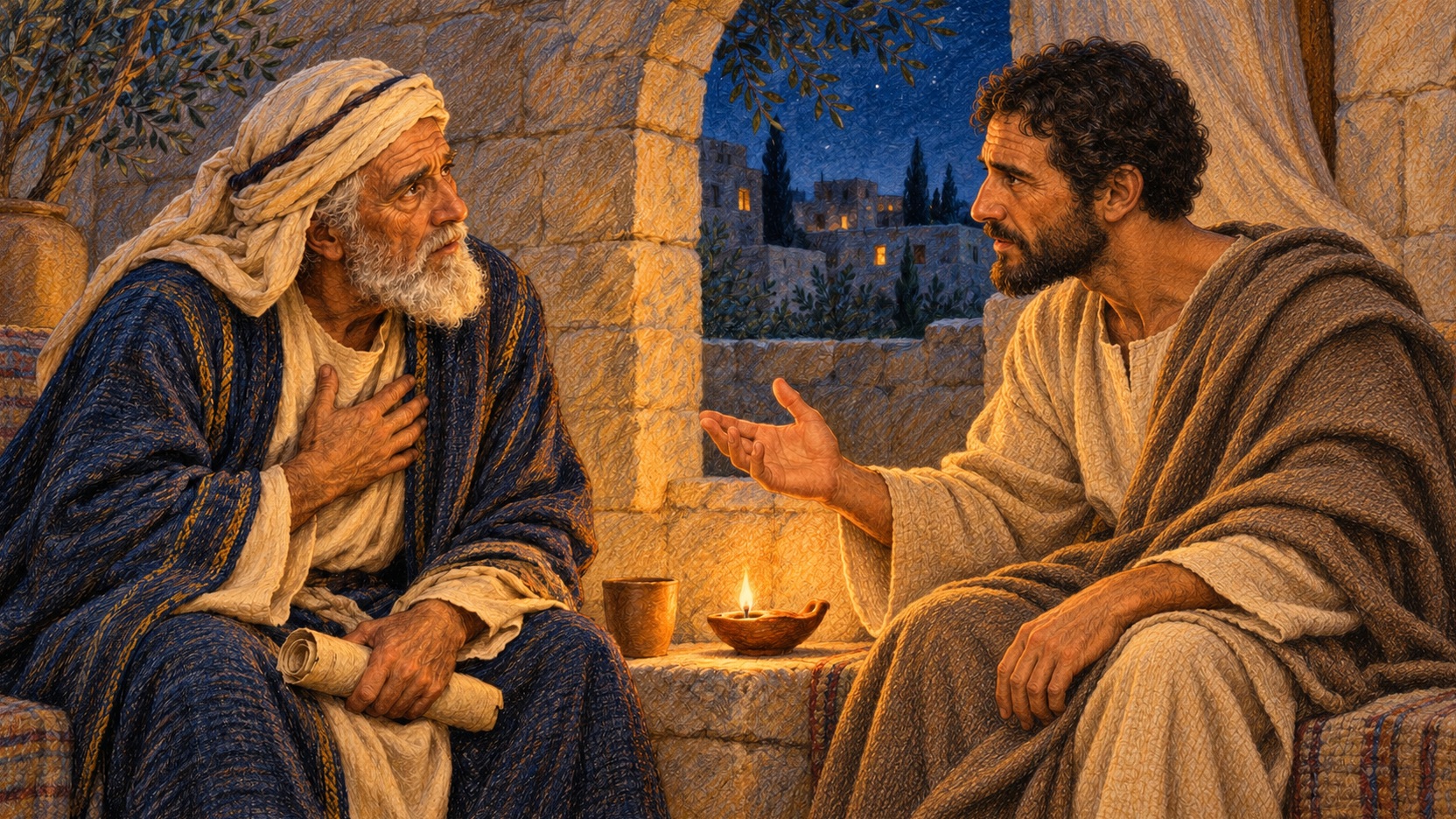
Jesus told Nicodemus, “You must be born again.” This man knew Scripture and held a respected position among Israel’s teachers, yet Jesus said he could not see God’s kingdom without new life from God. I cannot assume someone has received that life because he knows Scripture, follows religious disciplines, or grew up in a Christian family. Jesus points Nicodemus to the Spirit who gives life and the Son in whom he must believe.
Why Nicodemus Needed More Than Religion
John 2 ends with people believing in Jesus’ Name because they saw His signs. Jesus did not entrust Himself to them, because He knew what was in man. John then introduces Nicodemus, a Pharisee and ruler of the Jews who came by night and acknowledged Jesus as a teacher sent from God.
Nicodemus spoke respectfully about the signs, but Jesus directed him to his own need for spiritual life. Recognizing that God was with Jesus did not mean Nicodemus understood who Jesus was or how to enter God’s kingdom.
Jesus answered and said to him, “Most assuredly, I say to you, unless one is born again, he cannot see the kingdom of God.”
Jewish ancestry, a respected teaching position, and Pharisaic discipline could not give Nicodemus new life. Jesus did not tell Nicodemus to improve his standing or add another religious achievement. He needed life that only God could give.
Coming from a Christian family, attending church, learning Scripture, or serving in ministry cannot create that life either. Nor can an intense emotional experience. Those things may accompany a person’s conversion, but none has the power to make a sinner spiritually alive. When I speak of someone being born again, I mean that he has actually received new life through the Holy Spirit, not simply begun calling himself a Christian or become more interested in religion.
God’s work does not make our response irrelevant. Jesus went on to call Nicodemus to believe in the Son. The gospel presents a genuine appeal that a person can receive or resist, and he is responsible for that response. Believing does not produce life by human power; God gives life through His Spirit as the gospel is believed. Soteriology: The Study of Salvation considers this within the wider doctrine of salvation.
Born From Above by Water and the Spirit
Nicodemus took Jesus’ words as another physical birth and asked how an old man could enter his mother’s womb a second time. The Greek wording gennēthē anōthen can mean born again or born from above. Nicodemus was thinking about repeating natural birth, while Jesus was explaining life whose source is God.
Jesus then explained what He meant by this birth.
Jesus answered, “Most assuredly, I say to you, unless one is born of water and the Spirit, he cannot enter the kingdom of God.”
That which is born of the flesh is flesh, and that which is born of the Spirit is spirit.
Flesh can produce only flesh. Natural birth brings us into a human family, but it cannot bring us into God’s kingdom. A person also cannot create spiritual life within himself through determination. Yet Jesus’ birth analogy does not cancel His call to believe. He identifies the Spirit as the giver of life and directs Nicodemus to the Son in whom he must trust.
Some readers understand the water in John 3:5 as physical birth followed by spiritual birth. Others connect it with baptism. I believe the strongest background is God’s promise of cleansing and inward renewal in Ezekiel 36. God had promised to cleanse His people, give them a new heart and a new human spirit, and put His own Spirit within them.
Then I will sprinkle clean water on you, and you shall be clean; I will cleanse you from all your filthiness and from all your idols. I will give you a new heart and put a new spirit within you.
Deuteronomy 30:6 likewise promises that God will circumcise His people’s hearts so they will love Him. That promise helps me understand Jesus’ question to Nicodemus, “Are you the teacher of Israel, and do not know these things?” (John 3:10). As a teacher, he should have recognized God’s promise to change His people inwardly. Jesus was explaining a need that the law and prophets had already exposed.
I do not read John 3:5 as teaching that water baptism causes regeneration, or new birth. Christ commands believers to be baptized after salvation, publicly identifying them with Him. Baptism displays cleansing and union with Christ, but the outward act cannot produce the new heart that only God gives. We should obey Christ’s command while recognizing that the Spirit gives the life baptism declares. Baptism in the Bible develops that distinction from the other baptism passages.
Faith in Christ and God’s Work of Regeneration
To explain faith in the Son, Jesus recalled what God had done for Israel in the wilderness. In Numbers 21, the people sinned and were judged through fiery serpents. God instructed Moses to lift up a bronze serpent, and a person who had been bitten could look at it and live. The remedy came from God; the dying Israelites were called to respond to His promise.
And as Moses lifted up the serpent in the wilderness, even so must the Son of Man be lifted up, that whoever believes in Him should not perish but have eternal life.
For God so loved the world that He gave His only begotten Son, that whoever believes in Him should not perish but have everlasting life.
The Son lifted up on the cross is the Savior God provides for the world. Faith trusts Him rather than offering religious achievements as payment for life. Salvation depends on His power to save, so I should not look for assurance by measuring the strength of my feelings. John’s opening chapter likewise describes people receiving Christ while making clear that God gives them new birth.
But as many as received Him, to them He gave the right to become children of God, to those who believe in His name: who were born, not of blood, nor of the will of the flesh, nor of the will of man, but of God.
People receive Christ and believe in His Name, while God gives them the right to become His children and brings about their new birth. Bloodline and human power cannot accomplish it. I do not have to choose between God giving life and sinners needing to believe when John teaches both. Christ died for the whole world, and everyone who believes in Him receives the life He promises.
Paul uses palingenesia in Titus 3 for regeneration, meaning new birth or a new beginning. He attributes this change to God’s mercy and the Holy Spirit, ruling out our righteous deeds as its cause.
not by works of righteousness which we have done, but according to His mercy He saved us, through the washing of regeneration and renewing of the Holy Spirit.
Peter connects the new birth with the living Word of God.
having been born again, not of corruptible seed but incorruptible, through the word of God which lives and abides forever.
The Spirit works through the living Word, so the gospel’s message cannot be replaced with vague spiritual advice. Jesus Christ is the eternal Son, fully God and fully man, born of a virgin and entirely sinless. Wicked men tortured and crucified Him, but He willingly gave Himself as the perfect sacrifice for our sins. He completed His saving sacrifice through His shed blood and death. He was buried and rose bodily. The Father did not punish, curse, abandon, strike, bruise, or pour wrath on Jesus. Father, Son, and Holy Spirit were united in this saving work. The Gospel develops Christ’s death and resurrection more fully, and The Blood of Christ for Salvation examines His shed blood in redemption.
As sinners believe this gospel and come to Christ, the Spirit gives them life. No believer can claim to have made himself alive, and no sinner is told to repair himself until he becomes worthy of salvation. God calls us to repent and believe. Repentance means turning to God instead of defending our sin, while faith rests on Jesus as Lord and Savior. Neither response buys salvation; we receive the grace He offers. The study on Repentance explains that turning to God more fully.
The Spirit’s Seal and the Believer’s Living Hope
Does someone born again have the Holy Spirit immediately, or must he wait for a further stage before belonging fully to Christ? Paul gives a direct answer.
Now if anyone does not have the Spirit of Christ, he is not His.
Everyone who belongs to Christ has His Spirit. The Spirit who gives life also indwells the believer and seals him as God’s own. Indwelling means He lives within us. Paul tells the Ephesians how this happened to them.
In Him you also trusted, after you heard the word of truth, the gospel of your salvation; in whom also, having believed, you were sealed with the Holy Spirit of promise.
They heard the gospel, trusted Christ, and were sealed with the Holy Spirit. Paul goes on to call Him the guarantee of their inheritance until the redemption of God’s purchased possession. My assurance rests on that promise, not on maintaining a particular feeling. The God who gave new life marks His children as His own and keeps them.
Indwelling is different from being filled with the Spirit for service or walking in obedience to Him. Believers are commanded to be filled and to walk by the Spirit. Sin grieves Him, and we should respond to His conviction by confessing and repenting. A truly born-again believer does not lose the Spirit’s seal and need to receive Him again after each sin. His indwelling belongs to salvation itself.
David prayed, “Do not take Your Holy Spirit from me” (Psalm 51:11), and Saul lost the Spirit’s empowering presence associated with his kingship. I read those passages as warnings against presuming on God’s empowerment for an office. They do not teach that a New Covenant believer loses the Spirit’s indwelling whenever he sins. Romans 8 and Ephesians 1 promise that everyone who truly belongs to Christ has His Spirit and is sealed. The Holy Spirit Indwelling vs Coming Upon examines those different aspects of the Spirit’s work.
Peter also connects new birth with our future hope because Jesus has risen from the dead.
Blessed be the God and Father of our Lord Jesus Christ, who according to His abundant mercy has begotten us again to a living hope through the resurrection of Jesus Christ from the dead.
Peter wrote to believers facing suffering and grounded their hope in God’s mercy and Christ’s bodily resurrection. Their circumstances could not undo what God had done for them. They belonged to the living Savior, who secures their future. His completed sacrifice saves us, and His resurrection assures us that death will not have the final claim on His people.
God also brings us into His family now. New birth is more than a private experience that leaves us detached from other believers. We become His children and belong in the household of faith, learning to love and serve His people. The Spirit begins to produce His fruit in us because we have received life. That fruit is a result of salvation, never its purchase price.
Grace, Assurance, and the Fruit of New Life
Jesus’ warning to Nicodemus means we cannot use religious standing as proof that we belong to God. A Christian label is not the same as having received Christ. Someone who professes faith while persistently rejecting the Lord and showing no evidence of new life should not be reassured merely because he once used the right words. We need to ask whether we are trusting Christ rather than our membership, baptism, or service.
At the same time, new life does not mean sinless perfection. Believers struggle, stumble, need correction, and grow. We should encourage repentance and obedience without telling a troubled Christian that every failure cancels God’s saving work. Those truly born again are indwelt and sealed, and their new birth cannot be lost. God keeps His children; their religious intensity does not keep them spiritually alive.
For these reasons, I reject both Calvinism’s restriction of saving grace and Arminian loss-of-salvation teaching. Classical Calvinism, as expressed in the Canons of Dort, teaches that Christ’s death effectually redeems only the elect, those God chose for salvation. It also teaches that God’s inward call unfailingly brings them to faith. At the same time, the confession calls for preaching the gospel to all and acknowledges that its outward call can be resisted. I understand Scripture to teach that Christ died for all and that the grace offered to every person can be resisted.
God loved the world, and Christ gave Himself as a ransom for all. I cannot limit that provision to people selected without reference to their response. Neither can I treat faith as a payment sinners make toward their salvation. Everyone who believes in the Son receives life through God’s mercy. His invitation is genuine for every hearer, and receiving it gives no grounds for boasting.
I also reject the Arminian teaching that a person truly born again can finally fall away and lose salvation. That view takes the warnings against apostasy seriously, but I believe it makes the new birth and the Spirit’s seal reversible when Scripture presents them as God’s enduring work. Apostasy means abandoning the faith, and false profession is a real danger. Those warnings should expose empty claims and call people to Christ, while His promise gives assurance to everyone who truly belongs to Him.
Security in Christ gives us reason to turn from sin, not permission to settle into it. The Spirit produces love for God and for other Christians, and His children should increasingly show that life through obedience, confession, and repentance. Our assurance rests in Christ’s promise, while the evidence of His work should become visible in how we live.
When we call people to Christ, we must explain what He has done to save them. Advice about finding ourselves cannot give new birth. The Son of God shed His blood and died for sinners, then rose bodily, and He gives life to everyone who believes in Him. We should come to Him ourselves and direct others to Him without substituting religious activity for the life He gives.
My Final Thoughts
Nicodemus needed new life from God despite everything he knew and the position he held. We have the same need. The Holy Spirit gives that life as we receive Jesus Christ by faith, and He indwells and seals everyone truly born again. God keeps His children, so I can trust His promise while taking repentance and obedience seriously. Neither earns the life Christ gives freely. The invitation remains open: whoever believes in the Son has eternal life.