
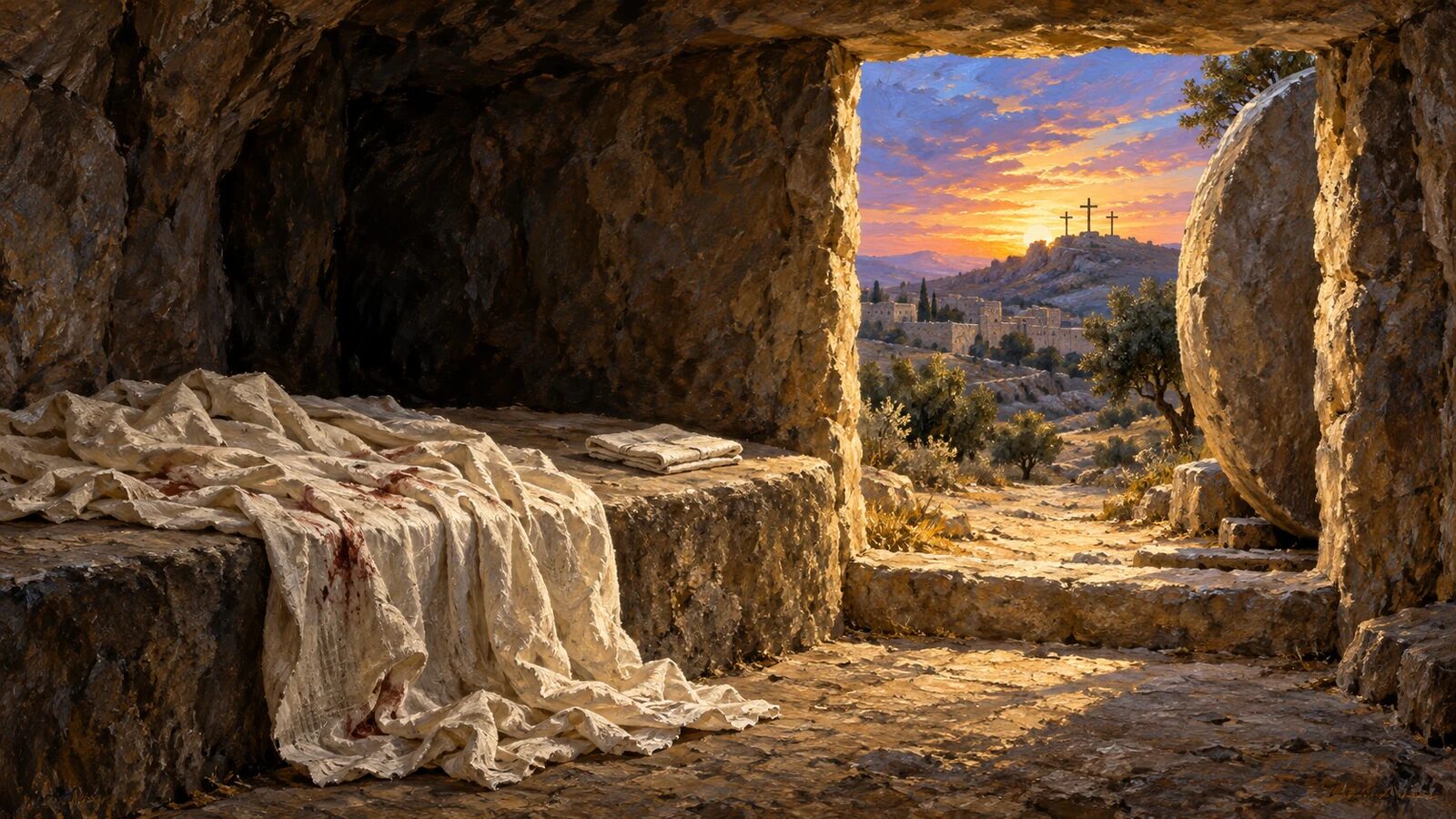
The gospel is familiar enough that people can repeat its words without pausing over its meaning. I want to follow Scripture’s own announcement: the gospel is not advice for improving ourselves. It is God’s good news about what Jesus Christ has done for sinners.
That good news first tells the truth about God and our sin. Its center is Jesus Christ, who shed His blood and died for us. After He was buried, He rose bodily from the dead, and God now calls every person to repent and believe in the Savior He has given.
Genesis shows why we need this good news by explaining sin and death. The Law and prophets then prepare us to understand atonement, before the Gospels and apostles explain Christ’s saving work and the response of faith. Following that progression helps us understand what God is announcing.
The New Testament word translated gospel, euangelion, means good news or glad announcement. That meaning helps distinguish the gospel from advice about what we should do. It announces what God has done in Christ. The commands to repent and believe belong to our response to that news.
I need to keep God’s initiative at the center of the message. He sent His Son, who died for our sins and rose from the dead, and now calls sinners to come to Him through Christ. The gospel does not say, “Improve yourself and God will respond.” It begins with what He has done.
Saying that God has a wonderful plan for someone’s life does not explain the gospel. God does lead His people in good ways, but that assurance alone leaves sin and His holy judgment unaddressed. It does not explain the cross or Christ’s shed blood. We have not communicated the biblical gospel if we leave out His resurrection and the call to repent and believe for forgiveness, however positive the message sounds.
The apostles announced Christ crucified and risen before calling people to respond. They were not offering self-esteem with Jesus added to it. Their invitation rested on the Savior’s finished work, rather than the strength of a sinner’s decision.
The Bad News We Must Face
Romans 3 places those whose sins are obvious and those who consider themselves moral or religious under the same verdict. Paul includes both Jews and Gentiles. I cannot remove guilt by appealing to my family background or religious privileges, and comparing myself favorably with someone else will not remove it either.
for all have sinned and fall short of the glory of God.
Paul’s word hamartano, translated sinned, can mean missing the mark. Knowing what the mark is keeps us from softening sin into a harmless mistake. God measures us by His glory and righteousness, not our potential or our standing beside another person. We have failed before the holy God who made us and to whom we owe our whole worship and obedience.
The respectable person needs this gospel just as much as someone whose life is openly broken. Looking better than a neighbor does not mean we have met God’s standard. Neither religious devotion nor sincere intentions can remove guilt or give forgiveness. The gospel tells the truth about us all.
Telling someone that truth can be merciful, just as a doctor needs to name a disease to help the patient. Jesus described Himself as a physician for the sick and called sinners to repentance. We need to stop pretending we are well if we are to recognize our need for Him.
Those who are well have no need of a physician, but those who are sick. For I did not come to call the righteous, but sinners, to repentance.
Jesus said this after calling Matthew from the tax office and sharing a meal with tax collectors and sinners. The Pharisees saw the meal as evidence against Him because they considered themselves separate from those people. His comparison exposed their own blindness. He was not identifying a group of truly righteous people who needed no Savior. He explained why He came near to those who recognized their guilt, while the self-righteous refused to see their need.
In Isaiah 59, Judah wondered why God’s saving intervention seemed absent. Isaiah answered that the Lord’s hand was not shortened and His ear was not dull. The people had embraced violence and injustice, deliberately turning toward evil, and their own sin separated them from God. That separation was not a passing mood He needed to overcome. Sin breaks fellowship with the holy God and leaves us guilty before His judgment.
But your iniquities have separated you from your God; And your sins have hidden His face from you.
I cannot repair that separation simply by becoming more disciplined or religiously active. Even making amends with people I have wronged does not remove my guilt before God. Reconciliation requires that guilt to be dealt with and my heart brought back to Him.
Romans 6 contrasts slavery to sin with the freedom God gives believers in Christ. Sin offers immediate pleasure but pays death as its earned wage. God gives eternal life. Verse 23 makes the difference clear by calling one a wage and the other a gift.
For the wages of sin is death, but the gift of God is eternal life in Christ Jesus our Lord.
Death is not merely the end of earthly life. Scripture speaks of physical death and the spiritual separation caused by sin. It also warns of final judgment. The lost will be raised and judged before entering the lake of fire. This second death is the final destruction of body and soul for unbelieving humanity. The gospel is good news because the danger is real.
God’s love is holy, so rescuing sinners does not mean ignoring or minimizing their guilt. His way of saving upholds His righteousness and shows how serious sin is. We see the greatness of His mercy in that rescue.
Promised From the Beginning
God’s promise of salvation began long before the New Testament. Genesis 3 records Eve being deceived by the serpent and Adam knowingly disobeying. Both then hid from God after their shame was exposed. While pronouncing judgment on the serpent, God promised a Deliverer: the woman’s Seed would be wounded but would crush the serpent’s head. The gospel was never a last-minute repair plan.
And I will put enmity Between you and the woman, And between your seed and her Seed; He shall bruise your head, And you shall bruise His heel.
That first promise did not explain everything later Scripture would reveal. It did tell us that God Himself would deal with sin and defeat Satan, so death would not have the final word. His covenants and appointed sacrifices develop that promise. Through the priesthood and prophets, we learn more about the coming King and His suffering before final victory.
Abraham helps us see that salvation has always been received by faith. In Genesis 15, Abram was still childless despite God’s promise to make him a great nation. God took him outside and pointed to the stars, promising descendants beyond counting. Abram could not produce the promised heir by effort, but he believed the LORD. God accounted that faith to him for righteousness.
And he believed in the LORD, and He accounted it to him for righteousness.
Old Testament believers trusted the God who promised to save, though they did not yet know the full details of the cross and empty tomb. I would not describe their salvation as earned by works while ours comes by grace. God has always saved by grace through faith, on the basis of the Redeemer He would provide.
Genesis 15:6 does not say Abraham manufactured righteousness. It says righteousness was accounted to him because he believed the Lord.
The Old Testament sacrifices taught Israel how seriously the holy God regards sin and that people must approach Him on His terms. Their different purposes help us understand the atonement He was preparing. Some offerings addressed sin and guilt, while peace and thanksgiving offerings emphasized fellowship. The burnt offering expressed complete dedication to God. These were not empty rituals. Blood was central to sacrificial atonement because the life of the flesh is in the blood. In Leviticus 17, God prohibited eating it and explained that He had given it on the altar for atonement.
For the life of the flesh is in the blood, and I have given it to you upon the altar to make atonement for your souls.
Paul explains in Hebrews that the sacrifices under the Law were shadows of good things to come. Their repetition showed that they could not make the worshiper perfect. The continuing Day of Atonement ministry made that need especially clear: a better, final offering was still required.
For the law, having a shadow of the good things to come, and not the very image of the things, can never with these same sacrifices make those who approach perfect.
The sacrificial background prepares us to understand the cross. Jesus did not merely show us love while leaving sin unresolved; He physically bore the punishment for our sins in His innocent body. After He was betrayed, wicked men mocked and beat Him before scourging and crucifying Him. Jesus shed His blood and gave His life for sinners, which is why Scripture speaks of salvation in His blood.
Romans 3 describes justification, or being declared righteous before God, as a gift of grace through Christ’s redemption. Paul places His blood at the center of that explanation. God set forth Christ as a propitiation by His blood through faith. The cross provides mercy while displaying God’s righteousness.
being justified freely by His grace through the redemption that is in Christ Jesus, whom God set forth as a propitiation by His blood, through faith.
I cannot leave Christ’s blood out of the gospel or treat it as a decorative metaphor. The spotless Lamb gave His life for sinners. Wicked men inflicted actual torture and death, which Jesus willingly endured in His innocent body as He shed His blood for our sins. Romans 3 presents that real sacrifice as God’s righteous provision of mercy. Forgiveness does not require Him to pretend justice is unimportant.
Christ the Fulfillment
In Galatians, Paul addressed pressure to put Gentile believers under the Mosaic Law as if Christ were insufficient. He compared the Law’s temporary guardianship with the mature standing of sons and heirs. At the appointed fullness of time, God sent His eternal Son. Jesus is fully God and became fully man, born of a virgin under the Law. His sinless life revealed the Father as He accomplished the redemption for which He came.
But when the fullness of the time had come, God sent forth His Son, born of a woman, born under the law, to redeem those who were under the law.
Jesus fulfilled what we had failed to fulfill, rather than lowering God’s standard. He then willingly offered His sinless body and blood for the world’s sins. The cross was the purpose for which He gave Himself, not a tragic accident or political mistake.
Hebrews contrasts priests who stood to offer sacrifices repeatedly with Christ, who offered one sacrifice and sat down. Believers are sanctified by the offering of His body once for all. I have nothing to add to that sacrifice through my own suffering. It needs neither repetition nor completion by a human priest or ritual.
By that will we have been sanctified through the offering of the body of Jesus Christ once for all.
Legalism treats human merit as something Christ’s work still needs. It may acknowledge much of what Jesus did, then make law-keeping or ritual part of the basis for acceptance with God. Religious heritage and moral effort cannot supply that basis either. His once-for-all offering leaves no unfinished part for human achievement to complete.
Antinomianism takes grace in the opposite direction, using it to excuse remaining comfortably enslaved to sin. Christ saves us from that slavery. The person who truly comes to Him is born again and begins to live in a new direction.
Paul summarized the gospel in 1 Corinthians 15 because some in Corinth denied the future resurrection of the dead. He began his answer by reminding the church of the message they had received and in which they stood. Christ died for our sins according to the Scriptures and was buried, then rose on the third day according to those same Scriptures. Paul named witnesses, including groups who saw the risen Lord. Burial confirmed His actual death, while the resurrection and eyewitness testimony declare that He truly lives. We cannot separate those events when explaining the gospel.
For I delivered to you first of all that which I also received: that Christ died for our sins according to the Scriptures, and that He was buried, and that He rose again the third day according to the Scriptures.
Christ’s resurrection belongs to the gospel itself, rather than being an extra for readers interested in miracles. If He has not risen, our faith is empty and we remain in our sins. But Jesus rose bodily. His resurrection vindicates who He is and confirms His finished work, giving believers a living hope.
who was delivered up because of our offenses, and was raised because of our justification.
Many people died on Roman crosses, so announcing Jesus’ death alone does not explain the good news. The sinless Son of God died for our sins according to the Scriptures, was buried, and rose again. We need both the cross and resurrection to tell what He has done.
My confidence rests in a risen Lord who conquered death and lives forever, rather than in the inspiring memory of a dead teacher. He is the only Savior and Mediator. His resurrection assures us that His saving work did not fail.
Repentance and Faith
Jesus called for a response when He began preaching in Galilee after John the Baptist’s imprisonment. He announced that the appointed time was fulfilled and God’s kingdom had drawn near, then commanded people to repent and believe. Years later, Paul spoke to the Ephesian elders at Miletus before leaving them. He reviewed his public and house-to-house ministry, summarizing his testimony to Jews and Greeks as repentance toward God and faith in the Lord Jesus Christ.
The time is fulfilled, and the kingdom of God is at hand. Repent, and believe in the gospel.
testifying to Jews, and also to Greeks, repentance toward God and faith toward our Lord Jesus Christ.
Repentance turns a sinner from rebellion toward God; faith trusts Jesus Christ as the only Savior. Neither earns salvation. I cannot honestly claim to rest in Christ while holding on to my own rule over my life, which is why this turning and trust belong together.
John 3 extends the invitation to whoever believes. God loved the world and gave His only begotten Son so that believers would not perish but have everlasting life. Because Christ died for the whole world, we can honestly offer the gospel to every person.
For God so loved the world that He gave His only begotten Son, that whoever believes in Him should not perish but have everlasting life.
That genuine offer can be resisted and rejected, so unbelief cannot be blamed on God. He calls sinners to come with a clear promise of life to whoever believes in Christ. Those who reject Him remain condemned.
Faith receives salvation without making it a human achievement. Ephesians 2 begins with people dead in trespasses and sins, following the world and living under corrupted desires. God makes believers alive with Christ because He is rich in mercy. Salvation comes by grace through faith, and afterward God creates us in Christ Jesus for good works. Those works grow from salvation instead of producing it.
For by grace you have been saved through faith, and that not of yourselves; it is the gift of God, not of works, lest anyone should boast.
Grace gives what we have not earned, and faith receives Christ and relies on Him. That leaves me no room to say, “I made myself worthy.” The only person I can boast in is the Lord.
Verse 10 continues the thought by calling believers God’s workmanship, created in Christ Jesus for good works. Those works cannot save us, but new birth changes our direction. The gospel brings new life rather than leaving a person unchanged.
For we are His workmanship, created in Christ Jesus for good works, which God prepared beforehand that we should walk in them.
We must reject both the claim that works save and the claim that salvation leaves a person unchanged. Scripture teaches that Christ saves by grace through faith, and the truly born again begin to walk in newness of life. Neither legalism nor lawlessness preserves that teaching.
Paul’s warning to the Galatians arose from a specific threat. Teachers were troubling the churches by pressing circumcision and law observance on Gentile believers. This added human religious performance to Christ as the ground of salvation, so it was much more than a cultural difference. The gospel is also corrupted when Christ’s identity or finished work is changed, or when another response replaces the repentance and faith God commands.
But even if we, or an angel from heaven, preach any other gospel to you than what we have preached to you, let him be accursed.
Legalism adds human merit to the work of Christ. Antinomianism makes the opposite error by using grace to defend continued rebellion. A prosperity message turns Christ into a means of earthly gain. Universalism denies the danger of judgment and the necessity of faith, while a merely therapeutic message speaks of healing without confronting sin. None of these is the gospel taught by the apostles. Neither is any message that leaves out Christ’s blood and bodily resurrection or refuses the call to repent and believe.
Calvinist limited atonement distorts the gospel offer by denying the plain biblical teaching that Christ died for the whole world. Arminian loss-of-salvation doctrine distorts the believer’s security by making eternal life depend upon a person’s ability to remain saved. Scripture gives a better gospel. Christ died for everyone, so God’s offer is genuine to every hearer. People must repent and believe, and those who are truly born again are kept by God.
When I test a message, I first ask whether it speaks truthfully about sin and preserves the full deity and humanity of Christ. It must proclaim His blood, death, and bodily resurrection as one saving work. The biblical gospel calls for repentance and faith while making clear that salvation is by grace. It also includes the new birth, because Christianity cannot be reduced to moral improvement.
An appealing message still needs to be tested. It may sound compassionate yet give no honest answer to sin. Moral seriousness can attract us too, as can claims of spiritual power or an intellectual argument. I need to ask whether the message agrees with the gospel delivered by the apostles and preserved in Scripture.
Assurance rests on Christ rather than our performance. In Ephesians 1, Paul praises God for the spiritual blessings believers have in Christ. Within that praise, he describes people hearing the word of truth and believing in Christ, then being sealed with the Holy Spirit of promise.
In Him you also trusted, after you heard the word of truth, the gospel of your salvation; in whom also, having believed, you were sealed with the Holy Spirit of promise.
During the Feast of Dedication, opponents surrounded Jesus in the temple and demanded that He identify Himself. He explained that their unbelief showed they were not His sheep, then described those who truly belonged to Him. His sheep hear His voice and receive eternal life, safe from being snatched out of His hand or the Father’s hand. I cannot understand that as temporary life. The truly born again are secure because Christ keeps them.
And I give them eternal life, and they shall never perish; neither shall anyone snatch them out of My hand.
That assurance gives no permission to sin. A superficial claim without new birth is not salvation, because the gospel brings sinners into new life. Believers may stumble and need correction, and they will need to confess sin. Even so, they no longer belong to their former master. Grace teaches us to follow Christ.
If you are relying on a prayer you once prayed, place that confidence in Christ Himself. Baptism and church attendance cannot take His place, and neither can personal morality or a Christian family. If your trust is in Him and you grieve your weakness, you can take heart. The Savior who saved you can also keep you.
My Final Thoughts
After following these passages, I believe the gospel is the good news that Jesus Christ died for our sins, was buried, and rose bodily from the dead. He is the only Savior, and His blood is sufficient for the whole world. We do not earn forgiveness. We receive it by faith as we turn to the risen Christ, who makes His people new and keeps them forever.