
What does God do when He saves a sinner, and how do we receive that salvation? Those questions concern each of us before God, even if we’ve never opened a theology book. I want to understand how grace and faith fit with repentance, what Christ’s blood accomplished, and why a believer can be secure in Him without setting any part of Scripture aside.
What the Study of Salvation Includes
Soteriology simply means the study of salvation and comes from the Greek idea of rescue or deliverance. The related Greek word soteria helps us understand what the gospel announces: through Jesus Christ, God rescues sinners from sin and its judgment, from death and separation from Him. But one word cannot tell us everything Scripture teaches about that rescue. We need to understand what Jesus did and how a sinner responds, then consider the new life God gives and how He will bring salvation to completion.
Scripture describes that saving work from several angles. When we speak of redemption, we’re considering the price Christ paid to set sinners free. Justification concerns our standing before God: He declares the believer righteous in Christ rather than condemned for sin. God also gives the believer spiritual life through the Holy Spirit, which is regeneration or the new birth, and receives him into His family through adoption.
The Spirit continues His work in the believer through sanctification, setting him apart and teaching him to live as someone who belongs to Christ. Salvation also has a future completion called glorification, when believers will be raised and made fit to live with the Lord forever. These words describe parts of God’s one saving work, so we need to understand how they belong together.
If I concentrate on only one part of salvation, I can miss what another passage teaches. Grace does not make God’s invitations insincere, and calling sinners to respond does not make salvation a reward for effort. Nor can I assume that every outward profession proves new birth or that eternal life can later become temporary. We need to let Scripture correct those errors by hearing all that it says.
For all the technical language, we’re asking how guilty people can be forgiven while God remains just, and how someone spiritually dead can receive life. Christ’s blood is central to that answer. We also need to know whether God offers salvation to every hearer and whether a sinner can resist Him. Then there is the question of whether someone truly born again can lose eternal life. The study of salvation takes us from our guilt before God all the way to the believer’s future resurrection.
No single verse answers all of those questions. Joshua 24 shows that people are responsible for their allegiance, while Ephesians 2 and Titus 3 explain why salvation comes by grace rather than works. Romans 3 takes us through our guilt to Christ’s saving blood, and Romans 10 explains faith and confession. We can then consider the worldwide offer in John 3 and 1 Timothy 2 alongside the security promised to Christ’s people in John 10 and Ephesians 1. Comparing these passages helps us understand salvation more fully and clearly.
Grace Received Through Faith
The New Testament leaves no room for earning salvation. Neither a religious heritage nor a respected family can make us right with God, and better behavior cannot erase our guilt. Keeping the law will not save us any more than an intense emotional experience will. Baptism and church membership cannot replace faith in Christ either. Every sinner needs the mercy God shows through Jesus Christ.
For by grace you have been saved through faith, and that not of yourselves; it is the gift of God, not of works, lest anyone should boast.
The Greek words help us understand Paul’s distinction. The word charis speaks of grace or favor freely given, while pistis means faith, trust, or reliance. God gives sinners what they do not deserve, and faith receives His gift. I cannot treat my trust in Christ as a payment or an achievement that makes me worthy of acceptance. It is more like an empty hand receiving Christ and His finished work. That is why Paul excludes boasting: no saved person can stand before God and claim, “I made myself worthy.”
Paul continues by showing where good works belong.
For we are His workmanship, created in Christ Jesus for good works, which God prepared beforehand that we should walk in them.
Good works follow because God has made a person new in Christ; they do not purchase that new life. The difference is like the fruit on a tree. Stapling fruit to dead branches cannot make the tree live, but a living tree bears fruit because life is already there.
Titus says the same thing with different language.
not by works of righteousness which we have done, but according to His mercy He saved us, through the washing of regeneration and renewing of the Holy Spirit.
Paul rules out saving ourselves, but he also shows that salvation reaches beyond our legal standing before God. Through regeneration and renewal, the Holy Spirit gives us new life. God is doing far more than improving a sinner’s public image.
That is also why baptism cannot cause salvation. Water baptism follows faith and publicly identifies the believer with Christ. It does not regenerate the heart or replace reliance on the Savior. We should take this outward sign seriously because Christ commanded it, but confusing the sign with God’s saving work directs faith toward a ritual.
I cannot cancel past guilt by putting better behavior on the other side of an imaginary scale. Nor does God ask me to pay part of the price while Christ supplies the rest. His work is sufficient, and salvation comes from mercy. Good works then have a necessary place as the expression of the life God has given. We can take obedience seriously without making it a contribution to our salvation.
The Bible calls sinners to respond, and that call does not turn grace into human achievement. God commands people to repent and believe because they are accountable creatures made in His image. He genuinely calls them to receive the grace He offers.
Near the end of his life, Joshua gathered Israel and reminded the people of what the LORD had done. Joshua 24 records his call for them to decide whom they would serve, giving us an Old Testament example of their responsibility to God.
And if it seems evil to you to serve the LORD, choose for yourselves this day whom you will serve… But as for me and my house, we will serve the LORD.
We need to notice whom Joshua was addressing. He called covenant people away from idolatry and divided loyalty, rather than teaching that a human choice could purchase salvation. His appeal follows a pattern found throughout Scripture: God acts first and speaks truthfully about what He has done, then commands people to turn from false gods and serve Him.
Repentance does not mean cleaning yourself up until God accepts you. The Greek word metanoia is often explained as a change of mind, but we need the biblical context to understand what that change involves. A guilty person stops defending sin and turns toward God, and that inward change naturally gives life a new direction. Faith likewise goes beyond agreeing with facts: the sinner receives Christ and relies on Him alone.
that if you confess with your mouth the Lord Jesus and believe in your heart that God has raised Him from the dead, you will be saved.
In Romans 10, Paul contrasts the righteousness people try to establish for themselves with the righteousness God gives through faith in Christ. Confession brings that faith into the open by acknowledging the Lord whom a person trusts in the heart. I would not turn Paul’s words into a formula that saves whoever repeats it, or make confession a second work added to faith. Secretly admiring Jesus or agreeing that He once lived is not the reliance Paul describes. Saving faith rests on the crucified and risen Christ as Lord and the only Savior.
The Cross and the Blood
God gives salvation freely, but we should never understand that to mean He treats sin lightly. Jesus Christ, the completely sinless Son of God, physically bore the punishment for our sins in His innocent body on the cross. Wicked men betrayed and mocked Him, then beat and scourged Him before crucifying Him. He shed His blood and died, then rose bodily from the dead. Salvation is in His blood because He gave His life for sinners.
for all have sinned and fall short of the glory of God, being justified freely by His grace through the redemption that is in Christ Jesus, whom God set forth as a propitiation by His blood, through faith.
Romans 3 brings me back to the question of how God can forgive guilty people and still remain just. Paul begins with everyone’s guilt, then explains that justification is given freely by grace because redemption is found in Christ Jesus. God presented Christ as the propitiation through His blood, and the sinner receives that provision through faith. In justifying the person who believes in Jesus, God remains righteous. His mercy at the cross does not diminish His holiness; we see His mercy and justice meet in Christ.
Propitiation means that the sacrifice God provided deals with the righteous offense of sin. Jesus did not have to persuade an unwilling Father to become merciful. The Father loved the world and sent the Son, who willingly gave Himself for sinners. The Holy Spirit applies Christ’s completed work to those who believe. We should understand their work in that unity, without dividing the Father and Son in purpose.
The Father did not punish, curse, abandon, strike, bruise, or pour wrath on Jesus. Wicked men inflicted the physical torture that fulfilled God’s foreknown saving purpose. The sinless Son willingly endured it as He bore our sins in His body. In this way, the triune God saves without compromising His holiness.
who Himself bore our sins in His own body on the tree, that we, having died to sins, might live for righteousness.
Peter says Jesus bore our sins in His own body, and I don’t want to lose the physical reality of what He endured. The punishment He endured was an actual event in history: He suffered and bled until He died, and He rose bodily from the dead. Moral improvement and religious sincerity cannot save us, nor can a mystical experience take His place. Our salvation is found in the crucified and risen Savior.
Romans 3:25 connects propitiation with Jesus’ blood and faith, while 1 Peter 2:24 tells us that He bore sins in His body on the tree. We need to understand His blood and body together with His suffering and death, and with His bodily resurrection. Reducing any part of that work to a symbol or setting it aside takes us away from the very work through which He saves.
A Genuine Offer to the World
The gospel can be preached honestly to every person because Christ’s provision is real and sufficient. Scripture never presents God as making a hollow offer to sinners. He loved the world and gave His Son, who died for sinners. Whoever believes in Christ receives everlasting life.
For God so loved the world that He gave His only begotten Son, that whoever believes in Him should not perish but have everlasting life.
John 3:16 speaks of God’s love for the world and His giving of the Son, but it does not teach universalism, the belief that everyone will be saved. The same passage says that the unbeliever is condemned already. I need to take both statements seriously: the invitation is given to “whoever believes.” Unbelief keeps a person from receiving life, not a lack of provision in Christ.
For this is good and acceptable in the sight of God our Savior, who desires all men to be saved and to come to the knowledge of the truth.
Paul says in 1 Timothy 2:5-6 that there is one God and one Mediator between God and humanity. He identifies that Mediator as the Man Christ Jesus, who gave Himself as a ransom for all. I cannot reconcile limited atonement with the scope of these passages. Christ’s death was not a private provision reserved for a hidden few, so we must carry the gospel into the world and honestly call every hearer to repent and believe.
The Lord is not slack concerning His promise, as some count slackness, but is longsuffering toward us, not willing that any should perish but that all should come to repentance.
God is patient because He is merciful, not because He is weak. People can resist His appeal and remain in unbelief without making His invitation any less genuine. Their responsibility to respond belongs alongside His offer. If a theological system makes God’s universal invitations insincere or narrows Christ’s provision until we cannot honestly preach to everyone, it has failed to account for the whole witness of Scripture.
I appreciate Calvinism’s desire to honor God’s sovereignty, but limited atonement and irresistible grace do not fit these universal invitations and genuine warnings. Rejecting those teachings does not require us to weaken grace. Salvation remains God’s work from beginning to end, and faith earns none of it. We should be able to affirm His sovereignty while taking His truthful call and our responsibility to respond seriously.
Because Christ died for the world, we can call any sinner to Him honestly and urgently. God commands repentance, and the Son gives life to whoever believes. If someone refuses Him, that refusal is real; it does not mean God was only pretending to offer salvation. But I cannot bring about someone’s new birth by pressure or manipulation. Our responsibility is to proclaim Christ and call for faith while trusting the Spirit to convict through the truth.
New Birth and Eternal Security
When God declares a believer righteous, He does not merely place a legal label over an unchanged life. The Spirit gives life to the person who believes. Jesus explained the need for this new birth to Nicodemus in John 3. Although Nicodemus was a respected teacher of Israel, his knowledge and position could not give him spiritual life. He first understood Jesus to mean another physical birth, so Jesus explained birth by the Spirit. Neither family descent nor religious education can bring anyone into God’s kingdom, and a good moral reputation cannot do it either. God must give new life.
Therefore, if anyone is in Christ, he is a new creation; old things have passed away; behold, all things have become new.
Becoming a new creation does not make a believer instantly mature or remove every struggle. He has a new standing before God and a new spiritual life, with Christ as his rightful Master. The old life no longer has a rightful claim of ownership, so his direction begins to change. That growth can be uneven and may require correction, but it comes from new birth, not simply learning religious language or adopting Christian habits.
The Holy Spirit convicts the sinner and gives life through regeneration, then indwells and seals every believer. He continues teaching the Christian and producing spiritual fruit in him. A promise to do better cannot accomplish that work. Salvation rests on Christ’s completed redemption as the Spirit gives life through the gospel.
In Him you also trusted, after you heard the word of truth, the gospel of your salvation; in whom also, having believed, you were sealed with the Holy Spirit of promise.
These believers heard the word of truth and trusted Christ, and God sealed them with the Holy Spirit of promise after they believed. That order helps me understand where assurance belongs. The seal is God’s mark of ownership and the guarantee of the believer’s inheritance, so its certainty does not rise and fall with how secure I feel during a hard season.
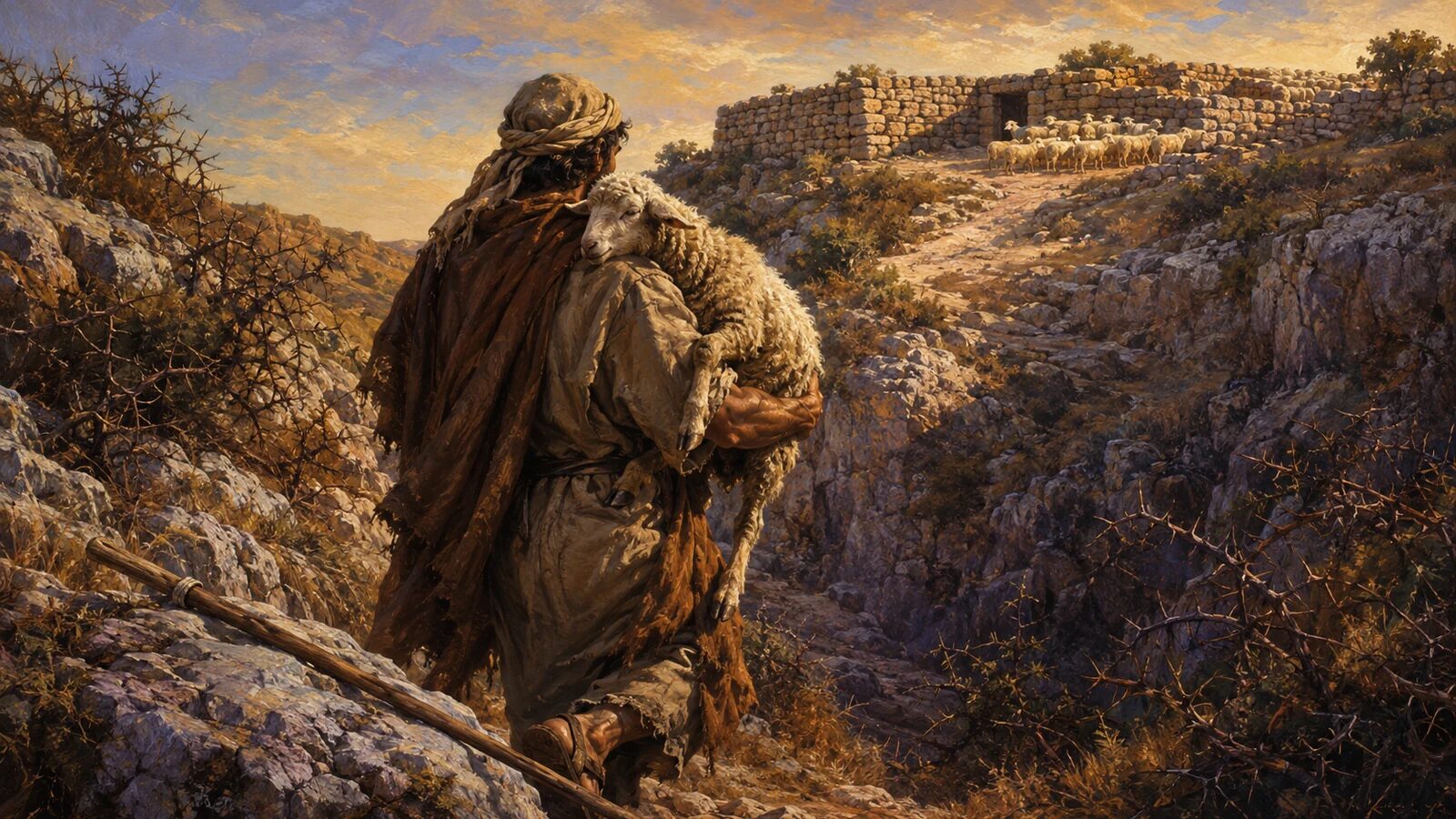
Jesus describes His sheep as people who hear His voice and whom He knows personally. They follow because they belong to Him, and He gives them eternal life. If their security depended on their own determination, no believer would be safe. It rests on the Shepherd who keeps them.
And I give them eternal life, and they shall never perish; neither shall anyone snatch them out of My hand.
Jesus promises eternal life and says that His sheep will never perish. I cannot read that as a temporary arrangement that expires whenever a believer stumbles. He also says in John 10:29 that the Father holds them and no one can snatch them from His hand.
That is why I reject the Arminian claim that a truly born-again believer can lose salvation. God has made him a new creation and sealed him with the Holy Spirit, and Christ keeps everyone who truly belongs to Him. A child of God may need discipline and correction, and may grieve deeply over sin, but God does not abandon the person He has made alive.
Eternal security is not permission for lawlessness. A person who permanently abandons Christ and settles into unbelief is not proof that the new birth can be reversed. 1 John gives a better explanation.
They went out from us, but they were not of us; for if they had been of us, they would have continued with us.
John was describing people whose departure from the apostolic fellowship revealed that they had never truly belonged to it. He was not declaring every struggling believer false. A Christian may stumble badly or experience doubt, and even firm discipline does not mean he has ceased to be God’s child. Permanently repudiating Christ is different: it can expose a profession that was never real. Everyone truly born again is eternally secure, but inherited religion or a momentary emotional response cannot establish that someone has new life.
This is why I cannot give someone assurance merely because he repeated a prayer or professed faith superficially. That approach, often called easy-believism, overlooks the new birth. True faith comes to Christ, and the life He gives begins to change a person’s direction. We should neither reassure someone settled in rebellion nor frighten a weak believer by suggesting that every struggle erases God’s saving work.
The difference between receiving salvation and producing it helps us recognize these errors. Works-based religion makes human effort part of the ground of salvation, while baptismal regeneration assigns saving power to the outward sign. Requiring sinners to reform themselves before coming to Christ makes a similar mistake. Limited atonement narrows His provision and invitation, whereas teaching that salvation can be lost weakens His promise and the Spirit’s seal. Yet assurance also becomes empty when easy-believism overlooks the new birth. We receive Christ by faith because grace provides salvation, and the Spirit gives real life that Christ securely keeps.
Knowing that I did not save myself leaves no room for pride, and knowing that Christ died for the world gives me reason to proclaim Him honestly and urgently. Whoever believes receives life. For the believer, that assurance can steady changing emotions without making sin harmless. Grace calls us toward holiness, and because the Shepherd holds His sheep, we can confess our sin and get up to continue walking with Him.
For fuller studies of these connected truths, see being born again, the gospel, and life being in the blood.
My Final Thoughts
I find my assurance in what God has done to rescue sinners through Jesus Christ, because works and rituals cannot earn His acceptance. We receive salvation by grace through faith in the One who physically bore our punishment in His body and shed His blood on the cross. He died and rose bodily, and we can honestly offer His gospel to the whole world. Everyone who comes to Him in repentant faith is made alive and sealed by the Holy Spirit. That new life should lead us into holiness with confidence in the Shepherd who keeps us, rather than fear that every failure has undone His work.