
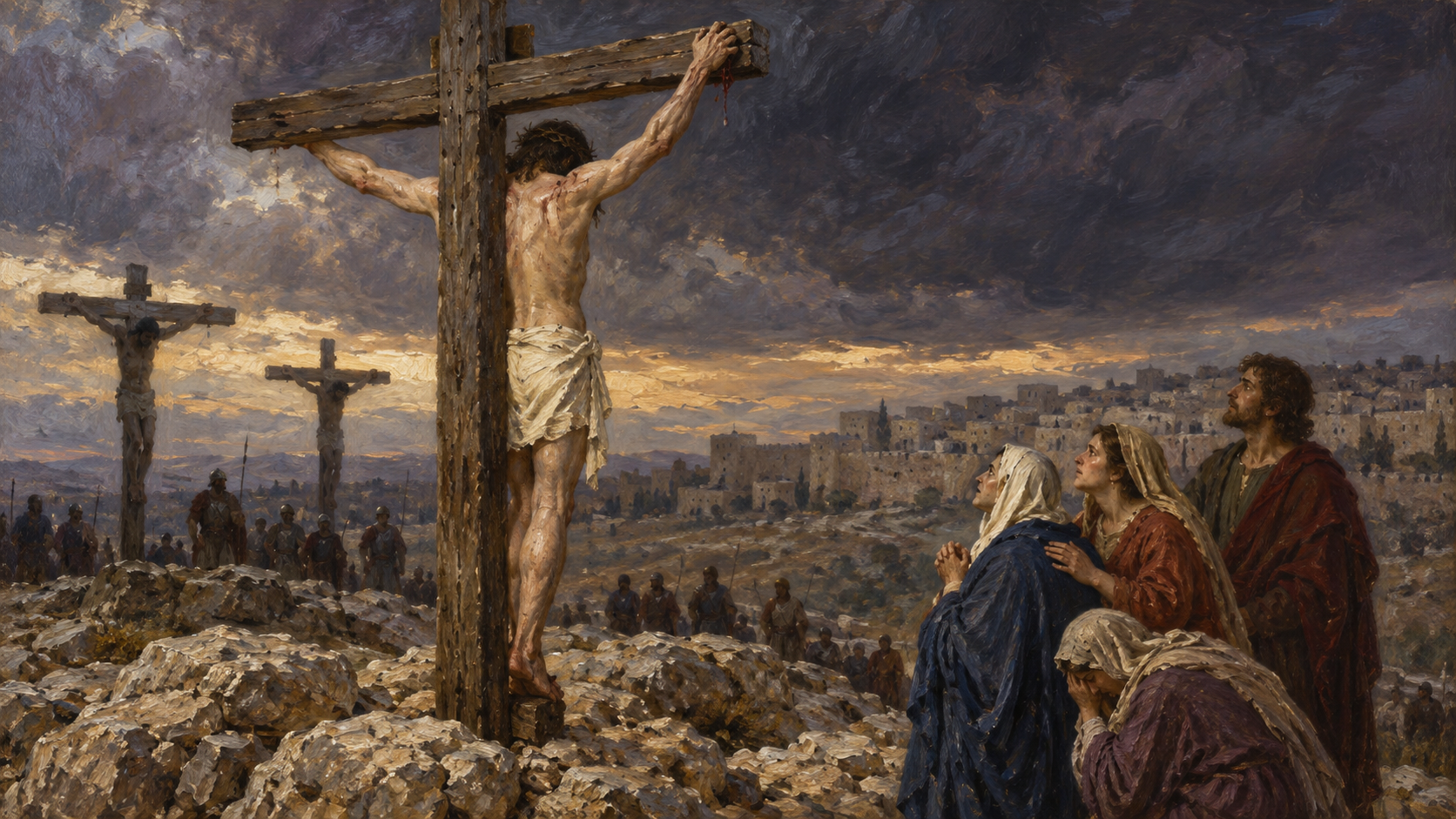
Why does Scripture speak so often about the blood of Jesus instead of simply saying that He loved us or died for us? The eternal Son truly became man and willingly shed His innocent blood for sinners. I cannot separate that blood from the life He gave, as though it worked like a spiritual charm. He truly died, was buried, and rose bodily, and the gospel holds all of that together.
Life Is in the Blood, and God Provides Atonement
Redemption is release secured at a price, and the apostles identify Christ’s blood as that price. They also connect His blood with Justification, God’s declaration that the believer is righteous in Christ. His blood also cleanses believers from sin and brings them into peace with God, opening the way into His presence. These are central New Testament teachings, not primitive images that mature readers are expected to leave behind.
Jesus had a real human body and lived without sin. He endured actual torture that shed His blood and ended in His death. After burial, He rose bodily from the grave. When I say that Jesus showed love, I need to remember how He showed it: He willingly gave His innocent life. A vague expression of love cannot carry the full meaning of that gospel.
Salvation is in Christ’s blood because He voluntarily shed it in sacrifice, not because blood is an impersonal spiritual substance. His death and resurrection belong to the work He completed. Saying “pleading the blood” cannot take the place of repentance and faith, and it cannot replace obedience or prayer. We are trusting the living Christ who saves through His finished sacrifice.
Following this theme from God’s declaration about creaturely life through Israel’s sacrifices helps me understand the cross more clearly. Jesus truly bore punishment for our sins, yet the Father was not His punisher. Wicked men tortured and killed Him while the Father and Son remained united with the Holy Spirit in their saving purpose. We need to keep both the real suffering and that unity in view.
The Old Testament pattern begins with God’s ownership of life:
For the life of the flesh is in the blood, and I have given it to you upon the altar to make atonement for your souls; for it is the blood that makes atonement for the soul.’
Leviticus begins with creaturely life in the blood, and that life belongs to God. He gave blood a particular purpose on the altar, the place He appointed for Israel’s sacrifices: to make atonement for the soul. Israel could not treat it as ordinary food when God had assigned it that holy use. Nor could worshipers use the altar for religious experiments of their own.
Through Atonement, God provides a way to deal with sin so guilty people can be forgiven and brought near. The animal’s blood had no power apart from the God who appointed the sacrifice. A worshiper could not manipulate Him with it, but had to present the sacrificed life according to His command. Sin brings death, and mercy comes through the substitute God provides. That is very different from treating blood as magic.
God had already made His claim over life known before Sinai. He told Noah not to eat flesh with its lifeblood still in it, then announced accountability for shedding human blood. Murder is an offense against God because every person bears His image. The spilled blood testifies that a life belonging to the Creator has been taken.
The Hebrew word dam, written דָּם, means blood. The related discussion of life uses nephesh, written נֶפֶשׁ, which can mean creaturely life or the living creature itself, and can also refer to a person or soul. Context determines how we understand it. Here Leviticus says that creaturely life is in the blood and that God appoints sacrificial life for atonement. I would not turn those words into a division between the body and a detachable, inherently immortal substance.
Passover, Covenant, and the Sinless Lamb
On the night God delivered Israel from slavery in Egypt, the final plague brought death to the firstborn. Passover was His provision for deliverance. Each Israelite household killed an unblemished lamb and applied its blood to the sides and upper beam of the doorway, trusting His promise: “When I see the blood, I will pass over you.” I notice that the Hebrew families were spared through the provision God commanded, not because they were morally superior to the Egyptians.
The lamb died before its blood was applied, and judgment passed over the household before Israel was released from bondage. Paul makes the connection explicit when he writes, “Christ, our Passover, was sacrificed for us” in 1 Corinthians 5:7. We are following a pattern God authorized in the historical exodus. Jesus is the spotless Lamb whose shed blood delivers from judgment and sets His redeemed people free.
Exodus 24 introduces covenant blood. A covenant is a binding relationship established by God’s promise and terms, which Moses read to Israel before the people agreed to them. Blood was then sprinkled as the nation was solemnly bound to the Lord. Jesus deliberately used that language when He called the cup His blood of the new covenant, shed for many for the forgiveness of sins. His death establishes the promised covenant through His blood; it does far more than change how a person feels.
On the annual Day of Atonement, Israel’s high priest carried sacrificial blood into the innermost part of the tabernacle and presented it at the mercy seat. This gold cover over the ark was God’s appointed meeting place with His people, yet access remained restricted even as confession and cleansing took place. Paul explains in Hebrews that these meaningful ceremonies were shadows pointing ahead. Their repetition helps me see what they could not finish: a final sacrifice was still needed.
Only the sinless Christ could provide that sacrifice:
knowing that you were not redeemed with corruptible things, like silver or gold, from your aimless conduct received by tradition from your fathers, but with the precious blood of Christ, as of a lamb without blemish and without spot.
Jesus was not another guilty man caught in political violence. He is the virgin-born eternal Son, fully God and fully man. Though tempted in every way human beings are tempted, He never sinned. No deceit was found in His mouth because no inner corruption stained His obedience.
Christ’s sinlessness explains Peter’s words “without blemish and without spot.” The Law required an acceptable offering, but animals could only anticipate what Christ would provide. They were not moral equivalents of human beings, and their blood could not cleanse the conscience permanently. Jesus offered the life of the sinless Man to whom those sacrifices had pointed.
Christ’s blood is precious because of who He is. I cannot separate it from His full deity or complete humanity, or from the obedience and love with which He offered His real body. Silver and gold can buy freedom in human markets, but that corruptible wealth cannot release a sinner from guilt or death. Redemption required the life God provided.
John the Baptist therefore called Jesus “the Lamb of God who takes away the sin of the world.” Revelation worships Him as the Lamb who was slain and redeemed people to God by His blood. Heaven never outgrows this blood-centered gospel.
Jesus Bore Real Punishment, but the Father Did Not Turn Against Him
The cross cannot be made painless or reduced to an abstract symbol:
who Himself bore our sins in His own body on the tree, that we, having died to sins, might live for righteousness–by whose stripes you were healed.
Jesus was betrayed and falsely accused, then mocked and struck by His enemies. Roman soldiers scourged and tortured Him before nailing Him to the cross. Acts 2 and 4 name the lawless hands responsible for the violence, including the rulers, Gentiles, and people of Israel. God foreknew what they would do and used their actions in His saving purpose without becoming the wicked author of their cruelty.
When Peter says Christ bore our sins in His own body, he is describing physical suffering. The stripes were real, and His blood was shed before He died. Wicked men inflicted that punishment, but Jesus willingly bore it for our sins when He possessed the authority to escape.
I cannot fully describe the cross by calling Jesus an offering while saying He was never punished in any sense. He suffered Roman execution as a condemned criminal. The distinction concerns who inflicted that punishment: sinners brutalized the innocent Son, while the Father never turned against Him.
His willingness did not make their violence any less real. John 10 says no one could take His life apart from His authority, while the Gospels still identify the people who arrested and killed Him. Jesus laid down His life by allowing wicked men to do what He could have stopped. He then took it again in His bodily resurrection.
Psalm 22 protects this distinction:
For He has not despised nor abhorred the affliction of the afflicted; Nor has He hidden His face from Him; But when He cried to Him, He heard.
Jesus’ cry, “My God, My God, why have You forsaken Me?” brought Psalm 22 before those watching Him die. The Psalm describes their mockery, the piercing of His hands and feet, and the division of His garments, then moves through prayer to vindication. It also looks ahead to worldwide worship as a future people hear what the Lord has done. I cannot leave verse 24 out of that account: God did not hide His face from the afflicted One, but heard Him.
The cry expresses the depth of Christ’s suffering and fulfills the Psalm without announcing a fracture in the Trinity. Jesus had already told His disciples that they would leave Him alone, then said, “And yet I am not alone, because the Father is with Me.” His final prayer entrusted His spirit into the Father’s hands.
The Father did not punish or curse Jesus, abandon Him, or pour wrath upon Him. He did not strike or bruise His Son. Jesus remained beloved and sinless, with obedience that never failed. The Father loved Him because He laid down His life, and God was in Christ reconciling the world to Himself.
The Father sent His Son, and the Son willingly offered Himself through the eternal Spirit, as Hebrews says. All three Persons willed redemption in perfect unity. I do not need to call the Father His Son’s torturer in order to affirm God’s foreknowledge or the saving purpose of the cross.
Propitiation and What Christ’s Blood Accomplishes
Romans explains how Christ’s blood displays both grace and righteousness:
being justified freely by His grace through the redemption that is in Christ Jesus, whom God set forth as a propitiation by His blood, through faith, to demonstrate His righteousness, because in His forbearance God had passed over the sins that were previously committed,
God freely justifies by grace through the redemption found in Christ, whose blood Paul identifies as the propitiation received through faith. Paul also speaks of God’s forbearance, His patience in withholding immediate judgment against earlier sins. Propitiation is the atoning provision that answers sin and extends God’s righteous favor. God does not overlook sin when He justifies a sinner. He publicly provides Christ and His blood as the righteous ground of mercy.
The Greek word hilasterion, written ἱλαστήριον, also names the mercy seat where atoning blood was presented before God. That connection helps me understand why Paul joins the word to Christ’s blood. He points to the sacrifice God provided, received through faith, as the demonstration of His righteousness. He does not describe the Father venting anger upon the Son.
The related word hilasmos, written ἱλασμός, appears in 1 John when Jesus is identified as the propitiation for our sins and for the whole world. Christ Himself is the atoning sacrifice, rather than an impersonal substance or a ritual that needs repeating. The biblical altar and mercy seat help us understand that provision through shed blood. Scripture connects it with reconciliation, bringing enemies into peace with God. That reconciliation does not mean unity within God was broken.
Calling Christ’s sacrifice propitiation does not reduce it to a friendly gesture that leaves justice unanswered. Sin brings death, and Jesus truly gave His life. His innocent blood provides atonement, so God remains just while justifying the person who has faith in Jesus.
Ephesians 1:7 joins redemption through Christ’s blood with forgiveness, as does the wording preserved in the received Greek text of Colossians 1:14. Because Christ purchased the believer, he no longer belongs to sin’s condemned dominion. Romans 5:9 also says that those justified by His blood will be saved from wrath through Him. I need to preserve that distinction: Christ’s blood saves them from the judgment they otherwise faced, rather than Christ absorbing that final wrath in their place.
In 1 John 1:7, the blood of Jesus Christ cleanses from all sin, and Revelation 1:5 praises Him for washing us from our sins in His own blood. This cleansing concerns our moral condition and standing before God, not a physical washing ceremony. The blood of His cross also makes peace, as Colossians 1:20 explains. His sacrifice deals with the sin that made us enemies so our broken relationship with God can be restored.
Acts 20:28 says God purchased the church with His own blood. Through Christ’s finished sacrifice and His continuing life as High Priest, the access once barred is now open. Hebrews 10:19 gives believers boldness to enter the Holiest by Jesus’ blood. Hebrews also says that His blood sanctifies His people. To sanctify is to set someone apart for God. Christ’s sacrifice establishes that new standing and begins a life of holiness, without making the believer instantly sinless.
Christ’s blood establishes the everlasting covenant and gives the believer grounds for victory. Revelation says believers overcome by the blood of the Lamb and the word of their testimony. Their confidence rests in the redemption already accomplished by the slain and risen Christ. They are not using blood as a verbal charm.
The Whole Gospel Is Offered to the Whole World
The gospel includes Christ’s death, burial, and resurrection:
For I delivered to you first of all that which I also received: that Christ died for our sins according to the Scriptures, and that He was buried, and that He rose again the third day according to the Scriptures,
Jesus died and was buried before rising bodily on the third day. His burial confirms the reality of His death, and the empty tomb confirms His resurrection. When we speak of salvation through His blood, we are speaking of the crucified and risen Lord, not a substance detached from Him.
Jesus did not continue suffering in hell after saying, “It is finished.” His sacrifice required no hidden second payment. He committed His spirit to the Father and promised the repentant thief they would be together in Paradise. His body lay in the tomb until He rose in victory.
The resurrection vindicates the sinless Son and declares death defeated. Without it, our faith would be empty and we would remain in our sins. I cannot separate Christ’s blood from His resurrection when both belong to the same gospel. The One who gave His life and truly died is now the living Savior who conquered the grave.
The scope of that sacrifice is equally clear:
And He Himself is the propitiation for our sins, and not for ours only but also for the whole world.
John distinguishes “our sins” from “the whole world.” That wording does not confine Christ’s blood to a secretly limited class. John the Baptist calls Him the Lamb who takes away the sin of the world, and Hebrews says He tasted death for everyone.
That universal provision does not mean everyone is saved. People can resist the Holy Spirit and reject God’s genuine offer, whose saving benefits must be received through repentance toward God and faith in the Lord Jesus Christ. The unbeliever remains condemned because he rejected the offered Savior, not because Christ’s sacrifice was unavailable to him.
Everyone who repents and believes is forgiven and justified, made new through the new birth. The Holy Spirit comes to dwell within and seal that person, and every genuine believer is eternally secure in Christ. That security gives no permission to despise the blood that bought us or settle comfortably into lawlessness. Grace teaches God’s children to pursue holiness. When we sin, we confess it and continue in grateful obedience, remembering that a superficial profession alone never proves new birth.
John 6 repeatedly describes the needed response as coming to Jesus and believing in Him. That helps me understand why the chapter is not commanding cannibalism or literal blood drinking. Its shocking image presses us to receive Christ personally, rather than admire Him from a distance.
At the Lord’s Supper, we remember and proclaim Christ’s body and blood through the bread and cup. Those elements do not become another sacrifice, and no priest brings Christ down to offer Him again. Hebrews says He offered Himself once for all. Remembering the real cost of redemption makes communion sober, while proclaiming His death in expectation of His return gives it hope. The cup directs our faith to blood already shed, not to a repeated Calvary.
Examining ourselves at the table means bringing known sin honestly before the Lord, not supplying another payment for it. We share fellowship in the Christ whose sacrifice is complete. The meal looks back to His cross and forward to His return without attempting to reproduce either event.
Three related studies develop parts of this subject further. The Atonement of Jesus Christ examines Christ’s substitutionary offering and the biblical rejection of punishment by the Father. Life Being in the Blood follows blood and life from Noah through Leviticus, Hebrews, John 6, and communion. The Gospel follows God’s saving promise through Christ’s death and resurrection and explains repentance, faith, and eternal security.
My Final Thoughts
I cannot keep the gospel intact by making it bloodless or treating Christ’s blood as an impersonal formula. Jesus, the sinless Son, willingly gave His real life for the whole world. Wicked men punished and killed Him while the Father remained united with the Son and Holy Spirit in their saving purpose. He shed His blood and truly died, then rose bodily after burial. The living Savior offers forgiveness to every person who will repent and believe. My confidence rests in Him and His finished sacrifice, and the blood that purchased us calls us to grateful holiness rather than careless sin.