
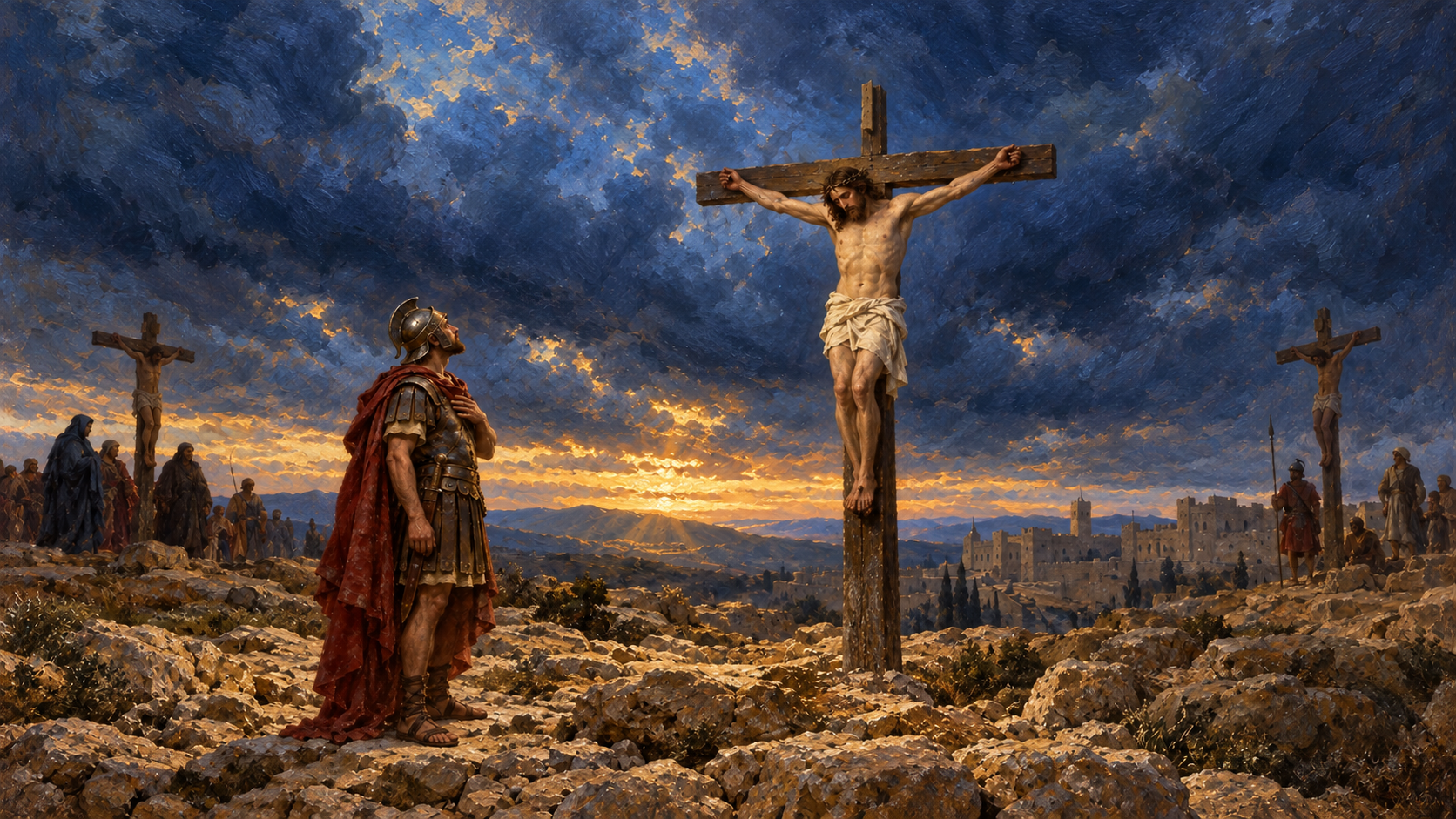
What did Jesus actually accomplish when He died on the cross? Did the Father turn against His Son, or did the Father, Son, and Holy Spirit act together to save us? The sacrifices God gave Israel help us begin answering that question, and the prophets and New Testament carry the promise forward. I want to understand the judgment Jesus bore without describing God as divided against Himself.
Our Sin Requires the Atonement God Provides
To understand atonement, we need to begin with God’s holiness and our sin. He created people to know and obey Him, reflecting His goodness in the way they lived. Yet every person has sinned against Him. That is rebellion against our Creator, not a small defect we can repair by trying harder. The wages of sin is death, and God judges evil with perfect righteousness.
God’s love does not make His holiness less serious. We would not call a judge good if he simply ignored evil, and Scripture presents God as both righteous and merciful. He acknowledges guilt for what it is while providing the way for guilty people to be forgiven. That helps me understand why we need to consider both His justice and His mercy when we look at the cross.
We cannot make atonement for ourselves, even by doing good after we repent. Those deeds do not erase earlier guilt, any more than religious activity can cleanse our conscience or suffering can purchase righteousness. We need someone sinless to stand in our place who can also defeat death. Jesus Christ alone meets that need.
God prepared Israel to understand this need through the sacrifices. In Leviticus 17:11, He says that He gave blood upon the altar to make atonement for souls because the life is in the blood. I notice that God Himself provided what He would accept. The sacrifices taught Israel that sin brings death and that forgiveness has a cost, while showing them the acceptable substitute He supplied.
Leviticus 16 describes the Day of Atonement, when an appointed priest approached God to seek cleansing for the people. The high priest first offered for his own sin and then for theirs. He carried blood within the veil and sprinkled it before the mercy seat. Israel could not approach the holy God casually or seek forgiveness on its own terms. The people needed the provision He had appointed.
The two goats helped Israel see both a death God accepted and guilt being carried away. The goat offered to the Lord died as a sin offering. Over the living goat, the high priest confessed Israel’s sins before it was sent into the wilderness. These pictures did not make sin imaginary. God truly dealt with it and removed it from those for whom atonement was made.
At Passover, a lamb without blemish died and its blood marked Israel’s homes. Judgment passed over the people sheltered under God’s provision. That helps us understand why Christ is our Passover sacrificed for us. He is the spotless Lamb whose death accomplished what those earlier sacrifices anticipated, so we cannot reduce His sacrifice to a vague picture of love.
Still, the animal offerings could never take away sin completely. The high priest needed a sacrifice for himself, and the Day of Atonement had to be repeated. Jesus has no sin, so He needs no offering for Himself. As both the true High Priest and the true sacrifice, He entered the heavenly holy place with His own blood, as Hebrews explains. The old ceremony pointed forward to the redemption the perfect Son completed. The study on the mercy seat follows this pattern in more detail.
Mercy at the mercy seat did not mean justice had disappeared. God dealt truthfully with guilt, and at the cross Jesus took the place of sinners under the judgment their sin deserved. The Father received His Son’s sacrifice. Because of that sacrifice, those who believe are cleansed and welcomed into God’s presence.
The sacrifices help me see that the cross was never an afterthought. From the beginning, God was teaching His people that guilt needed a real answer and that He would provide it. He did not change His standards when Christ came, nor did Jesus rescue us from a Father unwilling to forgive. The sacrifices were temporary shadows, but their mercy came from the same God who sent His Son.
The Sinless Servant Willingly Bore Our Punishment
Isaiah 53 says that the Servant bore our griefs and carried our sorrows. He was wounded for our transgressions and bruised for our iniquities, with the chastisement that brought us peace falling upon Him. The Lord laid on Him the iniquity of us all. When I read who suffered and whose sins He bore, I see substitution plainly. The righteous Servant was suffering for sinners, not merely beside them.
Isaiah also says it pleased the Lord to bruise the Servant and make His soul an offering for sin. I do not read that as cruelty in the Father or opposition between Him and the Son. It reveals the united purpose of the Triune God, the one God who is Father, Son, and Holy Spirit. The Father sent the Son, who willingly gave Himself, and the Spirit empowered that saving work. At Calvary, God displayed His justice within His love.
Isaiah describes a Servant who had done no violence and had no deceit in His mouth. His innocence is essential to what He accomplished, because a sinful man could die only under his own guilt. Jesus was completely sinless. As the eternal Son who took human flesh, He alone was qualified to bear the punishment belonging to others.
The New Testament continues to describe Jesus standing in the place of sinners. He gave His life as a ransom for many, and Peter says He bore our sins in His own body on the tree. Paul explains in Galatians 3:13 that Christ redeemed us from the curse of the law by becoming a curse for us. The law exposes sin and pronounces judgment, but Christ bore that curse so those under it could receive the blessing promised through faith.
Bearing that judgment did not make Christ sinful or end the Father’s love for Him. He remained the holy Son while standing where guilty people should have stood and accepting the judgment that belonged to us. I understand 2 Corinthians 5:21 in that sense when it says God made Him who knew no sin to be sin for us. The spotless Son truly bore our sin as God’s appointed substitute without becoming morally evil Himself.
The punishment Jesus bore was physical and real. After His betrayal and condemnation, men mocked and scourged Him before crucifying and killing Him. Their actions were wicked, and they remain responsible for them, even though the cross was also God’s saving plan. Jesus shed His blood and died. Peter connects that physical suffering with our sin when he says Christ bore our sins in His body on the tree.
Some presentations of penal substitution describe the Father as needing persuasion to love sinners, turning against His Son, or breaking the unity of God. Scripture gives us no permission to picture the cross that way. The Father loved the world and sent His Son, while the Son loved us and freely gave Himself. But I must not correct those distortions by removing substitution or judgment from the cross. Jesus truly bore the penalty our sins deserved within God’s united purpose to save.
The cross gives me no reason to think God is indifferent to evil. He judged sin so seriously that Christ bore its penalty. Neither can I see Him as unwilling to forgive, since His love moved Him to give His Son for sinners’ salvation. Our peace rests in that finished work, with guilt answered rather than ignored.
In Gethsemane, Jesus prayed that the cup might pass, yet He fully submitted to the Father’s will. Scripture uses the cup to picture suffering and, in several passages, divine judgment. That is why I would not reduce His agony to fear of human pain. He knew the torture and shame ahead of Him, but He was also preparing to bear the saving burden assigned to Him. His prayer lets us see the cost of His willing obedience.
Jesus’ anguish showed the courage of His obedience rather than making Him an unwilling victim. No one took His life against His will. He laid it down because He loved us, bearing what we could not bear. Through the innocent One’s sacrifice, sin received a true answer.
On the cross Jesus cried the opening words of Psalm 22: “My God, My God, why have You forsaken Me?” He was identifying Himself as the righteous sufferer foretold in David’s psalm. Psalm 22 describes brutal public rejection, but it ends with confidence that God has heard and that His righteousness will be proclaimed. I need to hear Christ’s real sorrow and sin-bearing anguish without imagining that the eternal Trinity was collapsing.
The Father and Son remained one in purpose and nature even as the Son truly entered the place of judgment our sins deserved. The Father never stopped loving Him, and the Son willingly bore sin’s penalty as part of God’s plan to save us. Justice and love were not fighting each other at the cross. God’s love was accomplishing a just redemption.
Hebrews says Christ offered Himself through the eternal Spirit, so we must include the Spirit when we consider the cross. The Father sent His Son as Savior, and the Son freely obeyed with the Spirit active in His offering. The whole Godhead acted in perfect unity while Jesus truly bore our penalty.
Christ’s Blood Answers Sin and Brings Us Near
Scripture repeatedly connects redemption and forgiveness with Christ’s blood. I cannot treat His blood as a poetic expression that avoids the reality of His death. He poured out His life in sacrificial death, and Hebrews says that without shedding of blood there is no remission. Jesus entered the heavenly holy place with His own blood, having obtained eternal redemption.
The eternal Son took human flesh and gave His life to rescue people under condemnation. He paid the required price Himself, rather than simply announcing pardon from a safe distance. That helps me appreciate both the seriousness of sin and the generosity of God. Forgiveness is free to us as believers, but giving it cost Him His life.
Because His sacrifice is perfect, Christ’s blood cleanses the conscience and gives believers access to God. We do not approach by our own merit or through sacrifices that must be repeated. We come through the crucified and risen High Priest who opened the way.
Romans begins by revealing God’s wrath against ungodliness and unrighteousness. His wrath is His holy opposition to evil, not an uncontrolled outburst, and Paul does not abandon that truth when he announces the gospel. In Romans 3, he explains that believers are justified freely by grace through the redemption found in Christ Jesus.
God set Christ forth as a propitiation by His blood, through faith, to demonstrate His righteousness. Propitiation means that His righteous judgment against sin is answered by the sacrifice He provides. God had passed over sins in His patience, but the cross publicly showed that He remained just while declaring the person who believes in Jesus righteous. Forgiveness rests on that righteous provision. God did not lower His standard to forgive us.
The Father gave His Son because He loved the world, and the Son gave Himself because He loved us. That rules out describing propitiation as a conflict between an angry Father and a loving Son. God was in Christ reconciling the world to Himself. I see the cross as His united work of reconciliation, not a rupture within God.
Those who believe are reconciled to God through the death of His Son, even though we were His enemies. God removes the barrier sin created and grants us peace with Him through the blood and righteousness of Jesus. That peace is our standing before God. We do not manufacture it by religious effort or make it real by producing a feeling.
Salvation gives us more than escape from a penalty. God brings former enemies near and receives them as His own. The blood that answers our guilt also opens the way into fellowship with Him. That gives me assurance even when my feelings are unsettled. Our peace depends on what Christ accomplished, not on how strongly we feel it on a particular day.
At the Last Supper, Jesus called the cup His blood of the new covenant, shed for many for the remission of sins. Jeremiah had promised that God would forgive iniquity and remember sin no more under that covenant. He would also write His law on the heart. Jesus deliberately connected His coming death with the fulfillment of that promise, establishing the new covenant in His blood.
Covenant forgiveness changes the person who receives it. God does not merely adjust a record and leave the sinner untouched. He gives believers new life and places His Spirit within them, writing His law on their hearts so they know Him and desire to obey. Their service grows from the life Christ supplies. They are not trying to earn salvation by keeping the law.
His One Sacrifice and Living Priesthood Are Enough
Hebrews contrasts the sacrifices that had to be repeated under the old covenant with Christ’s one sacrifice for sins forever. Animal blood pointed toward Him but could not perfect the conscience. Jesus entered the holy place once with His own blood and then sat down at God’s right hand. His redeeming sacrifice was complete.
Hebrews also says Christ offered Himself once to bear the sins of many. His sacrifice perfects forever those who are being sanctified, meaning those He has set apart and is making holy. His blood accomplished what no human effort or repeated ceremony could do, so there is no remaining offering for sin.
Christ’s completed sacrifice gives me reason to turn from despair and from trying to repeat what He has already done. No additional sacrifice can improve what He finished. Communion remembers and proclaims His body and blood without offering Him again. Baptism identifies a believer with Christ, but it does not create the atonement. Every saving blessing comes from His completed work and is received by faith. The complete study on Communion explains why the Lord’s Supper is a remembrance rather than a repeated sacrifice.
The resurrection belongs to this good news. Christ died for our sins according to the Scriptures, was buried, and rose again on the third day. Death could not hold Him. The Savior who paid for sin is alive forever, able to give life to His people. The study on the resurrection of Jesus follows the evidence and meaning of that bodily victory.
The risen Jesus now lives to intercede for us. Hebrews says He always lives to make intercession for those who come to God through Him. His ongoing work as High Priest rests on the sacrifice He has completed, applying the lasting benefits of His blood to His people. He is not dying repeatedly to keep those benefits available.
When an accusation against a believer is true, denial or self-improvement cannot answer it. Satan is called the accuser, and our own conscience testifies to guilt while the law exposes what we have done. I cannot remove that guilt by arguing it away. My answer is Jesus Christ, who died for sinners and rose again.
When believers confess sin, they come through the Advocate who is the propitiation for our sins. We are not returning to God in the hope that another sacrifice can be found. Christ’s blood is sufficient to cleanse us, and His righteousness is sufficient for our standing before God. We can have that assurance without taking pride in ourselves, because our confidence is in the Savior.
We can rest in Christ without becoming careless, because His sacrifice is complete and His intercession continues. No believer keeps himself saved by supplying a second payment for sin. We depend on the Savior who has already paid the price, and that assurance lets us walk in the new life He has given us while looking forward to His return.
Christ Died for the World and Saves Everyone Who Believes
Jesus is the propitiation for our sins, and not for ours only but also for the whole world. He gave Himself as a ransom for all. God truly desires people to be saved, and the gospel invitation is real for every hearer. Christ’s death is sufficient for all and genuinely offered to all.
People can resist and reject God’s grace. Christ died for all, but that does not mean everyone will be saved. Forgiveness is received through repentance toward God and faith in Jesus Christ. Those who refuse the Son remain under condemnation because they reject the only Savior God has provided.
When I share the gospel, I can honestly tell a person that Christ has made provision for him. I never need to suggest that perhaps Christ did not. Whoever believes in the Savior who died for sinners receives eternal life, so the invitation carries both honesty and urgency. The complete study on salvation traces how sin, repentance, faith, forgiveness, and new life fit together.
Trusting Christ means resting in His finished sacrifice rather than our own merit. The believer is justified by grace through faith and forgiven through His blood. God makes that person a new creation, with the Holy Spirit dwelling within and sealing every true believer. Our security depends on Christ’s work. Living in fear cannot keep us accepted before God.
The Savior who purchased us with His blood calls us to live for righteousness, so security gives us no permission for lawlessness. Peter connects Christ’s bearing of sin with our dying to sins so we may live for what is right. I owe Him obedience because I belong to Him and His grace has made me new.
Understanding what redemption cost should affect more than what I say in worship. Gratitude calls me to offer my life to the One who purchased me. Other believers were bought by the same blood, which gives us reason to love them. His provision truly extends to the lost as well, and knowing that should deepen our concern for their salvation.
The mercy we have received also shapes how we deal with people who wrong us. We do not excuse evil, and forgiveness never requires us to neglect justice. Yet we need to remember the great price paid for our own mercy. We can speak truthfully about wrongdoing and repent when we are guilty, making restitution where we can. Christ’s grace to us gives us reason to extend grace to others.
If you are still outside Christ, God has made a real provision for your sin through the cross. It is both an invitation and a warning, because that provision must be received. Do not delay repentance or rely on your own efforts. Come to the Savior who bore the punishment you deserved and rose to give eternal life.
My Final Thoughts
I cannot accept a picture of the cross that divides the Father from the Son, but neither can I set aside the truth that Jesus willingly bore our punishment. The sinless Son shed His blood in our place and rose bodily, and He now lives as our High Priest. The Triune God acted together to save us, answering the demands of justice without any reluctance to love. I have no sacrifice to add and no merit to claim. I can rest securely in Christ’s finished work while calling every person to receive the mercy He has truly provided.