
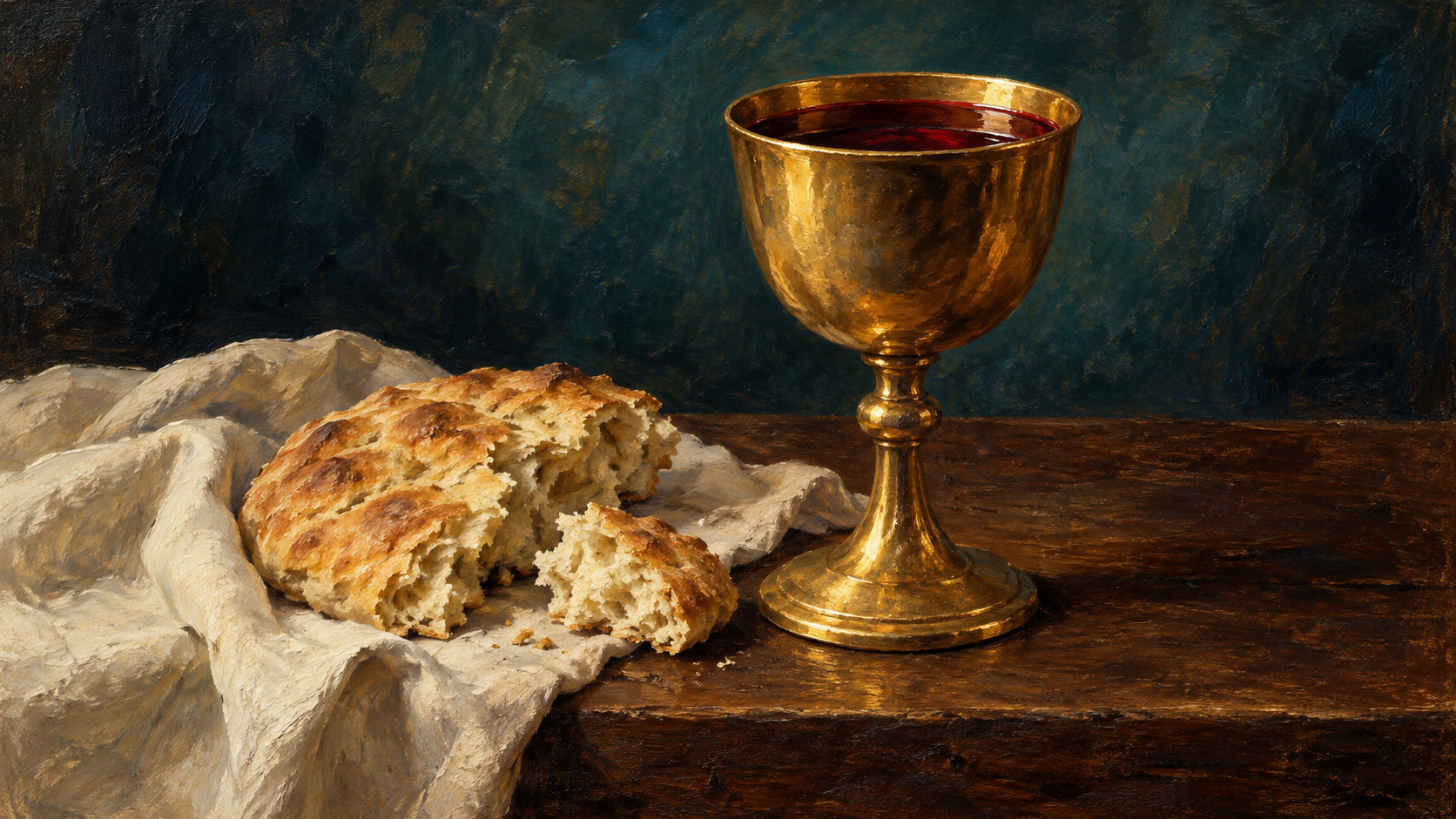
Why did God promise a new covenant when the covenant at Sinai came from Him? God’s Law was never the problem, but Israel broke that covenant. Their failure brings us to a need every sinner shares: outward commands cannot forgive us or make us new. Only God can do that through Jesus Christ.
God Promised a New Covenant
Jesus established the New Covenant in His blood to bring forgiveness and inward renewal. God gives His Spirit to produce a new kind of obedience, and He promises an eternal inheritance. We cannot reach Him by keeping enough laws. Through His Son’s death and resurrection, God has done for sinners what we could never do for ourselves.
The earlier covenants had already been moving God’s saving purpose toward Christ. Through the Noahic Covenant, God preserved the world where redemption would unfold. He then promised Abraham blessing for all nations through the promised Seed. At Sinai, the Mosaic Covenant revealed His holiness and exposed sin, while its sacrifices pointed beyond themselves. God later promised an eternal King in the Davidic Covenant. These promises come together in the New Covenant through the crucified and risen Messiah.
Jeremiah announced the New Covenant while Judah was rebelling and judgment was approaching. The people still had the written Law, and priests still offered sacrifices at the temple, yet they had turned from the LORD. Israel and Judah had broken the covenant made at Sinai, and Jerusalem would fall as a result. It was in that setting of rebellion and judgment that God promised something greater still to come.
“Behold, the days are coming, says the LORD, when I will make a new covenant with the house of Israel and with the house of Judah–
not according to the covenant that I made with their fathers in the day that I took them by the hand to lead them out of the land of Egypt, My covenant which they broke, though I was a husband to them, says the LORD.
But this is the covenant that I will make with the house of Israel after those days, says the LORD: I will put My law in their minds, and write it on their hearts; and I will be their God, and they shall be My people.
No more shall every man teach his neighbor, and every man his brother, saying, ‘Know the LORD,’ for they all shall know Me, from the least of them to the greatest of them, says the LORD. For I will forgive their iniquity, and their sin I will remember no more.”
God names the house of Israel and the house of Judah as the covenant partners, then contrasts this promise with the covenant made when He led their fathers out of Egypt. That identifies the broken covenant as the Mosaic Covenant. In the new one, God promises to write His law within His people and restore their fellowship with Him. They will know the LORD, and He will forgive them completely.
I keep coming back to the last sentence: “For I will forgive their iniquity, and their sin I will remember no more.” Israel had a long religious history, but that could not resolve their sin. Nor can religion laid over an unchanged heart resolve mine. We need God to forgive us and renew us from within, which is exactly the need His promise addresses.
Because the Mosaic Covenant came from God, it was holy, righteous, and good. The fault lay with human sin rather than with His Law. As the Law commanded righteousness and ordered Israel’s national life, it exposed the people’s transgressions and showed them their need for sacrifice.
Therefore by the deeds of the law no flesh will be justified in His sight, for by the law is the knowledge of sin.
For the law, having a shadow of the good things to come, and not the very image of the things, can never with these same sacrifices, which they offer continually year by year, make those who approach perfect.
The sacrifices had to be repeated because they were shadows pointing beyond themselves. They showed that sin deserves death, but animal blood could not accomplish eternal redemption. I understand Jeremiah’s promise as mercy that fulfills God’s earlier purpose, not a contradiction of what He had already said. God does not set holiness aside in the New Covenant. He provides true forgiveness through Christ’s blood and writes His truth upon the heart.
The repeated ceremonies taught Israel to recognize uncleanness and separation from a holy God. With every new offering, the people were reminded that the work was still unfinished. Although the Law could identify and condemn sin, it could neither justify sinful people nor give their hearts new life. The New Covenant meets that need without dishonoring the purpose of the old one.
The New Covenant Changes the Heart
Ezekiel helps us understand the inward change promised in Jeremiah 31. He describes God cleansing His people, giving them a new heart, and placing His Spirit within them. An outward command can tell us what is right, but the saving work these prophets describe reaches further: God gives life within.
Then I will sprinkle clean water on you, and you shall be clean; I will cleanse you from all your filthiness and from all your idols.
I will give you a new heart and put a new spirit within you; I will take the heart of stone out of your flesh and give you a heart of flesh.
I will put My Spirit within you and cause you to walk in My statutes, and you will keep My judgments and do them.
A heart of stone cannot give itself spiritual life. God gives His people a new heart and places His Spirit within them, changing how they live. That order helps me understand obedience properly. It is the fruit of God’s saving work, not a payment I offer to obtain forgiveness, and it remains an important part of the life He gives.
Paul makes a similar distinction between ink on tablets of stone and the Spirit’s writing on human hearts. He is explaining what the Spirit does within sinners, not insulting God’s Law. The letter by itself could never produce the inward life that the Spirit gives.
Clearly you are an epistle of Christ, ministered by us, written not with ink but by the Spirit of the living God, not on tablets of stone but on tablets of flesh, that is, of the heart.
The Hebrew words help us understand the promise accurately. The word for “covenant” is בְּרִית (berith), describing a serious bond God establishes with promises and obligations. Jeremiah calls this covenant “new,” using חָדָשׁ (chadash). It is new in relation to the Mosaic Covenant Israel broke, not simply a small repair to that old order. God Himself will provide the forgiveness and inward work His people need.
The Greek word diatheke, often used for covenant in the New Testament, can mean a covenant or a testament. Hebrews draws on that range of meaning to explain why death is involved. Christ’s death has secured the New Covenant, making it both binding and gracious.
Jesus Established the Covenant in His Blood
On the night before His crucifixion, Jesus took the cup and connected His approaching death with the New Covenant. His words reached back to the prophetic promise. He was declaring that His own blood would establish that covenant, rather than introducing an isolated religious phrase.
Likewise He also took the cup after supper, saying, “This cup is the new covenant in My blood, which is shed for you.”
For this is My blood of the new covenant, which is shed for many for the remission of sins.
Matthew explains that Christ’s blood was shed “for the remission of sins.” Forgiveness therefore rests on His real death, not on a vague spiritual feeling. The eternal Son had become fully man without ceasing to be fully God. He lived without sin and went willingly to the cross.
Wicked men tortured and scourged Jesus before they crucified and killed Him. In His innocent body, He physically bore the punishment for our sins as He shed His blood and died. He was buried and rose bodily from the dead. When I consider what makes this covenant secure, I have to look at His finished work. Its strength does not depend on how firmly a believer resolves to follow Him.
Covenant fellowship had already been connected with blood at Sinai. Moses sprinkled sacrificial blood and called it “the blood of the covenant” in Exodus 24:8. Fellowship with a holy God could not treat sin lightly. The New Covenant rests on better blood, and Jesus is not another animal sacrifice. He is the spotless Lamb, the Son of God who became man to give Himself for sinners.
Not with the blood of goats and calves, but with His own blood He entered the Most Holy Place once for all, having obtained eternal redemption.
Christ obtained eternal redemption through His once-for-all sacrifice, while animal sacrifices had to be offered again. He accomplished more than a temporary religious improvement. The Lord’s Supper does not repeat His offering, and no church ritual can complete it. Nor can our suffering add any merit to what He has done. His blood is sufficient because of who He is and the perfection of His offering.
The gospel is the good news of what God has done through His Son. Conceived by the Holy Spirit and born of the virgin Mary, Jesus fulfilled the Father’s will and offered Himself willingly. Wicked men betrayed and mocked Him, then beat and scourged Him before crucifying and killing Him. The punishment He bore for us involved real torture, the shedding of His blood, and His death.
The Father did not punish, curse, or abandon Jesus. He did not strike or bruise Him, nor did He pour wrath on Him. The Father and Son remained united in the work of redemption. Jesus was buried, and He rose bodily on the third day. Christ died for the whole world, and God’s offer of salvation is genuine. People may resist and reject Him, but everyone who repents and believes in Jesus Christ receives forgiveness and new birth. God gives that believer His indwelling Spirit and eternal security.
That if you confess with your mouth the Lord Jesus and believe in your heart that God has raised Him from the dead, you will be saved.
For with the heart one believes unto righteousness, and with the mouth confession is made unto salvation.
For “whoever calls on the name of the LORD shall be saved.”
Jesus Is the Mediator of the Better Covenant
Hebrews quotes Jeremiah 31 at length because the New Covenant stands at the center of Christ’s priestly work. Jesus is the Mediator of a better covenant, established on better promises. He is also the High Priest who entered the true holy place with His own blood.
But now He has obtained a more excellent ministry, inasmuch as He is also Mediator of a better covenant, which was established on better promises.
And for this reason He is the Mediator of the new covenant, by means of death, for the redemption of the transgressions under the first covenant, that those who are called may receive the promise of the eternal inheritance.
As our Mediator, Jesus stands between us and God. He can represent us perfectly because He is fully man, and His person and work have divine worth because He is God the Son. The offering He presents is His own completed sacrifice, not the blood of another.
I cannot read about that completed offering and treat forgiveness as a small thing. What God promised in Jeremiah required Christ’s death. We receive New Covenant grace freely because He paid the price in His blood, and He now lives forever as our Mediator.
Christ’s complete sacrifice secures the promised eternal inheritance for those who are called. We approach God through the living Son, whose blood has opened the way and whose priesthood never passes to another. We do not depend on a temporary priest or bring another offering to keep the covenant in force.
Gentile Believers Share the Blessing Without Replacing Israel
Jeremiah 31 names Israel and Judah explicitly, so I cannot treat those names as incidental. God gave this promise as part of the future hope of His reunified covenant people. If the church claims the covenant while denying those people any future place in it, we have set aside the very people God named.
The apostles also apply New Covenant blessings to believers in Christ now. His blood brings Gentile believers near, and through faith they are joined to Him and share in the richness of God’s saving promise. They do not have to become ethnic Israel to be saved or put themselves under the Mosaic Law to share in Israel’s Messiah.
And if some of the branches were broken off, and you, being a wild olive tree, were grafted in among them, and with them became a partaker of the root and fatness of the olive tree,
do not boast against the branches.
Romans 11 calls Gentile believers to gratitude because we stand by faith and mercy, with no reason to boast. Israel’s present hardening is only partial, and God remains able to graft the natural branches in again. I should find confidence in Christ here without claiming that the church has replaced Israel. The mercy we receive should deepen our reverence for God’s stated promises to them.
The church’s participation in New Covenant blessing is real and complete because believers belong to Christ, whose blood established it. That does not rewrite Jeremiah’s words or cancel God’s future work with Israel and Judah. I want to hold both truths together: Gentiles receive mercy in Israel’s Messiah, and Israel’s name remains in the promise.
God’s earlier covenants help us see that this was no late change in His plan. The world preserved through the Noahic Covenant was the setting for redemption, and Abraham’s promised Seed would bring blessing to all nations. The Mosaic Covenant showed God’s holiness and the need for blood, while David received the promise of a King whose throne would endure. Jesus fulfills these promises as the Seed and true sacrifice. He is also our Mediator, the Son of David who is now the risen King.
For all the promises of God in Him are Yes, and in Him Amen, to the glory of God through us.
Grace Produces Obedience and Future Hope
The cup at the Lord’s Table keeps Christ’s covenant blood before the church. Jesus commanded us to remember Him, and Paul says the bread and cup proclaim the Lord’s death until He comes. The Supper is a serious and joyful proclamation of the gospel.
In the same manner He also took the cup after supper, saying, “This cup is the new covenant in My blood. This do, as often as you drink it, in remembrance of Me.”
For as often as you eat this bread and drink this cup, you proclaim the Lord’s death till He comes.
When believers share communion, we obey Christ’s command to remember Him and proclaim what He has done. The bread and cup do not become another sacrifice for sin, nor does the meal save someone apart from repentance and faith. It directs our attention back to His once-for-all death and forward to His return.
I would distinguish the cup from the covenant signs God gave through circumcision to Abraham and through the Sabbath to Israel under Moses. The New Testament describes the Lord’s Supper as remembrance and proclamation. The cup announces the blood by which believers belong to Christ, so I would not assign it exactly the same role as those earlier signs.
Believers live under grace rather than under the Mosaic Covenant as Israel’s national law. Yet the grace that forgives us also renews and teaches us, so it cannot be permission to despise holiness. The covenant promises God’s truth written on the heart and His Spirit working within. That is how grace transforms the lives of those it forgives.
For sin shall not have dominion over you, for you are not under law but under grace.
Someone truly born again is forgiven, indwelt by the Spirit, and sealed in Christ. That believer is eternally secure because salvation rests on His blood and promise, not on fragile human performance. Security does not give permission for lawlessness, and a shallow profession alone cannot establish that someone has been born again. New Covenant life produces repentance and faith along with love and endurance. It also brings a growing desire to obey the Lord.
Christ’s finished work lets us rest without becoming careless. We come to God through the Savior whose blood opened the way, rather than fearfully trying to establish our own righteousness. Because He purchased us, I can confess my sin honestly and receive His correction. Belonging to Him gives us reason to pursue holiness.
Christ’s blood has already established the New Covenant, and everyone who repents and believes receives its saving blessing now. Scripture also directs us toward what is still to come. Israel and Judah will know the covenant promise in fullness when the nation turns to the Messiah. The church awaits Christ’s bodily return and the resurrection, looking forward to the kingdom that cannot be shaken.
Therefore, since we are receiving a kingdom which cannot be shaken, let us have grace, by which we may serve God acceptably with reverence and godly fear.
The words “till He comes” at the Lord’s Table remind me that this covenant concerns our future as well as what Christ has already done. The Savior who shed His blood rose bodily, and our living Mediator will return. We look forward to resurrection and to open fellowship with God in Christ’s kingdom.
Religious achievement gives us no basis for confidence in this covenant. Neither keeping the Law nor participating in a church ritual can save us, and a family name gives no advantage before God. Admiring grace is not the same as receiving Christ by faith, so admiration alone is not the response He calls for. Our salvation rests on Jesus, who shed His blood for sinners and rose from the dead. His complete sacrifice provides full forgiveness. We are called to trust our Mediator and walk by His Spirit as we proclaim His death until He comes.
For related studies, see A Complete Bible Study on the Mosaic Covenant, A Complete Bible Study on the Blood of Christ for Salvation, A Complete Bible Study on Communion, and A Complete Bible Study on Soteriology: The Study of Salvation.
My Final Thoughts
The New Covenant brings me back to the sufficiency of Christ’s blood. God’s Law was never the problem; our sinful hearts were. Jesus willingly gave Himself and shed His blood for us. Because He rose bodily, everyone who believes in Him can be forgiven and made new. His grace gives the believer security, but it also changes the heart and produces a desire to obey. I want to remember His finished work with gratitude and proclaim His death faithfully as I wait for the living Mediator to return.