
Why did Paul speak so sharply to churches that already believed in Jesus? Teachers were pressing them to add circumcision and the Mosaic Law to faith. That put the very basis of their acceptance with God at stake. I want to follow Paul’s answer in Galatians, because he explains both why Christ alone justifies us and how people He has set free learn to walk by the Holy Spirit.
The Gospel Crisis in Galatia
Paul wrote with the urgency of a pastor who saw people he loved moving away from the truth that had given them life. He left out his usual thanksgiving. After a brief greeting, he expressed astonishment that the Galatians were turning so quickly to a different gospel. These teachers were doing far more than disputing worship preferences or the schedule of church meetings. They were changing the basis on which a sinner is accepted by God.
Paul had preached Jesus Christ among these people, and they had believed what they heard. God gave them the Holy Spirit, and their confession had already cost them suffering. Other teachers then arrived and pressed these Gentile believers toward circumcision and calendar observance, insisting that they submit to the Mosaic Law. With its claimed connection to Jerusalem, the message may have sounded ancient and disciplined. But Paul saw what that demand did: it placed a religious work alongside Christ and drew free sons toward bondage.
Paul could confront that error without treating the Law as evil. God gave the Law to serve His purpose, but His promise to Abraham came first. The Law could neither cancel that promise nor give spiritual life. Its temporary covenant role pointed forward until the promised Seed came. Now that Christ has come, Gentiles receive Abraham’s blessing and the promised Spirit through faith. They do not first have to become Jews or enter the Sinai covenant to belong to God’s family.
Freedom from the Mosaic covenant does not give us permission to obey the flesh. The same apostle who condemned legalism called believers to serve one another through love and walk by the Spirit. He wanted them to restore a fallen person gently and help carry a burden too heavy for someone to bear alone. Supporting faithful teaching and continuing to do good when the harvest seems delayed belong to that life too. Grace provides the only basis for justification, and it creates a life that no religious checklist can produce.
Before opening the letter itself, Acts helps us see where these churches came from and what Paul had already taught them. In Pisidian Antioch, he announced the same justification by faith that Galatians would later defend.
Therefore let it be known to you, brethren, that through this Man is preached to you the forgiveness of sins; and by Him everyone who believes is justified from all things from which you could not be justified by the law of Moses. Beware therefore, lest what has been spoken in the prophets come upon you: 'Behold, you despisers, Marvel and perish! For I work a work in your days, A work which you will by no means believe, Though one were to declare it to you.'" So when the Jews went out of the synagogue, the Gentiles begged that these words might be preached to them the next Sabbath. Now when the congregation had broken up, many of the Jews and devout proselytes followed Paul and Barnabas, who, speaking to them, persuaded them to continue in the grace of God. On the next Sabbath almost the whole city came together to hear the word of God. But when the Jews saw the multitudes, they were filled with envy; and contradicting and blaspheming, they opposed the things spoken by Paul. Then Paul and Barnabas grew bold and said, "It was necessary that the word of God should be spoken to you first; but since you reject it, and judge yourselves unworthy of everlasting life, behold, we turn to the Gentiles. For so the Lord has commanded us: 'I have set you as a light to the Gentiles, That you should be for salvation to the ends of the earth.'" Now when the Gentiles heard this, they were glad and glorified the word of the Lord. And as many as had been appointed to eternal life believed. And the word of the Lord was being spread throughout all the region.
Paul identified himself as an apostle commissioned through Jesus Christ and God the Father. His own history helps explain why the churches should believe that claim. This former persecutor had not invented a convenient ministry or learned his gospel from human teachers. Nor had he sought Jerusalem’s approval before preaching. Jesus Christ revealed Himself and sent Paul to the Gentiles, and the other apostles later recognized the grace God had given him.
There are two main proposals about where the Galatian churches were located. In older geographical usage, Galatia could mean the ethnic region in north-central Asia Minor. The Romans also used the name for a province extending farther south, including Pisidian Antioch, Iconium, Lystra, and Derbe. Acts 13-14 records Paul and Barnabas preaching in those southern cities. They gathered believers from both Jews and Gentiles and established churches despite fierce opposition.
Then Jews from Antioch and Iconium came there; and having persuaded the multitudes, they stoned Paul and dragged him out of the city, supposing him to be dead. However, when the disciples gathered around him, he rose up and went into the city. And the next day he departed with Barnabas to Derbe. And when they had preached the gospel to that city and made many disciples, they returned to Lystra, Iconium, and Antioch, strengthening the souls of the disciples, exhorting them to continue in the faith, and saying, "We must through many tribulations enter the kingdom of God." So when they had appointed elders in every church, and prayed with fasting, they commended them to the Lord in whom they had believed. And after they had passed through Pisidia, they came to Pamphylia. Now when they had preached the word in Perga, they went down to Attalia. From there they sailed to Antioch, where they had been commended to the grace of God for the work which they had completed. Now when they had come and gathered the church together, they reported all that God had done with them, and that He had opened the door of faith to the Gentiles. So they stayed there a long time with the disciples.
I find the South Galatian reading most likely because it fits the people and events named in Acts. On that view, Paul may have written in the late AD 40s, before the Jerusalem council of Acts 15. Galatians would then be one of his earliest preserved letters. An early date also helps explain why he did not appeal to the council’s written decision, which would have answered the circumcision controversy directly.
A North Galatian audience and a date after Acts 15 remain possible. Interpreters also disagree about whether the Jerusalem visit in Galatians 2 was the famine visit recorded in Acts 11 or the council in Acts 15. A date before the council favors the famine visit, but I would not present that reconstruction as inspired fact. The doctrine of the letter does not depend on settling its date. Paul and the Jerusalem apostles proclaimed the same Christ and refused to make circumcision a condition of Gentile salvation.
Galatians gives us neither an official name for the opposing teachers nor a complete statement of their beliefs. We learn their position from Paul’s answers. They wanted Gentile believers circumcised and encouraged observance of days and months, seasons and years. Keeping the Law, they taught, would complete what faith had begun. They also appear to have undermined confidence in Paul by comparing him with Jerusalem’s recognized leaders.
Later in the letter Paul exposed what lay behind their appeal. They wanted an impressive outward result and a way to avoid persecution for the cross. They also wanted to boast in the Galatians’ circumcision. This went beyond private devotion to Jewish customs: they were imposing circumcision as a condition of covenant standing. Accepting it on that basis made a person responsible to keep the whole Law and displaced grace as the ground of righteousness.
I need to distinguish that demand from a person’s voluntary observance. A Jewish believer may keep lawful family customs, and any Christian may observe a day to the Lord as a matter of conscience. Paul himself accommodated Jewish practice when it helped the gospel mission. Yet he refused the same practice when false brethren made it a test of freedom and acceptance. We have to ask what doctrine someone attaches to the act.
The letter’s three main movements belong together. Chapters 1-2 defend Paul’s apostleship and gospel. Chapters 3-4 explain justification through promise rather than Law, along with the sonship and inheritance believers receive. Chapters 5-6 then show how free sons and daughters live by the Spirit. Paul’s personal history supports the doctrine he teaches, and that doctrine establishes a liberty we can see in love and holiness. The divisions help us follow his argument without separating its parts.
Those movements also answer the practical questions raised by the controversy. Jesus Christ authorized this gospel. God declares sinners righteous and makes them heirs through faith in Christ according to promise, apart from works of Law. People set free from Sinai therefore live by serving through love and walking in the Holy Spirit.
One Gospel and the Apostles Who Defended It
Paul, an apostle (not from men nor through man, but through Jesus Christ and God the Father who raised Him from the dead), and all the brethren who are with me, To the churches of Galatia: Grace to you and peace from God the Father and our Lord Jesus Christ, who gave Himself for our sins, that He might deliver us from this present evil age, according to the will of our God and Father, to whom be glory forever and ever. Amen. I marvel that you are turning away so soon from Him who called you in the grace of Christ, to a different gospel, which is not another; but there are some who trouble you and want to pervert the gospel of Christ. But even if we, or an angel from heaven, preach any other gospel to you than what we have preached to you, let him be accursed. As we have said before, so now I say again, if anyone preaches any other gospel to you than what you have received, let him be accursed. For do I now persuade men, or God? Or do I seek to please men? For if I still pleased men, I would not be a bondservant of Christ. But I make known to you, brethren, that the gospel which was preached by me is not according to man. For I neither received it from man, nor was I taught it, but it came through the revelation of Jesus Christ.
Before Paul named the controversy, his greeting already gave the answer to it. His apostleship came through Jesus Christ and the Father who raised Him from the dead. Grace and peace come from God, and Jesus gave Himself for our sins according to the Father’s will to deliver believers from this present evil age. Paul began with Christ’s self-giving and resurrection as the basis of our rescue, the very message his opponents threatened.
The Galatians were turning from the God who called them in grace toward what sounded like another gospel. But borrowing Christian language did not make that message good news. It corrupted the saving announcement. Changing who Jesus is or what He accomplished changes the gospel, and so does changing how sinners receive God’s gift. Requiring circumcision for justification denied the sufficiency of the gospel the Galatians had received.
Paul held himself and his coworkers to the same standard, extending it even to an angel from heaven. A teacher’s charisma or audience cannot establish authority, nor can a spiritual spectacle or the appearance of ancient wisdom. Any messenger who contradicts the apostolic gospel stands under God’s judgment. Paul repeated anathema, translated “accursed,” because the eternal condition of his hearers was at stake. His words were not an outburst of uncontrolled anger. God alone defines the message by which He saves.
The Greek words help us understand the force of that warning. Paul uses Heteros to stress a gospel different in kind, then denies that it is allos, another legitimate gospel of the same kind. His word Anathema speaks of being accursed under judgment. Read together in this warning, the terms describe a counterfeit, not a harmless variation on the same gospel.
For you have heard of my former conduct in Judaism, how I persecuted the church of God beyond measure and tried to destroy it. And I advanced in Judaism beyond many of my contemporaries in my own nation, being more exceedingly zealous for the traditions of my fathers. But when it pleased God, who separated me from my mother's womb and called me through His grace, to reveal His Son in me, that I might preach Him among the Gentiles, I did not immediately confer with flesh and blood, nor did I go up to Jerusalem to those who were apostles before me; but I went to Arabia, and returned again to Damascus. Then after three years I went up to Jerusalem to see Peter, and remained with him fifteen days. But I saw none of the other apostles except James, the Lord's brother. (Now concerning the things which I write to you, indeed, before God, I do not lie.) Afterward I went into the regions of Syria and Cilicia. And I was unknown by face to the churches of Judea which were in Christ. But they were hearing only, "He who formerly persecuted us now preaches the faith which he once tried to destroy." And they glorified God in me.
Paul had advanced in Judaism while persecuting the church with destructive zeal. Becoming a Christian cost him the standing he had gained, along with safety and former allies. I cannot explain his conversion as a way to improve his position among Christians. God set him apart and revealed His Son, calling him to preach among the Gentiles. That change from persecutor to witness was the work of grace.
Paul mentioned Arabia and his limited early contact with Jerusalem to establish where his message came from. He had not immediately submitted it to a human committee, but that independence was no expression of contempt for fellowship. After three years he visited Cephas, commonly called Peter, and saw James the Lord’s brother. The Judean churches knew him by report. Hearing that their former persecutor now preached the faith he had tried to destroy led them to glorify God.
Acts records events Galatians does not retell, while Galatians explains intervals and purposes that Acts does not emphasize. The two accounts select different details and complement one another. Paul also swore before God that he was telling the truth. His history needed to be stated plainly because the source of his apostleship was under attack.
Then after fourteen years I went up again to Jerusalem with Barnabas, and also took Titus with me. And I went up by revelation, and communicated to them that gospel which I preach among the Gentiles, but privately to those who were of reputation, lest by any means I might run, or had run, in vain. Yet not even Titus who was with me, being a Greek, was compelled to be circumcised. And this occurred because of false brethren secretly brought in (who came in by stealth to spy out our liberty which we have in Christ Jesus, that they might bring us into bondage), to whom we did not yield submission even for an hour, that the truth of the gospel might continue with you. But from those who seemed to be something–whatever they were, it makes no difference to me; God shows personal favoritism to no man–for those who seemed to be something added nothing to me. But on the contrary, when they saw that the gospel for the uncircumcised had been committed to me, as the gospel for the circumcised was to Peter (for He who worked effectively in Peter for the apostleship to the circumcised also worked effectively in me toward the Gentiles), and when James, Cephas, and John, who seemed to be pillars, perceived the grace that had been given to me, they gave me and Barnabas the right hand of fellowship, that we should go to the Gentiles and they to the circumcised. They desired only that we should remember the poor, the very thing which I also was eager to do.
When Paul returned to Jerusalem with Barnabas and Titus, the question had a direct bearing on someone traveling with him. Titus was Greek, yet the recognized leaders did not compel him to be circumcised. That gave the Galatians a concrete answer to their own question. False brethren had entered secretly to spy out the liberty believers had in Christ and bring them into bondage. Paul refused to yield because he wanted Gentile believers to keep receiving the truth of the gospel.
Paul explained his gospel privately to influential leaders, a wise setting when public confusion could have harmed the churches. Those leaders did not correct his message or add requirements to it. James, Cephas, and John recognized the grace given to him and extended fellowship to Paul and Barnabas. They would minister principally among different people, but they were preaching the same gospel.
Their request that Paul remember the poor fitted something he was already eager to do. I don’t want to miss that practical concern in a discussion about justification. The apostle who insisted that works cannot make us righteous also organized sacrificial relief and later commanded believers to do good to all. Gospel agreement never removes the need for mercy, because grace produces generous love.
Titus and Timothy help us see how Christian liberty works. Paul refused to circumcise Titus because the demand threatened gospel truth. Later, he circumcised Timothy, whose mother was Jewish, to remove an obstacle to ministry among Jewish hearers. Liberty allows us to refuse a demand or voluntarily surrender a preference. It never allows us to confess that a ritual completes Christ’s saving work.
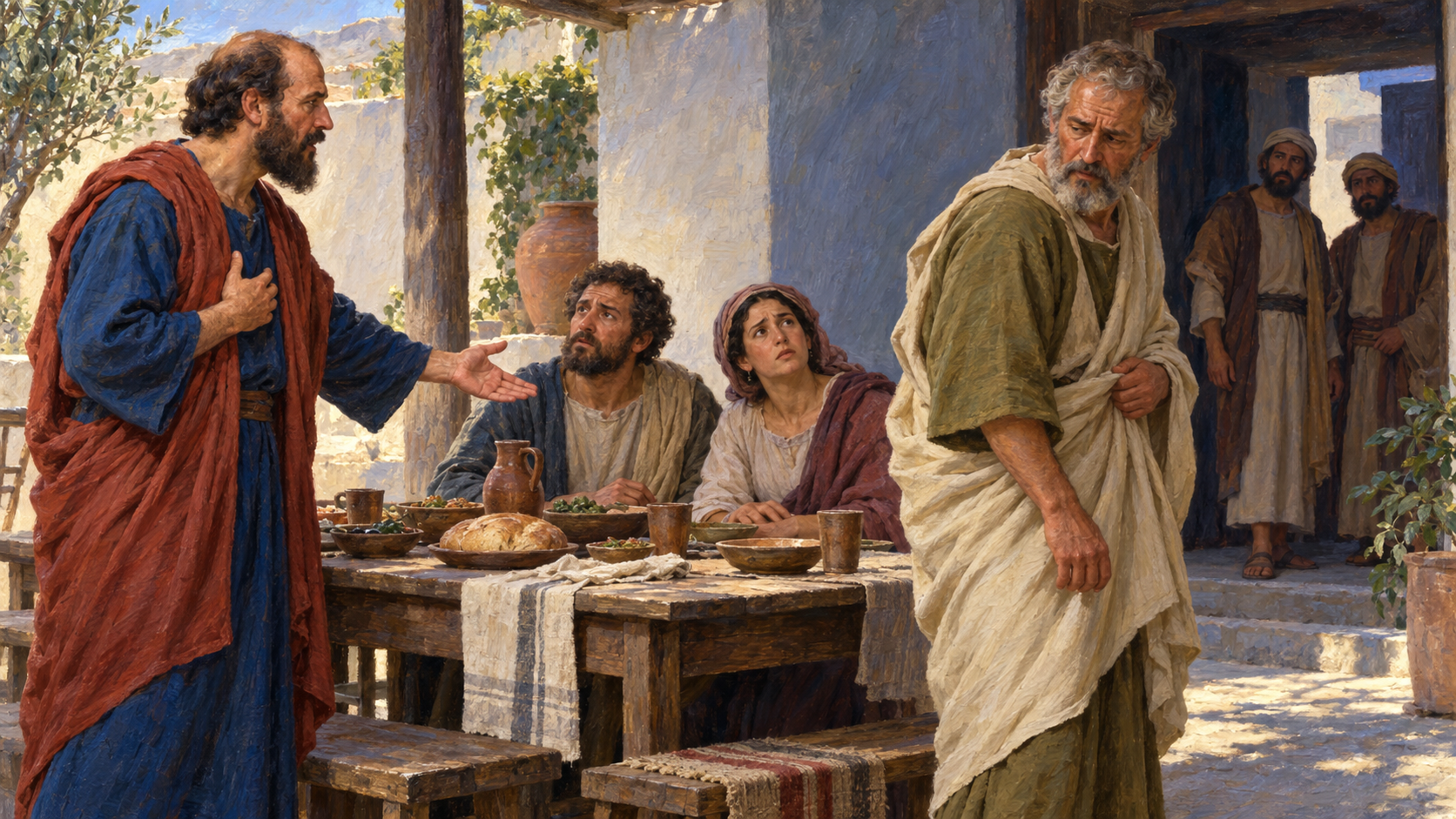
Now when Peter had come to Antioch, I withstood him to his face, because he was to be blamed; for before certain men came from James, he would eat with the Gentiles; but when they came, he withdrew and separated himself, fearing those who were of the circumcision. And the rest of the Jews also played the hypocrite with him, so that even Barnabas was carried away with their hypocrisy. But when I saw that they were not straightforward about the truth of the gospel, I said to Peter before them all, "If you, being a Jew, live in the manner of Gentiles and not as the Jews, why do you compel Gentiles to live as Jews? We who are Jews by nature, and not sinners of the Gentiles, knowing that a man is not justified by the works of the law but by faith in Jesus Christ, even we have believed in Christ Jesus, that we might be justified by faith in Christ and not by the works of the law; for by the works of the law no flesh shall be justified. "But if, while we seek to be justified by Christ, we ourselves also are found sinners, is Christ therefore a minister of sin? Certainly not! For if I build again those things which I destroyed, I make myself a transgressor. For I through the law died to the law that I might live to God. I have been crucified with Christ; it is no longer I who live, but Christ lives in me; and the life which I now live in the flesh I live by faith in the Son of God, who loved me and gave Himself for me. I do not set aside the grace of God; for if righteousness comes through the law, then Christ died in vain."
Peter had been eating with Gentile believers at Antioch. When men associated with James arrived, fear of the circumcision party led him to withdraw. Other Jewish believers followed his hypocrisy, and even Barnabas was carried away. We should notice that the passage does not say James ordered the separation. It describes how fear and social pressure can lead sound believers to act against what they know.
Paul confronted Peter before everyone because his public failure was spreading to others. By treating uncircumcised Gentiles as unfit for full fellowship at the table, Peter was effectively compelling them to live as Jews. The gospel declared them accepted in Christ, but his withdrawal told them they remained unclean or incomplete. I need to take that seriously: my conduct can contradict the doctrine I confess even if I never change a formal statement.
The public correction matched the public harm. It does not follow that every private failure should become an occasion for humiliation. Recognized leaders are accountable to Scripture, and protecting gospel fellowship may require clear correction. Paul did not deny Peter’s apostleship or treat him as an enemy. He called Peter back to the truth they both confessed rather than creating a rival gospel.
Three times in Galatians 2:16 Paul denies that a person is justified by works of the Law. Justification means being declared righteous. God is neither pretending that sin never happened nor rewarding someone’s religious progress. He receives the sinner who trusts Jesus Christ because of Christ, not because that person has accumulated enough covenant observance.
The received Greek text and NKJV speak of faith in Jesus Christ. Christ’s perfect faithfulness is true and glorious, but Paul’s sentence directs the sinner to trust Him. The quality of my faith does not earn justification. Faith receives the Savior and gives up every competing ground of confidence.
Paul’s question about rebuilding what he destroyed addresses the objection that leaving Law-righteousness makes Christ the minister of sin. It does not. The Law itself had exposed the failure of trying to establish righteousness through it. Paul died to that system as a basis of acceptance so that he could live to God.
Being crucified with Christ describes a decisive change in Paul’s identity and in who rules his life. It does not erase his personality or make him divine, and it does not promise sinless perfection. His former self under condemnation no longer determines his standing. Christ lives in him, and he now lives by faith in the Son of God who loved him and gave Himself for him. If Law could provide righteousness, Christ’s death would no longer be necessary to save.
Promise, Law, and Sons Through Faith
O foolish Galatians! Who has bewitched you that you should not obey the truth, before whose eyes Jesus Christ was clearly portrayed among you as crucified? This only I want to learn from you: Did you receive the Spirit by the works of the law, or by the hearing of faith? Are you so foolish? Having begun in the Spirit, are you now being made perfect by the flesh? Have you suffered so many things in vain–if indeed it was in vain? Therefore He who supplies the Spirit to you and works miracles among you, does He do it by the works of the law, or by the hearing of faith?– just as Abraham "believed God, and it was accounted to him for righteousness." Therefore know that only those who are of faith are sons of Abraham. And the Scripture, foreseeing that God would justify the Gentiles by faith, preached the gospel to Abraham beforehand, saying, "In you all the nations shall be blessed." So then those who are of faith are blessed with believing Abraham.
Paul brought the Galatians back to how their life in Christ began. He had clearly portrayed Christ crucified among them, and they received the Holy Spirit by hearing with faith, not by works of Law. Now their teachers wanted human effort to perfect what God had begun by His Spirit. I do not see maturity in that proposal. It reverses the gospel by changing the ground on which they depend.
Abraham’s history shows that righteousness through faith was never a late exception made for Gentiles. Genesis says he believed God and was counted righteous before Sinai, and even before he received circumcision. He was trusting the God who promised, not purchasing the promise with his faith.
After these things the word of the LORD came to Abram in a vision, saying, "Do not be afraid, Abram. I am your shield, your exceedingly great reward." But Abram said, "Lord GOD, what will You give me, seeing I go childless, and the heir of my house is Eliezer of Damascus?" Then Abram said, "Look, You have given me no offspring; indeed one born in my house is my heir!" And behold, the word of the LORD came to him, saying, "This one shall not be your heir, but one who will come from your own body shall be your heir." Then He brought him outside and said, "Look now toward heaven, and count the stars if you are able to number them." And He said to him, "So shall your descendants be." And he believed in the LORD, and He accounted it to him for righteousness.
Paul calls people of faith sons of Abraham because they share his pattern of believing God’s promise. Scripture had already announced that all nations would be blessed in Abraham. Gentile inclusion through Christ fulfills that worldwide part of the promise. It does not make Gentiles ethnic descendants of Jacob or cancel God’s land and national promises to Israel.
God had worked mightily among the Galatians and given them His Spirit. They received the Spirit when they heard and believed. Those works could not validate the legalism that came later. The timing helps me understand Paul’s argument: they needed to keep depending on the Spirit for growth, not transfer into the Mosaic covenant.
For as many as are of the works of the law are under the curse; for it is written, "Cursed is everyone who does not continue in all things which are written in the book of the law, to do them." But that no one is justified by the law in the sight of God is evident, for "the just shall live by faith." Yet the law is not of faith, but "the man who does them shall live by them." Christ has redeemed us from the curse of the law, having become a curse for us (for it is written, "Cursed is everyone who hangs on a tree"), that the blessing of Abraham might come upon the Gentiles in Christ Jesus, that we might receive the promise of the Spirit through faith. Brethren, I speak in the manner of men: Though it is only a man's covenant, yet if it is confirmed, no one annuls or adds to it. Now to Abraham and his Seed were the promises made. He does not say, "And to seeds," as of many, but as of one, "And to your Seed," who is Christ. And this I say, that the law, which was four hundred and thirty years later, cannot annul the covenant that was confirmed before by God in Christ, that it should make the promise of no effect. For if the inheritance is of the law, it is no longer of promise; but God gave it to Abraham by promise.
Paul is not calling God’s holy, just, and good Law a curse. He is describing the position of people who rely on its works for righteousness. They stand under the covenant’s curse because it requires continued obedience to everything written. Keeping selected commands cannot meet that demand. The Law identifies sin and declares the lawbreaker guilty, but it cannot give life.
Habakkuk’s declaration that the just shall live by faith confirms that human performance cannot establish righteousness before God. If I choose Law as my basis, I accept the obligation to keep it all. I cannot add a few visible signs of observance to Christ and ignore the rest of the covenant.
"If a man has committed a sin deserving of death, and he is put to death, and you hang him on a tree, his body shall not remain overnight on the tree, but you shall surely bury him that day, so that you do not defile the land which the LORD your God is giving you as an inheritance; for he who is hanged is accursed of God.
Deuteronomy commanded Israel not to leave an executed man’s body exposed overnight. Hanging on a tree publicly displayed that the condemned person had come under covenant judgment. Jesus was entirely innocent, yet wicked men treated Him as condemned. They physically tortured and punished Him, then killed Him. He willingly bore that real punishment for our sins in His innocent body. He shed His blood and died, was buried, and rose bodily. The Father did not punish or curse Jesus, nor did He abandon Him. He did not strike or bruise Him or pour wrath on Him.
Galatians connects Christ’s becoming a curse for us with His willing self-giving and the public shame and death inflicted on Him. It does not divide the Father from the Son or make the Father the agent of evil men’s violence. Through His blood and death, Christ redeemed people from the curse. In Him Abraham’s blessing could come to Gentiles, and believers could receive the promised Spirit through faith.
Paul then takes us back to the promise God made before the Law. Even an established human covenant is not casually canceled or supplemented. Since God’s promise preceded the Law by 430 years, Sinai could not undo inheritance by promise. Paul identifies the singular Seed as Christ. The Hebrew word for seed can also refer collectively to many descendants, as it often does in Genesis. Paul’s inspired argument identifies the representative descendant through whom the blessing reaches the nations.
What purpose then does the law serve? It was added because of transgressions, till the Seed should come to whom the promise was made; and it was appointed through angels by the hand of a mediator. Now a mediator does not mediate for one only, but God is one. Is the law then against the promises of God? Certainly not! For if there had been a law given which could have given life, truly righteousness would have been by the law. But the Scripture has confined all under sin, that the promise by faith in Jesus Christ might be given to those who believe. But before faith came, we were kept under guard by the law, kept for the faith which would afterward be revealed. Therefore the law was our tutor to bring us to Christ, that we might be justified by faith. But after faith has come, we are no longer under a tutor. For you are all sons of God through faith in Christ Jesus. For as many of you as were baptized into Christ have put on Christ. There is neither Jew nor Greek, there is neither slave nor free, there is neither male nor female; for you are all one in Christ Jesus. And if you are Christ's, then you are Abraham's seed, and heirs according to the promise.
If the Law could not give the promised inheritance, why did God give it? Paul answers that it was added because of transgressions until the Seed came. Within Israel’s covenant life it defined sin and restrained evil, while ordering the nation and guarding the historical line through which Messiah came. I would not call that temporary role a flaw in God’s plan. The word “until” tells us that God appointed it for a particular stage.
The Law does not oppose God’s promises. If a law could give life, righteousness could have come through it. But an external code cannot regenerate a sinner. Scripture confined everyone under sin so the promise could be given through faith in Jesus Christ. The Law exposes our guilt without being able to cure it.
Paul’s Greek word paidagogos describes a household guardian who supervised a child until maturity. Understanding that role helps us follow his point about the Mosaic Law’s temporary custody until Christ. He is not picturing a classroom teacher whose lessons carry on in the same form forever.
Believers are now sons of God through faith in Christ Jesus, so they no longer stand under that guardian. Being baptized into Christ and putting on Christ describes identification with Him. Water baptism follows salvation and publicly symbolizes union with His death and resurrection. It neither causes the new birth nor replaces faith.
In Christ, a Jew and a Greek receive equal standing and inheritance, as do a slave and a free person, a man and a woman. No one can claim spiritual superiority because of ethnicity, social rank, or sex. Yet that equality does not erase created sex or every role in church and home. Nor does it cancel Israel’s identity and promises. We can belong to the same Savior without pretending our histories never existed.
Now I say that the heir, as long as he is a child, does not differ at all from a slave, though he is master of all, but is under guardians and stewards until the time appointed by the father. Even so we, when we were children, were in bondage under the elements of the world. But when the fullness of the time had come, God sent forth His Son, born of a woman, born under the law, to redeem those who were under the law, that we might receive the adoption as sons. And because you are sons, God has sent forth the Spirit of His Son into your hearts, crying out, "Abba, Father!" Therefore you are no longer a slave but a son, and if a son, then an heir of God through Christ. But then, indeed, when you did not know God, you served those which by nature are not gods. But now after you have known God, or rather are known by God, how is it that you turn again to the weak and beggarly elements, to which you desire again to be in bondage? You observe days and months and seasons and years. I am afraid for you, lest I have labored for you in vain.
An heir may spend his childhood under guardians and stewards until the time his father has appointed. Paul uses that arrangement to describe the period before the heir receives his full place in the household. Then, in the fullness of time, God sent His Son, born of a woman and born under the Law. The eternal Son truly became human. He entered Israel’s covenant setting and obeyed without sin, redeeming those under the Law.
In Paul’s legal setting, adoption meant receiving status and an inheritance, with a secure place in the household. Believers receive that adoption as sons. His word “sons” emphasizes the inheritance position that belongs to women and men alike in Christ, so it does not diminish women. Every believer receives the Spirit of God’s Son, who cries, “Abba, Father,” testifying to a genuine family relationship.
The Galatians had once served false gods. They would repeat that old bondage under a biblical appearance if they now placed their confidence in compulsory religious observance. Paul speaks of weak and beggarly elements and of observing days and months, seasons and years. He is addressing calendar observance made into a covenant obligation. Voluntarily remembering a day is not the same as returning to an enslaving system after God has known them as sons.
Brethren, I urge you to become like me, for I became like you. You have not injured me at all. You know that because of physical infirmity I preached the gospel to you at the first. And my trial which was in my flesh you did not despise or reject, but you received me as an angel of God, even as Christ Jesus. What then was the blessing you enjoyed? For I bear you witness that, if possible, you would have plucked out your own eyes and given them to me. Have I therefore become your enemy because I tell you the truth? They zealously court you, but for no good; yes, they want to exclude you, that you may be zealous for them. But it is good to be zealous in a good thing always, and not only when I am present with you. My little children, for whom I labor in birth again until Christ is formed in you, I would like to be present with you now and to change my tone; for I have doubts about you.
Paul now reminded the Galatians of their personal relationship with him. They had received him during a physical illness that could have led them to despise him. Instead, they welcomed him generously and would have sacrificed greatly for him. We are not told what the illness was. Their willingness to pluck out their eyes may express deep devotion or may suggest an eye condition, but I would not claim a certain diagnosis of either the illness described here or Paul’s thorn.
The false teachers courted the Galatians to isolate them and gain their devotion. Paul wanted Christ to be formed in them, even when he was absent. That difference helps me hear the love in his severe words. His image of labor pains expresses pastoral anguish over their spiritual health, rather than a desire to control them. He wanted Christ to shape their character and confidence.
Tell me, you who desire to be under the law, do you not hear the law? For it is written that Abraham had two sons: the one by a bondwoman, the other by a freewoman. But he who was of the bondwoman was born according to the flesh, and he of the freewoman through promise, which things are symbolic. For these are the two covenants: the one from Mount Sinai which gives birth to bondage, which is Hagar– for this Hagar is Mount Sinai in Arabia, and corresponds to Jerusalem which now is, and is in bondage with her children– but the Jerusalem above is free, which is the mother of us all. For it is written: "Rejoice, O barren, You who do not bear! Break forth and shout, You who are not in labor! For the desolate has many more children Than she who has a husband." Now we, brethren, as Isaac was, are children of promise. But, as he who was born according to the flesh then persecuted him who was born according to the Spirit, even so it is now. Nevertheless what does the Scripture say? "Cast out the bondwoman and her son, for the son of the bondwoman shall not be heir with the son of the freewoman." So then, brethren, we are not children of the bondwoman but of the free.
Paul asked those who wanted to be under the Law whether they had listened to it. Abraham had two sons. Ishmael was born to Hagar through ordinary human planning, while Isaac was born to Sarah through God’s promise after human strength had failed. These were real women and sons who lived through grief and conflict, and Genesis records God’s care for them. Paul’s inspired symbolism rests on that history rather than replacing it.
Paul explicitly uses the women to symbolize two covenants. Hagar corresponds to Sinai and slavery in his argument, while Sarah corresponds to promise and freedom. That comparison reverses what the Galatians’ teachers were claiming. Submission to Law could not establish their place among Abraham’s children, because inheritance belongs to children of promise. Seeking status through the covenant of bondage would not give them that inheritance.
We must never turn Paul’s symbolism into contempt for Jewish or Arab people. Hagar was Egyptian, and God saw and cared for her. Ishmael received real promises too, although the covenant line continued through Isaac. Nor can I make “Jerusalem above” mean that the church has erased national Israel. Paul is contrasting the sources of slavery and freedom in this controversy. Romans 9-11 continues to affirm God’s faithfulness and future purpose for Israel.
The command “Cast out the bondwoman” applies the Genesis pattern to the legalistic demand confronting these churches. Righteousness through Law cannot share the basis of inheritance with promise. Paul is telling the churches to reject a doctrine that makes bondage a condition of belonging. He is not telling them to cast out ethnic groups or mistreat people caught in error.
Stand in Liberty and Walk by the Spirit
Stand fast therefore in the liberty by which Christ has made us free, and do not be entangled again with a yoke of bondage. Indeed I, Paul, say to you that if you become circumcised, Christ will profit you nothing. And I testify again to every man who becomes circumcised that he is a debtor to keep the whole law. You have become estranged from Christ, you who attempt to be justified by law; you have fallen from grace. For we through the Spirit eagerly wait for the hope of righteousness by faith. For in Christ Jesus neither circumcision nor uncircumcision avails anything, but faith working through love.
Christ had made the Galatians free, and Paul wanted them to stand in that freedom. Circumcision here was not being treated as a neutral medical act or family custom. They were accepting it as necessary for justification. On that basis, a person became responsible to keep the whole Law and placed his confidence where Christ would profit him nothing.
Those attempting to be justified by Law had become estranged from Christ and fallen from grace. They were abandoning grace as the basis of justification to seek righteousness through Law instead. Paul is not saying that a truly born-again person becomes unborn or that the Holy Spirit removes His seal. Nor does one failure cancel eternal life. The warning remains severe: abandoning Christ as the ground of righteousness exposes a false confidence that cannot save.
Believers wait through the Spirit for the hope of righteousness by faith. Neither circumcision nor uncircumcision supplies a spiritual advantage in Christ. Faith works through love, but that does not make loving deeds another basis for justification. The Spirit has given new life, so living faith rests in Christ and expresses itself in love.
You ran well. Who hindered you from obeying the truth? This persuasion does not come from Him who calls you. A little leaven leavens the whole lump. I have confidence in you, in the Lord, that you will have no other mind; but he who troubles you shall bear his judgment, whoever he is. And I, brethren, if I still preach circumcision, why do I still suffer persecution? Then the offense of the cross has ceased. I could wish that those who trouble you would even cut themselves off! For you, brethren, have been called to liberty; only do not use liberty as an opportunity for the flesh, but through love serve one another. For all the law is fulfilled in one word, even in this: "You shall love your neighbor as yourself." But if you bite and devour one another, beware lest you be consumed by one another!
The Galatians had been running well before someone hindered their obedience to the truth. Paul compares the effect of false teaching to a little leaven spreading through a whole lump. We cannot keep a corruption of the gospel safely confined to one corner of the church. Paul trusts the Lord to preserve His people while warning that the person troubling them will bear judgment.
Paul’s fierce wish that the circumcision agitators would cut themselves off exposes where their destructive obsession leads. This is a sharp prophetic rebuke, not contempt for Jewish bodies. Paul was circumcised himself and loved his fellow Israelites. His anger was directed at the teachers who were mutilating the gospel and unsettling the churches.
Christian liberty frees us to serve one another through love, not to make personal desire our ruler. Loving our neighbor fulfills the Law’s moral intent, whereas biting and devouring one another destroys fellowship. I can see the same reliance on the flesh in trying to earn acceptance through Law-keeping and in using freedom to excuse sin. The Spirit leads free people toward loving service instead.
I say then: Walk in the Spirit, and you shall not fulfill the lust of the flesh. For the flesh lusts against the Spirit, and the Spirit against the flesh; and these are contrary to one another, so that you do not do the things that you wish. But if you are led by the Spirit, you are not under the law. Now the works of the flesh are evident, which are: adultery, fornication, uncleanness, lewdness, idolatry, sorcery, hatred, contentions, jealousies, outbursts of wrath, selfish ambitions, dissensions, heresies, envy, murders, drunkenness, revelries, and the like; of which I tell you beforehand, just as I also told you in time past, that those who practice such things will not inherit the kingdom of God. But the fruit of the Spirit is love, joy, peace, longsuffering, kindness, goodness, faithfulness, gentleness, self-control. Against such there is no law. And those who are Christ's have crucified the flesh with its passions and desires. If we live in the Spirit, let us also walk in the Spirit. Let us not become conceited, provoking one another, envying one another.
The Holy Spirit is a divine Person who indwells every born-again believer and leads God’s children. He is not an impersonal religious force. To walk in the Spirit is to depend on His presence in our daily conduct and agree with the Word He inspired. That requires active trust, rather than passivity or a pursuit of uncontrolled impressions.
The flesh is fallen human desire set against God. Its opposition to the Spirit explains the real inward struggle believers experience. Paul does not promise freedom from every temptation, but neither does he treat surrender as normal. The Spirit gives power to refuse what the flesh wants, and believers are commanded to walk under His leadership.
Paul includes sexual sin in the works of the flesh, along with corrupt worship and occult practice. He also describes the hatred and uncontrolled anger that damage relationships. Rivalry produces factions, while envy and drunkenness show the same rule of fallen desire. I cannot condemn the more visible sexual or substance sins while making room for jealous division. Paul puts them in the same sobering list.
Paul warns that those who practice such things will not inherit God’s kingdom. He is describing a settled way of life, not saying that one fall causes a born-again person to lose salvation. Eternal security neither permits lawlessness nor proves that every superficial profession was genuine. Someone comfortably ruled by the flesh needs to hear this warning instead of dismissing it because of a past prayer or religious label. Honest repentance and faith in Christ are the right response.
The fruit of the Spirit is singular, presenting a unified character: love, joy, peace, longsuffering, kindness, goodness, faithfulness, gentleness, and self-control. These qualities are not natural temperament, the price of salvation, or spiritual gifts distributed in different measures for service. They are the Spirit’s moral fruit in people who belong to Christ. No one may excuse cruelty by pointing to zeal or excuse unfaithfulness by pointing to kindness.
Those who belong to Christ have crucified the flesh with its passions and desires. Temptation remains, but the flesh no longer has the right to rule. Since the Spirit gave us life, we should walk in step with Him. That includes refusing conceit and the urge to provoke or envy one another. Paul is showing how liberty affects the way Christians treat each other.
Restore, Carry Burdens, and Boast in the Cross
Brethren, if a man is overtaken in any trespass, you who are spiritual restore such a one in a spirit of gentleness, considering yourself lest you also be tempted. Bear one another's burdens, and so fulfill the law of Christ. For if anyone thinks himself to be something, when he is nothing, he deceives himself. But let each one examine his own work, and then he will have rejoicing in himself alone, and not in another. For each one shall bear his own load. Let him who is taught the word share in all good things with him who teaches. Do not be deceived, God is not mocked; for whatever a man sows, that he will also reap. For he who sows to his flesh will of the flesh reap corruption, but he who sows to the Spirit will of the Spirit reap everlasting life. And let us not grow weary while doing good, for in due season we shall reap if we do not lose heart. Therefore, as we have opportunity, let us do good to all, especially to those who are of the household of faith.
When someone is overtaken in a trespass, he needs to be restored. His sin is neither entertainment for others nor something to dismiss carelessly. Spiritual believers should help set him right in a spirit of gentleness while watching themselves. If I am helping to restore someone, remembering my own vulnerability to temptation should keep pride out of the correction. Gentleness does not require me to deny his sin.
Paul tells believers to bear one another’s burdens, then says a few sentences later that each person must bear his own load. The statements fit together. We help someone carry a weight too heavy to bear alone without taking away the responsibility that belongs to that person. Christian fellowship should neither abandon someone who is crushed nor teach an irresponsible person to pass every duty to others. In bearing one another’s burdens, we fulfill the law of Christ.
The Greek words clarify that difference. Baros describes a heavy burden calling for shared strength, while Phortion describes a load or assigned responsibility each person must carry. Understanding both helps us see why compassionate help and honest personal accountability belong together in a community formed by grace.
Those taught the Word should provide material support for faithful teachers. Paul gives that command after rejecting legalism throughout the letter, so grace plainly does not remove practical responsibility. Churches should support sound ministry without making celebrities of teachers or using wealth to measure whether their teaching is true.
Sowing and reaping describes the moral direction of our lives and its consequences before God. Paul is not teaching karma or a prosperity formula, and charitable works cannot purchase salvation. Sowing to the flesh strengthens corruption. We sow to the Spirit by directing our attention toward what agrees with His life and allowing that truth to govern our choices. Our time and resources follow that direction too. The harvest may take time, which is why Paul encourages weary believers not to lose heart.
We are to do good to all people, with a special responsibility toward fellow believers as members of the same household. Care for the church does not compete with love for our neighbors. Paul recognizes the order of those relationships while extending our concern broadly. Whenever God gives an opportunity, those who have received grace should act for another person’s good.
See with what large letters I have written to you with my own hand! As many as desire to make a good showing in the flesh, these would compel you to be circumcised, only that they may not suffer persecution for the cross of Christ. For not even those who are circumcised keep the law, but they desire to have you circumcised that they may boast in your flesh. But God forbid that I should boast except in the cross of our Lord Jesus Christ, by whom the world has been crucified to me, and I to the world. For in Christ Jesus neither circumcision nor uncircumcision avails anything, but a new creation. And as many as walk according to this rule, peace and mercy be upon them, and upon the Israel of God. From now on let no one trouble me, for I bear in my body the marks of the Lord Jesus. Brethren, the grace of our Lord Jesus Christ be with your spirit. Amen.
Paul closes by writing in large letters with his own hand. Perhaps he wanted to emphasize the words, or perhaps the size reflected the effort of writing or his physical weakness. We cannot establish an eye disease from that detail. What we do know is that he personally authenticated the letter and pressed its final warning.
The circumcision teachers wanted an impressive outward result without suffering persecution for Christ’s cross. Although they did not keep the whole Law themselves, they wanted to boast in the Galatians’ altered flesh. Paul would boast only in the cross of Jesus Christ. Through Christ, the world’s demands for status and approval no longer ruled him.
A new-covenant person’s defining reality is God’s new creation, not circumcision or its absence. God gives the life that religious surgery cannot produce. That does not make bodily obedience irrelevant, since Paul has just commanded conduct led by the Spirit. It tells us where obedience belongs: God changes a person, and obedience follows His work.
Interpreters disagree about “the Israel of God.” Some read it as another name for the whole church. Others understand Paul to bless Jewish believers alongside Gentile believers who follow the new-creation rule. I find the second reading strongest because it preserves “and upon” and fits Paul’s continuing use of Israel for Jacob’s physical descendants. Whichever reading someone takes, the phrase cannot erase ethnic Israel or overturn the sustained teaching of Romans 9-11.
For I do not desire, brethren, that you should be ignorant of this mystery, lest you should be wise in your own opinion, that blindness in part has happened to Israel until the fullness of the Gentiles has come in. And so all Israel will be saved, as it is written: "The Deliverer will come out of Zion, And He will turn away ungodliness from Jacob; For this is My covenant with them, When I take away their sins." Concerning the gospel they are enemies for your sake, but concerning the election they are beloved for the sake of the fathers. For the gifts and the calling of God are irrevocable.
Paul describes Israel’s hardening as partial and temporary. Deliverance will come, and God’s gifts and calling remain irrevocable. Sharing in Abraham’s blessing gives Gentiles no grounds to boast or claim that the church is now the ethnic Israel God rejected. The believing Jewish remnant is truly Israel and truly in Christ. National Israel’s future also rests on God’s faithfulness.
I understand Paul’s marks of the Lord Jesus as the scars of persecution he endured in Christ’s service, including beatings and stoning. They were not mystical reproductions of Jesus’ wounds. While the teachers displayed circumcision as a mark of status, Paul’s wounded body showed what it had cost him to refuse to soften the cross.
Paul ends where his argument began, with grace: “The grace of our Lord Jesus Christ be with your spirit.” Grace supplies justification and the freedom in which Christians live. It also strengthens obedience led by the Spirit. I cannot read this letter and conclude that we begin by grace but eventually graduate to relying on ourselves.
The Complete Gospel and the Way Galatians Examines Us
Jesus is the eternal Son, fully God and fully man. He was born of a virgin and lived without sin, then gave Himself for our sins according to the Father’s will. Wicked men physically tortured and punished Him, then killed Him. He willingly bore that real punishment for our sins in His innocent body. His blood was shed, and He died and was buried before rising bodily. The Father did not punish or curse Jesus, nor abandon Him. He did not strike or bruise Him or pour wrath on Him.
Christ died for the whole world, and God genuinely offers salvation even though people can resist and reject Him. Everyone who repents and believes in Jesus is forgiven and justified, born again as a new creation. The Holy Spirit indwells and seals them, and they are eternally secure. Circumcision cannot purchase or complete that gift. Neither can baptism or communion, church membership or calendar observance. Moral improvement and family heritage cannot do it either.
Water baptism should follow salvation and publicly identifies the believer with Christ. It does not cause salvation, just as communion does not repeat Christ’s sacrifice. In communion we remember and proclaim His body and blood. Good works belong to the new life as its fitting fruit, never as a second price added after faith.
Eternal security does not empty Paul’s language about apostasy or his moral warnings of their force. God keeps the true believer, who should stand firmly in grace. But a superficial profession cannot assure someone who rejects the biblical Christ or trusts religious works for righteousness. Neither can it assure someone settled into the unrepentant rule of the flesh. Galatians brings our confidence back to Christ and directs our whole life toward the Spirit.
I would begin by reading the entire letter in one sitting to hear Paul’s argument as a whole. Notice his repeated appeal to the gospel and faith, and how he connects promise with Law. His contrast between flesh and Spirit carries the argument toward the cross and Christian liberty. On a second reading, follow the three broad movements. Chapters 1-2 establish who authorized the message, chapters 3-4 explain how people become heirs, and chapters 5-6 show how those heirs live.
On a third reading, pay attention to the relationships. Paul refused to seek people’s approval while still pursuing unity with the apostles. His confrontation with Peter did not stop him from treating Peter as a fellow apostle. Even while rebuking the Galatians, he called them brethren and labored for Christ to be formed in them. He defended personal responsibility while also commanding believers to bear one another’s burdens. We can see courage and gentleness belonging together in the community gospel truth creates.
Paul’s questions help us examine teaching today. Is a teacher making ritual or heritage necessary to complete faith in Christ? An experience or a level of performance can be made into the same false requirement. We should also ask whether he uses grace to excuse the flesh or isolates people from sound churches to gain their loyalty. What does he boast in: outward numbers and visible marks, or Christ’s cross and new creation?
The letter also asks something of me. I must refuse any private attempt to make God owe me acceptance and bring sin into the light instead of calling bondage liberty. Freedom in Christ leads me to serve others through love, including helping carry a crushing weight while respecting their responsibility. It also calls me to support sound instruction and keep doing good when the harvest seems delayed. None of that earns grace. It is how people who have received grace learn to walk.
For more detail on the people and doctrines Galatians brings together, continue with A Complete Bible Study on the Apostle Paul, A Bible Study on God Keeping His Promise to Abraham, and A Complete Bible Study on the Law. The practical side of Paul’s argument is developed in A Complete Bible Study on the Freedom Found in Christ and A Complete Bible Study on the Fruit of the Spirit. The same covenant controversy is examined in A Biblical Examination of the Hebrew Roots Movement.
Scripture controls every conclusion in this study. For the historical destination and date question, Greg Herrick discusses The Date and Destination of Galatians. Ole Jakob Filtvedt surveys the major readings of God’s Israel in Galatians 6:16. These sources describe historical and grammatical debates; they do not determine Unforsaken theology.
My Final Thoughts
Galatians helps me see why Paul holds grace together with the life it creates. Jesus Christ alone is the ground of justification. No ritual or inherited status can complete His work, and neither can moral achievement. The Law fulfilled its appointed role, but it cannot place Gentile believers under Sinai or give the life only God supplies. Christ’s freedom does not permit us to serve the flesh. The Holy Spirit leads us into love, where we gently restore those who fall and help carry heavy burdens. We can continue doing good without making obedience the price of acceptance. As we wait for God’s harvest, we keep walking by the Spirit and boasting in the cross because we never outgrow grace.