
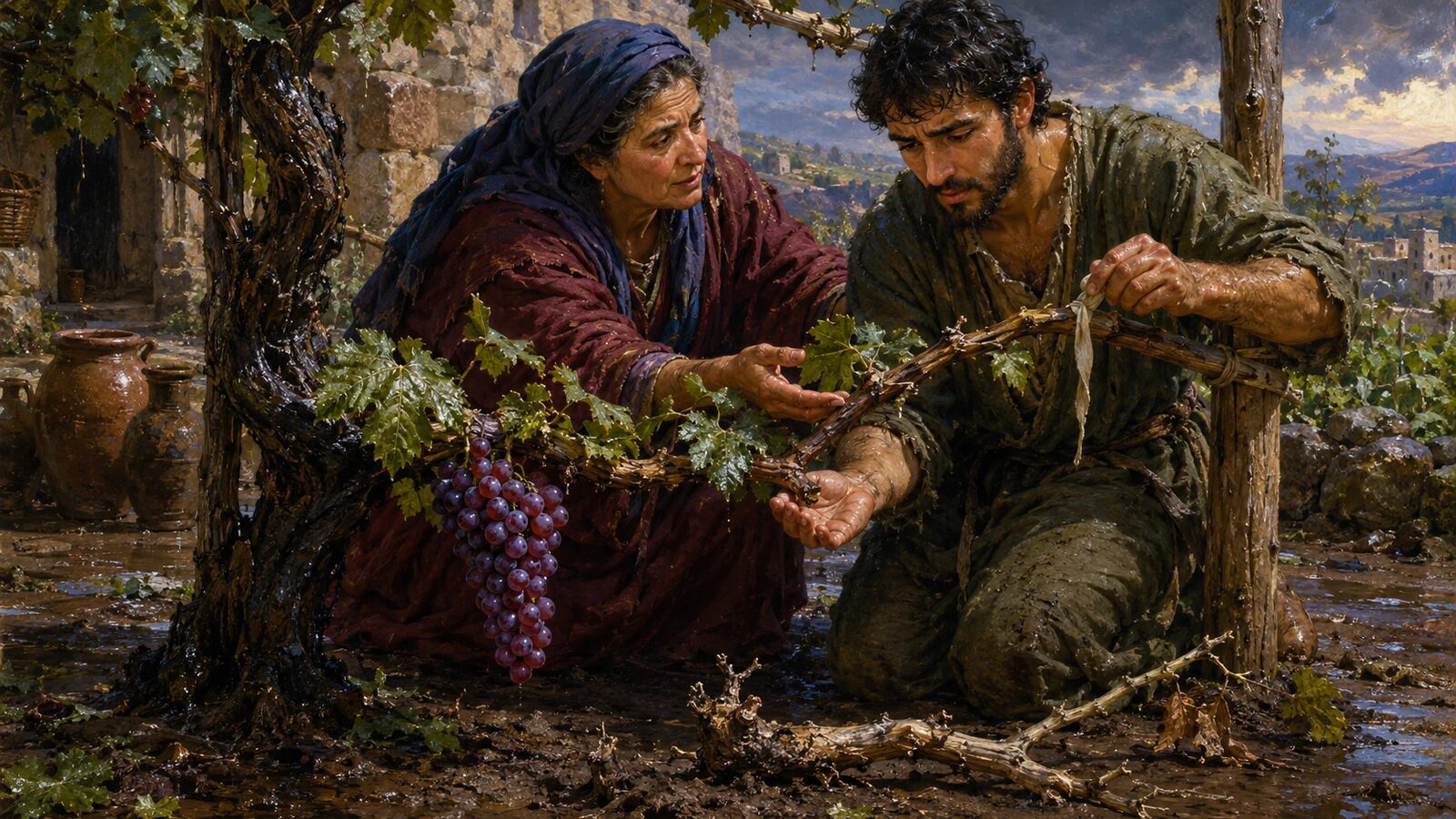
We can become so familiar with the fruit of the Spirit that we recite the list without asking what Paul is actually saying. Is he giving Christians nine traits to manufacture, or describing what the Holy Spirit produces in someone who belongs to Christ? I want to read Galatians 5 with that question in mind and follow Paul’s contrast between the flesh and the Spirit.
Grace, the Flesh, and the Setting of Galatians 5
Paul wrote to churches in the Roman province of Galatia, in what is now part of Turkey. These Gentiles had believed in Christ, but other teachers insisted that they still needed circumcision and observance of the Mosaic Law to belong fully to God’s people. Paul recognized that more than religious custom was at stake. Requiring the Law to complete what Christ began would mean that grace was no longer grace.
Paul therefore defended justification by faith in Christ apart from works of the Law. Justification means being declared righteous before God, rather than gradually earning that standing by becoming good enough.
knowing that a man is not justified by the works of the law but by faith in Jesus Christ, even we have believed in Christ Jesus, that we might be justified by faith in Christ and not by the works of the law; for by the works of the law no flesh shall be justified.
I need to keep that foundation in mind when I reach the fruit of the Spirit. If I make love or joy the price of God’s acceptance, I have reversed Paul’s argument. The same is true of peace and self-control. None of these qualities can impress God into saving a sinner.
Jesus Christ alone saves us. On the cross He physically bore the punishment for our sins in His innocent body, enduring real torture and shedding His blood. He truly died. The Father did not punish, curse, or abandon Him. Nor did the Father strike or bruise Him or pour wrath on Him. Christ gave Himself willingly for the whole world and then rose bodily from the grave. God genuinely offers salvation to all, although people can resist and reject Him. Those who repent and believe in Jesus receive forgiveness and are born again as new creations. The Holy Spirit comes to live within them and seals them for the day of redemption.
Paul also explains how a believer can live rightly without relying on works for salvation. The life that begins by faith continues through the Holy Spirit, not through confidence in the flesh. That gives us both power to obey and moral direction. Grace does not make sin harmless, so in Galatians 5 Paul warned believers against using their liberty as an opening for the flesh. He then set these opposing ways of life before them.
I say then: Walk in the Spirit, and you shall not fulfill the lust of the flesh.
Paul’s command acknowledges that the believer still faces a conflict. By flesh, he means fallen human nature acting in rebellion against God, not an inherently evil physical body. Those desires can use both mind and body for sinful ends, and trusting Christ does not make them harmless. Yet we are no longer helpless before them because the Holy Spirit lives within the child of God. Walking in the Spirit means depending on His leading day by day and responding when He convicts us through the Word He inspired.
Paul names the works of the flesh with painful clarity:
Now the works of the flesh are evident, which are: adultery, fornication, uncleanness, lewdness, idolatry, sorcery, hatred, contentions, jealousies, outbursts of wrath, selfish ambitions, dissensions, heresies, envy, murders, drunkenness, revelries, and the like; of which I tell you beforehand, just as I also told you in time past, that those who practice such things will not inherit the kingdom of God.
Paul’s list includes sexual sin and false worship, including the occult practices of sorcery, but it also exposes sins that destroy relationships. The word translated heresies refers here to destructive factions or sectarian divisions. Drunkenness and revelries show how appetites and group celebrations can become cruel masters. Although these sins look different, they come from the same rebellion against God. A life settled under their rule does not agree with inheritance in His kingdom.
Paul’s phrase “those who practice such things” describes an established pattern, not an isolated failure followed by grief and repentance. I should not tell a true believer that he loses salvation every time he stumbles, even when the fall is serious. Scripture calls him to confess his sin and return to the light. But neither should I reassure someone who claims Christ while comfortably defending a life ruled by the flesh. Falling into sin and choosing to make peace with it are different, and a superficial profession does not prove that someone has been born again.
One Fruit Formed by the Holy Spirit
Once Paul has shown what the flesh produces, he turns to the Spirit’s harvest:
But the fruit of the Spirit is love, joy, peace, longsuffering, kindness, goodness, faithfulness, gentleness, self-control. Against such there is no law.
Paul’s words “of the Spirit” tell me where to look for the source of this fruit. A disciplined temperament or pleasant personality cannot produce it, and neither can a healthy church culture. Fear and law-keeping are no substitute for the Holy Spirit’s work. He is a divine Person who gives life and lives within believers, not a mood or an impersonal power. He seals them for the day of redemption while continuing to convict them of sin and form Christ’s character in them. A fuller study of who He is can be found in A Complete Bible Study on the Person of the Holy Spirit.
The Greek phrase karpos tou pneumatos means “fruit of the Spirit.” Depending on context, karpos can describe fruit, a harvest, or a result. Paul uses the singular fruit rather than fruits. That helps us understand his description of one harvest with several related qualities, though I would not build a hidden doctrine on the grammar alone. His larger point is that the Spirit produces these qualities together, not as separate badges we choose according to preference.
Love and self-control are distinct, just as joy differs from longsuffering, but all nine qualities belong to the new direction the Spirit forms under Christ. They may develop unevenly. A new believer can show sincere love while still learning patience, and a mature Christian may need to repent of a harsh tone. That uneven growth does not mean the Spirit intends part of our character to belong to Christ while we reserve another part for the flesh.
If I am dependable, that does not give me a reason to refuse gentleness. Being peaceful because I avoid conflict cannot take the place of loving someone when it costs me something, and joy cannot excuse a lack of self-control. Paul is describing more than my personal strengths. These qualities belong together as the family likeness God produces in those who belong to Jesus.
We see these qualities in ordinary life: in the way a Christian treats a spouse or raises children, and in relationships at church and work. Our response to temptation reveals whether self-control is growing, while our speech shows whether kindness and gentleness are present. The Spirit’s fruit also changes how we forgive and gives us endurance under pressure that a pleasant temperament could never sustain by itself.
Love appears first, and Paul means more than warmth or sentimental approval. Love seeks another person’s true good through practical service, whether that means helping carry a burden or forgiving. It speaks honestly without making room for envy and takes no delight in evil. That is why I read 1 Corinthians 13 alongside Galatians 5. Someone can appear spiritually gifted and yet be empty when love is absent.
Joy is a settled gladness in the Lord. It does not require a naturally cheerful personality, and it does not disappear whenever life becomes painful. Christians can grieve deeply while retaining joy because its roots are in God rather than present comfort. Joy looks back to Christ’s resurrection and rests in the promises of God. Because those promises are sure, it can also look ahead with certain hope to the Lord’s return.
Peace begins with being reconciled to God through Jesus Christ. From that settled relationship, the Spirit grows peace in our hearts and teaches us to pursue it with one another. I don’t have to deny fear or pretend a conflict is absent. I can bring those concerns before God instead of surrendering my inner life to anxiety.
Longsuffering is patient endurance, especially with other people. It means being slow to anger and refusing to rush into repaying a wound. We can still confront sin and give necessary correction while learning not to live in constant irritation. As the Spirit teaches us patience, revenge loses its appeal and we stop demanding that everyone mature on our preferred schedule.
Kindness takes the form of gentle, practical help, and it affects how we speak the truth as well as what we say. I cannot excuse harshness simply by claiming to love truth. The Spirit teaches us to do good tenderly and to approach others with humility, especially when someone is weak.
Goodness means acting with moral uprightness, loving what God calls good and refusing what He calls evil. Being agreeable is not enough. Sometimes doing good requires confronting sin or protecting someone in danger, even if that means giving a warning or a firm no. Loyalty to God should move us to act, rather than cruelty toward people.
Faithfulness grows out of trust in God and makes a person steady and reliable. His honesty and loyalty become visible when he keeps his word, so others learn they can count on him. The Spirit forms truthfulness that holds up over time, along with the perseverance to remain faithful.
Gentleness is strength under control, not weakness. Jesus is gentle and lowly in heart, yet He is never cowardly. The Spirit teaches believers to correct people without crushing them. A gentle leader does not need to bully, and a gentle speaker tells the truth without taking pleasure in the pain it may cause.
Through self-control, the Spirit enables us to govern desires and impulses instead of obeying them. I do not have to surrender to anger or every appetite, and I can turn away from a fantasy rather than feed it. Fear need not command me, nor must I speak simply because I feel the urge. This ability does not save me. It shows that the flesh is no longer my rightful master.
Paul concludes, “Against such there is no law.” These qualities fulfill the moral direction of God’s Law rather than producing the rebellion it condemns. He is not saying that love earns justification, but showing why the Law does not condemn a life led by the Spirit.
Why Fruit and Spiritual Gifts Must Be Distinguished
Both fruit and spiritual gifts come from the Holy Spirit, but they serve different purposes. He distributes gifts to equip believers to serve the body of Christ. One may teach while another offers practical service. Some lead or encourage, and others give generously or show mercy. Even help that few people notice has a place among the gifts He distributes in His wisdom.
But one and the same Spirit works all these things, distributing to each one individually as He wills.
The Spirit does not distribute fruit in that way. Every believer is called to love and should increasingly show joy and peace. Patience and kindness are no less necessary for one member of the church than another, and the same is true of goodness and faithfulness. None of us is excused from gentleness or self-control because we have a public gift. Gifts cannot take the place of the character the Spirit forms.
Corinth makes me cautious about treating visible ability as proof of maturity. That church had abundant gifts and dramatic manifestations, yet Paul had to confront pride and competing factions. Sexual sin and lawsuits between believers also required correction, and their gathered worship was disorderly. In 1 Corinthians 13, Paul explains why love cannot be replaced by tongues or prophecy, however impressive they may seem. Knowledge cannot replace it either. Without love, even sacrificial giving and dramatic faith are spiritually hollow.
Spiritual gifts remain important, but they must serve others in love under the authority of truth. Their use calls for order and holiness. A gifted person who refuses the Spirit’s fruit is dangerous, however mature his ability may make him appear. The distinction is developed further in A Complete Bible Study on the Gifts of the Holy Spirit.
How the Fruit Grows and What Hinders It
Jesus’ teaching in John 15 helps me understand where the fruit described in Galatians 5 comes from. A branch depends on the life of the vine. Separating from it and trying to look fruitful cannot produce what comes through abiding in it.
“I am the vine, you are the branches. He who abides in Me, and I in him, bears much fruit; for without Me you can do nothing.”
To abide is to remain or continue. A branch depends continually on the vine for life, and Jesus used that picture to describe more than occasional religious contact with Him. For a born-again believer, this dependence is neither passive laziness nor an anxious effort to earn continued sonship. We consciously depend on Christ through faith and prayer. We receive His Word intending to obey it, and when it exposes sin, we keep that sin in the light through confession. Worship and fellowship with God’s people also belong to this life of dependence. None of these practices earns His acceptance. They are ordinary ways the Spirit teaches and renews us, bringing conviction where needed and strength to obey.
Paul’s picture of walking describes growth through continuing steps in the same direction rather than one dramatic leap. We yield our daily choices to the Spirit as He uses Scripture to expose the flesh and direct us toward Christ. Paul says, “If we live in the Spirit, let us also walk in the Spirit” (Galatians 5:25). I need to notice that order: the Spirit gives life first, and then calls us to keep in step with Him.
Romans 8 describes those led by the Spirit as sons of God and says that believers put the deeds of the body to death through Him. We really do obey, but the power comes from the Spirit. I cannot claim to conquer sin in my own strength when it is God’s Spirit living within me who enables it. Depending on Him means refusing to make peace with what Christ died to save us from.
The Spirit is never weak, but believers can resist His work in daily life. Paul gives a direct warning:
And do not grieve the Holy Spirit of God, by whom you were sealed for the day of redemption.
The surrounding passage names conduct that grieves the Spirit, including corrupt speech and sinful anger. Bitterness and other habits of the old life grieve Him too. What catches my attention is that the very believer commanded not to grieve Him is already sealed for the day of redemption. Assurance does not make sin safe. The Holy One who seals us also lives in us, so our sin concerns our relationship with Him personally.
We hinder growth when we defend sin or put off responding to conviction, especially while neglecting the Word that exposes it. Private habits can strengthen the flesh, and anger may be excused as personality. We may also withdraw from fellowship or turn to legalism instead of depending on Christ. Those choices can appear more respectable than open rebellion, but they too need to be brought into the light.
We don’t need to minimize the struggle or hide behind shame. We need to name the sin honestly before God and turn from it, depending on Christ as we obey. If bitterness has taken root, that obedience means forgiving as God in Christ forgave us. When we have fed lust, we need to cut off its access and bring the temptation into the light. If harshness has become normal, we must stop calling it honesty and learn gentleness from Christ. Asking the Spirit to grow fruit while protecting those sins works against the very growth we seek.
Fruit Is Evidence of Life, Not the Root of Life
Honest self-examination in Galatians 5 must agree with the gospel: Jesus Christ alone saves, and fruit does not cause salvation. The Spirit gives new life to those who believe, indwells them and seals them for redemption. Titus 3 describes His renewing work, while 2 Corinthians 5 calls the believer a new creation. Paul explains in Ephesians that we are sealed with the Holy Spirit of promise upon hearing and trusting the gospel.
In Him you also trusted, after you heard the word of truth, the gospel of your salvation; in whom also, having believed, you were sealed with the Holy Spirit of promise.
The Spirit’s seal assures us that we belong to God. A truly born-again believer is kept by God’s promise and Christ’s finished work, not by the perfection of his fruit. Slow growth alone is no reason for a weak believer to conclude that he is lost. A newborn child is alive before he is strong. A Complete Bible Study on Being Born Again looks more closely at the new life Jesus gives.
Paul gives no such assurance to someone who claims Jesus while remaining content to practice the works of the flesh. He says that those who belong to Christ have crucified the flesh with its passions and desires. This describes a decisive change of ownership and direction, not sinless perfection.
And those who are Christ’s have crucified the flesh with its passions and desires. If we live in the Spirit, let us also walk in the Spirit.
I want to give the struggling believer the assurance Scripture gives without offering false comfort to someone who is content under the flesh. A truly born-again person cannot lose salvation or undo the new birth; eternal security belongs to those genuinely regenerated by the Spirit. Yet a shallow profession is not saving faith merely because someone calls it that. Fruit does not give us life, but life from God bears fruit.
Galatians teaches justification by faith apart from works of the Law, so love and joy cannot purchase life with God any more than self-control can. If those qualities could earn salvation, Christ’s saving work would no longer be sufficient. They follow the life He gives.
Grace does not make fruit optional either. Paul’s warning about practicing the works of the flesh rules out treating rebellion as safe or blessed by God. The Spirit brings a saved person into a new kind of life, even when growth is slow and uneven.
Natural temperament may imitate parts of Paul’s list. Someone may be quiet without having the peace of God, or agreeable because conflict feels uncomfortable. Another person may be disciplined because self-control helps him reach a personal goal. Those traits are not necessarily false, but personality alone is not the same as Christlike character produced by God. In the same way, public ability or a dramatic gift cannot prove maturity when love and holiness are absent.
Galatians 5 describes conflict between flesh and Spirit, so we should expect genuine Christians to struggle. The question is which direction rules a person’s life, not whether temptation ever appears. Yet maturity will not develop while we ignore every command. The Spirit produces the fruit as we walk in Him and abide in Christ, confessing sin and obeying His Word.
When I see sacrificial love growing or joy enduring through pain, I should recognize God’s mercy rather than take pride in myself. His mercy also teaches us to seek peace and be patient with others. As kindness shapes how we approach people, goodness moves us to act rightly. Over time they can see greater faithfulness and gentleness in us. Even restraining an old desire is evidence that the Spirit is doing what the flesh could never do.
That gratitude should go with honesty about sin. If we protect the works of the flesh or excuse them as normal, we need to repent. Calling anger passion or lust a harmless weakness does not change what it is. Division is not automatically discernment, and a Christian label cannot turn drunkenness into liberty. We can be patient with slow growth without becoming passive about sin, just as a farmer waits for a harvest while still tending the field. We continue in the Word and prayer as we depend on the Spirit. When He exposes sin, we confess it and obey what God has made clear, remaining in fellowship with His people.
My Final Thoughts
I don’t understand the fruit of the Spirit as a religious checklist or a collection of pleasant personality traits. In Galatians 5, Paul is describing Christ’s character growing in people who have received life from the Spirit. That fruit cannot purchase salvation, yet the Spirit who gives and seals new life does not leave us content under the flesh. If this passage exposes something missing in me, I have no reason for pride, but I don’t need to collapse in despair either. I can return to Christ with the sin brought into the light and take the next obedient step in dependence on His Spirit.