
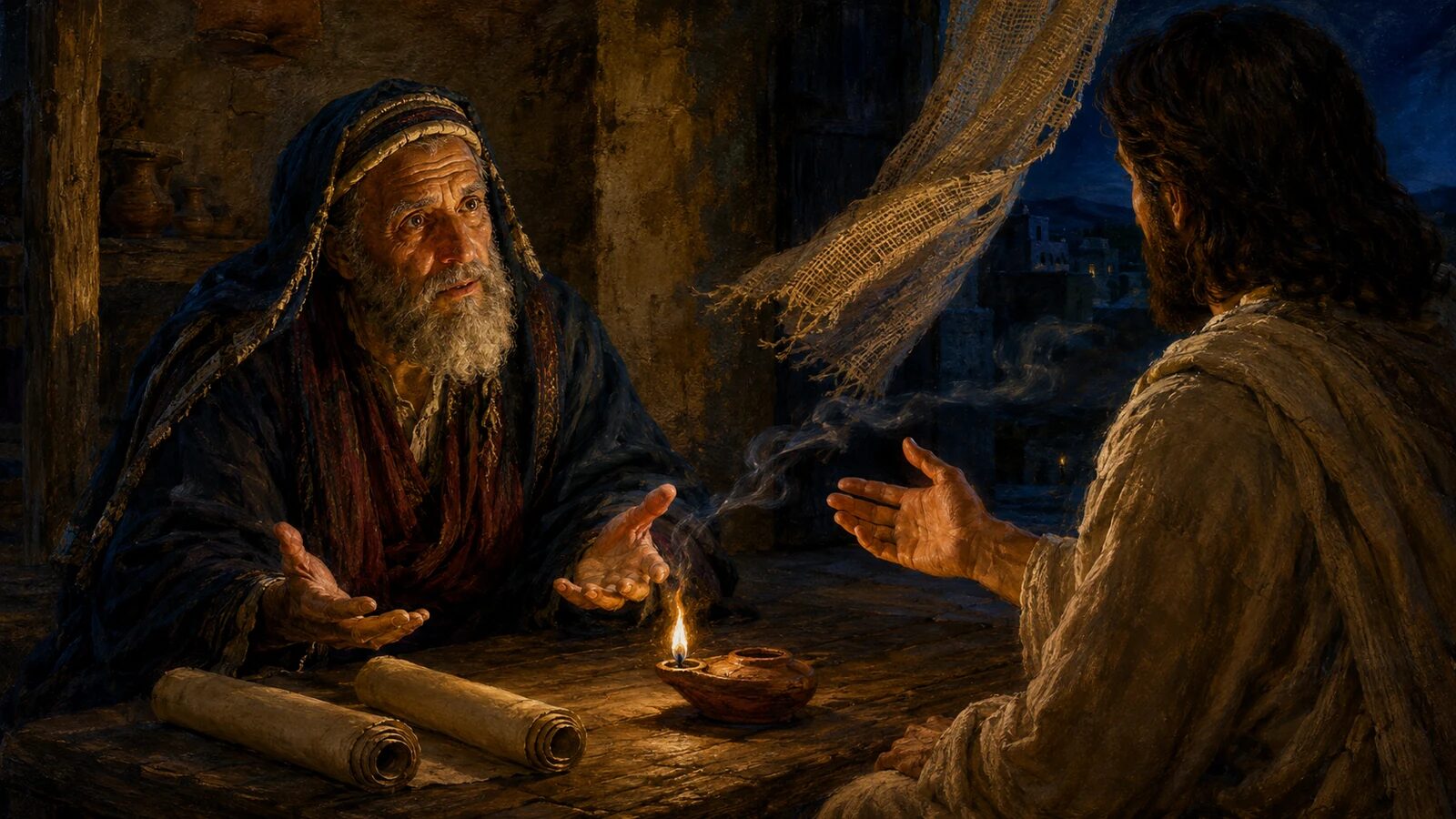
Why did Jesus tell one of Israel’s most religious teachers that he had to be born again? Nicodemus was thoroughly trained and lived a disciplined life that had earned public respect, yet Jesus did not offer him better habits or one more lesson to master. He told him that he needed life only God could give, and John 3 shows how that life comes through the Holy Spirit as a person believes in the Son.
Nicodemus Needed New Life
John 2 ends with many people believing in Jesus’ name because they had seen His signs. Yet Jesus did not entrust Himself to them, because He knew what was in man. Nicodemus then approached Him with that same interest in the signs, saying they showed that God was with Him. Jesus answered the need beneath his respectful words. Nicodemus needed more than an appreciation of the signs; he needed new life.
Nicodemus was a Pharisee, a ruler of the Jews, and a recognized teacher of Israel. His position gave him authority, but it could not solve the problem Jesus addressed. Many teachers would have welcomed his respectful approach and begun with their common ground. Jesus went straight to the need that neither rank nor training could meet.
Jesus answered and said to him, “Most assuredly, I say to you, unless one is born again, he cannot see the kingdom of God.”
Jesus’ word “unless” leaves no other way into the kingdom. Nicodemus could not enter through Jewish heritage, knowledge of the law, or a respected moral life. His problem was deeper than ignorance or poor habits: he was spiritually dead. No amount of personal effort could produce the life Jesus said he needed.
Being spiritually dead means being separated from God’s life and held in bondage to sin. It does not mean a person cannot hear and respond when God appeals to him. Jesus addressed Nicodemus directly and later called him to believe. I need to keep that invitation together with God’s work of convicting and drawing people through His Word and Spirit. Each hearer remains responsible and may receive the life offered or resist it.
God gives spiritual life where it was absent. That is why being born again cannot be reduced to improving the old heart or teaching a dead sinner to imitate a living saint. Paul describes this change as becoming a new creation.
Therefore, if anyone is in Christ, he is a new creation; old things have passed away; behold, all things have become new.
A new believer has much to learn, but he now belongs to Christ and has a new relationship with God. He is no longer merely close to Christian truths. God has made him alive, and that real beginning gives his life a new direction even before he becomes mature.
Nicodemus already looked disciplined, while someone newly converted may still have a great deal to learn. That makes me cautious about judging the new birth by how polished a person appears. An impressive religious image cannot tell me whether God has given someone life in Christ. Regeneration means God gives new life, with a new identity and direction from the beginning, while maturity develops over time.
Jesus spoke to a man his community respected, not only to people whose failures were obvious. Nicodemus’s learning and moral seriousness did not remove his need to be born again. I should not assume that growing up around church or knowing the Bible well gives someone spiritual life. Even admirable conduct can be present where the new birth has never taken place.
Born Again Means Born From Above
When Jesus spoke about birth, Nicodemus thought of being born physically a second time. His confusion brought the conversation beyond what religion could help him achieve. A baby does not cause his own birth, and the beginning Jesus described had to be given to Nicodemus by another.
The Greek phrase gennethe anothen can mean “born again” or “born from above.” That range helps us follow the conversation in John 3. Nicodemus was thinking about another physical birth, while Jesus was explaining where the new life must come from. It is a real beginning given by God above, beyond what human effort can produce.
Jesus continues by separating what flesh can produce from what only the Spirit can give.
Jesus answered, “Most assuredly, I say to you, unless one is born of water and the Spirit, he cannot enter the kingdom of God.”
That which is born of the flesh is flesh, and that which is born of the Spirit is spirit.
Jesus compared the Spirit’s work to the wind, which we can hear and recognize by its effects even though we cannot control where it comes from or goes. We do not control the new birth either. The Spirit gives the life, and its reality becomes visible in the person He has made alive.
Some understand “water and the Spirit” as a reference to physical birth followed by spiritual birth. Others understand water as cleansing, since the Old Testament often uses washing that way. I find the strongest background in Ezekiel 36. God joins cleansing with the promise of a new heart and a new human spirit, then promises to put His own Spirit within His people.
Jesus’ contrast between flesh and Spirit gives the physical-birth view a reason worth considering. But Ezekiel had already brought cleansing and a changed heart together with the promise of God’s indwelling Spirit. Jesus expected a teacher of the Old Testament to recognize what He was describing. That is why I believe Ezekiel gives a fuller explanation of “water and the Spirit.”
I will give you a new heart and put a new spirit within you; I will take the heart of stone out of your flesh and give you a heart of flesh. I will put My Spirit within you and cause you to walk in My statutes, and you will keep My judgments and do them.
Jesus later asked how Nicodemus could be Israel’s teacher and not know these things. I understand that rebuke in light of the promise he should have recognized: God would cleanse His people and give them new life through the Spirit. Jesus was explaining the fulfillment of that promise, not introducing a religious slogan.
John 3:5 does not therefore teach that water baptism produces the new birth. Baptism is commanded as an act of obedience that publicly identifies a believer with Christ, so I take it seriously. But it follows salvation rather than creating a new heart. Flesh cannot produce spiritual life, so an outward washing cannot do what only the Spirit can do. No ritual can replace faith in Christ.
If God gives this life from above, I cannot claim that I made myself alive. Nor can I treat the new birth as a passing religious mood. He gives real life that begins changing the person from within.
The New Birth Comes Through Faith in the Son
Jesus then directed Nicodemus to the Son of Man being lifted up, using Moses’ action in the wilderness to explain what He meant. Numbers 21 records Israel’s sin against God and the venomous serpents that brought death through the camp. God told Moses to raise a bronze serpent, and those who looked at the remedy He provided lived. Jesus was moving from an explanation of spiritual life to the One through whom it comes.
The dying Israelite did not heal himself or earn life through the strength of his gaze. He trusted what God had provided. In the same way, a condemned sinner must look in faith to the Son who was lifted up.
And as Moses lifted up the serpent in the wilderness, even so must the Son of Man be lifted up, that whoever believes in Him should not perish but have eternal life.
For God so loved the world that He gave His only begotten Son, that whoever believes in Him should not perish but have everlasting life.
Jesus joins the new birth to believing in the Son, even though giving that life is God’s work. Faith does not deserve or earn the gift. We receive the life found in Christ by trusting Him, much as an open hand receives something it could not pay for.
God loved the world and gave His Son so that whoever believes would not perish. I cannot narrow that invitation to a hidden few, because Christ did not die only for them. People can resist God’s appeal and remain in unbelief, but everyone who believes in the Son receives eternal life. The invitation is genuine.
But as many as received Him, to them He gave the right to become children of God, to those who believe in His name: who were born, not of blood, nor of the will of the flesh, nor of the will of man, but of God.
John describes God’s children as those who receive Christ and believe in His name. They are born of God, not given new life by a family bloodline or religious background. Human willpower cannot produce it either. I need to keep those truths together: receiving Christ by faith does not make the birth less God’s work, and God’s work does not make faith unnecessary.
Christian parents cannot pass God’s life to a child through ancestry, and no one can produce the new birth through determination or decide it for someone else. Yet our response to the gospel is not meaningless. We are called to receive the Son personally, and God gives the right to become His children to those who believe in Christ’s name. John’s words leave no room to boast, but they also give us no reason to remain passive.
The cross stands at the center of that faith. Jesus is the eternal Son, fully God and fully man, and He lived completely without sin. Wicked men physically tortured and punished His innocent body. They shed His blood and killed Him. Jesus willingly bore that real punishment for our sins. The Father did not punish or curse His beloved Son. He did not abandon Jesus, strike or bruise Him, or pour wrath upon Him. Jesus was buried and rose bodily from the dead. The Spirit gives life as a sinner believes this gospel, so no one has room to boast.
The Spirit Regenerates, Indwells, and Seals
Paul gives one of the clearest explanations of the new birth in Titus 3. He roots salvation in God’s mercy rather than in any righteous work we have done.
not by works of righteousness which we have done, but according to His mercy He saved us, through the washing of regeneration and renewing of the Holy Spirit.
The Greek word palingenesia means regeneration or new birth. In Titus 3, Paul places that beginning within God’s merciful saving work through the Spirit, not as a reward for good behavior. Regeneration describes new life beginning, while renewal describes the Spirit making the person new. Paul joins them in God’s saving act rather than dividing them into separate stages. Other passages speak of the Spirit’s ongoing renewal of believers, but Titus first directs us to the new beginning God gives apart from works.
I don’t want to confuse that new beginning with the growth that follows it. A person does not gradually earn the right to become spiritually alive. God saves by mercy and gives life, then the Spirit continues to renew the believer’s thinking and teach him how to live in keeping with what he has received.
Peter connects being born again with God’s living Word. Whether someone can tell a dramatic account of conversion is not the test. The Spirit brings sinners to life through the truth God has spoken, especially the gospel of Christ.
having been born again, not of corruptible seed but incorruptible, through the word of God which lives and abides forever.
The gospel tells us of the crucified and risen Christ, and the Spirit gives life as sinners believe that truth. That connection keeps the new birth grounded in Scripture. It cannot be treated as a private mystical claim with no relation to what God has said.
The One who gives this life is the Holy Spirit, a divine Person. He is not an impersonal power, nor should we confuse Him with an emotion or a religious atmosphere. Jesus promised that He would live in His disciples and remain with them.
And I will pray the Father, and He will give you another Helper, that He may abide with you forever.
Paul is equally direct about the Spirit’s indwelling. A person without the Spirit of Christ does not belong to Christ.
Now if anyone does not have the Spirit of Christ, he is not His.
God does not leave the believer to keep himself spiritually alive by maintaining religious intensity. His Spirit lives within us and bears witness that we belong to God. Through the Word, He teaches us and gives us strength to keep looking to Christ. Paul also explains that He seals those who have trusted the gospel.
Every person who truly belongs to Christ has His Spirit within, including believers who are still immature. Feelings change, but His presence is more than a feeling. He convicts us of sin and teaches us through the Word, producing lasting fruit the old nature could never produce. I find assurance first in God’s promise and the presence He has given, while recognizing that the Spirit’s work also begins to show in how we live.
In Him you also trusted, after you heard the word of truth, the gospel of your salvation; in whom also, having believed, you were sealed with the Holy Spirit of promise.
Paul says they heard the word of truth, the gospel of salvation, and were sealed with the promised Holy Spirit after believing in Christ. I want to keep that order clear. The seal marks God’s ownership and gives security, and Paul calls the Spirit the guarantee of the inheritance until the purchased possession is redeemed. He is describing God’s commitment to keep His people.
Ephesians 4:30 tells believers not to grieve the Holy Spirit who sealed them for the day of redemption. His seal is secure, but belonging to God gives us more reason to take sin seriously. I cannot use His keeping power as permission to rebel against the One whose Spirit lives within me.
New Life Produces Living Fruit
Good works cannot bring about the new birth, since God saves by mercy rather than works of righteousness. But the life He gives cannot remain permanently fruitless. A living root produces fruit, so we should expect new life to begin showing itself in how a person lives.
Now by this we know that we know Him, if we keep His commandments.
John had already told believers to confess their sins and had identified Jesus Christ as our Advocate with the Father. He was not demanding sinless perfection here. But neither would he reassure someone who claimed to know Christ while remaining settled in disobedience. New life changes the direction of a person’s walk, even as growth and struggle continue.
We know that we have passed from death to life, because we love the brethren.
Love for believers goes beyond natural friendliness expressed in Christian language. The Spirit begins forming loyalty to God’s people, teaching the believer to forgive and serve them. A born-again person can still act selfishly, and fear may hinder growth. Old habits do not always disappear immediately. Even with those struggles, the person’s direction begins to change, and truth and obedience are no longer treated as enemies to avoid.
We do not obey in order to become born again. Obedience grows because God has made us alive in Christ, so fruit gives evidence of life without purchasing it. That is why I can affirm salvation as entirely a gift of grace while still expecting the life God gives to change us.
Weakness or slow growth alone cannot tell us that someone has no spiritual life. Believers still struggle against the flesh, and John makes room for confession and Christ’s advocacy when they sin. His warning concerns a settled direction that denies Christ while claiming His name. I should not demand instant maturity, but neither should I redefine the new birth to allow permanent peace with unbelief and disobedience.
Baptism cannot take the place of faith, just as religion cannot supply spiritual life. Producing enough fruit does not save anyone, yet the person God makes alive will not remain permanently untouched. A believer’s struggles do not erase the new birth as though it were only a temporary emotional label.
I cannot accept Calvinism’s claim that Christ died only for a hidden elect, because the gospel genuinely calls everyone to repent and believe. People can resist that appeal and remain in unbelief. I also cannot accept the Arminian teaching that someone truly born again can later lose the life God gave. Everyone who actually comes to Christ becomes God’s child and receives the Spirit who indwells and seals him. That life is eternally secure because God keeps those He has made alive. Security rests on His power and gives no permission for rebellion.
The new birth leaves me no grounds to boast that I became religious enough to rescue myself. It also keeps me from taking comfort in church background or Bible knowledge apart from personal faith in Christ. For a true believer, a difficult week’s changing emotions do not undo the Spirit’s seal. We still need to confess sin, while resting our assurance on Christ and God’s promise. Grace makes holiness serious because our sin grieves the Spirit who now lives within us.
For further study, see A Complete Bible Study on the Gospel, A Complete Bible Study on Baptism in the Bible, and The Holy Spirit Indwelling vs Coming Upon. Those subjects develop the gospel received by faith, the proper place of baptism, and the Spirit’s continuing presence in the believer.
My Final Thoughts
Being born again is new life God gives through the Holy Spirit as a sinner believes in Jesus Christ. It is not a religious upgrade or the result of a ritual. The Spirit lives within the believer and seals him as God’s own, and that new life begins to produce real change. I want to receive this truth with humility: I cannot earn the new birth, and being around religion is no substitute for personally receiving Christ. He offers life that only God can give. Come to Him and receive it, then learn to walk as someone He has made alive.