
The Bible often calls the LORD the God of Israel. Does that mean He belongs to one nation, or does the title tell us how the only true God made Himself known? When I follow His dealings with Abraham, Moses, and Israel, I find promises that lead to Jesus Christ and salvation offered to the world. We need to understand that history if we are going to use the title as Scripture does.
Scripture calls Him the Creator, Most High, and Almighty. He rules as King and Judge, and His people know Him as Father, Holy One, Shepherd, and Redeemer. Calling Him the God of Israel identifies this same Lord by His covenant relationship with a particular people. He made promises to them, revealed His Word through them, and acted in their history to fulfill what He had said.
God Bound His Name to His Covenant Promises
Before Israel existed as a nation, the LORD called Abram, later named Abraham, and promised him descendants and land. Through him, blessing would reach every family of the earth. The covenant line continued through Isaac and Jacob, whom God named Israel. The family’s relationship with the LORD began with His call and His promises. They had not invented a useful deity and persuaded Him to serve their interests.
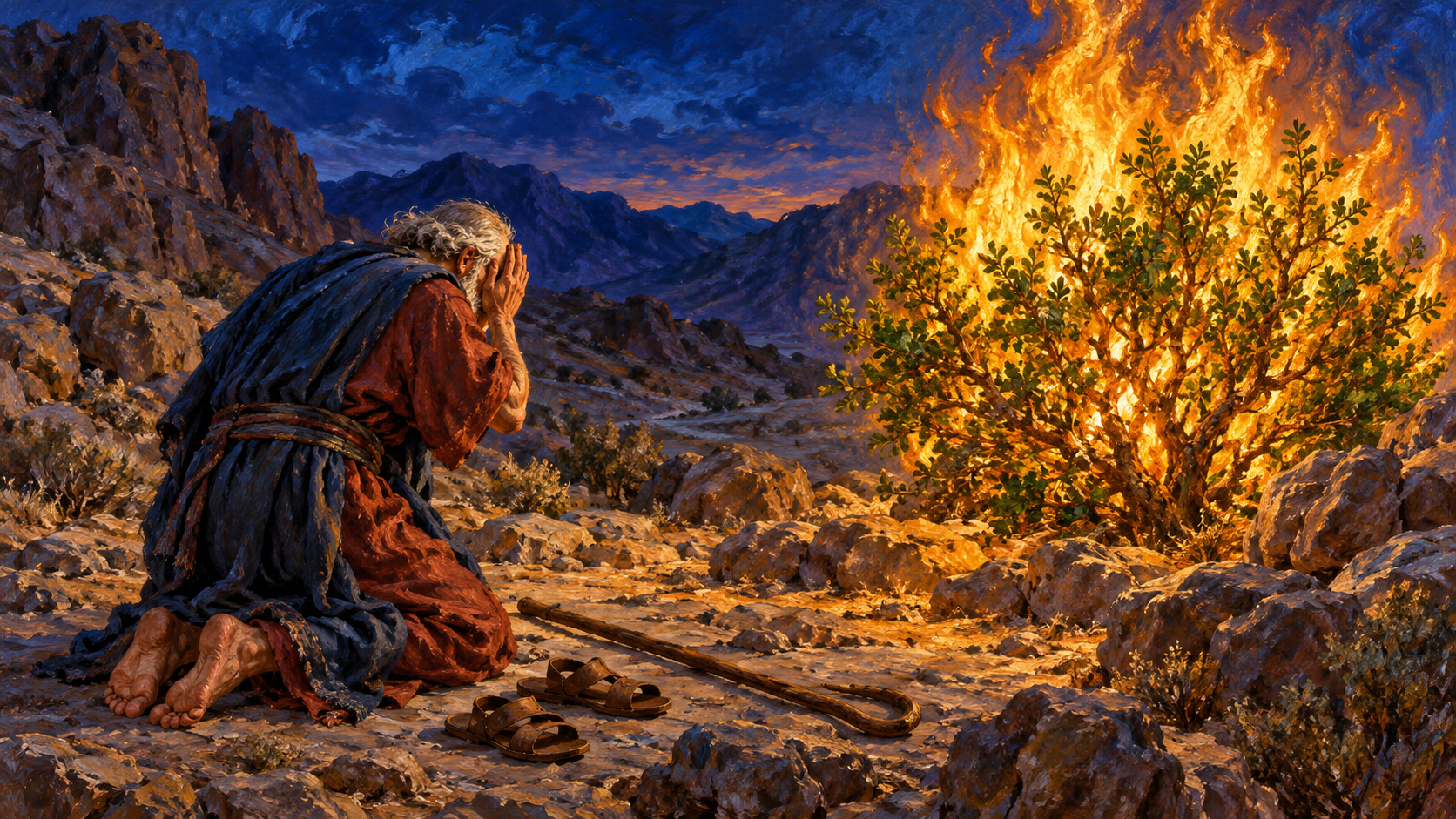
Centuries later, when Abraham’s descendants were slaves in Egypt, God appeared to Moses at the burning bush. He identified Himself by naming the fathers to whom He had made those promises:
Moreover He said, "I am the God of your father–the God of Abraham, the God of Isaac, and the God of Jacob." And Moses hid his face, for he was afraid to look upon God.
The God before whom Moses hid his face was the God who had called Abraham. Moses was being sent to bring His people out of Egypt, and the LORD instructed him how to identify the one who sent him:
Moreover God said to Moses, "Thus you shall say to the children of Israel: ‘The LORD God of your fathers, the God of Abraham, the God of Isaac, and the God of Jacob, has sent me to you. This is My name forever, and this is My memorial to all generations.’"
God had heard the Israelites’ groaning and remembered His covenant. Remembering here means acting faithfully on what He had promised, not recovering information He had forgotten. He judged Egypt, redeemed His people from slavery, and led them toward the land He had sworn to give them. Moses served as His messenger, but the deliverance depended on the LORD’s power and commitment to His word.
Neither Abraham’s worthiness nor Israel’s ability explains that commitment. God took the initiative in calling Abraham and making the promise, and He later acted to fulfill it. The study of God keeping His promise to Abraham follows that history more fully. I want us to see His grace in choosing this people and His faithfulness in doing what He said He would do.
The Hebrew phrase Elohei Yisrael means “God of Israel,” as we can see in the Hebrew text of Exodus 5:1. English Bibles commonly use LORD for the divine name YHWH. These names identify the God who has spoken, but pronouncing Hebrew words cannot give us power over Him. We learn His character from what He says and does. Knowing His name should lead us to receive that revelation, rather than attach our own ideas to a biblical title.
The God of Israel Is the Only God
The LORD’s covenant with Israel did not place Him alongside other national gods. The surrounding nations associated their deities with territory, political power, weather, fertility, and other concerns. Israel was to confess that the LORD alone is God and respond with wholehearted love:
"Hear, O Israel: The LORD our God, the LORD is one! You shall love the LORD your God with all your heart, with all your soul, and with all your strength."
Earlier, in Deuteronomy 4, Moses had explained why God showed the people His power:
To you it was shown, that you might know that the LORD Himself is God; there is none other besides Him.
Therefore know this day, and consider it in your heart, that the LORD Himself is God in heaven above and on the earth beneath; there is no other.
He is God in heaven and on earth, with no other beside Him. Israel had not merely selected a deity suitable for its culture. The LORD was declaring the truth about Himself to the people He had delivered. Idolatry therefore involves more than a different cultural preference. Giving worship to another god denies what the Creator has revealed about Himself.
The word translated “one” in Deuteronomy 6:4 is echad, the ordinary Hebrew word for one, as the Brown-Driver-Briggs lexicon explains. I would not make that word carry the entire doctrine of the Trinity. Scripture’s complete witness teaches us that the Father is God, the Son is God, and the Holy Spirit is God. They are distinct Persons, yet there is one God. We neither divide Him into three gods nor reduce Father, Son, and Spirit to roles played by one Person.
John 1 teaches the deity of the Word, Matthew 28:19 names Father, Son, and Holy Spirit together, and Acts 5:3–4 identifies lying to the Holy Spirit as lying to God. We also need to consider 2 Corinthians 13:14, Ephesians 2:18, and 1 John 5:7 as we follow the Bible’s testimony. Deuteronomy’s confession of one God remains true throughout that revelation. The fuller teaching about the Son and the Spirit does not authorize us to lower either beneath deity.
Returning to Moses’ instruction in Deuteronomy 10, we find that Israel’s privileged relationship with God gave them no exemption from His righteousness:
For the LORD your God is God of gods and Lord of lords, the great God, mighty and awesome, who shows no partiality nor takes a bribe.
In the surrounding verses, Moses calls for circumcision of the heart, meaning that the people must stop stubbornly resisting God. He then describes the LORD defending the fatherless and widow and loving the stranger, whom He supplies with food and clothing. Israel was commanded to love the stranger too, remembering its own life in Egypt. The God who chose Israel would not accept a bribe or overlook injustice on its behalf. His character governed both His covenant promises and the conduct He required.
After Moses’ death, Joshua led the people toward the Jordan. God had sustained Israel through the wilderness, and now He would bring them into the land He had promised. Joshua announced what the coming crossing would demonstrate:
And Joshua said, "By this you shall know that the living God is among you, and that He will without fail drive out from before you the Canaanites and the Hittites and the Hivites and the Perizzites and the Girgashites and the Amorites and the Jebusites."
As the priests carrying the ark stepped into the water, God stopped the river’s flow, and Israel crossed on dry ground. Joshua 3 records that act of deliverance at the entrance to the land. The promise made to the fathers was being fulfilled among their descendants. Later generations could call on the God of Israel knowing that He had delivered their people from Egypt, sustained them, and brought them into their inheritance.
Those generations also needed to remember His holiness. God raised kings and sent prophets, and when His people turned to idols, the prophets exposed their rebellion and warned them of judgment. The King who had committed Himself to Israel still ruled every nation:
"Thus says the LORD, the King of Israel, And his Redeemer, the LORD of hosts: ‘I am the First and I am the Last; Besides Me there is no God.’"
But the LORD is the true God; He is the living God and the everlasting King. At His wrath the earth will tremble, And the nations will not be able to endure His indignation.
Isaiah calls Him Israel’s King and Redeemer, while declaring that there is no God besides Him. Jeremiah describes the nations trembling before the living God and everlasting King. His relationship with Israel did not confine His authority to its borders. Nor did that relationship make Israel immune to judgment. The people could not appeal to ancestry, the temple, or sacrifices as an excuse to reject the words of the God who gave them those privileges.
His discipline was consistent with His character, as were His continuing promises of redemption. Faithfulness did not require Him to pretend rebellion was harmless. When I take comfort in His promise to keep His word, I also need to listen to His correction. We cannot appeal to His grace while refusing what He has told us.
Jesus Reveals the Father and Fulfills the Promises
Jesus affirmed Israel’s place in God’s work of salvation when He spoke with the Samaritan woman. She raised the dispute over worship on Mount Gerizim or in Jerusalem. His answer recognized what God had revealed through the Jews and announced worship that would not depend on being at either of those sites:
"You worship what you do not know; we know what we worship, for salvation is of the Jews. But the hour is coming, and now is, when the true worshipers will worship the Father in spirit and truth; for the Father is seeking such to worship Him. God is Spirit, and those who worship Him must worship in spirit and truth."
The covenants, Scriptures, and prophets had come through Israel, and the Messiah came from that people. Jesus did not treat the competing religious claims as equally true. Yet the Father was seeking worshipers in spirit and truth, and ancestry or being in the right place could not supply that response. A Samaritan woman needed to receive the truth He revealed, just as a Jewish worshiper did.
The one speaking to her was the eternal Son. John calls Him the Word who was with God and was God, through whom all things were made. That Word became flesh. Jesus entered Israel’s covenant history as a man, fulfilled God’s promises, and revealed the Father without ceasing to be God. Our study of the Word, Logos explains that testimony more fully. Christ belongs within the identity of the one God; He is not a later addition to Israel’s religion.
The apostles preached Him in direct connection with the God of the fathers. Peter addressed the people in Acts 3 by naming that God and declaring what they had done to Jesus:
The God of Abraham, Isaac, and Jacob, the God of our fathers, glorified His Servant Jesus, whom you delivered up and denied in the presence of Pilate, when he was determined to let Him go. But you denied the Holy One and the Just, and asked for a murderer to be granted to you, and killed the Prince of life, whom God raised from the dead, of which we are witnesses.
Peter’s hearers could recognize the God he named, yet his charge put them in direct opposition to that God. They had denied Jesus and asked for a murderer’s release, while God had glorified His Servant and raised Him from the dead. The apostles’ eyewitness testimony required them to reconsider their rejection of Him.
Jesus willingly endured the physical torture and death wicked men inflicted on Him. In His innocent body He bore the punishment for our sins and shed His blood, completing His saving work through His death. He was buried and then rose bodily from the grave. The gospel announces what Israel’s God has accomplished through His Servant and eternal Son. It calls sinners to receive the Savior He sent.
I cannot appeal to Abraham while rejecting his promised Seed and still claim to have received God’s full revelation. Jesus said that no one comes to the Father except through Him. As 1 John 5:1 teaches, whoever believes that Jesus is the Christ is born of God. Those claims concern the identity of the Messiah and our response to Him. Religious language about the God of Abraham cannot make rejection of His Son into faith.
Gentiles Are Brought Near Without Erasing Israel
God had promised blessing to the nations through Abraham from the beginning. Gentile salvation was not an emergency measure after Israel’s failure. Gentiles are people from the nations outside Israel, and Paul tells Gentile believers to remember what their condition had been before Christ:
Therefore remember that you, once Gentiles in the flesh–who are called Uncircumcision by what is called the Circumcision made in the flesh by hands– that at that time you were without Christ, being aliens from the commonwealth of Israel and strangers from the covenants of promise, having no hope and without God in the world.
But now in Christ Jesus you who once were far off have been brought near by the blood of Christ.
They had been outsiders to Israel’s commonwealth and the covenants of promise, without hope and without God. Now they had been brought near through the blood of Christ for salvation. Their nearness came through His sacrifice. That leaves no basis for congratulating themselves on being better than the people through whom God had preserved His promises.
Paul addresses that pride in Romans 11 through the picture of an olive tree. Gentile believers are like wild branches grafted in among the natural branches, sharing in the nourishment supplied by the root. They do not support that root; it supports them. Some natural branches were broken off because of unbelief, while Gentiles stand by faith. Their response should be reverent dependence on God, rather than boasting over those branches.
God is also able to graft the natural branches in again when they do not continue in unbelief. Paul goes on to say that God’s gifts and calling are irrevocable: He does not revoke His commitment to the people He called. The church receives salvation blessing in Christ, but it has no authority to dissolve God’s promises concerning Israel into vague symbols. We need to distinguish Israel and the church while trusting God to fulfill His word to both.
That faithfulness does not make ancestry a means of salvation. John the Baptist warned that God could raise up children to Abraham from stones, and Paul taught righteousness by faith rather than works or circumcision. A Jewish person needs Christ, and a Gentile person needs Christ. We honor God’s covenant history by receiving the Messiah it promised, not by treating a bloodline as a substitute for repentance and faith.
The Title Tests Our Worship
The title “God of Israel” therefore calls for more than recognizing the right words. We can acknowledge that God revealed Himself through Israel and still resist the truth He revealed. I need to ask whether I am listening to Him, especially when His Word contradicts something I want to believe about Him.
If I retain a biblical name for God while insisting that He would never judge a sin I want to excuse, I have changed His character to suit myself. Family tradition and cultural familiarity cannot make that invention true. Fear and politics cannot define Him either. The God who revealed Himself to Moses also spoke through the prophets and sent His Son. We must receive His testimony, rather than choose the portions that leave our assumptions undisturbed.
Deuteronomy 6 follows the confession that the LORD is one with a command to love Him with all our heart, soul, and strength. James reminds us that even demons believe there is one God and tremble. Merely agreeing with a correct statement about Him is insufficient. Saving faith receives His Son, trusts Him, and responds to His Word. When the Spirit gives us new birth and dwells within us, our relationship with God becomes far more than knowing how to describe Him.
The Father sent the Son, who took flesh and died for sinners before rising bodily, and the Spirit gives us life and fellowship with God. We therefore come to the Father through the Son by the Spirit. I need to receive what God has revealed about Himself and listen when His Word corrects me, rather than expect Him to conform to my preferences.
My Final Thoughts
The God of Israel is the one true God, who made promises to a real people and acted to fulfill them. He chose Israel without becoming its private possession, and He brought salvation to Jews and Gentiles through Jesus Christ without canceling His faithfulness to Israel. This title gives us reason to trust what He says about Himself and what He has promised to do.
Our response must include receiving the Son He sent. Ancestry and familiar religious language cannot replace faith in Christ. As we trust the Scriptures and respond to the living God they reveal, we learn to worship the Father through the Son by the Spirit.