
I can readily welcome God’s mercy when I need forgiveness and then object to His authority when He confronts something I want to keep doing. But choosing only the qualities I find agreeable would give me a god of my own making. To know the living God, I need to hear what He says about Himself in Scripture, including the things that expose my sin.
The One God Revealed in Three Persons
Scripture does not introduce the LORD as a tribal deity whose authority ends at Israel’s border. He made heaven and earth, and everything He created remains under His authority. Other nations might worship other gods, but their worship did not make those gods real or entitled to Israel’s allegiance.
“Hear, O Israel: The LORD our God, the LORD is one!
The same Bible identifies the Father as God, the Son as fully divine, and the Holy Spirit as God. The three Persons are distinct, yet they share one divine essence, meaning one undivided divine nature. We worship one God, eternally existing in three co-equal and co-eternal Persons.
This is the doctrine of the Trinity. The Father, Son, and Holy Spirit are not three gods, nor are they temporary roles played by one Person. Each fully possesses every attribute of God. The Son is not less divine than the Father, and the Holy Spirit is a divine Person who acts with knowledge and purpose, rather than an impersonal force.
We also cannot distribute God’s characteristics among the Persons, as though the Father supplied justice and the Son supplied love. The Father sent the Son to accomplish redemption, and the Spirit indwells and seals those who believe. They did not have competing purposes or different moral characters. Jesus reveals the Father, and the salvation He provides expresses the holy love of the one triune God.
For the same reason, God’s love never requires Him to become less truthful or holy. He knows us personally and judges with complete understanding. His power serves His good purposes, and His mercy does not contradict His justice. These qualities describe who He always is, not separate parts that take turns governing His actions.
The Name, Holiness, and Faithfulness of God
When God called Moses to lead Israel out of Egypt, Moses asked what name he should give the people. He was being sent to confront a ruler who held them in slavery. He needed to know on whose authority he was going and what assurance he could give Israel.
And God said to Moses, “I AM WHO I AM.” And He said, “Thus you shall say to the children of Israel, ‘I AM has sent me to you.'”
The words “I AM” help us understand God’s self-existence. He does not depend on anything He created in order to live, possess knowledge, or exercise power. Moses was not being asked to supply something God lacked. He could go on the authority of God’s name and rely on His promised presence, even though his own ability was insufficient for the task.
God also identified Himself by the covenant name LORD, the God of Abraham, Isaac, and Jacob. The rescue He promised was consistent with the promises He had made to their fathers. He had seen their affliction and heard their cries; slavery in Egypt had not made Him forget His covenant.
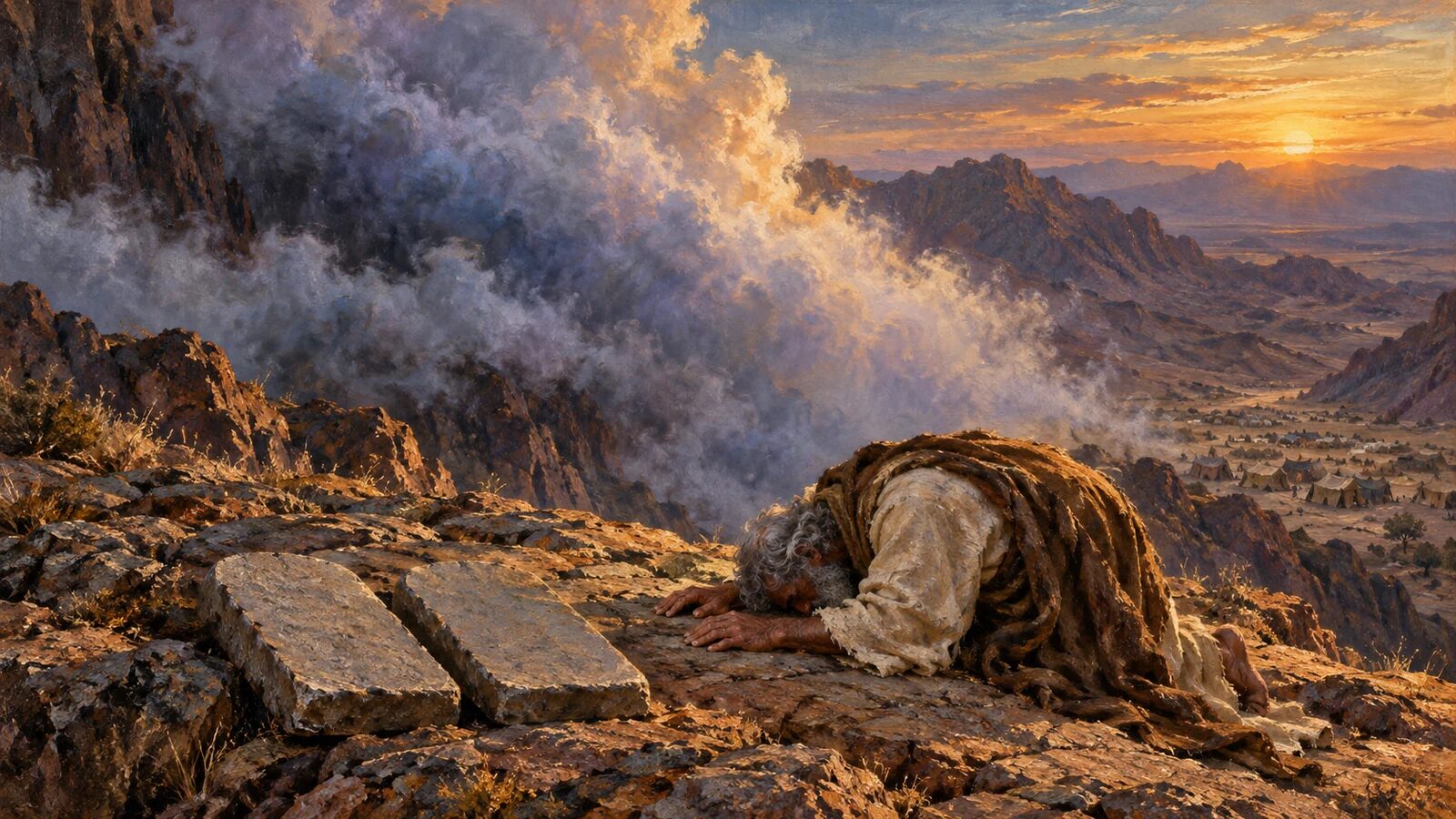
Exodus 34 returns to God’s name after Israel had worshiped the golden calf. Moses had interceded for the people and broken the first tablets of the covenant. When he returned to the mountain with new tablets, the LORD proclaimed His name and described His character.
And the LORD passed before him and proclaimed, “The LORD, the LORD God, merciful and gracious, longsuffering, and abounding in goodness and truth,
The people had committed a grievous sin, yet God described Himself as merciful and gracious, patient with sinners and abundant in goodness and truth. His declaration continued with forgiveness and righteous judgment. We cannot use His mercy to claim that sin no longer concerns Him, or treat His judgment as though He had ceased to be merciful.
God’s holiness means that He is set apart from creation and morally pure in Himself. No evil belongs to His character, and no higher authority must correct Him or make Him holy. The worship offered before His throne recognizes that purity.
And one cried to another and said: “Holy, holy, holy is the LORD of hosts; The whole earth is full of His glory!”
Holiness does not make Him indifferent to people in distress. It means His compassion is never dishonest and His love never approves evil merely to spare someone’s feelings. He can draw near to sinners without adopting their sin. The study on the word holy follows these truths through worship, the cross, and the believer’s life.
I need to remember that when I want forgiveness without admitting I have done wrong. God did not save us by deciding that sin was harmless. He provided salvation through the blood of Christ, and that provision expresses His holy love rather than a relaxation of His standards.
Perfect Knowledge, Wisdom, and Power
Psalm 147 praises the LORD who heals the brokenhearted, counts the stars, and calls them by name. His attention to a wounded person does not compete with His care for the heavens. The psalm joins His power to understanding that has no limit.
Great is our Lord, and mighty in power; His understanding is infinite.
Omniscience means that God knows all things. The Hebrew word translated “understanding” includes insight and discernment. We learn gradually, forget what we once knew, and sometimes discover that we have badly misjudged someone. God does not have to gather missing evidence or revise a decision because a motive escaped His notice.
Proverbs 15:3 says that His eyes are everywhere, watching the evil and the good. He sees both the wrongdoing we conceal and the faithful work no one else acknowledges. I cannot persuade Him that a sin is innocent by explaining it more cleverly, but I also do not have to fear that unnoticed obedience has escaped His attention.
His complete knowledge is joined to perfect wisdom. Knowing a fact does not keep a human being from making a foolish decision; God always understands what is right and acts accordingly. He never needs to repair a plan made with incomplete information. When I cannot understand His timing, I need to remember that my view of the situation is limited and may be clouded by fear. I can bring Him my questions without assuming that what I cannot explain must be a mistake.
Isaiah 46 shows that He also knows what lies ahead and can accomplish what He has purposed. The idols in that chapter have to be lifted onto animals and carried away; they cannot even move themselves from where their worshipers put them. The LORD, by contrast, tells Israel that He has carried His people and will continue to carry them into old age.
Declaring the end from the beginning, And from ancient times things that are not yet done, Saying, “My counsel shall stand, And I will do all My pleasure,’
God’s foreknowledge does not cancel our responsibility. He can know what wicked people intend, overrule their actions for good, and still hold them accountable for what they freely chose to do. He is never the author of their sin. His command to repent and believe is addressed to people who must respond, and His knowledge of that response gives no one an excuse for refusing Him.
Omnipotence means that God has all power to accomplish His purposes in agreement with His nature. It does not mean He can lie, sin, or make a contradiction true. Because He cannot deny His own character, we can trust that His power will always be exercised with holiness and wisdom.
In the beginning God created the heavens and the earth.
Creation depends on Him for its existence. Space and time, matter and life all exist by His will. He did not receive His existence from the universe He made. Nations, storms, sickness, and even death remain under His authority. Spiritual enemies also have no power independent of Him. That gives us reason to trust Him without denying the harm His creatures can suffer.
Jeremiah confessed this power while Jerusalem was under Babylonian siege and he himself was confined. God had told him to buy a field as a sign that houses, fields, and vineyards would again be possessed in the land. Buying property while an invading army threatened the city called for trust in that promise. After completing the purchase, Jeremiah prayed:
“Ah, Lord GOD! Behold, You have made the heavens and the earth by Your great power and outstretched arm. There is nothing too hard for You.
God had announced that Jerusalem would fall, so Jeremiah’s prayer was not a demand that divine power prevent every loss. He was bringing the field purchase and the coming disaster before the LORD, who could restore the land after judgment. God’s ability to accomplish His promise did not mean Jeremiah would avoid the calamity around him.
When I pray, I need to distinguish what God is able to do from what He has promised to do. He has not promised every outcome I would prefer or agreed to work according to my schedule. His power also makes salvation possible when human effort cannot help. Jesus was speaking about salvation when He said that what is impossible with men is possible with God. We cannot give ourselves new life, but God can save us through Christ.
Present Everywhere and Unchanging in Character
God’s omnipresence means that He is present everywhere as God. This differs from pantheism, the belief that everything is God. He remains distinct from His creation and cannot be confined within it, yet no created place puts us beyond His presence.
Where can I go from Your Spirit? Or where can I flee from Your presence? If I ascend into heaven, You are there; If I make my bed in hell, behold, You are there.
David names the highest and lowest places to describe how impossible it is to escape Him. The believer in a hospital room is no farther from God than the believer praying at home. That is a comfort when I feel alone, but it also exposes the foolishness of imagining that a closed door makes disobedience safe.
“Am I a God near at hand,” says the LORD, “And not a God afar off? Can anyone hide himself in secret places, So I shall not see him?” says the LORD; “Do I not fill heaven and earth?” says the LORD.
Through Christ, the believer also knows God’s presence in fellowship, not merely as something no one can escape. Jesus promised to be with His disciples to the end of the age. When I pray, I am speaking to the One who is already near, rather than trying to draw His attention from somewhere far away.
Immutability means that God does not change in His perfect nature and character. He does not need to mature, and He will never decay or become less holy. His truth cannot shift and His faithfulness cannot wear out. Malachi connected that unchanging character with the preservation of Israel despite the people’s unfaithfulness.
“For I am the LORD, I do not change; Therefore you are not consumed, O sons of Jacob.
In the next verse, the LORD calls them to return to Him and promises to return to them. His unchanging character did not make their response irrelevant. Scripture also describes Him grieving over sin and relenting from announced disaster when people repent. Those are genuine dealings with people whose conduct changes, not evidence that He has acquired a new character.
The same God who opposes stubborn evil shows mercy to sinners who turn from it. He has not become compassionate after previously lacking compassion. I can therefore come to Him in prayer without trying to persuade Him to become good, and confess without pretending I am supplying facts He did not know.
Wise and True, Just and Merciful
At the end of Romans 11, Paul worships God after describing His dealings with Israel and the Gentiles. He has warned Gentile believers against pride and looked ahead to God’s covenant faithfulness toward Israel. What God has revealed gives Paul ample reason to praise Him, even though His wisdom exceeds what a human being can fully trace.
Oh, the depth of the riches both of the wisdom and knowledge of God! How unsearchable are His judgments and His ways past finding out!
I should study what God has revealed rather than use mystery as an excuse for carelessness. But I also need enough humility to admit when Scripture has not answered a question. My inability to explain every part of His purpose does not make that purpose foolish.
We can trust His Word because He cannot lie or break His promises. In Numbers 23, Balak wanted Balaam to curse Israel. When Balaam pronounced a blessing instead, Balak took him to another place and asked him to try again. But moving to another vantage point could not make the LORD reverse His word.
God is not a man, that He should lie, Nor a son of man, that He should repent. Has He said, and will He not do? Or has He spoken, and will He not make it good?
People exaggerate, forget promises, and sometimes deliberately deceive. God’s truthfulness rules out those failures. Balaam could not reverse the blessing God had given, and we should not confuse God’s merciful response to repentance with the fickleness of someone whose word cannot be trusted.
His justice likewise means He never calls evil good or pretends that guilt does not exist. His love does not require Him to approve whatever we want. John shows us what that love actually provided for sinners.
In this is love, not that we loved God, but that He loved us and sent His Son to be the propitiation for our sins.
Propitiation concerns the atoning sacrifice through which Christ deals with our guilt before God. The Father sent His Son because He loved us; salvation did not begin with sinners persuading a reluctant God to care. His provision dealt with sin without requiring Him to abandon His holiness.
Mercy is God’s compassion toward people in misery and guilt, while grace describes the favor He gives those who cannot earn it. If forgiveness depended on our deserving it, none of us could come. Yet He offers it without pretending our sin never happened, because the salvation He provides deals with our guilt.
The Cross Reveals God Most Clearly
In Romans 3, Paul explains how God justifies a sinner. The law exposes guilt, and obeying it now cannot erase the sins we have already committed. Justification means that God declares a person righteous, which Paul says comes through faith in Jesus Christ.
whom God set forth as a propitiation by His blood, through faith, to demonstrate His righteousness, because in His forbearance God had passed over the sins that were previously committed, to demonstrate at the present time His righteousness, that He might be just and the justifier of the one who has faith in Jesus.
God does not have to choose between being just and forgiving the believer. He deals with sin through Christ’s sacrifice and declares righteous the person who has faith in Jesus. His forbearance toward sins previously committed did not mean He had approved them. The cross demonstrates the righteousness of the God who had shown that patience.
Jesus is the eternal Son, fully God and fully man, who came to reveal the Father and save sinners. He committed no sin, yet wicked people tortured and crucified Him. The punishment He willingly bore in His innocent body was for our sins, and His saving work was completed through His shed blood and death. He was then buried and rose bodily from the grave. The Father did not punish, curse, abandon, strike, bruise, or pour wrath on Jesus, and the Spirit was not divided from the Father or Son.
The Father who sent Him, the Son who willingly gave Himself, and the Spirit who brings new life work in perfect agreement. The saving plan reveals God’s wisdom and love, the resurrection displays His power, and the fulfillment of His promises confirms His faithfulness.
Christ died for the whole world, and God’s offer of salvation is genuine for every person. His grace can be resisted and finally rejected, but He calls us to repent and trust in Jesus Christ. Faith receives what grace provides; neither our worth nor our religious effort caused God to send His Son for us.
Everyone who truly believes is regenerated, meaning genuinely born again. The Holy Spirit indwells that believer and seals him for the promised inheritance. He is eternally secure because Christ saves completely, but that security gives no permission for lawlessness. There should be evidence of new life in how we live. Obedience becomes part of worship rather than a way to earn our place with God.
I can therefore bring my sin and my fears to the Father honestly. He already knows what I have done and understands the circumstances I cannot sort out. I am not asking a weak helper to accomplish more than he can or trying to make an indifferent God care. I am coming through Christ to the holy, wise, and merciful God who has made Himself known.
My Final Thoughts
I cannot ask God to become less holy so I can keep a sin I enjoy. His mercy gives me reason to repent and trust Him, rather than keep hiding. I want to worship the Lord who has revealed Himself in Scripture and receive correction from Him along with the comfort I am so ready to welcome.