
John’s opening words are familiar, but I want to slow down and consider what he is saying about Jesus. Why does he call Him the Word, and why does he begin before creation itself? Those questions take us back to who Christ eternally is.
The Word in John 1
John does not begin with Bethlehem, because the Son did not begin there. His opening reaches behind creation and tells us who Jesus already was when every created thing began.
When John calls Jesus the Logos, he is speaking about the Person who already existed before creation in fellowship with God. The Word possesses the full divine nature, and everything that exists was created through Him. Life belongs to Him, and He shines as the Light. John then tells us that this eternal Person truly became flesh.
If those opening words seem difficult, it helps to remember why John wrote his Gospel. In John 20:30-31, he explains that he selected and recorded these signs so readers would believe Jesus is the Christ, the Son of God, and have life in His name. He is not setting a riddle for specialists or asking us to solve it through Greek philosophy. Even the grammatical details of his opening serve that purpose. John wants us to recognize that the Jesus who walked in Galilee is the eternal Son who came to save us.
The Greek noun logos can describe a word or a statement, but its meaning is not limited to either. In other contexts it can refer to a message or an account. It may also describe the matter under discussion or a reasoned expression. No single English word covers every use, so we need the sentence and the larger passage to understand it accurately.
In John 1, the surrounding statements show that Logos names a Person. John uses masculine pronouns for the Word and says creation came through Him. He is the One in whom life is found and about whom others testify. By the end of this opening passage, John has identified Him as Jesus Christ, not an abstract principle.
A word makes known something that would otherwise remain inward. That helps me understand why John uses this title, though he means much more than that God communicated through Jesus. The Logos is Himself the eternal divine Son who personally reveals the Father.
Greek philosophers used logos in discussions of reason and cosmic order, and Jewish writers outside Scripture used the term in other ways. Those parallels may help explain why readers understood the word, but I do not believe they should control John’s doctrine.
John’s first words deliberately take us back to Genesis. He begins with creation and then speaks of life and light, themes already familiar from Scripture’s opening chapter. After introducing John the Baptist as a human witness, he describes the Word tabernacling among us, recalling the tent where God’s glory dwelt among Israel. His references to grace and truth lead to his mention of Moses. I want to follow those connections within Scripture’s own history and revelation as I try to understand his meaning.
John does not borrow a philosophical system and attach Jesus to it. He announces that the Creator revealed throughout Israel’s Scriptures has made Himself known in the eternal Son.
In the beginning God created the heavens and the earth. The earth was without form, and void; and darkness was on the face of the deep. And the Spirit of God was hovering over the face of the waters. Then God said, "Let there be light"; and there was light.
Genesis opens with God creating the heavens and the earth. John takes us to that same beginning and tells us the Word was already there. Creation began at that point, but the Son did not.
In Genesis, light appeared when God spoke while the Spirit hovered over the waters. John draws on these same realities to present the Son. That connection does not mean every command God spoke was identical in every respect to the personal Logos.
In the beginning was the Word, and the Word was with God, and the Word was God. He was in the beginning with God. All things were made through Him, and without Him nothing was made that was made. In Him was life, and the life was the light of men. And the light shines in the darkness, and the darkness did not comprehend it.
John uses a form of the verb translated “was” to describe the Word’s continuing existence. He later describes creation with forms meaning “came into being” instead. We should notice that difference: the Son already existed, while created things had a beginning.
I would not base Christ’s eternal existence on an isolated grammatical observation. The grammar supports what the whole passage says: the Word was already there when creation came into being through Him, so He was not produced at its beginning.
The words “with God” describe a real personal relationship. We cannot understand the Son as merely an impersonal attribute inside the Father, nor can we understand the Father as the Son using another name.
John goes on to describe the Son’s eternal closeness to the Father’s heart. The Father sent Him into the world, where He spoke the Father’s words and openly loved Him before returning to Him. Their relationship did not begin when the Son became man. These actions reveal a distinction between Persons that was already real.
That eternal relationship rules out modalism, the idea that one Person simply appears in different roles. It does not divide God into separate gods. The one divine Being has always existed as the Father and the Son together with the Holy Spirit.
John’s third statement tells us what the Word is by nature. He is not merely godlike or partly divine. Everything that God is by nature, the Word is.
The order of the Greek clause emphasizes what the Word was, while the phrase before it keeps Him personally distinct from the Father. I need to hold both statements together. John does not identify the Word as the Father, and he does not describe Him as a lesser kind of being.
We see the same identity throughout the Gospel. Jesus uses the divine declaration “I AM,” and Thomas later confesses Him as Lord and God. Jesus exercises authority to give life and forgive sins. He receives worship and says that people must honor Him just as they honor the Father.
Some groups render John 1:1 as “the Word was a god” because the final clause has no Greek article before the noun God. But the absence of that article does not require us to insert an indefinite article in translation.
The clause describes the Word’s divine nature. Translating it as “a god” conflicts with John’s belief in one God and with his next statement that every created thing came through the Word. Later confessions of Christ’s deity confirm that John has not put Him in a lower class of beings.
There is also a basic problem with placing the Word among created beings: if He made everything that came into being, He cannot belong in that group Himself. I believe John is giving us a direct answer. The Word is the eternal Creator who was personally with God and is fully God.
John leaves no exception to that statement. All created things came into being through the Word, and nothing that was made came into being apart from Him. There is no remaining category of creation in which we could place Him.
He is the image of the invisible God, the firstborn over all creation. For by Him all things were created that are in heaven and that are on earth, visible and invisible, whether thrones or dominions or principalities or powers. All things were created through Him and for Him. And He is before all things, and in Him all things consist.
Colossians makes the same distinction between Christ and what He created. Its title “Firstborn” describes His supremacy and rightful place as heir. The next sentence explains that every created thing was made by Him, through Him, and for Him. We should understand the title in light of that explanation.
The Son did not borrow life from the creation He made. Life belongs to who He is and to His authority, which is why John’s Gospel shows Him giving eternal life and raising the dead.
His life is the light of humanity, revealing what darkness hides and exposing evil. Those who receive His light find guidance and hope in it. Sinful people may hate the light because it exposes their deeds, but darkness cannot master Christ’s light or put it out.
John the Baptist testified to the Light, but he was not the Light himself. That is the humility I need whenever I speak about Christ. A faithful messenger directs attention toward Him rather than toward himself.
That was the true Light which gives light to every man coming into the world. He was in the world, and the world was made through Him, and the world did not know Him. He came to His own, and His own did not receive Him.
But as many as received Him, to them He gave the right to become children of God, to those who believe in His name: who were born, not of blood, nor of the will of the flesh, nor of the will of man, but of God. And the Word became flesh and dwelt among us, and we beheld His glory, the glory as of the only begotten of the Father, full of grace and truth.
The Creator entered the world He made, and the people living in His creation failed to recognize Him. I don’t want the familiarity of those words to hide the tragedy they describe. John uses world in different ways, but the surrounding sentences here point to sinful humanity failing to recognize its own Creator.
John then turns to Jesus coming to His own people in Israel’s covenant history. God had prepared them through His promises and prophets. They had the temple and the expectation of the Messiah, yet many refused Him when He came. That is a heartbreaking rejection, but it is not a claim that every Jewish person rejected Jesus. John the Baptist and the apostles were Jewish, as were the first believers.
Human rejection cannot change who Jesus is or end God’s genuine invitation. The Light continues to shine, and John turns from rejection to “as many as received Him.” Everyone who will believe is included in that invitation.
John explains receiving Christ as believing in His name. Faith trusts the person Jesus truly is, not a religious formula or an invented version of Him.
Believers receive the right to become children of God through a birth that God Himself brings about. Neither ancestry nor bodily descent can produce it. We cannot make ourselves God’s children by determination, church membership, or moral achievement. God gives this new life to everyone who receives Christ through faith.
God genuinely offers salvation to the world, though people can resist His invitation. Everyone who believes in Christ receives life and is truly born again as a new creation. The Holy Spirit indwells and seals those believers, so their eternal security depends on God’s saving work.
The Word Became Flesh
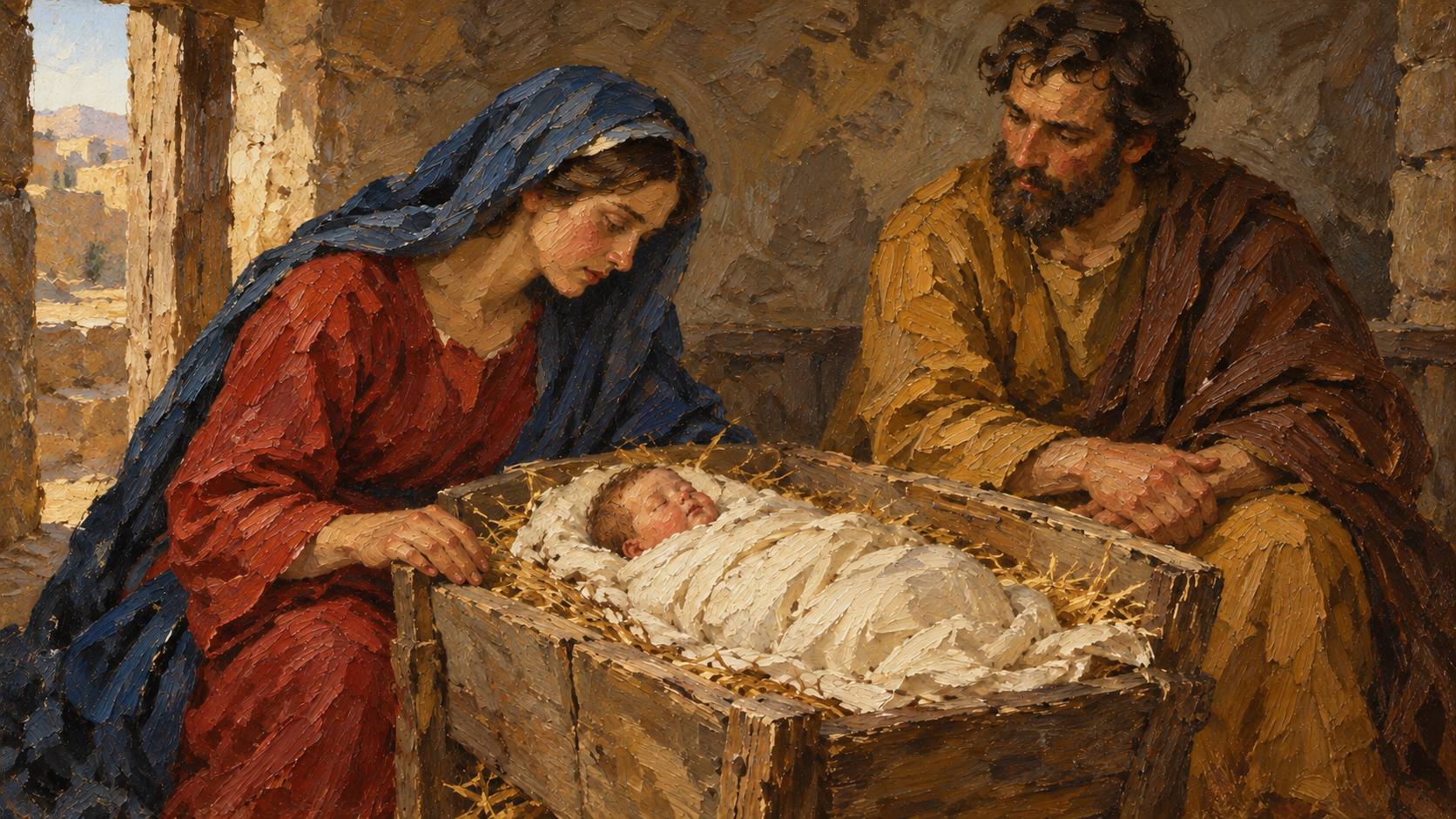
When John says the Word became flesh, he does not mean the Son stopped being God. The same eternal Person took a complete human nature while remaining what He had always been. He did not change from a divine Person into a human person, and His humanity was not merely an appearance. Jesus Christ is fully God and fully man.
The verb translated “dwelt” carries the sense of pitching a tent or tabernacling. An Israelite reader would recognize the connection with the wilderness tabernacle, where God dwelt among His people and revealed His glory. John now describes that presence revealed personally in the Son who became man. The comparison does not make Jesus a building. His coming fulfills what the tabernacle had anticipated.
Jesus lived in a real human body that experienced both hunger and weariness. He bled and suffered before truly dying upon the cross, and He later raised that same body from the grave. Any teaching that reduces His humanity to an appearance contradicts the apostolic witness.
John speaks as someone who saw Jesus, and I want to give that testimony its full weight. The disciples watched His signs and lived close enough to observe His holy character. They saw His compassion as well as His authority. Some witnessed the transfiguration, and all faced the reality of His crucifixion. They later found the tomb empty and saw His risen body.
“Grace and truth” recalls God’s covenant character and finds its fulfillment in Jesus. His kindness never requires Him to be less truthful. He gives undeserved favor without concealing sin or changing what is real.
John says believers have received “grace for grace.” The expression describes grace coming in continuing fullness. Everything believers receive comes from Christ’s inexhaustible supply. Moses genuinely gave God’s law, whose purpose reaches its saving fulfillment in Christ. I do not read that contrast as an insult to Moses or a claim that the law was mistaken. Moses served God faithfully, and his ministry pointed to Jesus, the eternal Son.
And of His fullness we have all received, and grace for grace. For the law was given through Moses, but grace and truth came through Jesus Christ. No one has seen God at any time. The only begotten Son, who is in the bosom of the Father, He has declared Him.
John is not denying that God appeared to people in the Old Testament. He is saying that no human being has seen the Father in His unveiled fullness. Those earlier appearances genuinely revealed God, but the Son who became man gives His fullest personal revelation. The Son knows the Father in eternal intimacy, so He does not describe Him as an observer looking in from outside. He reveals the Father from within their divine fellowship.
If I want to know the Father, I must come through the Son who reveals Him. Jesus is not a gentle Son trying to persuade a reluctant or distant Father to love us. He shows us the Father’s own character and carries out the saving mission the Father entrusted to Him. Looking past Jesus for some deeper knowledge of God would mean leaving the revelation God has given.
God’s Word and the Living Word
By the word of the LORD the heavens were made, And all the host of them by the breath of His mouth. He gathers the waters of the sea together as a heap; He lays up the deep in storehouses. Let all the earth fear the LORD; Let all the inhabitants of the world stand in awe of Him. For He spoke, and it was done; He commanded, and it stood fast.
God’s word is never mere information without power. Creation obeys when He speaks because every command carries His authority, and what He declares accomplishes the purpose for which He sends it.
John identifies the personal Son as the One through whom all creation came into being. We can see more fully what the Old Testament was preparing us to understand without treating each syllable God spoke as a separate person.
When the prophets say the word of the LORD came to them, many passages simply mean that God gave them a message. We still need to read each setting carefully. Genesis 15, for example, describes personal features in a vision that go beyond receiving a bare statement of information.
I would not force every passage into the same explanation. Receiving a message from God does not automatically mean someone visibly saw Christ. But where Scripture describes a genuinely personal appearance, we should not reduce it to an inward impression either.
The Old Testament presents God’s word as active and authoritative, revealing His will. That prepares us for John’s Gospel, but John 1 gives its own decisive answer about who the personal Logos is: Jesus Christ.
Another New Testament word, rhema, often refers to something said or to a particular utterance. Its meaning overlaps with the word John uses, and both can describe God’s message. We should keep that overlap in mind when someone draws a sharp line between them.
The claim that logos always means written Scripture and rhema always means a private word for an individual does not fit their actual use. Matthew 4 uses rhema for God’s scriptural utterance, while many passages use logos for spoken preaching.
Understanding those Greek words should help us read the passage honestly and accurately, not give an impression authority over Scripture. Context determines how a word is being used, and every spiritual claim must answer to the inspired written Word.
"For as the rain comes down, and the snow from heaven, And do not return there, But water the earth, And make it bring forth and bud, That it may give seed to the sower And bread to the eater, So shall My word be that goes forth from My mouth; It shall not return to Me void, But it shall accomplish what I please, And it shall prosper in the thing for which I sent it."
Scripture is God’s inspired written revelation. It is without error and sufficient. Jesus is the eternal divine Person to whom those writings testify. The book itself did not become flesh, and the Son who became man is not paper and ink.
Distinguishing the written Word from the living Word does not put them in competition. Jesus submitted to Scripture and quoted it as the final authority, declaring that it cannot be broken. He fulfilled everything written about Him and sent apostles whose inspired testimony tells us who He is.
For the word of God is living and powerful, and sharper than any two-edged sword, piercing even to the division of soul and spirit, and of joints and marrow, and is a discerner of the thoughts and intents of the heart.
And there is no creature hidden from His sight, but all things are naked and open to the eyes of Him to whom we must give account.
Paul draws his warning from Israel’s wilderness history. The people who left Egypt heard God’s promise, yet many hardened their hearts in unbelief and did not enter the offered rest. Hebrews presses that warning upon its readers: hearing God’s message is not the same as receiving it in faith. The living word exposes whether our trust and obedience are genuine.
Verse 13 moves from the message that searches the heart to the God who sees everything and judges us. There may be a connection with Christ’s personal authority, but the immediate point is the power of God’s spoken and written warning.
I need to let that warning examine me. Merely possessing a Bible does not answer it, and labeling every occurrence of “word” as Jesus would distract from what the passage is asking us to receive.
That which was from the beginning, which we have heard, which we have seen with our eyes, which we have looked upon, and our hands have handled, concerning the Word of life– the life was manifested, and we have seen, and bear witness, and declare to you that eternal life which was with the Father and was manifested to us– that which we have seen and heard we declare to you, that you also may have fellowship with us; and truly our fellowship is with the Father and with His Son Jesus Christ.
1 John returns to the Gospel’s opening with particular emphasis on what the apostles experienced firsthand. The eternal life who was with the Father appeared in a real human body. They heard His voice and saw Him with their own eyes, and their hands touched Him.
Our fellowship with the apostles rests on the historical Christ they knew. They saw Jesus shed His blood and die, then encountered Him after His bodily resurrection. Christian faith depends on that testimony, not on a secret spiritual insight detached from His coming in the flesh.
Now I saw heaven opened, and behold, a white horse. And He who sat on him was called Faithful and True, and in righteousness He judges and makes war. His eyes were like a flame of fire, and on His head were many crowns. He had a name written that no one knew except Himself.
He was clothed with a robe dipped in blood, and His name is called The Word of God.
And the armies in heaven, clothed in fine linen, white and clean, followed Him on white horses.
Now out of His mouth goes a sharp sword, that with it He should strike the nations. And He Himself will rule them with a rod of iron.
He Himself treads the winepress of the fierceness and wrath of Almighty God. And He has on His robe and on His thigh a name written: KING OF KINGS AND LORD OF LORDS.
Revelation applies the title directly to the victorious returning Christ. The Word who came in humility will return bodily as righteous Judge and King.
Revelation presents the Word as a Person who acts in history. His robe and many crowns show His royal authority, and His names tell us who He is. The sword coming from His mouth portrays the power of His word as He rules the nations and executes judgment. Calling Him the Word of God does not reduce Him to speech. It identifies God’s perfect self-expression in the Person of the authoritative King.
God, who at various times and in various ways spoke in time past to the fathers by the prophets, has in these last days spoken to us by His Son, whom He has appointed heir of all things, through whom also He made the worlds;
who being the brightness of His glory and the express image of His person, and upholding all things by the word of His power,
when He had by Himself purged our sins, sat down at the right hand of the Majesty on high,
The prophets really did bring God’s inspired word. Hebrews honors that earlier revelation while distinguishing the Son from every servant through whom it came.
God appointed the Son heir of all things and created the worlds through Him. The Son radiates divine glory and exactly expresses the Father’s Person while sustaining everything by His power. Having accomplished redemption, He sat down as the enthroned Lord. God’s fullest revelation is personal because His own Son has come to us.
No later private revelation can improve upon the Son or correct what His apostles testify about Him. The Spirit still teaches and gives gifts, but His work always agrees with the sufficient Scriptures He inspired.
Errors John’s Full Witness Corrects
Arian teaching identifies the Son as the first and greatest creature. John leaves no place for that conclusion because every created thing came through Him. The Jehovah’s Witness translation calls the Word “a god,” even though John’s grammar does not require that rendering. John believes in one God, and the rest of his Gospel confesses Christ’s full deity.
Jesus said to them, "Most assuredly, I say to you, before Abraham was, I AM."
Jesus claimed more than simply being older than Abraham. His present-tense declaration went beyond the age of any creature and identified Him as divine. That was what moved His hearers to take up stones.
Modalism treats the Father and Son as one Person appearing in different roles, but John says the Word was personally with God. Later he describes the Father sending the Son and the Son praying to the Father. I cannot read those exchanges as one Person talking to Himself. Their love and fellowship are real relationships between distinct Persons.
"I and My Father are one." Then the Jews took up stones again to stone Him. Jesus answered them, "Many good works I have shown you from My Father. For which of those works do you stone Me?" The Jews answered Him, saying, "For a good work we do not stone You, but for blasphemy, and because You, being a Man, make Yourself God."
The Father and Son are distinct Persons, so being one does not mean they are one Person changing roles. The neuter form of “one” fits that unity without removing their personal distinction. The response of Christ’s hearers also shows that they understood the divine significance of what He said.
Adoptionism says Jesus was merely human before later becoming God’s Son. John places the Son before creation, which rules out that claim. Docetism moves in the other direction by saying His flesh was only an appearance. The apostles’ testimony answers it: they saw and heard the Son who had become man, and they touched Him with their own hands.
Each of these errors gives us a false understanding of who the Savior is, so I don’t want to leave out any part of John’s witness. Christ is fully divine and personally distinct from the Father. He has always existed, and He also possesses complete humanity. We need to confess all of that together.
John moves from the Son’s eternal identity to His coming in the flesh to save us. The Creator entered His creation because sinners could not climb their way to God. Philosophy cannot bridge that distance, and neither keeping the law nor trying harder at religion can erase sin. Our ancestry cannot give us eternal life either.
Jesus lived without sin and willingly bore real punishment for our sins in His innocent body. Wicked men physically tortured and punished Him before killing Him on the cross. He shed His blood and truly died, then rose bodily from the grave. The Father did not punish or curse His Son, and He never abandoned Him or poured wrath upon Him.
Because the eternal Son is God, His revelation and saving work have the infinite worth Scripture gives them. Because He is fully human, His suffering was real. The blood He shed was actual blood, and He died in the body He had taken for us before raising that same body from the grave.
Christ died for the whole world, and God’s offer is genuine. Whoever believes in the Son receives everlasting life; whoever refuses remains responsible for rejecting the true Light.
Reading Scripture and Worshiping Christ
Knowing what Logos means should affect more than my vocabulary. Jesus is the Creator in whom life has its source. He shines as the Light because He is God the Son. I cannot confess that identity while continuing to arrange my life around myself and finding a place for Him within it.
We should read Scripture to hear God’s authoritative message and know Christ as it presents Him. A supposed spiritual Jesus who contradicts the Bible is not someone we should follow. But collecting biblical facts while resisting the Son they reveal is no better response to God’s message.
When darkness presses, I need to remember that it has never mastered the Light. Guilt gives me reason to come to the One whose blood cleanses, not to withdraw from Him. Remembering that every breath depends on the Word through whom all things exist also leaves no room for pride.
Knowing who Christ is should move us to confess Him clearly and worship Him as God. As we obey His teaching, we should genuinely offer His life to every person.
My Final Thoughts
John does not use Logos as an abstract riddle. He wants us to know that Jesus is the eternal Word who was personally with God and fully God before creation began. This same Son made all things and then truly became flesh to save us. I find that truth simple enough to confess and deep enough to keep studying: the One who reveals the Father is the eternal Son, not a created messenger or a vague force. We should read John’s words carefully and trust the Christ they reveal, worshiping Him as the living Word of God.