
Malachi spoke to people who had their temple back and were offering sacrifices again, yet their reverence for God was fading. Religious activity continued alongside corrupt teaching, betrayed marriages, and withheld offerings. I need to hear that warning carefully. A familiar worship schedule can continue while I become careless about the God I claim to honor, and Malachi names the conduct that exposes such carelessness.
Malachi Confronts Worship Without Reverence
Judah’s people had returned from exile, rebuilt the temple, and resumed sacrifices, although they remained under Persian rule. Malachi probably ministered during the fifth century BC. His concerns resemble those in Ezra and Nehemiah, but the book gives no exact year. The Hebrew malakhi means “My messenger” and may be the prophet’s name or a title describing his calling. He speaks with the authority of the LORD of hosts.
Malachi is last among the Twelve, the collection of shorter prophetic books. It also closes the Old Testament in the Christian arrangement of Scripture, whereas the familiar Jewish arrangement ends with Chronicles. Its final promises about a messenger and the Day of the LORD lead naturally into the Gospels. The interval is often called “the four hundred silent years,” a rough description of the gap in the biblical prophetic record. Scripture gives no precise countdown, and God continued directing events and preserving His people during those years.
The book develops through a series of disputes. God states what is true, and the people respond, “In what way?” They question His love, demand proof that they have despised His name, and resist His charges about their homes and offerings. They even speak as though serving Him has brought no benefit. These repeated questions push away correction instead of showing a willingness to hear His answer.
God answers by naming what they have done. He identifies defective sacrifices and priests whose teaching causes people to stumble. He confronts the betrayal of wives, the withholding of tithes, and the admiration shown toward arrogant evildoers. Temple worship still went on while His commands were being flouted. In His patience, He gave them specific wrongs to acknowledge and abandon. When Scripture exposes my conduct, a general feeling of regret cannot take the place of facing the sin He identifies.
“I have loved you,” says the LORD. “Yet you say, ‘In what way have You loved us?’ Was not Esau Jacob’s brother?” Says the LORD. “Yet Jacob I have loved; But Esau I have hated, And laid waste his mountains and his heritage For the jackals of the wilderness.”
God began with His love because the rebukes concerned a covenant relationship He had already established. Judah was allowing present disappointment to obscure what He had done. Jacob and Esau were brothers, yet God carried the covenant promises through Jacob’s line and preserved Israel, while Edom’s proud strongholds came under judgment.
The love and hatred here express decisive covenant choice and rejection, including judgment. Malachi speaks of descendants, mountains, and territory. I read that national and historical setting as the governing context, rather than a declaration that God irresistibly saved one infant while withholding a genuine offer from the other. Romans 9 uses this history to defend God’s freedom to carry the messianic promise through His appointed line.
Israel’s preservation did not prove its people were naturally more righteous. Jacob had sinned, and Malachi was confronting sin among his descendants. God’s grace gave them reason to honor Him; it did not make the conduct of their priests acceptable.
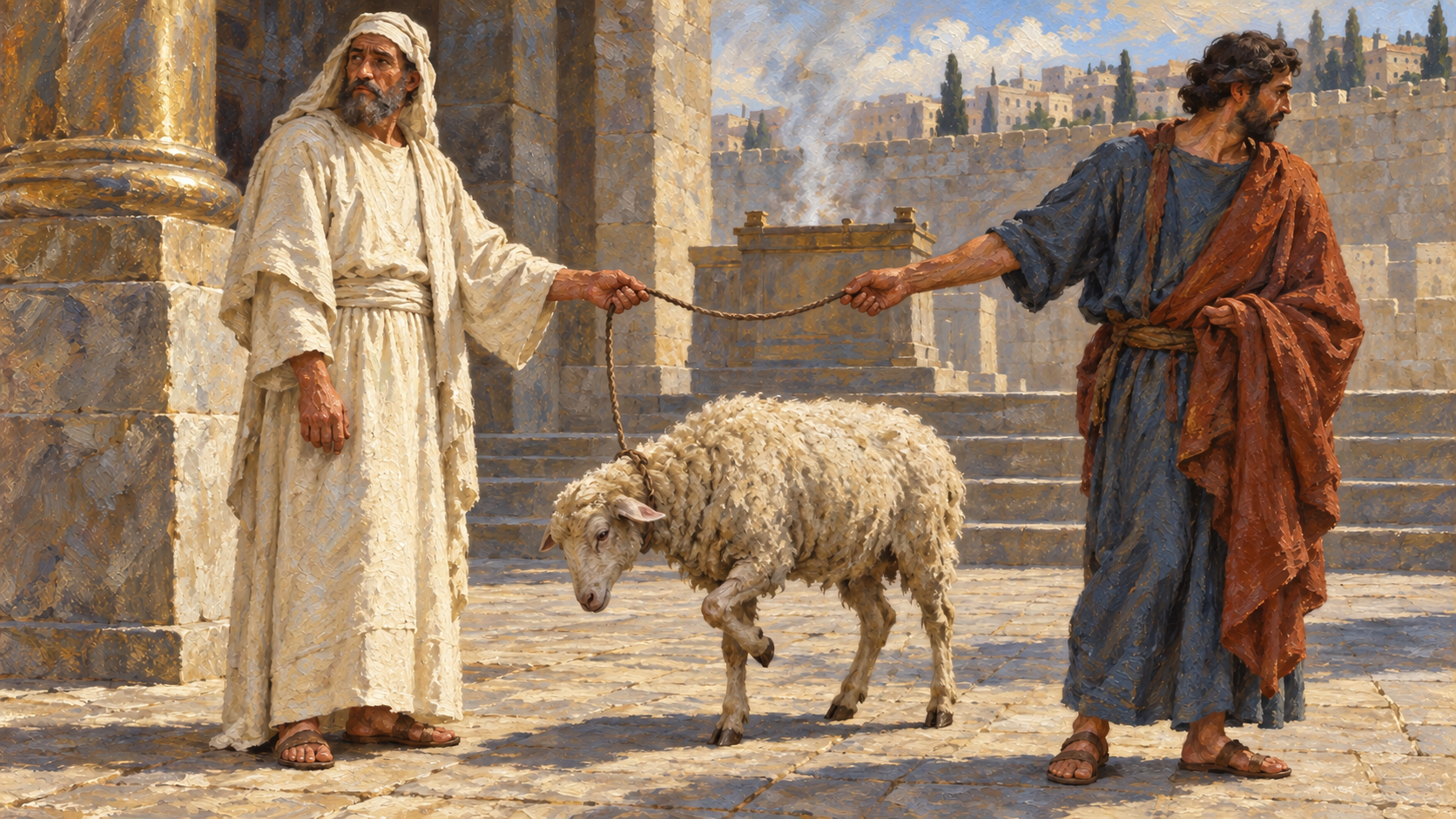
“A son honors his father, And a servant his master. If then I am the Father, Where is My honor? And if I am a Master, Where is My reverence? Says the LORD of hosts To you priests who despise My name. Yet you say, ‘In what way have we despised Your name?’ You offer defiled food on My altar, But say, ‘In what way have we defiled You?’ By saying, ‘The table of the LORD is contemptible.’ And when you offer the blind as a sacrifice, Is it not evil? And when you offer the lame and sick, Is it not evil? Offer it then to your governor! Would he be pleased with you? Would he accept you favorably?” Says the LORD of hosts.
The priests knew that the Law prohibited defective sacrifices, yet blind, lame, and sick animals were being accepted at God’s altar. The LORD asked whether their governor would receive such a gift favorably. They expected a human ruler to be treated with honor while offering God what His own command rejected. Keeping the sacrifices on schedule could not make that contempt reverent.
Even an expensive animal could not purchase God’s acceptance. Israel had to bring the offering He commanded, and its sacrifices pointed beyond themselves to His provision for sin. The priests were disregarding those commands while claiming to worship Him. Christians do not keep Israel’s altar law, but I need to examine that same attitude in careless teaching, dishonest service, or words of praise that conceal indifference toward God. We still owe Him truthful worship.
Malachi 2 describes God spreading the offal, the discarded waste from the festival sacrifices, on the priests’ faces and having them carried away with it. Men entrusted with holy service had profaned it; God would treat them like the refuse removed from the sacrifices. The severity belongs to His covenant warning against corrupt priests. This passage is not a direct prediction of Jesus cleansing the temple.
God Calls Priests and Families Back to Covenant Faithfulness
“My covenant was with him, one of life and peace, And I gave them to him that he might fear Me; So he feared Me And was reverent before My name. The law of truth was in his mouth, And injustice was not found on his lips. He walked with Me in peace and equity, And turned many away from iniquity. “For the lips of a priest should keep knowledge, And people should seek the law from his mouth; For he is the messenger of the LORD of hosts.
God describes the character He intended for Levi’s ministry. A faithful priest revered His name and spoke truth, with a life that agreed with his instruction. He helped people turn away from sin. As the LORD’s messenger, he had been entrusted with teaching God’s Law, not inventing religious opinions and presenting them as God’s will.
Malachi’s priests had departed from that calling and caused others to stumble. People came to them to learn God’s will, so their corrupt teaching could persuade a hearer to excuse conduct God condemned. They were harming people’s consciences and lives. Here the word messenger describes a priest’s responsibility to teach. Its later use for the forerunner and the divine Messenger of the covenant does not make every messenger the Messiah.
Jesus is the church’s final High Priest and the one Mediator between God and man. The church therefore lives under His priesthood rather than the Levitical system. Christian teachers do, however, have a responsibility to explain Scripture honestly and live according to it. We should want hearers to repent and remain faithful, rather than treat their applause as proof that we have served them well.
Malachi also confronts Judah’s union with foreign worship. His expression “the daughter of a foreign god” identifies an idolatrous allegiance. Ruth was a Moabite who trusted the LORD and entered Israel faithfully, so her background did not prevent her from belonging to Him. The sin Malachi condemns is allegiance to a foreign god. Alongside that religious treachery, men were betraying the wives of their youth:
Yet you say, “For what reason?” Because the LORD has been witness Between you and the wife of your youth, With whom you have dealt treacherously; Yet she is your companion And your wife by covenant. But did He not make them one, Having a remnant of the Spirit? And why one? He seeks godly offspring. Therefore take heed to your spirit, And let none deal treacherously with the wife of his youth. “For the LORD God of Israel says That He hates divorce, For it covers one’s garment with violence,” Says the LORD of hosts. “Therefore take heed to your spirit, That you do not deal treacherously.”
The LORD was witness to their marriage covenants. He calls the wife a companion, someone to whom the husband has pledged faithfulness, not property he can discard when desire changes. Tears at the altar did not compensate for betraying her. Malachi joins worship and home because the same man who brought offerings was accountable to God for how he treated his wife.
The Hebrew wording of Malachi 2:16 has led to different translations, especially over who is said to hate. The NKJV understands the statement as the LORD’s hatred of divorce. Other translations understand it as describing a man who hates and divorces his wife. I retain the NKJV’s reading while acknowledging the grammatical difficulty. The passage’s condemnation of covenant treachery and violence is plain.
We also need to read Malachi alongside what Jesus and Paul teach about sexual immorality and abandonment. God’s warning to a betrayer must not be turned into an accusation against the spouse who has been wronged. The seriousness of the marriage covenant gives the unfaithful person no excuse for betrayal or violence. It also gives us reason to care for the person who has been injured.
Twice the passage tells them, “Take heed to your spirit.” The command reaches the inner life where a person begins making excuses for treachery. I cannot honor God publicly while deliberately violating a covenant He witnesses, then expect my religious activity to conceal what I have done.
At the end of chapter 2, the people ask, “Where is the God of justice?” They see evildoers prospering and speak as though God approves, even while injustice marks their own worship and homes. An honest lament can bring confusion to God while trusting His character. These people instead use delayed judgment to question His moral rule and resist His correction. God answers that the Lord will come. Those demanding His intervention will then have their own lives exposed.
The Lord and His Messenger Are Coming
“Behold, I send My messenger, And he will prepare the way before Me. And the Lord, whom you seek, Will suddenly come to His temple, Even the Messenger of the covenant, In whom you delight. Behold, He is coming,” Says the LORD of hosts. “But who can endure the day of His coming? And who can stand when He appears? For He is like a refiner’s fire And like launderers’ soap. He will sit as a refiner and a purifier of silver; He will purify the sons of Levi, And purge them as gold and silver, That they may offer to the LORD An offering in righteousness.
Matthew, Mark, and Luke apply the forerunner prophecies to John the Baptist. His task was to prepare people for the coming Lord. He called Israel to repent and directed them to the One whose sandal strap he was unworthy to loose.
The LORD says His messenger will prepare the way “before Me.” The Lord who follows is called the “Messenger of the covenant” and comes to “His temple.” I understand this as the LORD’s own visitation through the Messiah. The Son is personally distinct from the Father, yet fully divine. The New Testament reveals Him as Jesus Christ, the eternal, uncreated Son who is fully God and fully man.
The title Messenger of the covenant also accords with the distinctive Angel of the LORD in Old Testament divine appearances. I understand those appearances as Christophanies, appearances of Christ before He took on human flesh. The coming Messiah is the divine Messenger of the covenant. Ordinary human and angelic messengers remain distinct from Him; the word messenger alone does not identify someone as Christ.
Jesus came to the temple and publicly exercised authority there during His earthly ministry. Malachi’s description of purification and public judgment also reaches beyond that first coming to His future return. The prophet presents these works of the Messiah together without describing every event between His comings. We should not lose the future warning by treating the whole passage as already fulfilled.
A refiner heats silver to remove impurity, and a launderer washes defilement from cloth. Those images explain the Lord’s action toward the sons of Levi: He will purify them so that they can offer righteous service. Their corrupt worship cannot continue with His approval. Malachi is describing the Messiah’s work of cleansing, rather than teaching that hardship automatically improves everyone’s character.
The Lord’s judgment addresses specific sins. He testifies against sorcery, adultery, and perjury, or lying under oath. He condemns the withholding of wages, oppression of widows and orphans, and mistreatment of strangers. Religious ceremony will not hide a refusal to fear Him. His cleansing also gives hope: as He removes the defilement, the service corrupted by sin can become righteous service again.
When I ask God to set the world right, I need to remember that He sees my conduct as clearly as anyone else’s. Malachi’s hearers demanded justice while resisting correction. The Lord’s answer calls me to repent, rather than assume His coming will expose only the sins I dislike in other people.
The Messiah who is worthy to judge first came to save. Wicked men tortured Jesus and put Him to death, but He voluntarily gave Himself to be slain as the perfect sacrifice for our sins. The saving worth of His sacrifice rests on His perfection and the offering of His innocent life. His shed blood and death completed that sacrifice before His burial and bodily resurrection. The Father did not punish, curse, abandon, strike, bruise, or pour wrath on His Son. Father, Son, and Holy Spirit, the three distinct, coequal and coeternal Persons of the one God, acted in unity in our redemption. Jesus’ bodily resurrection declares that death could not hold Him.
Christ died for the whole world, so God’s offer is genuine for every person, although people can resist His grace and reject Him. Everyone who repents and believes in Jesus is forgiven, justified, and born again. To be justified is to be declared righteous before God in Christ. The Holy Spirit indwells and seals each genuine believer, who is eternally secure in Christ. That security gives no permission for lawlessness, and an empty profession does not establish new birth. Neither does new birth mean a believer never stumbles. Obedience should show the reality of the new life; it neither earns nor keeps salvation.
More ceremony could not cure the treachery Malachi exposed. The Savior gives new life, and those who belong to Him have reason to honor God in their worship, teaching, marriage, giving, and speech. These were precisely the parts of life in which Malachi’s hearers had been disregarding God’s commands. Their need to repent could not be confined to what happened at the altar.
Return to the God Who Does Not Change
“I am the LORD, I do not change; therefore you are not consumed, O sons of Jacob.” Israel had survived generations of unfaithfulness because the LORD remained faithful to His covenant. He then called them back: “Return to Me, and I will return to you,” and the people again questioned how they should return. His answer identified what they had withheld from His house.
God took the initiative in calling them back. He exposed their departure and genuinely invited them to return. His grace came before their response; they were not earning His attention or beginning salvation independently of Him. Their repeated objections also show that people can resist His appeal. His unchanging character gives believers assurance while calling us to holiness. A faithful Father disciplines His children, so His care gives us reason to repent rather than an excuse for carelessness.
“Will a man rob God? Yet you have robbed Me! But you say, ‘In what way have we robbed You?’ In tithes and offerings. You are cursed with a curse, For you have robbed Me, Even this whole nation. Bring all the tithes into the storehouse, That there may be food in My house, And try Me now in this,” Says the LORD of hosts, “If I will not open for you the windows of heaven And pour out for you such blessing That there will not be room enough to receive it.
The LORD directs this charge to “this whole nation.” Israel’s tithes supplied actual food from the harvests and herds, and the storehouse held provision for His house. The wider Law assigned tithes to support the Levites, sacred festivals, and people in need. Withholding them violated God’s command and deprived those He had appointed to receive that provision.
The curse and promised abundance belong to the Mosaic covenant. The promises concern rain, harvests, and protection from the devourer that threatened their crops. Israel’s reputation among the nations belongs to the same covenant setting. I cannot place a Christian under this threat for giving less than ten percent. No pastor has authority to impose Malachi’s national covenant curse on the church.
Here God invited Israel to bring what His Law required and see Him keep His covenant promise. This was a call to obey His revealed word, not permission to gamble with donations or demand a financial return. Scripture elsewhere forbids testing God in unbelief. His invitation in Malachi concerned the command and promise He had already given this nation.
Under the new covenant, Christian giving should be regular, cheerful, and willing, supporting sound teaching and meeting genuine needs. The apostles do not impose Israel’s tithe law or promise wealth in exchange for gifts. Ten percent can be a useful personal discipline, but it cannot be made a requirement the apostles did not give. I can reject a preacher’s manipulation while still examining whether I am using it to excuse my own selfishness. A Complete Bible Study on Tithing follows those covenant distinctions further.
Malachi also rebukes those who called service to God useless and treated arrogant people as fortunate. Their complaints were not the only voices among His people, however. Others responded with reverence:
Then those who feared the LORD spoke to one another, And the LORD listened and heard them; So a book of remembrance was written before Him For those who fear the LORD And who meditate on His name. “They shall be Mine,” says the LORD of hosts, “On the day that I make them My jewels. And I will spare them As a man spares his own son who serves him.” Then you shall again discern Between the righteous and the wicked, Between one who serves God And one who does not serve Him.
Those who feared the LORD spoke with one another, and He listened. Their fellowship was heard amid the contempt others expressed toward Him. The book of remembrance draws on the familiar practice of a king keeping a record for later recognition, as Mordecai’s experience in Esther illustrates. God needs no written reminder. The record assures them that He knows them and will acknowledge them.
I would not automatically identify this record with the Book of Life, because the passages explain different things. Here God promises to distinguish publicly between those who serve Him and those who do not. These people were not sinless, nor had their religious conversations earned salvation. They spoke as people who feared the LORD and belonged to Him. His promise to claim them as His own gave them reason to hope in His mercy instead of joining the complaints around them.
The Day of the LORD Will Reveal the Difference
“For behold, the day is coming, Burning like an oven, And all the proud, yes, all who do wickedly will be stubble. And the day which is coming shall burn them up,” Says the LORD of hosts, “That will leave them neither root nor branch. But to you who fear My name The Sun of Righteousness shall arise With healing in His wings; And you shall go out And grow fat like stall-fed calves. You shall trample the wicked, For they shall be ashes under the soles of your feet On the day that I do this,” Says the LORD of hosts.
The coming Day answers the claim that the proud are blessed. Their present success will not conceal their standing before God forever. Malachi compares the wicked to stubble burned until neither root nor branch remains. I understand this as decisive destruction, rather than the endless preservation of human beings in fire.
The wider teaching of Scripture places unbelieving humanity’s final judgment after resurrection at the Great White Throne. The second death in the Lake of Fire is the irreversible destruction of the human body and soul. Human souls are not naturally immortal; eternal life is God’s gift. Malachi’s imagery supports that understanding, although the full doctrine must be drawn from Scripture as a whole.
For those who fear God’s name, the sunrise brings healing. They go out with the vigor of well-fed calves released from a stall. I understand the Sun of Righteousness as the dawn of God’s righteous deliverance. Within the book’s messianic setting, there is strong reason to see this promise fulfilled in Christ, the Lord who exposes evil and brings salvation. The image describes His life-giving rule without identifying the Creator with the physical sun.
“Wings” can describe the spreading rays of that rising sun. The word can also refer to edges or extremities, but that range of meanings does not turn this passage into a prediction about a particular garment. Healing accompanies judgment and vindication here. It does not promise every faithful Christian immediate bodily healing before the resurrection. Christ can heal now according to His wisdom, and in the new creation He will finally remove death and pain.
The Day of the LORD encompasses a broad sequence of events. Judgment unfolds during the Tribulation, Christ returns bodily to establish His literal thousand-year reign, and a final rebellion follows that kingdom. The Great White Throne judgment precedes the new creation. Malachi reveals the moral outcome without setting out that entire chronology. A Complete Bible Study on the Day of the Lord examines the wider passages.
God’s patience now gives people time to repent. His genuine offer in Christ remains open, and it can be received or resisted. I should not mistake that opportunity for proof that the judgment Malachi announces will never come.
“Remember the Law of Moses, My servant, Which I commanded him in Horeb for all Israel, With the statutes and judgments. Behold, I will send you Elijah the prophet Before the coming of the great and dreadful day of the LORD. And he will turn The hearts of the fathers to the children, And the hearts of the children to their fathers, Lest I come and strike the earth with a curse.”
Israel was to remember the Law God had given through Moses at Horeb while waiting for the promised messenger. Future deliverance did not cancel present obedience. The promise concerning Elijah would later be applied to John the Baptist’s ministry. Before John’s birth, Gabriel explained his calling:
And he will turn many of the children of Israel to the Lord their God. He will also go before Him in the spirit and power of Elijah, “to turn the hearts of the fathers to the children,” and the disobedient to the wisdom of the just, to make ready a people prepared for the Lord.
John went before the Lord “in the spirit and power of Elijah.” His wilderness ministry, courage before rulers, and call to repentance resembled Elijah’s commission. He fulfilled that prophetic role without being Elijah reincarnated or living under another name. When asked whether he was literally Elijah, John said no.
Jesus identified John as the promised messenger and said that, for those willing to receive it, he was the Elijah who was to come. Jesus also spoke of Elijah coming and restoring all things. I understand those statements by distinguishing the fulfillment of a prophetic role from personal identity. John truly fulfilled the Elijah-like role at Christ’s first coming. Malachi’s connection with the great Day also leaves room for a future ministry of Elijah before Christ’s public return.
The turning of hearts includes restored faithfulness within families, but Gabriel’s explanation goes beyond family affection. The disobedient turn toward the wisdom of the just, and a people are prepared for the Lord. A Complete Bible Study on John the Baptist develops that fulfillment and his witness to Jesus.
My Final Thoughts
Malachi calls me to examine what my worship says about how I regard God. I need to face the conduct His Word exposes instead of answering with another evasive “In what way?” Repentance belongs in my treatment of Scripture and in my home, my resources, and my speech. God hears those who fear Him, even when arrogant people seem to prosper. The Messiah who shed His blood, died, and rose bodily will return to make the difference plain. I want to receive His mercy now and honor Him with willing obedience.