
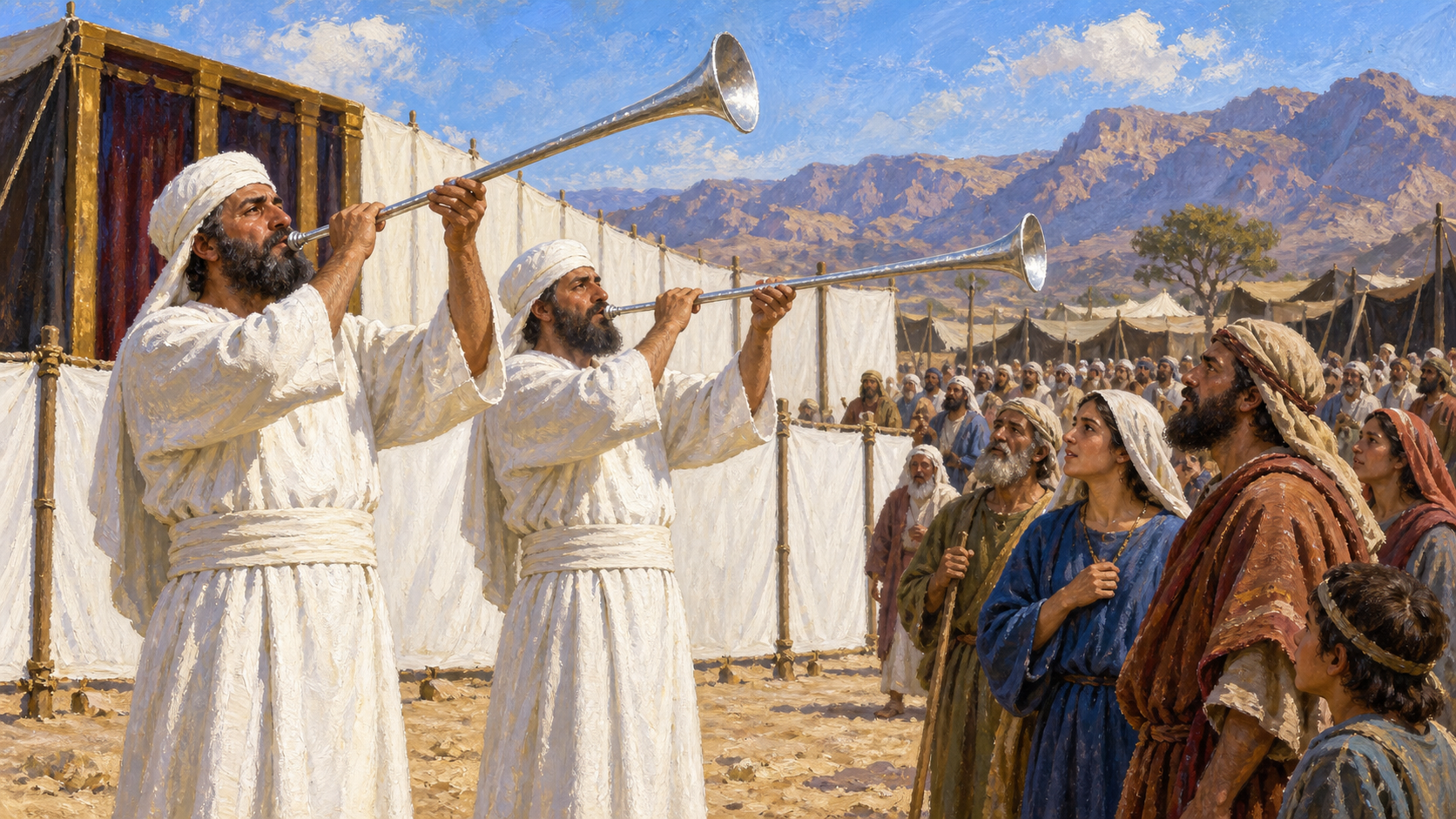
Leviticus gives Israel a short command for the Feast of Trumpets without explaining much about its meaning. That leaves me wanting to understand what the nation was meant to hear in those trumpet blasts and how far Christians should connect the feast with future prophecy. The other trumpet passages in Scripture help answer those questions, but they do not give us a calendar for predicting dates.
The Feast at the Beginning of the Seventh Month
In Leviticus 23, Israel was commanded to observe the Feast of Trumpets with a sabbath-rest and a holy assembly. The day was called a memorial of blowing of trumpets, though little explanation accompanied the command. Later Jewish tradition calls it Rosh Hashanah, meaning the head of the year. The Torah itself directs our attention to the trumpet sound as Israel rested and gathered to remember and worship the LORD.
The Hebrew expression Yom Teruah is often connected with the feast and means the day of shouting or blasting. Depending on the setting, teruah can describe a shout or a trumpet blast. It can also refer to an alarm, a battle cry, or joyful acclamation. Understanding that range helps us read the trumpet passages accurately. The sound could gather Israel or warn the nation, accompany worship, or announce that God was intervening.
Leviticus 23 and Numbers 29 give the command for the first day of the seventh month. Numbers 10 shows how trumpets called Israel together and directed the camp’s movements, as well as serving in war and worship. In Exodus 19, the sound accompanied God’s presence at Sinai. Joel 2 and Zephaniah 1 use it to warn of the Day of the LORD. By contrast, 1 Corinthians 15 and 1 Thessalonians 4 give the church resurrection hope, while Revelation 8-11 describes trumpet judgments during the Tribulation. I need to keep those settings in view so that recognizing a shared sound does not lead me to confuse different events.
Leviticus places the feast on the first day of the seventh month. Israel was to do no customary work and was to offer an offering made by fire to the LORD.
Speak to the children of Israel, saying: “In the seventh month, on the first day of the month, you shall have a sabbath-rest, a memorial of blowing of trumpets, a holy convocation. You shall do no customary work on it; and you shall offer an offering made by fire to the LORD.”
Numbers 29 adds the offerings for that day and calls it a day of blowing the trumpets. With this feast, Israel entered the seventh month before the Day of Atonement and the Feast of Tabernacles. After hearing the trumpets on the first day, Israel was to afflict their souls on the tenth. That day’s high-priestly ministry centered on cleansing and atonement. On the fifteenth day, the nation began a week of dwelling in booths and rejoicing before the LORD.
The trumpet called Israel to attention before the month led them through atonement to dwelling with joy before the LORD. That sequence gives me something definite to consider, but Leviticus does not explain the feast’s full purpose. I would rather follow the other trumpet passages than fill that silence with claims Scripture does not make. They give us enough to study faithfully without turning the feast into a code for predicting dates.
What Trumpets Meant in Israel’s Life
In Numbers 10, the LORD told Moses to make two silver trumpets for calling the congregation together and directing the camps when it was time to move. This is Scripture’s clearest explanation of how trumpets served Israel as a nation.
Make two silver trumpets for yourself; you shall make them of hammered work; you shall use them for calling the congregation and for directing the movement of the camps.
The trumpets also sounded alarms and accompanied Israel into battle. God promised that when they sounded the alarm in war, He would remember them and save them from their enemies. He had appointed this use of the trumpet within His covenant with Israel. It expressed their dependence on Him for safety rather than giving them a way to control Him.
Numbers 10 also describes trumpets sounding over burnt offerings and peace offerings. They were blown on days of gladness, during the appointed feasts, and at the beginnings of months. So the sound belonged to Israel’s worship and calendar as well as its military needs and wilderness travel. The whole congregation heard it and responded together before God, making this a shared act of worship rather than a private spiritual exercise.
Those uses help me understand what Israel would recognize in a day of trumpet-blowing. The sound had gathered them for worship, directed their movements, and warned them of danger. It called them to remember the LORD who remembered them. The Feast of Trumpets gave that familiar covenant sound a whole day at the beginning of the seventh month, calling the nation to give God its attention.
Before Leviticus 23, Israel had already heard a terrifying trumpet at Sinai. Thunder and lightning covered the mountain, while a thick cloud surrounded it. A very loud trumpet sounded and kept growing louder as Moses spoke and God answered him.
And when the blast of the trumpet sounded long and became louder and louder, Moses spoke, and God answered him by voice.
At Sinai, the people trembled because the trumpet announced the LORD’s presence and the holiness of that covenant moment. This was no sound of entertainment. That setting helps me understand why a biblical trumpet can stir fear as well as joy. The same kind of sound that gathers worshipers can warn sinners that the Holy One is coming.
The instruments also differ from one passage to another. Numbers 10 names silver trumpets, while later discussions of worship and holy days often bring the shofar to mind. I don’t want speculation about the instrument to distract us from what the appointed sound does. It calls people together before God to remember and respond, and at times it warns them.
Trumpets, the Day of the LORD, and Resurrection Hope
The prophets connect trumpet blasts with the Day of the LORD. Joel says, “Blow the trumpet in Zion, And sound an alarm in My holy mountain!” Zephaniah describes the great day of the LORD as a day of trumpet and alarm against fortified cities and high towers.
The Day of the LORD describes a broad prophetic work of judgment and deliverance, rather than any difficult period someone might experience. The nearer judgments announced by the prophets foreshadow that climactic future Day. It reaches to Christ’s visible return and His kingdom, then ultimately to the last judgment. Trumpets announce God’s intervention as He puts down pride and establishes His rule while saving His people.
A trumpet can call people to rejoice, but the prophets also use it to sound an alarm. That warning keeps me from treating the Feast of Trumpets only as a celebration. The LORD sees and remembers what is happening, and He will judge rebellion as well as save. These prophetic passages call for repentance and watchfulness, not simply curiosity about what might happen. They give the world no reason to assume everything will continue unchanged.
In 1 Corinthians 15, Paul gives believers a related reason for hope: when the trumpet sounds, the dead will be raised incorruptible and living believers will be changed. In 1 Thessalonians 4, the Lord descends from heaven with a shout, accompanied by the voice of an archangel and the trumpet of God. The dead in Christ rise first. Then living believers are caught up together with them to meet the Lord in the air.
For the Lord Himself will descend from heaven with a shout, with the voice of an archangel, and with the trumpet of God. And the dead in Christ will rise first.
I believe Scripture places this gathering of the church before the Tribulation. The trumpet of God summons us to the Lord before the hour of trial, so it gives the church hope rather than warning us to fear the wrath of that coming period. We can comfort one another with this promise and live ready for Him.
When Paul speaks of “the last trumpet” in 1 Corinthians 15, he is explaining how resurrection defeats death and gives believers incorruptible bodies. His subject is the completion of the church’s hope of resurrection and transformation. He is not describing Revelation’s trumpet judgments, which had not yet been given to John in the form we now have. In Paul’s discussion, the trumpet announces the end of this earthly life for those who belong to Christ.
I find deep comfort in this doctrine, just as Paul tells believers to comfort one another with these words. The trumpet of God means the Lord has not lost a single one of His people. Graves do not silence His summons, and death cannot hold those who are in Christ.
Why Every Prophetic Trumpet Is Not the Same Event
In Matthew 24, Jesus describes the great Tribulation and His visible coming as the Son of Man before speaking of a trumpet. At that coming, angels will gather His elect with a great trumpet sound. This gathering belongs to the Olivet Discourse, the teaching Jesus gave about His public return after the Tribulation.
I cannot merge Matthew 24:31 with 1 Thessalonians 4 simply because both mention a trumpet. Scripture uses that sound for more than one event. The church’s gathering before the Tribulation is our blessed hope, while Matthew 24 describes the Son of Man’s visible return and an angelic gathering in that setting. Keeping the events distinct allows each passage to say what it actually teaches.
Revelation 8-11 describes seven trumpet judgments during the Tribulation. They announce God’s judgment on the earth, striking creation itself as they reach the waters and the heavens. Later trumpets bring demonic torment and terrible armies. The seventh announces, “The kingdoms of this world have become the kingdoms of our Lord and of His Christ.”
Paul comforts the church with resurrection and transformation, whereas Revelation describes Tribulation judgments and announces the kingdom. That difference is why I do not identify Revelation’s trumpets with Paul’s last trumpet. The shared imagery deserves attention, but it cannot replace the setting each writer gives us.
The seventh trumpet in Revelation follows the seventh seal and comes before the bowls of wrath. It loudly and publicly announces the certainty of the kingdom even though further judgments remain in the book. In 1 Thessalonians 4, the trumpet of God accompanies the Lord’s gathering of His church. We can recognize hope for the church and judgment on a rebellious world in the Bible’s trumpet passages without making them the same event.
Watchfulness Without Calendar Speculation
Later Jewish tradition connects the feast with the civil new year and calls it Rosh Hashanah. That helps explain later Jewish practice, but it does not determine what the Torah means. Leviticus 23 identifies the day by its trumpet-blowing and calls Israel to assemble in holiness and rest before the LORD.
We should speak respectfully about Jewish tradition without mocking later practice or pretending its history does not exist. Respect does not require giving tradition the authority of Moses and the Prophets. Scripture remains our final authority, so I want the inspired text to govern how we understand this appointed sound before the LORD.
The spring feasts clearly point to Christ’s first coming. Passover and Unleavened Bread belong to this group, along with Firstfruits and Pentecost. These feasts find major fulfillment in His death and burial, His resurrection, and the giving of the Spirit. The fall feasts draw our attention toward prophetic hope that has not yet been fulfilled. With the Feast of Trumpets, we hear the summons and alarm that lead us to consider resurrection and the coming kingdom.
None of this tells me that Jesus must gather the church on a future Feast of Trumpets. Scripture gives us no permission to set a date by calculating new moons or following calendars and feast cycles. Jesus said that no one knows the day or hour. The watchfulness this feast encourages means being ready for Him, not working out a date He has not given us.
Typology means recognizing biblical patterns, and it can help us understand the feast when those patterns serve the text. The trumpet calls people together to remember God, but it can also warn them or give them hope. Reading that pattern well should strengthen our obedience rather than feed a prediction scheme. It must never override plain New Testament teaching or erase the distinctions among Israel, the church, and future Tribulation events.
The true center is Christ. Jesus physically bore the punishment for our sins in His innocent body through real torture, the shedding of His blood, and death. He was buried and rose bodily. The trumpet hope belongs to those who are His. The dead in Christ will rise, living believers will be changed, and the Lord will reign.
Our hope rests in Christ Himself rather than our ability to calculate a date. We can listen for His summons in Scripture and obey His Word, living watchfully without fear. The trumpet alarms in the prophets and Revelation still call us to take judgment seriously. While mercy is offered, we must preach the gospel. People need reconciliation with God through Christ, which goes much further than knowing facts about the feasts.
Being watchful means serving the Lord faithfully today and turning from sin when His Word exposes it. We keep praying when the world feels unstable and learn to love His appearing rather than fear it. I do not need a hidden date to do those things. I need to know the Lord and trust His promise so that I am found obeying Him when He comes.
God’s appointed times show that He orders the seasons and keeps His covenant as He brings prophecy to completion. He is not reacting to history in panic, and I can wait for Him with confidence in that faithfulness. We can also comfort one another with resurrection hope. The dead in Christ are not forgotten, because the Lord remembers His people and will bring them to Himself.
For further study, see The End Times Timeline, The Pre-Tribulation Rapture, and Matthew 24-25. The studies on The Seven Trumpets of Revelation and The Day of the LORD explore these prophetic distinctions in greater depth.
My Final Thoughts
The Feast of Trumpets called Israel away from ordinary work so the nation could gather and remember the LORD, and its sound still directs our attention toward both warning and hope. After tracing these passages, I believe we honor the feast best when we let each trumpet speak in its own setting instead of forcing every passage into one event or one date on the calendar. The church can wait confidently for Christ to gather His people before the Tribulation. While mercy is offered, we preach the gospel and comfort one another with the promise that death will never silence the Lord’s summons.