
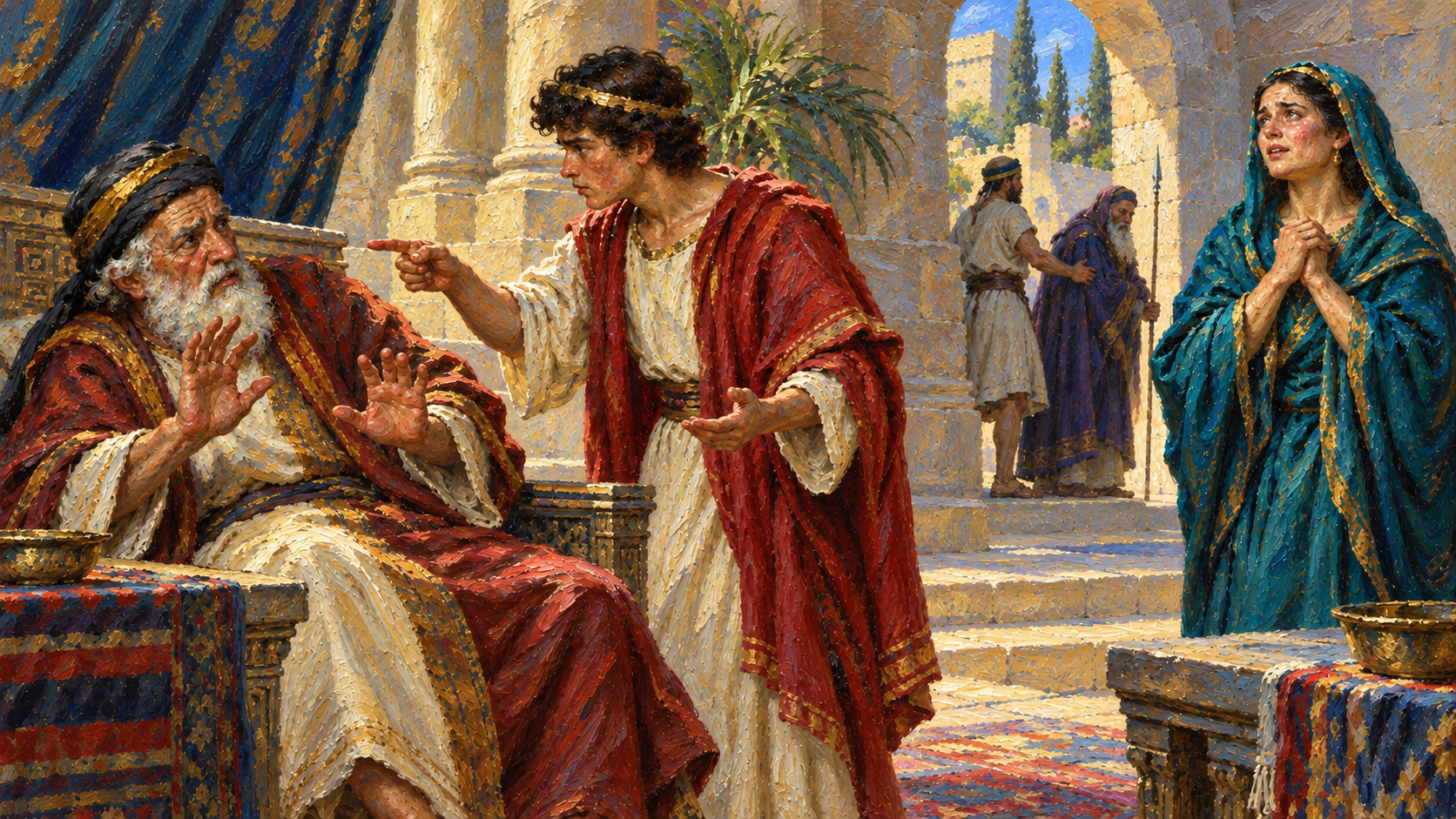
Susanna and Bel and the Dragon are sometimes printed as Daniel 13 and Daniel 14. Do they belong to the inspired Book of Daniel? I want to examine what these writings contain and why a useful religious work is not automatically Scripture.
The Real Question Is Authority
A writing can teach something true without being part of God’s authoritative Word. A sermon may explain Scripture faithfully, and a historical account may preserve useful information, but neither becomes inspired because of that usefulness. The same distinction applies to Susanna and Bel and the Dragon. Agreement with biblical morality does not by itself place them in the canon, the collection of writings received as Scripture.
I can approve of a writing that condemns lust, exposes idolatry, or praises courage without calling it God-breathed. Those moral judgments may be true, but my approval cannot establish inspiration. I need to keep that distinction clear because Christian doctrine rests on what God has given as His Word.
I receive the Old Testament according to the Hebrew Masoretic Text, including the Aramaic portions preserved in books such as Daniel. The Septuagint can be useful for historical study, but it cannot overrule the Hebrew and Aramaic text as the governing Old Testament base. Susanna and Bel and the Dragon are not part of Daniel in that preserved Hebrew and Aramaic tradition. For that reason, they cannot serve as Scripture for doctrine, correction, or final authority.
What Susanna and Bel and the Dragon Teach
Susanna is a courtroom account about a righteous woman falsely accused by two corrupt elders. They desire her and threaten her, then accuse her when she refuses their wickedness. The community is ready to condemn her until Daniel intervenes. He separates the accusers and questions each one, exposing contradictions in their answers. Susanna is vindicated, and the false witnesses receive judgment.
The elders use their position to make sexual demands and then bear false witness when Susanna refuses. The account condemns their wickedness and honors her chastity and courage, presenting her vindication as just and good. We can recognize those moral teachings in Scripture. Moses’ law condemns adultery and false witness as well as the corruption of justice by wicked leaders. Proverbs likewise warns against wicked men and teaches the value of wisdom in judgment.
That agreement with biblical ethics does not establish Susanna as inspired. It reads as a moral tale attached to Daniel’s reputation, without the prophetic structure of canonical Daniel. It gives no visions of kingdoms rising and falling, no covenant promise, and no Messianic prophecy. I can take its moral lesson seriously without placing it alongside Daniel 2, Daniel 7, Daniel 9, or Daniel 12 as part of the same inspired prophetic book.
Bel and the Dragon places Daniel in several episodes in Babylon. In the account of Bel, he exposes priests who secretly eat food left as an offering to an idol. He also destroys a creature the people revere in the dragon episode, exposing the foolishness of their worship. A later scene resembles the lions’ den and describes Daniel being preserved.
The broad lessons resemble what Scripture already teaches about false worship. Idols are false, and religious fraud deserves to be exposed. God’s servant should remain courageous before rulers. Isaiah mocks idols that cannot speak or save, and Elijah confronts false worship on Mount Carmel. Daniel 6 records the true God preserving Daniel in the lions’ den. Bel and the Dragon uses Daniel’s setting for its own rebuke of idolatry.
I do not mistake those similarities for authority. Canonical Daniel already reveals God’s rule over idolatrous empires and His care for faithful servants in exile. Its prophecy concerns Gentile kingdoms and the coming Messiah, extending to the final resurrection. Bel and the Dragon adds no inspired prophecy to that witness. It should not be treated as Daniel 14 in the sense of continuing the book God inspired.
Canonical Daniel Has a Different Character
Daniel’s courage as a Jewish exile belongs within a prophetic book about God’s rule over kingdoms and His revelation of things to come. Daniel interprets Nebuchadnezzar’s dream and receives visions of beasts and kingdoms. Daniel 9 gives a prophetic timetable connected to Messiah, while Daniel 12 speaks of resurrection and final deliverance. We lose the character of the book if we reduce it to a collection of accounts about a wise, brave exile.
This prophetic character is central to the book. Daniel reveals the God who rules over Babylon, Medo-Persia, Greece, Rome, and the final kingdom realities developed elsewhere in Scripture. Jesus Himself points to Daniel’s prophecy of the abomination of desolation while teaching about future events:
Therefore when you see the “abomination of desolation,” spoken of by Daniel the prophet, standing in the holy place (whoever reads, let him understand).
Jesus names Daniel as a prophet and directs His hearers to the inspired prophetic book. He does not quote Susanna or Bel and the Dragon as Danielic prophecy, and the apostles do not build doctrine from either writing. The additions became associated with Daniel later in Greek tradition, but they are not the focus of the New Testament’s use of his book.
That difference should shape how I read these works. Canonical Daniel gives revelation from God. The additions may echo its themes, but they lack its prophetic authority. Recognizing their moral content does not require me to place them beside the Word God breathed out.
The Hebrew and Aramaic Text and the Canon
The clearest textual distinction is their absence from the Hebrew Masoretic Text and the preserved Hebrew and Aramaic Daniel tradition. Daniel includes sections in both languages. Susanna and Bel and the Dragon are Greek additions, rather than parts of that canonical text.
That fact does not forbid historical study. It identifies where authority lies. Paul says the Jewish people were entrusted with God’s Old Testament revelation:
What advantage then has the Jew, or what is the profit of circumcision? Much in every way! Chiefly because to them were committed the oracles of God.
God entrusted His oracles to Israel, so the Hebrew and Aramaic canon carries an authority the later Greek additions do not. I can still study the Septuagint for its ancient translation history and what it shows about some Greek-speaking communities’ transmission of Jewish writings. It is useful for study and comparison, but its wider collection cannot redefine the canon God gave.
Jesus summarized the Old Testament Scriptures as the Law of Moses, the Prophets, and the Psalms:
Then He said to them, “These are the words which I spoke to you while I was still with you, that all things must be fulfilled which were written in the Law of Moses and the Prophets and the Psalms concerning Me.”
Luke 24:44 shows the categories of Scripture Jesus received and fulfilled, though that verse alone does not settle every detail of the canon. His references to Daniel concern the prophet and the abomination of desolation. He never appeals to Susanna, Bel, or the dragon as prophetic revelation.
I would not rest this conclusion on silence alone. Some canonical Old Testament books are never directly quoted in the New Testament. Here, the silence accompanies stronger textual evidence: the additions are absent from the Hebrew and Aramaic Daniel I receive as the Old Testament base. Both point to the conclusion that these works should not be treated as inspired Daniel.
Moral Value and the Boundary of Scripture
A reader may wonder why Susanna should be rejected when it teaches justice, or why Bel and the Dragon should not be received when it rebukes idols. Those questions concern their moral value, but agreement with biblical morality does not establish inspiration.
A hymn can teach sound doctrine just as a sermon can explain Scripture well. A historical account may preserve an important detail. Those are useful contributions, but they do not make any of those works the Word of God. Inspiration is God’s act; readers cannot confer it on a text they find helpful.
All Scripture is given by inspiration of God, and is profitable for doctrine, for reproof, for correction, for instruction in righteousness.
Paul describes Scripture as God-breathed, which is why it has authority to teach and correct the church. He is not giving that authority to every helpful religious work. Susanna and Bel and the Dragon may agree with biblical teaching at points, but they do not carry the authority of God-breathed Scripture.
Peter describes true prophecy in similar terms. It did not begin in the will of man. God moved holy men to speak:
For prophecy never came by the will of man, but holy men of God spoke as they were moved by the Holy Spirit.
Canonical Daniel bears that prophetic character; the additions do not have the same standing. Their place in Greek tradition calls for care in using the Septuagint, rather than an expansion of Daniel. We can examine ancient translation choices through it and learn how many Greek-speaking Jews and later Christians encountered Old Testament writings. That historical value does not give it final authority over the Hebrew and Aramaic text.
When a Greek manuscript tradition includes material absent from the Hebrew and Aramaic Daniel, we need to recognize its limits. Valuable material can be preserved in a translation or collection alongside works outside the canon. For Old Testament language study, we should therefore use the Hebrew Masoretic Text as the base, including the Hebrew Bible’s Aramaic portions. Comparing the Greek may help us, but it cannot add inspired chapters to Daniel.
God warned Israel not to add to what He commanded:
You shall not add to the word which I command you, nor take from it, that you may keep the commandments of the LORD your God which I command you.
That command first belongs to its covenant setting in Deuteronomy. Still, I need to take seriously its warning against giving human additions divine authority. It does not forbid us to consult dictionaries or commentaries, or to read history and ancient literature. Those sources can inform us and may correct historical assumptions, but they remain under Scripture. They cannot establish doctrine with God’s authority.
The church receives the Scriptures God gave; it does not create the canon according to its preferences or feelings. Those writings carry divine authority and come to us through Israel’s covenant responsibility to preserve God’s oracles. They agree with the prophetic and apostolic witness and bear the character of God-breathed Scripture. The additions fail the clearest test here: they are absent from the preserved Hebrew and Aramaic Daniel received as Scripture.
I want to keep that distinction clear because it protects Christian doctrine. Other apocryphal or deuterocanonical writings have been used to support practices canonical Scripture does not establish. Accepting a writing because it feels edifying would make it harder to maintain that distinction elsewhere in the church’s teaching. My concern comes from love for the Word God gave, not contempt for ancient literature.
How Christians Should Treat These Writings
Finding Susanna or Bel and the Dragon in an old Bible does not need to cause panic. The same is true of encountering them in a Catholic edition, an Orthodox collection, or a discussion of the Septuagint. We need discernment about what we are reading. If there is a reason to read them, we can approach them as ancient religious literature associated with Daniel in some traditions, rather than as inspired chapters of his book.
We can then speak honestly about their content. Susanna condemns false testimony and praises integrity, while Bel and the Dragon mocks idolatry and exposes religious fraud. Those moral teachings do not place either work in the Old Testament canon received through the Hebrew and Aramaic Scriptures. We can acknowledge what they teach without giving them divine authority.
A pastor may discuss these additions when explaining the Apocrypha or the history of textual traditions. But he should make clear that he is discussing ancient literature, rather than preaching it as Scripture. He should not build doctrine on these works or present them as chapters God added to Daniel. The church needs the Word of God for its nourishment, not every ancient work with religious themes.
Forever, O LORD, Your word is settled in heaven.
Our confidence rests in God’s settled Word. We do not need to enlarge Scripture in order to protect truth. We need to receive what God gave and study it faithfully. This same concern is behind the question of which Bible translation to trust. It also affects how we approach Daniel’s inspired prophecies, including the 70 weeks of Daniel, and how we understand the Word of the Lord in the Old Testament.
My Final Thoughts
After considering these writings, I do not believe Susanna or Bel and the Dragon should be treated as inspired Scripture. They may preserve moral lessons, but they are Greek additions rather than parts of the Hebrew and Aramaic Daniel. Moral value cannot create divine inspiration. Canonical Daniel stands as prophetic Scripture, and Jesus Himself names Daniel as a prophet. We can read ancient literature honestly without giving it authority God did not give it. Our doctrine and our confidence must rest on His settled Word.