
Why did Paul speak so sharply to churches that already believed in Jesus? Teachers were pressing them to add circumcision and the Mosaic Law to faith. That put the very basis of their acceptance with God at stake. In Galatians, Paul explains both why Christ alone justifies us and how people He has set free learn to walk by the Holy Spirit.
The Gospel Crisis in Galatia
After his greeting, Paul immediately expresses astonishment that the Galatians are turning toward a message that corrupts the gospel he preached. He omits his usual thanksgiving because the basis of their acceptance with God is under threat. Before anything else, these churches need to understand the danger in what they are being taught.
The churches had heard Christ proclaimed, believed in Him, and received the Holy Spirit. Now they were being pressed to receive circumcision and observe the Mosaic calendar. Their teachers offered a way to complete what faith had begun, but accepting that demand would make religious works part of their confidence before God. A message can sound disciplined and biblical while assigning the law a purpose God never gave it.
Galatians does not give the teachers’ official name or a complete account of their beliefs. We learn what they demanded from Paul’s answers: Gentiles should receive circumcision and observe days and seasons. They also appear to have challenged his standing beside Jerusalem’s recognized leaders. Later, Paul identifies their desire to avoid persecution for the cross and boast about the people they had circumcised. He supplies that assessment of their motives; we do not have to infer it from outward observance alone.
The location of these churches is disputed because Galatia could name either the ethnic region in north-central Asia Minor or the larger Roman province. The province extended south to cities including Pisidian Antioch, Iconium, Lystra, and Derbe. I find the southern destination most likely because Acts 13–14 records Paul and Barnabas establishing churches there. In Pisidian Antioch, Paul had already preached the justification by faith that this letter defends.
Therefore let it be known to you, brethren, that through this Man is preached to you the forgiveness of sins; and by Him everyone who believes is justified from all things from which you could not be justified by the law of Moses.
Paul announced forgiveness through Jesus and justification that Moses’ law could not supply. Many Gentiles welcomed the message, and he and Barnabas continued preaching despite opposition (Acts 13:40-49). In Lystra, opponents stoned Paul and dragged him outside the city (Acts 14:19-20). After preaching in Derbe, the two men returned to those threatened churches to strengthen the believers and appoint elders. Their concern for these people continued after the violence.
And when they had preached the gospel to that city and made many disciples, they returned to Lystra, Iconium, and Antioch, strengthening the souls of the disciples, exhorting them to continue in the faith, and saying, "We must through many tribulations enter the kingdom of God." So when they had appointed elders in every church, and prayed with fasting, they commended them to the Lord in whom they had believed.
These churches had not been promised comfortable lives. Paul taught them to expect tribulation as they continued in faith. Their need for courage would not be met by changing the gospel to make it less offensive.
On the reading that places these churches in southern Galatia, Paul may have written in the late AD 40s, before the Jerusalem council in Acts 15. That would make Galatians one of his earliest preserved letters and help explain why he did not appeal to the council’s written decision about circumcision. A northern audience and later date remain possible. Interpreters also differ over whether Galatians 2 describes the famine visit in Acts 11 or the council visit in Acts 15. I favor the earlier reconstruction without treating it as inspired chronology. Greg Herrick discusses these alternatives in The Date and Destination of Galatians.
We can follow Paul’s teaching without settling the date. Chapters 1–2 establish the authority of his apostleship and gospel; chapters 3–4 explain promise, law, sonship, and inheritance. Chapters 5–6 show how people freed by Christ live through the Spirit. These parts belong together. Neither earning acceptance through law nor using freedom to excuse sin belongs to the life God gives.
One Gospel and the Apostles Who Defended It
I marvel that you are turning away so soon from Him who called you in the grace of Christ, to a different gospel, which is not another; but there are some who trouble you and want to pervert the gospel of Christ. But even if we, or an angel from heaven, preach any other gospel to you than what we have preached to you, let him be accursed. As we have said before, so now I say again, if anyone preaches any other gospel to you than what you have received, let him be accursed.
Paul’s greeting begins answering the controversy before he names it. Jesus Christ and the Father who raised Him commissioned Paul, so his apostleship did not depend on appointment by a human institution. The Lord gave Himself for our sins according to the Father’s will to deliver us from this present evil age (Galatians 1:1-5). The Galatians’ rescue began with God’s grace and Christ’s willing self-giving. Their covenant observance could not supply that rescue.
The teachers were using Christian language, but their message was drawing people away from the God who called them in grace. Adding circumcision as a condition of justification did more than make discipleship demanding. It said Christ’s work was insufficient to establish a sinner’s righteousness before God. Changing the person of Christ, His saving work, or the way we receive His gift changes the gospel itself.
Paul uses heteros for the different gospel and then allos when denying that there is another. In this passage his point is clear: the proposed message is a corruption, with no right to stand beside the gospel as another valid option. We should hear the whole sentence rather than make two Greek words carry the argument by themselves. His repeated anathema, translated “accursed,” places the false messenger under God’s judgment.
Paul applied that standard even to himself and to an angel from heaven. I cannot make an impressive speaker, a large audience, or a striking spiritual experience the judge of the apostolic message. If Paul himself were to contradict the gospel he had preached, his former standing would not excuse it. He served Christ and could not alter the message to secure people’s approval (Galatians 1:10-12).
But when it pleased God, who separated me from my mother's womb and called me through His grace, to reveal His Son in me, that I might preach Him among the Gentiles, I did not immediately confer with flesh and blood, nor did I go up to Jerusalem to those who were apostles before me; but I went to Arabia, and returned again to Damascus. Then after three years I went up to Jerusalem to see Peter, and remained with him fifteen days.
Paul had zealously persecuted the church while advancing beyond his contemporaries in devotion to ancestral traditions (Galatians 1:13-14). Becoming a Christian overturned that career. His former allies turned against him, and he faced the kind of suffering he once inflicted on others. God revealed His Son and called this former persecutor to preach among the Gentiles. The study on the Apostle Paul follows that change more fully.
Paul’s account of Arabia, Damascus, and his first Jerusalem visit explains how little early contact he had with the apostles there. They had not trained him in the gospel he was preaching. Only after three years did he visit Peter for fifteen days and see James, the Lord’s brother. The Judean churches knew him by report, and they glorified God because their former persecutor now preached the faith he had tried to destroy (Galatians 1:19-24).
Paul’s independence did not mean he despised the other apostles or considered fellowship unnecessary. Acts and Galatians select different details about his travels. Here he gives the intervals and contacts relevant to his commission, even calling God as witness that he is telling the truth. The churches needed to know that Christ had revealed his gospel directly, rather than imagine he was passing on an inferior version of Jerusalem’s teaching.
Yet not even Titus who was with me, being a Greek, was compelled to be circumcised. And this occurred because of false brethren secretly brought in (who came in by stealth to spy out our liberty which we have in Christ Jesus, that they might bring us into bondage), to whom we did not yield submission even for an hour, that the truth of the gospel might continue with you.
Titus, the Greek believer Paul brought to Jerusalem with Barnabas, made the question of circumcision concrete. The recognized leaders did not compel him to receive it. False brothers wanted to bring believers into bondage, and Paul refused to yield because gospel truth was being challenged. His refusal protected Gentile believers from a requirement Christ had not placed on them.
Paul discussed his preaching privately with the recognized leaders, seeking agreement that would keep confusion from undermining the mission (Galatians 2:1-2). They supplied no missing part of his gospel. James, Peter, and John recognized the grace God had given him and extended fellowship to him and Barnabas. They would principally serve different people while preaching the same saving message. Their request to remember the poor also agreed with what Paul was already eager to do (Galatians 2:6-10). Defending justification apart from works never excused neglecting hungry people.
Paul’s later circumcision of Timothy, whose mother was Jewish, shows why the meaning attached to the act was decisive. He accommodated Jewish hearers in Timothy’s case to remove an obstacle to ministry. Circumcising Titus under the demand then being made would have conceded that a ritual was necessary for acceptance with God. A lawful custom can be observed voluntarily, but it cannot be imposed as a supplement to Christ’s saving work. I need to understand the doctrine attached to a practice before deciding whether it serves Christian liberty or surrenders gospel truth.
Peter had been eating with Gentile believers in Antioch. When men associated with James arrived, he withdrew because he feared the circumcision party. The passage does not say James ordered this separation. Peter acted hypocritically, and other Jewish believers followed him, including Barnabas. His example as a respected apostle helped draw others into the same failure (Galatians 2:11-13).
But when I saw that they were not straightforward about the truth of the gospel, I said to Peter before them all, "If you, being a Jew, live in the manner of Gentiles and not as the Jews, why do you compel Gentiles to live as Jews? We who are Jews by nature, and not sinners of the Gentiles, knowing that a man is not justified by the works of the law but by faith in Jesus Christ, even we have believed in Christ Jesus, that we might be justified by faith in Christ and not by the works of the law; for by the works of the law no flesh shall be justified."
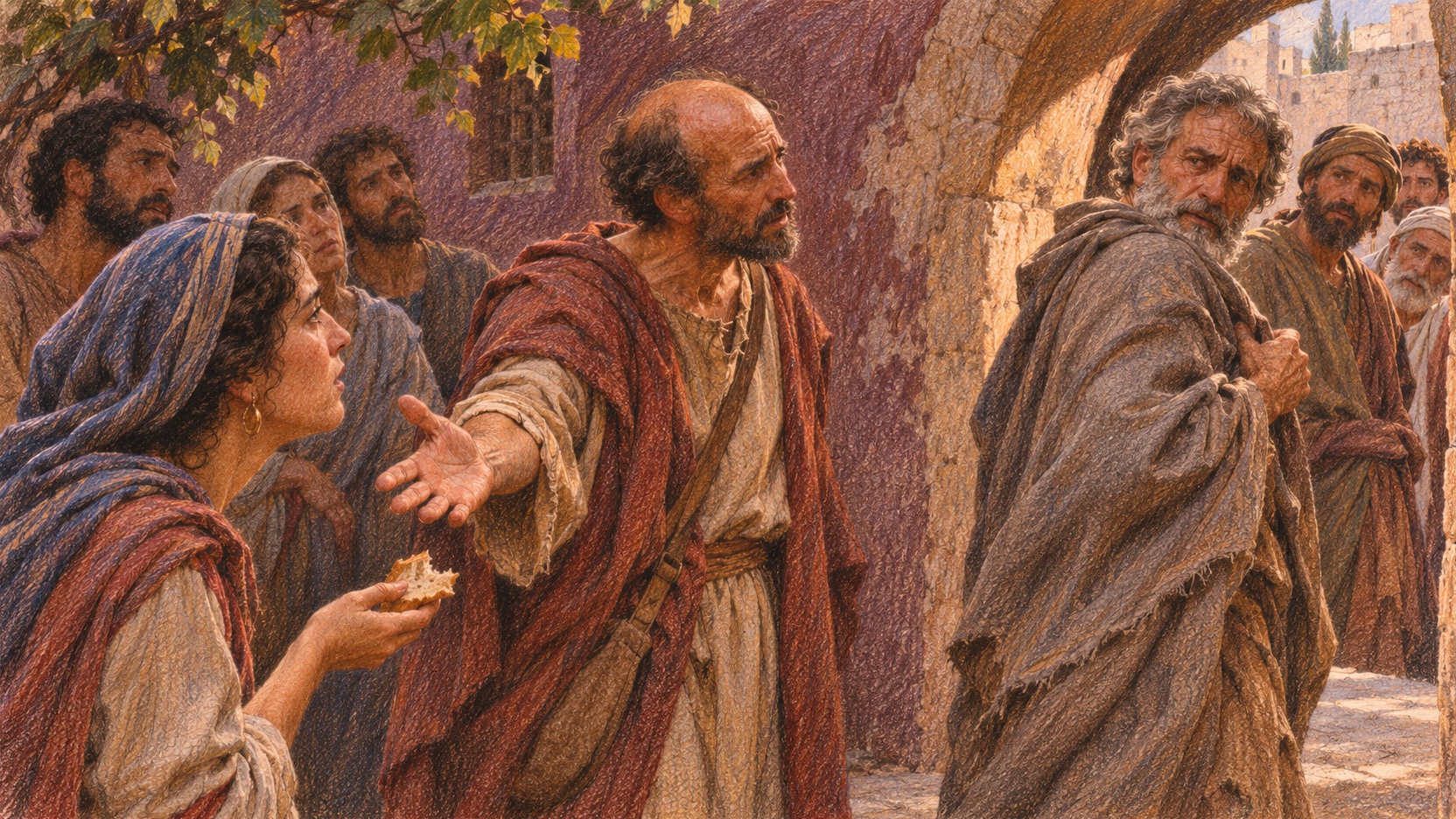
Paul confronted Peter publicly because the damage was public and spreading. Peter’s withdrawal treated Gentiles whom Christ had received as though they were not fully acceptable without living as Jews. His refusal to eat with them implied that their faith in Christ had left them unfit for the fellowship Jewish believers enjoyed.
Paul corrected Peter without denying his apostleship or treating him as an enemy. This does not authorize humiliating people over every private fault. A leader’s public behavior was drawing the church into hypocrisy, so Paul named the error before those it affected. Protecting fellowship required that correction. I can defend sound doctrine in words while teaching the opposite through the way I treat another believer.
Three times in verse 16, Paul denies that works of law justify anyone. Justification is God’s declaration that a believer is righteous in Christ. He is neither rewarding religious progress nor pretending the sinner never did wrong. He accepts the person who trusts Jesus because of Christ, without waiting for enough acts of observance to accumulate.
The received Greek text, as rendered in the NKJV, speaks of faith in Jesus Christ. Christ is perfectly faithful, but Paul also expressly says that we have believed in Him. He directs the sinner to trust the Savior. I cannot treat the strength of my faith as an achievement that makes God owe me righteousness.
Leaving law as a basis of righteousness does not make Christ a minister of sin. Rebuilding the system Paul had left would establish him as a transgressor again, since the law exposes the guilt it cannot remove. He died to law as his ground of acceptance so that he could live to God (Galatians 2:17-19).
Being crucified with Christ describes a decisive change in Paul’s standing and allegiance (Galatians 2:20-21). His former life under condemnation no longer determines who he is before God. Christ lives in him, and he lives by faith in the Son who loved him. He has received life the law could not provide, without losing his personality, becoming divine, or attaining sinless perfection. If law could establish righteousness, Christ’s death would have been unnecessary.
Promise, Law, and Sons Through Faith
This only I want to learn from you: Did you receive the Spirit by the works of the law, or by the hearing of faith? Are you so foolish? Having begun in the Spirit, are you now being made perfect by the flesh? Have you suffered so many things in vain–if indeed it was in vain? Therefore He who supplies the Spirit to you and works miracles among you, does He do it by the works of the law, or by the hearing of faith?– just as Abraham "believed God, and it was accounted to him for righteousness."
Paul asks the Galatians to remember how their life in Christ began. They had heard Christ crucified proclaimed and received the Spirit through faith (Galatians 3:1-6). Neither their suffering nor God’s work among them had begun with Mosaic observance. How could the flesh now complete what the Spirit had begun? Calling that an improvement would change the very ground of their confidence.
Abraham also believed before receiving circumcision, long before Sinai. Genesis describes him bringing his childlessness to God and receiving a promise of descendants from his own body (Genesis 15:1-4). His righteousness came through believing the One who promised.
Then He brought him outside and said, "Look now toward heaven, and count the stars if you are able to number them." And He said to him, "So shall your descendants be." And he believed in the LORD, and He accounted it to him for righteousness.
When Paul calls believers Abraham’s sons, he identifies people who share Abraham’s faith. God had already promised blessing to all nations through him. Gentiles therefore receive that blessing through Christ without first becoming ethnic Jews (Galatians 3:7-9). This fulfills the worldwide promise without canceling God’s land and national promises to Israel. The study on God keeping His promise to Abraham considers those promises together.
The same sequence answers the Galatians’ present difficulty. God had given them the Spirit when they heard and believed, before the new teachers demanded observance. They needed to continue depending on Him for growth, rather than enter the Mosaic covenant as though it could supply a missing part of spiritual life.
Christ has redeemed us from the curse of the law, having become a curse for us (for it is written, "Cursed is everyone who hangs on a tree"), that the blessing of Abraham might come upon the Gentiles in Christ Jesus, that we might receive the promise of the Spirit through faith.
Paul does not call God’s holy law evil. He explains what it means to rely on its works for righteousness: a person must continue obeying everything written or face its curse. Selecting a few visible commands cannot satisfy the whole covenant. Habakkuk’s declaration that the just shall live by faith agrees with Paul’s conclusion. Human performance cannot establish righteousness before God (Galatians 3:10-12).
Christ redeemed us from that curse, and Paul explains His becoming a curse for us by citing the law about a man hanged on a tree.
"If a man has committed a sin deserving of death, and he is put to death, and you hang him on a tree, his body shall not remain overnight on the tree, but you shall surely bury him that day, so that you do not defile the land which the LORD your God is giving you as an inheritance; for he who is hanged is accursed of God.
Deuteronomy commanded Israel to bury an executed man’s body that day, because leaving it exposed overnight would defile the land. Hanging the body publicly displayed condemnation. Jesus was innocent, yet wicked men treated Him as condemned, tortured Him, and crucified Him. He willingly gave His sinless body and shed His blood as the perfect sacrifice for our sins. The Father did not punish, curse, abandon, strike, bruise, or pour wrath on Jesus.
Paul connects Christ’s becoming a curse for us with that shameful death and His willing self-giving. I do not read him as dividing the Father from the Son or making the Father the agent of the violence. Christ redeemed people through His blood and death, completing His saving sacrifice before His burial and bodily resurrection. In Him Abraham’s blessing comes to Gentiles, and believers receive the promised Spirit through faith.
Paul then returns to the promise God made before the law. Even a confirmed human covenant is not casually annulled or supplemented. The law arrived 430 years later and could not cancel the promised inheritance. Paul identifies the promised Seed as Christ (Galatians 3:15-18). Seed can describe many descendants collectively, as it does in Genesis; his inspired explanation identifies the representative descendant through whom the blessing reaches the nations.
If the inheritance did not depend on the law, why did God give the law? Paul answers that question before explaining the full standing believers receive in Christ.
For you are all sons of God through faith in Christ Jesus. For as many of you as were baptized into Christ have put on Christ. There is neither Jew nor Greek, there is neither slave nor free, there is neither male nor female; for you are all one in Christ Jesus. And if you are Christ's, then you are Abraham's seed, and heirs according to the promise.
Paul says it was added because of transgressions until the Seed came (Galatians 3:19-22). It defined sin and restrained evil within Israel’s national life, while guarding the people through whom Messiah would come. Its temporary role was part of God’s purpose, rather than evidence that His plan had failed.
The law did not oppose the promise. It exposed guilt and confined people under sin, but an external code could not regenerate them or give them the new life they needed. If a law could have given life, righteousness could have come through it. Instead, people receive the promise through faith in Jesus Christ.
Paul calls the law a paidagogos, a household guardian who supervised a child (Galatians 3:23-25). That temporary arrangement helps explain the law’s custody until Christ. Paul is not describing a modern classroom teacher whose lessons continue in the same form forever. Now that Christ has come, believers are God’s sons through faith and no longer stand under that guardian. The study on the Law develops its purpose and fulfillment.
Being baptized into Christ and putting on Christ describes identification with Him. Water baptism follows salvation and publicly symbolizes union with His death and resurrection. The water neither creates new birth nor replaces faith. Jews and Greeks receive equal standing in Christ, as do slaves and free people, men and women. Ethnicity, rank, and sex cannot establish a superior claim to the inheritance.
That equality does not erase created sex, every responsibility in church and home, or Israel’s identity and promises. Paul is explaining how people become heirs. Everyone who belongs to Christ receives the promised blessing without first acquiring someone else’s ancestry or social position.
But when the fullness of the time had come, God sent forth His Son, born of a woman, born under the law, to redeem those who were under the law, that we might receive the adoption as sons. And because you are sons, God has sent forth the Spirit of His Son into your hearts, crying out, "Abba, Father!" Therefore you are no longer a slave but a son, and if a son, then an heir of God through Christ.
A child could be heir to an estate while still living under guardians and stewards until his father’s appointed time (Galatians 4:1-3). Paul uses that arrangement to explain the change from custody to the full position of a son. In the fullness of time God sent His Son, born of a woman and under the law, to redeem those under it. The eternal Son truly became human, entered Israel’s covenant setting, and obeyed without sin.
Adoption describes the position and inheritance God gives His people in His household. Paul’s word “sons” includes women as well as men; both receive that full inheritance. God also sends the Spirit of His Son into their hearts, crying out, “Abba, Father!” This is a real family relationship, with access to the Father through Christ.
The Galatians had once served things that were not gods. Now compulsory religious observance threatened to put them under bondage again, this time with a biblical appearance. Paul names days, months, seasons, and years because observance was being made a covenant obligation (Galatians 4:8-11). He is not condemning a believer’s voluntary choice to remember a day. These former worshipers of false gods had been received as sons. Seeking acceptance through Mosaic observance would exchange that freedom for a servant’s standing, even though their former bondage had taken a different form.
Have I therefore become your enemy because I tell you the truth? They zealously court you, but for no good; yes, they want to exclude you, that you may be zealous for them. But it is good to be zealous in a good thing always, and not only when I am present with you. My little children, for whom I labor in birth again until Christ is formed in you, I would like to be present with you now and to change my tone; for I have doubts about you.
Paul appeals to the affection the Galatians had once shown him. During his physical illness, they welcomed him instead of despising or rejecting him (Galatians 4:12-15). Their willingness to give him their own eyes may express extraordinary devotion or suggest an eye condition. Neither that expression nor his later reference to large letters establishes a diagnosis, and we cannot identify this illness with his thorn in the flesh as though he had said so.
Now telling them the truth threatened that relationship. The new teachers courted them to exclude them and secure their loyalty. Paul’s comparison with labor pains expresses his anguish over their spiritual condition. He wanted Christ formed in them even when he was absent. Their growth in Christ concerned him more than winning a following for himself. He then answers their desire to live under law by returning to Abraham’s household.
Now we, brethren, as Isaac was, are children of promise. But, as he who was born according to the flesh then persecuted him who was born according to the Spirit, even so it is now. Nevertheless what does the Scripture say? "Cast out the bondwoman and her son, for the son of the bondwoman shall not be heir with the son of the freewoman." So then, brethren, we are not children of the bondwoman but of the free.
Paul asks those who desire to be under law whether they have listened to it (Galatians 4:21-23). Abraham’s sons were born to different mothers under different circumstances. Ishmael was born to Hagar through human planning, while Isaac was born to Sarah through God’s promise after Abraham and Sarah’s natural ability to have a child had failed. Genesis records these real people, their grief and conflict, and God’s dealings with them. Paul’s symbolism rests on what actually happened.
He explicitly uses Hagar and Sarah to represent two covenants (Galatians 4:24-27). Hagar corresponds to Sinai and bondage, while Sarah corresponds to promise and freedom. The comparison overturns the teachers’ claim: putting Gentiles under Sinai would not establish their inheritance as Abraham’s children. Children of promise receive what law cannot give them.
I cannot turn that argument into contempt for Jewish or Arab people. Hagar was Egyptian, God cared for her, and Ishmael received genuine promises even though the covenant line continued through Isaac. Nor does the Jerusalem above mean that national Israel has been erased. Romans 9–11 continues to affirm God’s faithfulness and Israel’s future.
Paul’s use of “Cast out the bondwoman” calls the churches to reject the doctrine that makes bondage a condition of belonging. Inheritance by promise cannot rest alongside righteousness earned through law. He gives no instruction to expel ethnic groups or mistreat people caught in the error.
Stand in Liberty and Walk by the Spirit
Indeed I, Paul, say to you that if you become circumcised, Christ will profit you nothing. And I testify again to every man who becomes circumcised that he is a debtor to keep the whole law. You have become estranged from Christ, you who attempt to be justified by law; you have fallen from grace.
Paul calls the Galatians to stand in the freedom Christ gave them (Galatians 5:1). They were being pressed to receive circumcision as necessary for justification. He is answering that demand, rather than condemning a neutral medical procedure or a voluntary family custom. Accepting the demand would obligate them to the whole law and place their confidence where Christ would profit them nothing.
Paul’s warning about estrangement from Christ and falling from grace is severe. These people were attempting to obtain righteousness through something that could not save. He is not teaching that a truly born-again person loses the new birth or that the Spirit removes His seal after a failure. A profession of faith cannot assure someone who abandons Christ as the ground of righteousness. We must receive the warning while also affirming that God keeps those genuinely born again.
Through the Spirit, believers wait for the hope of righteousness by faith (Galatians 5:5-6). Neither circumcision nor its absence gives anyone an advantage before God. Faith expresses itself through love because the Spirit has given new life; loving deeds do not become a second ground of justification. The freedom found in Christ must be understood with both that assurance and that call to love.
And I, brethren, if I still preach circumcision, why do I still suffer persecution? Then the offense of the cross has ceased. I could wish that those who trouble you would even cut themselves off! For you, brethren, have been called to liberty; only do not use liberty as an opportunity for the flesh, but through love serve one another. For all the law is fulfilled in one word, even in this: "You shall love your neighbor as yourself." But if you bite and devour one another, beware lest you be consumed by one another!
The Galatians had been running well before someone obstructed their obedience. False teaching spread like leaven through dough, affecting more than the people who first accepted it. Paul expressed confidence in them in the Lord while warning that the person troubling them would face judgment (Galatians 5:7-10). A church cannot protect its people by leaving a corruption of the gospel unchallenged.
His fierce wish that the circumcision agitators would cut themselves off exposes the destructiveness of their demand. It is a sharp rebuke directed at teachers unsettling the churches, not contempt for Jewish bodies. Paul was circumcised himself and loved his fellow Israelites. The continued persecution he endured also answered any claim that he was still preaching circumcision as a saving requirement. He had not removed the offense of the cross to gain approval.
Paul then directs the Galatians toward loving service to one another. Liberty must not become an opportunity to obey the flesh. Love fulfills the law’s moral intent, while biting and devouring one another tears the church apart. Both trying to earn God’s acceptance through observance and excusing sin in the name of freedom leave fallen desire in control.
Now the works of the flesh are evident, which are: adultery, fornication, uncleanness, lewdness, idolatry, sorcery, hatred, contentions, jealousies, outbursts of wrath, selfish ambitions, dissensions, heresies, envy, murders, drunkenness, revelries, and the like; of which I tell you beforehand, just as I also told you in time past, that those who practice such things will not inherit the kingdom of God. But the fruit of the Spirit is love, joy, peace, longsuffering, kindness, goodness, faithfulness, gentleness, self-control. Against such there is no law.
The Holy Spirit is a divine Person who indwells every born-again believer. He is not an impersonal religious force. Walking in Him means depending on His presence and following the Word He inspired as we make daily choices. Paul calls for that active trust, without telling us to wait passively for impressions or treat every strong impulse as God’s leading.
The flesh is fallen human desire opposed to God. Its conflict with the Spirit explains why a believer still faces a real struggle. Temptation has not disappeared, but yielding to it is not inevitable. The Spirit enables believers to refuse sinful desires, and Paul commands them to walk under His leadership (Galatians 5:16-18).
His list reaches beyond the sins easiest to condemn in other people. Adultery, sexual immorality, drunkenness, idolatry, and sorcery stand beside hatred, jealousies, selfish ambitions, and factions. If I denounce drunkenness while nursing resentment and dividing a church to secure my position, I am making room for the same flesh Paul condemns. Religious respectability cannot make those desires harmless.
Those whose lives are ruled by these practices will not inherit God’s kingdom. Paul describes a settled course of life, without saying that one fall cancels a true believer’s salvation. A past prayer, church membership, or Christian label cannot assure someone comfortably continuing under the flesh’s rule. When I speak of regeneration, I mean genuine new birth, which should become evident in a person’s actions. Someone making an unrepentant profession of faith needs to hear the call to repent and believe in Christ.
Paul describes love, longsuffering, and self-control, together with the other qualities in his list, as the Spirit’s fruit. They belong together in the character He produces. These are not merely a pleasant temperament or different gifts assigned to different believers. The Spirit develops them in people who belong to Christ. Zeal cannot excuse cruelty, and an agreeable manner cannot excuse unfaithfulness. The study on the fruit of the Spirit considers these qualities in daily life.
People who belong to Christ have crucified the flesh with its passions and desires. The flesh still tempts them, but it has no rightful claim to govern them. Because the Spirit has given life, they should keep in step with Him. Paul brings that command directly into their relationships by forbidding conceit, provocation, and envy (Galatians 5:24-26).
Restore, Carry Burdens, and Boast in the Cross
Do not be deceived, God is not mocked; for whatever a man sows, that he will also reap. For he who sows to his flesh will of the flesh reap corruption, but he who sows to the Spirit will of the Spirit reap everlasting life. And let us not grow weary while doing good, for in due season we shall reap if we do not lose heart. Therefore, as we have opportunity, let us do good to all, especially to those who are of the household of faith.
Paul explains what gentleness looks like when another believer sins. The person overtaken in a trespass needs restoration, rather than an audience entertained by his failure. Spiritual believers should help set him right while watching their own vulnerability to temptation. I cannot correct someone faithfully while enjoying the chance to feel superior to him. Gentleness tells the truth about the sin and seeks the person’s recovery (Galatians 6:1-2).
Helping another person bear a burden does not contradict taking responsibility for my own load. Paul uses baros for burden and phortion for load, but we need his instructions in context rather than a claim that the words can never overlap. Here he commands us to help the person under a heavy weight and also to examine our own work and accept responsibility for our conduct (Galatians 6:2-5).
If someone is crushed by the consequences of a failure, I can listen, pray, and help him take the next right steps. I cannot repent in his place or make him honest by carrying every duty he refuses. Nor should I use personal responsibility as an excuse to leave him alone when he needs help. Shared burdens and accountable conduct both belong to the law of Christ.
Those who receive instruction should also share material support with their teachers (Galatians 6:6). Grace does not mean churches can neglect the people faithfully teaching them. It also gives no warrant to turn a teacher into a celebrity or assume wealth proves his message true.
Paul’s image of sowing and reaping describes the direction of our lives and its consequences before God. Sowing to the flesh brings corruption; sowing to the Spirit looks toward the harvest of everlasting life. He has already established that this life is God’s gift through faith, so charitable giving cannot purchase it. Nor does he offer a formula for immediate comfort or financial success. We cannot mock God by claiming His grace while deliberately cultivating the desires He condemns. Our use of attention, time, and resources shows which direction we are following.
The harvest may be delayed, which is why believers need encouragement to keep doing good. We are to care for all people, with particular responsibility toward fellow believers in God’s household. Helping the church does not excuse indifference to a neighbor outside it. As opportunities arise, grace should produce practical care rather than another reason to postpone it.
But God forbid that I should boast except in the cross of our Lord Jesus Christ, by whom the world has been crucified to me, and I to the world. For in Christ Jesus neither circumcision nor uncircumcision avails anything, but a new creation. And as many as walk according to this rule, peace and mercy be upon them, and upon the Israel of God. From now on let no one trouble me, for I bear in my body the marks of the Lord Jesus.
Paul writes the closing words in large letters with his own hand (Galatians 6:11). Their size may emphasize his appeal or reflect physical effort or weakness, but it cannot establish an eye disease. He personally authenticates the letter as he returns to its central contrast.
The teachers wanted an outward result they could display without enduring persecution for the cross. They failed to keep the whole law themselves, yet wanted to boast about the Galatians’ circumcision (Galatians 6:12-13). Paul would boast only in Christ’s cross. Through Christ, the world had lost its right to measure his worth by status and approval. Gaining its acceptance could no longer govern his service.
I understand Paul’s marks of the Lord Jesus as scars from persecution in Christ’s service, including beatings and stoning. I do not read them as mystical reproductions of Jesus’ wounds. The teachers displayed circumcision as a mark of status, while Paul’s body bore the cost of refusing to soften the cross.
God gives new life through His work of new creation. Neither circumcision nor its absence can produce it. Bodily conduct still concerns Him, as Paul’s commands about daily life make clear. Obedience follows God’s life-giving work; religious surgery cannot become the source of that life.
Interpreters differ over “the Israel of God.” Some take it as a name for the whole church. Others understand Paul to bless Jewish believers alongside the Gentile believers who follow the new-creation rule. I find the second reading stronger because it preserves the force of “and upon” and agrees with Paul’s continuing use of Israel for Jacob’s descendants. Ole Jakob Filtvedt surveys the main arguments in God’s Israel in Galatians 6:16. The phrase should be read alongside Paul’s extended explanation in Romans, rather than used to cancel it.
For I do not desire, brethren, that you should be ignorant of this mystery, lest you should be wise in your own opinion, that blindness in part has happened to Israel until the fullness of the Gentiles has come in. And so all Israel will be saved, as it is written: "The Deliverer will come out of Zion, And He will turn away ungodliness from Jacob; For this is My covenant with them, When I take away their sins." Concerning the gospel they are enemies for your sake, but concerning the election they are beloved for the sake of the fathers. For the gifts and the calling of God are irrevocable.
Israel’s hardening is partial and will not have the final word. God’s gifts and calling remain irrevocable, and the Deliverer will turn ungodliness from Jacob. The believing Jewish remnant belongs to Christ, while national Israel’s future rests on God’s faithfulness. Gentiles who share Abraham’s blessing cannot claim that God has discarded Israel and given its ethnic identity to the church.
Paul’s final blessing (Galatians 6:18) is “The grace of our Lord Jesus Christ be with your spirit.” The grace that justifies also sustains believers in freedom and obedience. Paul has not brought them through six chapters so they can graduate from depending on God to relying on themselves.
The Complete Gospel and the Way Galatians Examines Us
The Savior Paul preached is the eternal Son, fully God and fully man, born of a virgin and without sin. He gave Himself for our sins according to the Father’s will. Wicked men inflicted His bodily suffering and crucified Him, but He freely gave Himself to be slain as the perfect sacrifice. His saving work through His shed blood and death was complete before His burial and bodily resurrection. The Father did not punish, curse, abandon, strike, bruise, or pour wrath on Jesus.
Christ died for the whole world, and God genuinely offers salvation to every person. People can resist His grace and reject Him. Everyone who repents and believes in Jesus is forgiven and justified, born again as a new creation, indwelt and sealed by the Holy Spirit, and eternally secure. No ritual, family heritage, moral achievement, or church membership can purchase or complete that gift. Obedience neither earns nor keeps salvation.
Water baptism follows salvation and publicly identifies the believer with Christ. It does not cause the new birth, just as communion does not repeat His sacrifice. In communion we remember and proclaim His body and blood. Good works likewise belong to the life God has given. Treating them as a later price for continued acceptance would return us to the error Paul opposes.
Eternal security does not make his warnings about apostasy or the works of the flesh empty. God keeps those genuinely born again, but a superficial profession of faith cannot assure someone who rejects the biblical Christ, relies on religious works for righteousness, or remains settled in unrepentant sin. Galatians directs us to Christ as our confidence and to the Spirit as the One who leads our conduct.
I would read the letter in one sitting before dividing it into familiar passages. Listen for how Paul’s defense of his commission leads into promise and inheritance, then into the conduct of people who have received the Spirit. On a second reading, follow the three broad movements: the authorized gospel in chapters 1–2, heirs through faith in chapters 3–4, and life in liberty in chapters 5–6.
Then pay attention to the relationships. Paul refused to alter the gospel for approval while still pursuing fellowship with the apostles. He confronted Peter as a fellow apostle who needed correction and rebuked the Galatians while laboring for Christ to be formed in them. His commands to help carry burdens and examine our own work show how courage, gentleness, and responsibility belong together in a church.
Those passages give us questions to ask about teaching now. Does a teacher require a ritual, ancestry, experience, or level of performance to complete faith in Christ? Does he use grace to excuse sin? Is he isolating people from sound fellowship to secure their devotion? Is he boasting in the outward results he can display or in Christ’s cross and new creation? The examination of the Hebrew Roots Movement applies these covenant questions to a present controversy.
The letter examines my own confidence too. I cannot make God owe me acceptance because I have served Him, or call obedience optional because He receives me by grace. Walking by the Spirit should affect how I correct someone, help a person under a crushing burden, and support sound teaching. Continuing to do good when results are slow also requires that dependence on Him.
My Final Thoughts
Paul refused to let the Galatians add a requirement to the gospel that made Christ insufficient. He also refused to let them use freedom to serve the flesh. Both errors disregard what God has provided: Christ alone establishes our righteousness, and the Spirit gives and develops the life the law could not produce. I want to stand in that grace as I learn the costly, ordinary obedience Paul describes. Loving others, restoring someone gently, carrying burdens, and continuing to do good grow from the life He has given us. None of them pays for our place in God’s family.