
Christians can talk past each other about the Sabbath because we may be asking different questions. God’s rest at creation and Israel’s seventh-day command are related, but we need to understand each in its setting. Sunday gatherings and the rest Jesus gives a weary sinner also belong in the discussion. I want to see how Scripture connects these things without treating them as though they all mean the same thing.
“And He said to them, ‘The Sabbath was made for man, and not man for the Sabbath. Therefore the Son of Man is also Lord of the Sabbath.’” (Mark 2:27-28)
Some believers teach that every Christian must keep the seventh day exactly as Israel did. Others speak as though God has nothing to say about our work or our need for worship and rest. I cannot fit either conclusion with the whole of Scripture. The Sabbath begins with God’s completed work and becomes a covenant sign for Israel. It also points ahead to rest in Christ, so understanding how it develops helps us consider how to use our time before Him.
God’s rest after creation needs to be distinguished from the national law Israel later received with civil penalties. Sunday is not that seventh-day Sabbath moved forward by a day. And when we speak about resting in Christ, we mean neither permission for laziness nor another work we must perform to earn peace with God. I want to receive the wisdom God teaches through the Sabbath without turning it into a legal requirement He has not placed on the church.
God’s Rest at Creation and Israel’s Covenant Sign
Genesis 1 records God creating the heavens and the earth in six days. In Genesis 2:1-3, His work was finished, so He rested on the seventh day and set it apart by blessing it and making it holy. He was not recovering from exhaustion. As Isaiah 40:28 says, the everlasting God does not faint or grow weary. His rest was the cessation of creative work that was complete.
The Hebrew verb shabath is translated “rested” and means to cease or stop, and Sabbath comes from that root. Understanding the word helps us see why Genesis speaks of God resting even though He needed no recovery of strength. He had brought His work to its intended completion. For us, that provides a pattern of purposeful labor followed by rest, with both taking place under the Creator’s authority over time.
Genesis does not explicitly give Adam or Noah a weekly Sabbath command, nor does it say that Abraham or every nation received one before Sinai. I do not want to declare a universal law where the text has not stated it. Yet God’s creation pattern still belongs in our understanding. When He later commanded Israel to remember the Sabbath, He grounded it in His own seventh-day rest (Exodus 20:11). We should take seriously what that pattern teaches about a life that is not consumed by endless striving.
We are finite creatures, even when our approach to work seems to forget it. Work belonged to God’s good design before sin entered the world, but it becomes a cruel master when I depend on it to prove my worth or keep everything under my control. God does not need me to hold the world together. The creation account calls me to work faithfully and also trust Him enough to stop.
The first direct Sabbath command to Israel appears in the wilderness. In Exodus 16, God provided manna and told the people to gather twice as much on the sixth day because the seventh would be “a Sabbath rest, a holy Sabbath to the LORD” (Exodus 16:23). Stopping required them to trust His provision. They were to receive what He had supplied as enough, rather than anxiously go out to gather every day.
At Sinai, the fourth commandment required Israel to remember the Sabbath day and keep it holy (Exodus 20:8-11). After six days of work, they were to cease ordinary labor on the seventh. Their children and servants shared that rest, as did resident foreigners and even livestock. I notice how far the command reached into the life of the nation. God was ordering the public life of a redeemed people, not simply offering private advice about feeling rested.
Exodus 20 points back to creation, while Deuteronomy 5 connects the day with Israel’s rescue from slavery in Egypt. Israel served the Creator who had also become the nation’s Redeemer. Sabbath rest reminded the people that they were no longer slaves forced to produce without relief. Their time and labor now belonged to the God who had delivered them.
Exodus 31:12-17 identifies the covenant setting directly. Verse 13 says, “Surely My Sabbaths you shall keep, for it is a sign between Me and you throughout your generations.” God gave this sign to the children of Israel as part of their covenant order, alongside circumcision and tabernacle service. We need to keep that setting in view when we read of the severe penalty. Israel was a holy nation under God’s direct law, and defiantly rejecting the Sabbath sign expressed contempt for His covenant.
That setting explains the Sabbath’s importance for Israel rather than making it insignificant. It also keeps me from treating the church as though it were ancient Israel. The New Testament does not put Gentile believers under the Mosaic code. In Acts 15, the Jerusalem council refused to make the Law of Moses a condition of their fellowship with God. We therefore have no basis for taking Israel’s covenant penalty and imposing it on the new-covenant church.
Jesus Reveals the Sabbath’s Mercy and Fulfillment
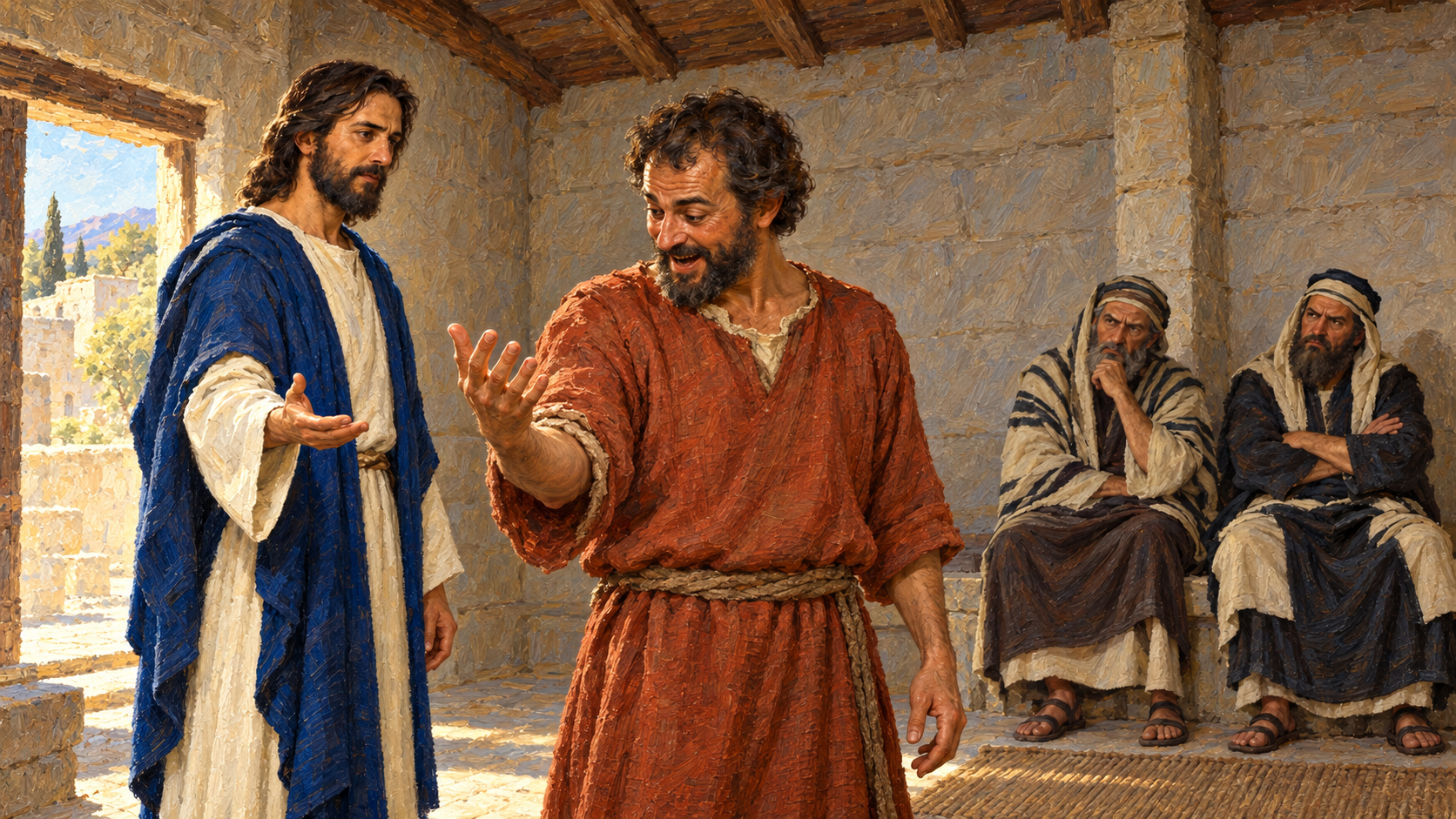
By the first century, religious leaders had developed many traditions about what could and could not be done on the Sabbath. Their desire to honor the law could become a system that placed human rules above mercy. When Jesus’ disciples plucked heads of grain as they walked through a field, the Pharisees accused them of doing what was unlawful. Jesus answered from Scripture, reminding them that David ate the consecrated bread when he and his companions were hungry. He then said that the Sabbath was made for man and that the Son of Man is Lord even of the Sabbath (Mark 2:23-28).
Jesus affirmed the Sabbath’s purpose while declaring His authority over it. God had given the day for human good, not for religious leaders to use against hungry people. We see the same concern in Mark 3, when Jesus met a man with a withered hand in the synagogue. He asked whether doing good or evil was lawful on the Sabbath, whether one should save life or kill (Mark 3:4). His opponents would not answer because their system had obscured the mercy in God’s law.
I need to take that warning personally when considering a conviction about a day, or about suitable work and recreation. Sincerity does not excuse a hard heart. Feeding a hungry person or helping during an emergency honors the Lord, as does caring for a child or meeting another necessary human need. If keeping my rule becomes more precious to me than showing mercy, I am failing to honor the Lord of the Sabbath.
Jesus also obeyed the Father perfectly where Israel had failed under the law, as every other sinner has failed as well. His cry from the cross, “It is finished,” did not mean that holiness no longer mattered. He had completed the saving work that only He could accomplish. That completed work brings the promise pictured in Sabbath rest to its goal in Him.
Paul explains the connection in Colossians 2:16-17: “So let no one judge you in food or in drink, or regarding a festival or a new moon or sabbaths, which are a shadow of things to come, but the substance is of Christ.” The references to festivals, new moons, and sabbaths echo the Old Testament calendar. I do not read Paul as condemning grateful rest or a believer’s choice to honor the Lord on a particular day. He is forbidding the judgment that makes those observances a condition of spiritual acceptance.
A shadow points to the reality that casts it. Israel’s Sabbath taught trust in God through ceasing ordinary work, and set apart time that marked the people’s covenant relationship with Him. It pointed ahead to the completion He would provide, but the sign itself could not save them. Christ is the substance Paul describes. Through Him sinners are reconciled to God and receive forgiveness with a clean conscience, along with the promise of sharing His final rest.
With that fulfillment in view, we can understand why the New Testament never tells the church to enforce the seventh-day Sabbath as the Mosaic covenant did. Colossians 2:20-23 warns against returning to regulations that may look wise but cannot change the heart. Salvation comes by grace through faith in Christ’s blood. A calendar cannot provide it. If I make Saturday observance the test of whether someone truly knows God, I have turned a sign of rest into a new form of bondage.
Freedom in Christ still leaves us much to learn from the Sabbath. It does not give us permission to overwork ourselves or exploit others, and it cannot justify neglecting worship. The shadow teaches us to receive life as God’s gift. I can work honestly and care for my household while recognizing that His provision sustains us. Stopping my work becomes an admission that our lives do not finally depend on my ability to control them.
Hebrews Calls Us to Enter God’s Rest by Faith
Hebrews 3 and 4 give the New Testament’s most extended discussion of rest. The writer begins with Israel’s wilderness generation. Those people had seen God’s deliverance from Egypt, yet many hardened their hearts in unbelief. Psalm 95 records God’s oath that they would not enter His rest. Hebrews applies the warning directly: “Beware, brethren, lest there be in any of you an evil heart of unbelief in departing from the living God” (Hebrews 3:12).
The next chapter of Hebrews brings God’s rest at creation together with Israel’s later experience. God’s works were finished from the foundation of the world, and Genesis describes His seventh-day rest. Israel failed to enter the promised rest through unbelief. Even after Joshua led the nation into the land, Psalm 95 spoke of another day. That later invitation is why I cannot understand entry into Canaan as the whole fulfillment of the promise. The writer concludes, “There remains therefore a rest for the people of God” (Hebrews 4:9).
The Greek word sabbatismos is translated “rest” in verse 9 and refers to a Sabbath-rest. The word helps us recognize the Sabbath connection, but it does not by itself tell Christians to recreate Israel’s seventh-day covenant. We need to follow the surrounding argument about entering God’s rest by faith. The wilderness generation remained outside because of unbelief, and Hebrews calls its readers to refuse that unbelief. I understand the word within that explanation rather than treating a dictionary definition as the whole argument.
Believers already experience something of this rest when they trust Christ’s finished sacrifice instead of trying to establish their own righteousness before God. Yet Hebrews does not leave us looking only at what we enjoy now. God’s people still await the complete rest of His kingdom, when every promise will be fulfilled and our struggle with sin will be over.
When Hebrews 4:10 speaks of ceasing from works, I cannot take that as permission to stop serving or obeying. The same letter urges perseverance and love for one another, with good works and reverent worship continuing in the believer’s life. What we leave behind is unbelief and the effort to save ourselves. A Christian works from acceptance in Christ, rather than trying to buy that acceptance. We rest in what Jesus has done as we keep following Him.
The First Day, Church Gathering, and Liberty of Conscience
Jesus rose bodily from the grave on the first day of the week. All four Gospels identify the day (Matthew 28:1; Mark 16:2; Luke 24:1; John 20:1). His resurrection changed history, so the earliest believers had a compelling reason to gather on the day their Lord triumphed over sin and death.
Acts 20:7 describes the disciples at Troas gathering on the first day to break bread while Paul spoke to them. Paul also instructed each believer in 1 Corinthians 16:2 to set something aside on the first day for the collection. Those passages show that the day had a recognizable place in early Christian life. I would not claim that they spell out every detail of a universal service schedule, but they fit naturally with the church’s long practice of meeting on the day of Christ’s resurrection.
John says in Revelation 1:10 that he was “in the Spirit on the Lord’s Day” when he received the Revelation. Many Christians identify that as the first day of the week, a reading supported by early church usage. I think we should still acknowledge that the verse itself does not define the phrase. Whatever care that identification requires, there is no uncertainty about Jesus being Lord or about every day belonging to Him.
Sunday gathering does not move the Mosaic Sabbath to a different day. The Sabbath remains the seventh day in Scripture, and Sunday does not become a replacement law by which we are justified. Christians gather on the first day to remember the risen Christ with joy. Together we receive the ministry of the Word and pray, sharing fellowship and the Lord’s Supper. Giving and mutual encouragement also belong to that common life. Hebrews 10:25 commands us not to forsake assembling together. I need to heed that command rather than become so absorbed in naming the day that I neglect gathering with the church.
Romans 14:5-6 speaks directly to disagreements over days: “One person esteems one day above another; another esteems every day alike. Let each be fully convinced in his own mind” (Romans 14:5). Paul is not making truth different for each person. He is teaching us to act in faith before the Lord and stop despising or condemning one another over a calendar observance the gospel has not required.
A Jewish believer may rest on Saturday to honor the God of Scripture and remember creation. A Gentile believer may regard every day alike without placing himself under Mosaic Sabbath law, while a church may faithfully gather on Sunday. None of those choices makes one believer entitled to boast over another. Whether someone observes a day or does not, the choice should honor the Lord and be accompanied by thanksgiving to God.
That liberty does not excuse neglecting the church or exploiting workers. It also gives me no right to despise a weaker believer or participate in idolatry. I cannot claim freedom from Sabbath law while allowing greed to exhaust me and draw me away from my family. Christ frees us to serve righteousness and learn to love others, so our use of freedom should reflect that purpose.
A believer who observes the Sabbath must not impose his conscience on others. His conscience cannot become a rule every Christian must follow. Colossians plainly says, “Let no one judge you” regarding sabbaths, so the church must reject any requirement that makes a day necessary for acceptance with God. We can reject that legalism and still listen seriously to God’s wisdom about worship and rest.
Work, Worship, Bodily Rest, and the Rest Jesus Gives
The gospel changes the basis of our rest without removing the needs God gave us as creatures. Our bodies still require sleep and food, with time to recover from work. We also need gathered worship and attention to our households. Admitting those limits is not a failure of faith. I need to distinguish diligence from endless productivity that I trust more than God, just as I need to distinguish rest from avoiding responsibilities He has given me. Scripture’s wisdom leaves no room for either misplaced trust or irresponsibility.
For many believers, regularly setting aside time for church and bodily rest expresses trust in God. That shared time allows us to hear Scripture and pray together. It strengthens fellowship and creates opportunities to serve, while a quieter pace allows the body to recover. That rhythm will not look identical in every household. Work in medicine or public safety can affect it, as can parenting, emergency work, or transportation duties. Jesus’ teaching about mercy should guide how we apply a wise rhythm, keeping us from turning it into a harsh rule.
A nurse caring for a patient remains within God’s concern even when that care is needed on a particular day. The same is true of a parent tending a sick child or a worker protecting others. Necessary service can be a way of loving our neighbors. If I ignore someone’s suffering to prove that I keep the right day, I have missed what the Lord showed us when He healed on the Sabbath.
Employers and leaders also need to consider whom the Sabbath command protected. God gave rest to servants and resident foreigners rather than allowing them to be treated as machines, and He included animals too. That should affect how Christians run a workplace. People’s need for worship and family life deserves respect, along with their health and dignity. Rest should not be a luxury reserved for the wealthy or those who control their schedules. It reflects the goodness of God’s creation and the limits He placed within it.
We should take gathering with the church seriously even when circumstances make attendance difficult. Illness may require someone to watch a sermon alone, as may distance or an urgent situation, but those limits differ from choosing permanent isolation. We need the Word preached among the body and the ordinances Christ gave His church. Other believers also bring correction and pray with us. Since the risen Lord gathers His people into one body, our love for that body should be evident even when our work schedules differ.
The deepest Sabbath lesson comes into view when Jesus says, “Come to Me, all you who labor and are heavy laden, and I will give you rest” (Matthew 11:28). He does not tell sinners to rescue themselves through better time management or harder religious effort. He does not demand a flawless weekly routine before He receives them. He tells them to come to Him.
Jesus Christ is the eternal Son of God, fully God and fully man, and He alone lived without sin. He was physically tortured and bore the punishment for our sins in His innocent body on the cross. He shed His blood and died, then rose bodily from the grave. Because His sacrifice is sufficient, the person who trusts Him receives forgiveness and new life, and the Holy Spirit seals that believer. This is the rest I need most deeply: peace with God through the blood of Christ.
That peace does not leave a believer passive. Jesus calls His people to take His yoke and learn from Him, so gratitude for grace leads us into obedience. We serve without trying to earn membership in God’s family, and when we fail, we repent. Following Christ now includes waiting for the final rest in which He will make all things new. Stopping work cannot earn acceptance with God. The Sabbath teaches us to trust the One who completes what we could never accomplish for ourselves.
Related studies explore the purpose of God’s Law, the covenant responsibilities of marriage, and Christian conscience and Christ-Mas. The study on legalism in the church examines how human rules can displace the grace and obedience found in Christ.
My Final Thoughts
The Sabbath leads me from God’s completed work at creation to the covenant sign He gave Israel, and finally to the rest found in Jesus Himself. Christians are not commanded to keep Israel’s seventh-day Sabbath as a legal requirement, so we should not judge one another over observing days. Yet I still need to receive God’s wisdom about work and the limits of my body, while making room for gathered worship and showing mercy to others. My peace with God rests in Christ, who saves where no calendar observance could. He gives that peace now and promises His people complete rest in the future.