
What was Jesus showing us when He compared the kingdom of God to a mustard seed? He also used that seed when He spoke about faith, but He wasn’t making exactly the same point in each passage. I want to understand each saying in its setting. In the kingdom parable, that means following the seed from its small beginning to the result God has promised.
The Parable in Its Gospel Settings
On the same day Jesus went out of the house and sat by the sea. And great multitudes were gathered together to Him, so that He got into a boat and sat; and the whole multitude stood on the shore. Then He spoke many things to them in parables, saying: “Behold, a sower went out to sow. And as he sowed, some seed fell by the wayside; and the birds came and devoured them. Some fell on stony places, where they did not have much earth; and they immediately sprang up because they had no depth of earth. But when the sun was up they were scorched, and because they had no root they withered away. And some fell among thorns, and the thorns sprang up and choked them. But others fell on good ground and yielded a crop: some a hundredfold, some sixty, some thirty. He who has ears to hear, let him hear!” And the disciples came and said to Him, “Why do You speak to them in parables?” He answered and said to them, “Because it has been given to you to know the mysteries of the kingdom of heaven, but to them it has not been given. For whoever has, to him more will be given, and he will have abundance; but whoever does not have, even what he has will be taken away from him. Therefore I speak to them in parables, because seeing they do not see, and hearing they do not hear, nor do they understand. And in them the prophecy of Isaiah is fulfilled, which says: ‘Hearing you will hear and shall not understand, And seeing you will see and not perceive; For the hearts of this people have grown dull. Their ears are hard of hearing, And their eyes they have closed, Lest they should see with their eyes and hear with their ears, Lest they should understand with their hearts and turn, So that I should heal them.’ But blessed are your eyes for they see, and your ears for they hear; for assuredly, I say to you that many prophets and righteous men desired to see what you see, and did not see it, and to hear what you hear, and did not hear it. “Therefore hear the parable of the sower: When anyone hears the word of the kingdom, and does not understand it, then the wicked one comes and snatches away what was sown in his heart. This is he who received seed by the wayside. But he who received the seed on stony places, this is he who hears the word and immediately receives it with joy; yet he has no root in himself, but endures only for a while. For when tribulation or persecution arises because of the word, immediately he stumbles. Now he who received seed among the thorns is he who hears the word, and the cares of this world and the deceitfulness of riches choke the word, and he becomes unfruitful. But he who received seed on the good ground is he who hears the word and understands it, who indeed bears fruit and produces: some a hundredfold, some sixty, some thirty.”
Jesus taught the crowds from a boat while His disciples listened nearby. He began with the Sower, which shows how differently people respond to the same word about the kingdom. Some hear without understanding, while others receive it joyfully, but the word never takes root in them. In another hearer, competing loves gradually choke what was heard. The good ground describes someone who receives the word and bears fruit. We should notice where Jesus places the difference: in the hearers, not in a weakness of the word itself.
Jesus then explained why He spoke in parables. He was making the mysteries of the kingdom known to His disciples, while others heard without truly receiving because of their unbelief. A parable does more than decorate a lesson, but it also doesn’t invite us to invent a meaning for every detail. We need to follow the comparison Jesus makes and let His surrounding teaching help us understand it.
The order of these parables keeps me from assuming that the kingdom’s growth means everything will go smoothly. Before the Mustard Seed, the Sower and the Weeds describe real fruit alongside the enemy’s opposition and counterfeit growth that remains until judgment. Those difficulties cannot stop the kingdom from reaching the outcome God has appointed. A small beginning gives us no reason to doubt the King’s power.
Another parable He put forth to them, saying: “The kingdom of heaven is like a man who sowed good seed in his field; but while men slept, his enemy came and sowed tares among the wheat and went his way. But when the grain had sprouted and produced a crop, then the tares also appeared. So the servants of the owner came and said to him, ‘Sir, did you not sow good seed in your field? How then does it have tares?’ He said to them, ‘An enemy has done this.’ The servants said to him, ‘Do you want us then to go and gather them up?’ But he said, ‘No, lest while you gather up the tares you also uproot the wheat with them. Let both grow together until the harvest, and at the time of harvest I will say to the reapers, “First gather together the tares and bind them in bundles to burn them, but gather the wheat into my barn.”‘” Another parable He put forth to them, saying: “The kingdom of heaven is like a mustard seed, which a man took and sowed in his field, which indeed is the least of all the seeds; but when it is grown it is greater than the herbs and becomes a tree, so that the birds of the air come and nest in its branches.” Another parable He spoke to them: “The kingdom of heaven is like leaven, which a woman took and hid in three measures of meal till it was all leavened.” All these things Jesus spoke to the multitude in parables; and without a parable He did not speak to them, that it might be fulfilled which was spoken by the prophet, saying: “I will open My mouth in parables; I will utter things kept secret from the foundation of the world.”
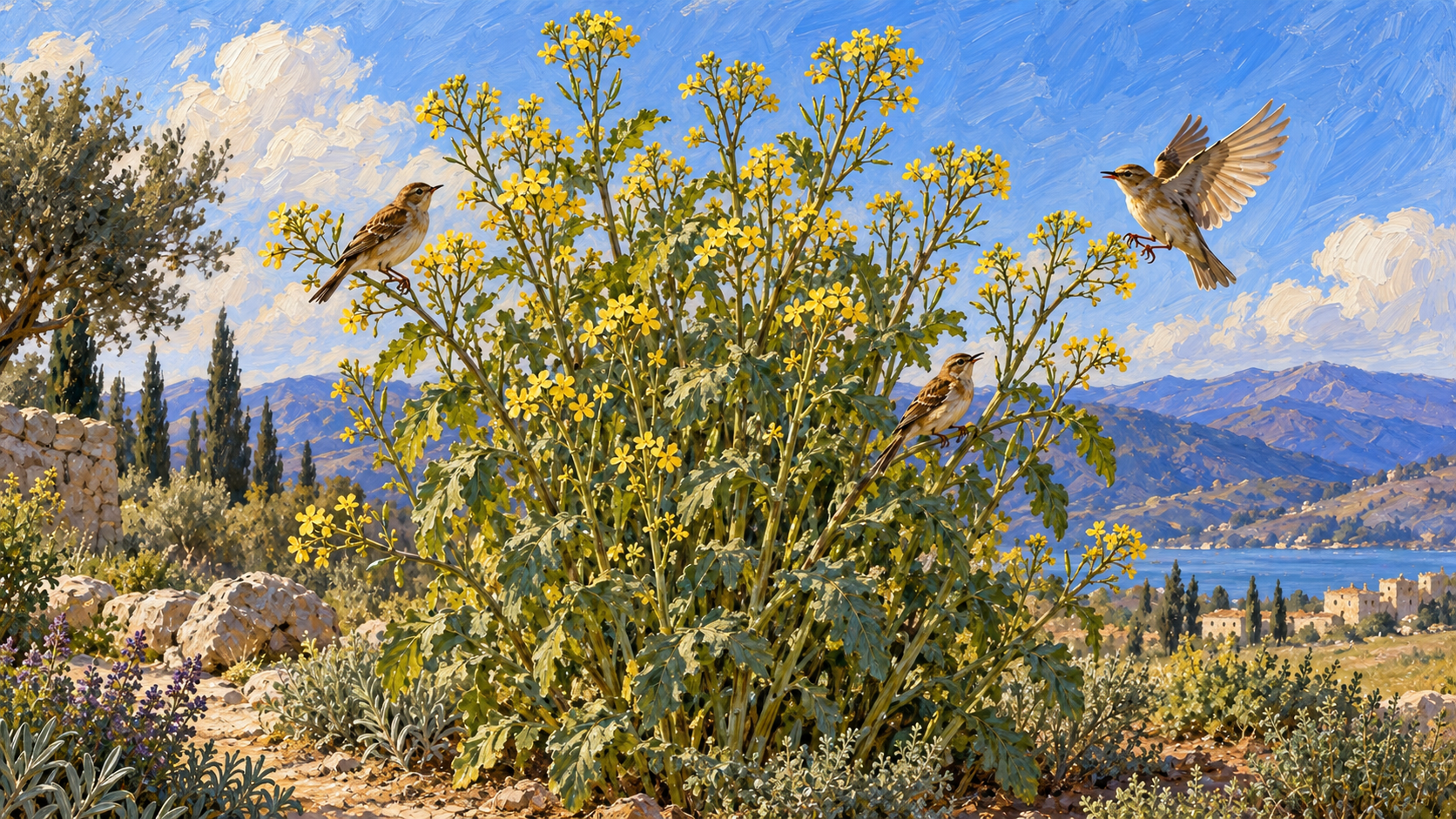
Jesus compared the kingdom of heaven to a mustard seed that a man sowed in his field. It was the least among the seeds familiar to that setting, yet it grew larger than the garden herbs and became tree-like enough for birds to lodge in its branches. I notice how much the comparison depends on seeing both ends of that growth. Something easily overlooked at the beginning becomes conspicuous when it has grown.
In the preceding parable of the Weeds, both sons of the kingdom and sons of the wicked one remain in the present field until the harvest. The leaven in the following parable begins hidden and works through the measured flour. Each comparison teaches us something different about the kingdom. Taken together, they challenge the expectation that God’s reign must begin with an impressive worldly display.
Jesus was the promised King, yet the religious establishment opposed Him. Looking at His small band of disciples, people would hardly have expected their witness to reach the world or their service to have a place in His future royal government. Jesus was teaching His hearers to trust God’s promise instead of judging the kingdom by that first impression.
Also He said to them, “Is a lamp brought to be put under a basket or under a bed? Is it not to be set on a lampstand? For there is nothing hidden which will not be revealed, nor has anything been kept secret but that it should come to light. If anyone has ears to hear, let him hear.” Then He said to them, “Take heed what you hear. With the same measure you use, it will be measured to you; and to you who hear, more will be given. For whoever has, to him more will be given; but whoever does not have, even what he has will be taken away from him.” And He said, “The kingdom of God is as if a man should scatter seed on the ground, and should sleep by night and rise by day, and the seed should sprout and grow, he himself does not know how. For the earth yields crops by itself: first the blade, then the head, after that the full grain in the head. But when the grain ripens, immediately he puts in the sickle, because the harvest has come.” Then He said, “To what shall we liken the kingdom of God? Or with what parable shall we picture it? It is like a mustard seed which, when it is sown on the ground, is smaller than all the seeds on earth; but when it is sown, it grows up and becomes greater than all herbs, and shoots out large branches, so that the birds of the air may nest under its shade.” And with many such parables He spoke the word to them as they were able to hear it. But without a parable He did not speak to them. And when they were alone, He explained all things to His disciples.
Mark places the mustard seed after the lamp, the measure, and the growing seed. The lamp belongs where its light can be seen, and Jesus’ teaching about the measure calls hearers to listen responsibly. Then He describes a seed growing while the sower carries on with his ordinary cycle of sleep and work. The man does not master the process that produces the crop, though he puts in the sickle when harvest comes.
That sower helps me think about the limits of our own work. We can scatter seed and later gather the harvest, but we cannot command life to rise from the soil. As human witnesses do the work God has given them, His kingdom advances according to His purpose. No ministry technique can produce spiritual life, however persuasive the speaker or large the institution may be.
In Mark, Jesus then asks what comparison will help His hearers picture the kingdom. The tiny mustard seed becomes greater than the garden herbs and puts out large branches. We need to hold that beginning and result together. God quietly brings about a growth that the seed’s apparent weakness would never lead us to expect.
Now He was teaching in one of the synagogues on the Sabbath. And behold, there was a woman who had a spirit of infirmity eighteen years, and was bent over and could in no way raise herself up. But when Jesus saw her, He called her to Him and said to her, “Woman, you are loosed from your infirmity.” And He laid His hands on her, and immediately she was made straight, and glorified God. But the ruler of the synagogue answered with indignation, because Jesus had healed on the Sabbath; and he said to the crowd, “There are six days on which men ought to work; therefore come and be healed on them, and not on the Sabbath day.” The Lord then answered him and said, “Hypocrite! Does not each one of you on the Sabbath loose his ox or donkey from the stall, and lead it away to water it? So ought not this woman, being a daughter of Abraham, whom Satan has bound–think of it–for eighteen years, be loosed from this bond on the Sabbath?” And when He said these things, all His adversaries were put to shame; and all the multitude rejoiced for all the glorious things that were done by Him. Then He said, “What is the kingdom of God like? And to what shall I compare it? It is like a mustard seed, which a man took and put in his garden; and it grew and became a large tree, and the birds of the air nested in its branches.” And again He said, “To what shall I liken the kingdom of God? It is like leaven, which a woman took and hid in three measures of meal till it was all leavened.”
In Luke’s account, Jesus healed a woman who had been bent over for eighteen years. The synagogue ruler objected because it was the Sabbath. Jesus exposed the hypocrisy by pointing to something His hearers already did: they untied an animal to give it water on the Sabbath. Surely this daughter of Abraham ought to be loosed from Satan’s bondage as well. His adversaries were put to shame, and the crowd rejoiced.
Jesus then asked what the kingdom of God was like. Before He gave the comparison, His hearers had already seen the King’s authority at work. One woman’s deliverance might have looked small beside Satan’s oppressive reach and the religious leaders’ entrenched resistance. Yet the King had entered that conflict, and His rule would not remain hidden or defeated.
Luke pairs the mustard seed with leaven, just as Matthew does. Both begin with something easily overlooked and carry us through to its completed effect. With that woman’s healing still before us, we can see how personal God’s reign is. He reaches people whom proud religious systems overlook.
Putting the three accounts together helps me appreciate why the setting matters. Each Gospel preserves the same contrast between the small beginning and the result. Matthew surrounds it with warnings about mixed responses and final judgment. Mark reminds us that the sower cannot produce the growth, while Luke lets us see the King’s authority in His care for a suffering woman whom proud men had overlooked.
From a Small Seed to the Kingdom’s Appointed Extent
Jesus chose a familiar seed. Mustard varieties grew readily in the region and could develop from a minute seed into a large garden plant. His hearers did not need a lesson in modern taxonomy to grasp the comparison. A seed scarcely impressive in the hand could become a plant large enough to dominate its garden setting.
I don’t want to turn this seed into a code in which every feature tells us something separate about Christ, Scripture, the church, or personal faith. Jesus compares the kingdom with the whole movement from small to large. A man sows the seed, and it grows into a substantial plant with room for birds in its branches. That is the movement He gives us to follow, so it needs to govern our interpretation.
The familiar garden image would have been easy to remember. Worldly kingdoms display their territory and military strength, surrounding their authority with visible wealth. Jesus directed attention to a seed that looked unimpressive. We can trust God’s kingdom without needing that kind of spectacle, because its success does not depend on how people first estimate it.
Matthew calls the mustard seed the least of all the seeds, and Mark says it is smaller than all the seeds on earth when sown. Critics sometimes compare it with every microscopic seed species known to modern botany and accuse Jesus of error. That objection ignores ordinary language and the agricultural frame Jesus expressly supplied.
We still speak of sunrise without making a technical claim about astronomy, and referring to the four corners of a property does not define its geometric shape. Even calling a restaurant the home of a town’s best meal isn’t a universal scientific conclusion. We understand such statements in the setting where they are made. Jesus was speaking to people who knew the tiny seeds they sowed in their fields and gardens. Mustard gave them a truthful comparison between a very small seed and a surprisingly large plant.
I don’t need to invent an ancient seed catalog to defend what Jesus said. Understanding His comparison in its historical setting is enough: a remarkably small cultivated seed produces an unexpectedly large garden plant.
Matthew says the grown mustard becomes a tree, while Mark stresses large branches. Luke likewise says it grew and became a large tree. The wording does not require a cedar-sized mustard plant. Scripture often describes an object by its evident form and function in the scene. A mature mustard can stand woody and tall enough for birds to settle among its branches.
We can distort the comparison by exaggerating the plant into a botanical marvel or by insisting that an herb could never be described as a tree. Jesus was comparing the seed and mature plant as people in that setting knew them.
Once mature, the mustard plant is larger than the other garden herbs and takes up considerable space and has branches where birds can lodge. That is quite a change from its minute beginning. We can understand the contrast without calculating an exact height or settling on one exclusive mustard species.
Reading this as ordinary garden speech helps me stay with the point Jesus was making. His hearers knew both the tiny cultivated seed and the large branching plant. Neither needs to be exaggerated for the comparison to make sense.
The kingdom was never powerless, since its King is the eternal Son and all authority belongs to Him. But Jesus came in humility, and its public beginning looked small. Israel’s leaders rejected Him. His early followers had neither an army nor a palace to impress people, and they lacked the prestige normally associated with a kingdom.
After Christ’s resurrection and ascension, the gospel witness spread from Jerusalem through Judea and Samaria and on to the nations. Congregations formed across the Roman world. Through the centuries, people of many languages have heard and believed the good news. That history helps us see how widely the kingdom witness has reached, but I would not make statistics about institutional Christianity the basis of my confidence. The parable’s promised outcome rests on Christ’s word.
Nor can large numbers tell us whether a work is faithful. Matthew 13 has already described shallow responses and people in whom worldly cares choke the word. The weeds also remain among the wheat until judgment. We cannot count every organization that uses Christian language as evidence of genuine kingdom growth. Christ knows His own and preserves His word, and He will bring His reign to open completion.
In Mark’s neighboring parable, the seed sprouts and grows while the man sleeps and rises, though he does not know how. Jesus is not dismissing the work of cultivation or harvest. He is showing us the limit of the servant’s power: sowing a seed does not give the sower the ability to create life.
I find that limit both humbling and reassuring. It leaves no room to credit manipulation for spiritual life, but it also keeps slow visible results from becoming a reason to despair. We are responsible to teach the Word accurately and proclaim the gospel clearly. As we do that and care for disciples, we must leave the living result in God’s hands.
Paul later made a similar point through the work of planting and watering. Different servants carried out those assignments, but God alone gave the increase. That helps us respond to the Mustard Seed with patient confidence in God’s sovereign work instead of congratulating ourselves for growth we could not produce.
Matthew says “kingdom of heaven,” while Mark and Luke say “kingdom of God” in their parallel accounts. The same mustard-seed saying cannot describe two unrelated kingdoms. Matthew’s reverent Jewish wording and the other Gospel wording identify the same divine rule.
We also need to notice how a passage uses the word kingdom. It can refer to the King’s authority or to the people who truly belong to Him. In other places, it directs us toward the promised realm where His will shall be openly enforced. Those meanings cannot be reduced to the church or an inward feeling. Neither social improvement nor heaven after death explains everything Scripture means by the kingdom.
The church bears witness to the King now, while Scripture still promises Israel’s future restoration. Christ will return bodily and judge the world’s rebellion, then establish His literal earthly reign. Those promises help me understand how far the mustard-seed comparison reaches. Its growth must be read with that future fulfillment still in view.
Jesus announced that the kingdom had drawn near because the King Himself stood among the people. They could see the power of God’s reign as He cast out demons and healed disease. Nature obeyed Him, and He had authority both to forgive sin and to command the dead to rise. The bent woman in Luke was set free when this stronger King confronted Satan’s bondage.
Those who repent and believe now belong to Christ and live under His authority. They are transferred into the kingdom of the Son of God’s love and called to obey the King’s teaching. This present reality is genuine even though the world has not yet been brought under His visible righteous government.
Belonging to Christ’s kingdom now does not mean its future promises have already been fulfilled. We cannot build the millennial kingdom through political influence or cultural change, and church growth will not establish it either. Our work is to proclaim the King and make disciples who practice His commands as we await the kingdom He will establish when He returns.
Jesus will return bodily after the appointed Tribulation, defeat His enemies, and deliver Israel. He will then judge the nations and reign for a literal thousand years. The kingdoms of this world will become the kingdoms of our Lord and of His Christ, so what once appeared dismissible will be openly acknowledged as supreme.
The Mustard Seed does not give us the entire prophetic timetable. We learn further details from Daniel and the Olivet Discourse, along with the apostolic letters and Revelation. What this parable gives us is a certainty that holds throughout those promises: the small beginning people saw during Jesus’ ministry cannot measure the kingdom’s final extent.
Final judgment and the eternal state follow the millennial reign. Christ’s royal purpose never dissolves into a vague spiritual influence. The King will exercise real authority until every rival dominion has fallen. His redeemed people will dwell with Him forever.
That brings me back to the way people first judged Jesus’ ministry. What they could see then did not tell them everything about His kingdom. The rejected King will return openly, and the reign they dismissed will be the only kingdom left standing.
The Birds and the Old Testament Tree Background
Jesus tells us that the birds lodge in the branches, but He does not explain who they represent. I want to respect that silence. Scripture does not identify them as God’s promises, so I would not present that idea as what the parable means.
In the Sower earlier in Matthew 13, birds devour seed and Jesus identifies the attacker as the wicked one. That nearby usage makes a negative association possible, yet symbols are not mechanically fixed across every parable. In several Old Testament kingdom-tree passages, birds picture nations or peoples sheltered beneath a ruler.
We can weigh those possibilities without making the whole parable depend on one of them. Whatever further meaning the birds may have, the plant has grown large enough for them to lodge in its branches. Their presence helps us see the extent of that growth.
Israel’s prophets used trees to describe rulers and empires under divinely appointed dominion. Their spreading branches and great height pictured influence that could be seen from afar, while the creatures beneath them found shelter. Yet God’s judgment could still cut down any tree that became proud. Jesus’ hearers lived within this scriptural world.
That background helps me understand why birds in branches would belong in a kingdom parable. That resemblance does not prove that every feature of Ezekiel or Daniel carries over into Matthew 13. We can recognize a shared image while still allowing each passage to speak about its own historical subject.
Three passages give us useful examples. In Ezekiel 17, God promises to plant a tender twig Himself. Ezekiel 31 describes Assyria’s former greatness as a cedar before telling of its fall, while Daniel 4 portrays Nebuchadnezzar’s worldwide rule and humiliating judgment. Each helps us see the reach of royal power and God’s sovereign right to raise rulers up or bring them low.
Thus says the Lord GOD: “I will take also one of the highest branches of the high cedar and set it out. I will crop off from the topmost of its young twigs a tender one, and will plant it on a high and prominent mountain. On the mountain height of Israel I will plant it; and it will bring forth boughs, and bear fruit, and be a majestic cedar. Under it will dwell birds of every sort; in the shadow of its branches they will dwell. And all the trees of the field shall know that I, the LORD, have brought down the high tree and exalted the low tree, dried up the green tree and made the dry tree flourish; I, the LORD, have spoken and have done it.”
After announcing judgment on Judah’s faithless rulers, Ezekiel gave this promise from God. The LORD would take a tender twig from the high cedar and plant it on Israel’s high mountain. He would cause it to bear fruit and become a majestic cedar where birds of every sort would dwell. The exaltation would be His work, just as He would bring down the high tree.
The promise points toward God’s restoration through David’s line and finds its fulfillment in the Messiah. Human kings had failed, but God Himself would establish the righteous Branch. In the image Ezekiel gives us, God plants what He will exalt. The result is a fruitful kingdom that provides shelter.
I can see that same pattern in the small beginning of Jesus’ kingdom without treating the mustard plant as Ezekiel’s cedar in every detail. God exalts what proud rulers dismiss. As the Messiah’s reign provides refuge, it also exposes how empty the claims of self-exalting kingdoms are.
Now it came to pass in the eleventh year, in the third month, on the first day of the month, that the word of the LORD came to me, saying, “Son of man, say to Pharaoh king of Egypt and to his multitude: ‘Whom are you like in your greatness? Indeed Assyria was a cedar in Lebanon, With fine branches that shaded the forest, And of high stature; And its top was among the thick boughs. The waters made it grow; Underground waters gave it height, With their rivers running around the place where it was planted, And sent out rivulets to all the trees of the field. ‘Therefore its height was exalted above all the trees of the field; Its boughs were multiplied, And its branches became long because of the abundance of water, As it sent them out. All the birds of the heavens made their nests in its boughs; Under its branches all the beasts of the field brought forth their young; And in its shadow all great nations made their home. ‘Thus it was beautiful in greatness and in the length of its branches, Because its roots reached to abundant waters. The cedars in the garden of God could not hide it; The fir trees were not like its boughs, And the chestnut trees were not like its branches; No tree in the garden of God was like it in beauty. I made it beautiful with a multitude of branches, So that all the trees of Eden envied it, That were in the garden of God.’
Ezekiel addressed Pharaoh by recalling the greatness of Assyria. Like a magnificent cedar, it spread its influence widely enough for birds to nest in its branches and beasts to give birth beneath it. Entire nations made their home in its shadow. But the verses that follow tell us what happened when that great empire became proud: God brought it into judgment.
That outcome keeps me from treating size as proof of God’s approval. An empire may provide order and shelter and still be arrogant and doomed. A religious organization can likewise grow large while using Christ’s name and departing from His word.
Our confidence in the Mustard Seed rests in God’s kingdom, not in the idea that growth is always good. Christ’s rule is righteous because He is righteous, so we must test claimed kingdom work by His revelation. A large audience or generous budget cannot prove that the work is faithful. Neither can impressive buildings or access to political leaders.
“These were the visions of my head while on my bed: I was looking, and behold, A tree in the midst of the earth, And its height was great. The tree grew and became strong; Its height reached to the heavens, And it could be seen to the ends of all the earth. Its leaves were lovely, Its fruit abundant, And in it was food for all. The beasts of the field found shade under it, The birds of the heavens dwelt in its branches, And all flesh was fed from it. “I saw in the visions of my head while on my bed, and there was a watcher, a holy one, coming down from heaven. He cried aloud and said thus: ‘Chop down the tree and cut off its branches, Strip off its leaves and scatter its fruit. Let the beasts get out from under it, And the birds from its branches. Nevertheless leave the stump and roots in the earth, Bound with a band of iron and bronze, In the tender grass of the field. Let it be wet with the dew of heaven, And let him graze with the beasts On the grass of the earth. Let his heart be changed from that of a man, Let him be given the heart of a beast, And let seven times pass over him. ‘This decision is by the decree of the watchers, And the sentence by the word of the holy ones, In order that the living may know That the Most High rules in the kingdom of men, Gives it to whomever He will, And sets over it the lowest of men.’
Nebuchadnezzar dreamed of a great tree visible to the ends of the earth. It supplied food to all flesh, with branches that offered shade and a place to lodge. Then a heavenly watcher ordered it cut down. The judgment would teach the living that the Most High rules in human kingdoms and gives them to whomever He wills.
Daniel later identifies the tree as Nebuchadnezzar and his far-reaching dominion. The birds and beasts belong to the picture of peoples dependent on his rule. His pride brought temporary humiliation until he acknowledged heaven’s authority.
That use of the image makes peoples or nations a plausible meaning for the birds in the mustard parable. Even on that reading, they remain dependent on God. They do not own the kingdom independently, but receive their shelter under the true King’s authority.
One view sees the birds as nations or peoples finding shelter within the kingdom’s far-reaching blessing. Ezekiel 17 and Daniel 4 provide strong tree-and-bird parallels, and the mustard plant’s ability to host birds naturally demonstrates its mature extent. This reading emphasizes the reach of the kingdom witness and the future blessing of Messiah’s rule.
A second view sees the birds negatively. Because birds represent the wicked one in the Sower and the Weeds warns of counterfeit sons, some interpreters believe the unusual plant portrays institutional Christendom expanding into a shelter for corrupt powers. This reading takes the surrounding opposition seriously, though it must explain why Jesus makes growth rather than corruption the explicit comparison.
The tree passages in Ezekiel and Daniel give me good reason to consider peoples or nations as a possible meaning for the birds. I would still distinguish that possibility from what Jesus expressly tells us. He does not call them God’s promises, and the presence of birds need not always mean evil. What we know is that the plant has become large enough for them to lodge in its branches. Christians can differ about the unstated symbolism and still recognize that result.
Matthew and Luke place the Leaven beside the Mustard Seed. A woman hides leaven in three measures of meal, and it eventually works through the whole amount. Again, Jesus takes us from a beginning that is easily overlooked to a result whose extent can be seen.
Leaven often pictures corruption elsewhere in Scripture, so some interpreters read this parable as the spread of false doctrine through Christendom. The surrounding Weeds makes corruption a real concern. Yet Jesus says the kingdom is like the event: the woman hides the leaven in the flour, and it spreads through the whole amount.
I believe we understand these two parables best by preserving that shared emphasis without ignoring the mixed conditions Jesus describes elsewhere in the discourse. God’s kingdom purpose moves from an uncelebrated beginning toward its appointed completion. During the present age, counterfeit professions and false teaching remain. At judgment, Christ will separate the wicked from those who truly belong to Him.
Mustard-Seed Faith, the Gospel, and the Coming Kingdom
And when they had come to the multitude, a man came to Him, kneeling down to Him and saying, “Lord, have mercy on my son, for he is an epileptic and suffers severely; for he often falls into the fire and often into the water. So I brought him to Your disciples, but they could not cure him.” Then Jesus answered and said, “O faithless and perverse generation, how long shall I be with you? How long shall I bear with you? Bring him here to Me.” And Jesus rebuked the demon, and it came out of him; and the child was cured from that very hour. Then the disciples came to Jesus privately and said, “Why could we not cast it out?” So Jesus said to them, “Because of your unbelief; for assuredly, I say to you, if you have faith as a mustard seed, you will say to this mountain, ‘Move from here to there,’ and it will move; and nothing will be impossible for you. However, this kind does not go out except by prayer and fasting.”
After the Transfiguration, a father brought his tormented son to Jesus because the disciples had been unable to cast out the demon. Jesus rebuked the demon and healed the child. When the disciples asked why they had failed, He spoke about their unbelief and the dependence expressed in prayer and fasting.
Here the mustard seed helps us understand genuine faith rather than the kingdom’s development through history. Jesus does not describe faith as a spiritual substance we can measure out until we have enough to force a miracle. Even the smallest genuine reliance on God turns us away from ourselves toward the One for whom nothing within His will is impossible.
“Move this mountain” is forceful proverbial language for an impossible obstacle. It gives us no right to command whatever result we want or to blame a suffering believer for not feeling certain enough. Biblical faith receives God’s word and asks according to His will, continuing to obey even when His answer differs from our request.
Then He said to the disciples, “It is impossible that no offenses should come, but woe to him through whom they do come! It would be better for him if a millstone were hung around his neck, and he were thrown into the sea, than that he should offend one of these little ones. Take heed to yourselves. If your brother sins against you, rebuke him; and if he repents, forgive him. And if he sins against you seven times in a day, and seven times in a day returns to you, saying, ‘I repent,’ you shall forgive him.” And the apostles said to the Lord, “Increase our faith.” So the Lord said, “If you have faith as a mustard seed, you can say to this mulberry tree, ‘Be pulled up by the roots and be planted in the sea,’ and it would obey you. And which of you, having a servant plowing or tending sheep, will say to him when he has come in from the field, ‘Come at once and sit down to eat’? But will he not rather say to him, ‘Prepare something for my supper, and gird yourself and serve me till I have eaten and drunk, and afterward you will eat and drink’? Does he thank that servant because he did the things that were commanded him? I think not. So likewise you, when you have done all those things which you are commanded, say, ‘We are unprofitable servants. We have done what was our duty to do.'”
In Luke, Jesus was teaching His disciples how to live. He warned them against causing little ones to stumble, then commanded them to rebuke a brother honestly and forgive him when he repented, even repeatedly. The apostles asked Him to increase their faith. Jesus answered with the mustard seed and mulberry tree, then described servants who did their assigned work without expecting applause.
Repeatedly forgiving a repentant brother can be difficult, and I notice that this is the setting in which the disciples asked for more faith. They needed to depend on God to obey Him. Jesus’ answer corrects the idea that faith gives us status or control, showing instead how genuine trust is expressed in humble obedience.
The servant illustration leaves us no basis for feeling entitled. After doing what the Master commands, we have fulfilled our duty; we have not put Him in our debt. Faith means trusting His character and receiving His grace as we continue to serve Him.
These two faith passages help me see why we should not blend every mustard-seed saying into one lesson. Matthew 17 deals with unbelief and dependence in spiritual conflict. Luke 17 answers a request for greater faith in the setting of forgiveness and humble duty. In neither place does faith become a force that puts God under our control.
Therefore, when they had come together, they asked Him, saying, “Lord, will You at this time restore the kingdom to Israel?” And He said to them, “It is not for you to know times or seasons which the Father has put in His own authority. But you shall receive power when the Holy Spirit has come upon you; and you shall be witnesses to Me in Jerusalem, and in all Judea and Samaria, and to the end of the earth.”
Before Jesus ascended, the apostles asked whether He would restore the kingdom to Israel at that time. He did not deny the future restoration. He told them that its timing remained under the Father’s authority and redirected them to their present assignment.
The Holy Spirit would empower the apostles to bear witness to Christ in Jerusalem. From there, their testimony would spread through Judea and Samaria to the end of the earth. We can follow that widening witness in Acts and see how it resembles the mustard parable’s expansion. As the message reached farther, it remained centered on Jesus’ death and bodily resurrection.
Their assignment helps me understand our own. We have been given a testimony to proclaim, while the times and seasons remain in God’s hands. Believers announce reconciliation with God and establish faithful local churches. As we await His return, we teach people to obey Christ’s commands. The Spirit empowers that witness; He does not give us a political replacement for the promised kingdom.
We give thanks to the God and Father of our Lord Jesus Christ, praying always for you, since we heard of your faith in Christ Jesus and of your love for all the saints; because of the hope which is laid up for you in heaven, of which you heard before in the word of the truth of the gospel, which has come to you, as it has also in all the world, and is bringing forth fruit, as it is also among you since the day you heard and knew the grace of God in truth; as you also learned from Epaphras, our dear fellow servant, who is a faithful minister of Christ on your behalf, who also declared to us your love in the Spirit.
Paul thanked God for the Colossians’ faith in Christ and love for the saints. They had heard the true gospel, the same message that was bearing fruit and growing throughout the world. We can see the effect in these people: genuine kingdom witness had brought transformation and an understanding of God’s grace in truth.
I notice that Paul’s gratitude concerns more than expansion. The message is the true gospel, with its hope laid up in heaven, and it produces faith and love in those who receive it. A wider reach without sound doctrine would not satisfy his description.
The worldwide spread helps us appreciate the extent of God’s work without losing sight of each personal, precious conversion. The rejected Messiah’s witnesses preached a message that reached people they had never met. That same gospel is still God’s power to save everyone who believes.
Jesus is the eternal Son who remains fully God and became fully man. Born of a virgin, He lived without sin. The kingdom belongs to Him by right, yet He first came in humility to seek and save the lost. He genuinely offers salvation to the whole world, though people can resist and reject that offer.
Wicked men physically tortured, punished, and killed Jesus. He willingly bore that real punishment for our sins in His innocent body. He shed His blood and died before being buried and rising bodily. The Father did not punish or curse Jesus, nor did He abandon His Son. He did not strike, bruise, or pour wrath on Him.
Everyone who repents and believes in Christ receives forgiveness and is justified, or declared righteous before God. That person is born again and made new, indwelt and sealed by the Holy Spirit. The believer remains eternally secure in Christ, but that security does not excuse lawlessness. Nor does a superficial profession prove that someone has truly been born again.
We cannot inherit a place in God’s kingdom simply by growing up within Christian culture. Moral improvement will not gain us entrance, and an institution’s success cannot secure it for us. The King saves sinners by grace through faith. His resurrection guarantees that He will return and fulfill every kingdom promise.
Then the seventh angel sounded: And there were loud voices in heaven, saying, “The kingdoms of this world have become the kingdoms of our Lord and of His Christ, and He shall reign forever and ever!” And the twenty-four elders who sat before God on their thrones fell on their faces and worshiped God, saying: “We give You thanks, O Lord God Almighty, The One who is and who was and who is to come, Because You have taken Your great power and reigned. The nations were angry, and Your wrath has come, And the time of the dead, that they should be judged, And that You should reward Your servants the prophets and the saints, And those who fear Your name, small and great, And should destroy those who destroy the earth.” Then the temple of God was opened in heaven, and the ark of His covenant was seen in His temple. And there were lightnings, noises, thunderings, an earthquake, and great hail.
Revelation announces the moment when the kingdoms of this world become the kingdoms of the Lord and His Christ. Heaven worships because God has taken His great power and begun to reign openly. The raging nations then face judgment, while God’s servants receive their reward.
That outcome will come through God’s intervention and the King’s victory, rather than a gradual human improvement of the world. The contrast in the mustard parable will be fully evident when the rejected King openly rules what rebellious kingdoms had claimed for themselves.
When Christ reigns, He will vindicate every faithful witness whose work looked small. He will also expose counterfeit allegiance and judge those who destroy the earth. Looking forward to that day should encourage us to remain steady in holiness and truth now.
For a closer look at the surrounding ideas, the related studies examine the kingdom of heaven and the kingdom of God, the Parable of the Sower, and the Parable of the Weeds.
My Final Thoughts
The mustard seed teaches me to judge Christ’s kingdom by the King Himself rather than by how small its beginning looked. Jesus began with a small band of disciples, yet He will return bodily and establish His promised reign. Neither opposition nor counterfeit profession can prevent it. Until then, we are to speak His Word faithfully and depend on God for the life and growth only He can give. Mustard-seed faith does not put Him under our control. We humbly trust the Lord who shed His blood and died, then was buried and rose bodily to save everyone who receives Him by faith. With our hope resting in Him, we can serve without becoming proud when the work grows or despairing when it still looks small.