
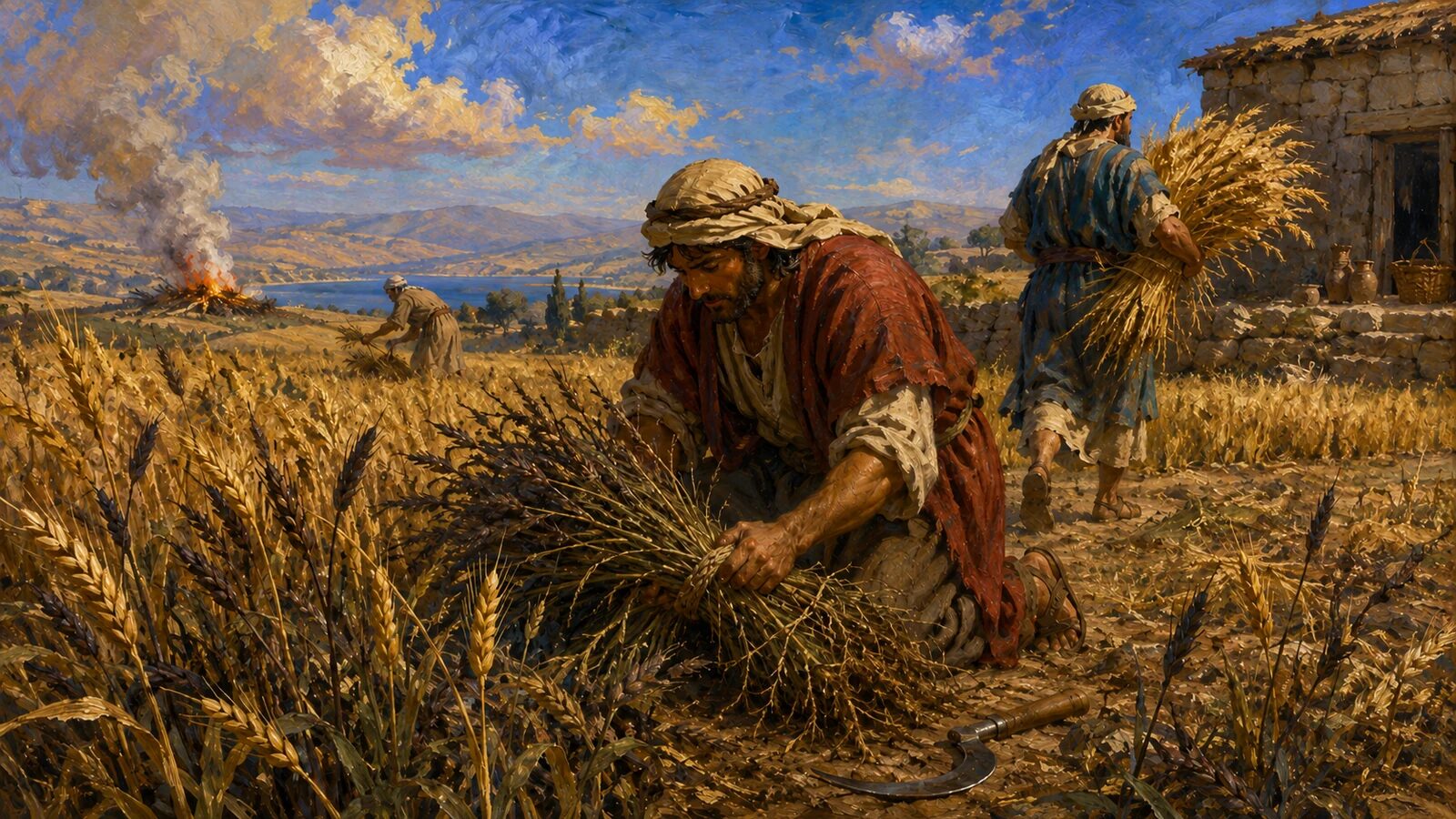
Jesus tells us plainly that evil is at work in the world, yet He does not give us authority to carry out God’s final judgment. I find the Parable of the Weeds helpful because it asks us to take both truths seriously. We need discernment without losing the patience and faithfulness He calls for while the field remains mixed.
This parable is also known as the Parable of the Tares. Jesus describes an active enemy whose counterfeit influence is real, but He also promises a harvest. The servants must wait for that appointed time rather than uprooting the field themselves.
Some Christians trust a spiritual claim simply because it uses religious vocabulary. An outward resemblance to Christianity is enough to persuade them. Others become so suspicious that they treat every immature believer as a counterfeit, until hunting for weeds becomes the center of their Christian life. Jesus teaches us to remain faithfully under His authority without giving way to either reaction.
Waiting for the harvest does not cancel our responsibility to exercise discernment or practice church discipline. We still have a duty to guard the flock from false teachers. The church can judge doctrine by Scripture and address visible sin according to Christ’s commands, but it cannot see every heart as God does. Final separation belongs to the Son of Man, and we cannot bring that harvest forward before He commands it.
The Mixed World Jesus Describes
By Matthew 13, opposition to Jesus had been growing. Large crowds gathered, but their responses differed. Some were receptive or merely curious, while others responded shallowly. Religious leaders had already become openly hostile. Jesus taught the crowd beside the sea and later went into the house, where His disciples asked Him to explain the parable. The public teaching confronted every hearer. In private, He identified the people and events represented in it so His disciples could understand it responsibly.
The Parable of the Weeds follows the Parable of the Sower, which explains different responses to the Word. Some hearts remain hard or receive it only shallowly. Competing desires crowd out the truth in some hearers, while others produce genuine fruit. Jesus then describes an enemy who opposes the kingdom’s presence in the world through counterfeits. The problem is hostile sabotage, not bad seed sown by the Son of Man.
That helps me understand why genuine fruit and counterfeit influence are both present in the world. God’s Word is producing fruit even as an enemy opposes it. Jesus prepared His disciples to remain faithful among that opposition rather than expecting a fully sorted field before the harvest.
Good Seed and Enemy Sabotage
Jesus begins with a man who sows good seed in his own field. Both the field and the good seed belong to him. The trouble enters when an enemy comes while the men are sleeping. He secretly sows tares among the wheat and then slips away.
Another parable He put forth to them, saying: “The kingdom of heaven is like a man who sowed good seed in his field; but while men slept, his enemy came and sowed tares among the wheat and went his way.”
I notice that the enemy slipped away after sowing the tares. Counterfeit spiritual work often conceals what it is doing and creates confusion through resemblance. We should not expect every deception to announce itself with a dramatic denial of truth. Sometimes it uses familiar Christian words while stripping them of their biblical meaning.
When the crop appeared, the servants wanted to know why there were tares if the seed had been good. The owner told them an enemy had done it. They offered to gather the tares immediately, and I can understand their concern. But the master would not allow them to act.
But he said, “No, lest while you gather up the tares you also uproot the wheat with them. Let both grow together until the harvest.”
The master had not called the tares harmless. He stopped the servants because they were not qualified to make the final separation at that stage. Early growth can look alike, and tangled roots make it possible to uproot wheat along with the weeds. Their zeal could damage the very crop they wanted to protect if they acted without his authority.
Jesus Explains the Field and Harvest
Later, the disciples asked Jesus to explain the parable. I don’t need to invent an identity for its figures when He has supplied their meaning Himself. His explanation gives us the place to begin.
He answered and said to them: “He who sows the good seed is the Son of Man. The field is the world, the good seeds are the sons of the kingdom, but the tares are the sons of the wicked one.”
Jesus identified Himself as the sower through the title Son of Man. Daniel 7 connects that title with kingdom authority, and it also points to His role in judgment. He sows the good seed, the sons of the kingdom, in the world. The tares are the sons of the wicked one, sown by the devil. At the end of the age, angels will reap the harvest. Jesus tells us whom these figures represent without explaining every detail of a sinner’s conversion or every event in the prophetic timeline.
The enemy who sowed them is the devil, the harvest is the end of the age, and the reapers are the angels.
Jesus is describing the present age, when His people and the devil’s counterfeits live in the world until He brings the harvest. I cannot turn that explanation into permission to label every difficult person a tare. The parable is not primarily about disagreements within a local church, and it does not tell us to tolerate false teaching.
Jesus says, “The field is the world.” I need to keep that identification in mind when applying the parable to church life. Many readers instinctively make the field the local church, but Jesus describes something broader: the kingdom’s present work in the world before the harvest. Its lessons affect the church without changing what the field represents.
We should not expect the world to become pure before the King returns. Even among those touched by Christian influence, some are curious hearers or people falsely professing faith. Intentional deceivers may be present too. Their presence does not mean Christ has failed. He told us an enemy would be working in the field.
The enemy is still an intruder in a world under Christ’s authority, not an equal owner. The Son of Man sows good seed in His own field, and the devil’s sabotage does not make him sovereign over it. When Jesus later speaks of gathering lawlessness out of His kingdom, He has not changed the field from the world to the local church. His royal authority reaches the whole field, and He will openly establish an order purified of evil. The harvest belongs to Him, so evil will not have the final word.
Counterfeits and the Danger of False Certainty
Jesus calls the tares “the sons of the wicked one.” He is identifying their spiritual character and allegiance, not biological descent from the devil. Nor does He say every unbeliever consciously pretends to be a Christian or plots within a church. I would not use the farming image to argue that a living person was created unable to repent. Before judgment, God genuinely offers the gospel to the whole world, and people can receive or resist it. The harvest reveals two final identities. The devil works through counterfeit influence and false professions. Lawlessness and spiritual deception also serve his work.
The Greek term translated tares is zizania, commonly understood as darnel. This weed can resemble wheat during its early growth, and the difference becomes clearer as the plants mature. That delayed clarity is part of the parable’s warning against premature final sorting.
Someone can learn Christian vocabulary and attend church regularly without being born again. Moral habits cannot produce spiritual life either. Outward resemblance to a Christian cannot save anyone. Wicked men physically tortured Jesus and shed His innocent blood when they put Him to death. He willingly bore the punishment for our sins in His body and rose bodily. We are saved by grace through faith in Him. The new birth produces fruit, but that fruit can never purchase the new birth.
Knowing that counterfeits exist should sober us without making every weak believer suspect. Young wheat can look unimpressive, and genuine believers may be immature or deeply wounded. Some understand slowly, and many need correction as they grow. I need to take that possibility seriously before treating someone’s weakness as proof that he does not belong to Christ. Recognizing that counterfeits exist must not make us careless about the wheat we could harm through overconfident judgment.
The Harvest and Final Judgment
Jesus identifies the harvest as the end of the age and the reapers as angels. That harvest marks the appointed completion of this present order. He is not describing the end of one ministry or the collapse of one nation. Nor can we use current events to set a date for judgment. Christ will direct His angels in a perfect separation that human servants cannot bring forward. This single harvest picture assures us that separation will come, without replacing the fuller prophetic sequence of Christ’s return, His literal thousand-year reign, resurrection, and the Great White Throne.
The Son of Man will send out His angels, and they will gather out of His kingdom all things that offend, and those who practice lawlessness.
Jesus speaks plainly about fire and the removal of lawlessness, with wailing and gnashing of teeth. I cannot keep that warning at a distance by treating it only as a description of other people. Someone can live near the wheat and use religious language without belonging to Christ. The harvest will expose that person’s true condition.
I believe we must take that judgment seriously without adding eternal conscious torment for human beings. The Lake of Fire is real and fiery, and its judgment cannot be reversed. The wicked will be resurrected and judged before experiencing the second death, the final destruction of the human body and soul. Eternal life belongs to those redeemed in Christ. The lost do not receive that life in a state of misery.
For the righteous, Jesus’ promise means the mixed field will not last forever. The Father’s kingdom will no longer be entangled with lawlessness.
Then the righteous will shine forth as the sun in the kingdom of their Father. He who has ears to hear, let him hear!
Jesus calls every hearer to respond personally. He has not given us an end-times chart merely to satisfy curiosity. I need to listen to Him and make sure I belong to Him, rather than relying on my closeness to His people. His call is to come to Christ Himself.
Discernment Without Harshness
We cannot practice discernment while refusing to acknowledge the enemy’s activity and the reality of tares and lawlessness. But harsh suspicion also leads us away from Jesus’ instruction. Identifying and removing questionable people must not become our main responsibility as Christians.
John told believers to test the spirits instead of believing every spirit. Paul warned the Ephesian elders that savage wolves would come in and that men would speak perverse things to draw disciples away. These commands require discernment, so waiting for the harvest cannot make it optional.
Beloved, do not believe every spirit, but test the spirits, whether they are of God; because many false prophets have gone out into the world.
We test teaching against the apostles’ witness to Christ preserved in the written Word. It must agree with the gospel of grace, and its fruit must match what Scripture names. I cannot establish a teaching’s truth by liking the teacher’s personality, any more than my suspicion can disprove it. A large platform or political usefulness does not change the standard. Familiar phrases must still be examined for biblical faithfulness.
We can identify false doctrine and act on visible sin without claiming to know every heart. We can also refuse fellowship with teachers who deny Christ or corrupt the gospel. Humility means recognizing the limits of that judgment: we are not the angels who will reap the harvest, and we must not turn our limited knowledge into a claim to know someone’s final judgment.
The field represents the world, so the parable is broader than instructions for local church discipline. It still helps us understand church life. Congregations exist in that mixed world and can include people who profess faith without truly believing. We need to respond without panic or passivity.
Jesus gives instruction in Matthew 18 for confronting a brother who sins. Paul gives instruction in 1 Corinthians 5 for dealing with open, scandalous sin in the congregation. Those passages show that “let both grow until the harvest” does not mean a church must ignore visible wickedness or allow destructive influence to remain unaddressed.
Therefore “put away from yourselves the evil person.”
Church discipline deals with conduct we can know and see, including unrepentant sin and destructive teaching. The final harvest settles each person’s ultimate identity and eternal judgment. Keeping those responsibilities distinct helps me understand why the church must act when Scripture commands it, while leaving final judgment to Christ. We must follow God’s process and purpose rather than acting on suspicion or personal irritation.
Church discipline seeks repentance while protecting people and the purity of the congregation. Where possible, it should lead to restoration. Guarding against false teaching also protects Christ’s sheep and keeps the gospel clear. Neither responsibility gives us reason to make tender believers fear being uprooted simply because they are immature. Jesus cares about the wheat, and that must shape how we care for them.
Pastors and parents especially need that care, as does anyone discipling another person. Slow growth is not proof of false faith, and an honest question is not necessarily rebellion. I should not mistake immaturity for deception or assume that smooth words prove faithfulness. Christ and Scripture must guide us as we look for genuine repentance and faith that produce fruit.
My Final Thoughts
Jesus’ explanation leaves me responsible to test doctrine and follow His commands for the church. It gives me no permission to ignore false teaching or open sin, but neither does it let me pretend to see every heart or carry out the final harvest before He comes. We must guard the truth while caring for the wheat and leaving perfect judgment to the Son of Man. A mixed field can be discouraging, yet it remains under His rule. His promise of the harvest gives us reason to stay faithful and patient.