
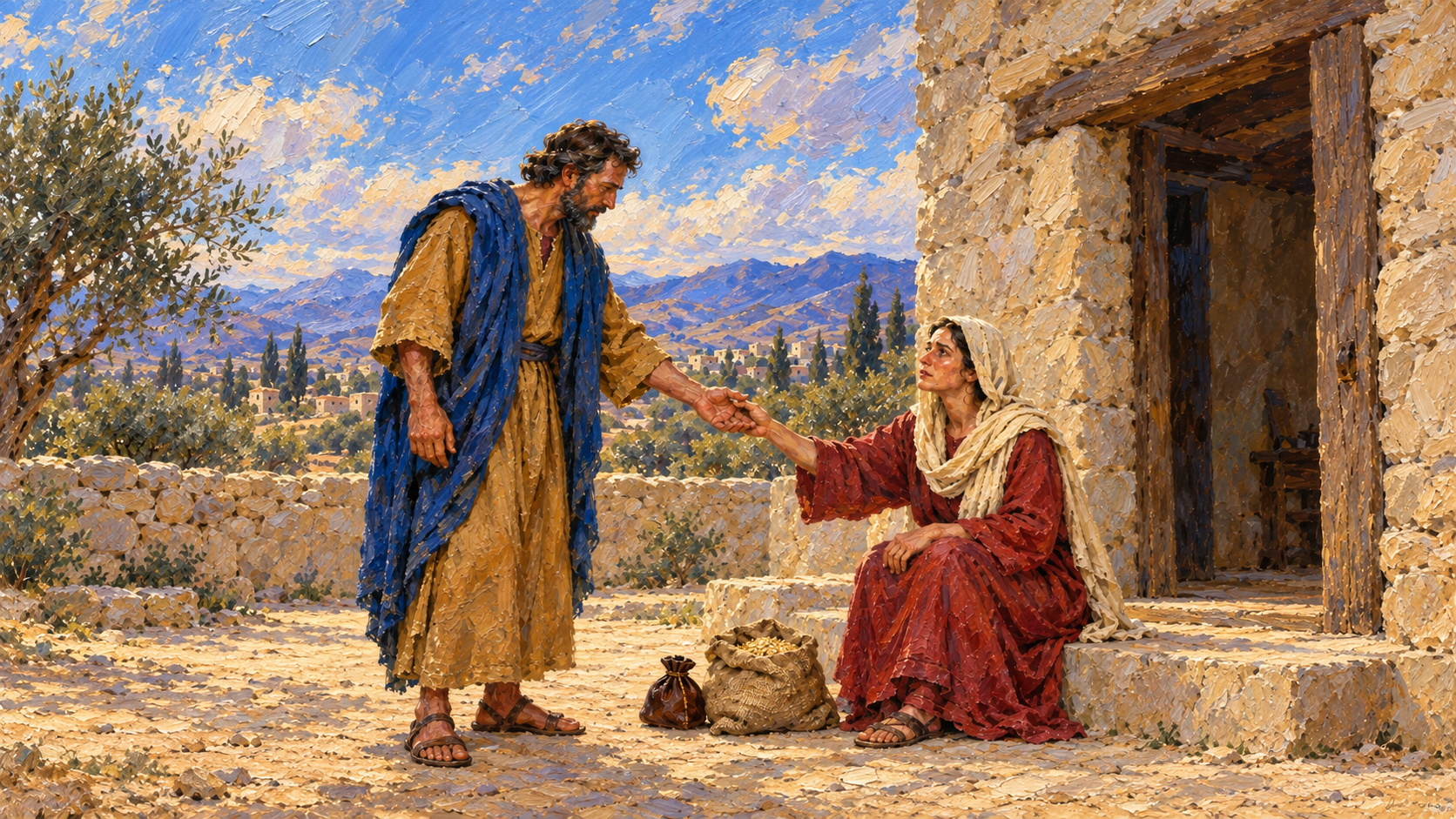
Hosea describes a people who kept their religious practices while betraying the God they claimed to worship. The Lord exposed their idolatry, dishonesty, sexual corruption, and exploitation, and warned that judgment would follow. Yet He also promised to heal their turning away and receive them again.
I want us to follow both the accusation and the promise. Hosea’s marriage makes Israel’s betrayal painfully visible, but the book reaches beyond his household to the nation’s judgment and eventual restoration. God’s mercy does not mean that He has stopped calling their conduct evil, and His judgment does not mean that He has forgotten what He promised.
Hosea’s Setting and the Sign of His Household
Hosea’s opening verse names Uzziah, Jotham, Ahaz, and Hezekiah as kings of Judah, and Jeroboam son of Joash as king of Israel. This northern Jeroboam is commonly called Jeroboam II. Hosea’s ministry extended across a long period in which prosperity gave way to political instability, assassinations, and the threat of Assyrian conquest.
Israel had divided after Solomon’s reign. Jerusalem and its temple stood in Judah, the southern kingdom, while the northern kingdom retained the name Israel and was also called Ephraim after its dominant tribe. Jeroboam I, its first king, had established calf shrines at Bethel and Dan to keep his subjects from returning to Jerusalem. By the time of Jeroboam II, that corrupted worship was firmly established. A successful economy had not made the nation’s relationship with God healthy.
Later rulers sought protection from Assyria or Egypt rather than returning to the Lord. Assyria eventually captured Samaria and deported many Israelites. Hosea’s warnings concern that national catastrophe, not merely an individual’s feeling of spiritual distance. He distinguishes Israel from Judah, sometimes warns Judah too, and promises that both will ultimately be reunited.
The word of the LORD that came to Hosea the son of Beeri, in the days of Uzziah, Jotham, Ahaz, and Hezekiah, kings of Judah, and in the days of Jeroboam the son of Joash, king of Israel. When the LORD began to speak by Hosea, the LORD said to Hosea: "Go, take yourself a wife of harlotry And children of harlotry, For the land has committed great harlotry By departing from the LORD." So he went and took Gomer the daughter of Diblaim, and she conceived and bore him a son. Then the LORD said to him: "Call his name Jezreel, For in a little while I will avenge the bloodshed of Jezreel on the house of Jehu, And bring an end to the kingdom of the house of Israel. It shall come to pass in that day That I will break the bow of Israel in the Valley of Jezreel." And she conceived again and bore a daughter. Then God said to him: "Call her name Lo-Ruhamah, For I will no longer have mercy on the house of Israel, But I will utterly take them away. Yet I will have mercy on the house of Judah, Will save them by the LORD their God, And will not save them by bow, Nor by sword or battle, By horses or horsemen." Now when she had weaned Lo-Ruhamah, she conceived and bore a son. Then God said: "Call his name Lo-Ammi, For you are not My people, And I will not be your God. "Yet the number of the children of Israel Shall be as the sand of the sea, Which cannot be measured or numbered. And it shall come to pass In the place where it was said to them, 'You are not My people,' There it shall be said to them, 'You are sons of the living God.' Then the children of Judah and the children of Israel Shall be gathered together, And appoint for themselves one head; And they shall come up out of the land, For great will be the day of Jezreel!
God commanded Hosea to marry a wife of harlotry because the land had departed from Him. Hosea married Gomer, and his household became a prophetic sign of Israel’s unfaithfulness. Readers differ over whether Gomer was already sexually immoral, became unfaithful afterward, or is initially described in relation to the corrupt society around her. The chapter does not supply her earlier biography. It does identify the betrayal the marriage represents: Israel had abandoned the Lord for other gods.
The children’s names carried the warning into public life. Jezreel recalled bloodshed associated with Jehu’s house and announced the end of that dynasty and the breaking of Israel’s military strength. The earlier account in 2 Kings 10:30–31 commends Jehu for executing judgment on Ahab’s house, yet also says he continued in Jeroboam’s sins. How Hosea’s condemnation of Jezreel’s bloodshed relates to that earlier commission is debated. We should not turn approval of one commission into approval of everything Jehu and his descendants did. Hosea’s verdict is explicit: the dynasty would answer to God and its rule would end.
Lo-Ruhamah means that mercy has not been shown. The name announces the withdrawal of mercy from the rebellious northern kingdom, while Judah receives a distinct promise of deliverance by the Lord rather than military power. Lo-Ammi means “not My people.” That name expresses the severity of the covenant breach. Israel could not presume that ancestry would protect its existing national order while it refused the God who had established the covenant.
Before the chapter ends, however, the Lord promises a reversal. The people will multiply, be called sons of the living God, and be gathered with Judah under one head. Chapter 2 begins with the restored names, “My people” and “Mercy is shown.” The judgment is real, but it has not cancelled God’s purpose for the people He names. The study on the twelve tribes of Israel helps explain the division and the promised reunion.
The Covenant Lawsuit and the Promise of Restoring Love
Hosea 2 presents a covenant lawsuit: the Lord brings charges against Israel for violating the relationship He had established. The language of an unfaithful wife exposes the nation’s allegiance to false gods.
Say to your brethren, 'My people,' And to your sisters, 'Mercy is shown.' "Bring charges against your mother, bring charges; For she is not My wife, nor am I her Husband! Let her put away her harlotries from her sight, And her adulteries from between her breasts; Lest I strip her naked And expose her, as in the day she was born, And make her like a wilderness, And set her like a dry land, And slay her with thirst. "I will not have mercy on her children, For they are the children of harlotry. For their mother has played the harlot; She who conceived them has behaved shamefully. For she said, 'I will go after my lovers, Who give me my bread and my water, My wool and my linen, My oil and my drink.' "Therefore, behold, I will hedge up your way with thorns, And wall her in, So that she cannot find her paths. She will chase her lovers, But not overtake them; Yes, she will seek them, but not find them. Then she will say, 'I will go and return to my first husband, For then it was better for me than now.' For she did not know That I gave her grain, new wine, and oil, And multiplied her silver and gold– Which they prepared for Baal. "Therefore I will return and take away My grain in its time And My new wine in its season, And will take back My wool and My linen, Given to cover her nakedness. Now I will uncover her lewdness in the sight of her lovers, And no one shall deliver her from My hand. I will also cause all her mirth to cease, Her feast days, Her New Moons, Her Sabbaths– All her appointed feasts. "And I will destroy her vines and her fig trees, Of which she has said, 'These are my wages that my lovers have given me.' So I will make them a forest, And the beasts of the field shall eat them. I will punish her For the days of the Baals to which she burned incense. She decked herself with her earrings and jewelry, And went after her lovers; But Me she forgot," says the LORD. "Therefore, behold, I will allure her, Will bring her into the wilderness, And speak comfort to her. I will give her her vineyards from there, And the Valley of Achor as a door of hope; She shall sing there, As in the days of her youth, As in the day when she came up from the land of Egypt. "And it shall be, in that day," Says the LORD, "That you will call Me 'My Husband,' And no longer call Me 'My Master,' For I will take from her mouth the names of the Baals, And they shall be remembered by their name no more. In that day I will make a covenant for them With the beasts of the field, With the birds of the air, And with the creeping things of the ground. Bow and sword of battle I will shatter from the earth, To make them lie down safely. "I will betroth you to Me forever; Yes, I will betroth you to Me In righteousness and justice, In lovingkindness and mercy; I will betroth you to Me in faithfulness, And you shall know the LORD. "It shall come to pass in that day That I will answer," says the LORD; "I will answer the heavens, And they shall answer the earth. The earth shall answer With grain, With new wine, And with oil; They shall answer Jezreel. Then I will sow her for Myself in the earth, And I will have mercy on her who had not obtained mercy; Then I will say to those who were not My people, 'You are My people!' And they shall say, 'You are my God!'"
Israel credited her lovers with providing food, clothing, oil, and drink. The Lord identifies those things as His own gifts, including the silver and gold used in Baal worship. The people had taken what He supplied and used it to honor the supposed rivals who had supplied nothing. Their prosperity had become a means of financing the betrayal.
God therefore announced that He would block their paths, withdraw the provision, expose their shame, and bring their festivals to an end. The vines and fig trees they called their lovers’ wages would be ruined. This was active judgment on the nation, not simply an unfortunate loss that God observed from a distance. The false gods would be unable to protect the people who credited them with their security.
Then the Lord promises to draw Israel into the wilderness and speak comfort. The wilderness recalls the nation’s dependence on Him after coming out of Egypt. The Valley of Achor, associated with Achan’s sin and judgment in Joshua 7, would become a door of hope. God would remove the names of the Baals, renew His betrothal in righteousness and faithfulness, and grant safety. Restoration would include knowing the Lord again, rather than returning to the same arrangement with the idols still in place.
Then the LORD said to me, "Go again, love a woman who is loved by a lover and is committing adultery, just like the love of the LORD for the children of Israel, who look to other gods and love the raisin cakes of the pagans." So I bought her for myself for fifteen shekels of silver, and one and one-half homers of barley. And I said to her, "You shall stay with me many days; you shall not play the harlot, nor shall you have a man–so, too, will I be toward you." For the children of Israel shall abide many days without king or prince, without sacrifice or sacred pillar, without ephod or teraphim. Afterward the children of Israel shall return and seek the LORD their God and David their king. They shall fear the LORD and His goodness in the latter days.
The Lord commanded Hosea to love an adulterous woman as a sign of His continuing love for Israel. Hosea acquired her for silver and barley and required a period without harlotry or another man. I understand why readers identify her as Gomer in light of the preceding chapters, though chapter 3 itself does not name her. Nor does it explain every circumstance of the transaction, so we should not present an imagined auction scene as a recorded event.
The interpretation of the sign is given directly. Israel would remain many days without king or prince, sacrifice, sacred pillar, ephod, or teraphim. The ephod was associated with priestly service, while teraphim were household idols. The list describes the loss of the nation’s established political and religious life. Afterward the people would return, seek the Lord and David their king, and come before Him in reverence in the latter days. I understand that promise to include genuine repentance and restoration under rightful Davidic rule, fulfilled through the Messiah. It cannot be reduced to political recovery without returning to God.
God’s commands concerning Hosea’s marriage were unique prophetic instructions, not general directions about choosing a spouse. A modern leader cannot claim Hosea’s authority to direct someone else’s marriage or require a believer to marry a person known to be unfaithful. We should learn what God revealed through the prophet without assuming that we have received his particular commission.
The marriage imagery in chapter 2 describes God’s judgment of national Israel. He speaks as its covenant Judge. A sinful human spouse does not possess that authority. These words do not authorize someone to strip, humiliate, starve, assault, or confine a spouse and call it godly discipline. Hosea’s prophetic commission cannot be used to give abusive conduct a religious defense.
Rejected Knowledge, Empty Worship, and False Security
Hear the word of the LORD, You children of Israel, For the LORD brings a charge against the inhabitants of the land: "There is no truth or mercy Or knowledge of God in the land. By swearing and lying, Killing and stealing and committing adultery, They break all restraint, With bloodshed upon bloodshed. Therefore the land will mourn; And everyone who dwells there will waste away With the beasts of the field And the birds of the air; Even the fish of the sea will be taken away. "Now let no man contend, or rebuke another; For your people are like those who contend with the priest. Therefore you shall stumble in the day; The prophet also shall stumble with you in the night; And I will destroy your mother. My people are destroyed for lack of knowledge. Because you have rejected knowledge, I also will reject you from being priest for Me; Because you have forgotten the law of your God, I also will forget your children. "The more they increased, The more they sinned against Me; I will change their glory into shame. They eat up the sin of My people; They set their heart on their iniquity. And it shall be: like people, like priest. So I will punish them for their ways, And reward them for their deeds. For they shall eat, but not have enough; They shall commit harlotry, but not increase; Because they have ceased obeying the LORD. "Harlotry, wine, and new wine enslave the heart. My people ask counsel from their wooden idols, And their staff informs them. For the spirit of harlotry has caused them to stray, And they have played the harlot against their God. They offer sacrifices on the mountaintops, And burn incense on the hills, Under oaks, poplars, and terebinths, Because their shade is good. Therefore your daughters commit harlotry, And your brides commit adultery. "I will not punish your daughters when they commit harlotry, Nor your brides when they commit adultery; For the men themselves go apart with harlots, And offer sacrifices with a ritual harlot. Therefore people who do not understand will be trampled. "Though you, Israel, play the harlot, Let not Judah offend. Do not come up to Gilgal, Nor go up to Beth Aven, Nor swear an oath, saying, 'As the LORD lives'– "For Israel is stubborn Like a stubborn calf; Now the LORD will let them forage Like a lamb in open country. "Ephraim is joined to idols, Let him alone. Their drink is rebellion, They commit harlotry continually. Her rulers dearly love dishonor. The wind has wrapped her up in its wings, And they shall be ashamed because of their sacrifices.
Hosea 4 names the conduct that made the covenant breach visible. Truth, mercy, and the knowledge of God were absent, while false oaths, lies, theft, killing, and adultery spread through the land. Bloodshed followed bloodshed. The charge concerned how people actually lived, not merely whether they could give the expected answers about Israel’s religion.
The priests were especially accountable for rejecting the knowledge they were supposed to teach. They fed on the people’s sin instead of confronting it, and God held both people and priests responsible. The warning about destruction for lack of knowledge is not a slogan about inadequate schooling. They had rejected God’s revealed law. Their ignorance was bound up with refusal, and the consequences reached the people under their instruction.
The men also had no grounds for condemning daughters and brides while going to prostitutes themselves. Hosea exposed that hypocrisy alongside idolatry and stubbornness, then warned Judah not to join Israel’s worship. Religious leadership did not excuse the men from the moral accountability they imposed on others.
"Hear this, O priests! Take heed, O house of Israel! Give ear, O house of the king! For yours is the judgment, Because you have been a snare to Mizpah And a net spread on Tabor. The revolters are deeply involved in slaughter, Though I rebuke them all. I know Ephraim, And Israel is not hidden from Me; For now, O Ephraim, you commit harlotry; Israel is defiled. "They do not direct their deeds Toward turning to their God, For the spirit of harlotry is in their midst, And they do not know the LORD. The pride of Israel testifies to his face; Therefore Israel and Ephraim stumble in their iniquity; Judah also stumbles with them. "With their flocks and herds They shall go to seek the LORD, But they will not find Him; He has withdrawn Himself from them. They have dealt treacherously with the LORD, For they have begotten pagan children. Now a New Moon shall devour them and their heritage. "Blow the ram's horn in Gibeah, The trumpet in Ramah! Cry aloud at Beth Aven, 'Look behind you, O Benjamin!' Ephraim shall be desolate in the day of rebuke; Among the tribes of Israel I make known what is sure. "The princes of Judah are like those who remove a landmark; I will pour out My wrath on them like water. Ephraim is oppressed and broken in judgment, Because he willingly walked by human precept. Therefore I will be to Ephraim like a moth, And to the house of Judah like rottenness. "When Ephraim saw his sickness, And Judah saw his wound, Then Ephraim went to Assyria And sent to King Jareb; Yet he cannot cure you, Nor heal you of your wound. For I will be like a lion to Ephraim, And like a young lion to the house of Judah. I, even I, will tear them and go away; I will take them away, and no one shall rescue. I will return again to My place Till they acknowledge their offense. Then they will seek My face; In their affliction they will earnestly seek Me."
Chapter 5 addresses priests, people, and the royal house together. Their deeds were not directed toward returning to God, and bringing flocks and herds could not overcome their persistent treachery. Ephraim recognized sickness and Judah a wound, but Ephraim sought help from Assyria. The foreign king could not cure the breach between Israel and the Lord.
God’s withdrawal was deliberate: He would wait until they acknowledged their offense and sought His face. That announcement prepares us for the call to return at the beginning of chapter 6.
Come, and let us return to the LORD; For He has torn, but He will heal us; He has stricken, but He will bind us up. After two days He will revive us; On the third day He will raise us up, That we may live in His sight. Let us know, Let us pursue the knowledge of the LORD. His going forth is established as the morning; He will come to us like the rain, Like the latter and former rain to the earth. "O Ephraim, what shall I do to you? O Judah, what shall I do to you? For your faithfulness is like a morning cloud, And like the early dew it goes away. Therefore I have hewn them by the prophets, I have slain them by the words of My mouth; And your judgments are like light that goes forth. For I desire mercy and not sacrifice, And the knowledge of God more than burnt offerings. "But like men they transgressed the covenant; There they dealt treacherously with Me. Gilead is a city of evildoers And defiled with blood. As bands of robbers lie in wait for a man, So the company of priests murder on the way to Shechem; Surely they commit lewdness. I have seen a horrible thing in the house of Israel: There is the harlotry of Ephraim; Israel is defiled. Also, O Judah, a harvest is appointed for you, When I return the captives of My people.
The invitation speaks of revival after two days and being raised on the third, picturing swift restoration after judgment. I can recognize an echo of Christ’s third-day resurrection while retaining the passage’s immediate concern with Israel’s restoration. It is not presented here as a direct schedule of Jesus’ burial and resurrection.
The Lord’s answer, however, exposes a response that disappears like a morning cloud or early dew. Saying the right words briefly would not establish the faithfulness the people lacked. They needed to return in the conduct of their lives, not assume that a short-lived expression of regret settled the charges.
The Lord desires mercy rather than sacrifice and knowledge of Himself more than burnt offerings. Hesed, the Hebrew word behind this language, can express mercy, faithful love, or covenant loyalty according to context. Hosea is not cancelling the sacrifices God commanded. He is exposing people who offer them while practicing treachery and bloodshed, including priests compared to robbers waiting to murder. Knowing the Lord should produce loyalty to Him and mercy toward others.
"When I would have healed Israel, Then the iniquity of Ephraim was uncovered, And the wickedness of Samaria. For they have committed fraud; A thief comes in; A band of robbers takes spoil outside. They do not consider in their hearts That I remember all their wickedness; Now their own deeds have surrounded them; They are before My face. They make a king glad with their wickedness, And princes with their lies. "They are all adulterers. Like an oven heated by a baker– He ceases stirring the fire after kneading the dough, Until it is leavened. In the day of our king Princes have made him sick, inflamed with wine; He stretched out his hand with scoffers. They prepare their heart like an oven, While they lie in wait; Their baker sleeps all night; In the morning it burns like a flaming fire. They are all hot, like an oven, And have devoured their judges; All their kings have fallen. None among them calls upon Me. "Ephraim has mixed himself among the peoples; Ephraim is a cake unturned. Aliens have devoured his strength, But he does not know it; Yes, gray hairs are here and there on him, Yet he does not know it. And the pride of Israel testifies to his face, But they do not return to the LORD their God, Nor seek Him for all this. "Ephraim also is like a silly dove, without sense– They call to Egypt, They go to Assyria. Wherever they go, I will spread My net on them; I will bring them down like birds of the air; I will chastise them According to what their congregation has heard. "Woe to them, for they have fled from Me! Destruction to them, Because they have transgressed against Me! Though I redeemed them, Yet they have spoken lies against Me. They did not cry out to Me with their heart When they wailed upon their beds. "They assemble together for grain and new wine, They rebel against Me; Though I disciplined and strengthened their arms, Yet they devise evil against Me; They return, but not to the Most High; They are like a treacherous bow. Their princes shall fall by the sword For the cursings of their tongue. This shall be their derision in the land of Egypt.
Hosea 7 exposes the corruption behind the political disorder. The court took pleasure in wickedness, princes were inflamed with wine, and conspirators prepared their hearts like an oven whose heat would break out into destructive action. Kings fell, yet the people did not call on God. The collapse of their leadership had not made them willing to repent.
An unturned cake is badly cooked, with one side left undone. It pictures Ephraim’s compromised condition among the nations, while gray hairs picture decline the people failed to recognize. Foreigners were consuming Israel’s strength. Like a senseless dove, the nation moved between Egypt and Assyria looking for rescue, but the Lord would spread His net over it. The problem was not every possible diplomatic agreement; it was relying on foreign powers while refusing the God whose judgment those powers could not prevent.
"Set the trumpet to your mouth! He shall come like an eagle against the house of the LORD, Because they have transgressed My covenant And rebelled against My law. Israel will cry to Me, 'My God, we know You!' Israel has rejected the good; The enemy will pursue him. "They set up kings, but not by Me; They made princes, but I did not acknowledge them. From their silver and gold They made idols for themselves– That they might be cut off. Your calf is rejected, O Samaria! My anger is aroused against them– How long until they attain to innocence? For from Israel is even this: A workman made it, and it is not God; But the calf of Samaria shall be broken to pieces. "They sow the wind, And reap the whirlwind. The stalk has no bud; It shall never produce meal. If it should produce, Aliens would swallow it up. Israel is swallowed up; Now they are among the Gentiles Like a vessel in which is no pleasure. For they have gone up to Assyria, Like a wild donkey alone by itself; Ephraim has hired lovers. Yes, though they have hired among the nations, Now I will gather them; And they shall sorrow a little, Because of the burden of the king of princes. "Because Ephraim has made many altars for sin, They have become for him altars for sinning. I have written for him the great things of My law, But they were considered a strange thing. For the sacrifices of My offerings they sacrifice flesh and eat it, But the LORD does not accept them. Now He will remember their iniquity and punish their sins. They shall return to Egypt. "For Israel has forgotten his Maker, And has built temples; Judah also has multiplied fortified cities; But I will send fire upon his cities, And it shall devour his palaces."
Israel still claimed to know God in chapter 8, but its choices contradicted the claim. Rulers were installed without regard for Him, craftsmen made calves from silver and gold, and altars multiplied. God had given His law, yet the people treated it as something foreign. Keeping the religious buildings and sacrificial meals did not make worship acceptable while they rejected His instruction.
Sowing the wind and reaping the whirlwind describes the disastrous result of that rebellion. Their choices would bring consequences far beyond any gain they expected, destroying the security they had hoped to obtain. Crops would fail or be consumed by foreigners, and neither fortified cities nor multiplied altars would protect a nation that had forgotten its Maker.
Israel empties his vine; He brings forth fruit for himself. According to the multitude of his fruit He has increased the altars; According to the bounty of his land They have embellished his sacred pillars. Their heart is divided; Now they are held guilty. He will break down their altars; He will ruin their sacred pillars. For now they say, "We have no king, Because we did not fear the LORD. And as for a king, what would he do for us?" They have spoken words, Swearing falsely in making a covenant. Thus judgment springs up like hemlock in the furrows of the field. The inhabitants of Samaria fear Because of the calf of Beth Aven. For its people mourn for it, And its priests shriek for it– Because its glory has departed from it. The idol also shall be carried to Assyria As a present for King Jareb. Ephraim shall receive shame, And Israel shall be ashamed of his own counsel. As for Samaria, her king is cut off Like a twig on the water. Also the high places of Aven, the sin of Israel, Shall be destroyed. The thorn and thistle shall grow on their altars; They shall say to the mountains, "Cover us!" And to the hills, "Fall on us!" "O Israel, you have sinned from the days of Gibeah; There they stood. The battle in Gibeah against the children of iniquity Did not overtake them. When it is My desire, I will chasten them. Peoples shall be gathered against them When I bind them for their two transgressions. Ephraim is a trained heifer That loves to thresh grain; But I harnessed her fair neck, I will make Ephraim pull a plow. Judah shall plow; Jacob shall break his clods." Sow for yourselves righteousness; Reap in mercy; Break up your fallow ground, For it is time to seek the LORD, Till He comes and rains righteousness on you. You have plowed wickedness; You have reaped iniquity. You have eaten the fruit of lies, Because you trusted in your own way, In the multitude of your mighty men. Therefore tumult shall arise among your people, And all your fortresses shall be plundered As Shalman plundered Beth Arbel in the day of battle– A mother dashed in pieces upon her children. Thus it shall be done to you, O Bethel, Because of your great wickedness. At dawn the king of Israel Shall be cut off utterly.
Chapter 10 returns to the use of prosperity for idolatry. More fruit had financed more altars and embellished pillars. The people feared for their calf, but it would itself be carried away to Assyria as tribute. Their king would be swept away, and thorns would cover the ruined places of worship. The objects in which they had invested their confidence could not preserve themselves, much less rescue Israel.
The Lord nevertheless called them to sow righteousness, reap mercy, and break up their fallow ground. They had cultivated wickedness and trusted their own military strength; repentance required a different course. I need to hear that when regret leaves my conduct untouched. Truthful confession should lead to abandoning the practices I am confessing, rather than protecting them while asking God to remove their repercussions.
The Loved Son, Holy Compassion, and Victory Over Death
"When Israel was a child, I loved him, And out of Egypt I called My son. As they called them, So they went from them; They sacrificed to the Baals, And burned incense to carved images. "I taught Ephraim to walk, Taking them by their arms; But they did not know that I healed them. I drew them with gentle cords, With bands of love, And I was to them as those who take the yoke from their neck. I stooped and fed them. "He shall not return to the land of Egypt; But the Assyrian shall be his king, Because they refused to repent. And the sword shall slash in his cities, Devour his districts, And consume them, Because of their own counsels. My people are bent on backsliding from Me. Though they call to the Most High, None at all exalt Him. "How can I give you up, Ephraim? How can I hand you over, Israel? How can I make you like Admah? How can I set you like Zeboiim? My heart churns within Me; My sympathy is stirred. I will not execute the fierceness of My anger; I will not again destroy Ephraim. For I am God, and not man, The Holy One in your midst; And I will not come with terror. "They shall walk after the LORD. He will roar like a lion. When He roars, Then His sons shall come trembling from the west; They shall come trembling like a bird from Egypt, Like a dove from the land of Assyria. And I will let them dwell in their houses," Says the LORD. "Ephraim has encircled Me with lies, And the house of Israel with deceit; But Judah still walks with God, Even with the Holy One who is faithful.
Hosea 11 looks back to the exodus, describing Israel as God’s loved son. He taught Ephraim to walk, took the people by their arms, and fed them, yet they credited neither their healing nor their care to Him. As His messengers called, they turned toward Baal. Assyrian rule and violence would follow their refusal to repent.
The Lord then asks how He can give Ephraim up like Admah and Zeboiim, cities destroyed with Sodom and Gomorrah (Deuteronomy 29:23). His compassion is stirred, and He declares that He is God, not man, the Holy One in their midst. These words express real compassion without suggesting that He has discovered something new, lost control, or become morally divided. The same holy God who judges Israel also preserves the purpose of His covenant mercy.
That mercy does not prevent the exile already announced in the chapter. It promises that judgment will not erase the people. The Lord will call His sons from the west, Egypt, and Assyria and settle them in their houses. The nation that fluttered toward foreign powers like a senseless dove will come trembling at His call. Returning to dwell in their land is part of the promised restoration, alongside returning to Him.
Matthew applies the words of Hosea 11:1 about calling the Son out of Egypt to Jesus after His family’s return from Egypt (Matthew 2:15). Jesus follows Israel’s path as the faithful Messiah without sharing Israel’s rebellion. This is typology: a real earlier person or event forms a pattern that receives a greater fulfillment in Christ. Matthew’s application does not make the original reference to Israel disappear.
Chapter 13 speaks frankly about the terrible cost of rebellion. The Lord had cared for Israel in the wilderness, but abundance led to pride and forgetfulness. The people multiplied idols and trusted kings who could not save their cities.
When Ephraim spoke, trembling, He exalted himself in Israel; But when he offended through Baal worship, he died. Now they sin more and more, And have made for themselves molded images, Idols of their silver, according to their skill; All of it is the work of craftsmen. They say of them, "Let the men who sacrifice kiss the calves!" Therefore they shall be like the morning cloud And like the early dew that passes away, Like chaff blown off from a threshing floor And like smoke from a chimney. "Yet I am the LORD your God Ever since the land of Egypt, And you shall know no God but Me; For there is no savior besides Me. I knew you in the wilderness, In the land of great drought. When they had pasture, they were filled; They were filled and their heart was exalted; Therefore they forgot Me. "So I will be to them like a lion; Like a leopard by the road I will lurk; I will meet them like a bear deprived of her cubs; I will tear open their rib cage, And there I will devour them like a lion. The wild beast shall tear them. "O Israel, you are destroyed, But your help is from Me. I will be your King; Where is any other, That he may save you in all your cities? And your judges to whom you said, 'Give me a king and princes'? I gave you a king in My anger, And took him away in My wrath. "The iniquity of Ephraim is bound up; His sin is stored up. The sorrows of a woman in childbirth shall come upon him. He is an unwise son, For he should not stay long where children are born. "I will ransom them from the power of the grave; I will redeem them from death. O Death, I will be your plagues! O Grave, I will be your destruction! Pity is hidden from My eyes." Though he is fruitful among his brethren, An east wind shall come; The wind of the LORD shall come up from the wilderness. Then his spring shall become dry, And his fountain shall be dried up. He shall plunder the treasury of every desirable prize. Samaria is held guilty, For she has rebelled against her God. They shall fall by the sword, Their infants shall be dashed in pieces, And their women with child ripped open.
The lion, leopard, and bereaved bear picture the severity of God’s judgment. The final description of Samaria’s devastation is horrifying; we should not soften it into a vague illustration of feeling distant from God.
Verse 14 requires some care. The quotation above presents God’s promise to ransom His people from death. Some translations instead read the opening lines as questions announcing that He will not spare the nation, as the translation notes explain. I retain the promise reading reflected here, while recognizing that it does not cancel the immediate judgment described around it. We should distinguish that promised deliverance from an assurance that every inhabitant of Samaria would escape the invasion.
Paul draws on Hosea’s language when teaching bodily resurrection in 1 Corinthians 15. In Christ, death will not have the final victory. That apostolic use gives us firm grounds for resurrection hope while leaving Hosea’s warning about the coming historical judgment intact.
Return, New Testament Fulfillment, and Israel’s Future
O Israel, return to the LORD your God, For you have stumbled because of your iniquity; Take words with you, And return to the LORD. Say to Him, "Take away all iniquity; Receive us graciously, For we will offer the sacrifices of our lips. Assyria shall not save us, We will not ride on horses, Nor will we say anymore to the work of our hands, 'You are our gods.' For in You the fatherless finds mercy." "I will heal their backsliding, I will love them freely, For My anger has turned away from him. I will be like the dew to Israel; He shall grow like the lily, And lengthen his roots like Lebanon. His branches shall spread; His beauty shall be like an olive tree, And his fragrance like Lebanon. Those who dwell under his shadow shall return; They shall be revived like grain, And grow like a vine. Their scent shall be like the wine of Lebanon. "Ephraim shall say, 'What have I to do anymore with idols?' I have heard and observed him. I am like a green cypress tree; Your fruit is found in Me." Who is wise? Let him understand these things. Who is prudent? Let him know them. For the ways of the LORD are right; The righteous walk in them, But transgressors stumble in them.
The final chapter calls Israel to return with words that acknowledge its guilt and renounce its false saviors. Assyria cannot save, military horses cannot provide deliverance, and handmade objects are not gods. This is more than regretting how badly events have turned out. The people are to abandon the allegiances that displaced the Lord and ask Him to take away their iniquity and receive them graciously.
God promises to heal their backsliding and love them freely. The dew, lily, deep roots, spreading branches, grain, and vine all picture life and fruitfulness supplied by Him. Israel had credited the lovers and Baals with its provision; now the Lord identifies Himself as the source of its fruit. The book ends by calling the wise to recognize that His ways are right and walk in them.
Hosea’s repeated language about knowing and returning should therefore be read in context. The Hebrew verb yada means to know, but here knowing God involves an obedient relationship rather than facts alone. Shuv means to turn or return, with related forms describing the turning away God promises to heal. These words do not make repentance mysterious. A people who have abandoned the Lord must return to Him rather than continue defending their departure.
The New Testament applies these themes directly. Jesus quoted Hosea 6:6 when critics objected to His eating with sinners and when they condemned His disciples over grain plucked on the Sabbath (Matthew 9:13; 12:7). Mercy was not an excuse to disregard God’s law; their treatment of people exposed how poorly they understood it.
Paul uses Hosea’s reversal of the names concerning mercy and God’s people in Romans 9, in a discussion of God’s calling from Jews and Gentiles. First Peter 2 applies the restored identity to believers called out of darkness to declare God’s praises and live honorably among the nations. Those who receive mercy cannot claim that ethnicity or meritorious conduct purchased their place among His people.
Neither application requires us to remove Israel from Hosea’s promise. Judah and Israel are named, their reunion is promised, and the latter-day return includes seeking the Lord and David their king. Paul goes on to address Israel’s salvation in Romans 11. The church shares salvation through Israel’s Messiah, but that mercy does not authorize us to cancel God’s national covenant promises. The studies on the New Covenant and Amos consider related promises and warnings.
I understand that future from a pretribulation and premillennial perspective. The church will be gathered before the Tribulation; afterward Christ will return bodily and establish His literal thousand-year reign. Israel’s repentance and restoration will display God’s faithfulness. The gathering in 1 Thessalonians 4:13–18 and the return and reign in Revelation 19–20 belong to the wider teaching by which I understand that fulfillment.
Our response begins with Jesus Christ, the eternal Son, fully God and fully man, born of a virgin and without sin. Wicked men inflicted real bodily torture and put Him to death, but He willingly bore that punishment for our sins, shedding His blood for the whole world. The Father did not punish, curse, abandon, strike, bruise, or pour wrath on Jesus. His saving work through His blood and death was complete before His burial and bodily resurrection.
God genuinely offers salvation to every person, although people can resist and reject it. Whoever repents and believes is forgiven and born again, indwelt and sealed by the Holy Spirit, and eternally secure. A Christian profession alone does not establish that someone has received new life; the evidence should appear in conduct. That conduct does not earn salvation or keep us saved, and security in Christ gives no permission for lawlessness.
Hosea should also make me examine what I am trusting and defending. Money, career success, political influence, sexual desire, or public approval can become something I obey at God’s expense. Receiving ordinary gifts with gratitude is not idolatry. The betrayal comes when I give created things the allegiance that belongs to Him or refuse His commands to preserve what I want.
Returning to the Lord requires truthful confession followed by an honest response to what He has exposed. If I have lied, I need to correct the lie. If I have exploited someone, the harm must stop and whatever can be repaired should be addressed. Religious activity cannot make that unnecessary. We can ask for His mercy while taking the actual steps of obedience that the sin requires.
My Final Thoughts
Hosea will not let me separate God’s mercy from His judgment of evil. He tells the truth about Israel’s betrayal, brings the judgment He warned of, and still promises restoration through His faithful love. I want to respond to that mercy with more than words that vanish like morning dew. Christ is the Savior we need, and knowing Him should become evident in the loyalties we abandon, the wrongs we address, and the way we treat other people.