
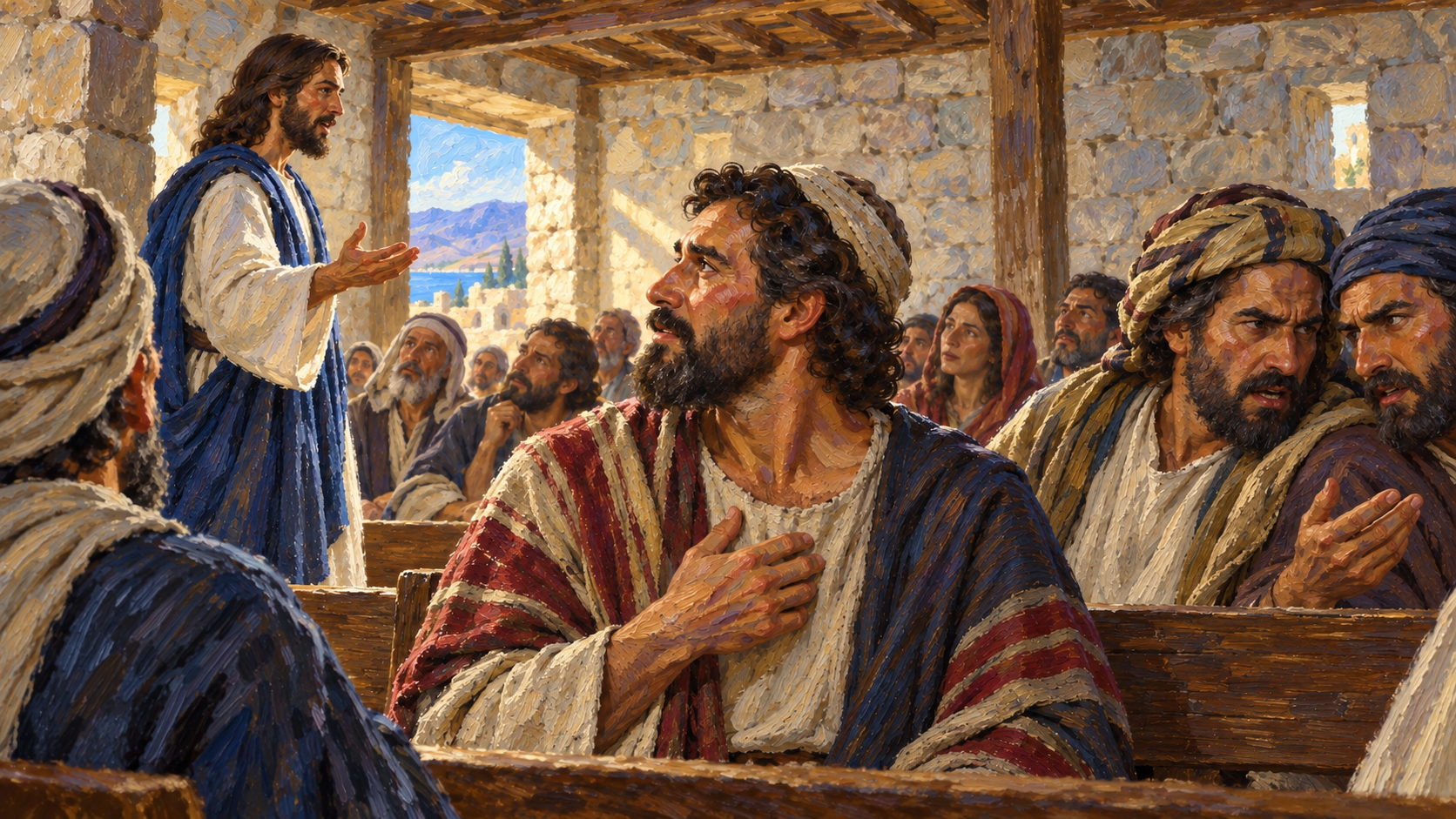
What does Jesus mean when He says that no one can come to Him unless the Father draws him? Some understand this as irresistible grace, a work of God that inevitably brings selected people to saving faith. Others understand drawing as a physical action that brings the dead from their graves. I don’t believe either reading accounts for Jesus’ explanation. The Father draws people to the Son through His gracious testimony, and the Son promises to raise the believer at the last day.
We cannot come without God’s help. He sent the Son, reveals the truth, and convicts us through His Spirit. We supply none of those things. But dependence on grace does not establish that grace cannot be resisted. Jesus explains the Father’s drawing through teaching, hearing, and learning, while John’s Gospel repeatedly describes people refusing the testimony God has given. I want to follow that explanation without overlooking the assurance in the same sentence: Christ will raise the person who comes to Him.
Coming to Jesus Means Believing
Before the Bread of Life discourse in John 6, Jesus confronted people who claimed to trust Moses while rejecting the One Moses wrote about. Their problem was not that God had left them without testimony. They searched the very Scriptures that pointed to Christ:
You search the Scriptures, for in them you think you have eternal life; and these are they which testify of Me. But you are not willing to come to Me that you may have life. "I do not receive honor from men. But I know you, that you do not have the love of God in you. I have come in My Father's name, and you do not receive Me; if another comes in his own name, him you will receive. How can you believe, who receive honor from one another, and do not seek the honor that comes from the only God? Do not think that I shall accuse you to the Father; there is one who accuses you–Moses, in whom you trust. For if you believed Moses, you would believe Me; for he wrote about Me. But if you do not believe his writings, how will you believe My words?"
Jesus holds these hearers responsible when He says, “you are not willing to come to Me.” They wanted honor from one another and would not receive the Son who came in His Father’s name. Reading Scripture had not made them humble before its Author. They could discuss Moses while refusing the person to whom his writings directed them.
I need to keep their refusal alongside what Jesus says about the Father’s drawing. God’s testimony is necessary, but hearing it does not force a person to believe. Jesus does not praise these men for possessing some independent ability to save themselves. He exposes their unwillingness to receive the revelation they already had. That confrontation also prepares us for John 6, where another group appeals to Moses while failing to recognize the Son.
Near Passover, Jesus fed about five thousand men with five barley loaves and two small fish. The crowd identified Him as the promised Prophet and intended to take Him by force to make Him king. Jesus withdrew rather than submit to their plans. They had received an extraordinary sign, but their enthusiasm did not mean they understood His mission.
That evening His disciples crossed the sea, and Jesus came to them walking on the water. The next day, the crowd traveled to Capernaum in search of Him. They had gone to considerable effort to find Him, but Jesus explained why that pursuit still fell short of faith:
On the following day, when the people who were standing on the other side of the sea saw that there was no other boat there, except that one which His disciples had entered, and that Jesus had not entered the boat with His disciples, but His disciples had gone away alone– however, other boats came from Tiberias, near the place where they ate bread after the Lord had given thanks– when the people therefore saw that Jesus was not there, nor His disciples, they also got into boats and came to Capernaum, seeking Jesus. And when they found Him on the other side of the sea, they said to Him, "Rabbi, when did You come here?" Jesus answered them and said, "Most assuredly, I say to you, you seek Me, not because you saw the signs, but because you ate of the loaves and were filled. Do not labor for the food which perishes, but for the food which endures to everlasting life, which the Son of Man will give you, because God the Father has set His seal on Him." Then they said to Him, "What shall we do, that we may work the works of God?" Jesus answered and said to them, "This is the work of God, that you believe in Him whom He sent." Therefore they said to Him, "What sign will You perform then, that we may see it and believe You? What work will You do? Our fathers ate the manna in the desert; as it is written, 'He gave them bread from heaven to eat.'" Then Jesus said to them, "Most assuredly, I say to you, Moses did not give you the bread from heaven, but My Father gives you the true bread from heaven. For the bread of God is He who comes down from heaven and gives life to the world." Then they said to Him, "Lord, give us this bread always."
These people wanted another meal. Jesus had supplied bread, and they were looking for more of what had filled their stomachs. They had benefited from the sign without receiving what it revealed about Him. Seeking help from Jesus is not necessarily the same as believing in Him; a person can want His gifts while refusing His authority and the life He offers.
When Jesus directed them to food that endures to everlasting life, they asked what works they should perform. He told them to believe in the One the Father sent. Faith receives God’s provision; it does not put God in our debt. Calling belief the work God requires here does not turn it into a meritorious achievement that purchases salvation.
Their appeal to manna exposed another misunderstanding. Moses had not been the ultimate giver of that bread, and manna had sustained mortal people who eventually died. The Father now gives the true Bread from heaven, the One who gives life to the world. When the crowd asked to receive this bread always, Jesus identified the gift they needed:
And Jesus said to them, "I am the bread of life. He who comes to Me shall never hunger, and he who believes in Me shall never thirst. But I said to you that you have seen Me and yet do not believe. All that the Father gives Me will come to Me, and the one who comes to Me I will by no means cast out. For I have come down from heaven, not to do My own will, but the will of Him who sent Me. This is the will of the Father who sent Me, that of all He has given Me I should lose nothing, but should raise it up at the last day. And this is the will of Him who sent Me, that everyone who sees the Son and believes in Him may have everlasting life; and I will raise him up at the last day."
Jesus is Himself the Bread of Life. The crowd wanted a continuing supply of bread, much as the Samaritan woman had first wanted water that would spare her more trips to the well. In both encounters, Jesus directed the hearer beyond an immediate physical benefit to the life found in Him.
Verse 35 puts coming and believing alongside each other: “He who comes to Me shall never hunger” and “he who believes in Me shall never thirst.” The crowd had already crossed the sea and was standing near Him, yet Jesus said they did not believe. Coming to Christ for life therefore means more than traveling to His location. It means receiving Him in trusting dependence.
That use of coming governs the discussion in verse 44. Jesus is describing people receiving Him by faith, not bodies being pulled from graves. Those who come have everlasting life now, and He promises their resurrection in the future. We should keep both promises without making them the same event.
Jesus also says that all the Father gives Him will come and that He will never cast out the one who comes. The Father’s initiative and the Son’s faithfulness belong together. I don’t have to approach Jesus wondering whether He secretly intends to refuse me. His promise concerns the person who comes, and He has plainly said He will receive that person.
Calvinist interpreters understand the Father’s giving as the selection of particular people whom He will infallibly bring to faith. I read it with the Father’s testimony throughout John’s Gospel: through Scripture, signs, the Son’s words, and the Spirit’s work, God makes His Son known. Those who truly receive the Father’s teaching recognize and come to the Son. Claiming to know the Father while rejecting Jesus exposes a refusal of His testimony.
The text says all whom the Father gives will come. It does not say here that God eternally refuses to draw everyone else or that He regenerates selected unbelievers before they believe. Verse 40 describes the Father’s will in terms that invite every hearer to look to the Son and believe. I understand the giving in that revealed relationship between Father, Son, and believers, rather than supplying a decree that excludes everyone else from a genuine opportunity to respond.
Christ will lose nothing entrusted to Him. That gives me confidence in His obedience and care rather than in my ability to keep myself saved. A person who is truly born again does not move in and out of eternal life. Jesus receives and keeps that believer and promises to raise him bodily.
This assurance belongs to someone who has genuinely been born again, not merely someone who calls himself a Christian. A religious title, a period of outward discipleship, or participation in church activities cannot establish that new birth has taken place. Regeneration makes a person a new creation, and his conduct supplies evidence of that life without earning or maintaining it. Security in Christ does not excuse lawlessness. I discuss this more fully in A Complete Bible Study on Being Born Again.
How the Father Draws
The hearers’ next objection concerned Jesus’ claim to have come from heaven. They thought knowing His family settled the question of His identity. Jesus answered that earthly familiarity could not replace learning from the Father:
The Jews then complained about Him, because He said, "I am the bread which came down from heaven." And they said, "Is not this Jesus, the son of Joseph, whose father and mother we know? How is it then that He says, 'I have come down from heaven'?" Jesus therefore answered and said to them, "Do not murmur among yourselves. No one can come to Me unless the Father who sent Me draws him; and I will raise him up at the last day. It is written in the prophets, 'And they shall all be taught by God.' Therefore everyone who has heard and learned from the Father comes to Me.
Calling Him Joseph’s son, they assumed that knowing His family enabled them to dismiss His claim to a heavenly origin. Recognizing the eternal Son required receiving God’s revelation, rather than treating that familiarity as sufficient reason to refuse His words.
We should not soften the words “No one can come.” Sin darkens our understanding and turns our desires away from God. We seek human approval, defend our own standing, and resist unwelcome truth. A sinner cannot save himself, produce the gospel, bring the Son down from heaven, or manufacture the Spirit’s conviction. There would be no saving opportunity unless God first acted.
Yet neither the necessity of drawing nor the word itself tells us that the Father draws only an eternally selected few, or that drawing must be regeneration before faith. Jesus immediately speaks of being taught by God and of hearing and learning from the Father. His explanation directs us to God’s gracious communication of the truth and our reception of it.
He quotes the prophets in support of that explanation. Isaiah 54 describes Zion’s restoration, the enlargement of her blessing, and the righteousness and peace God promises His people. Within that promise we read:
All your children shall be taught by the LORD, And great shall be the peace of your children.
Jesus cites this as “And they shall all be taught by God.” He then says that everyone who has heard and learned from the Father comes to Him. The Father’s teaching does not lead people away from the Son or leave them free to claim devotion to God while denying Jesus. When His instruction is truly received, the learner recognizes the One He sent.
Hearing words and learning from the Father are not interchangeable descriptions of everyone in the crowd. Many heard Jesus speak and still resisted Him. They judged His claims by their appetite, their religious expectations, or their familiarity with His family. Learning involves receiving what God teaches, rather than merely being present when it is spoken.
Receiving that teaching does not earn eternal life any more than accepting bread means a beggar has bought it. Faith supplies neither the Savior nor the testimony that makes Him known. The sinner depends on what God has graciously provided and responds to the truth instead of rejecting it.
Jesus ends verse 44 with “I will raise him up at the last day.” Those who hold irresistible grace point to the same person being drawn and raised as evidence that everyone drawn must be saved. I understand the promise in the light of Jesus’ description of coming and believing: the person drawn by the Father who comes to the Son will certainly be raised. Verse 45 identifies those who come as those who hear and learn. His promise secures the believer’s future; it does not define drawing as resurrection or, in my judgment, cancel the refusals described elsewhere in this Gospel.
The Greek verb behind drawing is helko, which can be translated draw, pull, or drag according to its setting. Peter drew his sword in John 18, and the disciples hauled a net of fish in John 21. In Acts 16, Paul and Silas were dragged into the marketplace; in Acts 21, Paul was dragged from the temple. James describes rich oppressors dragging believers into court. These uses can involve considerable force, so I would not weaken the word into a casual suggestion.
But a physical use does not determine everything the verb means in a different setting. A sword, a net, a prisoner, and a person receiving divine teaching are not identical objects of an identical action. The NET translators’ note on John 6:44 likewise recognizes the forceful uses while observing that the wording does not itself state whether this drawing is irresistible. Jesus’ explanation about teaching, hearing, and learning must govern our reading here.
We make comparable distinctions in English when we speak of drawing water, drawing a crowd, or drawing a conclusion. An English comparison cannot settle a Greek text, but it illustrates why collecting the strongest physical uses of a word is not enough to establish its meaning everywhere. The Father’s drawing is a powerful, gracious work that brings truth to a responsible hearer. I do not understand the hearer as an object incapable of resisting that work.
John 12 supplies another use of the same verb. Greeks had come seeking Jesus, and He spoke about His approaching death and the reach of His work beyond Israel:
"Now My soul is troubled, and what shall I say? 'Father, save Me from this hour'? But for this purpose I came to this hour. Father, glorify Your name." Then a voice came from heaven, saying, "I have both glorified it and will glorify it again." Therefore the people who stood by and heard it said that it had thundered. Others said, "An angel has spoken to Him." Jesus answered and said, "This voice did not come because of Me, but for your sake. Now is the judgment of this world; now the ruler of this world will be cast out. And I, if I am lifted up from the earth, will draw all peoples to Myself." This He said, signifying by what death He would die.
John expressly explains that being lifted up refers to the death Jesus would die. The drawing described here proceeds through the crucified Christ and the proclamation of His gospel. It is not postponed until a physical gathering at the end of time.
The NKJV supplies and italicizes “peoples” to express the Greek word for all; there is no separate Greek noun meaning peoples in that phrase. The NET translation note makes the same point about its supplied noun. The arrival of Greeks helps explain the passage’s international reach. Jesus is not the possession of one nation, and sex, rank, or distance does not put someone beyond the gospel’s invitation.
I understand Christ’s drawing as a genuine gracious appeal to every person, rather than an irresistible work restricted to a preselected group. Christ gives His flesh for the life of the world. Yet drawing all peoples cannot mean that every individual will inevitably be saved. John 12 also describes unbelief after signs, a preference for human praise, rejection of Jesus’ words, and future judgment. Universalism, the belief that everyone will finally be saved, does not fit that setting. The drawing reaches people who can refuse it.
That refusal appears elsewhere in Jesus’ ministry. His lament over Jerusalem holds His desire to gather her children alongside their unwillingness:
"O Jerusalem, Jerusalem, the one who kills the prophets and stones those who are sent to her! How often I wanted to gather your children together, as a hen gathers her chicks under her wings, but you were not willing! See! Your house is left to you desolate; for I say to you, you shall see Me no more till you say, 'Blessed is He who comes in the name of the LORD!'"
The city had killed the prophets and rejected God’s messengers. Jesus’ desire to gather her children was sincere, and her refusal brought judgment. Stephen later confronted Jerusalem’s leaders with the same pattern of resistance:
"You stiff-necked and uncircumcised in heart and ears! You always resist the Holy Spirit; as your fathers did, so do you. Which of the prophets did your fathers not persecute? And they killed those who foretold the coming of the Just One, of whom you now have become the betrayers and murderers, who have received the law by the direction of angels and have not kept it."
Stephen named the prophets their fathers had persecuted and the Just One his hearers had betrayed and murdered. He called this resistance to the Holy Spirit. Luke 7:30 likewise says the Pharisees and lawyers rejected God’s purpose for themselves by refusing John’s baptism. These passages describe people resisting God’s gracious testimony, not people earning salvation through an unaided decision.
Calvinists distinguish a general call that can be resisted from an inward, effectual call that certainly brings the elect to faith. Effectual means it accomplishes that result. The Westminster Confession, chapter 10, teaches that God renews the wills of those He has chosen so that they come willingly. I should not describe their doctrine as people being saved while still unwilling to believe. Their claim is that a particular work of grace makes them willing and is invariably successful.
I disagree that John 6 requires that distinction between two kinds of calling. Jesus explains drawing through the Father’s teaching and the hearer’s learning, while the wider biblical witness describes genuine resistance to God’s gracious work. Calvinists interpret those refusals as resistance to the general call; I understand them as evidence that grace does not make the response inevitable. My disagreement concerns that additional restriction of saving grace, not whether God must act first. I examine the larger system in A Biblical Examination of Calvinism.
Receiving Christ and the Father’s Grant
In John 6, the teaching in the synagogue at Capernaum continues with Jesus explaining what it means to receive the Bread of Life. He begins this part of the discourse with the plain statement that the person who believes in Him has everlasting life. That statement helps us understand the imagery that follows:
Most assuredly, I say to you, he who believes in Me has everlasting life. I am the bread of life. Your fathers ate the manna in the wilderness, and are dead. This is the bread which comes down from heaven, that one may eat of it and not die. I am the living bread which came down from heaven. If anyone eats of this bread, he will live forever; and the bread that I shall give is My flesh, which I shall give for the life of the world." The Jews therefore quarreled among themselves, saying, "How can this Man give us His flesh to eat?" Then Jesus said to them, "Most assuredly, I say to you, unless you eat the flesh of the Son of Man and drink His blood, you have no life in you. Whoever eats My flesh and drinks My blood has eternal life, and I will raise him up at the last day. For My flesh is food indeed, and My blood is drink indeed. He who eats My flesh and drinks My blood abides in Me, and I in him. As the living Father sent Me, and I live because of the Father, so he who feeds on Me will live because of Me. This is the bread which came down from heaven–not as your fathers ate the manna, and are dead. He who eats this bread will live forever." These things He said in the synagogue as He taught in Capernaum.
Manna sustained people temporarily, but it could not keep them from dying. Jesus gives everlasting life, and the bread He would give for the world’s life was His flesh. His real incarnation and sacrificial death belong to the gift He offers. Admiring Jesus as a teacher does not give us life while we reject Him as the eternal Son who became man and gave His body for us.
The crowd asked how He could give them His flesh to eat. Their question resembles Nicodemus asking about entering a womb again or the Samaritan woman first thinking only about water from a well. Jesus was speaking of life received from Him, and they reduced His words to a crude physical transaction.
His language about eating His flesh and drinking His blood makes our dependence on Him unmistakable. We need the whole Christ, not selected teachings detached from His person, His lordship, or His saving death. Feeding on Him means receiving Him by faith and depending on Him for life. It is consistent with the coming and believing He has already described.
I do not understand this as cannibalism or as a promise that Communion causes the new birth. Communion later remembers and proclaims His body and blood; it neither repeats His sacrifice nor changes bread into His physical body. Eating the elements does not grant eternal life. Jesus repeatedly directs His hearers to believe in Him, and His promises attach everlasting life to that reception.
Some who had followed Him nevertheless found this teaching offensive. Jesus addressed their complaints and again spoke about the Father’s grant:
Therefore many of His disciples, when they heard this, said, "This is a hard saying; who can understand it?" When Jesus knew in Himself that His disciples complained about this, He said to them, "Does this offend you? What then if you should see the Son of Man ascend where He was before? It is the Spirit who gives life; the flesh profits nothing. The words that I speak to you are spirit, and they are life. But there are some of you who do not believe." For Jesus knew from the beginning who they were who did not believe, and who would betray Him. And He said, "Therefore I have said to you that no one can come to Me unless it has been granted to him by My Father." From that time many of His disciples went back and walked with Him no more.
These disciples objected to what Jesus said about Himself and their dependence on Him. He pointed them to His future ascension, back to where He had been before, and said the Spirit gives life. His words are spirit and life. He was not retracting the truth of His incarnation or the gift of His flesh for the world. He was correcting a way of hearing that reduced His revelation to physical consumption while refusing faith.
Jesus knew who did not believe and who would betray Him. His repeated statement that no one can come unless the Father grants it explains why human familiarity, cleverness, or religious effort cannot secure life. Salvation remains God’s gift. He sends the Son and opens the way through His testimony; we do not reach into heaven and obtain the Savior for ourselves.
I would not take these disciples’ departure as proof that no grace had ever reached them. They had heard Christ’s words, seen His sign, and followed Him, yet now walked away in offense and unbelief. A grant from the Father cannot become something a sinner earns, but neither do I understand it to mean God withholds every genuine opportunity and then condemns people for lacking one. The same discourse that establishes our dependence on God exposes refusal of the Son He has revealed.
Jesus then asked the twelve whether they also wanted to leave:
Then Jesus said to the twelve, "Do you also want to go away?" But Simon Peter answered Him, "Lord, to whom shall we go? You have the words of eternal life. Also we have come to believe and know that You are the Christ, the Son of the living God." Jesus answered them, "Did I not choose you, the twelve, and one of you is a devil?" He spoke of Judas Iscariot, the son of Simon, for it was he who would betray Him, being one of the twelve.
Peter confessed Jesus as the Christ, the Son of the living God, and asked where else they could go for eternal life. He had heard and received Jesus’ words. When other disciples left because they rejected those words, Peter acknowledged that the life he needed could be found in no one else.
Jesus’ reply did not allow Peter’s confession to stand as proof that every member of the twelve possessed saving faith. Judas had genuinely been chosen for apostolic office and had accompanied Jesus, but he remained an unbeliever. Jesus already knew he would betray Him. Choosing someone for service is not automatically the same as choosing him for life in Christ; Scripture also speaks of choices for historical purposes and covenant privileges. We need to ask what the choice concerns in each passage.
For that reason, Judas’ place among the twelve is not by itself a refutation of effectual drawing. John 6:44 concerns coming to Christ for life, whereas Judas’ appointment concerns his office and physical nearness to Jesus. His unbelief does warn us against seeking assurance in a religious position. A truly born-again believer is secure, but walking among disciples and holding office are no substitute for having the Son.
Christ Will Raise Every Believer
Jesus promises resurrection in John 6:39, 40, 44, and 54. He speaks of those the Father gives Him, those who see the Son and believe, those drawn who come, and those who feed on Him. I understand these as overlapping descriptions of believers, not four separate groups. Later, when Lazarus had died, Martha expressed the same expectation of resurrection at the last day:
Jesus said to her, "Your brother will rise again." Martha said to Him, "I know that he will rise again in the resurrection at the last day." Jesus said to her, "I am the resurrection and the life. He who believes in Me, though he may die, he shall live. And whoever lives and believes in Me shall never die. Do you believe this?" She said to Him, "Yes, Lord, I believe that You are the Christ, the Son of God, who is to come into the world."
Jesus did not correct Martha for expecting a future resurrection. He revealed Himself as the Resurrection and the Life, the One in whom that hope rests. The eternal life He gives now does not prevent a believer’s body from dying, but death will not have the final claim on that body. He has authority to raise His people into immortal life.
I would not reduce that promise to a metaphor for spiritual renewal. Nor does Jesus merely hope that a believer will remain eligible to be raised. He says, “I will raise him up.” The Son who receives His people will keep them and complete their salvation, including the redemption of their bodies. His promise is the reason for their confidence.
Resurrection is therefore central to John 6:44, but it is the future action the Son promises, not the meaning of the Father’s drawing. John 6 does not supply the full sequence of that future event. Paul gives further detail when comforting believers about Christians who have died:
But I do not want you to be ignorant, brethren, concerning those who have fallen asleep, lest you sorrow as others who have no hope. For if we believe that Jesus died and rose again, even so God will bring with Him those who sleep in Jesus. For this we say to you by the word of the Lord, that we who are alive and remain until the coming of the Lord will by no means precede those who are asleep. For the Lord Himself will descend from heaven with a shout, with the voice of an archangel, and with the trumpet of God. And the dead in Christ will rise first. Then we who are alive and remain shall be caught up together with them in the clouds to meet the Lord in the air. And thus we shall always be with the Lord. Therefore comfort one another with these words.
The Lord descends, the dead in Christ rise first, and living believers are then caught up with them to meet Him in the air. First Corinthians 15 adds the promise of bodily transformation and immortality. Those who have died in Christ will not miss His coming, and those still living will join them.
I believe the full prophetic witness teaches a pre-Tribulation gathering of the church, followed by a literal seven-year Tribulation and Christ’s bodily return to establish His literal thousand-year reign. After the thousand-year reign, unbelievers are raised for the Great White Throne judgment. That sequence rests on the wider teaching of Scripture, rather than being contained in the expression “last day” alone.
I understand that expression within the final period of God’s prophetic plan and its climactic resurrection hope. It need not collapse every resurrection and judgment into one indistinguishable moment. John 6 assures believers that Christ will raise them; Paul’s letters explain the church’s gathering, and Revelation and other prophecy disclose the later sequence. I set out that wider case in The Pre-Tribulation Rapture.
Reading John 6:44 in Its Full Context
The whole discourse keeps God’s initiative, our response, and Christ’s assurance together. The Father must draw; no sinner supplies his own Savior or creates the truth that reveals Him. The person who hears and learns comes to the Son, and the Son receives and keeps him. Coming and believing describe receiving life now, while resurrection is promised for the future.
I therefore cannot make drawing mean either a physical pull from a grave or irresistible regeneration of selected unbelievers before faith. Neither can I turn feeding on Christ into a ritual that saves. These readings move away from the teaching, hearing, learning, and believing Jesus Himself describes. Our ability to resist grace does not mean we can come without grace, and accepting God’s gift leaves us no basis for boasting.
Jesus later spoke again about the unity of His message with the Father’s testimony. His words explain both the invitation to believe and the seriousness of refusing it:
Then Jesus cried out and said, "He who believes in Me, believes not in Me but in Him who sent Me. And he who sees Me sees Him who sent Me. I have come as a light into the world, that whoever believes in Me should not abide in darkness. And if anyone hears My words and does not believe, I do not judge him; for I did not come to judge the world but to save the world. He who rejects Me, and does not receive My words, has that which judges him–the word that I have spoken will judge him in the last day. For I have not spoken on My own authority; but the Father who sent Me gave Me a command, what I should say and what I should speak. And I know that His command is everlasting life. Therefore, whatever I speak, just as the Father has told Me, so I speak."
Believing in Jesus means receiving the Father who sent Him. He came as light so that those who believe would no longer remain in darkness. People could hear His words and reject them, but their refusal would not cancel their responsibility. Although He came to save the world, His words would judge the person who rejected Him at the last day.
The One speaking is the eternal Son, fully God and fully man, born of a virgin and completely sinless. He came from heaven and gave His flesh for the life of the world. Wicked men physically tortured, punished, and killed Him, yet He willingly bore that real punishment for our sins in His innocent body. His saving work through His shed blood and death was complete before His burial and bodily resurrection. The Father did not punish, curse, abandon, strike, bruise, or pour wrath on Jesus.
Christ died for the whole world, and God’s offer of salvation is genuine for every person. The Spirit convicts through God’s truth, and the crucified Son draws through His cross and the gospel that proclaims it. People can resist and reject that grace; each must repent and believe in Jesus Christ. Everyone who truly believes is forgiven and justified, meaning declared righteous before God. That person is born again as a new creation, indwelt and sealed by the Holy Spirit. These truths belong to the Bible’s larger teaching about salvation, or soteriology.
Jesus will never cast out the one who comes or lose any of His own. Obedience does not earn or keep eternal life, but genuine new birth produces a changed direction. A profession that excuses lawlessness cannot supply assurance merely by using Christian words. Judas’ religious office did not give him life; Peter confessed that Jesus alone had the words of eternal life.
I don’t want debate over drawing to obscure that personal invitation and assurance. There is no reason to boast that I found Christ without grace, and no reason to wait for proof that I belong to a hidden class before responding. The Father has given His testimony so that we will look to His Son and believe. If I am defending my appetite, my reputation, or my religious standing against what Jesus says, the crowd’s refusal should warn me. Receiving His gift does not earn it, and the person who comes will be welcomed, kept, and raised bodily by the Son.
My Final Thoughts
I understand the Father’s drawing as His gracious initiative in making the Son known and teaching us through His testimony. We cannot come without that work, but Scripture does not permit me to treat resistance to grace as unreal. Jesus calls us to hear and learn, to come and believe, rather than harden ourselves against Him. He also promises the believer a future bodily resurrection. Our salvation begins with God’s provision, is received through faith, and will be brought to completion by the Son who refuses to lose His own.