
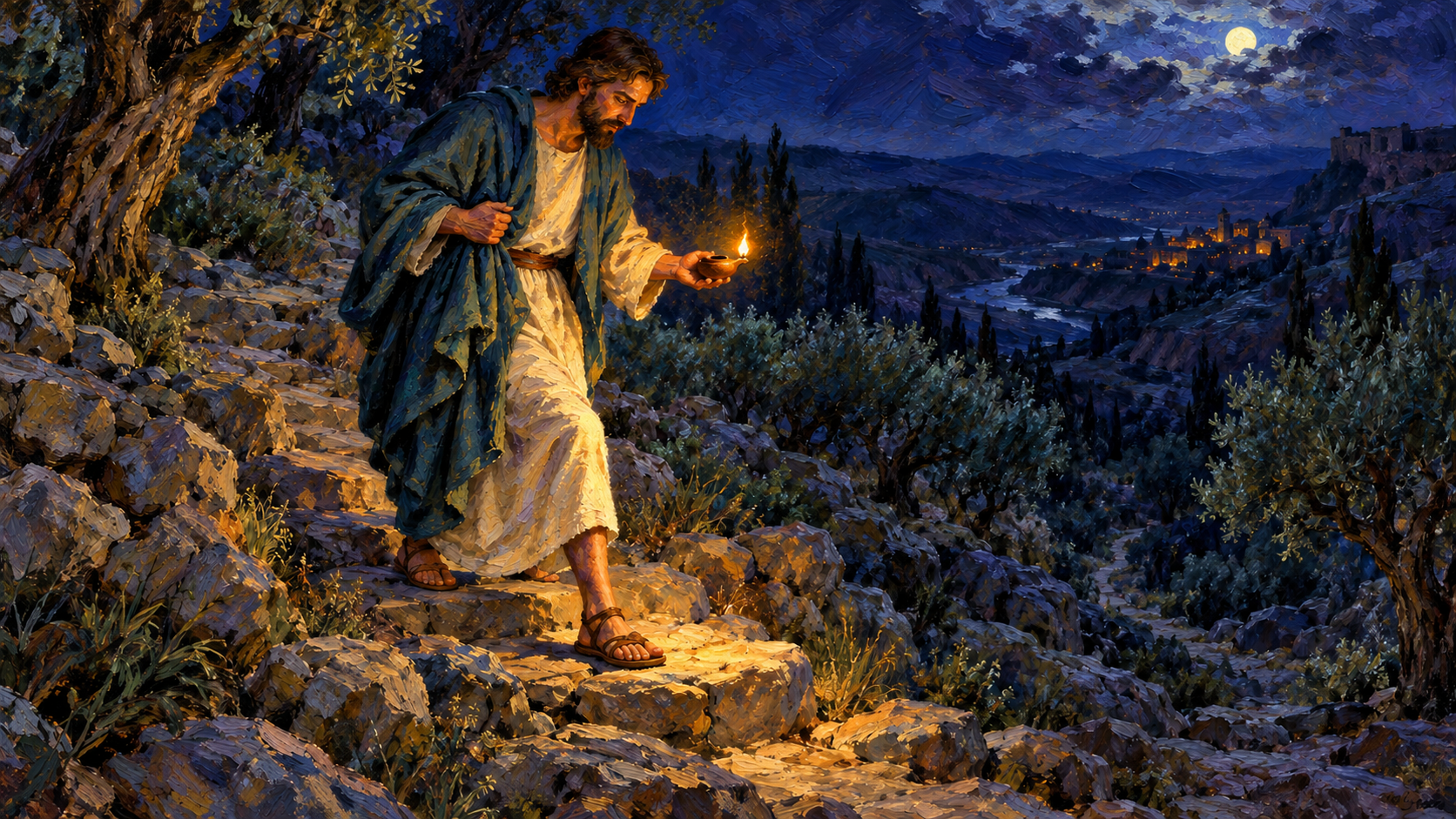
Genesis begins with light appearing at God’s command, and Revelation ends with the Lamb as the light of the New Jerusalem. Between those scenes, Scripture says God is light and calls Jesus the true Light. I want to follow these passages together and ask what they teach us about living before God.
Created Light and the God Who Is Light
Before introducing the sun, moon and stars as appointed lights, Genesis describes God creating the heavens and the earth. The earth was without form and void, with darkness over the deep, while the Spirit of God hovered over the waters. God then spoke, and light came into existence at His command.
Then God said, “Let there be light”; and there was light. And God saw the light, that it was good; and God divided the light from the darkness.
God’s command for light is the first command recorded after Scripture’s opening statement about creation. Light did not exist eternally alongside Him. He spoke it into being, declared it good and separated it from darkness. From its beginning, light was subject to God’s authority rather than a power existing on its own.
Only on the fourth day did God appoint the sun, moon and stars to mark seasons and give light on the earth.
Then God made two great lights: the greater light to rule the day, and the lesser light to rule the night. He made the stars also.
Light existed before God appointed the sun to serve Him. That order helps me see why we cannot treat the sun as the source of His power. The moon and stars also serve the purpose He gave them. Ancient nations often worshiped these heavenly bodies, but Genesis describes them as things God made and placed under His command. They are His instruments, not divine beings.
Genesis does not explain how the light of day one worked, and I do not want to invent a mechanism the passage never gives us. What we are told is that God made light before the sun. He does not depend on the sun to bring light into being or to separate and sustain it. Later, Revelation describes His glory illuminating a city without sun or lamp. In both passages, light remains under God’s authority.
When John says God is light, he is speaking about God’s holy nature. He is not identifying God with the physical energy He created.
This is the message which we have heard from Him and declare to you, that God is light and in Him is no darkness at all.
God knows all things and never deceives. There is no hidden corruption in Him, no moral shadow or place for evil. He is pure in Himself and truthful in everything He reveals. We need to keep that meaning clear when we read other passages about light. Scripture also uses the word for created brightness and God’s radiant glory. It can describe moral purity and revealed truth, or the salvation and guidance God gives. John also connects light with joy and life. God is the source of all these good things, but the meanings are not interchangeable. Here John is declaring that darkness has no place in God.
David speaks of the Lord as his own light and salvation. He trusts God Himself, not simply the light God gives.
The LORD is my light and my salvation; whom shall I fear? The LORD is the strength of my life; of whom shall I be afraid?
David’s words help me bring the teaching about God’s light into the fears we face. God’s presence gives clarity when fear leaves us confused, and He supplies strength when we tremble. Where guilt condemns us, He gives salvation. His holiness exposes our sin, yet His grace leads sinners toward mercy. We are depending on God Himself, not merely considering an idea on a page.
God’s Word Gives Light
Because God is light, His Word gives us light too. Scripture tells us who God is and what sin is, then explains how salvation comes and how His people are to walk. We do not have to guess at those things. When the path ahead feels narrow or confusing, His Word reveals truth and gives understanding.
Your word is a lamp to my feet and a light to my path.
The entrance of Your words gives light; it gives understanding to the simple.
I cannot leave Scripture behind and expect private impressions or popular ideas to supply the light God gives through His Word. But simply collecting biblical information is not enough either. We need to receive Scripture as God’s Word and believe what He says. Obedience follows that faith as we surrender to His truth and allow it to judge the thoughts and intentions of our hearts.
Psalm 119 says that God gives understanding to the simple through His words. That leaves little room for intellectual pride. We do not have to become experts in worldly wisdom before we can obey Him. If His Word is a lamp for our feet, admiring it from a distance is not enough. We need to walk by the light it gives.
Biblical light gives us much more than a positive feeling or a journey of personal discovery. It also contradicts the idea that humanity is naturally getting better. Scripture begins with creation and tells us the truth about sin and judgment while revealing God’s mercy and redemption. The God who knows every heart supplies this light, so the same passage can comfort a broken person and confront someone who is satisfied with himself.
The ordinary Hebrew word for light is or, used in Genesis 1:3 and many other Old Testament passages. The Greek word phos appears in John 1, John 8, and 1 John 1. Knowing these words helps us recognize what is being discussed, but we still need the context to understand it accurately. A passage may describe brightness or divine glory, while another speaks of truth and purity, life or guidance. God remains the source of every good light without each passage using the word in exactly the same sense.
Jesus Is the True Light
We see the fullest revelation of this light in Jesus Christ. John introduces Him as the eternal Word who was with God and was God, through whom all things were made. Life was in Him, and that life was the light of men. I cannot read John’s description and place Jesus among created teachers who offer religious insight. He is the eternal Son, fully God, who became fully man to save sinners.
In Him was life, and the life was the light of men. And the light shines in the darkness, and the darkness did not comprehend it.
That was the true Light which gives light to every man coming into the world.
Every other light depends on Jesus, which is why John calls Him the true Light. Created light points beyond itself, and conscience bears witness but cannot redeem us. The Law exposes sin, but our works cannot make us new. The prophets served God by carrying His Word. Jesus shares the divine nature with the Father and reveals Him perfectly, so He is Light in His own Person.
Jesus made the same exclusive claim during His earthly ministry.
Then Jesus spoke to them again, saying, “I am the light of the world. He who follows Me shall not walk in darkness, but have the light of life.”
His promise is more than moral improvement. Whoever follows Him has the light of life. Isaiah had already promised that light would shine on people who walked under the shadow of death.
The people who walked in darkness have seen a great light; those who dwelt in the land of the shadow of death, upon them a light has shined.
Matthew applies Isaiah’s promise to Christ’s ministry in Galilee. The people there needed God to reveal Himself and forgive their sins, not simply give them advice. In Christ, God brought life and fulfilled His promised kingdom hope. That is why I want to keep our attention on Jesus Himself when we speak about light. He is the Word made flesh and the sinless Son of God, who bore our sins in His innocent body on the cross. He shed His blood and died, then rose bodily. He saves us through His finished work as our substitute. An abstract principle of light or a vague path of enlightenment cannot do that.
John 3 explains why Christ’s coming exposes the human heart. People loved darkness rather than light because their deeds were evil. They wanted their sin to remain hidden, so the darkness in this passage is a chosen covering for sin rather than innocent ignorance.
And this is the condemnation, that the light has come into the world, and men loved darkness rather than light, because their deeds were evil.
But he who does the truth comes to the light, that his deeds may be clearly seen, that they have been done in God.
Christ uncovers the guilt and unbelief that self-righteousness tries to hide. His light also exposes impurity and false worship for what they are, reaching even the heart’s hatred of God. That helps me understand why a person who wants to protect sin resists Him. Someone being drawn by truth comes into the light because God is at work and truth no longer seems like an enemy. Coming into the light does not mean that person has earned salvation.
When Christ’s light leads someone to repentance, its exposing work is mercy. When people hate and refuse that light, it becomes judgment. The same sun can melt wax and harden clay. Christ saves those who believe, while His light leaves the unbeliever without excuse.
Walking in the Light
Paul says Christians once were darkness and now are light “in the Lord.” I notice that he goes beyond describing where they used to live. Their relationship with Christ has changed who they are, and that union is the reason they are called to walk in the light. Their changed life follows belonging to Him rather than an effort to save themselves.
For you were once darkness, but now you are light in the Lord. Walk as children of light.
And have no fellowship with the unfruitful works of darkness, but rather expose them.
Walking in the light means living openly before God. When His Word exposes hidden sin, we confess it instead of protecting it. We tell the truth because we no longer need darkness as a cover, and we turn from impurity. Our fellowship rests upon Christ’s cleansing blood rather than performance or pride.
But if we walk in the light as He is in the light, we have fellowship with one another, and the blood of Jesus Christ His Son cleanses us from all sin.
John’s next warning reassures me because it shows that walking in the light does not require pretending to be sinless. He calls that claim self-deception. A believer brings sin under God’s truth and confesses it instead of concealing it. We trust Christ’s blood to cleanse us, and fellowship with God and His people continues.
God’s light reaches into the way we treat one another. Hatred belongs to darkness, while love belongs to light, so I cannot claim close fellowship with God while choosing to cherish hatred against a brother. His light reaches into our private lives and becomes visible in our relationships and the words we speak.
Walking in God’s light gives us a pattern for discernment as well. Does a teaching agree with Scripture? Can this desire live honestly before God? Does a relationship encourage obedience, or is a hidden practice being protected from godly correction? Darkness survives through secrecy and excuse. Light welcomes God’s searching truth because the believer has no better refuge than the Lord who forgives and cleanses.
Unapproachable Glory and Everlasting Light
Scripture also uses light to speak about glory greater than any creature can bear. Paul says God dwells in unapproachable light.
Who alone has immortality, dwelling in unapproachable light, whom no man has seen or can see, to whom be honor and everlasting power. Amen.
Paul’s description tells us about God’s majesty, not His absence from His people. He alone has immortality in Himself. Fallen people cannot behold the unveiled fullness of His glory.
Knowing that helps me appreciate what happened when the eternal Son became man. He remained fully God, with His divine glory veiled in real humanity. At the transfiguration, Peter, James, and John were allowed to see a glimpse of that majesty.
And He was transfigured before them. His face shone like the sun, and His clothes became as white as the light.
The Light of the world lived among sinners with patience and mercy while remaining perfectly holy and acting with divine authority. His glory should humble us when we worship. I cannot make God fit my preferences or reduce Him to a slogan or a mood. He is the Lord of glory, yet through Christ sinners can draw near. His blood cleanses us, and by grace we are received as God’s children.
Scripture’s teaching about light reaches its final earthly scene in the New Jerusalem. Genesis describes light before the sun existed, and Revelation shows a city that needs neither sun nor moon. God’s glory illuminates it, and the Lamb is its light.
The city had no need of the sun or of the moon to shine in it, for the glory of God illuminated it. The Lamb is its light.
There shall be no night there: They need no lamp nor light of the sun, for the Lord God gives them light. And they shall reign forever and ever.
God made the sun good, but these promises show that created lights were never ultimate. In the city there will be no night, hidden corruption or curse. God’s servants will see His face and bear His name. I notice that the city’s lamp is the Lamb who was slain. Jesus entered this dark world and shed His blood. He died and rose bodily, and He will be the visible glory of the redeemed city forever.
Isaiah had already called the Lord His people’s everlasting light.
The sun shall no longer be your light by day, nor for brightness shall the moon give light to you; but the LORD will be to you an everlasting light, and your God your glory.
We are looking forward to resurrection life with God under Christ’s reign, with darkness gone forever. That gives me something definite to hope for, far more than a vague brightness after death. False teaching and persecution cannot extinguish God’s light. Grief may cloud our view for a time, and spiritual opposition is real. Yet darkness did not overcome Christ at His first coming, and none will stand when He returns bodily as King. That promise gives us courage now.
For further study, see A Complete Bible Study on the Characteristics of God, A Bible Study on the Holiness of God, A Complete Bible Study on the Deity of Jesus, and A Complete Bible Study on the Heavenly Jerusalem.
My Final Thoughts
After following this theme from Genesis to the New Jerusalem, I keep coming back to the fact that every good light depends upon God, while He depends on none of them. His holy light exposes what we would rather hide, but He does not leave us searching for our own way out of darkness. Jesus Christ is the true Light. He shed His blood and died to save sinners, then rose bodily. Because believers are now light in the Lord, we can bring sin into the open and trust His cleansing while His Word shows us how to walk. The darkness around us is real, but it is temporary; the Lamb will be the light of God’s people forever.