
When a beloved pet dies, asking whether animals go to heaven no longer feels like an abstract Bible question. It comes out of real affection and grief, and I do not think we should answer carelessly in either direction. Scripture gives us good reason to expect animals in God’s future restored creation. It does not give the same direct answer about the present state of a departed animal or promise the resurrection of a particular pet.
Animals Belong to God’s Good Creation
The Bible begins with God creating animals by His word according to their kinds and calling His work good:
Then God said, “Let the earth bring forth the living creature according to its kind: cattle and creeping thing and beast of the earth, each according to its kind”; and it was so.
And God made the beast of the earth according to its kind, cattle according to its kind, and everything that creeps on the earth according to its kind. And God saw that it was good.
Animals belong to the world God finally called very good. Their existence was His intention, and their variety displays His wisdom. The study on the literal six days of creation examines that account more fully. Psalm 104 describes His continuing provision for birds, wild beasts, young lions, and sea creatures, including Leviathan. He supplies their food and sustains their lives. When He takes away their breath they return to dust; when He sends forth His Spirit He renews the face of the earth. The psalm gives us ample reason to take His care for animals seriously.
I do not have to rely on my affection for an animal to explain why it has value. God made it and cares for His works. Yet Genesis also distinguishes human beings from the other creatures:
So God created man in His own image; in the image of God He created him; male and female He created them.
Then God blessed them, and God said to them, “Be fruitful and multiply; fill the earth and subdue it; have dominion over the fish of the sea, over the birds of the air, and over every living thing that moves on the earth.”
Only mankind is described as made in God’s image. That gives people a unique dignity and responsibility before Him, including responsibility for how we exercise dominion over animals. Dominion is authority to govern what God has entrusted to us; it is not permission to neglect or abuse it. The study on the image of God explains this human calling and worth.
Human uniqueness does not require coldness toward animals. They can experience fear and pleasure, learn patterns, respond to care, and form bonds with people and other creatures. Anyone caring for an animal has responsibilities toward a living creature that can suffer. Those bonds also help explain why its death may leave a painful absence in a household. Taking that grief seriously does not put animals on the same level as human beings.
The distinction becomes especially important when we discuss life after death. Human beings are moral image-bearers who sin and are accountable to God. They continue in conscious personal existence after death. Jesus describes their coming resurrection for life or judgment in John 5:28-29. That does not mean a human soul possesses immortality independently of God. Eternal life and immortality are gifts in Christ; Paul describes the mortal putting on immortality in 1 Corinthians 15:53-54.
Scripture does not describe animals as covenant rebels called to repent and trust Christ for forgiveness, or as creatures awaiting resurrection for personal judgment. An animal is not a redeemed sinner. I therefore cannot simply take everything Scripture says about a believer being with the Lord and apply it to a pet.
Creaturely Life, Breath, and Death
Much of the confusion concerns the words soul, spirit, breath, and life. Scripture plainly gives animals the breath of life. When describing the creatures entering Noah’s ark, Genesis says:
And they went in to Noah into the ark, two by two, of all flesh in which is the breath of life.
Genesis also uses the Hebrew expression nephesh chayyah, meaning a living being or living creature, for animals. The same expression describes man becoming a living being when God breathes into him in Genesis 2:7. This shared wording tells us that both possess life from God. It does not cancel the distinction Genesis makes concerning His image or establish that every creature has the same destiny after death.
When someone asks whether an animal has a soul, I need to understand what he means. If he means that it has genuine life, Scripture affirms that. If he means that it continues consciously after death and will be raised as human beings will, the word nephesh alone cannot establish his conclusion. We have to consider what the passages actually say about the creature in question.
Ecclesiastes brings the common mortality of people and animals into the discussion:
Who knows the spirit of the sons of men, which goes upward, and the spirit of the animal, which goes down to the earth?
In the surrounding verses, the writer considers life “under the sun” and observes that people and animals both die, have breath, and return to dust. Watching an animal die does not reveal everything about its future, any more than observing a human burial gives us a complete understanding of human resurrection. This verse raises the question of their spirits; it does not supply a full doctrine of animal afterlife.
I would neither use the shared language of life to promise every animal’s resurrection nor use this passage to claim certainty about everything God may do with His creatures. Scripture reveals much more about human accountability and resurrection than it does about individual animals after death. We should acknowledge that difference before turning to the promises it does give about their future.
Animals in Messiah’s Kingdom and the New Creation
Isaiah describes peace among animals and between animals and people under Messiah’s rule:
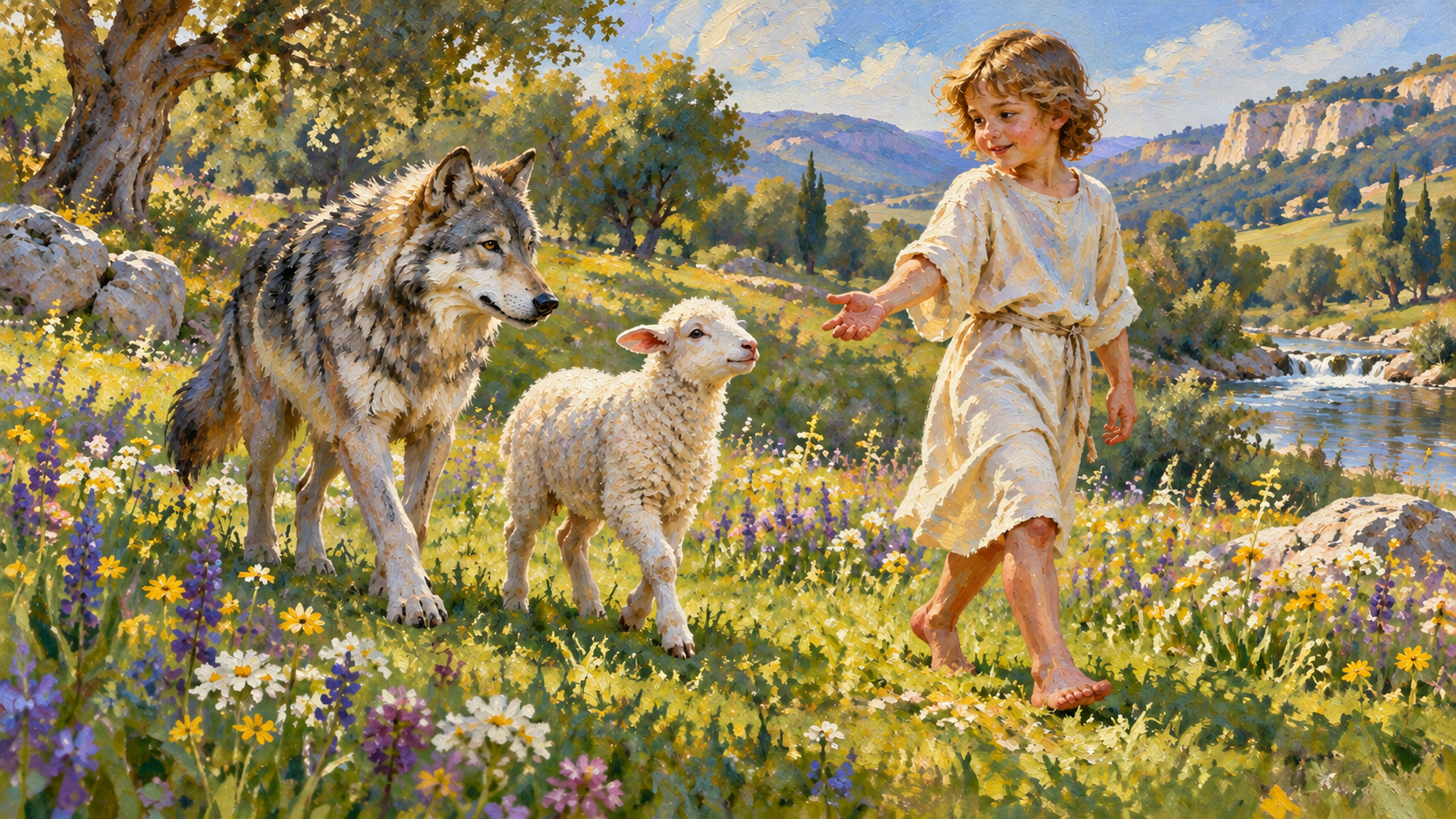
The wolf also shall dwell with the lamb, The leopard shall lie down with the young goat, The calf and the young lion and the fatling together; And a little child shall lead them.
They shall not hurt nor destroy in all My holy mountain, For the earth shall be full of the knowledge of the LORD As the waters cover the sea.
The wolf and the lamb shall feed together, The lion shall eat straw like the ox, And dust shall be the serpent’s food. They shall not hurt nor destroy in all My holy mountain, Says the LORD.
I understand these passages to describe real animals in Christ’s future Millennial kingdom, His thousand-year reign over the earth. They should not be reduced to pictures of people learning to get along. The wolf and lamb dwell together, the lion eats straw, and a child can lead animals that would now threaten him. Predatory violence will no longer govern their lives as it does in the present fallen world. Isaiah connects that peace with the knowledge of the Lord filling the earth.
These promises also help us be precise about the word heaven. A Christian who dies is with the Lord while awaiting bodily resurrection. Christ will gather His church and return bodily to reign over the earth. Isaiah’s descriptions fit especially with that earthly kingdom, while Revelation carries the promise forward to the final new heaven and new earth. The study on heaven follows the believer’s hope through these promises.
Consequently, the question about a pet can mean several things. Is the animal consciously with God now? Will there be animals in Messiah’s future kingdom? Will this particular animal be restored in the final new creation? Isaiah gives a clear description of animals in the kingdom. He does not identify them as resurrected pets or explain the present state of an animal that has died.
Creation Will Be Delivered From Corruption
Paul explains the wider reach of God’s work in Romans 8. The created order suffers under corruption and awaits deliverance:
Because the creation itself also will be delivered from the bondage of corruption into the glorious liberty of the children of God.
For we know that the whole creation groans and labors with birth pangs together until now.
Animals suffer within this groaning creation. Predators kill, bodies decay, and creatures die. Paul assures us that creation will not remain subject to corruption forever. Its future is connected with the revealing of God’s children and the redemption of their bodies. God does not save His people only to abandon the physical world around them to endless ruin.
Creation’s deliverance and the salvation of human persons remain distinct. A river and a field belong to the created order too, but neither is a sinner who must repent and be justified through faith. Likewise, animals can share in a restored world without being redeemed sinners. Paul teaches the extent of God’s victory over corruption; he does not promise a separate resurrection for every creature that has ever lived.
Revelation describes the final fulfillment, when God dwells with His people in a new creation:
Now I saw a new heaven and a new earth, for the first heaven and the first earth had passed away.
And God will wipe away every tear from their eyes; there shall be no more death, nor sorrow, nor crying. There shall be no more pain, for the former things have passed away.
The believer’s hope is secure because of Jesus Christ. The sinless Son of God, fully God and fully man, willingly endured the bodily suffering wicked men inflicted, shed His blood, and died for sinners. His saving work was complete before He rose bodily from the grave. Those who turn to Him in repentance and faith have their confidence in a living Savior who will make all things new.
God’s presence and the removal of death, sorrow, and pain are definite promises. Whatever questions we still have about particular creatures, His people will not inherit a world made poorer by His decisions. The God who created generously will complete His work wisely, and His redeemed people will rejoice in His presence.
Grieving Pets and Caring for the Animals God Made
A child who loses a dog or a family that buries a cat after many years may ask about heaven through tears. Someone else may miss an animal’s familiar presence in the daily routine. We should listen before delivering an explanation. Mocking that grief does not defend human dignity; it disregards the affection and responsibility through which the person cared for a creature God made.
I want to be tender without making a promise in God’s name that He has not given. I can tell a grieving person that God made the animal, knew its life, and cares for His creatures. Jesus spoke of the Father’s attention to sparrows and His provision for birds:
Are not two sparrows sold for a copper coin? And not one of them falls to the ground apart from your Father’s will.
Look at the birds of the air, for they neither sow nor reap nor gather into barns; yet your heavenly Father feeds them. Are you not of more value than they?
These sayings do not tell us where an animal goes after death. Jesus uses God’s care for birds to assure people of His greater care for them. His question, “Are you not of more value than they?” preserves the distinction between animals and His human hearers. Yet His care for the smaller creatures is real, and we need not be ashamed to bring our grief over one of them to Him.
If a child asks whether his pet will return, I can honestly say the Bible does not tell us that, while explaining what it does reveal about God’s goodness and His coming kingdom. We need not insist that God could never restore a particular animal, and we must not claim He has promised to do so. If He gives that reunion, we will receive it gratefully. If He does not, His people will still know His goodness, and He will wipe away every tear.
The Lord Himself will be the center of His people’s joy. Our future happiness does not depend on preserving every good gift in exactly the form we knew here. We can grieve a loss now and trust that nothing in God’s final creation will leave His people disappointed in Him. His revealed character gives us firmer comfort than a confident guess about one animal’s future.
His care also governs our treatment of animals while they are with us. Proverbs gives a practical description of righteousness:
A righteous man regards the life of his animal, But the tender mercies of the wicked are cruel.
A person entrusted with an animal should attend to its food, shelter, safety, and suffering. Deliberate cruelty or careless neglect cannot be excused by appealing to dominion. God gave human beings authority over these creatures, and that makes us accountable for how we use it. We should protect them from needless harm and treat their dependence on us as a responsibility.
Compassion must also keep the order Scripture gives. Animals have real worth, but human beings uniquely bear God’s image. Caring for an animal must not become an excuse to devalue people or give the creature the devotion owed to its Creator. We can oppose cruelty, love the animals entrusted to us, and defend the greater worth of human life without setting those responsibilities against one another.
My Final Thoughts
I believe Scripture gives us good reason to expect animals in God’s restored creation, especially in the peace of Christ’s Millennial kingdom. It does not promise that a particular pet is consciously in heaven now or will be individually resurrected. We should be honest about that limit while caring for people whose loss is painful. God saw the creature they loved, He will deliver creation from corruption, and His people will dwell with Him without death or sorrow. Our hope rests in Christ and in the goodness of the God who will wipe away every tear.