
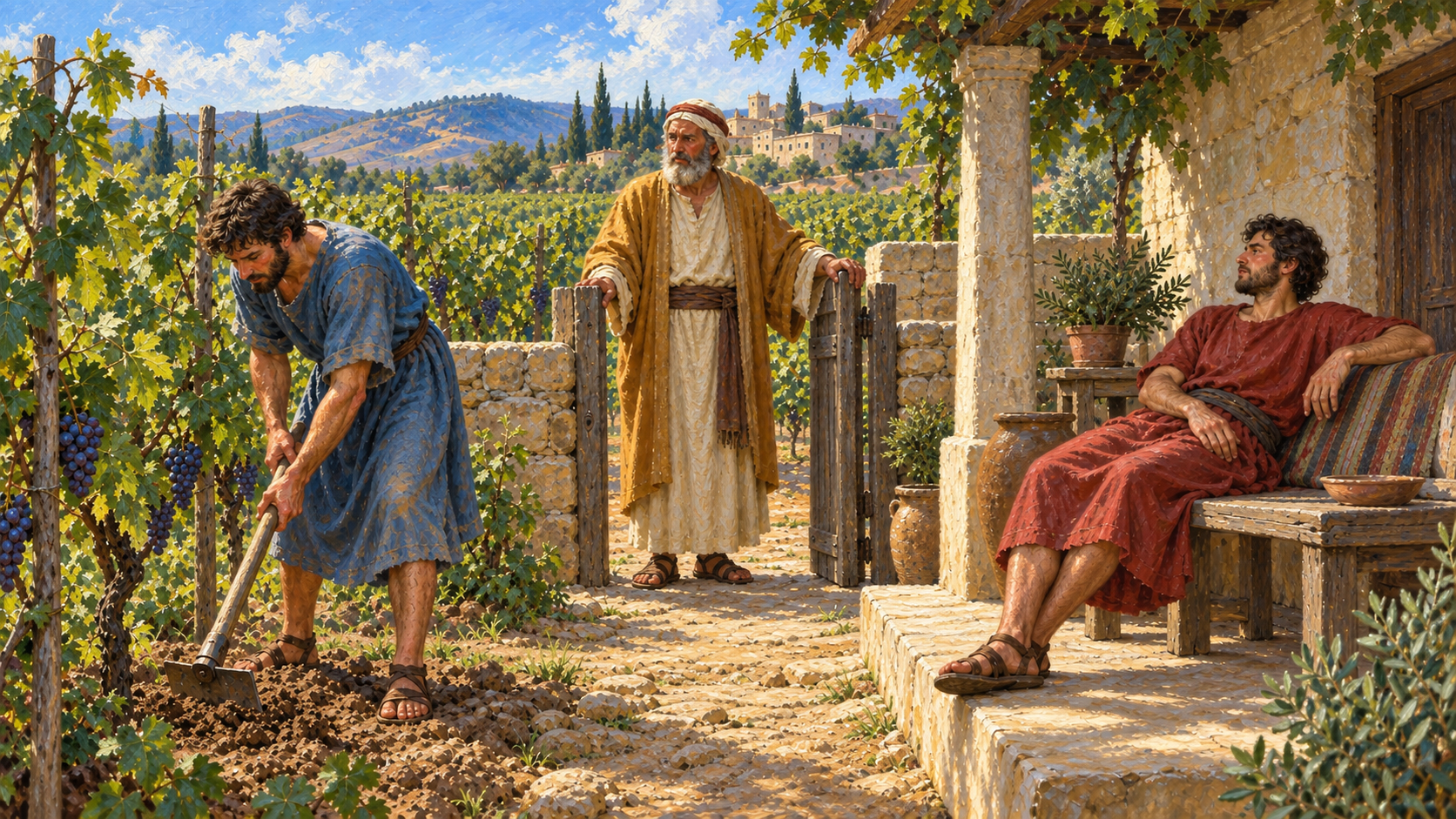
In the Parable of the Two Sons, Jesus asked religious leaders to judge two responses to a father’s command. They answered correctly, but their answer exposed their own refusal to believe God’s messenger. One son had spoken defiantly and then changed course; the other gave a respectful answer and never obeyed. I need to read this as more than a lesson about keeping promises, because Jesus was confronting people who knew how to profess loyalty to God while resisting His call to repent.
The Leaders Had Already Rejected God’s Authority
Matthew places the parable in Jerusalem during the final week before the crucifixion. Earlier in the chapter, Jesus entered the city, cleansed the temple, and received the praise of children there. The chief priests and elders then confronted Him while He was teaching in the temple. They asked, “By what authority are You doing these things? And who gave You this authority?”
Jesus answered with a question about John’s baptism: had it come from heaven or from men? The leaders discussed the consequences of either answer. If they acknowledged God as its source, they would have to explain why they had not believed John. If they called it merely human, they feared the crowd, who regarded John as a prophet. They answered, “We do not know,” after considering those costs rather than admitting what was true.
Their reasoning explains why Jesus brought John into the discussion. They had already refused a witness God sent, so the question of divine authority was not new to them. Their challenge to Jesus continued that resistance. He was exposing their response to God’s messenger, rather than evading an honest request for information.
John had prepared the way for the Messiah by calling Israel to repentance and pointing people toward Christ. He warned against relying on descent from Abraham and insisted that repentance should bear fruit. Jesus described his ministry as coming “in the way of righteousness.” The study of John the Baptist explains that ministry more fully.
Luke 7:29–30 describes the division John’s message exposed. People, including tax collectors, acknowledged God’s righteousness and received John’s baptism, while Pharisees and lawyers rejected God’s purpose for themselves. Publicly responding to John meant admitting a need for repentance. Religious standing could not remove that need, and the leaders’ knowledge made their refusal more serious.
I recognize a danger here when protecting influence begins to govern how someone handles a question of truth. These men could calculate which answer would cost them more, yet would not submit to the witness God had given. If I know what Scripture says but keep looking for an answer that protects my reputation, more information is not the only thing I need. I need to turn from the refusal I am already defending.
The Same Command Revealed Two Different Hearts
Jesus then asked, “But what do you think?” The father in His parable gave each son the same instruction, with work to be done that day.
“But what do you think? A man had two sons, and he came to the first and said, ‘Son, go, work today in my vineyard.’ He answered and said, ‘I will not,’ but afterward he regretted it and went. Then he came to the second and said likewise. And he answered and said, ‘I go, sir,’ but he did not go.
Both sons were addressed as family and understood what their father wanted. Neither could explain his response by claiming he had received no instruction or opportunity. The father’s word “son” did not excuse disobedience, and respectful speech did not complete the work.
The vineyard would also be familiar from the prophets’ description of Israel as the LORD’s vineyard, where He rightly expected fruit. Jesus would go on to speak about wicked tenants in another vineyard parable. Here, however, He directed attention to a simple question about the father’s will. The leaders did not have to solve a complicated symbol before answering.
Which of the two did the will of his father?” They said to Him, “The first.” Jesus said to them, “Assuredly, I say to you that tax collectors and harlots enter the kingdom of God before you.
They identified the first son because he actually went to work. His earlier refusal was wrong, but he did not persist in it. The leaders could recognize obedience in the parable while refusing the same change in themselves. Jesus’ application placed the tax collectors and harlots ahead of them, despite all the advantages of their religious position.
The First Son Shows Repentance That Changes Direction
The first son answered, “I will not.” Jesus did not commend that defiance. The son’s later conduct was right because he turned from his refusal, rather than because an insolent answer was somehow more honest or admirable than respectful speech.
Matthew says he later regretted it and went. The Greek verb metamelomai can describe a change of mind with regret and is translated “regretted” here. Its use here cannot be reduced to a feeling that left the son where he was. Jesus tells us what followed: he went to the vineyard and did what his father had commanded. The action explains the change.
A person can regret the embarrassment or consequences of wrongdoing and still intend to continue it. The son’s response went beyond that. His initial refusal no longer determined what he did. Ezekiel 18:21 likewise describes a wicked person turning from sin and doing what is lawful and right. Genuine repentance reaches conduct, though that conduct does not purchase forgiveness. The study of repentance develops that change of direction.
Jesus applied this response to people known publicly as sinners. He was not declaring sexual sin harmless or praising dishonest tax collection. The tax collectors and harlots who believed John acknowledged their need to turn to God. Their earlier rebellion had been real, but it did not have to be their final response to His word.
That gives a sinner reason to hope without pretending his past conduct was innocent. Someone who has openly refused God may repent and believe, while someone with an honored religious position may keep resisting. The difference is the response to God’s call, rather than which person began with a better reputation. The parable of the prodigal son also describes mercy toward someone who turns back after real wrongdoing.
The Second Son Exposes Empty Religious Profession
The second son answered, “I go, sir.” Those words were proper, but he did not go. The command remained undone even though his reply had sounded submissive. He could call his father “sir” without accepting his authority in practice.
The chief priests and elders had Scripture, temple responsibilities, and public standing. Yet when John called them to believe, they refused. They now challenged Jesus rather than submit to the truth He brought. Their outward profession corresponded to the second son’s respectful answer, while their conduct contradicted it. Isaiah had warned about this separation between religious speech and the heart.
Therefore the Lord said: “Inasmuch as these people draw near with their mouths And honor Me with their lips, But have removed their hearts far from Me, And their fear toward Me is taught by the commandment of men,
We should not respond by caring less about sound doctrine, reverence, or respectful speech. The problem was the refusal to live according to what was professed. A church can sing words that are true while resisting the Scripture those words express. I can defend repentance as a doctrine while refusing to admit a wrong I need to put right. The truth I confess must govern my response to God. First Samuel 15:22 also places obedience above sacrifice. Religious activity offered instead of submission does not honor God.
Matthew 7:21–23 gives a related warning about people who say, “Lord, Lord,” while practicing lawlessness. A profession of faith can deceive the person making it as well as the people listening. Jesus was not teaching that obedience buys entrance into His kingdom. He was exposing the claim to honor Him while refusing His will.
Jesus explained why the leaders resembled the second son.
For John came to you in the way of righteousness, and you did not believe him; but tax collectors and harlots believed him; and when you saw it, you did not afterward relent and believe him.
Their refusal continued after they saw others believe John. The verb translated as their failure to relent is the same one used for the first son’s regret. He reconsidered his refusal and went; the leaders would not reconsider and believe. They had received the message and then witnessed a response to it, but neither led them to repent.
“Enter the kingdom of God before you” was therefore a rebuke, rather than praise for the tax collectors’ and harlots’ past conduct or a promise that unbelieving leaders would enter later anyway. The people being despised as sinners had believed God’s witness, while the leaders remained resistant. Luke 13:3 extends the need for repentance to everyone: without it, people perish. A religious title cannot exempt someone from that warning.
Repentant Faith Obeys Without Erasing Israel’s Hope
The first son’s work did not purchase a place in his father’s family, and the tax collectors did not earn the kingdom by making themselves useful. Jesus identifies their belief in John’s righteous witness as the response the leaders lacked. Their changed conduct expressed that believing response. Salvation rests on God’s grace, received through faith, rather than the value of the work someone can offer Him.
But be doers of the word, and not hearers only, deceiving yourselves.
James warns against deceiving ourselves by hearing without doing. That does not contradict justification by faith, which means being declared righteous through trusting Christ. It confronts a person who treats exposure to truth as a substitute for responding to it. The study of faith considers why trusting the Lord cannot be reduced to agreeing with religious statements.
When I speak about the new birth, I mean someone genuinely becoming a new creation through Christ. There should be evidence of that life in his actions. A Christian label alone does not establish it, though neither does this require sinless perfection or make every failure proof that someone has never believed.
Jesus’ rebuke of leaders within Israel must also be distinguished from God’s promises to the nation. The tax collectors and harlots in this confrontation were sinners within Israel. We should not simply label the first son Gentile and the second son Jewish. Both responses were already visible among the people to whom John had come.
There is nevertheless a wider correspondence in Romans 9. Gentiles who had not pursued righteousness received it by faith, while Israel’s pursuit of the law failed where it was separated from faith. Covenant privileges, Scripture, and temple service could not substitute for believing God. The same refusal exposed in the second son could occur in a nation that outwardly professed loyalty to Him.
Romans 11:25–27 prevents us from turning that warning into replacement theology, the claim that God has discarded Israel’s national promises and transferred them away permanently. Paul describes a partial hardening and a future work of God toward Israel. Gentile inclusion does not cancel His covenants. I understand Israel’s future restoration to come through Christ, rather than through ancestry as an alternative to faith in Him.
Paul also warns Gentile believers not to boast against the natural branches. They stand by faith and have no grounds to despise the people through whom they received such blessings. Jesus’ rebuke of unbelieving leaders does not authorize contempt for Israel, and being included among God’s people does not make our own response to Him unimportant.
For Jews and Gentiles alike, salvation rests on Christ’s work rather than what we can earn. The eternal Son became fully man without ceasing to be God and lived without sin. Wicked people inflicted bodily suffering and death upon Him, and He willingly shed His innocent blood for our sins. The Father did not punish Him. His saving work through His blood and death was complete before His bodily resurrection. We receive His salvation through repentance and faith; obedience follows as the response of those He has saved. The study of soteriology, the doctrine of salvation, examines that provision more fully.
The church needs to hear the warning about empty profession as well. Membership, ministry responsibilities, and biblical vocabulary can all accompany a refusal to obey. If I know I have wronged someone, repeating that I believe in repentance will not repair the wrong. I need to admit what I have done and act accordingly. The father’s command included the word “today”; a promise to obey at some more convenient time was not the response he requested.
My Final Thoughts
I should not mistake knowing how submission sounds for actually submitting to God. The first son changed a sinful refusal into obedience, while the second left a respectful promise unfulfilled. Jesus’ explanation directs us to repentance and believing the witness God has given. Christ saves by grace, and that mercy gives us reason to stop defending our refusal and follow Him in what He has made clear.