
Psalm 34:8 invites us, “Oh, taste and see that the LORD is good.” David calls people to know that goodness through trusting God themselves. I want to keep his circumstances in view, because the man extending this invitation had known real fear. He was praising the LORD for deliverance without claiming that faith had removed every danger from his life.
David Learned God’s Goodness in Trouble
A Psalm of David when he pretended madness before Abimelech, who drove him away, and he departed.
Psalm 34 title
The heading points us to David’s flight from Saul. In 1 Samuel 21, he received Goliath’s sword from the priest at Nob, then fled to Gath, the Philistine champion’s own city. The king’s servants recognized him and recalled the song, “Saul has slain his thousands, and David his ten thousands.” His reputation as Israel’s victorious fighter now placed him in danger among Israel’s enemies.
David became very afraid. He pretended to be insane, scratching on the gate and letting saliva run down his beard. The ruler rejected the prospect of receiving him, and David escaped. The biblical account does not present him as an impressive warrior standing confidently before the Philistines. He was a fugitive who needed help.
First Samuel names the king Achish, while the psalm’s heading names Abimelech. One possible explanation is that Abimelech functioned as a royal title, much as Pharaoh did in Egypt, and Achish was his personal name. The difference in the names is not explained directly in Scripture, so I would present that as a possible reconciliation rather than an established fact. Both passages connect the episode with David’s departure after pretending madness.
His escape from Gath did not end Saul’s hostility. David could thank God for being brought out of one danger while still needing protection from another. The psalm begins with praise and calls the humble to magnify the LORD with him. His testimony includes what happened when he sought God.
I sought the LORD, and He heard me, And delivered me from all my fears.
David’s invitation grows out of that dependence. He goes on to speak of the angel of the LORD encamping around those who fear Him, of God hearing the righteous, and of His nearness to the brokenhearted. The psalm also acknowledges many afflictions. Its confidence rests in the LORD who hears and redeems His servants, rather than in a life that no longer contains trouble.
To Taste and See Is to Trust the LORD Personally
Oh, taste and see that the LORD is good; Blessed is the man who trusts in Him!
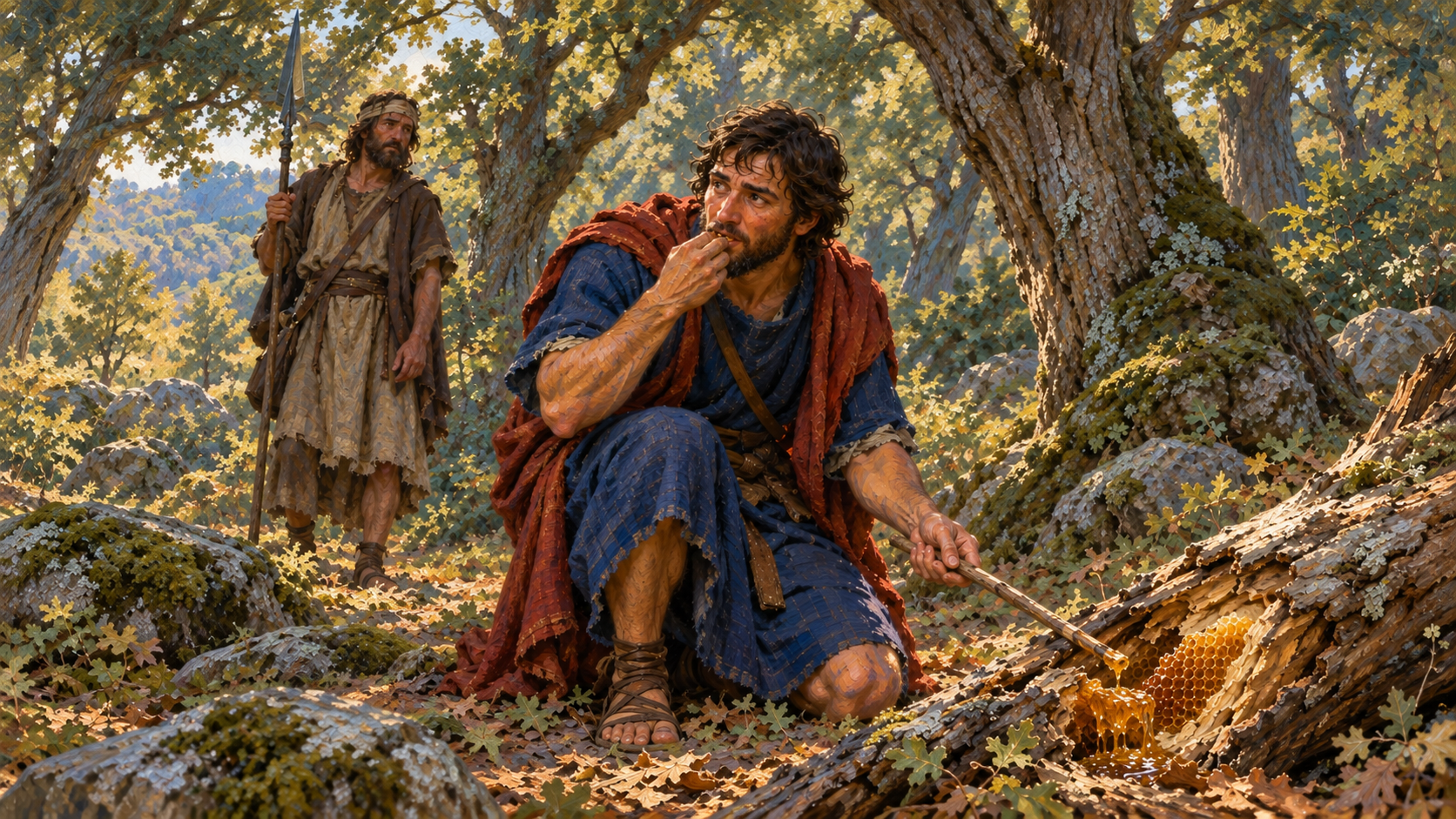
The Hebrew verb translated “taste” is ta’am. It can describe physical tasting or the perception and discernment that the picture suggests. In 1 Samuel 14, Saul’s son Jonathan tasted honey, and his eyes brightened. Someone could have described the honey to him, but the description would not have been the same as tasting it. David uses that familiar kind of experience to invite people to trust the God of whom he speaks.
The second half of Psalm 34:8 explains the response: the blessed person trusts in the LORD. We are not being invited to put God on trial, demand a miracle, or decide whether He is good by setting conditions He must meet. We come believing His word and take refuge in Him. Knowing the truth about Him and personally relying on Him belong together.
The verb translated “see,” ra’ah, can refer to ordinary sight or to perceiving and understanding. David joins the two images in a call to recognize God’s goodness through trusting Him. That does not mean every difficult circumstance will immediately become clear. Another psalm expresses confidence while the answer is still awaited.
I would have lost heart, unless I had believed That I would see the goodness of the LORD In the land of the living.
David believed that he would see God’s goodness. The confidence preceded the resolution he hoped for. I should not require every fear to disappear before trusting God, or treat a painful wait as proof that He has become unfaithful. His character gives us reason to rely on Him while we still need His help.
I could repeat Psalm 34:8 to someone else while refusing to bring my own fear before God. Agreeing that David was helped would not mean I had entrusted myself to the same LORD. Personal trust means receiving His promises as true and depending on Him in the need I actually face. The study of faith examines why belief reaches beyond detached agreement.
The LORD Himself Is Good
Psalm 34 says that the LORD is good, rather than merely saying that His gifts are enjoyable. A gift may be delayed, removed, or received differently from what I expected. If the outcome I wanted becomes my only measure of God’s character, I will have no confidence left whenever life becomes painful. David directs us to the God who sees His people and hears them.
The LORD is near to those who have a broken heart, And saves such as have a contrite spirit.
A contrite spirit is humbled before God, acknowledging need rather than defending self-sufficiency. The brokenhearted are not being told to make themselves cheerful before He will receive them. God draws near to people whose hearts are crushed. Their distress has not placed them beyond His concern.
David also says that the righteous have many afflictions. God may provide a way of escape, sustain a believer through an enduring hardship, bring needed correction, or give comfort while final vindication remains ahead. We should not promise every sufferer an immediate recovery or explain continued pain as a failure of faith. We may not know how deliverance will unfold, but God’s care is not limited to the form of rescue we have imagined.
Oh, fear the LORD, you His saints! There is no want to those who fear Him. The young lions lack and suffer hunger; But those who seek the LORD shall not lack any good thing.
Young lions can go hungry despite their strength and ability to hunt. David therefore directs God’s people to seek the LORD instead of resting their confidence in their own resources. His promise of good provision does not mean every desired comfort is guaranteed. We depend on God’s knowledge of what is truly good and trust that His care will not fail His people.
Those who take refuge in Him are also called to receive His instruction. Psalm 34 teaches them to keep their speech from evil, turn from wrongdoing, do good, and pursue peace. Fearing the LORD means regarding His holiness with humble reverence and letting His word direct us. The study of the fear of the Lord explains this obedient trust. An experience of mercy cannot justify returning to the conduct He forbids.
Jesus says in Matthew 5:6, “Blessed are those who hunger and thirst for righteousness, For they shall be filled.” Hunger recognizes a need that must be met. A repentant person comes to God aware of that need, rather than treating Him as someone obliged to supply a particular spiritual feeling. The LORD’s goodness includes His mercy toward sinners and His right to lead them out of sin.
Peter and John Bring the Invitation to Christ
Peter takes up the language of tasting God’s goodness when he teaches believers to desire the Word.
As newborn babes, desire the pure milk of the word, that you may grow thereby, if indeed you have tasted that the Lord is gracious.
A newborn’s hunger illustrates the believer’s need for what nourishes spiritual life. Having tasted the Lord’s grace should deepen our desire for Scripture, rather than lead us to treat biblical truth as inferior to personal experience. The Word teaches us who God is, how to pray, and how to obey Him. His grace gives us reason to keep receiving that instruction.
John 6 brings hunger and nourishment into Jesus’ teaching about Himself. After He fed the crowd, people continued looking for earthly bread. He directed them to food that endures to everlasting life and identified Himself as its source.
And Jesus said to them, “I am the bread of life. He who comes to Me shall never hunger, and he who believes in Me shall never thirst.”
Jesus explains the response with coming and believing. I understand feeding on Christ in this discourse as receiving Him by faith. Eating the multiplied bread could satisfy hunger for a time, but enjoying that miracle did not supply eternal life apart from believing in the Savior. They needed Him, rather than another meal alone.
The same discourse speaks of eating His flesh and drinking His blood. Those words point to the real humanity and physical life He would give for sinners. Jesus is not teaching cannibalism. His body was truly given and His blood truly shed; the salvation He accomplished is received by faith.
As the living Father sent Me, and I live because of the Father, so he who feeds on Me will live because of Me.
The Son sent by the Father is the source of life for those who receive Him. Jesus is eternal, fully God and fully man. Wicked people inflicted real bodily suffering and death upon Him, and He willingly shed His innocent blood for our sins. The Father did not punish Him. His saving work through His blood and death was complete before He rose bodily from the grave. The invitation to trust Him rests on what He has accomplished, rather than on a passing feeling of religious satisfaction.
Jesus’ explanation also governs how I understand Communion. Remembering Christ’s body and blood is a serious act of worship, but participation does not replace personal faith or repeat His completed sacrifice. Jesus’ own explanation in John 6 directs the hungry to come to Him and the thirsty to believe in Him. The life He gives cannot be obtained by substituting a religious action for that response.
The study of living water follows another image Jesus uses for the life He gives. Both pictures direct needy people to Him. Knowing an accurate description of bread will not feed someone who refuses to eat, and admiring Christ from a distance is not the same as coming to Him in repentance and faith.
Read the Invitation Without Detaching It From Scripture
David’s testimony does not let us turn Psalm 34:8 into a promise that every circumstance will feel good. We should remember both his deliverance and the dangers that remained. A believer can give thanks for one answer while continuing to ask for help in another need. God’s goodness is not suspended during that waiting.
We also need to assess what we call spiritual experience by Scripture. If an impression encourages me to excuse sin, neglect God’s Word, or turn away from Christ, it does not express the refuge David describes. The same psalm that invites us to taste God’s goodness calls us to fear Him and obey His instruction. Peter likewise connects tasting grace with a growing appetite for the Word.
David addresses people who know fear and weakness. We should not shame someone for needing refuge, as though he must first become strong enough to deserve God’s attention. The LORD welcomes the brokenhearted and teaches them to trust Him. The study of Psalm 8 also considers God’s care for human beings whose strength is so limited.
My Final Thoughts
I hear “taste and see” as a call to take refuge in the LORD Himself. We need more than admiration of David’s deliverance or agreement that God helped someone else. Christ’s body was given and His blood shed so that sinners could receive life through faith in Him. Having received His grace, we should keep coming to His Word and depending on His care, even while some fears remain unresolved. His goodness gives us reason to trust before every difficulty has passed.