
The prophet Isaiah describes a Child who will inherit the throne of David, Israel’s king, and reign forever. He also describes a Servant who is rejected and put to death for the sins of others. How can the promised King die and still rule a kingdom that never ends? I think we can see how these promises belong together when we compare Isaiah’s words with the birth, death, and bodily resurrection of Jesus, and then consider what He has promised to do when He returns.
Isaiah Spoke Into History and Revealed the Messiah
Before we make those comparisons, it helps to know what was happening when Isaiah spoke. He ministered in the eighth century before Christ, during the reigns of Uzziah, Jotham, Ahaz, and Hezekiah. These men were kings of Judah, the southern kingdom whose capital was Jerusalem. The northern kingdom was called Israel, and it was also called Ephraim. Assyria was a powerful empire threatening both kingdoms, so Isaiah’s hearers had real reason to be concerned about invasion.
But Isaiah began his book by confronting a danger they could not blame on a foreign army. They were bringing sacrifices to God while continuing to do the things He had forbidden. Their rulers accepted bribes, and people who needed someone to defend them, including widows and children without fathers, were being denied justice. God would not accept their religious observances as an excuse for what they were doing. He called them to put away their evil and learn to do good, and then He gave them this invitation.
“Come now, and let us reason together,” Says the LORD, “Though your sins are like scarlet, They shall be as white as snow; Though they are red like crimson, They shall be as wool.”
The LORD was offering to cleanse the people whose sins He had just exposed. I find that to be a useful place to begin understanding Isaiah’s promises of the Messiah, the King God appointed to bring His promised salvation. Judah needed deliverance from enemies, but its people also needed forgiveness. A change of government could not remove their guilt before God. Isaiah would go on to describe a King who rules righteously and a Servant who bears the sins of others, because God’s promised salvation addresses both their sin and the world in which they live.
God’s mercy also explains Isaiah’s repeated references to a remnant. That word describes the people left after judgment. In Isaiah 1:9, the prophet says that the LORD had preserved a small remnant; without His mercy, the nation would have been utterly ruined. The warnings were serious, but God had not abandoned His purpose for His people.
During the reign of Ahaz, two kings joined forces against Judah. Rezin ruled Syria from Damascus, and Pekah ruled the northern kingdom of Israel from Samaria. They intended to remove Ahaz and install another king in Jerusalem. Ahaz belonged to David’s royal family, which Scripture calls the house of David, so this threat concerned the continuation of that royal house as well as his own safety. Isaiah 7 describes the king and his people trembling when they heard about the alliance.
This is the conflict often called the Syro-Ephraimite crisis. The name simply refers to Syria and Ephraim joining together. Isaiah told Ahaz that their plan would not succeed and called him to believe God. Yet 2 Kings 16:7-9 records Ahaz sending silver and gold to the king of Assyria and asking him for help. Assyria captured Damascus and killed Rezin. Later, as 2 Kings 17:1-6 records, the Assyrians also captured Samaria and carried the northern kingdom’s people away into captivity. The empire Ahaz looked to for protection would itself become a terrible threat to Judah, just as Isaiah warned.
Isaiah also spoke about the fate of nations beyond Judah. Chapter 17 announces judgment against Damascus, and the capture recorded in 2 Kings 16 shows how real its vulnerability was. Chapter 13 announces Babylon’s overthrow and specifically names the Medes. Much later, Daniel 5 records Babylon’s king being killed and the kingdom passing to the Medes and Persians. Isaiah 19 describes internal conflict and harsh rule in Egypt, and Isaiah 23 announces the humiliation of Tyre, a wealthy trading city. These passages concern actual nations, though we should read each prophecy carefully before claiming that one conquest fulfilled every detail it contains.
Judah would also experience a remarkable deliverance during the reign of Hezekiah, who ruled after Ahaz. Sennacherib, the king of Assyria, captured Judah’s fortified cities and sent representatives to threaten Jerusalem. Hezekiah received a letter challenging his confidence in the LORD. He took it into the temple, spread it before God, and asked Him to save the city. Through Isaiah, God answered that Assyria’s king would not capture Jerusalem.
Therefore thus says the LORD concerning the king of Assyria: “He shall not come into this city, Nor shoot an arrow there, Nor come before it with shield, Nor build a siege mound against it.
By the way that he came, By the same shall he return; And he shall not come into this city,” Says the LORD.
Isaiah 37:36-37 then records the Angel of the LORD striking the Assyrian camp, where 185,000 died. Sennacherib returned to his own land, and Jerusalem was not taken. I understand this Angel of the LORD to be the preincarnate Son, meaning Christ appearing before He became man. The deliverance happened as God had said it would. When I read Isaiah’s promises about the Messiah, I am reading the same prophet through whom God had spoken so specifically about the danger facing Jerusalem.
Immanuel Is the Virgin-Born Divine Son
With that setting in mind, let’s return to Ahaz and the earlier threat from Syria and Israel. In Isaiah 7, God offered Ahaz a sign to confirm His word. Ahaz refused, saying he would not test the LORD. That might sound respectful if we heard it by itself, but God had expressly told him to ask. Isaiah rebuked the house of David and announced that the Lord would give a sign Himself.
Therefore the Lord Himself will give you a sign: Behold, the virgin shall conceive and bear a Son, and shall call His name Immanuel.
The name Immanuel means God with us. Isaiah spoke that promise to a frightened royal house whose enemies wanted to replace its king. In the surrounding verses, he also said that the lands of the two threatening kings would be forsaken before the Child reached the stage of knowing to refuse evil and choose good. The immediate danger belongs to the passage, so I do not want to read the promise as though Isaiah had stopped addressing Ahaz.
Chapter 8 gives another sign involving the growth of a child. Isaiah’s wife bore a son whom God told him to name Maher-Shalal-Hash-Baz. Before that child could call for his father or mother, the wealth of Damascus and the spoil of Samaria would be taken by Assyria. Isaiah was speaking about events close enough for the development of a child to mark their approach. That helps us understand the urgency of the setting, but Matthew specifically tells us whom the promise of the virgin-born Immanuel ultimately identifies.
Matthew describes Mary being found with child before she and Joseph came together. Joseph, the man to whom she was betrothed, considered ending their marriage arrangement quietly. An angel appeared to him in a dream and explained that Mary’s child had been conceived by the Holy Spirit. Joseph was to name Him Jesus because He would save His people from their sins. Matthew then connects that birth directly to Isaiah.
So all this was done that it might be fulfilled which was spoken by the Lord through the prophet, saying:
“Behold, the virgin shall be with child, and bear a Son, and they shall call His name Immanuel,” which is translated, “God with us.”
The Hebrew word almah refers to a young woman of marriageable age. Its use is consistent with virginity, and I read the promised sign in light of Matthew’s explicit account of its fulfillment. Mary conceived by the Holy Spirit before having relations with Joseph. Joseph was not Jesus’ biological father. The fulfillment is a miraculous conception, and Matthew identifies it as what the Lord had spoken through Isaiah.
When I examine Old Testament wording, I begin with the Hebrew Masoretic Text, the traditional Hebrew text underlying the Old Testament in the NKJV. The Septuagint is an ancient Greek translation of those Scriptures. I do not need to give that translation authority over Isaiah’s Hebrew in order to affirm the virgin birth, because Matthew’s inspired explanation tells us what happened and whom the prophecy concerns. I discuss the conception and its significance further in the study on the virgin birth.
Immanuel is more than a name suggesting that God sent help through an ordinary king. In Jesus, the eternal Son became fully man without ceasing to be God. Isaiah 9 helps us see why the promised Child cannot be understood as merely another ruler in David’s family.
For unto us a Child is born, Unto us a Son is given; And the government will be upon His shoulder.
And His name will be called Wonderful, Counselor, Mighty God, Everlasting Father, Prince of Peace.
Of the increase of His government and peace There will be no end, Upon the throne of David and over His kingdom, To order it and establish it with judgment and justice From that time forward, even forever.
Isaiah speaks of a Child being born, and he also calls Him Mighty God. His birth is real, but His existence did not begin at that birth. He is the eternal Son entering human life. The title Everlasting Father does not make Him the same Person as God the Father. I understand it in the sense of Father of Eternity, expressing His relationship to everlasting life as the One who possesses it and gives it. Jesus distinguishes Himself from the Father even as He speaks of their unity and promises eternal life to His sheep in John 10:27-30.
Notice also where Isaiah says this Child will reign. His government is upon David’s throne, and it continues forever. In Luke 1:31-33, the angel Gabriel tells Mary that her Son Jesus will receive the throne of His father David and reign over the house of Jacob forever. David was His royal ancestor, and the house of Jacob refers to Israel, the people descended from Jacob. Gabriel’s announcement connects the birth of Jesus with the same royal promise Isaiah had given.
Through His blood, Christ brings those who believe in Him into peace with God. Yet Isaiah’s description of the Prince of Peace also includes government, justice, and a kingdom without end. I cannot reduce all of that to the peace a believer experiences inwardly. The Son who saves us will also rule the world, and His government will reflect His own righteousness.
The Branch and Servant Bring Righteousness to the Nations
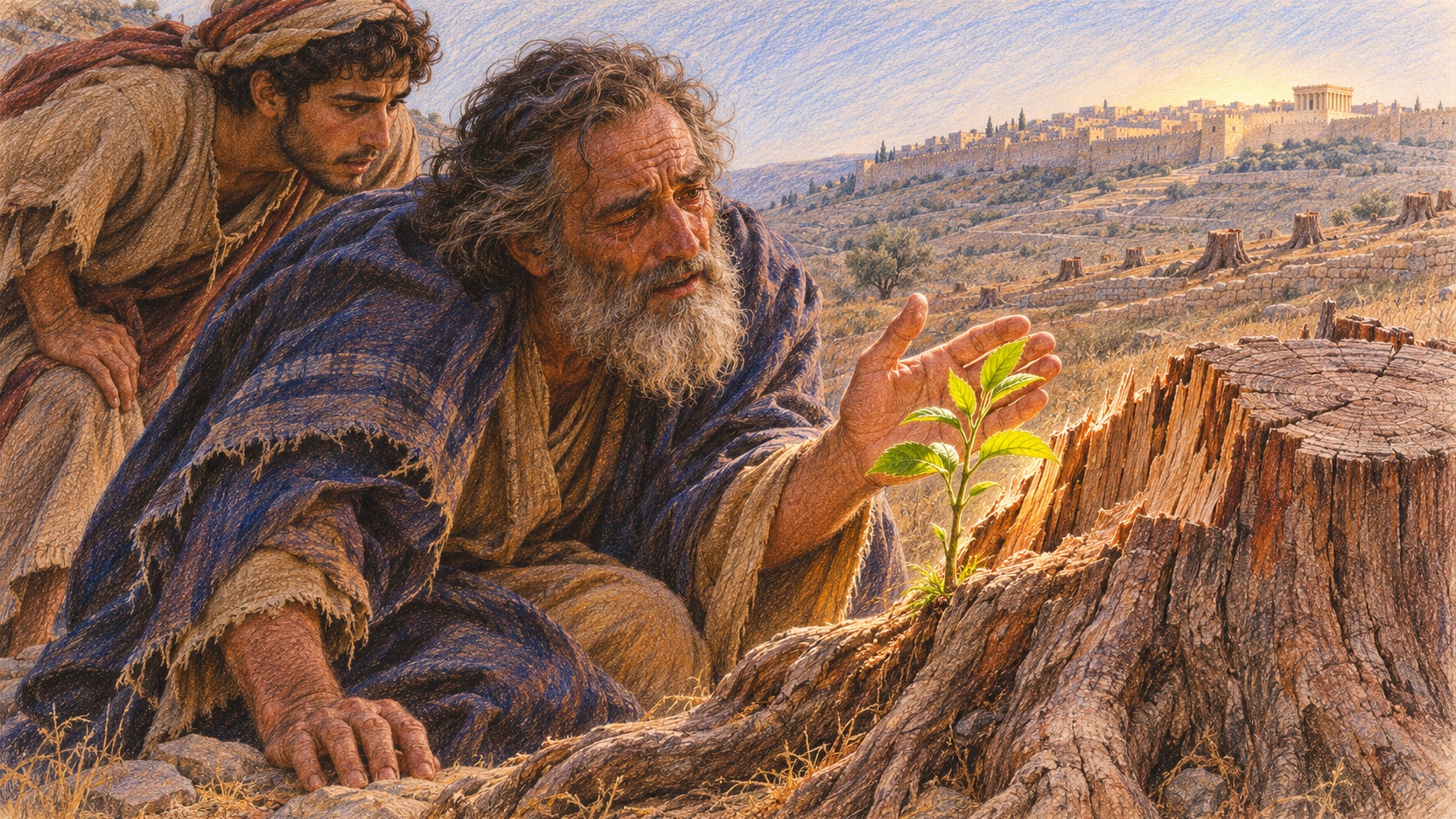
Isaiah 11 develops that promise by describing new growth from Jesse’s roots. Jesse was David’s father. Isaiah is therefore directing our attention to the family from which the promised King would come, but he describes it as a stem from which a new shoot grows. The image helps us understand how God’s promise could continue even after Jerusalem’s kings lost their throne. Much later, as 2 Kings 25 records, Babylon captures Jerusalem, takes King Zedekiah away, and burns the royal palace and temple. Yet that destruction would not prevent God from bringing forth the King He had promised from David’s family.
There shall come forth a Rod from the stem of Jesse, And a Branch shall grow out of his roots.
The Spirit of the LORD shall rest upon Him, The Spirit of wisdom and understanding, The Spirit of counsel and might, The Spirit of knowledge and of the fear of the LORD.
The word translated Branch is netser, a shoot or sprout. The picture is of life growing from an existing root, which helps explain the connection between this coming ruler and Jesse’s family. Isaiah then tells us what His government will be like. The Spirit of the LORD rests upon Him, giving wisdom and understanding, and His delight is in the fear of the LORD. His decisions will not be based on appearances or on what someone happens to say.
That description answers the injustice Isaiah exposed in his opening chapter. Judah’s corrupt rulers accepted bribes and neglected people who needed protection. The promised King judges the poor with righteousness, so a person without influence will not be denied justice because someone more powerful wants a different outcome. His rule also includes judgment against the wicked. The peace of His kingdom does not come from leaving evil unchallenged.
Jesus identifies Himself as both the Root and the Offspring of David in Revelation 22:16. He belongs to David’s family as the promised human descendant, and He is also the eternal Lord upon whom David’s own existence depends. I understand Isaiah’s royal promises to concern His actual reign. Gradual improvement in human government cannot fulfill a prophecy about this particular King establishing righteousness. The study on the Root of Jesse considers that family connection and His kingship in greater detail.
Isaiah also describes the work of this coming One as the work of the LORD’s Servant. The connection becomes clearer when we notice that the Spirit rests upon the Branch in Isaiah 11 and also upon the Servant in Isaiah 42.
“Behold! My Servant whom I uphold, My Elect One in whom My soul delights! I have put My Spirit upon Him; He will bring forth justice to the Gentiles.”
Gentiles are the peoples outside Israel, and the Servant’s work reaches them too. Matthew 12:14-21 expressly applies Isaiah 42 to Jesus. After members of the Pharisees, a Jewish religious group, plotted to destroy Him, Jesus withdrew, and He continued healing the people who followed Him. Matthew identifies that ministry with the Servant whom God upholds and in whose name the Gentiles will trust. The promised King was already doing the Servant’s work when He came among the people.
Isaiah 49:5-6 explains how Israel and the other nations are included in that work. The Servant is commissioned to bring Israel back to God, and He is also given as a light to the Gentiles so that salvation reaches the ends of the earth. God does not describe the restoration of Israel as the limit of His purpose. People far beyond Israel are to receive the light of His salvation through the same Servant.
We can see the apostles acting on that promise in Acts 13:46-47. Paul and his fellow worker Barnabas had preached the word of God, but some of their hearers opposed their message. When they explained why they were turning to the Gentiles, they cited Isaiah’s words about salvation reaching the ends of the earth. They were carrying the message of Christ to people whom God had already included in His announced purpose.
Jesus Himself also identified His ministry with Isaiah’s prophecy. Luke 4 records Him entering the synagogue, the Jewish gathering place for worship and instruction, in Nazareth where He had grown up. He read from Isaiah 61 about the One anointed by the Spirit to bring good news, liberty, and recovery of sight. Then He told the people that the Scripture had been fulfilled in their hearing. He was presenting Himself as the One sent to do that work.
This worldwide salvation agrees with the promise God had made long before Isaiah. In Genesis 12:1-3, God called Abraham, the forefather of Israel, and promised that all the families of the earth would be blessed in him. Christ brings that blessing to the nations. I do not understand the salvation of Gentiles to mean that the church replaces Israel or cancels God’s promises to that nation. Isaiah places Israel’s restoration and the salvation of the Gentiles together in the Servant’s mission.
The Suffering Servant Bears Sin and Rises in Triumph
So far, we have seen the promised One bringing justice and salvation. Isaiah also explains what He would endure in carrying out His work. In chapter 50, the Servant speaks of listening to God and refusing to turn away from His calling. His obedience continues even when people abuse Him.
I gave My back to those who struck Me, And My cheeks to those who plucked out the beard; I did not hide My face from shame and spitting.
In Matthew 27, the Roman governor Pilate had Jesus scourged, which means He was severely whipped, and then handed Him over to be crucified. The soldiers mocked Him as a king, spat on Him, and struck His head. These were bodily injuries inflicted by people. Isaiah’s Servant willingly endured shame and violence while continuing to trust God, and the Gospel account shows Jesus enduring that treatment on His way to the cross.
Isaiah 52:13 begins by announcing that the Servant will be exalted. Yet the prophecy immediately speaks of His appearance being terribly marred, and chapter 53 describes Him being despised and rejected. His exaltation follows suffering that other people look upon without understanding who He is. Isaiah then explains why the innocent Servant suffers.
Surely He has borne our griefs And carried our sorrows; Yet we esteemed Him stricken, Smitten by God, and afflicted.
But He was wounded for our transgressions, He was bruised for our iniquities; The chastisement for our peace was upon Him, And by His stripes we are healed.
All we like sheep have gone astray; We have turned, every one, to his own way; And the LORD has laid on Him the iniquity of us all.
Transgressions are acts of rebellion against God, and iniquities are our wrongdoing. Isaiah compares us to sheep that have gone astray because each of us has turned to his own way. The Servant is wounded for those sins even though, as verse 9 explains, He has done no violence and has no deceit in His mouth. His suffering belongs to the work of saving the guilty, while He Himself remains innocent.
I understand this as Christ taking the place of sinners and willingly bearing our sins in His innocent body. His perfection and His being slain as the spotless sacrifice are the basis of His atoning work. Atonement means that through His sacrifice He deals with our sin so that we can be forgiven and brought into peace with God. His death accomplishes something we cannot accomplish by admiring His courage or trying to imitate His conduct.
The New Testament identifies this Servant for us. In Acts 8, Philip, a preacher of the gospel, met an Ethiopian official who was returning from worship in Jerusalem. The man was reading Isaiah’s account of the One led like a sheep to slaughter. He asked Philip whether the prophet was speaking about himself or someone else. Philip began with that very Scripture and preached Jesus to him.
Peter makes the connection just as plainly in 1 Peter 2:21-25. He describes Christ as sinless and then explains that He bore our sins in His own body on the tree, referring to the cross. Peter also uses Isaiah’s language about straying sheep and healing through His stripes, the wounds He received. The passage concerns sinners returning to their Shepherd and living for righteousness because of what Christ has done for them.
I do not understand Isaiah 53 to mean that the Father turned against His Son. Verse 4 describes people regarding the sufferer as stricken by God, while the following verses explain that He was suffering for our sins. Later, verse 10 connects His suffering with God’s purpose and His life being made an offering for sin. I read that purpose in light of the Son’s willing sacrifice, not as the Father personally inflicting the violence that wicked people carried out.
The Father did not punish, curse, abandon, strike, bruise, or pour wrath on Jesus. The people who tortured and killed Him were responsible for their actions. Jesus willingly gave His sinless life, and His blood secures our forgiveness. In John 10:17-18, He explains that He lays down His life willingly in obedience to the command received from His Father. Hebrews 9:14 describes Him offering Himself without spot to God through the eternal Spirit. Father, Son, and Holy Spirit acted in unity to accomplish our redemption, our deliverance from sin through His sacrifice.
That is how I understand the LORD laying our iniquity on Him. The Son willingly bears our sins as the perfect sacrifice; He does not become sinful, and there is no division within God. God’s saving purpose also does not excuse the people who committed the violence. Their wicked treatment of Christ remains wicked even though He gave Himself through it for our salvation.
Isaiah goes on to describe the Servant remaining silent before His oppressors and being numbered with transgressors. Matthew 27 records Jesus declining to answer the accusations brought against Him before Pilate, and it also records Him being crucified between two robbers. The innocent One was put to death among criminals. Isaiah’s detail about being with the rich at His death likewise finds fulfillment in what happened to Jesus’ body.
Joseph of Arimathea was a rich man who had become a disciple of Jesus. After Jesus died, Joseph asked Pilate for His body, wrapped it in clean linen, and placed it in his own new tomb cut into rock. Jesus’ saving sacrifice through His shed blood and bodily death was complete before Joseph buried Him. John 19:30 records Jesus announcing the completion of His work before giving up His spirit.
But Isaiah does not end the Servant’s work with His death. After saying that He is cut off from the land of the living, the prophet speaks of Him seeing His seed, prolonging His days, and justifying many. To justify is to declare righteous. The Servant bears their sins, and those who receive the benefit of His work are the people I understand as His seed. Because Isaiah has already described His death, I understand this continued life to point to His resurrection.
Jesus fulfilled that hope when He rose bodily on the third day. Matthew 28 records the women finding His tomb empty and then meeting Him alive, taking hold of His feet, and worshiping Him. The King had truly died, but death did not prevent Him from fulfilling the rest of God’s promises. The study on Psalm 22 follows another passage that speaks prophetically of His suffering.
The Coming King Will Bring His Kingdom and New Creation
Because the Servant lives, the promises of His righteous government still belong to our future. Isaiah 2:1-4 describes nations coming to the LORD’s house in Jerusalem to learn His ways. He judges between them, and they turn their swords into plowshares and their spears into pruning hooks. Weapons used to kill become tools used to cultivate the land, because the nations no longer train for war.
Isaiah 11 describes peace extending even to the creatures that would ordinarily threaten one another. The wolf dwells with the lamb, the leopard lies down with the young goat, and a child is safe near the cobra’s hole. The prophecy connects that absence of destruction with the knowledge of the LORD filling the earth.
They shall not hurt nor destroy in all My holy mountain, For the earth shall be full of the knowledge of the LORD As the waters cover the sea.
I understand these promises to describe the conditions Christ will establish when He returns bodily to rule the earth. They concern nations, judgments, and life in His kingdom. The peace believers have with God now is real, but nations have not ceased making war. Nor has the church been commissioned to obtain enough political power to make itself the ruler Isaiah describes. Jesus Himself will establish that government.
Isaiah 65 and 66 also announce new heavens and a new earth. To understand how the kingdom and the final new creation fit together, I read Isaiah alongside Revelation 19 through 22. Revelation 19 describes Christ coming in victory. Chapter 20 then describes Satan being bound and Christ reigning for a thousand years. After those years, Satan is released and gathers the nations in a final rebellion. God defeats them, and the dead then stand before Him for judgment at the great white throne. Chapter 21 announces the new heaven and new earth, where God dwells with His people and death is no more.
Pay attention to that order. I understand Christ’s thousand-year reign to be a literal reign that precedes the final new creation. Isaiah 65 includes descriptions of long life that still mention death, whereas Revelation 21:4 expressly says there will be no more death. Reading the passages together keeps me from treating every description of future blessing as though it occurs at exactly the same stage. The final dwelling of God with His redeemed people, described in Revelation 21 and 22, brings the hope of new creation to its lasting fulfillment.
The Lord who will bring about that future is the same One who was born of Mary and gave His life for sinners. His humiliation did not cancel His kingship. His bodily resurrection answers the question of how the One who died can still fulfill the promise of an everlasting kingdom.
Isaiah Calls Us to Trust the Word and Proclaim Christ
These connections give me confidence in Scripture, but they also teach me to explain it carefully. Isaiah spoke to people facing particular dangers, and his promises also reached far beyond their lifetimes. When Matthew identifies the virgin-born Son or Philip explains the suffering Servant, the New Testament helps us understand the fulfillment. I want to keep that historical setting, Isaiah’s actual wording, and the apostolic explanation together when I teach these passages.
The powers that threatened God’s people could cause enormous suffering, but they could not overturn what He had declared. In Isaiah 46:9-11, God distinguishes Himself from every supposed rival by declaring the end from the beginning and bringing His purpose to pass. Isaiah 40 describes human life as grass that withers, and then contrasts its passing strength with the permanence of what God has said.
The grass withers, the flower fades, But the word of our God stands forever.
That is why I can proclaim Christ with confidence. The eternal Son became fully man, lived without sin, and willingly shed His blood for sinners. His death and bodily resurrection fulfilled the saving purpose God had announced. Jesus is alive to save, and the invitation is genuinely offered to the world. John 3:16-21 holds together God’s love for the world, His promise of life to the believer, and the responsibility of those who refuse the light.
The response is repentance toward God and faith in Jesus Christ, as Paul explains in Acts 20:21. Repentance involves turning to God from the sin we have been defending, and faith means trusting Jesus and His completed work for salvation. A Christian label or an admission that Isaiah predicted accurately is not the same thing as receiving Christ. The study on the gospel explains that invitation more fully.
Jesus calls this new life being born again in John 3. God actually gives life to the believer; salvation is more than agreeing with a religious statement. Paul explains in Ephesians 1:13-14 that those who hear the gospel and believe are sealed with the Holy Spirit, who guarantees their inheritance. The Spirit dwells in them, and their salvation is eternally secure. Christ’s promise that His sheep will never perish gives assurance that rests on His faithfulness.
Ephesians 2:8-10 also explains why that assurance does not make obedience unnecessary. Salvation is God’s gift received through faith, and it is not earned by works. Yet those whom He saves are created in Christ for good works. Obedience grows from the new life He gives; it neither purchases salvation nor keeps it in force. I should therefore receive His correction as someone whom He has saved, instead of using grace as an excuse to continue defending sin.
That brings Isaiah’s opening rebuke close to home. The people he addressed knew how to offer sacrifices while ignoring the wrong they were doing. I can make the same kind of mistake if I explain prophecy accurately but use that knowledge to protect my reputation or belittle someone who asks an honest question. What I know about Christ should lead me to acknowledge my own sin and speak patiently with the person who is trying to understand Him.
My Final Thoughts
Isaiah’s promises belong together because they concern the same Lord. Jesus came as the virgin-born Son, gave His innocent life for sinners, and rose bodily from the grave. His death accomplished our salvation, and His resurrection means that the King who will establish righteousness is alive to fulfill every promise concerning His reign.
I can trust Him with what still lies ahead because He has already kept His word in coming to save us. That confidence also gives me reason to receive correction now. The Savior Isaiah foretold is the One to whom I owe my life, and I want the way I teach His word and treat other people to reflect that dependence on Him.