
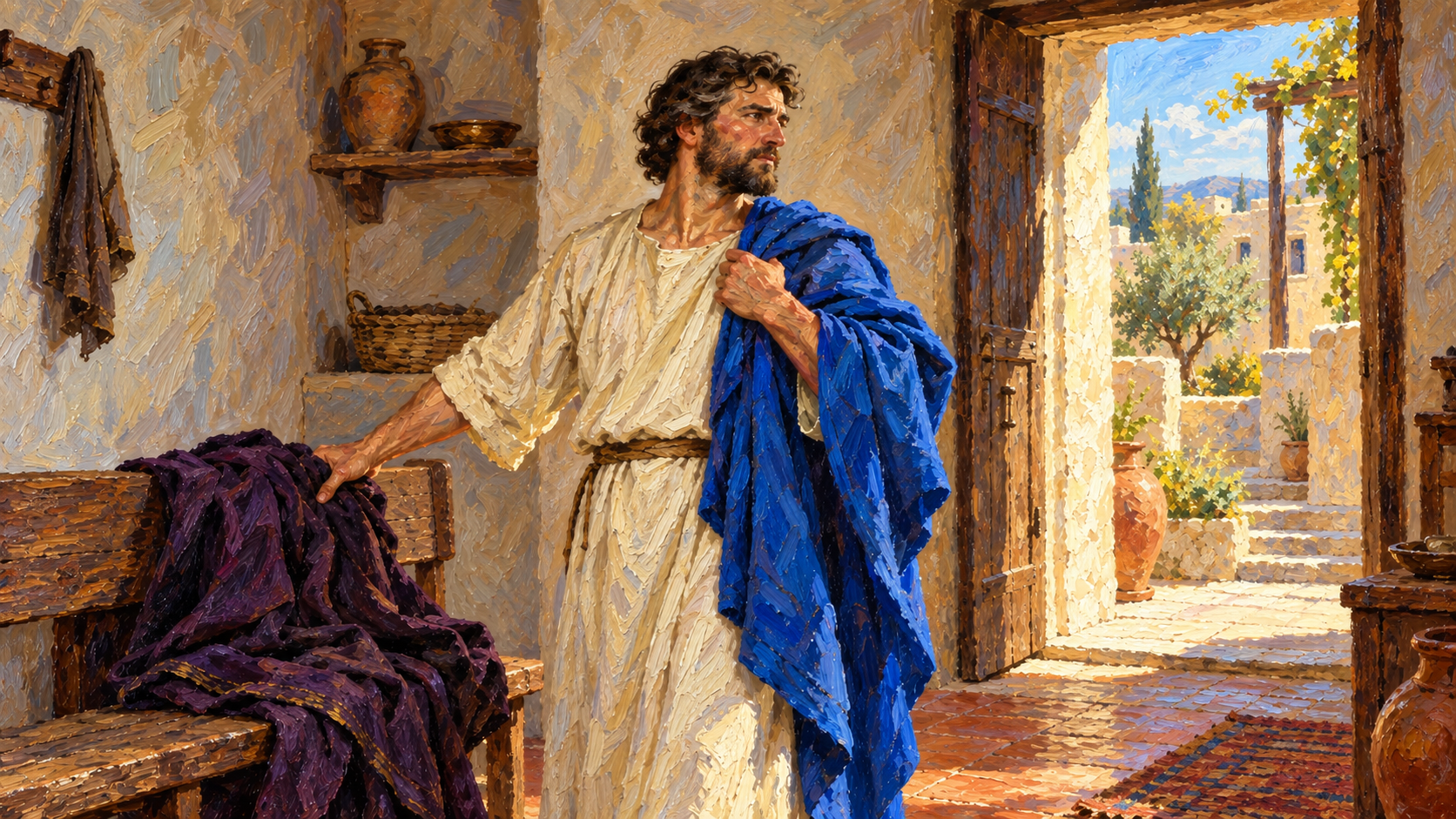
What does Paul mean when he tells believers to put off the old man and put on the new? He is not describing a sinner cleaning himself up so God will save him. He is showing us that the new life God gives in Christ changes our thinking and becomes visible in our speech and daily conduct.
New Life Comes Before Obedience
Paul is describing the transformation of every believer in Christ, not simply an improvement in behavior. God has redeemed that person and made him new. He then calls him to live in the holiness that belongs to Christ.
I need to keep that order clear when I read Paul’s commands. A sinner is not saved by reforming his conduct and presenting a cleaner life to God. Salvation is by grace through faith in Jesus Christ, whose blood was shed for sinners and who rose bodily from the dead. Obedience follows because God has already made the believer alive in Christ.
We can hold firmly to grace without treating obedience as optional. A Christian puts on the new man because he has been made alive in Christ, not to become born again. Ephesians 2:8-10 connects salvation by grace through faith with the good works for which the saved person was created in Christ Jesus.
Holiness, then, is not the price of salvation. It is the fruit of new birth and the fitting clothing of someone who belongs to Christ. Behavior-only religion can make a person look disciplined while leaving the heart unchanged, which is why Paul begins with identity and then shows how that identity should become visible.
The Old Man and the New Man
In Ephesians 4, Paul contrasts the believer’s new life with the former walk of the Gentiles. The old man is connected to corrupt desires and a mind darkened by sin. It belongs to a life alienated from God and filled with conduct that no longer fits anyone who has learned Christ.
Before addressing the old way of life, Paul has called the church to walk worthy of its calling with humility, patience, and love. He describes the body growing as each part does its share, then tells believers they must leave the old Gentile way of life. I cannot read that command as though my conduct concerns only me. A renewed person helps build up the church, so this personal obedience also belongs to our life together.
Paul says that the old man grows corrupt according to deceitful lusts:
That you put off, concerning your former conduct, the old man which grows corrupt according to the deceitful lusts.
Sin’s promises are deceitful. It offers freedom and pleasure, yet brings slavery and decay. Even the identity it promises leaves shame behind. I need to recognize those lies for what they are instead of trying to negotiate with sin.
Colossians 3 begins with the believer’s union with Christ. Because these believers were raised with Him, Paul tells them to seek the things above, put to death earthly sins, and put on the character that fits God’s chosen people. He does not ask them to pretend their old life was harmless. Sexual sin and uncleanness are sins against God, as are evil desire and covetousness. Calling covetousness idolatry helps us see how deeply sin reaches: it draws the heart toward a rival object of worship, rather than being merely a mistake in behavior.
Paul then describes mercy and kindness as part of the clothing of the new life. God’s people are to be humble and meek, showing patience toward others and living in forgiveness and love. The clothing image concerns more than looking religious. Our visible conduct should agree with the new life God has given us.
The Greek word translated “man” in these phrases is anthropos, a word for a man or human person. That helps us understand why Paul is speaking about a person, rather than just isolated habits. The old man is the person connected with former corruption, while the new man is the person God created for a new kind of life in Christ. The choices I make reveal which of those ways of life I am following.
A Renewed Mind Produces a Changed Life
Paul never leaves the believer with an empty life. The old is put away so the new can be worn openly:
And that you put on the new man which was created according to God, in true righteousness and holiness.
The new man’s virtues do more than make someone seem pleasant; they reflect Christ. The believer who has been forgiven learns to forgive, and the mercy he has received teaches him to show mercy. Because he now belongs to the truth, his words should become truthful as well. The new man was created according to God in true righteousness and holiness.
Between putting off and putting on, Ephesians speaks of being renewed in the spirit of the mind:
And be renewed in the spirit of your mind.
God renews the believer’s inner life through His Word and Spirit. We are not being asked to grit our teeth and imitate Christian behavior from the outside. Romans 12 calls believers away from conformity to this world and toward transformation through the renewing of the mind. In 2 Corinthians 3, the Spirit of the Lord transforms believers into the same image from glory to glory. Colossians 3 describes the new man being renewed in knowledge according to the image of the One who created him.
In each passage, inward renewal bears fruit in outward conduct. That is why Scripture must dwell richly in the church. If I keep feeding my mind with lies, I will keep returning to old patterns. Truth teaches me to recognize sin’s deceit and to see Christ as lovely. As my thinking is renewed, obedience begins to look fitting and holiness becomes recognizable as freedom rather than bondage.
What Must Be Put Away and Put On
Paul names particular sins so we can see what living according to this new identity involves. Ephesians 4 calls us to speak truth instead of falsehood and to stop nursing sinful anger that gives the devil a place to work. The person who stole must work honestly so he can give to others. We must replace corrupt speech with words that build others up, and bitterness and malicious speech have no rightful place in this new life.
Colossians 3 addresses our desires as well as our actions. Alongside sexual immorality and covetousness, Paul confronts anger, lying, and filthy speech. I need to look beyond what I do with my hands to what I love and imagine. The old way of life also shows itself in the conduct I excuse or protect and in the words I speak.
Putting away sin makes room for conduct that reflects Christ. Ephesians calls believers to be kind and tenderhearted, forgiving as God in Christ forgave them. Colossians also calls for mercy and humility, with patience and love shaping how believers live. Stopping the wrong conduct is necessary, but it is not the whole of biblical change.
If I stop lying, I still need to learn to tell the truth with wisdom and love. The person who stops stealing must learn honest work and generosity, just as someone who tore people down with words must learn to speak in a way that gives grace to the hearer. Paul’s instructions take us beyond refusing sin and show us how to practice the life that fits Christ.
Union with Christ Guards Against Two Errors
Romans 6 explains why the believer can refuse the old life: those who are in Christ have been united with Him in His death and resurrection. That is the foundation I see beneath the commands in Ephesians 4. Paul says:
Knowing this, that our old man was crucified with Him, that the body of sin might be done away with, that we should no longer be slaves of sin.
Christ has broken sin’s claim on the believer, so sin no longer has rightful dominion over him. Temptation can still come, but he is not trying to escape his old master by his own strength. He should count on what God has said about his new position and present himself to God as an instrument of righteousness.
If I turn Paul’s commands into a way of earning God’s favor, I have slipped into legalism. That measures acceptance by performance instead of recognizing that believers are accepted in Christ by grace. It leaves a person proud when he imagines he is succeeding and in despair when he can no longer ignore his failures.
Our union with Christ also guards against passive disobedience. Someone may say, “Since God saves by grace, I do not need to put anything away.” Paul rejects that reasoning. Grace does not leave a believer comfortably dressed in the old life. The gospel that saves also trains God’s people to deny ungodliness and worldly lusts.
God’s work in the believer calls for action, without turning obedience into self-salvation. Because he belongs to Christ, he confesses sin and flees temptation. Walking by the Spirit includes learning to speak truth and forgive others. There is no place for spiritual laziness here, but neither is obedience competing with grace. It grows from grace.
Practicing the New Life Together
Daily practice begins with being honest about sin. I cannot excuse lust as weakness or defend bitterness as part of my personality. Calling greed ambition does not make it righteous either. Since the old man grows corrupt through deceitful desires, the first battle is often recognizing the lie that sin is harmless.
Honesty about sin must lead to changed conduct. The liar needs to speak truth, and the angry person needs to seek reconciliation before anger gains a foothold. Someone holding bitterness must forgive as God in Christ forgave him. The person facing sexual temptation must flee instead of making room for the flesh. In all of this, prayer expresses our dependence on God. I should ask Him for strength and be quick to confess, without using prayer as a reason to postpone obedience.
The Word of Christ must also dwell richly among God’s people:
Let the word of Christ dwell in you richly in all wisdom, teaching and admonishing one another.
Colossians places worship and teaching inside the life of the new man. Believers admonish one another with gratitude and act in the name of the Lord Jesus. Sanctification, the process of growing in holiness, is personal but not isolated. The church helps believers remember the truth and walk in love.
The same principle appears in the fruit of the Spirit. Galatians 5 contrasts the works of the flesh with the life the Spirit produces. Love and joy grow from His work, along with peace and patience. His fruit also includes kindness, goodness, faithfulness, gentleness, and self-control. These qualities are not manufactured by human pride. They develop as the believer yields to the Spirit and refuses to make provision for the flesh.
These commands reach into our relationships. Paul addresses truth between members and anger that damages fellowship, along with words that can either corrupt the church or build it up. Forgiveness and love make the new life visible in how we treat each other. I should not mistake an appearance of discipline for Christlike character if harshness or deceit remains. His life reaches our motives and relationships as surely as our private habits.
A church displays the gospel as its people learn to live this way together. The person once known for lying learns to speak words we can trust, and the selfish believer begins to give. Those who were harsh learn tenderness, while those who held on to bitterness learn to forgive. We should not expect this change to be instant or perfect, but we should expect it to be genuine. Christ changes His people.
If another Christian lovingly points out conduct that belongs to my old life, I should recognize the aim of that correction: restoration, rather than shame for its own sake. Life together in the church helps us receive that correction. We should name sin truthfully while preaching grace clearly, welcoming repentance and helping one another pursue holiness. Religious appearances must not become a way to hide old patterns.
This work often requires patient obedience, since a temptation may return even after confession. Repeated pressure does not give the believer permission to surrender. He keeps bringing the struggle into the light so Scripture can expose the lies beneath it. If he fails, he confesses rather than defending himself and returns to the obedience that fits his new life. His confidence rests in the Lord, rather than in how easy the battle feels.
Some believers become discouraged because old temptations still press on them. The presence of a battle does not cancel the new birth. A heart that grieves sin before God and desires holiness is not making peace with the old master. The struggle may be painful, but the believer can run to Christ, practice repentance, receive mercy, and keep walking.
Scripture does not comfort rebellion, however. Eternal security belongs to those who are truly born again, not to an empty profession used as permission for sin. The new man has a new direction. He may stumble and need correction, but he cannot honestly call darkness his home. Grace trains God’s people, and the Spirit works in them to desire and do what pleases God.
My Final Thoughts
Putting off the old man and putting on the new means living in agreement with the new identity God has created in Christ. This is not a way to earn salvation, yet it is not optional for someone who has been born again. Christ has broken sin’s claim, and the Holy Spirit renews the believer through the truth so that old conduct can be replaced with a life that reflects Jesus. When an old pattern appears in my thinking or desires, I should call it what it is. I also need to notice when it begins shaping my words or relationships, put it away, and walk by the Spirit in the life Christ has given.