
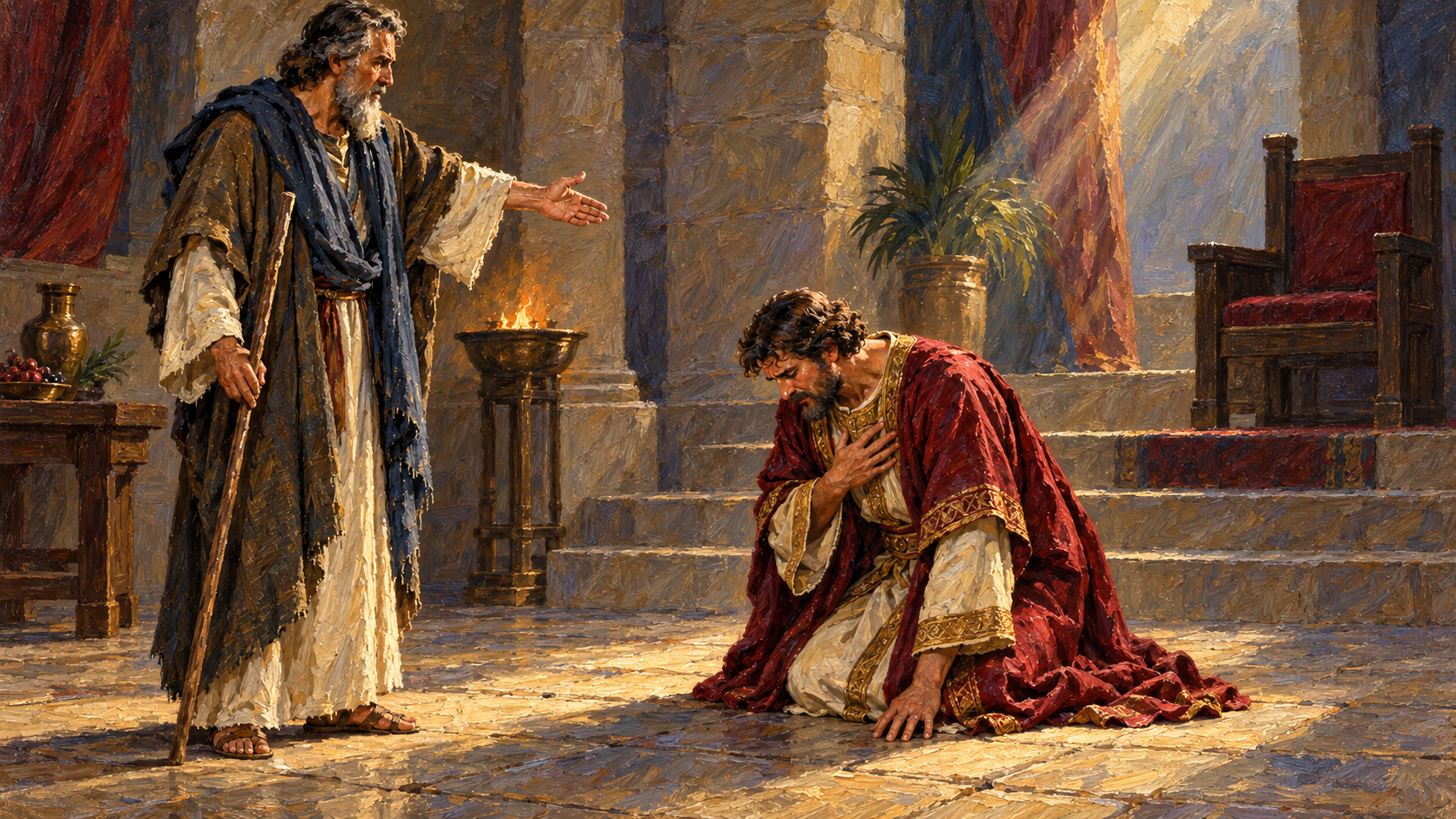
Comparing myself with another person will never tell me whether I am right before God. He measures us by His own holy character and truthful commands. To understand sin, we need to look at what He calls wrong and how deeply it reaches into the heart. We also need to understand the hope He offers through Jesus Christ.
What Scripture Means by Sin
Scripture describes sin as lawlessness and rebellion against God, with unbelief and trespass revealing the same inward corruption. It also includes refusing to do good we know we should do. Every sinner falls short of God’s glory. This is more than a mistake without moral meaning: the creature is refusing the Creator’s rightful rule. That refusal can appear in an outward act or a desire we cherish, in a deceitful word or a duty we neglect.
Before going further, we need to distinguish temptation from sin. Jesus was tempted and remained sinless, so the two cannot mean the same thing. We also need to distinguish the fallen, mortal condition children are born into from Adam’s personal guilt, which they do not inherit. And although some sins cause greater damage and carry greater blame, any sin makes a morally accountable person guilty before God.
No single illustration explains everything Scripture says about sin. Genesis 3 records its entrance into human history, and Ezekiel 18 explains why each person is accountable. Jesus traces sinful acts to the heart, while Romans brings the whole world under guilt. James then helps us understand how desire becomes sin. We need these passages together to understand both sin’s reach and where it leads.
In Genesis 3, the serpent distorted God’s Word, and the man and woman claimed moral independence for themselves. Their distrust became rebellion. Shame and hiding followed, then exile from the garden, with physical death coming later. Ezekiel 18 explains personal accountability: each morally responsible person answers for his own sin, and a child does not bear a parent’s guilt.
Jesus explains in Matthew 15 that evil thoughts and murder come from the heart. The same is true of adultery and sexual immorality, along with theft, false witness, and blasphemy. Romans 3 places both Jews and Gentiles under guilt and rules out a righteous verdict through works of law. James shows how welcomed desire gives birth to sin, while also calling refusal of known good sinful. In 1 John, sin is called lawlessness, and believers are told to confess their actual sins. John leaves no room to claim sinlessness or settle into rebellion.
The Hebrew word chata’ can refer to sin or failure and is often explained through the image of missing a goal. I find that image useful as long as it does not turn sin into an innocent accident or a morally neutral failure. Avon can describe iniquity or perversity, but its meaning also extends to guilt or the consequence of wrongdoing. With Pesha, the emphasis is on transgression, revolt, or rebellion against rightful authority.
The New Testament word anomia describes lawlessness, the refusal or violation of God’s moral rule. A related idea appears in Parabasis, which describes transgression as stepping beyond a known command or boundary. Paraptoma can refer to a trespass or offense, including a false step that carries real guilt. These words help us understand why sin cannot be reduced to an innocent failure.
The familiar explanation of sin as “missing the mark” needs that qualification. Biblical usage includes failure, but sin is not like an innocent arrow blown off course by the wind. Rebellion and lawlessness involve the sinner’s will, as do trespass and unbelief. The image must leave room for that moral responsibility.
The words overlap, yet each can draw attention to something different. Transgression may emphasize crossing a stated boundary, while iniquity can emphasize crookedness. Rebellion brings out resistance to rightful authority, and lawlessness exposes the heart’s refusal of God’s government. I cannot read those descriptions honestly and reduce sin to poor technique or ordinary human imperfection.
Sin, Adam, and Personal Guilt
Genesis 3 shows the first human sin in its moral shape. God had generously given the man and woman the garden’s trees while forbidding one. The serpent reframed this abundance as deprivation and questioned God’s Word. He denied the warning of death before suggesting that independence would produce wisdom.
Eating the forbidden fruit made the disobedience visible, but distrust and self-rule were already at work. Eve evaluated the tree apart from God’s command, and Adam joined her in disobedience. They acted as though creatures could define good and evil for themselves.
Their response afterward shows how sin avoids responsibility. Shame took the place of unashamed fellowship, and they hid instead of enjoying open communion. When confronted, they blamed others rather than confess honestly. Adam pointed to the woman and ultimately to God, who had given her to him, while Eve pointed to the serpent. They had claimed independence but tried to escape responsibility for what followed.
God’s judgment brought real consequences. Pain and conflict entered human experience, the ground came under a curse, and mortality began to govern the body. The man and woman were removed from the Tree of Life. Yet God also sought them while they were hiding and provided clothing for them. He promised conflict between the serpent and the woman’s Seed that would end with the serpent’s head being crushed. The whole gospel was not explained in that first promise, but it began the expectation of a coming Deliverer who would defeat the deceiver.
Romans 5 says sin entered the world through one man, with death entering through sin. Adam’s act brought a fallen condition into human history. His descendants are born mortal and weak in a world where rebellion is already present, and they have an inclination toward sin.
We should not confuse that inherited condition with being charged with Adam’s personal guilt as an infant. Romans 5:12 says death spread to all because all sinned. Ezekiel states the principle of individual accountability plainly.
The soul who sins shall die. The son shall not bear the guilt of the father, nor the father bear the guilt of the son. The righteousness of the righteous shall be upon himself, and the wickedness of the wicked shall be upon himself.
Ezekiel was answering Israelites who used a proverb to blame their fathers while avoiding responsibility for their own rebellion. He was not denying that a parent’s choices can bring painful consequences upon a child. The distinction concerns guilt: God does not transfer a father’s moral guilt to an innocent child. Each accountable person answers for his own response to God.
Scripture recognizes a time before a child knows to refuse evil and choose good. Children inherit mortality and a fallen human environment, but they are not condemned for someone else’s act. In time, every morally accountable person chooses sin personally.
That leaves me responsible for my own choices. I cannot blame Adam for a lie I choose to tell or lust I welcome. If I choose pride or hatred or refuse to believe God, those choices are mine. It also means grieving parents need not imagine that an infant who dies is condemned for inherited guilt. God judges righteously according to real moral accountability.
Romans 5 goes on to contrast Adam with Christ. Through Adam, sin and death entered the human world; through Christ, justification and life are genuinely offered to the whole world. That does not make salvation automatic. People can resist God’s grace, and the gift is received by faith. Adam’s ruin therefore does not have the final word over humanity, because the obedient Son has provided the way of life.
The Law, the Heart, and Temptation
God’s law tells us what is righteous and exposes every violation. Romans 3 describes the result in courtroom language: every mouth is stopped, and the whole world stands guilty. The law gives us knowledge of sin, so deeds of law cannot produce a righteous verdict.
Scripture uses the word “law” in several related ways. It may mean the law given through Moses, a particular command, or God’s revealed moral standard more broadly. Gentile nations were never placed under Israel’s national covenant code. Yet Romans still holds them responsible for suppressing known truth and violating the moral witness available to them. Being outside Israel does not provide a way around guilt.
A mirror reveals dirt without washing the face. In the same way, a command can tell the truth without creating the obedience it requires or erasing a past breach. Future good deeds do not turn a guilty act into an innocent one.
In James 2:10, stumbling at one point makes even the person who keeps the rest of the law guilty of all. That does not mean every sin causes the same earthly harm. One breach makes a person a lawbreaker before the same Lawgiver, which is the point James is making.
Romans 2 describes another witness in the conscience. Gentiles without the Mosaic law show the law’s work written in their hearts as their thoughts accuse or excuse them. But conscience can be misinformed or seared, so I cannot treat it as the final authority. Scripture must correct it and expose motives I might otherwise leave hidden.
Jesus takes accountability beyond conduct that could be seen in court. In Matthew 5, He places unjust anger and contempt in the same moral family as murder. A lustful look likewise welcomes adultery in the heart. The earthly consequences differ, but God sees the inward choice before it becomes a public act.
Matthew 15 locates evil thoughts in the heart, along with murders and adulteries. Sexual immorality and thefts come from within too, as do false witness and blasphemies. Circumstances may pressure us or expose what is already there. They do not make us innocent by removing responsibility for our choices.
The biblical heart includes our thoughts and desires as well as our will. It includes the loyalties that shape our moral judgment. Pride can govern a life without being spoken aloud, and coveting can remain hidden from every neighbor while God sees it. Even unbelief may appear religious while refusing God’s testimony.
I do not want this inward accountability to minimize the real harm caused by outward acts. Inner hatred and physical murder are not interchangeable in human justice. Jesus deepens accountability; He does not erase proportion. God wants truth within, and outward reform without inward surrender cannot make a sinner clean.
Hebrews says Jesus was tempted in every way relevant to real human weakness, yet He remained without sin. The arrival of temptation therefore cannot itself be identical with sin. Neither an unwanted thought nor an outside invitation establishes guilt on its own.
James 1 follows desire through to its result. A person is drawn and enticed, then desire conceives and gives birth to sin. When sin matures, it produces death. The turning point is consent, when the heart begins welcoming what God forbids. A person may agree with the temptation or plan how to fulfill it, cherishing the desire before acting on it.
The desires involved are not always wrong in themselves. Hunger and the need for rest are proper, as are the desire for safety and the need for companionship. Even wanting justice can be right. Temptation urges us to meet a proper desire through unbelief or disobedience. Jesus was hungry in the wilderness, yet He refused Satan’s invitation to act outside the Father’s will.
I don’t need to panic because temptation has come, but I must not entertain it either. God provides a way of escape, and taking it is often practical. Leaving a place or closing a screen may be necessary. A message may need to end before the conversation goes further, and confessing the struggle early lets someone help. Where money is the temptation, refuse the purchase. Where anger feeds it, stop rehearsing revenge. We need to take the exit before we begin defending a plan to sin.
Doing what God forbids is called sin of commission. Theft and false witness belong here, along with adultery and idolatry. Murder shows how destructive such an act can be. Sin of omission concerns a duty we refuse: James 4:17 says that knowing the good we should do and failing to do it is sin.
I cannot measure faithfulness simply by avoiding scandal. Refusing to help when help is within my power may be sin, and silence before injustice may be sinful too. Withholding forgiveness or neglecting a family duty also makes me accountable. Even a gift God expects me to use can be buried instead. Avoiding a forbidden act does not excuse refusing known good.
Scripture also distinguishes unintentional sin from presumptuous sin. The Mosaic offerings included provision for sins committed in ignorance, showing that lack of awareness did not make every act harmless. Deliberate rebellion carried greater blame because the person acted with knowledge and defiance together.
Ignorance can lessen responsibility, but that does not make it a virtue. A person may choose not to know because facing the truth would require change. Once Scripture exposes the sin, we need to confess it and obey God. What we failed to see before cannot become a reason to protect it now.
An institution can normalize evil by ordering people to participate or rewarding them for doing so. It may conceal the wrongdoing or give it a respectable name. Yet each participant still answers to God for his own choices. Human authority cannot make evil righteous, even when a group approves it.
All sin establishes guilt, though motives and damage differ. Knowledge can increase responsibility, and Jesus made that clear when Pilate claimed authority over Him. He told Pilate that no power could be his unless it were given from above, then said that the one who delivered Him to Pilate had the greater sin. Pilate was still guilty. The Jewish leader who acted with greater revealed knowledge carried greater blame. Jesus also described servants receiving different judgments according to what they knew.
A hateful thought is morally evil without creating the same public loss as murder. Coveting is also sin, but stealing a family’s savings adds injury that may require restitution and legal judgment. In the same way, a careless false statement differs from a planned campaign that destroys someone’s reputation.
We need those distinctions to judge honestly. Small faults must not be exaggerated to control someone, and grave abuse must not be minimized by pretending everyone is equally at fault. Courts and churches need to examine the facts and consequences, and so do families and individuals.
The Roman Catholic system of mortal and venial sins goes beyond Scripture by connecting classified acts with the loss of saving grace and sacramental restoration. The New Testament recognizes degrees of seriousness while teaching that a truly born-again believer is sealed and eternally secure. Serious sin can shatter fellowship and bring the Father’s discipline. It may even bring earthly ruin and loss of reward, but it does not undo the new birth.
When David confessed in Psalm 51 that he had sinned against God, he was not denying the harm done to Bathsheba and Uriah. Their families suffered too, as did the nation of Israel. His confession recognized that every sin is ultimately committed in God’s sight and against His authority.
Sin is always against God while also harming people. Adultery disobeys Him and betrays a spouse. Theft rejects His order by taking what belongs to a neighbor, while slander wounds someone made in His image and despises the God of truth.
I don’t see a need to choose between sin as a legal wrong and sin as a relational wrong. God’s law names what love requires and protects true relationship. Its commands come from the Creator we owe love to, and they govern how we treat people He made. Calling sin a violation of law does not make the injury impersonal.
That is why repentance may call for more than private prayer. Stolen property should be returned, and a public lie may need a public correction. Someone who has been injured deserves truthful acknowledgment. God’s forgiveness does not remove every earthly consequence, nor does it make damaged trust recover immediately.
The Power and Consequences of Sin
Romans 6 describes sin as a ruling power. As a person repeatedly obeys desire, what seemed like freedom becomes slavery. Sin begins dictating his thoughts and schedule, controlling his money and damaging relationships. It demands secrecy as its control grows.
Jesus said that whoever commits sin is its slave. Human effort may restrain an action or replace one habit with another, but only the Son can free us at the deepest level. Through the new birth, our ownership changes and the Holy Spirit comes to dwell in us.
For the wages of sin is death, but the gift of God is eternal life in Christ Jesus our Lord.
Death is earned as a wage; eternal life is received as God’s gift in Christ. That difference helps me understand why Scripture does not teach that every person has endless conscious existence by nature. Life is given by God, while sin reaches its final outcome in the second death.
Physical death shows humanity’s fallen condition, while personal sin makes us guilty before final judgment. Sin also harms life now by damaging fellowship and deadening the conscience. It destroys peace and spreads harm to others. The freedom it promises conceals a master whose demands go beyond what it first advertised.
In Mark 3, the scribes from Jerusalem had more than a rumor before them. They saw Jesus free people from demonic oppression, yet claimed He did it through Beelzebub, the ruler of demons. Jesus exposed the contradiction in their claim: Satan would not build his kingdom by casting out Satan. These men were deliberately calling the Holy Spirit’s clear testimony through Christ the work of an unclean spirit. That was the setting for His warning that blasphemy against the Holy Spirit never has forgiveness. He was addressing informed, hardened rejection of the Spirit’s testimony to Christ.
That setting keeps me from confusing this sin with an unwanted phrase, an intrusive thought, or a moment of frightened doubt. A person who is anxious and seeking mercy has not shown the settled rejection of those leaders. They called the Spirit’s work satanic in order to reject the Son.
The Holy Spirit convicts the world of sin and reveals the righteousness found in Christ. His warning of judgment accompanies His witness to Jesus. If someone persists to the end in rejecting that witness, there is no other Savior to turn to. Forgiveness is in Christ, so refusing Him to the end means refusing the only provision God has made.
In 1 John 5, John also speaks of sin leading to death, but he does not give us a complete system of categories. He may be describing severe temporal judgment, as we see in other New Testament cases. I would not claim more precision than he gives or use this passage to deny eternal security.
John does answer the question of sinlessness directly. In 1 John, anyone who says he has no sin deceives himself, and anyone who says he has not sinned makes God a liar. Believers still need to confess sin and receive cleansing in fellowship.
Yet the same letter says that those born of God do not practice sin. John distinguishes the acts a believer must confess from settled lawlessness that defines a person’s life. These statements do not contradict each other. The new birth makes a real break with sin’s dominion.
A Christian can stumble seriously and grieve the Holy Spirit. His sin may damage fellowship with God and bring the Father’s discipline, along with painful consequences. Grace never gives permission to rebel. Still, the person who is truly born again remains indwelt and sealed by the Holy Spirit. Failure does not make him unborn.
My assurance must rest in Christ, not in presuming that a profession alone proves salvation. Someone comfortable in lawlessness has no sound reason to call a superficial profession genuine. The Spirit brings conviction and a new direction, even though growth is neither immediate nor flawless.
Repentance and the Hope of the Gospel
Confession means agreeing with God about sin. We name it without softening it or blaming someone else, bringing into the light what we might otherwise hide. Repentance is a real turn of heart toward God, joined with faith in Jesus Christ. Neither confession nor repentance purchases forgiveness.
He who covers his sins will not prosper, But whoever confesses and forsakes them will have mercy.
Remorse alone does not bring that change. Pharaoh confessed under pressure, then returned to hardness when the pressure passed. Judas admitted his betrayal but turned toward despair instead of coming to Christ. Godly sorrow brings us toward the Lord and leads to changed conduct.
Zacchaeus helps me see the proper order. After receiving Jesus, he committed himself to generosity and restitution for false collection. His money did not purchase salvation. The changed use of it showed that his heart had turned in a new direction, so the conduct followed salvation rather than earning it.
Believers can confess without thinking they need to be saved again. In 1 John 1:9, confession belongs to walking in the light and restored fellowship. A secure child can tell the truth and accept correction. He repairs the harm where possible while depending on his Father’s cleansing.
Romans develops our need for that mercy across several chapters. Romans 1 exposes Gentile suppression of truth and the moral collapse that follows idolatry. Romans 2 addresses the person who judges others while practicing sin, including the Jew who possesses the written law. By Romans 3, no group stands outside accountability.
Therefore by the deeds of the law no flesh will be justified in His sight, for by the law is the knowledge of sin.
Justification means a verdict of righteous standing before God. It is not praise for trying harder than someone else, and keeping the law cannot erase an existing record of guilt. We need the righteousness God supplies because sinners cannot construct it for themselves.
Romans 3:21 then shows where hope is found. God’s righteousness is revealed apart from law-works through faith in Jesus Christ to all who believe. All have sinned and fall short, yet those justified receive that verdict freely by grace through the redemption in Christ.
Faith receives the Savior God offers; it is not a better kind of work that earns a favorable verdict. Salvation rests in Christ and His blood. I do not make it stronger by maintaining intense feelings or building a moral defense of myself.
Romans 3:25 says God set forth Christ as a hilasterion by His blood through faith. That term is used for the mercy seat, where atoning blood was presented. The picture is sacrificial mercy, not the Father venting anger upon the Son.
Jesus is the spotless Lamb who willingly offered Himself, both the sin offering and the High Priest. When 2 Corinthians 5:21 speaks of Him being made sin for us, it does not mean He became morally evil. The sinless One became the sin offering so that believers could receive righteous standing in Him.
Wicked men physically tortured and punished Jesus, then killed Him. He willingly bore that real punishment for our sins in His innocent body. After shedding His blood and dying, He was buried and rose bodily. The Father did not punish or curse Him. He did not abandon Jesus or strike or bruise Him, and He did not pour wrath on Him or send Him to hell.
Jesus entrusted His spirit to the Father and promised the believing thief that they would be together in Paradise. He did not suffer the second death or endless separation. His physical death and blood atone for sin, and His bodily resurrection defeats death.
Christ’s offering is for the whole world, and God genuinely calls every sinner to repent and believe. People can resist that invitation. But whoever comes to Christ in faith receives forgiveness and justification, with eternal life as God’s gift. That person is born again as a new creation, indwelt and sealed by the Holy Spirit.
The believer’s eternal security rests on Christ’s finished work and preserving power. This never authorizes lawlessness, and a superficial profession does not prove that someone has been born again. Those truly saved still need correction and growth, but their failures do not make them spiritually unborn.
Grace is God’s favor and generous provision for people who cannot earn salvation. Ephesians 2 explains that we are saved by grace through faith rather than works, leaving no place for boasting. It then says believers are created in Christ Jesus for good works.
That order helps me understand the place of obedience. Good works grow from salvation rather than purchase it. They cannot put Christ in our debt, but the new person created through salvation is someone God teaches to obey.
Titus 2 describes grace teaching believers to deny ungodliness and worldly lusts. Grace provides forgiveness and new birth without renaming evil as good. With the Spirit dwelling in us, we have hope strong enough to turn away from sin.
Romans 6 answers firmly when it asks whether we should continue in sin so grace may abound. We are united with Christ in His death and resurrection, so we should present ourselves to God as people alive from the dead. Sin no longer has a rightful claim to be our master.
Walking in the Light
I need God’s judgment of my conduct, not a favorable comparison with someone else. His light reaches my motives and words as well as the duties I neglect. Turning toward Him means no longer defending a path I know is wrong. We confess the sin and repair the harm where possible. Justification and life are received by faith in the Savior whose blood atones and whose resurrection defeats death.
Sin’s final consequence must be understood in connection with resurrection, not as a vague separation. In Revelation 20, the dead stand before God as the books are opened and each person is judged according to his works. Death and Hades are then cast into the Lake of Fire, the second death.
Every person begins written in the Book of Life. Those who finally reject the Messiah are blotted out, while believers remain. The other books record deeds and sins, but believers have their sins blotted out through Christ’s blood.
Lost humans finally face the irreversible destruction of body and soul rather than eternal conscious torment. Eternal life is God’s gift to those in Christ. Revelation 20:10 uniquely names the devil, the beast, and the false prophet as suffering endless torment.
That judgment gives urgency to the gospel. God does not delight in human destruction, and Christ died for the world. His invitation is genuine, so delay must not become presumption. We need to stop defending ourselves and come to Jesus while mercy is offered.
My Final Thoughts
I cannot read these passages and explain sin away as an ordinary mistake or weakness. It is personal rebellion against the holy God, and every accountable person needs the mercy found in Jesus Christ. His blood provides forgiveness, and His resurrection gives life. The grace that saves us also teaches us to walk in the light, so we can bring our sin honestly to Him instead of hiding or excusing it. He alone can forgive and change us.