
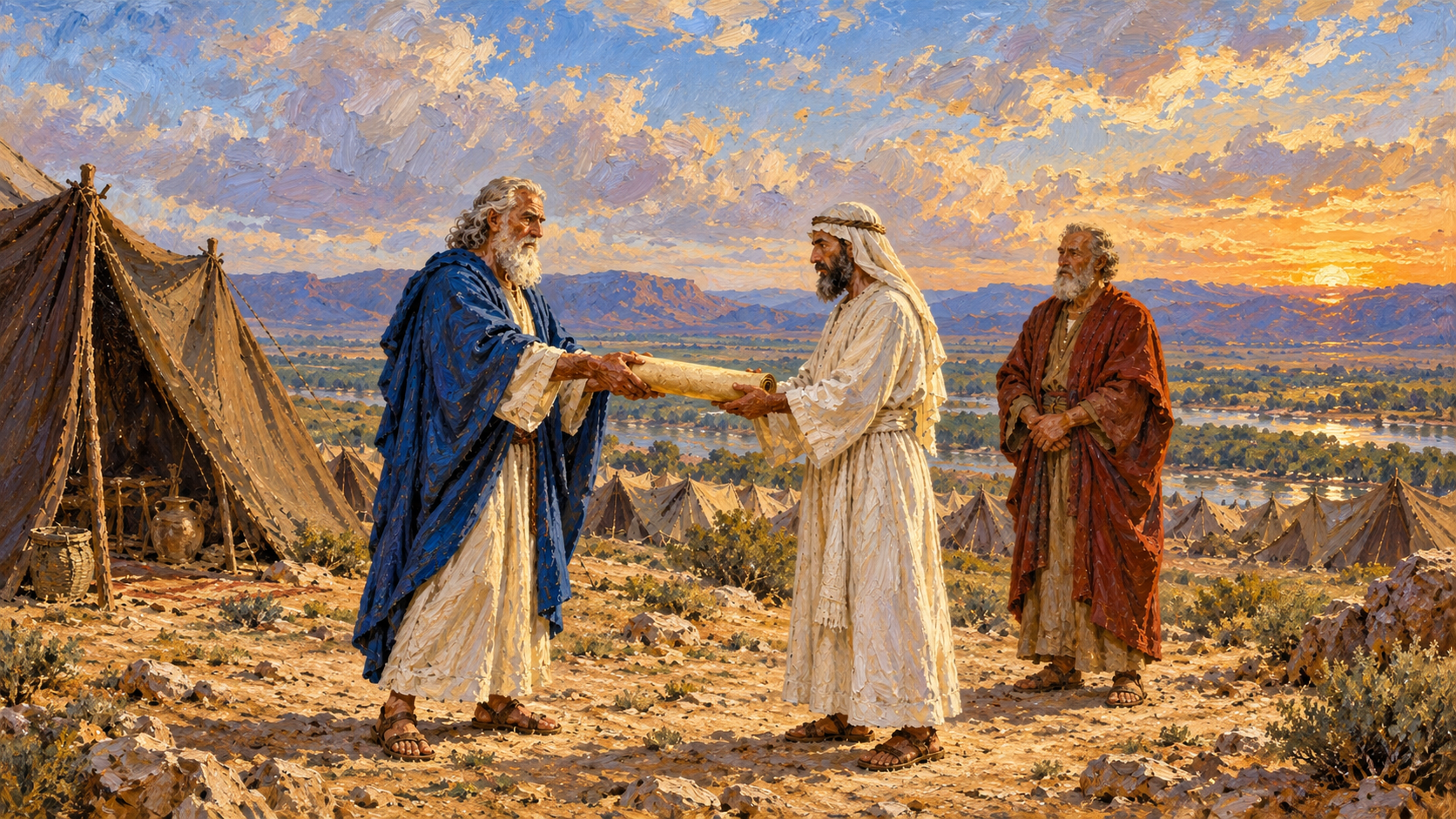
What exactly is the Pentateuch, and why do we need these five ancient books to understand Jesus? I believe we need to follow their story from creation through Moses instead of treating the Torah as a disconnected pile of laws. When the covenants and historical setting stay clear, the whole work leads the reader toward Christ.
What the Pentateuch Is and How the Five Books Fit Together
Then He said to them, "These are the words which I spoke to you while I was still with you, that all things must be fulfilled which were written in the Law of Moses and the Prophets and the Psalms concerning Me." And He opened their understanding, that they might comprehend the Scriptures. Then He said to them, "Thus it is written, and thus it was necessary for the Christ to suffer and to rise from the dead the third day, and that repentance and remission of sins should be preached in His name to all nations, beginning at Jerusalem. And you are witnesses of these things. Behold, I send the Promise of My Father upon you; but tarry in the city of Jerusalem until you are endued with power from on high."
Pentateuch is the familiar name for the first five books of Scripture: Genesis, Exodus, Leviticus, Numbers, and Deuteronomy. The name comes through Greek and simply identifies a five-volume work. Jewish readers commonly call these books the Torah, a Hebrew word that means instruction. English Bibles often translate Torah as Law, but that translation can sound narrower than the word actually is.
When Scripture speaks of the Law of Moses, it does not mean a bare list of rules. The Torah begins with creation and explains how human rebellion brought sin and death. It follows God’s promises through a real family history before recording Israel’s deliverance from Egypt and the covenant at Sinai. Worship and priesthood take their place within Israel’s wilderness journey, and Moses’ sermons and songs help the people remember. The commands make sense inside that unfolding history. God first tells Israel who He is and what He has done; then He tells the redeemed nation how it is to live.
Jesus spoke of the Law of Moses and placed it alongside the Prophets and Psalms. After rising bodily, He said that these Scriptures spoke of His suffering and resurrection. They also anticipated the worldwide proclamation of repentance and the remission of sins. The Pentateuch is therefore foundational history and instruction that begins the Bible’s unified witness to Christ.
Genesis begins with creation and ends with Joseph’s coffin in Egypt. After Joseph’s generation is gone, Exodus follows Israel out of bondage to the tabernacle at Sinai, where Leviticus gives its instruction. Numbers then follows the camp through wilderness rebellion toward Moab. On the edge of Canaan, Deuteronomy records Moses’ final covenant sermons.
Each book has its own emphasis, yet the story never starts over. God’s promises to Abraham explain why He later brings Abraham’s descendants out of Egypt. The Exodus brings the nation to Sinai, where God establishes His covenant with Israel. That covenant explains the priesthood, sacrifices, tabernacle, and national laws that follow. Israel’s rebellion then explains why the journey to Canaan lasts forty years. By the time Deuteronomy opens, the adults who refused to enter the land have died, and Moses is addressing their children on the plains of Moab, east of the Jordan River.
This sequence keeps readers from becoming lost in isolated laws. A command about sacrifice belongs to Israel’s tabernacle worship. A land law addresses a nation preparing to live in Canaan. A warning in Deuteronomy comes from Moses as Israel stands on the verge of entering that land. The surrounding history tells us who received a command, why it was given, and how it fits the Bible’s larger movement toward Christ.
The different kinds of writing therefore serve the same unfolding work. Genealogies identify the family God is preserving, while census records show how He orders the nation. Laws explain covenant life, and songs teach Israel to remember God’s acts and warnings. Even the travel lists locate judgment and mercy within the wilderness journey. If we pull one part away from that movement, it becomes easier to misuse a command or miss why a sacrifice was given. Reading the five books in sequence lets history explain the instruction and allows the instruction to show what Israel’s history means.
Moses and the Written Torah
The Bible repeatedly calls this body of instruction the Law of Moses. It is also called the Book of Moses and the Book of the Law of Moses. Joshua uses this language, and the same descriptions continue through Kings and Chronicles. Ezra and Nehemiah receive the work in the same way. Daniel and Malachi agree with that testimony. The Gospels and the apostolic writings continue to identify the Torah with Moses.
Moses could receive earlier history by divine revelation and could also preserve reliable ancestral records under inspiration. Eyewitness access was available for events of his own lifetime. Inspiration does not require one method of receiving every line; it guarantees that the result is God’s truthful Word.
Modern source theories often divide the Torah among several hypothetical writers or editors who supposedly lived long after Moses. Their arguments appeal to changes in vocabulary, repeated events, shifts of emphasis, and the use of more than one divine name. I think readers should understand the claim and then notice how much reconstruction it requires. A long work naturally sounds different when it moves from family history into national law, then into worship, census records, travel accounts, poetry, and sermons. Those changes do not overturn the Torah’s own claims or the testimony of Jesus.
So Moses came and told the people all the words of the LORD and all the judgments. And all the people answered with one voice and said, "All the words which the LORD has said we will do." And Moses wrote all the words of the LORD. And he rose early in the morning, and built an altar at the foot of the mountain, and twelve pillars according to the twelve tribes of Israel. Then he sent young men of the children of Israel, who offered burnt offerings and sacrificed peace offerings of oxen to the LORD. And Moses took half the blood and put it in basins, and half the blood he sprinkled on the altar. Then he took the Book of the Covenant and read in the hearing of the people. And they said, "All that the LORD has said we will do, and be obedient." And Moses took the blood, sprinkled it on the people, and said, "This is the blood of the covenant which the LORD has made with you according to all these words."
So Moses wrote this law and delivered it to the priests, the sons of Levi, who bore the ark of the covenant of the LORD, and to all the elders of Israel. And Moses commanded them, saying: "At the end of every seven years, at the appointed time in the year of release, at the Feast of Tabernacles, when all Israel comes to appear before the LORD your God in the place which He chooses, you shall read this law before all Israel in their hearing. Gather the people together, men and women and little ones, and the stranger who is within your gates, that they may hear and that they may learn to fear the LORD your God and carefully observe all the words of this law, and that their children, who have not known it, may hear and learn to fear the LORD your God as long as you live in the land which you cross the Jordan to possess." Then the LORD said to Moses, "Behold, the days approach when you must die; call Joshua, and present yourselves in the tabernacle of meeting, that I may inaugurate him." So Moses and Joshua went and presented themselves in the tabernacle of meeting. Now the LORD appeared at the tabernacle in a pillar of cloud, and the pillar of cloud stood above the door of the tabernacle. And the LORD said to Moses: "Behold, you will rest with your fathers; and this people will rise and play the harlot with the gods of the foreigners of the land, where they go to be among them, and they will forsake Me and break My covenant which I have made with them. Then My anger shall be aroused against them in that day, and I will forsake them, and I will hide My face from them, and they shall be devoured. And many evils and troubles shall befall them, so that they will say in that day, 'Have not these evils come upon us because our God is not among us?' And I will surely hide My face in that day because of all the evil which they have done, in that they have turned to other gods. "Now therefore, write down this song for yourselves, and teach it to the children of Israel; put it in their mouths, that this song may be a witness for Me against the children of Israel. When I have brought them to the land flowing with milk and honey, of which I swore to their fathers, and they have eaten and filled themselves and grown fat, then they will turn to other gods and serve them; and they will provoke Me and break My covenant. Then it shall be, when many evils and troubles have come upon them, that this song will testify against them as a witness; for it will not be forgotten in the mouths of their descendants, for I know the inclination of their behavior today, even before I have brought them to the land of which I swore to give them." Therefore Moses wrote this song the same day, and taught it to the children of Israel. Then He inaugurated Joshua the son of Nun, and said, "Be strong and of good courage; for you shall bring the children of Israel into the land of which I swore to them, and I will be with you." So it was, when Moses had completed writing the words of this law in a book, when they were finished, that Moses commanded the Levites, who bore the ark of the covenant of the LORD, saying: "Take this Book of the Law, and put it beside the ark of the covenant of the LORD your God, that it may be there as a witness against you; for I know your rebellion and your stiff neck. If today, while I am yet alive with you, you have been rebellious against the LORD, then how much more after my death? Gather to me all the elders of your tribes, and your officers, that I may speak these words in their hearing and call heaven and earth to witness against them. For I know that after my death you will become utterly corrupt, and turn aside from the way which I have commanded you. And evil will befall you in the latter days, because you will do evil in the sight of the LORD, to provoke Him to anger through the work of your hands."
Exodus says that Moses wrote all the words of the LORD. He read the Book of the Covenant publicly and sealed the covenant with blood. Numbers says that he recorded Israel’s journeys by the LORD’s command. Deuteronomy says that Moses wrote the Law and delivered it to the priests and elders. He commanded them to read it publicly and place it beside the ark as a witness.
These statements do not prove that Moses personally penned every final letter with no scribal assistance or later inspired editorial note. They do establish a substantial Mosaic document created under God’s command and entrusted to Israel.
I think the public nature of this process is an important detail that we should not overlook. Moses did not claim to possess a private message that no one else could examine. He read the covenant words to the assembled people. Priests and elders received the written Law, parents were commanded to teach it to their children, and the nation was required to hear it read publicly. From the beginning, its words stood as the known standard by which Israel’s faithfulness would be judged.
The final chapter narrates the death and burial of Moses. It then records Israel’s mourning and Joshua’s succession. Moses did not need to write the account of events after his death for the Torah to remain properly called his work.
An inspired prophet could add the closing record. Joshua is a reasonable traditional possibility because he succeeded Moses and was filled with the spirit of wisdom. Scripture does not identify the writer of those verses, though, so I do not think we should turn that possibility into certainty.
Books commonly retain the name of their principal author when a trustworthy conclusion or editorial notice is supplied by another hand. The brief supplement honors Moses and connects his work to the next stage of inspired history.
I follow the early Exodus chronology, placing the exodus in the fifteenth century BC and Moses’ final sermons about forty years later. 1 Kings 6:1 provides the central chronological link by locating Solomon’s fourth year 480 years after Israel left Egypt.
Converting this sequence into exact modern calendar dates depends on how we date the kings’ reigns and count the years. The case for Mosaic authorship does not depend on settling every year: the Pentateuch presents itself as arising through Moses in the historical setting it narrates.
The books also speak from within the world they describe. They preserve a detailed wilderness itinerary, repeated memories of Egypt, and instructions for a people not yet settled in Canaan. Again and again, Moses addresses Israel as a generation preparing to cross the Jordan. A theory of late composition must account for those features and for the consistent testimony of the rest of Scripture, which receives the work as Mosaic rather than exposing it as a recent invention.
Genesis: Creation, Ruin, and Promise
Genesis means beginnings, and the name fits the book. It opens with the heavens and the earth, then tells how God created human life and established marriage. It explains how sin and death entered the world, records the beginning of sacrifice, and follows humanity into the formation of nations and languages. From there, the book traces the patriarchal family from which Israel came. Genesis presents these as real historical beginnings, not detachable religious myths.
Chapters 1 through 11 begin with creation and the fall. They continue through Cain’s history to the global Flood and the judgment at Babel, where God confuses human language and scatters the people who had gathered in proud rebellion. Chapters 12 through 50 then narrow the focus to Abraham, his son Isaac, his grandson Jacob, and Jacob’s sons, especially Joseph. Jacob is also named Israel, so his twelve sons become the fathers of Israel’s twelve tribes. This narrower family focus does not abandon the nations. God chooses Abraham with the stated purpose that all families of the earth will be blessed through him.
Genesis ends with the promise still awaiting fulfillment. Abraham’s descendants are living in Egypt, and Joseph expects that God will bring them out. The family has not yet possessed the promised land.
In the beginning God created the heavens and the earth. The earth was without form, and void; and darkness was on the face of the deep. And the Spirit of God was hovering over the face of the waters. Then God said, "Let there be light"; and there was light. And God saw the light, that it was good; and God divided the light from the darkness. God called the light Day, and the darkness He called Night. So the evening and the morning were the first day. Then God said, "Let there be a firmament in the midst of the waters, and let it divide the waters from the waters." Thus God made the firmament, and divided the waters which were under the firmament from the waters which were above the firmament; and it was so. And God called the firmament Heaven. So the evening and the morning were the second day. Then God said, "Let the waters under the heavens be gathered together into one place, and let the dry land appear"; and it was so. And God called the dry land Earth, and the gathering together of the waters He called Seas. And God saw that it was good. Then God said, "Let the earth bring forth grass, the herb that yields seed, and the fruit tree that yields fruit according to its kind, whose seed is in itself, on the earth"; and it was so. And the earth brought forth grass, the herb that yields seed according to its kind, and the tree that yields fruit, whose seed is in itself according to its kind. And God saw that it was good. So the evening and the morning were the third day. Then God said, "Let there be lights in the firmament of the heavens to divide the day from the night; and let them be for signs and seasons, and for days and years; and let them be for lights in the firmament of the heavens to give light on the earth"; and it was so. Then God made two great lights: the greater light to rule the day, and the lesser light to rule the night. He made the stars also. God set them in the firmament of the heavens to give light on the earth, and to rule over the day and over the night, and to divide the light from the darkness. And God saw that it was good. So the evening and the morning were the fourth day. Then God said, "Let the waters abound with an abundance of living creatures, and let birds fly above the earth across the face of the firmament of the heavens." So God created great sea creatures and every living thing that moves, with which the waters abounded, according to their kind, and every winged bird according to its kind. And God saw that it was good. And God blessed them, saying, "Be fruitful and multiply, and fill the waters in the seas, and let birds multiply on the earth." So the evening and the morning were the fifth day. Then God said, "Let the earth bring forth the living creature according to its kind: cattle and creeping thing and beast of the earth, each according to its kind"; and it was so. And God made the beast of the earth according to its kind, cattle according to its kind, and everything that creeps on the earth according to its kind. And God saw that it was good. Then God said, "Let Us make man in Our image, according to Our likeness; let them have dominion over the fish of the sea, over the birds of the air, and over the cattle, over all the earth and over every creeping thing that creeps on the earth." So God created man in His own image; in the image of God He created him; male and female He created them. Then God blessed them, and God said to them, "Be fruitful and multiply; fill the earth and subdue it; have dominion over the fish of the sea, over the birds of the air, and over every living thing that moves on the earth." And God said, "See, I have given you every herb that yields seed which is on the face of all the earth, and every tree whose fruit yields seed; to you it shall be for food. Also, to every beast of the earth, to every bird of the air, and to everything that creeps on the earth, in which there is life, I have given every green herb for food"; and it was so. Then God saw everything that He had made, and indeed it was very good. So the evening and the morning were the sixth day. Thus the heavens and the earth, and all the host of them, were finished. And on the seventh day God ended His work which He had done, and He rested on the seventh day from all His work which He had done. Then God blessed the seventh day and sanctified it, because in it He rested from all His work which God had created and made.
Now the serpent was more cunning than any beast of the field which the LORD God had made. And he said to the woman, "Has God indeed said, 'You shall not eat of every tree of the garden'?" And the woman said to the serpent, "We may eat the fruit of the trees of the garden; but of the fruit of the tree which is in the midst of the garden, God has said, 'You shall not eat it, nor shall you touch it, lest you die.'" Then the serpent said to the woman, "You will not surely die. For God knows that in the day you eat of it your eyes will be opened, and you will be like God, knowing good and evil." So when the woman saw that the tree was good for food, that it was pleasant to the eyes, and a tree desirable to make one wise, she took of its fruit and ate. She also gave to her husband with her, and he ate. Then the eyes of both of them were opened, and they knew that they were naked; and they sewed fig leaves together and made themselves coverings. And they heard the sound of the LORD God walking in the garden in the cool of the day, and Adam and his wife hid themselves from the presence of the LORD God among the trees of the garden. Then the LORD God called to Adam and said to him, "Where are you?" So he said, "I heard Your voice in the garden, and I was afraid because I was naked; and I hid myself." And He said, "Who told you that you were naked? Have you eaten from the tree of which I commanded you that you should not eat?" Then the man said, "The woman whom You gave to be with me, she gave me of the tree, and I ate." And the LORD God said to the woman, "What is this you have done?" The woman said, "The serpent deceived me, and I ate." So the LORD God said to the serpent: "Because you have done this, You are cursed more than all cattle, And more than every beast of the field; On your belly you shall go, And you shall eat dust All the days of your life. And I will put enmity Between you and the woman, And between your seed and her Seed; He shall bruise your head, And you shall bruise His heel." To the woman He said: "I will greatly multiply your sorrow and your conception; In pain you shall bring forth children; Your desire shall be for your husband, And he shall rule over you." Then to Adam He said, "Because you have heeded the voice of your wife, and have eaten from the tree of which I commanded you, saying, 'You shall not eat of it': "Cursed is the ground for your sake; In toil you shall eat of it All the days of your life. Both thorns and thistles it shall bring forth for you, And you shall eat the herb of the field. In the sweat of your face you shall eat bread Till you return to the ground, For out of it you were taken; For dust you are, And to dust you shall return." And Adam called his wife's name Eve, because she was the mother of all living. Also for Adam and his wife the LORD God made tunics of skin, and clothed them. Then the LORD God said, "Behold, the man has become like one of Us, to know good and evil. And now, lest he put out his hand and take also of the tree of life, and eat, and live forever"– therefore the LORD God sent him out of the garden of Eden to till the ground from which he was taken. So He drove out the man; and He placed cherubim at the east of the garden of Eden, and a flaming sword which turned every way, to guard the way to the tree of life.
God created in six ordinary days and rested on the seventh. Humanity did not rise from impersonal matter through unguided ages. God made both man and woman in His image. He entrusted them with stewardship and joined them in marriage. This created order also grounds the Sabbath pattern.
Genesis 3 records a real rebellion in which the serpent contradicted God’s Word and deceived Eve. Adam then knowingly disobeyed. Their sin brought shame and alienation into human life, followed by pain and death. Human evil cannot be blamed upon the Creator’s design.
Even within this judgment, I see a promise that points beyond Eden. The woman’s Seed will bruise the serpent’s head while His heel is bruised. The wording anticipates victory over the serpent through suffering, and the rest of Scripture identifies that victorious Seed in Christ.
After these things the word of the LORD came to Abram in a vision, saying, "Do not be afraid, Abram. I am your shield, your exceedingly great reward." But Abram said, "Lord GOD, what will You give me, seeing I go childless, and the heir of my house is Eliezer of Damascus?" Then Abram said, "Look, You have given me no offspring; indeed one born in my house is my heir!" And behold, the word of the LORD came to him, saying, "This one shall not be your heir, but one who will come from your own body shall be your heir." Then He brought him outside and said, "Look now toward heaven, and count the stars if you are able to number them." And He said to him, "So shall your descendants be." And he believed in the LORD, and He accounted it to him for righteousness. Then He said to him, "I am the LORD, who brought you out of Ur of the Chaldeans, to give you this land to inherit it." And he said, "Lord GOD, how shall I know that I will inherit it?" So He said to him, "Bring Me a three-year-old heifer, a three-year-old female goat, a three-year-old ram, a turtledove, and a young pigeon." Then he brought all these to Him and cut them in two, down the middle, and placed each piece opposite the other; but he did not cut the birds in two. And when the vultures came down on the carcasses, Abram drove them away. Now when the sun was going down, a deep sleep fell upon Abram; and behold, horror and great darkness fell upon him. Then He said to Abram: "Know certainly that your descendants will be strangers in a land that is not theirs, and will serve them, and they will afflict them four hundred years. And also the nation whom they serve I will judge; afterward they shall come out with great possessions. Now as for you, you shall go to your fathers in peace; you shall be buried at a good old age. But in the fourth generation they shall return here, for the iniquity of the Amorites is not yet complete." And it came to pass, when the sun went down and it was dark, that behold, there appeared a smoking oven and a burning torch that passed between those pieces. On the same day the LORD made a covenant with Abram, saying: "To your descendants I have given this land, from the river of Egypt to the great river, the River Euphrates– the Kenites, the Kenezzites, the Kadmonites, the Hittites, the Perizzites, the Rephaim, the Amorites, the Canaanites, the Girgashites, and the Jebusites."
God promised Abraham descendants, a land, and blessing that would reach the nations. The problem in Genesis 15 is easy to feel: Abraham is still childless, so he cannot see how the promise will continue. When God takes him outside and points to the stars, Abraham believes the LORD, and his faith is accounted to him for righteousness.
The divided animals reflect the solemn form of an ancient covenant ceremony. Ordinarily, those making such a covenant passed between the pieces as a way of binding themselves to its terms. In Abraham’s vision, the smoking oven and burning torch represent God’s presence, and God alone passes between them while Abraham is in a deep sleep. The scene emphasizes that fulfillment rests on God’s sworn faithfulness, not on Abraham’s ability to make the promise come true.
The Abrahamic promises precede Sinai and are not canceled by Israel’s later failure under the Mosaic covenant. Paul explicitly argues that the Law, arriving centuries later, cannot annul the promise.
Genesis also refuses to idealize the patriarchs, for it records their fear and deception honestly. Their favoritism brought deep conflict into their families. The promise therefore rests on God’s faithfulness rather than human perfection as He preserves the line through which the Messiah comes.
Exodus and Leviticus: Redemption, Covenant, and Holiness
Now the LORD spoke to Moses and Aaron in the land of Egypt, saying, "This month shall be your beginning of months; it shall be the first month of the year to you. Speak to all the congregation of Israel, saying: 'On the tenth of this month every man shall take for himself a lamb, according to the house of his father, a lamb for a household. And if the household is too small for the lamb, let him and his neighbor next to his house take it according to the number of the persons; according to each man's need you shall make your count for the lamb. Your lamb shall be without blemish, a male of the first year. You may take it from the sheep or from the goats. Now you shall keep it until the fourteenth day of the same month. Then the whole assembly of the congregation of Israel shall kill it at twilight. And they shall take some of the blood and put it on the two doorposts and on the lintel of the houses where they eat it. Then they shall eat the flesh on that night; roasted in fire, with unleavened bread and with bitter herbs they shall eat it. Do not eat it raw, nor boiled at all with water, but roasted in fire–its head with its legs and its entrails. You shall let none of it remain until morning, and what remains of it until morning you shall burn with fire. And thus you shall eat it: with a belt on your waist, your sandals on your feet, and your staff in your hand. So you shall eat it in haste. It is the LORD's Passover. 'For I will pass through the land of Egypt on that night, and will strike all the firstborn in the land of Egypt, both man and beast; and against all the gods of Egypt I will execute judgment: I am the LORD. Now the blood shall be a sign for you on the houses where you are. And when I see the blood, I will pass over you; and the plague shall not be on you to destroy you when I strike the land of Egypt. 'So this day shall be to you a memorial; and you shall keep it as a feast to the LORD throughout your generations. You shall keep it as a feast by an everlasting ordinance. Seven days you shall eat unleavened bread. On the first day you shall remove leaven from your houses. For whoever eats leavened bread from the first day until the seventh day, that person shall be cut off from Israel. On the first day there shall be a holy convocation, and on the seventh day there shall be a holy convocation for you. No manner of work shall be done on them; but that which everyone must eat–that only may be prepared by you. So you shall observe the Feast of Unleavened Bread, for on this same day I will have brought your armies out of the land of Egypt. Therefore you shall observe this day throughout your generations as an everlasting ordinance. In the first month, on the fourteenth day of the month at evening, you shall eat unleavened bread, until the twenty-first day of the month at evening. For seven days no leaven shall be found in your houses, since whoever eats what is leavened, that same person shall be cut off from the congregation of Israel, whether he is a stranger or a native of the land. You shall eat nothing leavened; in all your dwellings you shall eat unleavened bread.'" Then Moses called for all the elders of Israel and said to them, "Pick out and take lambs for yourselves according to your families, and kill the Passover lamb. And you shall take a bunch of hyssop, dip it in the blood that is in the basin, and strike the lintel and the two doorposts with the blood that is in the basin. And none of you shall go out of the door of his house until morning. For the LORD will pass through to strike the Egyptians; and when He sees the blood on the lintel and on the two doorposts, the LORD will pass over the door and not allow the destroyer to come into your houses to strike you. And you shall observe this thing as an ordinance for you and your sons forever. It will come to pass when you come to the land which the LORD will give you, just as He promised, that you shall keep this service. And it shall be, when your children say to you, 'What do you mean by this service?' that you shall say, 'It is the Passover sacrifice of the LORD, who passed over the houses of the children of Israel in Egypt when He struck the Egyptians and delivered our households.'" So the people bowed their heads and worshiped. Then the children of Israel went away and did so; just as the LORD had commanded Moses and Aaron, so they did.
Exodus begins generations after Joseph, when a new Pharaoh has enslaved the Israelites and ordered the death of their sons. God hears their groaning and remembers His covenant with Abraham, Isaac, and Jacob. He calls Moses at the burning bush, reveals Himself as the LORD, and sends Moses to confront Pharaoh. The plagues expose Egypt’s ruler and gods as powerless before the true God, and the LORD brings Israel out with a mighty hand.
The final plague is the death of Egypt’s firstborn. Before it falls, God gives Israel one appointed means of protection. Each household must kill an unblemished lamb and place its blood on the doorposts and lintel. The LORD passes over the houses marked by that blood. Passover is therefore a historical rescue, a memorial Israel must teach to its children, and the beginning of the nation’s religious calendar.
The New Testament calls Christ our Passover. The connection is given by Scripture, not invented resemblance. Jesus is the sinless Lamb whose blood secures a greater deliverance from sin and death.
In the third month after the children of Israel had gone out of the land of Egypt, on the same day, they came to the Wilderness of Sinai. For they had departed from Rephidim, had come to the Wilderness of Sinai, and camped in the wilderness. So Israel camped there before the mountain. And Moses went up to God, and the LORD called to him from the mountain, saying, "Thus you shall say to the house of Jacob, and tell the children of Israel: 'You have seen what I did to the Egyptians, and how I bore you on eagles' wings and brought you to Myself. Now therefore, if you will indeed obey My voice and keep My covenant, then you shall be a special treasure to Me above all people; for all the earth is Mine. And you shall be to Me a kingdom of priests and a holy nation.' These are the words which you shall speak to the children of Israel." So Moses came and called for the elders of the people, and laid before them all these words which the LORD commanded him. Then all the people answered together and said, "All that the LORD has spoken we will do." So Moses brought back the words of the people to the LORD. And the LORD said to Moses, "Behold, I come to you in the thick cloud, that the people may hear when I speak with you, and believe you forever." So Moses told the words of the people to the LORD. Then the LORD said to Moses, "Go to the people and consecrate them today and tomorrow, and let them wash their clothes. And let them be ready for the third day. For on the third day the LORD will come down upon Mount Sinai in the sight of all the people. You shall set bounds for the people all around, saying, 'Take heed to yourselves that you do not go up to the mountain or touch its base. Whoever touches the mountain shall surely be put to death. Not a hand shall touch him, but he shall surely be stoned or shot with an arrow; whether man or beast, he shall not live.' When the trumpet sounds long, they shall come near the mountain." So Moses went down from the mountain to the people and sanctified the people, and they washed their clothes. And he said to the people, "Be ready for the third day; do not come near your wives." Then it came to pass on the third day, in the morning, that there were thunderings and lightnings, and a thick cloud on the mountain; and the sound of the trumpet was very loud, so that all the people who were in the camp trembled. And Moses brought the people out of the camp to meet with God, and they stood at the foot of the mountain. Now Mount Sinai was completely in smoke, because the LORD descended upon it in fire. Its smoke ascended like the smoke of a furnace, and the whole mountain quaked greatly. And when the blast of the trumpet sounded long and became louder and louder, Moses spoke, and God answered him by voice. Then the LORD came down upon Mount Sinai, on the top of the mountain. And the LORD called Moses to the top of the mountain, and Moses went up. And the LORD said to Moses, "Go down and warn the people, lest they break through to gaze at the LORD, and many of them perish. Also let the priests who come near the LORD consecrate themselves, lest the LORD break out against them." But Moses said to the LORD, "The people cannot come up to Mount Sinai; for You warned us, saying, 'Set bounds around the mountain and consecrate it.'" Then the LORD said to him, "Away! Get down and then come up, you and Aaron with you. But do not let the priests and the people break through to come up to the LORD, lest He break out against them." So Moses went down to the people and spoke to them.
Sinai is the mountain where Israel camps after leaving Egypt. God first reminds the people what He did to Egypt and how He carried them to Himself. Only then does He declare their covenant calling. If they obey His voice and keep His covenant, they will be His special treasure, a kingdom of priests, and a holy nation. The thunder, fire, trumpet, smoke, and guarded boundary teach them that the God who rescued them is holy and cannot be approached casually.
Grace in deliverance precedes covenant obligation. Israel did not earn the Exodus by keeping Sinai’s commandments. After redeeming the nation, God ordered its worship and established justice among the people. His Law governed family life and property. It also set Israel’s calendar and priesthood while defining public holiness.
The Mosaic covenant contains real conditions for Israel. Obedience brings its stated blessings, while disobedience brings its curses. This covenant must be distinguished from God’s unconditional commitments to Abraham. Confusing the covenants either makes Sinai meaningless or makes human failure capable of canceling God’s sworn promise.
Exodus turns from covenant law to detailed instructions for the sanctuary. God describes the ark and the lampstand before giving the pattern for the altar. He also specifies the priestly garments and the priests’ consecration. Repetition emphasizes that Israel must build according to God’s revealed pattern.
The tabernacle is a portable sanctuary built for a nation living in tents. It teaches access and separation together. The holy God truly dwells among His people, yet sinful people cannot approach Him on their own terms. Priests serve within the appointed order, sacrifices provide the required blood, and washings teach the need for cleansing. The outer court, Holy Place, Most Holy Place, and separating veil mark boundaries that guard worship. Only the high priest may enter the innermost room, and only under the conditions God gives.
When the work is completed, the glory of the LORD fills the tabernacle. Exodus therefore ends with the Creator dwelling among the nation He redeemed, while the restricted access still points toward the need for a better priest and final sacrifice.
Leviticus speaks from the tabernacle and explains Israel’s offerings and priesthood. Its distinctions between clean and unclean lead into the Day of Atonement and its wider teaching about holy conduct. The book also orders Israel’s appointed feasts and land Sabbaths before describing the covenant consequences of obedience and rebellion.
Holiness is not vague spirituality or a religious feeling. It means being set apart to God, and in Leviticus it governs worship, sexual conduct, food, care for the poor, truthful judgment, and honest business. Israel’s daily conduct was to reflect the character of the God who had claimed the nation for Himself. The command, “You shall be holy, for I the LORD your God am holy,” supplies the controlling reason.
The sacrificial system also teaches that sin disrupts fellowship and that God alone appoints access. We should follow the New Testament’s explanations rather than assigning a speculative meaning to every detail.
Now the LORD spoke to Moses after the death of the two sons of Aaron, when they offered profane fire before the LORD, and died; and the LORD said to Moses: "Tell Aaron your brother not to come at just any time into the Holy Place inside the veil, before the mercy seat which is on the ark, lest he die; for I will appear in the cloud above the mercy seat. "Thus Aaron shall come into the Holy Place: with the blood of a young bull as a sin offering, and of a ram as a burnt offering. He shall put the holy linen tunic and the linen trousers on his body; he shall be girded with a linen sash, and with the linen turban he shall be attired. These are holy garments. Therefore he shall wash his body in water, and put them on. And he shall take from the congregation of the children of Israel two kids of the goats as a sin offering, and one ram as a burnt offering. "Aaron shall offer the bull as a sin offering, which is for himself, and make atonement for himself and for his house. He shall take the two goats and present them before the LORD at the door of the tabernacle of meeting. Then Aaron shall cast lots for the two goats: one lot for the LORD and the other lot for the scapegoat. And Aaron shall bring the goat on which the LORD's lot fell, and offer it as a sin offering. But the goat on which the lot fell to be the scapegoat shall be presented alive before the LORD, to make atonement upon it, and to let it go as the scapegoat into the wilderness. "And Aaron shall bring the bull of the sin offering, which is for himself, and make atonement for himself and for his house, and shall kill the bull as the sin offering which is for himself. Then he shall take a censer full of burning coals of fire from the altar before the LORD, with his hands full of sweet incense beaten fine, and bring it inside the veil. And he shall put the incense on the fire before the LORD, that the cloud of incense may cover the mercy seat that is on the Testimony, lest he die. He shall take some of the blood of the bull and sprinkle it with his finger on the mercy seat on the east side; and before the mercy seat he shall sprinkle some of the blood with his finger seven times. "Then he shall kill the goat of the sin offering, which is for the people, bring its blood inside the veil, do with that blood as he did with the blood of the bull, and sprinkle it on the mercy seat and before the mercy seat. So he shall make atonement for the Holy Place, because of the uncleanness of the children of Israel, and because of their transgressions, for all their sins; and so he shall do for the tabernacle of meeting which remains among them in the midst of their uncleanness. There shall be no man in the tabernacle of meeting when he goes in to make atonement in the Holy Place, until he comes out, that he may make atonement for himself, for his household, and for all the assembly of Israel. And he shall go out to the altar that is before the LORD, and make atonement for it, and shall take some of the blood of the bull and some of the blood of the goat, and put it on the horns of the altar all around. Then he shall sprinkle some of the blood on it with his finger seven times, cleanse it, and consecrate it from the uncleanness of the children of Israel. "And when he has made an end of atoning for the Holy Place, the tabernacle of meeting, and the altar, he shall bring the live goat. Aaron shall lay both his hands on the head of the live goat, confess over it all the iniquities of the children of Israel, and all their transgressions, concerning all their sins, putting them on the head of the goat, and shall send it away into the wilderness by the hand of a suitable man. The goat shall bear on itself all their iniquities to an uninhabited land; and he shall release the goat in the wilderness. "Then Aaron shall come into the tabernacle of meeting, shall take off the linen garments which he put on when he went into the Holy Place, and shall leave them there. And he shall wash his body with water in a holy place, put on his garments, come out and offer his burnt offering and the burnt offering of the people, and make atonement for himself and for the people. The fat of the sin offering he shall burn on the altar. And he who released the goat as the scapegoat shall wash his clothes and bathe his body in water, and afterward he may come into the camp. The bull for the sin offering and the goat for the sin offering, whose blood was brought in to make atonement in the Holy Place, shall be carried outside the camp. And they shall burn in the fire their skins, their flesh, and their offal. Then he who burns them shall wash his clothes and bathe his body in water, and afterward he may come into the camp. "This shall be a statute forever for you: In the seventh month, on the tenth day of the month, you shall afflict your souls, and do no work at all, whether a native of your own country or a stranger who dwells among you. For on that day the priest shall make atonement for you, to cleanse you, that you may be clean from all your sins before the LORD. It is a sabbath of solemn rest for you, and you shall afflict your souls. It is a statute forever. And the priest, who is anointed and consecrated to minister as priest in his father's place, shall make atonement, and put on the linen clothes, the holy garments; then he shall make atonement for the Holy Sanctuary, and he shall make atonement for the tabernacle of meeting and for the altar, and he shall make atonement for the priests and for all the people of the assembly. This shall be an everlasting statute for you, to make atonement for the children of Israel, for all their sins, once a year." And he did as the LORD commanded Moses.
The Day of Atonement followed a strict order because Aaron’s sons had already died after approaching God with unauthorized fire. Once each year, and not whenever he wished, the high priest entered the Most Holy Place with sacrificial blood. He first offered for himself and his household because Israel’s priest was also a sinner. One goat was then killed as the people’s sin offering. Over the other goat, Aaron confessed Israel’s iniquities before it was led away into the wilderness. Together the goats pictured both cleansing by blood and the removal of guilt from the camp.
Leviticus says the life of the flesh is in the blood and that God gave it upon the altar to make atonement. Blood is not a decorative religious symbol. It represents life given under God’s appointed means of approach.
Paul explains in Hebrews that repeated animal sacrifices could not perfect the conscience or finally remove sin. The high priest returned year after year because the work was not complete. Those repeated sacrifices looked forward to Christ’s once-for-all priestly work. He did not merely repeat the shadow on a larger scale; He accomplished the eternal redemption the former sacrifices anticipated.
Numbers and Deuteronomy: Judgment, Preservation, and Renewal
Numbers receives its English name from censuses near the beginning and end. The Hebrew title draws attention to the wilderness. Both features serve the book: God orders Israel’s camp and preserves a people while an unbelieving generation dies in the wilderness.
The first census counts the generation that came out of Egypt and organizes the tribes around the tabernacle. The Levites receive responsibility for transporting and caring for the sanctuary. Once the camp leaves Sinai, however, the people’s repeated complaints expose their unbelief. Miriam and Aaron oppose Moses, ten spies persuade the nation to fear Canaan’s inhabitants, and Korah challenges the priesthood God established. Near the end, a foreign king hires Balaam to curse Israel, but God turns the attempted curse into blessing. No human enemy can cancel His purpose.
Israel’s failures do not defeat the covenant promise. God judges rebellion severely while preserving the nation. He blocks Balaam’s curse and brings the children of the wilderness generation to Moab.
So all the congregation lifted up their voices and cried, and the people wept that night. And all the children of Israel complained against Moses and Aaron, and the whole congregation said to them, "If only we had died in the land of Egypt! Or if only we had died in this wilderness! Why has the LORD brought us to this land to fall by the sword, that our wives and children should become victims? Would it not be better for us to return to Egypt?" So they said to one another, "Let us select a leader and return to Egypt." Then Moses and Aaron fell on their faces before all the assembly of the congregation of the children of Israel. But Joshua the son of Nun and Caleb the son of Jephunneh, who were among those who had spied out the land, tore their clothes; and they spoke to all the congregation of the children of Israel, saying: "The land we passed through to spy out is an exceedingly good land. If the LORD delights in us, then He will bring us into this land and give it to us, 'a land which flows with milk and honey.' Only do not rebel against the LORD, nor fear the people of the land, for they are our bread; their protection has departed from them, and the LORD is with us. Do not fear them." And all the congregation said to stone them with stones. Now the glory of the LORD appeared in the tabernacle of meeting before all the children of Israel. Then the LORD said to Moses: "How long will these people reject Me? And how long will they not believe Me, with all the signs which I have performed among them? I will strike them with the pestilence and disinherit them, and I will make of you a nation greater and mightier than they." And Moses said to the LORD: "Then the Egyptians will hear it, for by Your might You brought these people up from among them, and they will tell it to the inhabitants of this land. They have heard that You, LORD, are among these people; that You, LORD, are seen face to face and Your cloud stands above them, and You go before them in a pillar of cloud by day and in a pillar of fire by night. Now if You kill these people as one man, then the nations which have heard of Your fame will speak, saying, 'Because the LORD was not able to bring this people to the land which He swore to give them, therefore He killed them in the wilderness.' And now, I pray, let the power of my Lord be great, just as You have spoken, saying, 'The LORD is longsuffering and abundant in mercy, forgiving iniquity and transgression; but He by no means clears the guilty, visiting the iniquity of the fathers on the children to the third and fourth generation.' Pardon the iniquity of this people, I pray, according to the greatness of Your mercy, just as You have forgiven this people, from Egypt even until now." Then the LORD said: "I have pardoned, according to your word; but truly, as I live, all the earth shall be filled with the glory of the LORD– because all these men who have seen My glory and the signs which I did in Egypt and in the wilderness, and have put Me to the test now these ten times, and have not heeded My voice, they certainly shall not see the land of which I swore to their fathers, nor shall any of those who rejected Me see it. But My servant Caleb, because he has a different spirit in him and has followed Me fully, I will bring into the land where he went, and his descendants shall inherit it. Now the Amalekites and the Canaanites dwell in the valley; tomorrow turn and move out into the wilderness by the Way of the Red Sea." And the LORD spoke to Moses and Aaron, saying, "How long shall I bear with this evil congregation who complain against Me? I have heard the complaints which the children of Israel make against Me. Say to them, 'As I live,' says the LORD, 'just as you have spoken in My hearing, so I will do to you: The carcasses of you who have complained against Me shall fall in this wilderness, all of you who were numbered, according to your entire number, from twenty years old and above. Except for Caleb the son of Jephunneh and Joshua the son of Nun, you shall by no means enter the land which I swore I would make you dwell in. But your little ones, whom you said would be victims, I will bring in, and they shall know the land which you have despised. But as for you, your carcasses shall fall in this wilderness. And your sons shall be shepherds in the wilderness forty years, and bear the brunt of your infidelity, until your carcasses are consumed in the wilderness. According to the number of the days in which you spied out the land, forty days, for each day you shall bear your guilt one year, namely forty years, and you shall know My rejection. I the LORD have spoken this. I will surely do so to all this evil congregation who are gathered together against Me. In this wilderness they shall be consumed, and there they shall die.'" Now the men whom Moses sent to spy out the land, who returned and made all the congregation complain against him by bringing a bad report of the land, those very men who brought the evil report about the land, died by the plague before the LORD. But Joshua the son of Nun and Caleb the son of Jephunneh remained alive, of the men who went to spy out the land.
Then they journeyed from Mount Hor by the Way of the Red Sea, to go around the land of Edom; and the soul of the people became very discouraged on the way. And the people spoke against God and against Moses: "Why have you brought us up out of Egypt to die in the wilderness? For there is no food and no water, and our soul loathes this worthless bread." So the LORD sent fiery serpents among the people, and they bit the people; and many of the people of Israel died. Therefore the people came to Moses, and said, "We have sinned, for we have spoken against the LORD and against you; pray to the LORD that He take away the serpents from us." So Moses prayed for the people. Then the LORD said to Moses, "Make a fiery serpent, and set it on a pole; and it shall be that everyone who is bitten, when he looks at it, shall live." So Moses made a bronze serpent, and put it on a pole; and so it was, if a serpent had bitten anyone, when he looked at the bronze serpent, he lived.
After exploring Canaan for forty days, twelve spies agree that the land is fruitful and its cities are strong. Ten insist that Israel cannot prevail; Joshua and Caleb urge the people to trust the LORD who has already promised the land. The nation sides with the fearful report, accuses God of bringing them there to die, and proposes returning to Egypt. That generation loses the privilege of entry and wanders for forty years, one year for each day of the spying mission. Joshua and Caleb are preserved because they believed God.
Later, while Israel is detouring around Edom, the discouraged people again speak against God and Moses. Fiery serpents enter the camp, and many Israelites die. When the people confess their sin, God does not simply pretend the judgment never happened. He commands Moses to lift a bronze serpent on a pole, and every bitten person who looks at God’s appointed provision lives. The bronze object has no independent power; healing comes from God and is received by taking Him at His word.
Jesus applies this event to His own lifting up. The historical judgment and rescue become a God-given pattern of salvation through faith in the Son.
"Now this is the commandment, and these are the statutes and judgments which the LORD your God has commanded to teach you, that you may observe them in the land which you are crossing over to possess, that you may fear the LORD your God, to keep all His statutes and His commandments which I command you, you and your son and your grandson, all the days of your life, and that your days may be prolonged. Therefore hear, O Israel, and be careful to observe it, that it may be well with you, and that you may multiply greatly as the LORD God of your fathers has promised you–'a land flowing with milk and honey.' "Hear, O Israel: The LORD our God, the LORD is one! You shall love the LORD your God with all your heart, with all your soul, and with all your strength. "And these words which I command you today shall be in your heart. You shall teach them diligently to your children, and shall talk of them when you sit in your house, when you walk by the way, when you lie down, and when you rise up. You shall bind them as a sign on your hand, and they shall be as frontlets between your eyes. You shall write them on the doorposts of your house and on your gates.
Deuteronomy means second law, but the book is not a rival law code. Israel is camped on the plains of Moab, Moses is near death, and Joshua will soon lead the people across the Jordan. Moses therefore rehearses the nation’s history, restates the covenant instruction, and applies it to the generation that grew up in the wilderness. He warns them against the idolatry they will meet in Canaan and prepares them to live as God’s covenant nation in the land.
“Hear, O Israel” is known by its first Hebrew word, Shema, which means hear or listen. The command calls for more than receiving sound; Israel must listen with the intention to obey. The LORD alone is Israel’s God, and the people must love Him with the whole heart, soul, and strength. Parents are to teach His words while sitting at home, traveling, lying down, and rising. Covenant faithfulness is meant to shape ordinary life, not merely public ceremony.
Moses foretells the blessing that will follow obedience and the curse that will follow rebellion. He speaks of Israel’s coming exile and looks beyond it to future repentance and restoration. He also promises a Prophet like himself whom Israel must hear. The book ends with Moses’ death and the succession of Joshua. Israel is left waiting for that greater Prophet and for final heart transformation.
Now all the people gathered together as one man in the open square that was in front of the Water Gate; and they told Ezra the scribe to bring the Book of the Law of Moses, which the LORD had commanded Israel. So Ezra the priest brought the Law before the assembly of men and women and all who could hear with understanding on the first day of the seventh month. Then he read from it in the open square that was in front of the Water Gate from morning until midday, before the men and women and those who could understand; and the ears of all the people were attentive to the Book of the Law. So Ezra the scribe stood on a platform of wood which they had made for the purpose; and beside him, at his right hand, stood Mattithiah, Shema, Anaiah, Urijah, Hilkiah, and Maaseiah; and at his left hand Pedaiah, Mishael, Malchijah, Hashum, Hashbadana, Zechariah, and Meshullam. And Ezra opened the book in the sight of all the people, for he was standing above all the people; and when he opened it, all the people stood up. And Ezra blessed the LORD, the great God. Then all the people answered, "Amen, Amen!" while lifting up their hands. And they bowed their heads and worshiped the LORD with their faces to the ground. Also Jeshua, Bani, Sherebiah, Jamin, Akkub, Shabbethai, Hodijah, Maaseiah, Kelita, Azariah, Jozabad, Hanan, Pelaiah, and the Levites, helped the people to understand the Law; and the people stood in their place. So they read distinctly from the book, in the Law of God; and they gave the sense, and helped them to understand the reading. And Nehemiah, who was the governor, Ezra the priest and scribe, and the Levites who taught the people said to all the people, "This day is holy to the LORD your God; do not mourn nor weep." For all the people wept, when they heard the words of the Law. Then he said to them, "Go your way, eat the fat, drink the sweet, and send portions to those for whom nothing is prepared; for this day is holy to our Lord. Do not sorrow, for the joy of the LORD is your strength." So the Levites quieted all the people, saying, "Be still, for the day is holy; do not be grieved." And all the people went their way to eat and drink, to send portions and rejoice greatly, because they understood the words that were declared to them.
Joshua was commanded to meditate on the Book of the Law and obey it as he led Israel after Moses’ death. Later kings were judged according to Moses’ written commands, and the prophets repeatedly called the nation back to that covenant standard. Nehemiah 8 takes place after Judah’s exile in Babylon, when a restored community has returned to Jerusalem. Ezra reads the Law publicly, and the Levites do more than pronounce the words: they give the sense and help the people understand what they hear.
These later uses did not create the Torah’s authority; its authority came from God’s inspiration. Faithful servants recognized and copied the sacred text, then guarded it and taught it to people who were responsible to obey its words.
For Old Testament language work, I use the Hebrew Masoretic Text as the base. Ancient translations and manuscript discoveries can provide evidence about transmission, but they must not overrule the preserved Hebrew text.
Moses Leads the Reader to Christ
Then some Sadducees, who say there is no resurrection, came to Him; and they asked Him, saying: "Teacher, Moses wrote to us that if a man's brother dies, and leaves his wife behind, and leaves no children, his brother should take his wife and raise up offspring for his brother. Now there were seven brothers. The first took a wife; and dying, he left no offspring. And the second took her, and he died; nor did he leave any offspring. And the third likewise. So the seven had her and left no offspring. Last of all the woman died also. Therefore, in the resurrection, when they rise, whose wife will she be? For all seven had her as wife." Jesus answered and said to them, "Are you not therefore mistaken, because you do not know the Scriptures nor the power of God? For when they rise from the dead, they neither marry nor are given in marriage, but are like angels in heaven. But concerning the dead, that they rise, have you not read in the book of Moses, in the burning bush passage, how God spoke to him, saying, 'I am the God of Abraham, the God of Isaac, and the God of Jacob'? He is not the God of the dead, but the God of the living. You are therefore greatly mistaken."
The Sadducees were a Jewish group that denied the resurrection. Their question appeals to levirate marriage, the Mosaic provision concerning a brother’s duty when a man died childless. They invent a case in which seven brothers successively marry the same widow and ask whose wife she will be in the resurrection. The question is meant to make resurrection look absurd.
Jesus says they are mistaken because they know neither the Scriptures nor God’s power. Resurrection life is not merely the continuation of present marriage arrangements. He then cites God’s words to Moses at the burning bush: “I am the God of Abraham, the God of Isaac, and the God of Jacob.” His answer shows that resurrection truth is rooted even in Exodus. God’s covenant relationship with the patriarchs does not end in permanent death; He will raise them bodily, for He is not God of the dead but of the living.
A common claim says the Sadducees accepted only the Pentateuch. The New Testament directly reports their doctrinal denials but does not define their full canon. We can safely say Jesus refuted them from a Mosaic text they could not dismiss.
You search the Scriptures, for in them you think you have eternal life; and these are they which testify of Me. But you are not willing to come to Me that you may have life. "I do not receive honor from men. But I know you, that you do not have the love of God in you. I have come in My Father's name, and you do not receive Me; if another comes in his own name, him you will receive. How can you believe, who receive honor from one another, and do not seek the honor that comes from the only God? Do not think that I shall accuse you to the Father; there is one who accuses you–Moses, in whom you trust. For if you believed Moses, you would believe Me; for he wrote about Me. But if you do not believe his writings, how will you believe My words?"
In John 5, Jesus is speaking to religious leaders who search the Scriptures yet refuse to come to the One those Scriptures reveal. Possessing and studying the text is not the same as believing its testimony. Jesus says plainly that Moses wrote about Him. He treats Mosaic authorship as reality and tells His opponents that their rejection of Him also exposes their failure to believe Moses.
The testimony includes direct promise and patterns that Scripture itself explains. The woman’s Seed defeats the serpent, and Abraham’s Seed blesses the nations. Israel’s deliverance through Passover blood opens into the tabernacle, where God dwells among His people and the priesthood teaches the appointed way to approach Him. Later, the lifted serpent gives life to those who look in faith. Moses also promises the coming Prophet. When I follow those connections, Moses is plainly preparing the reader to recognize Christ.
For that reason, I would not treat every person or object as a hidden code for Jesus. Christ-centered interpretation follows the unfolding storyline and the connections Scripture itself establishes.
Brethren, I speak in the manner of men: Though it is only a man's covenant, yet if it is confirmed, no one annuls or adds to it. Now to Abraham and his Seed were the promises made. He does not say, "And to seeds," as of many, but as of one, "And to your Seed," who is Christ. And this I say, that the law, which was four hundred and thirty years later, cannot annul the covenant that was confirmed before by God in Christ, that it should make the promise of no effect. For if the inheritance is of the law, it is no longer of promise; but God gave it to Abraham by promise. What purpose then does the law serve? It was added because of transgressions, till the Seed should come to whom the promise was made; and it was appointed through angels by the hand of a mediator. Now a mediator does not mediate for one only, but God is one. Is the law then against the promises of God? Certainly not! For if there had been a law given which could have given life, truly righteousness would have been by the law. But the Scripture has confined all under sin, that the promise by faith in Jesus Christ might be given to those who believe. But before faith came, we were kept under guard by the law, kept for the faith which would afterward be revealed. Therefore the law was our tutor to bring us to Christ, that we might be justified by faith. But after faith has come, we are no longer under a tutor. For you are all sons of God through faith in Christ Jesus. For as many of you as were baptized into Christ have put on Christ. There is neither Jew nor Greek, there is neither slave nor free, there is neither male nor female; for you are all one in Christ Jesus. And if you are Christ's, then you are Abraham's seed, and heirs according to the promise.
But Christ came as High Priest of the good things to come, with the greater and more perfect tabernacle not made with hands, that is, not of this creation. Not with the blood of goats and calves, but with His own blood He entered the Most Holy Place once for all, having obtained eternal redemption. For if the blood of bulls and goats and the ashes of a heifer, sprinkling the unclean, sanctifies for the purifying of the flesh, how much more shall the blood of Christ, who through the eternal Spirit offered Himself without spot to God, cleanse your conscience from dead works to serve the living God? And for this reason He is the Mediator of the new covenant, by means of death, for the redemption of the transgressions under the first covenant, that those who are called may receive the promise of the eternal inheritance. For where there is a testament, there must also of necessity be the death of the testator. For a testament is in force after men are dead, since it has no power at all while the testator lives. Therefore not even the first covenant was dedicated without blood. For when Moses had spoken every precept to all the people according to the law, he took the blood of calves and goats, with water, scarlet wool, and hyssop, and sprinkled both the book itself and all the people, saying, "This is the blood of the covenant which God has commanded you." Then likewise he sprinkled with blood both the tabernacle and all the vessels of the ministry. And according to the law almost all things are purified with blood, and without shedding of blood there is no remission. Therefore it was necessary that the copies of the things in the heavens should be purified with these, but the heavenly things themselves with better sacrifices than these. For Christ has not entered the holy places made with hands, which are copies of the true, but into heaven itself, now to appear in the presence of God for us; not that He should offer Himself often, as the high priest enters the Most Holy Place every year with blood of another– He then would have had to suffer often since the foundation of the world; but now, once at the end of the ages, He has appeared to put away sin by the sacrifice of Himself. And as it is appointed for men to die once, but after this the judgment, so Christ was offered once to bear the sins of many. To those who eagerly wait for Him He will appear a second time, apart from sin, for salvation.
Paul says the Law was added because of transgressions until the promised Seed, Christ, should come. The Mosaic covenant arrived centuries after God’s covenant with Abraham, so it cannot cancel the earlier promise. Nor could the Law give sinful people life by their performance. It exposes transgression, confines all under sin, and leads the reader away from self-righteousness to justification by faith in Jesus Christ.
Paul, the author of Hebrews, explains the same movement through the tabernacle and sacrifices. Animal blood provided the cleansing God appointed within Israel’s covenant, but repeated sacrifices could not obtain eternal redemption. Jesus, the sinless High Priest and final sacrifice, physically bore the punishment for our sins in His innocent body on the cross through real torture, the shedding of His blood, and death. The Father did not punish, curse, abandon, strike, bruise, or pour wrath on Jesus. Christ voluntarily offered Himself and rose bodily from the dead.
His blood accomplishes what animal sacrifices could only foreshadow. Jesus died for the whole world, and God’s offer of salvation is genuine even though people can resist and reject it. Those who repent and believe in Him are forgiven, born again, and made new creations. The Holy Spirit comes to dwell within them and seals them, making every genuine believer eternally secure. That security is not permission for lawlessness, and a shallow profession without new life is not proof that a person was truly born again.
And certain men came down from Judea and taught the brethren, "Unless you are circumcised according to the custom of Moses, you cannot be saved." Therefore, when Paul and Barnabas had no small dissension and dispute with them, they determined that Paul and Barnabas and certain others of them should go up to Jerusalem, to the apostles and elders, about this question. So, being sent on their way by the church, they passed through Phoenicia and Samaria, describing the conversion of the Gentiles; and they caused great joy to all the brethren. And when they had come to Jerusalem, they were received by the church and the apostles and the elders; and they reported all things that God had done with them. But some of the sect of the Pharisees who believed rose up, saying, "It is necessary to circumcise them, and to command them to keep the law of Moses." Now the apostles and elders came together to consider this matter. And when there had been much dispute, Peter rose up and said to them: "Men and brethren, you know that a good while ago God chose among us, that by my mouth the Gentiles should hear the word of the gospel and believe. So God, who knows the heart, acknowledged them by giving them the Holy Spirit, just as He did to us, and made no distinction between us and them, purifying their hearts by faith. Now therefore, why do you test God by putting a yoke on the neck of the disciples which neither our fathers nor we were able to bear? But we believe that through the grace of the Lord Jesus Christ we shall be saved in the same manner as they." Then all the multitude kept silent and listened to Barnabas and Paul declaring how many miracles and wonders God had worked through them among the Gentiles. And after they had become silent, James answered, saying, "Men and brethren, listen to me: Simon has declared how God at the first visited the Gentiles to take out of them a people for His name. And with this the words of the prophets agree, just as it is written: 'After this I will return And will rebuild the tabernacle of David, which has fallen down; I will rebuild its ruins, And I will set it up; So that the rest of mankind may seek the LORD. Even all the Gentiles who are called by My name, Says the LORD who does all these things.' "Known to God from eternity are all His works. Therefore I judge that we should not trouble those from among the Gentiles who are turning to God, but that we write to them to abstain from things polluted by idols, from sexual immorality, from things strangled, and from blood. For Moses has had throughout many generations those who preach him in every city, being read in the synagogues every Sabbath." Then it pleased the apostles and elders, with the whole church, to send chosen men of their own company to Antioch with Paul and Barnabas, namely, Judas who was also named Barsabas, and Silas, leading men among the brethren. They wrote this letter by them: The apostles, the elders, and the brethren, To the brethren who are of the Gentiles in Antioch, Syria, and Cilicia: Greetings. Since we have heard that some who went out from us have troubled you with words, unsettling your souls, saying, "You must be circumcised and keep the law"–to whom we gave no such commandment– it seemed good to us, being assembled with one accord, to send chosen men to you with our beloved Barnabas and Paul, men who have risked their lives for the name of our Lord Jesus Christ. We have therefore sent Judas and Silas, who will also report the same things by word of mouth. For it seemed good to the Holy Spirit, and to us, to lay upon you no greater burden than these necessary things: that you abstain from things offered to idols, from blood, from things strangled, and from sexual immorality. If you keep yourselves from these, you will do well. Farewell.
Acts 15 records a dispute in the early church after many Gentiles had believed the gospel. Some teachers insisted that these non-Jewish believers had to be circumcised and keep the Law of Moses in order to be saved. The apostles and elders met in Jerusalem and rejected that demand. God had already purified Gentile hearts by faith and given them the Holy Spirit. Salvation is through the grace of the Lord Jesus, not entry into Israel’s covenant law code.
Christ fulfilled the Law, and believers are not under Sinai’s national covenant as a condition of justification or covenant membership. We do not enter the Levitical priesthood or return to its sacrifices. Mosaic food distinctions and the covenant calendar do not govern our standing before God. The new covenant does not make Gentiles into Mosaic Israel.
The Torah remains inspired and profitable. It reveals God’s character, shows the seriousness of sin, and records the historical foundation of redemption. Its laws teach us about justice within Israel’s covenant, while its sacrifices and priesthood prepare us to understand Christ’s work. We apply the Torah through its covenant setting and the instruction of the New Testament.
I think keeping the covenant setting clear helps us avoid two opposite errors. One is careless dismissal, as though the first five books no longer teach Christians anything. The other is Hebrew Roots legalism, which attempts to place believers back under features of the Mosaic covenant such as circumcision, food laws, or Israel’s calendar. Christians should neither ignore Moses nor treat the church as Mosaic Israel. We read Moses as inspired Scripture and follow his witness to Christ.
For more on these connections, see The Law, The Passover, and Shadows and Types.
My Final Thoughts
After tracing the Torah from creation to the edge of Canaan, I do not see five disconnected books or a law code that Christians can safely ignore. Moses gives us the real history of our creation and fall. He carries the promise to Abraham into Israel’s redemption and supplies the covenant setting that makes Christ’s saving work understandable. We are not under Sinai as Israel’s national covenant, but we still need the Scripture God gave through Moses. We should read each command in its setting, keep promise and covenant conditions distinct, and follow the connections the Bible itself makes. Moses does not lead us away from Jesus; he shows us why only the promised Seed can save: the Passover Lamb, final sacrifice, true High Priest, and coming Prophet.