
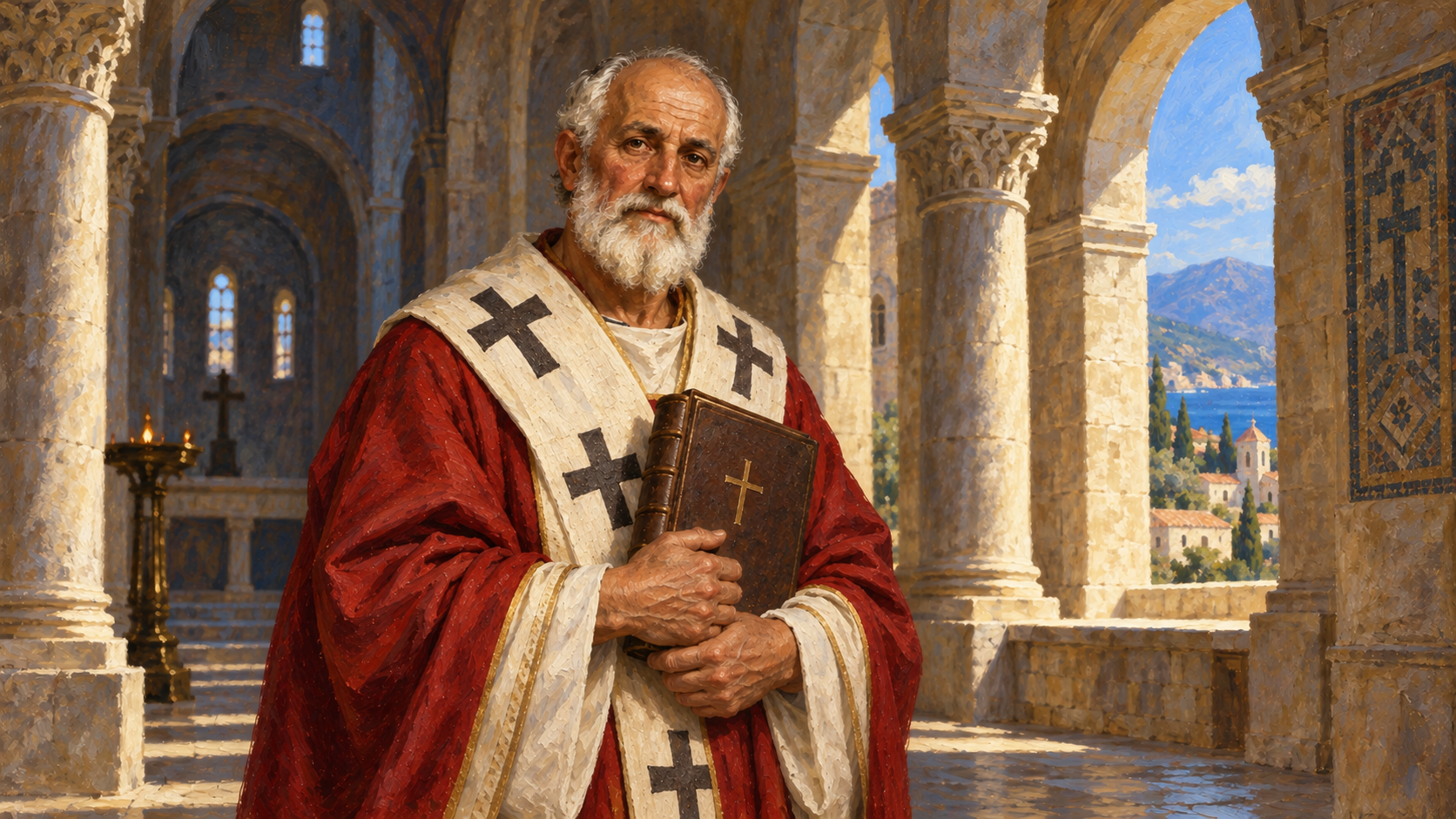
A church can use the right titles and still misunderstand what a pastor is there to do. He may be treated as a chief executive or a weekly speaker, or become a celebrity whose decisions cannot be questioned. As I work through the New Testament passages, I see a different basis for leadership: Jesus owns the church, and every man who leads it answers to Him.
One Office under the Chief Shepherd
The New Testament uses three main words for this office, each helping us understand part of its work. Pastor comes from the word for shepherd, with its emphasis on feeding and caring for God’s flock. Bishop, the traditional English word for overseer, emphasizes the responsibility to watch over that flock. Elder identifies recognized spiritual maturity. These descriptions belong together in one serious office rather than marking three steps in a hierarchy.
A shepherd feeds and leads the flock, but his care does not end there. He seeks sheep that wander and corrects them when needed, standing between them and danger. That picture helps me remember that pastoral work concerns living people, not numbers on a report. A teaching shepherd needs to recognize sound spiritual food and care about what happens to those people after the sermon.
An overseer watches for danger and manages what has been entrusted to him, knowing he will give an account. As an elder, he is also someone the church recognizes for steady spiritual maturity. Age alone does not give a man that standing, and the word sets no arbitrary minimum age. Timothy led while young, but talent and quick popularity cannot replace a proven pattern of maturity that people have observed over time.
We can see those emphases in the Greek words. Poimen means shepherd and gives us the English title pastor, while the related verb poimaino means to shepherd or tend. Episkopos describes the overseer entrusted with that watchful care. Presbyteros describes a recognized elder exercising mature judgment. Understanding the words helps us see why caring for the flock and overseeing it require maturity in the same man.
Acts 20 gives us the clearest scene in which those descriptions come together. Paul stopped near Ephesus and summoned the elders of that local church. Speaking to those same men, he said the Holy Spirit had made them overseers and told them to shepherd the church. He identified the men as elders, named their responsibility as overseers, and described their work as shepherding:
Therefore take heed to yourselves and to all the flock, among which the Holy Spirit has made you overseers, to shepherd the church of God which He purchased with His own blood.
Notice that Paul tells the elders to watch themselves before watching the flock. I cannot see how a man could guard others faithfully while refusing to examine his own doctrine and motives. His private conduct has to come under the Word too, including his appetites and temper, his marriage, and his handling of money. The office does not make him immune to temptation. Hidden sin in that position can injure many people.
Titus 1 makes the same connection. After telling Titus to appoint elders in every city, Paul explains that “a bishop must be blameless.” In 1 Peter 5, Peter addresses elders and tells them to shepherd while exercising oversight. All three passages bring the terms together around the same men and their work. Later traditions may assign different ranks to the titles, but those arrangements cannot determine what the apostles meant.
Paul’s warning in Acts 20 helps me understand why this is more than a question about titles. He believed the Ephesian elders might never see him again, and warned that savage wolves would enter after he left. Men would even arise from among the elders to draw disciples after themselves. The passage that joins these descriptions of the office also shows its need for humility and vigilance. Calling himself a bishop does not make a man a spiritual prince, and choosing pastor does not make him humble. What I want to know is whether he carries out the office as Christ commands.
Some understand a bishop as a higher official over local elders. That arrangement appeared later in church history, so we should not read it back into the apostolic wording. In Acts 20, all three descriptions apply to the Ephesian leaders. Titus moves from elders to “a bishop” without introducing another rank, and Peter tells elders to shepherd with oversight. Read together, the passages explain the office plainly.
To understand that office, we have to begin with Jesus. The Old Testament calls the LORD the Shepherd of His people and condemns shepherds who feed themselves while scattering the flock. In John 10, Jesus identifies Himself as the Good Shepherd. He knows His sheep and lays down His life for them, then takes it up again. He gathers His people into one flock and gives them eternal life.
Jesus is not one shepherd among equals. He is the eternal Son, fully God and fully man. Wicked men made Him suffer physically, yet He willingly bore the punishment for our sins in His innocent body. He shed His blood, died, and was buried. On the third day He rose bodily from the grave. He died for the whole world, and His offer of salvation is genuine. Because He alone is Savior and Mediator, no pastor can forgive sin by his own power, stand between a believer and Christ, or demand the trust that belongs to Christ alone.
Peter’s title for Jesus, the Chief Shepherd, puts every under-shepherd in his proper place. Christ owns the flock, and the truth, gifts, and results belong to Him. A faithful pastor therefore directs people to Christ and the written Word. He must not make his personality or private revelations something they depend on, or let his political instincts and personal brand become their guide.
Shepherd the flock of God which is among you, serving as overseers, not by compulsion but willingly, not for dishonest gain but eagerly; nor as being lords over those entrusted to you, but being examples to the flock;
Peter rejects service driven by compulsion or dishonest gain, and he forbids domination. He calls shepherds to care willingly and eagerly, giving the flock an example to follow. Their authority is real when they teach, correct, and protect, but it serves the truth and the people. Christ has not entrusted His people to a leader so that he can use them for his own comfort or ambition.
Desire, Appointment, and Tested Character
Paul calls the desire to shepherd a desire for a good work, so there is nothing shameful about wanting it. But he immediately turns to qualifications. An inner conviction or impressive testimony cannot establish fitness for the office, nor can a ministry degree or success in business. Even a claim that God spoke privately has to be examined under the qualifications He has already given in writing.
This is a faithful saying: If a man desires the position of a bishop, he desires a good work. A bishop then must be blameless, the husband of one wife, temperate, sober-minded, of good behavior, hospitable, able to teach; not given to wine, not violent, not greedy for money, but gentle, not quarrelsome, not covetous;
I do not want us to skim past the word must, because it governs the whole list. A church may not trade gentleness for eloquence, household faithfulness for attendance growth, or sound doctrine for fundraising skill. It should not appoint a man simply because nobody else volunteers. An empty position is safer than an unqualified overseer.
Acts 14 describes elders being appointed in churches, and Titus was told to appoint qualified men. In 1 Timothy, Paul warns against laying hands on anyone hastily. The Holy Spirit’s work and biblical gifting belong with personal desire and opportunity, but none of them removes the need for tested character. The church recognizes that fitness carefully. A man cannot establish his calling simply by appointing himself.
An interview or a short period of public attention cannot show all of that. The church needs enough shared life to know how a man handles correction and disappointment, including what happens when conflict arises. Can he be trusted with confidential information? His use of money, ordinary service, and conduct at home also need to be known. References and background checks can provide facts, but they do not replace local knowledge of character. Appointment publicly recognizes maturity already tested. It should not be a gamble that the title will produce it later.
A compelling account of a private calling cannot compensate for a missing qualification. We cannot test that private claim as we can examine God’s public standards. A congregation can make the same mistake when it regards a gifted speaker as too useful to question. His gifts may bring him attention, but eligibility depends on tested character. Taking time protects both the candidate and the flock.
A man considering ministry should want the work more than the title, and he can begin serving before anyone recognizes him. Opening his home and caring for people will show more about his love for the flock than a desire for recognition. Careful study of Scripture belongs with receiving correction and learning to govern his appetites. Faithfulness to his family is part of that preparation too. Time spent becoming qualified is not wasted, because God prepares a man through those ordinary responsibilities.
What catches my attention in 1 Timothy 3 and Titus 1 is how ordinary the qualifications are. Paul does not ask for celebrity appeal or advanced degrees. He says nothing about entrepreneurial vision, impressive appearance, or a preferred personality type. He asks for a life whose public and private parts agree. The overseer must be above reproach and self-controlled, showing hospitality, gentleness, and faithfulness. His maturity and reputation need to be proven, and he must be able to teach.
Above reproach cannot mean sinless, or no one could serve. It means that a credible accusation or settled contradiction does not define the man’s life. When he sins, he repents rather than hiding it or retaliating against those who notice. He does not merely manage appearances. The man known by his family and neighbors should be the same man his church and business contacts know.
For a bishop must be blameless, as a steward of God, not self-willed, not quick-tempered, not given to wine, not violent, not greedy for money, but hospitable, a lover of what is good, sober-minded, just, holy, self-controlled, holding fast the faithful word as he has been taught, that he may be able, by sound doctrine, both to exhort and convict those who contradict.
Titus calls an overseer God’s steward because he manages what belongs to Another. A self-willed or quick-tempered man is not qualified, nor is a man who is violent, greedy, or controlled by wine. The elder must love what is good and hold to the faithful Word. That helps me understand how firmness and gentleness belong together. Where a self-willed man treats disagreement as a threat, a gentle man can refute error because he is defending God’s truth rather than his own ego. A quarrelsome man may say something true while leading in a way Scripture rejects.
Those qualifications can be seen outside the church too. An unbelieving neighbor may reject the gospel while still knowing whether a man pays his debts. Workers can see whether he keeps his word and treats them fairly, and people can observe his temper and ordinary honesty. Opposition to the gospel does not disqualify an elder. A bad reputation earned by his own misconduct does.
Paul specifically warns against appointing a new convert. Sincere zeal and striking gifts are not the same as character tested through different seasons of Christian life. Giving authority too quickly can feed pride and bring the man into the devil’s condemnation. Waiting does not deny his future usefulness. It allows the church to distinguish spiritual fruit from charisma or borrowed language, and from enthusiasm that may not last.
Marriage, Household, and the One-Woman Man
Paul also says an overseer must be the husband of one wife. The Greek expression can be understood as a one-woman man, which reaches beyond the question of whether he currently has one legal spouse. It describes sexual and covenant faithfulness. Pornography and flirtation contradict that faithfulness, as do hidden affairs or manipulation of women. Treating marriage vows as disposable fails the requirement too.
The phrase does not require every elder to be married. Scripture never treats singleness as a moral flaw, and Paul’s own ministry prevents that interpretation. A married candidate must show exclusive faithfulness to his wife. An unmarried candidate must still be above reproach in his sexual conduct and relationships.
Divorce requires a careful examination of the man’s circumstances. We need to ask whether there were biblical grounds and who broke the covenant, then consider when it happened in relation to conversion. Real repentance and the conduct of the following years matter, along with his present public reputation. Forgiveness does not erase consequences or remove the credibility required for office. The question is whether the church can honestly recognize him now as above reproach and faithful to one woman.
one who rules his own house well, having his children in submission with all reverence (for if a man does not know how to rule his own house, how will he take care of the church of God?);
Ruling a household well means responsible management and care, not harsh control. A man has not met that qualification by frightening his family into silence. He also fails it when church work consumes every available hour and his family is neglected. Pursuing ministry at the expense of his wife and children contradicts the very qualification he claims to be serving.
Titus speaks of children who are not open to charges of reckless living or rebellion. A father cannot regenerate his child; only God saves, and children make real moral choices for which they become responsible. These passages require credible leadership while children remain under a man’s household authority. They do not make him sovereign over the later faith of every independent adult child. Still, a candidate cannot tolerate continuing chaos, cruelty, neglect, or open rebellion under his care merely because he preaches well.
The wording in Titus is translated by some as “believing children” and by others as “faithful children.” Paul immediately explains his concern by excluding reckless living and insubordination. Whatever conclusion a church reaches on that translation question, it must not imply that a father can produce the new birth. The text examines whether his leadership is credible in the household God has entrusted to him.
The church is looking for patient, ordered leadership, not a family arranged to look perfect. At home, a man’s family sees him tired and frustrated. They know how he apologizes and disciplines, and how he shows affection and makes sacrifices. His conduct there should agree with his public teaching. The household qualification exposes the contradiction when the congregation hears one man and the family lives with another.
Teaching, Male Leadership, and the Work of Shepherding
The ability to teach is another requirement. Ephesians 4 closely connects shepherds and teachers, and both 1 Timothy and Titus require doctrinal ability. Being confident in front of an audience is not enough. A teacher needs to understand a passage’s words and historical setting, including its place within God’s covenants. He must follow the writer’s argument and show how the passage fits with the rest of Scripture.
And He Himself gave some to be apostles, some prophets, some evangelists, and some pastors and teachers, for the equipping of the saints for the work of ministry, for the edifying of the body of Christ,
Christ gives leaders to equip the saints, so the pastor is not meant to do all the ministry while everyone else watches. Through faithful teaching, believers learn to read Scripture and use their gifts to care for one another. They become better able to discern error and share the gospel, growing in stability as they do. A leader who keeps every decision and responsibility to himself may look indispensable, but he can leave the congregation immature.
Titus also explains why an elder needs to defend the faith. Holding to the faithful Word enables him both to encourage people with sound doctrine and to refute what contradicts it. Wolves do not always sound hostile. They may quote verses and use familiar Christian language while flattering people’s desires to gain followers. A pastor needs to recognize attacks on who Christ is, including His deity, true humanity, and complete sinlessness. He must also recognize denials of the saving necessity of His blood and His bodily resurrection. The biblical gospel, the call to holiness, and Scripture’s final authority all require his defense.
That duty does not justify forcing every passage into a favorite controversy. Doing so leaves the passage itself untaught. Nor should a pastor call every secondary disagreement heresy. Scripture distinguishes between confused believers who need patient correction and hardened deceivers who undermine households and recruit followers. Faithful guarding responds to that difference.
I would look for clarity and faithfulness in a man’s teaching, along with attention to context and its fruit in people’s lives. Can he answer a sincere question without intimidation, and is he willing to let Scripture correct him? Does his explanation make Christ and the passage clearer, or make people depend on his private system? The church needs someone who opens the Bible to them. It does not need a performance with Scripture as scenery.
Ephesians 4 helps us judge that fruit. Christ intends teaching to bring His people into unity of faith and knowledge of the Son of God. They should grow in stability as they learn to love one another truthfully and serve together. Accurate notes have not accomplished that purpose if listeners remain easily deceived, unable to serve, or habitually cruel to one another.
In 1 Timothy, the teaching and authority order of chapter 2 comes immediately before the qualifications for overseers in chapter 3. Paul begins by commanding that a woman learn, treating her as a disciple who needs substantial doctrine. He then restricts her from teaching or exercising authority over a man in the gathered church, and explains that order from creation:
Let a woman learn in silence with all submission. And I do not permit a woman to teach or to have authority over a man, but to be in silence. For Adam was formed first, then Eve.
Because Paul appeals to Adam and Eve, the command cannot be reduced to a temporary problem in Ephesus or to an educational shortage that later disappeared. The male language of 1 Timothy 3 and Titus 1 agrees with this order. I therefore conclude that the elder office and authoritative teaching leadership in the local church belong to biblically qualified men.
Galatians 3:28 declares believers’ equal standing in Christ without erasing every distinction in marriage or the church. It does not cancel Paul’s teaching on leadership. The apostle who celebrated unity in salvation also grounded church leadership in creation. We need to hold both truths in what we teach and how we live.
That order does not make women less intelligent or spiritual, nor does it diminish their value or security in Christ. Men and women have equal human dignity. Both are guilty sinners who receive salvation in the same way and share the inheritance found in Christ. Their equal worth does not depend on receiving identical assignments.
Women’s service is vital to the church. They learn doctrine and pray with the body while laboring in gospel work. Hospitality and discipling children belong among their ministries, as do teaching younger women, strengthening missionary work, and offering wise counsel. They serve through the gifts God has given them. Priscilla and Aquila privately explained God’s way more accurately to Apollos. The church should train and honor women in this work as valuable service in its own right.
We should defend Paul’s instruction with the reason he gives, not with contempt for women or claims that they are incapable or naturally less faithful. Men need to hear the responsibility in the passage too. Being male does not entitle someone to the office, and most men are not qualified elders. Biblical order cannot excuse a man’s laziness or cruelty, or his silence when faithful leadership is needed.
I do not want us to miss Paul’s opening command that women learn. He does not treat women as intellectually unimportant or keep them from substantial theology. The church obeys the whole passage when it trains women deeply in Scripture, honors their biblically ordered work, and reserves the elder office for qualified men.
Preaching and teaching the Word remain the pastor’s central public labor. Paul charges Timothy to preach whether people welcome it or not, correcting and encouraging patiently. A motivational talk or partisan speech cannot take Scripture’s place. Neither can therapeutic slogans or speculative prophecy charts, and the pulpit is not a place to replace the Word with accounts designed to display the speaker.
A pastor must also guard the flock. Acts 20 warns about wolves coming from outside and men arising within who distort truth to attract disciples to themselves. That requires teaching truth before error arrives, then answering falsehood and refusing a platform to persistent deceivers. But Paul’s instruction still begins with the elder examining himself. Opposing wolves gives him no excuse for pride.
Equipping others is part of that care because the saints are to do the work of ministry. A congregation cannot mature while remaining a passive audience around one man’s gifts. Believers need to study Scripture and pray, share the gospel and disciple others, and give generously. Their spiritual gifts should be used in mercy and service. I would expect faithful pastoral work to help people become more capable of serving without needing the pastor to intervene constantly.
Caring for souls also brings a pastor beside grieving families and into hospital rooms. He helps believers work through doubts and gives married couples biblical counsel. He seeks wandering members and responds carefully to the confession of sin, with prayer and church discipline as part of his care. In a growing church, no elder can meet every need personally. That is another reason to equip the congregation and share leadership, while remembering that the people being cared for are more than information to manage.
The pastor’s own life must also teach. Paul tells Timothy to model godly speech and conduct, with love, faith, and purity. Eloquence may carry a man’s preaching beyond his actual obedience for a time, but it cannot make hypocrisy harmless. Doctrine needs to govern how he speaks and uses his time, how he apologizes, and what he chooses in private. His financial decisions and conduct at home are included. The truth he teaches must first reach him.
Plurality, Deacons, Money, and Accountability
The repeated use of elders in the plural should shape our expectations for local leadership. Acts 14 speaks of elders in every church, and Acts 20 calls together elders from one city. Philippians addresses bishops and deacons, while James tells the sick to call for the church’s elders. Titus likewise appoints elders in every city. The pattern recurs across these passages.
Sharing the office does not require every elder to do identical work. In 1 Timothy 5, some labor especially in word and doctrine. A church may have a lead teaching pastor and men who serve vocationally alongside elders employed elsewhere. They may carry different workloads and be known more or less publicly. Those differences do not make one the owner and the rest ceremonial advisers.
Shared leadership gives important decisions room to be examined and allows others to identify blind spots or review finances. An accusation can be addressed without the accused man judging his own case. The pastor also has people who can correct and care for him, and help him rest. A whole group can become compromised, so plurality is no guarantee against failure. Still, meaningful accountability is far safer for leaders and the flock than power centered on one personality.
Churches differ in how congregational participation and elder decisions work together. We do not have to resolve every detail to recognize the controls Scripture gives. Qualified elders must lead, while the congregation has its own responsibilities to discern truth and obey Scripture. Deacons have a distinct role, and church discipline must follow Christ’s commands. Whatever the arrangement, it remains under the written Word.
Scripture sets no fixed number of elders for every congregation. A small or newly planted church may need time to develop several qualified men, with outside accountability where possible while it does so. Appointing unqualified men to reach a preferred number would defeat the purpose. The biblical pattern directs us toward shared oversight developed patiently.
I would not assume a board provides accountability simply because it has that title. If one leader sets his own pay and approves his own expenses, he is not being held accountable. Accountability is also absent when he silences questions or appoints only personally loyal men. An accused leader cannot be allowed to direct the investigation of his own conduct. Those responsible must be able to disagree with him, examine records independently, and act without needing his permission.
In 1 Timothy 3, Paul treats elders and deacons as distinct offices. Both require tested character and trustworthiness, but only the elder list requires the ability to teach. Elders care for the flock through teaching and oversight, including guarding doctrine. Deacons are recognized servants entrusted with needs that help maintain practical care and unity in the church.
Although Acts 6 does not use the title deacon, it shows an important pattern of service. A dispute over the daily care of widows threatened unity and could have drawn the apostles away from prayer and the ministry of the Word. The church recognized seven men to oversee that need. They were qualified men of good reputation, full of the Holy Spirit and wisdom.
Practical service is spiritual work too. Caring for people involves resources and private burdens, and sometimes conflict. The deacon’s office has its own dignity and qualifications. Deacons are neither an unqualified board controlling the elders nor junior pastors waiting to be promoted. The related study, Deacons in the New Testament, examines Acts 6 and 1 Timothy 3:8-13 more closely.
I want to keep those offices distinct without making either seem unimportant. Teaching does not release elders from concern for suffering people. Practical service does not authorize deacons to take on the elder’s teaching and oversight without meeting his qualifications. When both serve faithfully, they help the whole body meet real needs while remaining devoted to prayer and Scripture.
Scripture permits pastors to receive compensation. Elders who lead well, especially those laboring in word and doctrine, may receive double honor, and “the laborer is worthy of his wages.” In 1 Corinthians 9, Paul also defends material support for gospel work. Pay can give a pastor substantial time for study and prayer as well as teaching and counseling. Administration and care during crises take time too. An elder who also has other employment can serve faithfully, however. Receiving a paycheck creates no higher spiritual rank.
The qualifications also repeatedly forbid greed and dishonest gain. A pastor must not pressure vulnerable people to give, and he must not conceal financial arrangements. The offerings do not belong to him personally. Preaching prosperity to enrich himself is wrong, as is letting wealthy donors determine doctrine. Financial openness protects the congregation and the honest pastor serving it.
For financial oversight to mean anything, the man receiving compensation cannot control his own pay and reimbursements or control an investigation of his own financial conduct. A church needs honest processes and documented decisions that avoid favoritism. It should provide fairly without creating celebrity luxury. That also allows a pastor to teach about money without people wondering whether each application is designed to increase his income.
A desire for money is not the only form greed takes. A man can crave a larger following or the influence and access it brings. He may want applause so much that he uses the flock to feel important, even while refusing a large salary. Recognizing and living by our responsibility as stewards is the remedy for those motives. Christ owns the church, and faithfulness to Him matters more than growing a platform.
Authority, Accusations, Discipline, and the Church’s Response
Hebrews calls believers to obey leaders who watch over souls and must give an account. The surrounding chapter remembers leaders who spoke God’s Word and points to Jesus Christ, who remains the same forever. Their authority rests in faithful teaching and accountable care, not personal supremacy. A congregation should receive teaching that respects Scripture’s context and cooperate with biblical direction. Qualified elders need room to lead, and chronic resistance or gossip can make their honest work miserable.
Obey those who rule over you, and be submissive, for they watch out for your souls, as those who must give account. Let them do so with joy and not with grief, for that would be unprofitable for you.
That command does not give elders absolute authority. They cannot rewrite Scripture or tell someone to sin. Nor can they control lawful personal choices, demand access to every private decision, or bind a conscience where God has not spoken. Since Christians obey God above men, honest questions must not be punished. An elder serves under Christ’s authority by teaching and applying His Word. He does not create authority of his own.
When a leader says submission rules out every question, he turns authority received from Christ into personal dominion. Hebrews says he will give an account, not that no one may examine him. We should obey a pastor who leads faithfully through Scripture, but he cannot add commands God never gave. If his direction contradicts God’s Word, our obedience belongs to God.
A church can become abusive when loyalty to the leader is treated as loyalty to Christ. Questions are then labeled rebellion, and leaving one congregation is presented as abandoning God. People harmed by misconduct may be pressured to protect the ministry’s reputation, while reports of financial or sexual wrongdoing are dismissed as enemy attacks. Those practices contradict the Chief Shepherd. Peter’s command against lording over the flock directly rules them out.
Healthy leaders welcome people opening their Bibles to examine what they teach. They can explain decisions and admit mistakes, submitting to fellow elders and distinguishing doctrine from judgment calls. They do not demand every confidential detail of someone’s life or use information from counseling to gain control. They want believers to mature with their faith resting in Christ.
Accusations also require care. Reckless accusations against a public leader can ruin a faithful man and harm his family and church. In 1 Timothy 5, Paul requires witnesses before an accusation against an elder is formally received. I understand that as a rule of evidence, not a reason to silence the first report of wrongdoing. That report needs to be heard carefully and investigated in a way that can establish corroboration:
Do not receive an accusation against an elder except from two or three witnesses. Those who are sinning rebuke in the presence of all, that the rest also may fear.
Paul’s next sentence makes clear that the witness requirement cannot be used to conceal sin. Elders who continue in established sin are to be rebuked publicly, and the process must be free of prejudice or partiality. The office is protected from unsupported slander without being shielded from accountability. When guilt is established, public leadership carries stricter public accountability.
Hearing a first report may lead to witnesses and records that establish what happened. Messages or financial documents can help, as can medical evidence. People who have never compared their experiences may independently reveal a pattern. Receiving a report to investigate it is different from accepting an accusation as proven. If the church refuses to hear the first person, it makes corroboration impossible and reverses the passage’s protective purpose.
The requirement does not mean two people must have witnessed the same private act. Scripture does not set that impossible standard. Independent reports can confirm a pattern, and documents can support testimony. A careful investigation neither decides guilt from rumor nor treats the absence of two eyewitnesses as proof of innocence. Its purpose is to seek the truth patiently.
Criminal conduct cannot be reduced to an internal church misunderstanding. Protecting vulnerable people and following applicable reporting laws are part of doing what is right. A church process does not replace civil authority. Leaders must not investigate themselves, intimidate witnesses, destroy records, or arrange a quiet move that sends danger into another congregation.
Repentance and forgiveness remain central to the gospel, and a fallen leader can be restored to Christian fellowship as he confesses and receives care. Restoration to office asks a different question. The church is not required to restore authority when his conduct has destroyed the above-reproach standing, trust, or safety the office requires. Grace does not set those qualifications aside.
A repentant man can be loved as a brother without becoming a pastor again. Forgiving him does not mean pretending the consequences have disappeared. The qualifications that governed his appointment still apply. Restoring fellowship recognizes him as a repentant believer, while restoring office requires him to have the tested credibility now to watch over souls. Keeping those questions distinct does not deny grace.
Some failures can be corrected without permanent removal, while other sins reveal or create disqualification. The church needs to examine both the sin and its pattern, including the harm to victims and any attempt at concealment. The man’s response to correction and his public reputation also bear on the decision. We should seek the truth and protect people while recognizing genuine repentance and honoring Christ. Revenge and protection of an institution’s image are not the purpose.
The congregation has duties toward its elders too. We should pray for our pastors and listen with open Bibles, encouraging faithfulness that may go unnoticed. Appropriate support includes respecting their family time and need for rest. Refusing gossip helps protect their work as well. They should be free to preach honestly without having to please people who punish every uncomfortable passage.
Members need to know those qualifications themselves. Wealth and business success cannot establish fitness, nor can charisma or a famous family. Social-media reach and promises of quick growth are no substitute either. However gifted a candidate is, he remains unqualified if he is quarrelsome or greedy, sexually compromised, unstable in doctrine, or untested.
Submission includes receiving biblical correction, but it does not require silence about established wrongdoing. Members may ask how finances are reviewed and how elders answer for their conduct. They may also ask how reports are investigated and whether vulnerable people are actually protected. Those questions are not automatically rebellion. Wise leaders recognize that trustworthy arrangements serve everyone.
We should not approach a pastor as though we have hired him to meet every preference. He cannot attend every event or answer every message immediately, and he should not have to carry ministries the body refuses to do. Ephesians 4 calls the saints to serve. As members, we help by doing that work, reconciling quickly, carrying each other’s burdens, and growing in the Word.
We must keep the gospel clear through all of this. Loyalty to a pastor does not save anyone, and leaving a congregation does not erase salvation. A true believer is a new creation, indwelt and sealed by the Holy Spirit, and eternally secure because of Christ’s finished work. That security does not excuse lawlessness or contempt for the church. It frees the believer to serve Christ from acceptance instead of trying to earn acceptance through institutional loyalty.
The New Testament’s descriptions of pastor or shepherd, bishop or overseer, and elder bring us back to one local-church office. Christ appoints qualified men to feed and protect His flock, equip believers for ministry, and lead under the written Word. Their lives must be above reproach, including faithfulness in marriage and at home. Self-control and hospitality belong with gentleness, proven maturity, and a good reputation. They must be able to teach sound doctrine and serve willingly under accountability. None of those responsibilities makes them owners or lords over Christ’s people.
A title cannot qualify a man whose life fails those requirements, and an appeal to calling cannot overrule Scripture. A successful platform cannot cleanse greed or sexual sin. It cannot excuse cruelty or false doctrine or conceal neglect at home. We should be equally careful not to judge a faithful man by celebrity standards the Bible never sets. The church should take time to recognize qualified men and then support them faithfully. Accusations need just investigation and established sin needs discipline without favoritism, with Jesus alone honored as Savior and Chief Shepherd.
I believe the pastoral office is so demanding because the church is so precious to Christ. Acts 20 says God purchased it with His own blood. Jesus physically suffered, shed His blood, died, and rose bodily to save sinners. People gathered by that gospel must never become tools for a human leader’s ambition. If we want to study the One every pastor serves, the related study on Jesus as the Good Shepherd follows that truth through Scripture.
We should seek men who reverence the Word and love the work of shepherding. They need to welcome accountability and handle conflict gently, protecting the weak and teaching Scripture clearly. The character their families know should agree with what the congregation sees. If a man desires the office, he should let Christ form that life before asking the church to recognize him. An elder already serving has the responsibility to watch himself and the flock now.
Members help make faithful shepherding joyful when they pray and speak truthfully. Serving with a teachable spirit and giving appropriate honor also strengthen good leaders. We protect the flock by testing doctrine against Scripture and refusing personality worship. We must also report wrongdoing responsibly. Leaders and members alike live under the written Word and will answer to Christ. For a fuller examination of the male-office question, see Can Women Be Pastors?, which also preserves the equal worth and vital service of women.
My Final Thoughts
My confidence is not that a church will find flawless under-shepherds. It is that the flawless Chief Shepherd has not abandoned His flock. Jesus knows His sheep, gave His life for them, rose again, and keeps everyone who belongs to Him. He remains the sure hope of faithful leaders and wounded church members alike. One day He will appear, and every faithful pastor will gladly point beyond himself to Christ.