
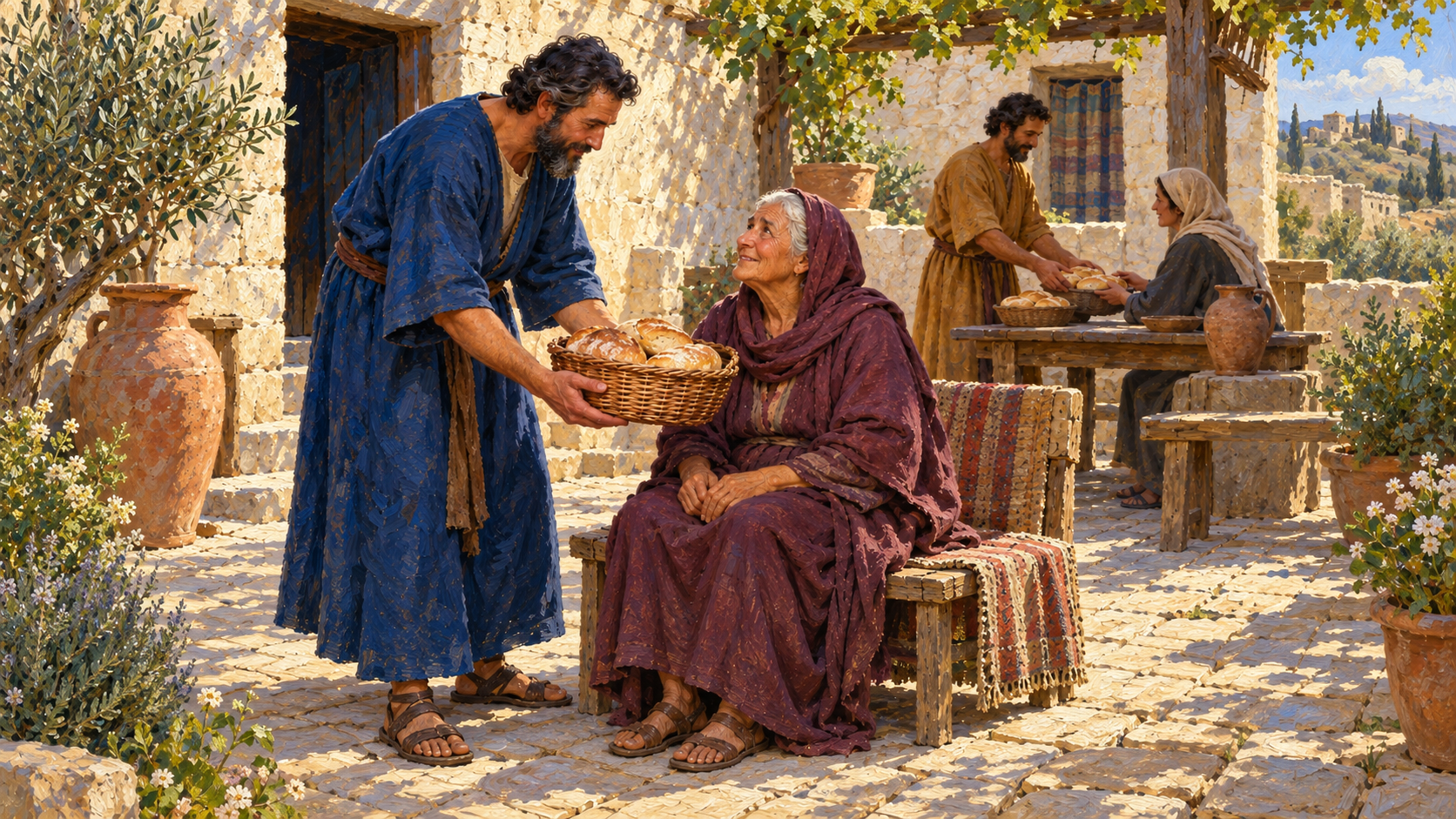
What does the New Testament actually expect from a deacon? The office is often reduced to tasks or treated as a lower level of leadership, but Paul begins with character and proven faithfulness. I want to understand why those qualities are so central to the work. Christ’s own service gives us the starting point, followed by the church’s example in Acts 6 and Paul’s instructions in 1 Timothy 2-3.
Christ Defines Servant Leadership
Before considering any church office, we need to hear how Jesus defined greatness. In Mark 10, the disciples were arguing about prominence because they were measuring importance the way the world does. Jesus taught them that leadership meant serving others, then pointed to His own mission.
For even the Son of Man did not come to be served, but to serve, and to give His life a ransom for many.
In Mark 10:45, Jesus explained why He came and showed what His leadership looks like. I do not want to hear only a familiar lesson about humility and miss His authority. The title Son of Man does not deny that authority. Jesus deliberately gave Himself for the good of others, showing how He chose to exercise it. Servant leadership does not require giving up conviction or clear direction.
When Jesus said He came to give His life, He joined service to sacrifice. A ransom is the price paid to release someone from bondage, and here it points to the cross where Christ died in the place of sinners. No act of church service can atone for anyone. Only Jesus saves, and we receive salvation by grace through faith in Him. Following His example means being willing to give our time and accept inconvenience because another person’s good matters more than being noticed.
That willingness should be behind the qualifications in 1 Timothy 3. A deacon takes responsibility for needs that may be complicated and messy instead of using the position to gain influence. His work brings him close to private burdens and conflict, and he may be entrusted with church money or other resources. I need to consider the motive for that kind of service. A man who mainly wants to be seen will eventually begin to use people, while a man seeking to reflect Christ will pursue their good even when the work is difficult.
Mark 10 also rules out leadership that dominates people or insists on control and personal rights. Jesus led with truth and love without weakening holiness, and His service had the clear purpose of accomplishing redemption. Deacons need clarity about the purpose of their work too. They are supporting the health of the church so it can remain devoted to prayer and the Word and live in obedience. Keeping that purpose in view helps distinguish useful service from aimless busyness.
That changes where I begin when thinking about deacons. Before drawing up a task list or an organizational chart, I need to consider Christ and what service under His authority looks like. A deacon takes up real burdens in a way that points people to the Lord while protecting the church’s unity and witness. The title should describe that service.
I do not think the office should be treated as a lesser job for men who are not elders. A deacon has different responsibilities from an elder, but the trust is substantial because his work reaches people in vulnerable moments.
Acts 6 Gives a Pattern of Recognized Service
Acts 6:1-6 gives the earliest clear pattern of the church recognizing qualified men to handle an important practical need. As the number of disciples grew, a complaint arose between Hebrew and Hellenist believers because some widows were being neglected in the daily distribution. I do not want to reduce that to a scheduling problem. Vulnerable people needed care, and the fairness of the church’s response would show whether its love could be trusted.
Now in those days, when the number of the disciples was multiplying, there arose a complaint against the Hebrews by the Hellenists, because their widows were neglected in the daily distribution. Then the twelve summoned the multitude of the disciples and said, It is not desirable that we should leave the word of God and serve tables.
The apostles were not saying that serving tables was unspiritual. They were saying they should not leave the Word of God to do it. Both ministries were necessary, but the same servants were not called to carry every responsibility. The church needed to protect prayer and the ministry of the Word while entrusting practical needs to people who would handle them with wisdom and integrity.
I can see how easily urgent needs could pull pastors into constant crisis management until little room remained for the Word. Growing churches face that pressure. Acts 6 shows them a way to meet those needs through trusted servants while staying faithful to their central mission.
Therefore, brethren, seek out from among you seven men of good reputation, full of the Holy Spirit and wisdom, whom we may appoint over this business; but we will give ourselves continually to prayer and to the ministry of the word.
The apostles required spiritual and moral maturity even for men handling a distribution. That is a detail I do not want to overlook. These men needed a good reputation and lives that showed the Holy Spirit’s work. They also needed wisdom to judge complaints carefully, especially when people were already hurting and needed patient care. Managing resources honestly required godly character too. Scripture does not separate those qualities from practical service.
The congregation helped identify qualified men, and the apostles appointed them. These men were entrusted with service rather than seizing a position for themselves. When they were brought before the apostles, the apostles prayed and laid hands on them. That public affirmation also made their responsibility clear. Everyone knew who was serving, and the men knew they were accountable for the work.
Acts 6 does not use the title deacon for these seven men, so I would be careful not to give them a title the text does not use. Still, I see the pattern behind the office in what happened. Qualified men were officially recognized to meet a practical need. Their work made the church’s care concrete and protected its unity while keeping the Word from being neglected.
Paul Requires Proven Character and Sound Faith
Paul addresses deacons directly in 1 Timothy 3:8-10. Their work brings them near people’s needs and sensitive situations, so the church must be able to trust them. The word likewise connects their qualifications with Paul’s concern about elders. In either role, capability alone is not enough for public service; the man must be morally qualified.
Likewise deacons must be reverent, not double-tongued, not given to much wine, not greedy for money, holding the mystery of the faith with a pure conscience.
A reverent man treats holy things with dignity and seriousness, so ministry cannot be a casual hobby to him. Paul also requires speech people can trust. A deacon must not tell one group one thing and another group something different simply to manage their reactions. That would be double-tongued speech. When a man communicates decisions or helps resolve problems, manipulating people through his words can quickly inflame tension in the church.
Paul’s warning about much wine concerns a man being mastered by an appetite. That makes him unreliable when others are grieving or under stress. Greed threatens that trust as well, especially when a deacon handles help for people in need or works with church budgets. Care for facilities and purchasing can also place resources in his hands. If his relationship with money is compromised, vulnerable people can be harmed and the church’s witness damaged.
A deacon must also hold the mystery of the faith with a pure conscience. Here mystery means the Gospel truth God once kept hidden but has now revealed in Christ. I understand Paul to be asking whether the man’s life agrees with the doctrine he holds. He must remain firm in sound teaching without a conscience accusing him of hypocrisy. That does not require sinless perfection, but an honest life before God that includes quick repentance. Service detached from truth soon becomes people-pleasing, whereas service grounded in the faith remains steady under pressure.
But let these also first be tested; then let them serve as deacons, being found blameless.
Testing a deacon means observing his life over time. Talent or success should not make us hurry a man into recognized service, and neither should eagerness or availability. I see care for both the flock and the man in this requirement. The church is protected from avoidable harm, and he is protected from responsibility he is not yet ready to carry.
Being blameless does not mean a man has no past or has never sinned. It means there is no ongoing, supportable charge against his life, and his ordinary conduct has established a credible pattern. Before giving him a role, the church should watch how he speaks and handles money. His response to appetites should be visible, along with his faithfulness to the Gospel. Once that pattern is established, his service supports the church instead of becoming a distraction.
Home Life Supports Public Credibility
In 1 Timothy 3:11-13, Paul turns to the home and a man’s closest relationships. A deacon may not preach every week, but people see his service and trust him with real needs. His private life cannot be kept separate from that trust. Disorder at home or careless speech will eventually affect the church. Paul is not asking for a perfect household; he is looking for credibility proven where life is most personal.
Likewise their wives must be reverent, not slanderers, temperate, faithful in all things.
I believe their wives refers to deacons’ wives here, because Paul returns to the male deacon in the next verse. That immediate flow strongly supports this reading. Some understand the phrase as referring to women servants in a similar role, and we should represent their view carefully because Scripture does not explicitly settle every detail. What is clear either way is that the character of people closely connected with recognized service affects the church’s health.
These women must treat holy things reverently and be careful with what they say. Ministry families often hear sensitive information, and slander can turn a private need into public talk and destroy trust. Paul also calls for temperance: a clear-minded steadiness rather than a response driven by every mood. Faithfulness in all things includes being dependable in ordinary duties even when no one applauds them.
Let deacons be the husbands of one wife, ruling their children and their own houses well.
The husband of one wife is a man whose marriage shows faithfulness and moral integrity. I would look for a man who keeps his commitment rather than one who knows how to impress people. The same care belongs in his leadership of his children and household. Ruling well means steady leadership and consistent care for those closest to him, not harsh control or neglect.
Church service puts pressure on a man’s time and emotions. If he cannot remain faithful in the care of those closest to him, he is not ready for broader trust. His home does not need to be staged for public approval. It does need to support the character the church sees rather than contradict it.
For those who have served well as deacons obtain for themselves a good standing and great boldness in the faith which is in Christ Jesus.
Faithful service earns the reputation of trust Paul calls good standing. It also gives a believer confidence to live and speak without shame because his conduct agrees with his message. That is the great boldness described here. I would not confuse these results of tested character with earning salvation through service. A man who wants to serve publicly should begin with private faithfulness and allow the church to see it over time.
Self-Control and the Difference Between Elders and Deacons
Elders and deacons have distinct responsibilities, although their qualifications overlap. An elder must teach and oversee the church. A deacon serves in a recognized role that supports the ministry and helps protect unity. Both need moral steadiness because both affect the health of the body.
A bishop then must be blameless, the husband of one wife, temperate, sober-minded, of good behavior, hospitable, able to teach; not given to wine, not violent, not greedy for money, but gentle, not quarrelsome, not covetous.
Temperate and sober-minded describe a man who is clear-headed and watchful. Paul is requiring sound judgment others can depend on, not selecting a personality type. His instruction that an elder must not be given to wine describes someone who does not linger beside it or become known for attachment to it. Drunkenness is condemned elsewhere, but I notice the concern here also reaches the man’s reputation and freedom from control by wine. People need to be able to depend on his judgment.
Paul moves from wine to the requirement that an elder be gentle rather than violent and not be quarrelsome. That helps me see how broadly self-control applies when a man is under pressure. It concerns anger and the urge to win as well as substances, and it affects how he uses power. Correct doctrine does not excuse harsh or reactive behavior that disqualifies a man from leadership. The church needs gentle strength, with authority used to serve and correct while protecting the flock.
The instructions about money raise the same question for me: what controls this man? An elder cannot be driven by financial gain or comparison with others, and financial pressure quickly exposes character. The church should never be left wondering whether his decision serves the flock or his own advantage.
Teaching belongs especially to the elder’s office, but deacons also need freedom from controlling appetites. For either office, we should ask whether a man remains clear-minded under stress and responds gently. His restraint should be visible in his relationship with alcohol and in the way he handles emotions and money. We are looking for a credible life shaped by repentance and discipline, not flawless men. Such leadership helps the church receive correction and care under the Word.
Authority and Roles in the Gathered Church
Paul’s instructions about deacons sit beside his teaching on learning and authority in the church. In 1 Timothy 2:11-14, he addresses believers gathered for prayer and instruction. I notice that he directly says a woman should learn God’s Word. He is not minimizing women or questioning their worth and ability. He is explaining the boundaries God gives for authoritative teaching and governing in the church.
Let a woman learn in silence with all submission. And I do not permit a woman to teach or to have authority over a man, but to be in silence.
“Let a woman learn” assumes women should receive doctrine and grow as disciples, which was significant in that cultural setting. The command also restricts a woman from teaching or exercising authority over a man in the gathered assembly. I understand silence here as a quiet and orderly posture, rather than absolute muteness in every setting, since the same letter recognizes proper speech in the church. Submission likewise means willingly accepting the order God assigns to church leadership. It does not imply personal inferiority.
For Adam was formed first, then Eve. And Adam was not deceived, but the woman being deceived, fell into transgression.
Paul bases his instruction on Genesis, appealing first to creation order and then to the fall. That is why I understand his reason to rest on Genesis rather than a local custom or a temporary problem in one city. His argument does not rest on education or social status either. We still need to stay within what he wrote: he is explaining the pattern for the church’s teaching authority, not saying women are more sinful or less capable.
This connects directly with the elders described in the next chapter. Elders must be able to teach and are responsible to oversee the church. The office is described in male terms, which agrees with Paul’s restriction concerning authority in the gathered church.
If a man desires the position of a bishop, he desires a good work. A bishop then must be blameless, the husband of one wife, temperate, sober-minded, of good behavior, hospitable, able to teach.
Scripture therefore determines these offices rather than our preferences. Qualified men serve as elders who teach and oversee, while qualified men serve as deacons whose recognized work supports ministry and protects unity. Women also served meaningfully in the New Testament through discipleship and hospitality. They prayed and labored in the Gospel without occupying the elder role.
Churches should appoint biblically qualified men as elders and guard the pulpit and elder authority accordingly. We also need to act on Paul’s instruction that women learn by providing strong Bible teaching for everyone. Women should be trained to handle Scripture carefully and encouraged in the many ministries through which they can build up the body without entering the elder office.
My Final Thoughts
I believe a man considering service as a deacon should begin by examining his character before asking which tasks he will take on. His speech and self-control need to remain steady over time, and his treatment of people and handling of money must support the church’s trust. He should welcome honest evaluation from pastors and other mature believers, even if it means waiting to serve publicly. Those of us in the church should honor faithful deacons rather than direct our frustrations at them. We can support them by speaking truthfully and resolving conflict quickly, and we should be ready to work beside them when practical needs arise. Christ values that dependable service whether anyone notices it or not, because it protects unity and helps the church stay focused on prayer and the Word.