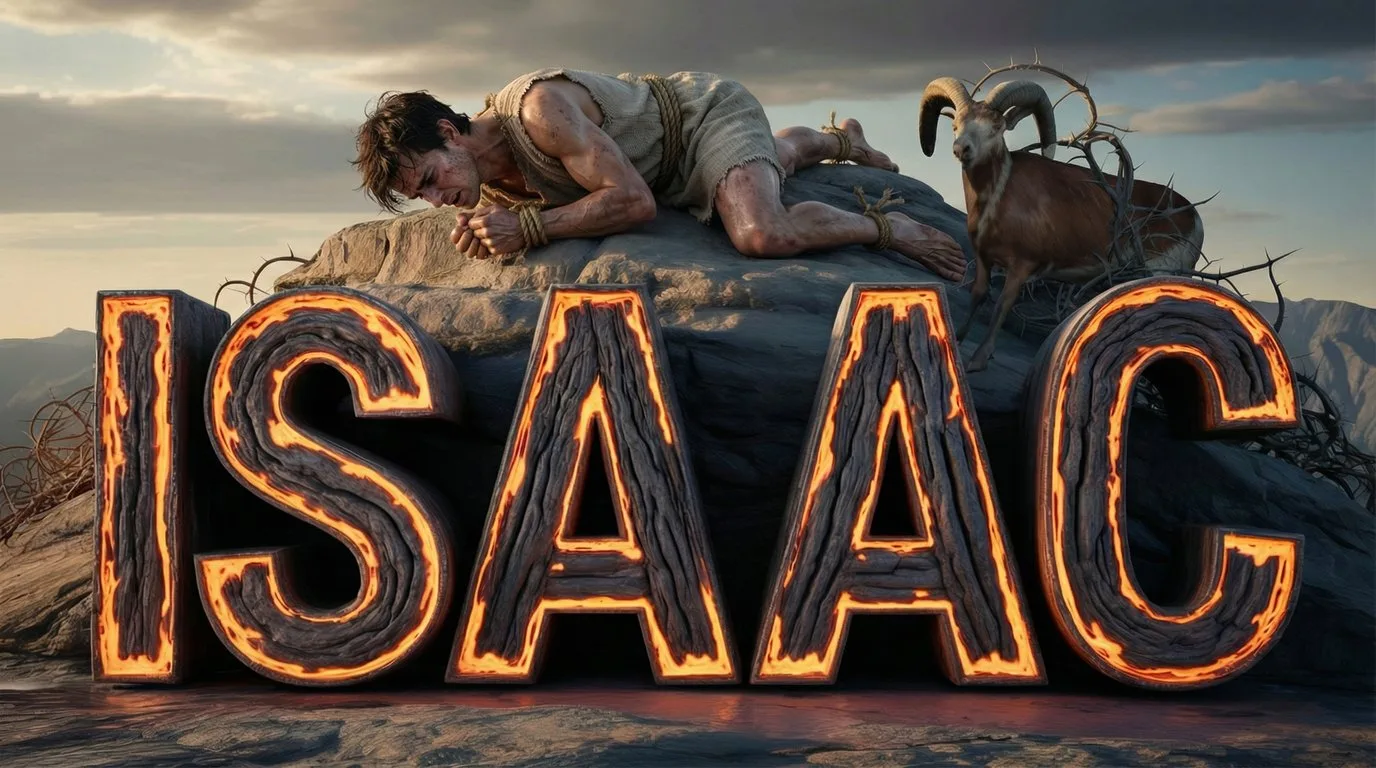

Isaac’s life can seem quieter than the lives of Abraham and Jacob, yet Scripture treats him as essential to the unfolding covenant God made with Abraham. Isaac is not a footnote. He is the promised son through whom God confirmed His word, preserved the covenant line, and prepared the way for the coming Messiah.
In this study we will walk through the main passages about Isaac in Genesis, paying attention to what the text actually says, why certain events mattered in their historical setting, and how the New Testament later interprets Isaac’s place in redemptive history. Along the way we will draw practical lessons about faith, prayer, obedience, family leadership, and trusting God’s promises when circumstances are complex.
Isaac in God’s Covenant Plan
Isaac enters the Bible’s record not merely as Abraham’s son, but as the child specifically named and chosen by God to carry forward the covenant promises. Abraham had other sons, and Isaac himself would have two sons. Yet God’s promise would be traced through a particular line, not because of human merit, but because God had spoken and committed Himself to His word.
From early in Genesis, God promised Abraham a great nation and worldwide blessing. That promise did not float in the abstract. It would come through a real family line, through a child born according to God’s timing, and through descendants God would multiply. Isaac is where the promise becomes visibly anchored to the next generation. If we miss that, we will misread Isaac as a passive character rather than a patriarch who embodies God’s faithfulness.
“Then God said: ‘No, Sarah your wife shall bear you a son, and you shall call his name Isaac; I will establish My covenant with him for an everlasting covenant, and with his descendants after him.’” (Genesis 17:19)
Notice the clarity: God names the mother, names the child, and states the covenant will be established with him. This is not simply a prediction. It is a divine commitment. Isaac’s life therefore is a testimony that God keeps promises that look impossible to human eyes.
Later Scripture confirms this covenant line. God repeatedly identifies Himself as “the God of Abraham, the God of Isaac, and the God of Jacob” (a phrase echoed across both Testaments). Isaac stands in the middle of that chain, bridging the original promise given to Abraham and the expansion of that promise through Jacob and the twelve tribes.
The Promise and the Miraculous Birth
The account of Isaac’s birth is inseparable from the problem it solves: Abraham and Sarah were beyond natural childbearing years. God allowed time to pass, not to tease them, but to demonstrate that the promised son would come by divine power, not human planning. Earlier, Abraham and Sarah attempted to “help” the promise along through Hagar, and the resulting family pain showed that human shortcuts do not produce covenant outcomes.
When God finally brought Isaac, it was unmistakably His doing. The timing mattered. The circumstances mattered. The age of Abraham and Sarah mattered. God was teaching them, and everyone who would later read Genesis, that His promises do not depend on our natural strength.
“And the LORD visited Sarah as He had said, and the LORD did for Sarah as He had spoken. For Sarah conceived and bore Abraham a son in his old age, at the set time of which God had spoken to him. And Abraham called the name of his son who was born to him, whom Sarah bore to him, Isaac.” (Genesis 21:1-3)
The repeated phrases “as He had said” and “as He had spoken” underline the point: God’s word is reliable. Isaac is a living “Amen” to God’s promise.
His name also teaches. “Isaac” means “he laughs.” Sarah’s initial laughter had mixed emotions, including disbelief, but God turned that laughter into joyful fulfillment. The Lord does not merely correct unbelief. He often transforms it into worship through the experience of His faithfulness.
There is also an important spiritual principle here. Isaac’s birth came by promise, not by fleshly striving. The New Testament later uses Isaac as a picture of those who are connected to God by His promise rather than merely by natural descent. That does not erase Israel’s history; instead, it highlights that God’s saving work is always rooted in His gracious initiative.
The Binding on Mount Moriah
One of the most weighty moments in Genesis is the binding of Isaac, often called the Akedah (from a Hebrew word meaning “binding”). The focus of Genesis 22 is primarily on Abraham’s test, yet Isaac is not incidental. He is the son of promise placed on the altar, and his presence there presses a question into the heart of the reader: How can God’s promise continue if the promised son is offered up?
The tension is intentional. God had said the covenant would be established with Isaac. Now God commands Abraham to offer Isaac as a burnt offering. The test forces Abraham to trust that God can be trusted even when God’s command seems to press against God’s promise. Faith is not pretending contradictions do not exist. Faith is obeying while trusting God to remain true to His word.
“Then He said, ‘Take now your son, your only son Isaac, whom you love, and go to the land of Moriah, and offer him there as a burnt offering on one of the mountains of which I shall tell you.’” (Genesis 22:2)
The language is piercing: “your only son Isaac, whom you love.” Isaac is not only biologically precious; he is covenantally precious. God’s test touches the deepest place of Abraham’s affections and future hopes.
Isaac’s role also deserves careful attention. Genesis says Isaac carried the wood, while Abraham carried the fire and the knife. Isaac asked the haunting question: “Look, the fire and the wood, but where is the lamb for a burnt offering?” Abraham replied, “My son, God will provide for Himself the lamb for a burnt offering” (Genesis 22:7-8). This exchange does not suggest Isaac was ignorant of sacrifice. It suggests Isaac was processing what obedience would mean.
When they reached the place, Isaac was bound. Considering Abraham’s age at this point, Isaac was likely strong enough to resist if he chose. The text does not describe a struggle. That silence is meaningful. Isaac’s submission, whether fully informed or increasingly aware, mirrors a posture of trust. The account does not present Isaac as a victim of random violence, but as part of a holy moment in which faith and obedience are being displayed across generations.
“And He said, ‘Do not lay your hand on the lad, or do anything to him; for now I know that you fear God, since you have not withheld your son, your only son, from Me.’ Then Abraham lifted his eyes and looked, and there behind him was a ram caught in a thicket by its horns. So Abraham went and took the ram, and offered it up for a burnt offering instead of his son.” (Genesis 22:12-13)
Substitution is at the center: “instead of his son.” The ram dies so Isaac lives. This becomes a foundational picture of substitutionary sacrifice throughout Scripture. While we must avoid forcing every detail into an allegory, Genesis 22 clearly foreshadows the later truth that God Himself would provide the sacrifice that sinners need. Abraham’s words, “God will provide,” land with lasting meaning.
Abraham named the place “The-LORD-Will-Provide” (Genesis 22:14). The Hebrew behind that phrase, Yahweh-yireh, carries the sense of the Lord seeing and providing. God sees the need and provides what is necessary. For Isaac, this event would have marked him for life. The God of his father is the God who provides, and whose promises are not threatened by tests.
A Wife Provided for Isaac
Genesis 24 gives a lengthy account of how Isaac received Rebekah as his wife. The length itself tells us it matters. Marriages in Genesis are not merely private romances; they are covenantal turning points. Abraham was concerned that Isaac not marry from the Canaanites around them. This was not ethnic pride but spiritual protection. The surrounding peoples were saturated in idolatry, and intermarriage could draw the covenant family into worship that contradicted the Lord.
Abraham sent his servant back toward his own relatives to find a wife for Isaac. The servant’s approach is instructive: he prays specifically for guidance, then watches for God’s answer in the form of character and willing service. Scripture does not present this as manipulating God with a gimmicky test, but as an earnest request for providential clarity in an important mission.
“Then he said, ‘O LORD God of my master Abraham, please give me success this day, and show kindness to my master Abraham. Behold, here I stand by the well of water, and the daughters of the men of the city are coming out to draw water.’” (Genesis 24:12-13)
The servant’s prayer continues with a request for a specific sign involving hospitality, and Rebekah’s response shows uncommon generosity. She not only offers water to the servant, but also draws water for the camels, which would have been physically demanding. Her actions reveal a heart that serves, and they also show her willingness to step into the unknown with faith.
When Isaac finally meets Rebekah, the text is simple and beautiful. Isaac receives her, and love is mentioned explicitly. In a Bible that is often blunt about human weakness, it is striking to see Scripture state plainly that Isaac loved his wife.
“Then Isaac brought her into his mother Sarah’s tent; and he took Rebekah and she became his wife, and he loved her. So Isaac was comforted after his mother’s death.” (Genesis 24:67)
Isaac’s comfort after Sarah’s death matters. It reminds us that even the patriarchs grieved deeply. Faith does not eliminate sorrow; it gives sorrow a place to heal under God’s care.
There is also a covenant lesson here. God’s promise would continue through Isaac, but God also provided the companion who would become part of that promise’s unfolding. Rebekah’s arrival was not a mere logistical success. It was God preserving the covenant line through wise guidance and answered prayer.
Isaac’s Faith Under Pressure
Genesis 26 highlights Isaac as an adult head of household, facing famine and external conflict. The chapter intentionally parallels events in Abraham’s life. Isaac faces scarcity, relocation, and fear. He is not a flawless hero; he struggles with some of the same fears his father did. Yet God’s faithfulness remains steady, and Isaac learns to walk in it.
When famine came, Isaac went toward Gerar. The Lord instructed him not to go down to Egypt but to dwell in the land He would show him. God then reaffirmed the covenant promises, linking them directly to Abraham’s obedience and to the oath God had sworn.
“Then the LORD appeared to him and said: ‘Do not go down to Egypt; live in the land of which I shall tell you. Dwell in this land, and I will be with you and bless you; for to you and your descendants I give all these lands, and I will perform the oath which I swore to Abraham your father.’” (Genesis 26:2-3)
Isaac’s obedience here is not dramatic travel across the ancient world. It is staying where God says to stay. Sometimes faith is shown most clearly in the quiet decisions where we remain in God’s will rather than taking the route that looks safest.
Yet Isaac also stumbled. Out of fear, he said Rebekah was his sister, repeating Abraham’s earlier failure. The account shows that spiritual heritage does not automatically produce spiritual maturity. A godly legacy is a gift, but every generation must choose obedience personally. At the same time, the Lord protected Rebekah and preserved the covenant line. Isaac’s failure could have brought disaster, but God’s protection intervened.
After that, Isaac experienced material blessing, which caused envy among the Philistines. They stopped up Abraham’s wells, and Isaac had to reopen them. Wells were not minor conveniences. In that land they were life and livelihood. The repeated disputes over wells teach us about patient endurance. Isaac could have escalated conflict, but he often chose to move, dig again, and seek peace, until the Lord made room for him.
There is strength in this kind of meekness. It is not cowardice. It is restrained power that values God’s promise over personal pride. Isaac’s life shows that trusting God includes trusting God to provide space, provision, and timing, even when others act unfairly.
Prayer, Barrenness, and God’s Answer
Like Sarah before her, Rebekah was barren for a time. This repeated pattern in the patriarchal narratives serves a purpose. God keeps highlighting that the covenant line advances not by human ability, but by divine enabling. Barrenness created a crisis: without children, the promise appears stalled. But crises are often where prayer becomes earnest and God’s power becomes obvious.
Isaac did not attempt a new human plan. Genesis emphasizes his prayer. The Hebrew idea behind the word translated “pleaded” carries the sense of entreating or earnestly interceding. Isaac went to God rather than scrambling for control.
“Now Isaac pleaded with the LORD for his wife, because she was barren; and the LORD granted his plea, and Rebekah his wife conceived.” (Genesis 25:21)
This verse is short, but it is full of theology. God hears prayer. God answers prayer. And the conception is attributed to the Lord granting Isaac’s plea. Scripture does not say Isaac and Rebekah simply had good timing. It points to God’s intervention.
When Rebekah conceived, the pregnancy was difficult. The twins struggled within her, and she inquired of the Lord. God answered with a prophetic word about two nations, two peoples, and a reversal of expected order. In their culture the firstborn normally held the stronger position, but God announced ahead of time that the older would serve the younger. This was not a comment about which child God “liked” more in a simplistic way, but a revelation of how God would order the covenant line and the historical nations that would come from these brothers.
“And the LORD said to her: ‘Two nations are in your womb, Two peoples shall be separated from your body; One people shall be stronger than the other, And the older shall serve the younger.’” (Genesis 25:23)
This word should have shaped the family’s spiritual perspective. Instead, Genesis shows parental favoritism growing: Isaac loved Esau, Rebekah loved Jacob (Genesis 25:28). Favoritism is not a small issue. It fractures unity and creates openings for manipulation and resentment. Isaac’s home would become a place where God’s promise was still true, but human decisions introduced needless pain.
Isaac’s example still speaks: he prayed and God answered, yet he also had to shepherd his heart and home in the direction of God’s revealed word. Prayer cannot be separated from obedience. When God speaks, faith listens and aligns.
The Blessing and Family Deception
Genesis 27 records one of the saddest family moments in the patriarchal accounts. Isaac, old and nearly blind, intended to bless Esau. In that setting, a “blessing” was not a casual hope. It was a formal pronouncement that carried weight for inheritance and leadership in the family. Isaac’s intention likely reflected both affection for Esau and attachment to the cultural expectation that the firstborn should receive the primary blessing.
Yet God had already spoken that the older would serve the younger. Instead of walking forward in unity under God’s word, the family moved in competing agendas. Isaac planned privately. Rebekah planned privately. Jacob participated in deception. Esau, who had previously despised his birthright, now wanted the blessing without addressing the deeper spiritual issues that had already shown themselves.
“So Jacob went near to Isaac his father, and he felt him and said, ‘The voice is Jacob’s voice, but the hands are the hands of Esau.’ And he did not recognize him, because his hands were hairy like his brother Esau’s hands; so he blessed him.” (Genesis 27:22-23)
Isaac’s senses gave him warnings. He noted the voice. He smelled the clothing. He felt the hands. Yet he moved forward. This is a sober reminder that desire can overpower discernment. When we want something strongly enough, we may explain away red flags. Spiritual leaders, especially in the home, must be careful not to let preferences become blind spots.
When Esau returned and the deception was uncovered, Isaac trembled exceedingly. That phrase captures more than surprise. It suggests he realized the seriousness of what had happened. Yet Isaac did not reverse the blessing, not merely because he could not, but because he came to recognize that God’s word was being fulfilled despite human sin.
“Then Isaac trembled exceedingly, and said, ‘Who? Where is the one who hunted game and brought it to me? I ate all of it before you came, and I have blessed him, and indeed he shall be blessed.’” (Genesis 27:33)
We should be clear: God fulfilled His purpose, but the deception was still wrong. Scripture never praises Jacob’s deceit or Rebekah’s manipulation. God can accomplish His plans even through human failure, but human failure still produces consequences. Jacob would later experience deception himself, and the family would carry scars for years.
At the same time, Isaac’s response shows an important shift. He does not fight against what God is doing. Later, when Jacob is sent away, Isaac intentionally blesses him again and charges him to marry within the broader family line rather than among the Canaanites (Genesis 28:1-5). That moment suggests Isaac is now more consciously aligned with the covenant purpose, not merely the cultural preference for the firstborn.
God’s Renewal and Isaac’s Wells
One of the most pastoral pictures of Isaac’s life is his repeated digging and reopening of wells. In Genesis 26, Isaac reopens the wells of Abraham, gives them their former names, and then digs new ones. The Philistines quarrel with him, and Isaac keeps moving until he finds room. This can seem like a minor detail until we realize that wells symbolize provision, inheritance, and staying power in the land.
Reopening Abraham’s wells is like reclaiming an inheritance that hostility tried to bury. There is a spiritual parallel: God’s promises may be opposed, but they are not erased. Isaac’s persistence is a form of faith. He keeps working, keeps trusting, and refuses to be defined by conflict.
Then, at Beersheba, the Lord appears to Isaac and speaks comfort and promise. This is a renewal of the covenant word, not because Isaac earned it, but because God is faithful to what He promised Abraham. Notice the repeated themes: “Do not fear,” “I am with you,” “I will bless you,” and “I will multiply your descendants.”
“And the LORD appeared to him the same night and said, ‘I am the God of your father Abraham; do not fear, for I am with you. I will bless you and multiply your descendants for My servant Abraham’s sake.’” (Genesis 26:24)
Isaac responds in the way a covenant man should respond: he builds an altar, calls on the name of the Lord, and pitches his tent there (Genesis 26:25). Altars in Genesis often mark places of worship, remembrance, and renewed commitment. Isaac is not merely managing property. He is anchoring his household in worship.
Even more, conflict begins to resolve. Abimelech comes to Isaac seeking a covenant of peace, acknowledging that “we have certainly seen that the LORD is with you” (Genesis 26:28). God’s presence with Isaac becomes visible even to outsiders. That does not mean Isaac had an easy life. It means God’s faithful companionship was evident through the way Isaac lived, endured, and pursued peace without abandoning his calling.
Isaac’s Legacy in Scripture
Isaac’s later years include grief, tension between sons, and the gradual transition of leadership to the next generation. Genesis records Isaac’s death at 180 years old, and it notes that Esau and Jacob buried him together (Genesis 35:29). That detail hints at a measure of reconciliation in the face of mortality. Even when relationships are complicated, honoring parents is still right, and family members can sometimes unite around what is truly weighty.
Isaac’s legacy is not mainly about his achievements; it is about God’s faithfulness working through him. Isaac shows us that a person can live a relatively quiet life and still occupy a critical place in God’s unfolding plan. Many believers serve God in ordinary rhythms: family leadership, prayer, worship, peacemaking, persistence in difficulty. Isaac reminds us that these are not second-tier callings.
The New Testament also treats Isaac as significant. He is a child of promise, and his near-sacrifice becomes a major example of faith and substitutionary provision. While we must keep Genesis in its context, we are also meant to see that God was preparing the world for the ultimate promised Son. Isaac did not die on Moriah, but the pattern of “the son,” “the wood,” and “God will provide” points forward to the greater provision that would come in Jesus Christ.
“By faith Abraham, when he was tested, offered up Isaac, and he who had received the promises offered up his only begotten son, of whom it was said, ‘In Isaac your seed shall be called,’ concluding that God was able to raise him up, even from the dead, from which he also received him in a figurative sense.” (Hebrews 11:17-19)
This passage helps us understand the faith dynamic in Genesis 22. Abraham trusted God’s ability to keep His word even if the situation required resurrection power. Isaac, as the promised seed, stands at the center of that trust.
Practically, Isaac teaches us that spiritual inheritance is a stewardship. He received promises, but he also had to walk with God in famine, fear, conflict, parenting challenges, and aging. In those areas, he was sometimes faithful and sometimes flawed, yet God remained faithful and continued His work.
My Final Thoughts
Isaac’s life reminds us that God’s promises are not fragile, and God’s plan does not depend on our strength. We see answered prayer in the face of barrenness, provision in the place of sacrifice, guidance in marriage, and steady help through conflict and uncertainty. Quiet faithfulness still matters greatly to God.
As you reflect on Isaac, ask where God is calling you to trust Him without dramatics: to pray earnestly, to worship consistently, to pursue peace, and to keep digging the next well when others contend with you. The God of Abraham, Isaac, and Jacob is still faithful to His word, and He still meets His people with presence, provision, and guidance.


 Get the book that teaches you how to evangelize and disarm doctrines from every single major cult and religion.