
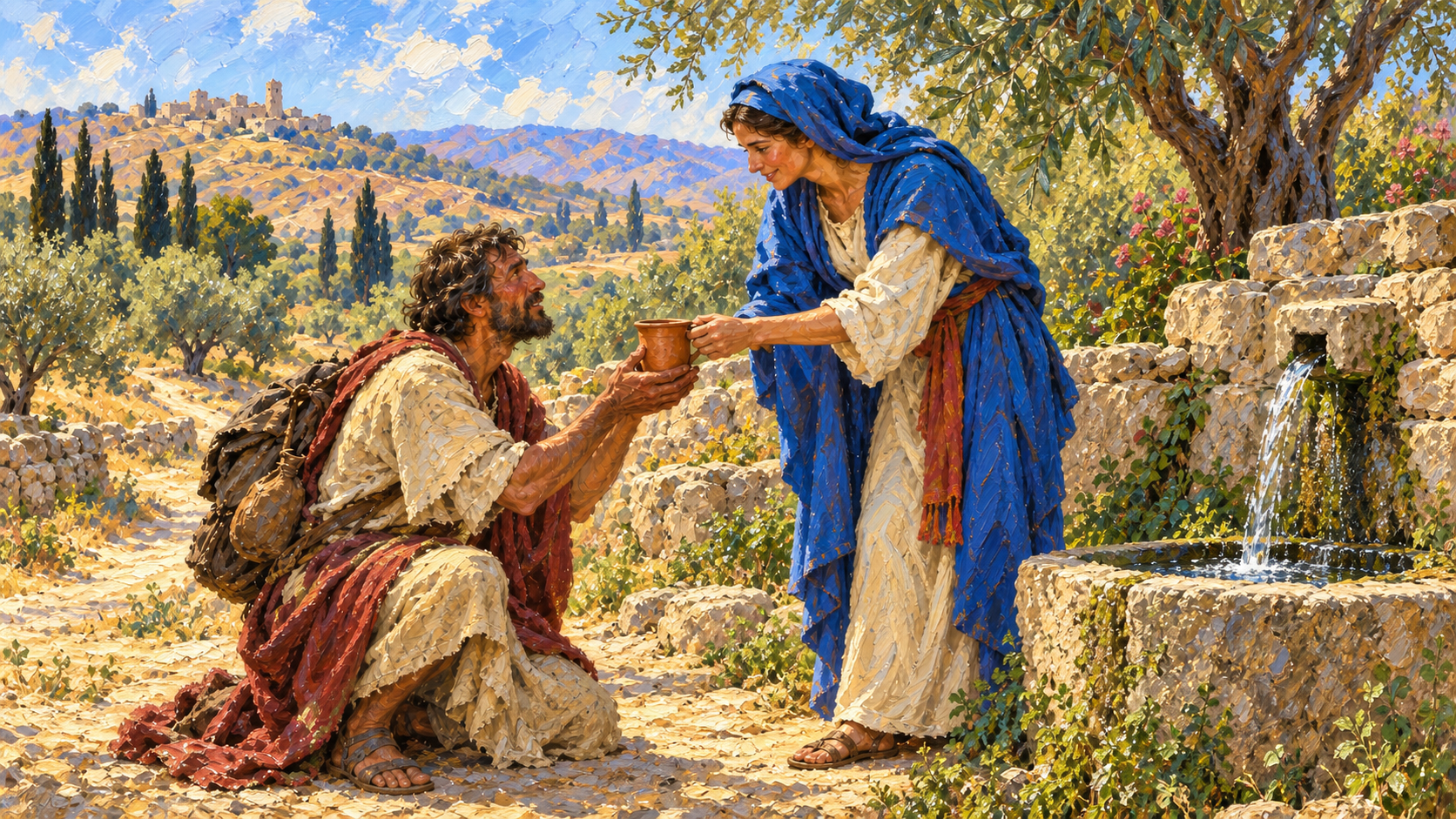
When we say God saves us by grace, we mean that He gives us salvation we could never earn. Calling grace “unmerited favor” is a helpful beginning, but I want to explain what God actually gives through that favor. He forgives sinners, makes them His children, and continues to help them live for Him. We need that fuller explanation if we are going to understand both the freedom of His gift and the change it produces.
What the Bible Means by Grace
Grace begins with God. We cannot put Him in our debt by doing enough good to offset our sins, and we cannot produce the forgiveness or righteous standing we need. He freely reaches us through Jesus Christ and gives pardon and new life to those who believe. Faith receives what He provides; it does not turn His generosity into something we have purchased.
That generosity does not require God to flatter our rebellion. Grace tells us the truth about sin and calls us to repent and believe. After we are born again, God continues to teach and correct us. A father who cares for his child does not have to approve of the child’s misconduct to prove his love, and God’s fatherly discipline is part of His gracious care.
Scripture also uses grace to describe gifts and help God gives for particular needs. Paul received grace for his apostolic service and learned that Christ’s grace was sufficient in weakness. Churches shared in grace by giving to believers in need, and Christians serve with abilities God has given them. We should therefore read the word in its setting. A passage about grace may be describing favorable acceptance, a generous gift, or God’s help in service and suffering.
The Hebrew Masoretic Text uses chen for favor, grace, or acceptance in someone’s eyes. Noah found that favor with the Lord, and Moses appealed to it when asking for His presence and guidance. Hesed, often translated mercy, kindness, or lovingkindness, describes steadfast love, including God’s faithful love toward His covenant people. These words contribute to our understanding of His generosity without becoming interchangeable definitions.
In the Greek New Testament, including the Textus Receptus, charis can mean grace, favor, a gracious gift, or thanks. The related word charisma describes a gift given by grace. A writer thanking God and a writer explaining salvation can use the same word without making exactly the same statement. I need to let the sentence tell me how the word is being used rather than pour every dictionary meaning into each occurrence.
Grace Was Present Before the New Testament
God did not begin showing grace when the New Testament opened. After Adam and Eve sinned, He sought them, confronted their disobedience, clothed them, and promised the Seed of the woman who would overcome the serpent. He later preserved Noah, called Abraham, redeemed Israel, and forgave people who returned to Him. He brought His people back from exile and promised a new covenant. Psalm 103 celebrates the character of the God who did those things:
Bless the LORD, O my soul; And all that is within me, bless His holy name! Bless the LORD, O my soul, And forget not all His benefits: Who forgives all your iniquities, Who heals all your diseases, Who redeems your life from destruction, Who crowns you with lovingkindness and tender mercies, Who satisfies your mouth with good things, So that your youth is renewed like the eagle's. The LORD executes righteousness And justice for all who are oppressed. He made known His ways to Moses, His acts to the children of Israel. The LORD is merciful and gracious, Slow to anger, and abounding in mercy. He will not always strive with us, Nor will He keep His anger forever. He has not dealt with us according to our sins, Nor punished us according to our iniquities. For as the heavens are high above the earth, So great is His mercy toward those who fear Him; As far as the east is from the west, So far has He removed our transgressions from us. As a father pities his children, So the LORD pities those who fear Him. For He knows our frame; He remembers that we are dust. As for man, his days are like grass; As a flower of the field, so he flourishes. For the wind passes over it, and it is gone, And its place remembers it no more. But the mercy of the LORD is from everlasting to everlasting On those who fear Him, And His righteousness to children's children, To such as keep His covenant, And to those who remember His commandments to do them. The LORD has established His throne in heaven, And His kingdom rules over all. Bless the LORD, you His angels, Who excel in strength, who do His word, Heeding the voice of His word. Bless the LORD, all you His hosts, You ministers of His, who do His pleasure. Bless the LORD, all His works, In all places of His dominion. Bless the LORD, O my soul!
The Lord knows His people’s frailty and has compassion on them as a father has compassion on his children. He forgives their iniquities and removes their transgressions instead of dealing with them as their sins deserve. The psalm also speaks of people who fear Him and remember His commandments. His compassion gives them reason to worship and obey Him, rather than a reason to presume that their conduct is irrelevant.
Old Testament believers were not justified by accumulating enough acts of law-keeping. Abraham believed God before the law was given at Sinai, and his faith was counted for righteousness. David described the blessing of forgiven sin, and Habakkuk said the just would live by faith (Genesis 15:6; Romans 4:1–8; Habakkuk 2:4). God’s covenant dealings developed through history, but salvation always came by grace and ultimately rested on Christ. Earlier believers trusted the promise God had revealed to them; we trust Christ’s accomplished death and bodily resurrection.
Long before Abraham, Noah received God’s favor in a world marked by violence:
Then the LORD saw that the wickedness of man was great in the earth, and that every intent of the thoughts of his heart was only evil continually. And the LORD was sorry that He had made man on the earth, and He was grieved in His heart. So the LORD said, "I will destroy man whom I have created from the face of the earth, both man and beast, creeping thing and birds of the air, for I am sorry that I have made them." But Noah found grace in the eyes of the LORD. This is the genealogy of Noah. Noah was a just man, perfect in his generations. Noah walked with God. And Noah begot three sons: Shem, Ham, and Japheth. The earth also was corrupt before God, and the earth was filled with violence. So God looked upon the earth, and indeed it was corrupt; for all flesh had corrupted their way on the earth. And God said to Noah, "The end of all flesh has come before Me, for the earth is filled with violence through them; and behold, I will destroy them with the earth. Make yourself an ark of gopherwood; make rooms in the ark, and cover it inside and outside with pitch. And this is how you shall make it: The length of the ark shall be three hundred cubits, its width fifty cubits, and its height thirty cubits. You shall make a window for the ark, and you shall finish it to a cubit from above; and set the door of the ark in its side. You shall make it with lower, second, and third decks. And behold, I Myself am bringing floodwaters on the earth, to destroy from under heaven all flesh in which is the breath of life; everything that is on the earth shall die. But I will establish My covenant with you; and you shall go into the ark–you, your sons, your wife, and your sons' wives with you. And of every living thing of all flesh you shall bring two of every sort into the ark, to keep them alive with you; they shall be male and female. Of the birds after their kind, of animals after their kind, and of every creeping thing of the earth after its kind, two of every kind will come to you to keep them alive. And you shall take for yourself of all food that is eaten, and you shall gather it to yourself; and it shall be food for you and for them." Thus Noah did; according to all that God commanded him, so he did.
Wickedness and violence filled the earth, and the Lord announced judgment against it. In that setting, Noah found grace in His eyes. Genesis describes Noah as just, blameless in his generation, and walking with God. Those words describe his integrity, not a man who had never sinned. God warned him about the coming Flood, instructed him to build the ark, and promised to establish His covenant with him.
Noah obeyed because he believed the warning, as Paul explains in Hebrews 11:7. Building the ark took real obedience, but Noah had not devised a rescue plan that persuaded God to favor him. God gave the warning and the means of preservation, and Noah acted in faith. Grace provided a refuge without making the coming judgment imaginary or excusing the violence that brought it.
Moses appealed to God’s favor under different circumstances. Israel had rebelled by worshiping the golden calf, and Moses was charged with leading these people onward. He needed the Lord’s presence and guidance:
Then Moses said to the LORD, "See, You say to me, 'Bring up this people.' But You have not let me know whom You will send with me. Yet You have said, 'I know you by name, and you have also found grace in My sight.' Now therefore, I pray, if I have found grace in Your sight, show me now Your way, that I may know You and that I may find grace in Your sight. And consider that this nation is Your people." And He said, "My Presence will go with you, and I will give you rest." Then he said to Him, "If Your Presence does not go with us, do not bring us up from here. For how then will it be known that Your people and I have found grace in Your sight, except You go with us? So we shall be separate, Your people and I, from all the people who are upon the face of the earth." So the LORD said to Moses, "I will also do this thing that you have spoken; for you have found grace in My sight, and I know you by name." And he said, "Please, show me Your glory." Then He said, "I will make all My goodness pass before you, and I will proclaim the name of the LORD before you. I will be gracious to whom I will be gracious, and I will have compassion on whom I will have compassion." But He said, "You cannot see My face; for no man shall see Me, and live." And the LORD said, "Here is a place by Me, and you shall stand on the rock. So it shall be, while My glory passes by, that I will put you in the cleft of the rock, and will cover you with My hand while I pass by. Then I will take away My hand, and you shall see My back; but My face shall not be seen."
Moses asked to know God’s ways so that he could know Him. He also pleaded for the people, insisting that they should not go forward without God’s presence. Their distinction from the surrounding nations depended on the Lord going with them. When Moses then asked to see His glory, God promised to make His goodness pass before him while protecting him from what he could not survive.
The Lord declared that He would be gracious and compassionate according to His own will. Moses could appeal to His favor, but could not demand it as a debt. Grace is God’s generous action toward people; it is not a substance Moses could acquire and control.
Israel had rebelled against a law that was holy, just, and good. It governed their covenant life, restrained public evil, and exposed sin by declaring what righteousness required. The failure lay with disobedient people, rather than with a defective command. However, telling a guilty person what is right does not remove that person’s guilt. The law’s sacrifices and other institutions pointed forward to the provision God would make through Christ.
Christians are not under the Mosaic covenant, but God’s moral will has not become irrelevant. Idolatry, murder, theft, adultery, and lying remain wrong. Grace brings forgiveness and new life, with God’s ways written on the heart by His Spirit. Paul explains in Hebrews why the repeated sacrifices of the old covenant could never accomplish what Christ accomplished:
For the law, having a shadow of the good things to come, and not the very image of the things, can never with these same sacrifices, which they offer continually year by year, make those who approach perfect. For then would they not have ceased to be offered? For the worshipers, once purified, would have had no more consciousness of sins. But in those sacrifices there is a reminder of sins every year. For it is not possible that the blood of bulls and goats could take away sins. Therefore, when He came into the world, He said: "Sacrifice and offering You did not desire, But a body You have prepared for Me. In burnt offerings and sacrifices for sin You had no pleasure. Then I said, 'Behold, I have come– In the volume of the book it is written of Me– To do Your will, O God.'" Previously saying, "Sacrifice and offering, burnt offerings, and offerings for sin You did not desire, nor had pleasure in them" (which are offered according to the law), then He said, "Behold, I have come to do Your will, O God." He takes away the first that He may establish the second. By that will we have been sanctified through the offering of the body of Jesus Christ once for all. And every priest stands ministering daily and offering repeatedly the same sacrifices, which can never take away sins. But this Man, after He had offered one sacrifice for sins forever, sat down at the right hand of God, from that time waiting till His enemies are made His footstool. For by one offering He has perfected forever those who are being sanctified. But the Holy Spirit also witnesses to us; for after He had said before, "This is the covenant that I will make with them after those days, says the LORD: I will put My laws into their hearts, and in their minds I will write them," then He adds, "Their sins and their lawless deeds I will remember no more." Now where there is remission of these, there is no longer an offering for sin.
The blood of bulls and goats could not take away sins, however often the offerings were repeated. Those sacrifices provided the covenant cleansing God had appointed, reminded worshipers of sin, and anticipated Christ. Jesus offered His own body once for all. His sacrifice gives believers a perfected standing before God, and the Spirit testifies to the new covenant’s promise of sins truly forgiven.
Grace and Truth Come in Fullness Through Jesus Christ
In the beginning was the Word, and the Word was with God, and the Word was God. He was in the beginning with God. All things were made through Him, and without Him nothing was made that was made. In Him was life, and the life was the light of men. And the light shines in the darkness, and the darkness did not comprehend it. There was a man sent from God, whose name was John. This man came for a witness, to bear witness of the Light, that all through him might believe. He was not that Light, but was sent to bear witness of that Light. That was the true Light which gives light to every man coming into the world. He was in the world, and the world was made through Him, and the world did not know Him. He came to His own, and His own did not receive Him. But as many as received Him, to them He gave the right to become children of God, to those who believe in His name: who were born, not of blood, nor of the will of the flesh, nor of the will of man, but of God. And the Word became flesh and dwelt among us, and we beheld His glory, the glory as of the only begotten of the Father, full of grace and truth. John bore witness of Him and cried out, saying, "This was He of whom I said, 'He who comes after me is preferred before me, for He was before me.'" And of His fullness we have all received, and grace for grace. For the law was given through Moses, but grace and truth came through Jesus Christ. No one has seen God at any time. The only begotten Son, who is in the bosom of the Father, He has declared Him.
John identifies the One who came to save us as the eternal Word. He was with God, He was God, and everything created came into being through Him. When the Word became flesh, He became truly human without ceasing to be God. Jesus is fully God and fully man, the Father’s unique, eternal Son. His disciples beheld His glory, full of grace and truth.
Jesus was born of a virgin and lived completely without sin. In His innocent body He willingly bore the punishment for our sins as wicked people physically tortured and killed Him. He voluntarily shed His blood and died for the whole world. His saving work through that blood and death was complete before He was buried and rose bodily from the grave.
The Father did not punish, curse, abandon, strike, bruise, or pour wrath on Jesus. The Son willingly offered Himself, and the violence was inflicted by wicked human beings. Our salvation rests in the blood He shed, as the studies on The Blood of Christ for Salvation and The Atonement of Jesus Christ explain further.
We therefore receive grace from Christ’s fullness, rather than obtain a supply we can separate from Him. He makes the unseen Father known and gives those who receive Him the right to become God’s children. John describes receiving Him as believing in His name. That new birth comes from God; ancestry cannot provide it, and parents or other people cannot will it into existence for someone else. Yet God’s work does not cancel the call to believe. John records the refusal of people who did not receive Christ as well as the new birth of those who did.
The comparison with Moses does not make the law evil or Moses an ungracious servant. Moses faithfully delivered what God gave him, and the law was a gracious gift to Israel. Jesus is the Son who fulfills what the law anticipated and reveals the Father in fullness. He does not make God’s holiness disappear so that sinners can be accepted. Through His saving work, He gives a righteous standing to everyone who believes.
Grace Saves Everyone Who Believes
And you He made alive, who were dead in trespasses and sins, in which you once walked according to the course of this world, according to the prince of the power of the air, the spirit who now works in the sons of disobedience, among whom also we all once conducted ourselves in the lusts of our flesh, fulfilling the desires of the flesh and of the mind, and were by nature children of wrath, just as the others. But God, who is rich in mercy, because of His great love with which He loved us, even when we were dead in trespasses, made us alive together with Christ (by grace you have been saved), and raised us up together, and made us sit together in the heavenly places in Christ Jesus, that in the ages to come He might show the exceeding riches of His grace in His kindness toward us in Christ Jesus. For by grace you have been saved through faith, and that not of yourselves; it is the gift of God, not of works, lest anyone should boast. For we are His workmanship, created in Christ Jesus for good works, which God prepared beforehand that we should walk in them. Therefore remember that you, once Gentiles in the flesh–who are called Uncircumcision by what is called the Circumcision made in the flesh by hands– that at that time you were without Christ, being aliens from the commonwealth of Israel and strangers from the covenants of promise, having no hope and without God in the world. But now in Christ Jesus you who once were far off have been brought near by the blood of Christ. For He Himself is our peace, who has made both one, and has broken down the middle wall of separation, having abolished in His flesh the enmity, that is, the law of commandments contained in ordinances, so as to create in Himself one new man from the two, thus making peace, and that He might reconcile them both to God in one body through the cross, thereby putting to death the enmity. And He came and preached peace to you who were afar off and to those who were near. For through Him we both have access by one Spirit to the Father. Now, therefore, you are no longer strangers and foreigners, but fellow citizens with the saints and members of the household of God, having been built on the foundation of the apostles and prophets, Jesus Christ Himself being the chief cornerstone, in whom the whole building, being fitted together, grows into a holy temple in the Lord, in whom you also are being built together for a dwelling place of God in the Spirit.
Paul describes people dead in trespasses and sins, actively following the world’s course and the evil influence of the prince of the power of the air. Their spiritual death means separation from God’s life and bondage to sin; they have not been born again. It does not mean an unbeliever cannot hear a genuine gospel call and respond while the Holy Spirit convicts. Paul is describing the sinful condition from which we need God to save us.
God’s rich mercy and great love move Him to make believers alive with Christ. He saves us by grace through faith, giving us a new standing in His Son and the prospect of sharing His glory. I cannot produce that life or put myself in that position by moral improvement. Faith receives the salvation God provides through Christ’s finished work.
Repentance and faith are the response God commands, not payments we offer Him. A sinner who abandons self-reliance and trusts Jesus has no reason to boast that he saved himself. Scripture says faith comes by hearing God’s Word and also describes hearers who resist. We depend on God’s gracious initiative, and His command to believe is sincere. He does not offer salvation to people whom He has excluded from any possibility of receiving it.
Good works follow salvation in Paul’s explanation. We are God’s workmanship, created in Christ to walk in the good works He has prepared. The same grace brings believing Jews and Gentiles into one body, reconciled to God through the cross. Gentiles who had been strangers to Israel’s covenants and without hope are brought near by Christ’s blood. Together, believers have access to the Father through one Spirit and belong to God’s household.
Some understand Ephesians 2:8 to identify faith itself as a gift given through a call that certainly brings God’s chosen people to belief. The Greek does not require that reading. The word translated “that” is neuter, while “faith” is feminine. I understand the pronoun to refer to the whole gift of salvation by grace through faith, rather than to faith alone. The grammatical forms can be seen in the Greek word analysis for Ephesians 2:8. Grammatical gender by itself does not settle every theological question, but this verse does not establish the Calvinistic teaching of irresistible grace.
Paul explains in Romans 3 why the law exposes our guilt without making us righteous:
Now we know that whatever the law says, it says to those who are under the law, that every mouth may be stopped, and all the world may become guilty before God. Therefore by the deeds of the law no flesh will be justified in His sight, for by the law is the knowledge of sin. But now the righteousness of God apart from the law is revealed, being witnessed by the Law and the Prophets, even the righteousness of God, through faith in Jesus Christ, to all and on all who believe. For there is no difference; for all have sinned and fall short of the glory of God, being justified freely by His grace through the redemption that is in Christ Jesus, whom God set forth as a propitiation by His blood, through faith, to demonstrate His righteousness, because in His forbearance God had passed over the sins that were previously committed, to demonstrate at the present time His righteousness, that He might be just and the justifier of the one who has faith in Jesus. Where is boasting then? It is excluded. By what law? Of works? No, but by the law of faith. Therefore we conclude that a man is justified by faith apart from the deeds of the law. Or is He the God of the Jews only? Is He not also the God of the Gentiles? Yes, of the Gentiles also, since there is one God who will justify the circumcised by faith and the uncircumcised through faith. Do we then make void the law through faith? Certainly not! On the contrary, we establish the law.
The law stops every mouth because all have sinned. It exposes our guilt without giving us a defense based on what we have done. In the received text quoted above, God’s righteousness is through faith in Jesus Christ to all and upon all who believe. God justifies the believer freely by grace through the redemption Christ accomplished.
To justify someone is to declare that person righteous before God. The passage calls Jesus the propitiation by His blood, the atoning sacrifice through whom God deals with sin and reconciles sinners to Himself. Jesus’ blood provides what my moral reform cannot. Baptism, generosity, ministry, and personal endurance cannot pay for my sins either. Faith accepts God’s verdict about my guilt and receives His provision, leaving me no basis for boasting about my acceptance before Him.
Paul goes on to describe the believer’s peace with God, then compares Christ’s saving work with the damage Adam brought into the human world:
Therefore, having been justified by faith, we have peace with God through our Lord Jesus Christ, through whom also we have access by faith into this grace in which we stand, and rejoice in hope of the glory of God. And not only that, but we also glory in tribulations, knowing that tribulation produces perseverance; and perseverance, character; and character, hope. Now hope does not disappoint, because the love of God has been poured out in our hearts by the Holy Spirit who was given to us. For when we were still without strength, in due time Christ died for the ungodly. For scarcely for a righteous man will one die; yet perhaps for a good man someone would even dare to die. But God demonstrates His own love toward us, in that while we were still sinners, Christ died for us. Much more then, having now been justified by His blood, we shall be saved from wrath through Him. For if when we were enemies we were reconciled to God through the death of His Son, much more, having been reconciled, we shall be saved by His life. And not only that, but we also rejoice in God through our Lord Jesus Christ, through whom we have now received the reconciliation. Therefore, just as through one man sin entered the world, and death through sin, and thus death spread to all men, because all sinned– (For until the law sin was in the world, but sin is not imputed when there is no law. Nevertheless death reigned from Adam to Moses, even over those who had not sinned according to the likeness of the transgression of Adam, who is a type of Him who was to come. But the free gift is not like the offense. For if by the one man's offense many died, much more the grace of God and the gift by the grace of the one Man, Jesus Christ, abounded to many. And the gift is not like that which came through the one who sinned. For the judgment which came from one offense resulted in condemnation, but the free gift which came from many offenses resulted in justification. For if by the one man's offense death reigned through the one, much more those who receive abundance of grace and of the gift of righteousness will reign in life through the One, Jesus Christ.) Therefore, as through one man's offense judgment came to all men, resulting in condemnation, even so through one Man's righteous act the free gift came to all men, resulting in justification of life. For as by one man's disobedience many were made sinners, so also by one Man's obedience many will be made righteous. Moreover the law entered that the offense might abound. But where sin abounded, grace abounded much more, so that as sin reigned in death, even so grace might reign through righteousness to eternal life through Jesus Christ our Lord.
Christ died for the ungodly while we were helpless and sinful. We did not first establish that we deserved His love. Believers now have peace with God through Him and stand in grace. Paul describes suffering producing perseverance, character, and hope, with God’s love poured into our hearts through the Holy Spirit. Grace has brought us into a relationship with God in which He continues working, including during hardship.
Adam’s sin brought mortality, weakness, and a fallen inclination toward sin into the human world. His descendants inherit that damaged condition, but not his personal guilt. Each morally accountable person becomes guilty through personal sin. Christ’s righteous act provides a real gift to the same world Adam damaged, and those who receive the abundance of grace and the gift of righteousness reign in life through Him.
God’s declaration to Moses that He would be gracious according to His own will does not mean He created most people without a genuine possibility of salvation. Christ died for the whole world, God desires all people to be saved, and He commands everyone everywhere to repent (1 John 2:2; 1 Timothy 2:4; Acts 17:30). For those reasons, I reject limited atonement, the claim that Christ’s saving sacrifice was provided only for the elect. Yet provision for everyone does not mean everyone is automatically saved. The gift is received through faith.
People can resist God’s grace. Jesus lamented people’s unwillingness to come to Him, religious leaders rejected God’s purpose for themselves, and Stephen accused his hearers of resisting the Holy Spirit (Luke 13:34; 7:30; Acts 7:51). Paul also warned against receiving God’s grace in vain (2 Corinthians 6:1). God convicts by His Spirit, teaches through His Word, and sends witnesses with a sincere gospel. A person’s refusal is that person’s responsibility, rather than the unavoidable result of a decree that made acceptance impossible.
That refusal before salvation must not be confused with the standing of someone genuinely born again. God justifies the believer, gives him new life, adopts him into His family, and joins him to Christ. The Holy Spirit indwells and seals him, guaranteeing his inheritance until redemption is complete. Jesus promises that His sheep will never perish. Our security rests on His finished work and God’s preserving power, rather than on our ability to keep ourselves saved.
Security gives no excuse for lawlessness, and a religious profession does not prove that someone has been regenerated, genuinely born again. God’s children can be disciplined, lose reward, damage their fellowship with Him, and squander opportunities to serve. In severe cases, discipline can include illness or physical death, as Paul explains in 1 Corinthians 11:27–32. That passage does not authorize us to diagnose every illness as punishment. It does establish that grace does not make sin harmless, even though a truly born-again person does not become unborn. The Study of Salvation examines these connected truths more fully.
Grace Trains, Strengthens, and Keeps God’s Children
Paul’s instructions to Titus explain how grace teaches believers to live. He addresses people of different ages and circumstances, naming conduct that should grow from their faith:
But as for you, speak the things which are proper for sound doctrine: that the older men be sober, reverent, temperate, sound in faith, in love, in patience; the older women likewise, that they be reverent in behavior, not slanderers, not given to much wine, teachers of good things– that they admonish the young women to love their husbands, to love their children, to be discreet, chaste, homemakers, good, obedient to their own husbands, that the word of God may not be blasphemed. Likewise, exhort the young men to be sober-minded, in all things showing yourself to be a pattern of good works; in doctrine showing integrity, reverence, incorruptibility, sound speech that cannot be condemned, that one who is an opponent may be ashamed, having nothing evil to say of you. Exhort bondservants to be obedient to their own masters, to be well pleasing in all things, not answering back, not pilfering, but showing all good fidelity, that they may adorn the doctrine of God our Savior in all things. For the grace of God that brings salvation has appeared to all men, teaching us that, denying ungodliness and worldly lusts, we should live soberly, righteously, and godly in the present age, looking for the blessed hope and glorious appearing of our great God and Savior Jesus Christ, who gave Himself for us, that He might redeem us from every lawless deed and purify for Himself His own special people, zealous for good works. Speak these things, exhort, and rebuke with all authority. Let no one despise you.
Saving grace has appeared to all people and teaches believers to refuse ungodliness and worldly desires. Jesus gave Himself to redeem us from lawless deeds and purify a people eager to do good. I cannot use grace to defend the very conduct He gave Himself to redeem us from. We are learning to live soberly, righteously, and godly while looking for the appearing of our great God and Savior Jesus Christ.
Paul applies that instruction to older and younger believers, marriage and family life, and Titus’s own conduct as a teacher. His speech and behavior must support the doctrine he teaches. Older women are to teach what is good and help younger women live faithfully in their homes. Love, self-control, and integrity belong in everyday relationships, where other people can see whether our conduct agrees with our confession.
The instructions to bondservants address an unjust order in the first-century Roman world. They do not make slavery good or forbid a believer from obtaining lawful freedom (1 Corinthians 7:21). Paul tells people living under that order to serve honestly, without stealing, so that their conduct honors God’s teaching. We also need to ask whether our dealings with other people display honesty and goodwill. Grace does not make dishonesty acceptable because the person doing it knows Christian doctrine.
Grace also equips us to serve. Paul could speak of working abundantly while crediting God’s grace at work with him (1 Corinthians 15:10). He really labored, but the ability and help came from God. When I use a spiritual gift to help another believer, I am putting God’s generosity to use rather than making Him owe me a wage. Giving to someone in need, teaching faithfully, and serving without applause are opportunities to share what He has supplied.
Paul also learned to depend on grace when he wanted relief from an affliction:
It is doubtless not profitable for me to boast. I will come to visions and revelations of the Lord: I know a man in Christ who fourteen years ago–whether in the body I do not know, or whether out of the body I do not know, God knows–such a one was caught up to the third heaven. And I know such a man–whether in the body or out of the body I do not know, God knows– how he was caught up into Paradise and heard inexpressible words, which it is not lawful for a man to utter. Of such a one I will boast; yet of myself I will not boast, except in my infirmities. For though I might desire to boast, I will not be a fool; for I will speak the truth. But I refrain, lest anyone should think of me above what he sees me to be or hears from me. And lest I should be exalted above measure by the abundance of the revelations, a thorn in the flesh was given to me, a messenger of Satan to buffet me, lest I be exalted above measure. Concerning this thing I pleaded with the Lord three times that it might depart from me. And He said to me, "My grace is sufficient for you, for My strength is made perfect in weakness." Therefore most gladly I will rather boast in my infirmities, that the power of Christ may rest upon me. Therefore I take pleasure in infirmities, in reproaches, in needs, in persecutions, in distresses, for Christ's sake. For when I am weak, then I am strong.
The abundance of revelations could have become an occasion for Paul to exalt himself. He describes a thorn in the flesh, a messenger of Satan that buffeted him and kept him from that pride. Its exact form is not named. Some understand it as illness; others suggest persecution, harassment, or a hostile person.
Paul pleaded three times for the thorn to depart. Christ answered by promising sufficient grace and declaring that His strength was made perfect in weakness. The Lord remained in control of the affliction and used it to restrain Paul’s pride and display Christ’s power, without making Satan’s evil good. Paul learned to depend on the Lord while the weakness remained. The promise did not make the pain pleasant or make asking for relief wrong.
I would be reckless to use Paul’s continued suffering as evidence that he lacked faith. Sometimes the Lord changes our circumstances, and sometimes He supplies what we need to remain faithful within them. We can ask for relief and help without claiming that enough faith obliges Him to remove every hardship. Hebrews directs us to bring those needs to Jesus:
For the word of God is living and powerful, and sharper than any two-edged sword, piercing even to the division of soul and spirit, and of joints and marrow, and is a discerner of the thoughts and intents of the heart. And there is no creature hidden from His sight, but all things are naked and open to the eyes of Him to whom we must give account. Seeing then that we have a great High Priest who has passed through the heavens, Jesus the Son of God, let us hold fast our confession. For we do not have a High Priest who cannot sympathize with our weaknesses, but was in all points tempted as we are, yet without sin. Let us therefore come boldly to the throne of grace, that we may obtain mercy and find grace to help in time of need.
God’s Word exposes our thoughts and motives, and no creature can hide from Him. Yet the One who represents us before God as our great High Priest is the sinless Son who understands human weakness and testing. Because of Him, we can approach the throne of grace confidently. Boldness in prayer comes from access through Christ, rather than from assuming God owes us the outcome we request.
Revelation closes with that generosity still being offered, alongside Christ’s promise to return and the warning that His words must be taken seriously:
"And behold, I am coming quickly, and My reward is with Me, to give to every one according to his work. I am the Alpha and the Omega, the Beginning and the End, the First and the Last." Blessed are those who do His commandments, that they may have the right to the tree of life, and may enter through the gates into the city. But outside are dogs and sorcerers and sexually immoral and murderers and idolaters, and whoever loves and practices a lie. "I, Jesus, have sent My angel to testify to you these things in the churches. I am the Root and the Offspring of David, the Bright and Morning Star." And the Spirit and the bride say, "Come!" And let him who hears say, "Come!" And let him who thirsts come. Whoever desires, let him take the water of life freely. For I testify to everyone who hears the words of the prophecy of this book: If anyone adds to these things, God will add to him the plagues that are written in this book; and if anyone takes away from the words of the book of this prophecy, God shall take away his part from the Book of Life, from the holy city, and from the things which are written in this book. He who testifies to these things says, "Surely I am coming quickly." Amen. Even so, come, Lord Jesus! The grace of our Lord Jesus Christ be with you all. Amen.
Christ will come and judge righteously, including evaluating His children’s service for reward. Rewards do not make justification a wage; acceptance before God remains His free gift. The obedience of His redeemed people grows from the new life He gives, rather than purchasing their access to the tree of life. Those outside Christ face judgment, while anyone who desires is invited to take the water of life freely.
The warning against adding to or taking away from this prophecy forbids treating God’s Word as material we can corrupt without consequence. I understand the warning about a person’s part in the Book of Life alongside Scripture’s wider teaching: every person begins written there, but those who finally reject the Messiah are blotted out. Believers remain, with their sins blotted out through Christ’s blood. We need to hear the warning and the invitation together, without making rejection of Christ harmless or turning His free gift into something we earn.
Morality, religious heritage, baptism, and ministry cannot purchase salvation, and even profound remorse cannot settle the debt of sin. We need to repent and receive Jesus Christ by faith. Whoever believes is forgiven and justified, receives new birth from God, and is indwelt and sealed by the Holy Spirit. The Savior’s provision is sufficient, and His offer is genuine for every person.
Because Christ gives us access to God’s throne, I can bring my actual need to Him instead of pretending I can manage alone. If I have sinned, I need to confess it honestly. If I need wisdom to obey, I can ask for help, and I can bring other people’s needs before Him too. We approach a High Priest who understands testing and gives His people mercy and grace in their time of need.
God’s forgiveness should affect my willingness to forgive. If someone acknowledges a wrong and asks for forgiveness, I cannot praise God for His mercy while insisting that the other person must keep paying for what he did. I need to tell the truth about the wrong without using it as a reason to withhold forgiveness from a repentant person. Grace teaches me how to treat others as well as how to deal with my own sin.
We should be just as sincere when offering the gospel. Someone’s past may include grievous sin, but that is a reason to explain repentance and forgiveness, rather than decide Christ’s offer does not include that person. Having received a salvation we did not deserve, we should tell others honestly and kindly how they can receive it too.
My Final Thoughts
Grace means I can stop bargaining with God for an acceptance I could never earn. Christ has provided salvation, and everyone who receives Him by faith is justified and secure. The same Lord teaches His children to obey and supplies help when their strength fails. I want to depend on Him in that way, grateful enough to serve without pretending my service pays for His favor, and ready to offer His genuine invitation to others.