
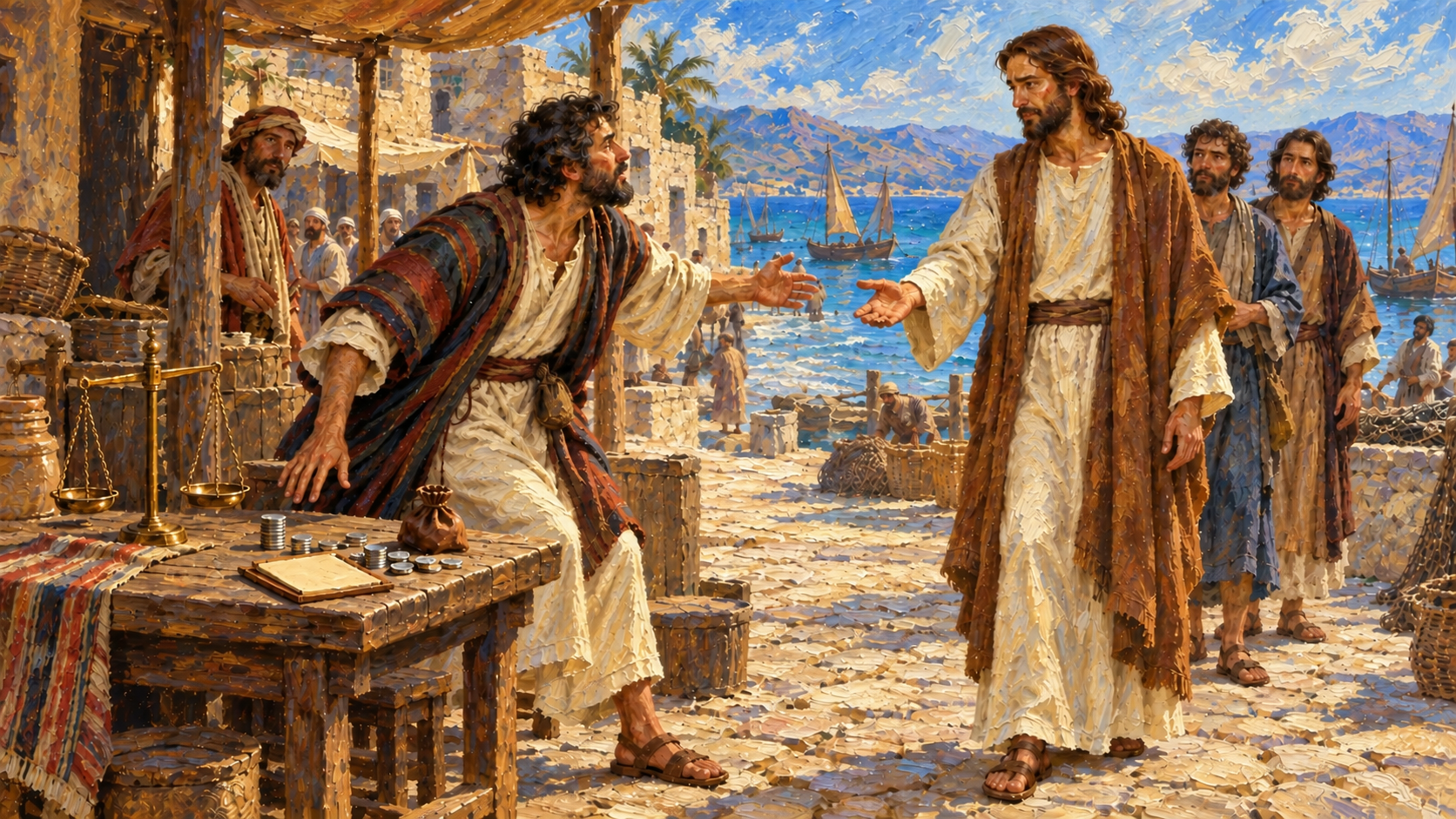
What does Paul mean when he calls himself a slave of Jesus Christ? The word can sound harsh when we remember the cruelty of human slavery, yet Paul uses it to describe real ownership and allegiance. I want to understand how belonging wholly to Jesus agrees with the freedom He gives us. That means looking at the kind of Master He is and the secure place He gives His people in God’s family by grace.
What It Means to Be a Slave of Christ
Paul introduces himself as “a bondservant of Jesus Christ” in the first sentence of Romans. He uses doulos, the ordinary Greek word for a slave, to say that he belongs to Jesus and lives under His authority. This is a claim of ownership and submission, not simply a description of work Paul has chosen to do.
Human slavery gives that language a severity we should not pretend away. Coercion and exploitation have torn families apart, and violence has denied people their rightful freedom. Paul drew on a social reality his readers knew to make a claim about their spiritual condition. No person is autonomous before God. Whom we serve determines the direction of our lives and where that service finally leads.
To understand that claim, we need to look at both masters. Sin lies to the people it enslaves and pays them with death. Jesus, however, took the form of a servant and gave His life for captives, shedding His blood to free them. He receives believers as God’s adopted children and calls them His friends, even making them heirs with Him. They have not traded freedom for exploitation. They have left a murderous master for the household of the Son who gives eternal life.
I don’t want to lose any of those relationships by concentrating on the word slave alone. Believers belong wholly to Christ, yet they are also God’s children and Jesus’ friends. They share His inheritance and have citizenship in heaven. Scripture calls them saints and priests and joins them as members of one body. Slavery describes their complete allegiance and obedience, while those other images help us understand the love and security they find under His rule.
The Greek noun doulos ordinarily describes a slave who belongs to a master. Some English translations use bondservant to convey devoted service or distinguish the biblical setting from modern forms of slavery. That can help the reader, provided we still hear the claim of ownership the word carries.
Paul uses this title for himself in Romans, Philippians, and Titus. James, Peter, Jude, and John use it too. It tells us whose authority governs the messenger and whose interests govern his work. An apostle belongs to the Lord whose message he carries. He is not free to turn that message into a private religious kingdom.
Alongside doulos, the title kurios helps us understand the relationship. It means lord or master and is repeatedly applied to Jesus Christ. The believer serves under His authority and answers to Him, but this is also an honored position because of who the Master is.
Slavery was part of Roman household life and the wider economy. Roman law upheld it, and both agriculture and public life depended heavily on enslaved labor. People did many kinds of work under slavery, and some eventually received their freedom. Yet those differences did not remove the owner’s legal power over an enslaved person or the vulnerability to exploitation that came with it.
Paul’s readers would not have understood doulos to mean a volunteer who retained an independent claim over his life. Scholars describe Rome as a slave society because enslaved labor and the relationship between owner and slave were central to its structure. We should acknowledge that force in Paul’s language without treating every ancient experience as identical or using their differences to make slavery seem harmless.
Using that image does not praise human enslavement. It makes me ask who could rightfully claim the whole person. Sin claims people only to destroy them, and human beings try to dominate others without any divine right to do so. Jesus alone is the Creator who redeemed His people and rules them as Lord. His character makes belonging to Him entirely different: He serves His people and gives His life for them. He also shares His inheritance and restores them to holy freedom.
Paul himself explains that he is speaking in human terms because of the weakness of the Romans’ flesh. He uses a familiar social relationship to explain allegiance, without importing every feature of Roman slavery into life with Christ. We need the comparison to understand Christ’s exclusive claim upon us, and we need the surrounding gospel to understand the Master who makes it.
I would not soften slave into casual helper, since that would remove the real belonging Paul describes. Neither would I transfer a human master’s cruelty onto Christ. Paul compares authority and allegiance while contrasting the masters themselves, and we need to keep that difference in view.
From Sin’s Rule to Life in Christ
Before reaching Romans 6, Paul has spent five chapters explaining why everyone needs grace. All have sinned, every mouth is stopped before God, and works of the Law cannot justify anyone. God freely justifies the believer by grace through the redemption in Jesus Christ. Abraham was counted righteous by faith, and everyone who believes now has peace with God. That is the setting for what Paul says next about obedience.
Romans 6 takes up a distortion of that teaching. If grace abounds where sin increased, should a believer keep sinning so that grace may abound? Paul answers, “Certainly not!” He does not withdraw grace to make room for holiness. Instead, he explains that salvation joins us to Christ’s death and resurrection. Someone who has died with Christ cannot regard sin’s old rule as the place where he rightfully belongs.
I need to keep that order clear. Obedience does not purchase justification or bring about the new birth, and it adds no merit to Christ’s finished work. It grows from our union with Him. In Romans 6, Paul is describing the new rule and direction of a life in which God has already acted by grace.
Paul describes sin as a ruler seeking to reign, then asks how we will use our bodies. We can present them as instruments to sin or to God. The slavery language explains why freedom from one master means service to another. As Paul follows each kind of service to its outcome, he shows that sin pays wages while God gives a gift.
Romans 6:16 begins with the act of presenting oneself to a master through obedience. Paul is looking at the allegiance expressed in what a person yields to, not treating a passing thought or isolated temptation as proof of ownership.
Do you not know that to whom you present yourselves slaves to obey, you are that one's slaves whom you obey, whether of sin leading to death, or of obedience leading to righteousness?
Jesus gives the same diagnosis in John 8 when He says that whoever commits sin is a slave of sin. Sin promises independence, but as it trains a person’s desires, it narrows his choices and hardens his conscience. Anger or lust may begin to direct his life even while he calls himself free. Greed and the need for approval can make similar demands. Intoxication or resentment may govern his decisions, or he may become intent on controlling other people. In each case, the promised freedom gives way to increasing obedience to sin.
Jesus also challenges the idea that we can live without a master. In Matthew 6, He says no one can serve two masters and applies that truth to God and wealth. Money may begin as a tool, but once a person’s trust rests on it, fear of losing it can reshape his identity and obedience. Comfort or reputation can gain that same control. Politics and romance can do so as well, along with physical appetite or career ambition. I need to ask more than whether I enjoy these things. What do I obey when God’s Word says no? That is where self-rule becomes visible.
We do need to distinguish that allegiance from a believer’s struggle with temptation. Christians can fall seriously, yet a person who hates his sin may confess it and keep resisting its demands. That is different from protecting sin as though Christ had no authority over it. Romans 6 follows the question of rule and ownership. It does not teach that one failure reverses the new birth.
Changing masters begins with union with Jesus Christ, not a stronger effort of will. Romans 6 says believers were joined to His death and raised to walk in newness of life. Since Christ died to sin once and now lives to God, we are to reckon ourselves dead to sin and alive to God in Him. We act on the relationship He has given us.
Sin is still present in the mortal body, but it no longer has the right to reign over the believer. We are no longer required to obey its lusts. That gives me a different reason to resist: I am living from the identity Christ has given me, rather than trying to create that identity through my own struggle.
Water baptism portrays our identification with Christ in His death and burial, followed by resurrection with Him. It comes after salvation as a public confession of the Lord to whom we now belong. The water does not unite us to Christ or regenerate the heart. God gives new life through faith in His crucified and risen Son, and baptism declares that allegiance.
That union also keeps holiness from becoming a moral project detached from Christ. We live to God in Him, and the Lord who commands obedience supplies the life from which it grows. His Spirit dwells within the believer, and Christ’s resurrection guarantees the promised outcome of that life.
This new life is explored further in A Complete Bible Study on Being Born Again. The new birth, the Spirit’s indwelling and sealing, and the fruit that follows all begin with faith in Jesus Christ.
Present Yourself to God
Knowing who we belong to calls for deliberate action. Romans 6 tells believers to refuse sin’s reign and stop offering the parts of their bodies as instruments of unrighteousness. Instead, as people alive from the dead, they are to present themselves to God and use their members as instruments of righteousness.
Christ’s claim includes what I choose to see and hear, as well as what I say and do. My sexuality and physical appetite are under His authority too. He has a claim on my imagination and the way I use my time, and I am to offer Him my money and abilities. The body is where this allegiance becomes visible, so I cannot treat it as though it were irrelevant to spiritual life.
Presenting ourselves to God becomes concrete in those choices. We offer Him our speech by telling the truth and using words that build people up instead of corrupt language. In our sexuality, that means rejecting pornography and sexual activity outside the covenant of marriage. With money, it means honest work and paying every legitimate debt, together with generosity that refuses greed. This is how a general desire to surrender to the Lord becomes specific obedience.
Romans 12 later uses the same verb when it calls believers to present their bodies as a living sacrifice. I would not confuse that offering with the sacrifice that saves us, which belongs to Christ alone and was made once for all. We offer our redeemed lives gratefully in daily worship because of what He has already done.
As Scripture renews our judgment, fear and envy no longer direct our decisions, nor do worldly assumptions. Christ’s good authority reaches physical life through sexual purity and sobriety, and also through faithful work and needed rest. It reaches our speech when we choose truth and kindness instead of manipulation. Our time and abilities can then serve righteousness rather than self-rule.
Paul thanks God that former slaves of sin obeyed from the heart the teaching to which they were delivered. I notice that he gives God the credit without treating doctrine as unimportant. The truth reached the source of their obedience, their hearts. Grace does not settle for outward compliance while inward rebellion remains protected.
But God be thanked that though you were slaves of sin, yet you obeyed from the heart that form of doctrine to which you were delivered.
Obeying from the heart means more than feeling enthusiastic. The Romans had been delivered to a form of doctrine, the gospel announcing who Christ is and what He has done. That truth reshapes allegiance. Belief and obedience therefore belong together, while obedience remains distinct from the ground of our justification.
Nor does heart obedience mean flawless performance. A child of God may obey weakly, discover mixed motives, and need correction without making the new direction of his life unreal. He increasingly desires the Lord’s will and grieves when he disobeys. Rather than settle into peace with the old master, he returns through confession.
Human religious systems often prize what Paul calls eye-service, obedience performed only while someone is watching. They can count and control visible compliance, but Christ sees the heart. He rejects hypocrisy without despising weak obedience offered in faith. He teaches us to serve sincerely out of love for the Master who first loved us.
Paul describes conversion as being freed from sin and becoming slaves of righteousness. The change is real even though sin has not disappeared and temptation remains possible. What has ended is sin’s rightful dominion.
And having been set free from sin, you became slaves of righteousness.
Because Christ has changed his ownership and the Holy Spirit dwells within him, the believer has a real basis for refusing sin’s old command. That does not make every struggle easy. Some habits call for sustained confession and wise boundaries, and accountability may be needed. If someone has been harmed, restitution may also be necessary. Patient rebuilding often follows. The difficulty of that work does not give sin its legal claim back.
Jesus says the slave of sin does not remain in the house forever, but the Son does. When the Son makes someone free, that person is free indeed. I cannot find that freedom merely by discovering something about myself. It comes from the Son’s authority and life as He releases the captive to live under truth.
That gives us reason to reject both despair and presumption. Sin no longer owns the believer, yet grace has not made his commands harmless. Romans 6 holds those truths together by declaring sin’s dominion broken and telling the freed person to stop yielding to it.
For a fuller treatment of how holiness grows from Christ’s finished work, see A Complete Bible Study on Sanctification.
Purchased by Christ and Welcomed Into His Family
Why does Christ have the right to claim the whole person? In 1 Corinthians 6, Paul answers by saying we were bought at a price. The believer’s body is the temple of the Holy Spirit and is no longer his own. Because both body and spirit belong to God, we are to glorify Him in them.
For you were bought at a price; therefore glorify God in your body and in your spirit, which are God's.
Scripture identifies that price as the precious blood of Christ. The eternal Son became man and lived without sin, yet wicked men physically tortured and punished His innocent body. They shed His blood and killed Him, and He willingly bore that punishment for our sins. The Father did not punish or curse His beloved Son, nor did He abandon Him. He did not strike or bruise Jesus or pour wrath upon Him. After His burial, Jesus rose bodily.
The language of purchase does not mean that God paid Satan. Satan had no rightful ownership that entitled him to compensation. Redemption tells us what our rescue cost and that we have been released from our former bondage. It also explains why the Lord has a rightful claim over those He saved.
I cannot reserve a secret part of my life from the One who redeemed the whole person. Christ did not purchase only a portion of my week. The blood that gives me assurance also calls me to bodily purity, bringing ordinary life into worship and service.
Slavery does not remove the privileges Scripture gives the believer. Romans describes us as slaves of righteousness in chapter 6, then as adopted children and heirs in chapter 8. Those descriptions answer different questions about the same salvation.
Calling us slaves tells us whose claim governs our allegiance. Adoption identifies the family that has received us, while friendship tells us the Lord has made His will known. Inheritance points to the future we receive by grace. As members of His body, we are also joined to Christ and to His people.
Romans 8 says we did not receive the spirit of bondage again to fear, but the Spirit of adoption by whom we cry, “Abba, Father.” The Spirit bears witness that we are God’s children and therefore heirs with Christ. That means His servants obey within the security of the Father’s family, rather than as terrified captives wondering whether they will be discarded.
Jesus told His disciples they were His friends if they did what He commanded. He explained that a slave does not know what his master is doing, whereas He had told them what He heard from the Father. I do not understand that friendship as permission to set aside His commands or lordship. He was showing them loving intimacy by disclosing His will within a relationship of obedience.
We should be able to acknowledge Christ’s complete claim on our allegiance and still enjoy the closeness He gives us. Adoption means secure access to the Father instead of terror under condemnation. Friendship brings obedient disciples into fellowship as Jesus makes His Father’s will known. And the future believers inherit with Christ is something no earthly master could ever give.
In Galatians, Paul defends the freedom of Gentile believers against those who would require circumcision and the Mosaic Law for acceptance. He tells the church to stand fast in the liberty Christ gave them and refuse a yoke of bondage. Yet he also explains why that liberty cannot become an excuse for selfishness.
Believers are called to liberty, but they must use it to serve one another through love rather than indulge the flesh. The verb in Galatians 5:13 belongs to the same slave word group. I notice how freedom and service belong together here: Christ releases us from condemnation and legalistic bondage so that we can give ourselves in love.
1 Corinthians 7 places two apparently opposite descriptions side by side. An enslaved person called in the Lord becomes His freedman, while a socially free person called by Christ becomes His slave. Both belong to the same Lord, so earthly status determines neither spiritual worth nor access to God. Paul immediately adds, “You were bought at a price; do not become slaves of men.”
Paul is not endorsing human enslavement by using that image. In the same passage, he tells an enslaved believer to use freedom if he can obtain it. Elsewhere, he reminds masters that they answer to the same Master in heaven, who shows no partiality. He receives Onesimus as a beloved brother in Philemon and asks Philemon to do the same. We need to read each passage in its own setting, but together they leave no room to turn Christ’s ownership into a defense of human domination.
Christ frees the believer from sin’s ownership and the Law’s condemnation. He also releases the conscience from illegitimate religious control. That freedom is neither a right to rule ourselves nor a demand to submit to human bondage. It allows us to obey Christ with a clean conscience and serve our neighbors through love.
The relationship between liberty and service is developed further in The Freedom Found in Christ.
Struggle, Security, and the Conscience
Romans 6 says sin’s dominion is broken, not that we have reached sinless perfection. In 1 John, believers are warned that claiming to have no sin is self-deception. Yet the same letter calls us away from sin and directs anyone who does sin to Jesus Christ the righteous, our Advocate with the Father.
A true believer can still face deeply entrenched habits or bodily weakness. Desires trained over many years may remain powerful. Scripture never calls evil harmless, but the intensity of temptation alone does not tell us who owns a person. I would look at whether he defends sin as a right or brings it into the light. Is he arranging to keep it available, or cutting off access to it? Is he resenting Christ’s command, or learning to agree with it? Those responses help distinguish allegiance from struggle.
Confession names sin as God names it, and repentance turns us from defending the wrong toward obedience. If I have harmed someone, that may require admitting it directly and making appropriate restitution. Boundaries may need to change, and I must patiently accept that trust can take a long time to rebuild. Grace does not ask the wounded person to pretend the harm was small.
Eternal security makes that honesty possible on stable ground. The truly born-again believer is a new creation, indwelt and sealed by the Holy Spirit for the day of redemption. Confession does not make him God’s child again. He confesses because he already is the Father’s child and refuses to make peace with the old master.
That assurance does not belong to a superficial profession with no evidence of new birth. If someone permanently rejects Christ’s rule and protects settled rebellion, the church should warn him instead of using security to bless lawlessness. God alone knows the heart, but the fruit of a person’s life helps reveal whether his profession was genuine.
Christ’s ownership gives no pastor the right to treat people as his property. Nor does it give that right to an institution, employer, or family leader. Jesus owns His people, and every human authority remains limited and accountable under His Word.
Jesus contrasted Gentile rulers who lord authority over others with leadership among His disciples. The Son of Man came to serve and give His life, so greatness among His people is shown through service. Peter likewise commands elders to shepherd willingly and eagerly rather than act as lords over those entrusted to them.
Paul tells the Corinthians that even apostolic ministers have no dominion over their faith. In Acts, the apostles obeyed God rather than men whenever a human command opposed His will. I would apply that same limit to a leader who demands unquestioning personal loyalty or punishes biblical examination. His authority remains accountable to Christ and cannot place him above correction.
Biblical submission never requires participation in sin or surrender of our ability to make moral choices. Church leaders are responsible to tell the truth and protect the vulnerable, and they must answer for their own conduct. Belonging to Christ brings us under His authority together; it does not exempt a leader from it.
We can now see why calling doulos a volunteer loses the force of Christ’s ownership. We would make a different mistake by using grace to dismiss obedience, since Romans 6 grounds obedience in union with Christ. Yet temptation is not proof that sin still owns a believer. Dominion differs from conflict, and the new direction becomes visible as sin is brought into the light and resisted.
Nor can we hand Christ’s authority to a spiritual leader. No pastor or institution becomes our master. Human authority remains under Scripture, with no right to command sin or dominate another person’s faith.
Daily Allegiance and the Final Outcome
That allegiance reaches ordinary responsibilities at work. Employees serve the Lord by working honestly even when no supervisor is watching. Employers also have a Master in heaven, which calls them to act justly toward those who work for them. Neither role gives one person ownership of another’s dignity.
In the church, spiritual gifts are given for everyone’s benefit. If I belong to Christ, my gift is not a means of building a personal following. I am to teach the truth and serve without partiality, remaining willing to receive correction for the health of His body. Hidden service belongs to the same Lord as ministry others can see.
Christ’s authority also governs each role in marriage and family. A husband’s calling is sacrificial love rather than domination, and a wife’s biblical submission does not require obedience to sin or endurance of abuse. Parents are to train children without provoking them, while children honor their parents in obedience to the Lord. These responsibilities never make one family member the spiritual owner of another.
Some choices that express allegiance may receive no applause at all. Returning excess change or refusing pornography in private is still obedience to the Lord. So is keeping a promise after it becomes costly or admitting an error at work. We may need to forgive while recognizing that trust does not automatically return, or serve someone who can never repay us. None of those choices earns eternal life. They show how we are offering the life Christ has redeemed.
I notice that after a chapter devoted to obedience, Romans 6 still ends by distinguishing wages from a gift. Death is the earned return for service to sin. Eternal life, however, is something God gives. The ordinary choices we have considered lead toward the fruit of holiness without ever making that fruit the price of salvation.
For the wages of sin is death, but the gift of God is eternal life in Christ Jesus our Lord.
Death includes physical death in the present order and reaches its final expression in judgment. Unbelievers will be raised and judged at the Great White Throne. The Lake of Fire is the second death, in which human body and soul are irreversibly destroyed. The lost do not receive eternal life in conscious torment. Paul’s contrast remains death versus eternal life.
That does not mean immediate extinction when a person first dies physically, because resurrection and judgment still follow. Nor does it mean everyone will eventually be restored, since the second death is final. The seriousness of those wages should move those who hear it to receive Christ while His invitation remains open.
Eternal life is found in Christ Jesus our Lord, not in religious achievement or an improved self-image. It is not a wage for our progress in sanctification either. The Son died for the whole world and genuinely calls sinners to repent and believe. Everyone who receives Him by faith receives the gift, and He keeps everyone who is truly born again and belongs to Him.
My Final Thoughts
After working through Romans 6, I understand slavery to Christ as complete belonging to a Master whose character is entirely different from that of an abusive human owner. Sin pays its servants with death, but Jesus gave His blood to rescue sinners and gives eternal life as a gift to everyone who receives Him by faith. He welcomes His servants into the Father’s family as children who are also His friends and heirs, so obedience grows within grace instead of purchasing it. No human leader can take His place, and no old sin has the right to reclaim someone He has freed. I want that assurance to become willing, grateful obedience in the ordinary life I present to Him.