
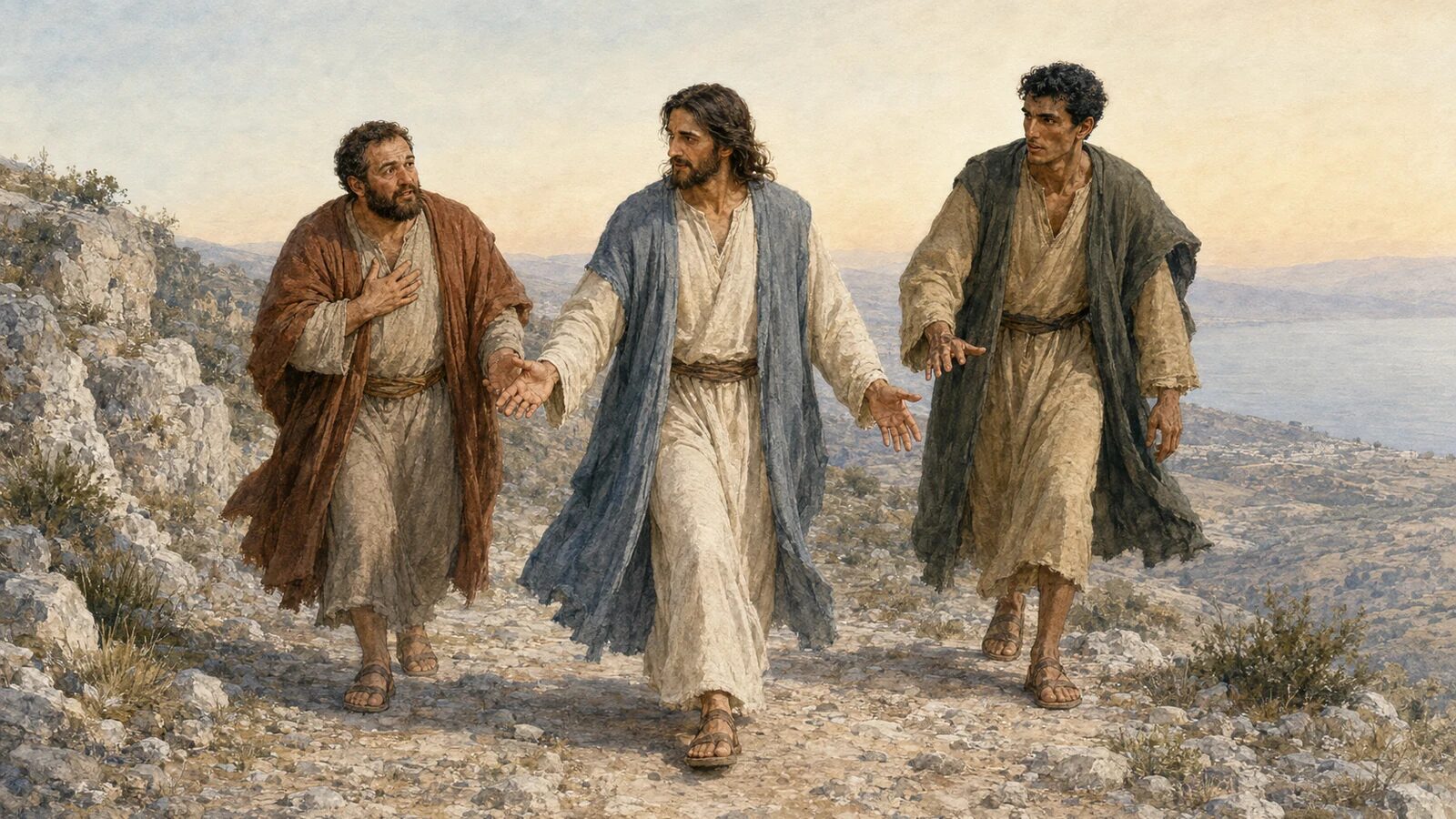
When I picture Simon the Zealot and Matthew the tax collector sitting at the same table with Jesus, I have to stop and think about what brought them together. Their old labels could have placed them on opposite sides of Roman rule, but neither label was strong enough to rule a life that belonged to Christ. That makes me want to look closely at what Scripture says about taxes and political power, but also about repentance and the allegiance God alone deserves.
Roman Taxes Made Political Allegiance Personal
Taxes were not a quiet bookkeeping issue in first-century Judea and Galilee. Roman power stood behind every assessment and demand for tribute. Customs charges and road tolls carried the same reminder: foreign rulers controlled the land, and local collectors helped those rulers receive their money.
The arrangement differed from place to place. After AD 6, Rome administered Judea directly through prefects such as Pontius Pilate. Galilee, where much of Jesus’ public ministry occurred, remained under Herod Antipas. He was a local ruler, but his authority depended on Rome. A person could therefore face imperial tribute, local taxes, customs charges, and commercial tolls within overlapping systems. This background explains why the Gospels mention both a tax paid to Caesar and collectors sitting at local tax offices.
The burden also touched Israel’s covenant memory. The LORD had delivered His people from Pharaoh, given them His Law, and promised a king from David’s line. Rome now demanded tribute while its rulers honored false gods and praised imperial glory. Some Jews cooperated with the system, many endured it, and others believed faithfulness to God required armed resistance.
“When you come to the land which the LORD your God is giving you, and possess it and dwell in it, and say, “I will set a king over me like all the nations that are around me,’ you shall surely set a king over you whom the LORD your God chooses; one from among your brethren you shall set as king over you; you may not set a foreigner over you, who is not your brother. But he shall not multiply horses for himself, nor cause the people to return to Egypt to multiply horses, for the LORD has said to you, “You shall not return that way again.’ Neither shall he multiply wives for himself, lest his heart turn away; nor shall he greatly multiply silver and gold for himself. “Also it shall be, when he sits on the throne of his kingdom, that he shall write for himself a copy of this law in a book, from the one before the priests, the Levites. And it shall be with him, and he shall read it all the days of his life, that he may learn to fear the LORD his God and be careful to observe all the words of this law and these statutes, that his heart may not be lifted above his brethren, that he may not turn aside from the commandment to the right hand or to the left, and that he may prolong his days in his kingdom, he and his children in the midst of Israel.
Deuteronomy 17 deepened that tension. It told Israel to appoint a brother rather than a foreigner as king. That king was not to gather the usual signs of royal power for himself. He had to copy God’s Law, read it throughout his life, and remain humble before his brethren. The passage condemns rulers who exalt themselves above God, but it does not command every Israelite living under conquest to refuse every tax. It regulates Israel’s covenant choice of a king; it does not directly settle how an individual must respond to an already established empire.
I find the distinctions Scripture gives us very helpful here. Daniel served within pagan governments but would not worship their gods. Jeremiah told the exiles to seek Babylon’s peace without pretending Babylon was holy. Jesus likewise recognized a limited civil sphere while reserving worship and final obedience for God.
The census connected with Quirinius in AD 6 shows what could happen when those distinctions disappeared. Josephus describes Judas the Galilean and Zadok urging revolt. They treated the tax as the beginning of slavery and insisted that God alone was ruler and Lord. Acts 5:37 also remembers Judas rising “in the days of the census.” His followers gathered, but Judas died and they were scattered.
We need care with the name Zealot. Josephus clearly applies it to a violent faction in Jerusalem during the First Jewish War, decades after Jesus chose the Twelve. Historians debate how directly that later party was connected to Judas’s earlier movement. The word can refer broadly to revolutionary zeal, name that later faction, or simply describe a zealous person. A serious concern for God’s kingship could still be twisted into murder and cruelty. Later revolutionary factions helped drive the war that ended with Jerusalem and the temple destroyed. That history warns us that sincere zeal does not make every method righteous.
Now it came to pass in those days that He went out to the mountain to pray, and continued all night in prayer to God. And when it was day, He called His disciples to Himself; and from them He chose twelve whom He also named apostles: Simon, whom He also named Peter, and Andrew his brother; James and John; Philip and Bartholomew; Matthew and Thomas; James the son of Alphaeus, and Simon called the Zealot; Judas the son of James, and Judas Iscariot who also became a traitor.
Luke calls Simon “the Zealot,” and Acts keeps the same title. Matthew and Mark call him the Cananaean, a term drawn from an Aramaic word connected with zeal. Simon may have had revolutionary nationalist ties before following Jesus, or the title may have described his religious zeal without membership in a defined political party. The New Testament never gives us his political résumé.
Popular retellings sometimes make Simon an assassin and then invent a dramatic scene in which he renounces violence. Scripture records neither claim. What it does tell us is firmer and better: Jesus chose Simon, Simon remained among the apostles, and he waited with the believers after Christ’s ascension. Whatever the title once meant, Simon’s defining allegiance became the Lord Jesus. Christ sent him to proclaim the kingdom, not to build it with a sword.
Jesus Called Tax Collectors to Repentance, Not Respectability
The New Testament calls tax collectors telonai. Their jobs varied. Some collected tolls on goods moving along roads, across borders, or through ports. Others handled revenue connected to Roman or local client rulers. The older word “publican” can mislead us if it makes every local collector sound like a wealthy Roman contractor.
The system gave collectors opportunities to overcharge and extort. It also made them visible collaborators with rulers their neighbors resented, so the Gospels often group them with “sinners.” That contempt had real moral causes, but Scripture never says every collector stole every coin. Jesus did not excuse exploitation, and He did not treat a collector’s reputation as a barrier to salvation.
Then he said to the multitudes that came out to be baptized by him, “Brood of vipers! Who warned you to flee from the wrath to come? Therefore bear fruits worthy of repentance, and do not begin to say to yourselves, “We have Abraham as our father.’ For I say to you that God is able to raise up children to Abraham from these stones. And even now the ax is laid to the root of the trees. Therefore every tree which does not bear good fruit is cut down and thrown into the fire.” So the people asked him, saying, “What shall we do then?” He answered and said to them, “He who has two tunics, let him give to him who has none; and he who has food, let him do likewise.” Then tax collectors also came to be baptized, and said to him, “Teacher, what shall we do?” And he said to them, “Collect no more than what is appointed for you.” Likewise the soldiers asked him, saying, “And what shall we do?” So he said to them, “Do not intimidate anyone or accuse falsely, and be content with your wages.”
John required fruit worthy of repentance. When tax collectors asked what that meant in their work, he told them to collect no more than the appointed amount. Honest records could not purchase forgiveness; they showed that the collector had stopped using public office for private theft.
John gave soldiers a related command. They were not to intimidate people or bring false accusations, and they had to be content with their wages. Public authority creates special opportunities for abuse, especially when money or weapons back it. Repentance reaches the exact place where power has harmed others.
John’s answer also shows that collecting revenue was not automatically sinful. If resignation were the only faithful response, he could have said so. Instead, he required honesty and restraint within the work. A believer serving in government remains accountable to God for every choice, even when a superior or accepted custom excuses wrongdoing.
As Jesus passed on from there, He saw a man named Matthew sitting at the tax office. And He said to him, “Follow Me.” So he arose and followed Him. Now it happened, as Jesus sat at the table in the house, that behold, many tax collectors and sinners came and sat down with Him and His disciples. And when the Pharisees saw it, they said to His disciples, “Why does your Teacher eat with tax collectors and sinners?” When Jesus heard that, He said to them, “Those who are well have no need of a physician, but those who are sick. But go and learn what this means: “I desire mercy and not sacrifice.’ For I did not come to call the righteous, but sinners, to repentance.”
Matthew was still sitting at the tax office when Jesus said, “Follow Me.” He got up and followed, and the next scene brings many tax collectors and sinners to a table with Jesus. The Pharisees saw compromise. Jesus saw sick people who needed a physician and sinners who needed repentance.
His presence did not bless extortion. His call took Matthew out from under his former controlling allegiance and placed every part of life under a new Lord. Mark and Luke call the man Levi, and the accounts have long been understood to describe the same disciple. Luke says Levi left all, while Matthew’s shorter account says he arose and followed. We can read them together without forcing Luke’s exact wording into Matthew’s sentence.
Jesus did not require Matthew to become socially respectable before he could follow. The command itself required new loyalty. Discipleship would govern how Matthew handled money, treated people, spoke, and worked.
Then Jesus entered and passed through Jericho. Now behold, there was a man named Zacchaeus who was a chief tax collector, and he was rich. And he sought to see who Jesus was, but could not because of the crowd, for he was of short stature. So he ran ahead and climbed up into a sycamore tree to see Him, for He was going to pass that way. And when Jesus came to the place, He looked up and saw him, and said to him, “Zacchaeus, make haste and come down, for today I must stay at your house.” So he made haste and came down, and received Him joyfully. But when they saw it, they all complained, saying, “He has gone to be a guest with a man who is a sinner.” Then Zacchaeus stood and said to the Lord, “Look, Lord, I give half of my goods to the poor; and if I have taken anything from anyone by false accusation, I restore fourfold.” And Jesus said to him, “Today salvation has come to this house, because he also is a son of Abraham; for the Son of Man has come to seek and to save that which was lost.”
Zacchaeus makes that change visible. He was a rich chief tax collector, yet Jesus called him by name and entered his home. Zacchaeus promised to give half his goods to the poor and repay fourfold anyone he had defrauded. His restitution was costly and concrete, but it did not buy salvation. Jesus said salvation had come because the Son of Man came to seek and save the lost.
Grace does not excuse financial abuse, and financial repair cannot cleanse sin before God. Christ saves by grace. Repentance then bears visible fruit where the former life caused harm. The wording, restitution laws, and place of Zacchaeus’s wealth receive fuller treatment in the complete study on Zacchaeus.
Matthew and Simon Came Under One Greater Lord
Scripture never records private arguments between Matthew and Simon, so we should not preach invented conversations as history. Even so, the apostolic lists establish something remarkable. Jesus chose a man associated with tax collection and another known for zeal into the same Twelve. Those labels could have represented opposite answers to foreign rule, but Christ’s authority stood above both.
Jesus did not unite them by saying political questions were meaningless. Taxation and oppression carry moral weight, but so do violence and greed. Political loyalty can also become idolatry when it is treated as ultimate. Jesus united His disciples by calling them to repent, believe the truth, and submit to one Lord.
The church should show the same power. Political backgrounds do not erase biblical truth, yet they cannot become rival gospels. No believer is finally defined by cooperation with a system or resistance to it. Modern labels from the left or right cannot master us. Everyone who is born again belongs to Christ and must learn obedience alongside the rest of His people.
This does not ask Christians to hide convictions in order to keep a shallow peace. Unity in Christ is submission to shared truth, not an agreement to call every policy harmless. Matthew still had to leave exploitation behind, and Simon could not baptize sinful methods with the word zeal. The gospel brings both men to the same place of repentance and then teaches them to love as brothers.
Then the Pharisees went and plotted how they might entangle Him in His talk. And they sent to Him their disciples with the Herodians, saying, “Teacher, we know that You are true, and teach the way of God in truth; nor do You care about anyone, for You do not regard the person of men. Tell us, therefore, what do You think? Is it lawful to pay taxes to Caesar, or not?” But Jesus perceived their wickedness, and said, “Why do you test Me, you hypocrites? Show Me the tax money.” So they brought Him a denarius. And He said to them, “Whose image and inscription is this?” They said to Him, “Caesar’s.” And He said to them, “Render therefore to Caesar the things that are Caesar’s, and to God the things that are God’s.” When they had heard these words, they marveled, and left Him and went their way.
The Pharisees and Herodians formed an unlikely alliance for this trap. Pharisees were known for close attention to the Law and inherited traditions. Herodians were associated with the political order surrounding Herod’s house. They did not share one program, but they joined against Jesus and covered their scheme with flattery.
They asked about the kensos, the imperial tribute or poll tax. A simple yes could alienate people who saw the tax as surrender to pagan rule. A no could make Jesus sound like the revolutionaries Rome executed. Jesus exposed their wickedness, asked for the tax coin, and made them identify Caesar’s image and inscription. His answer made them marvel because He accepted neither role in their trap. He was not Caesar’s religious spokesman, and He was not a tax-revolt claimant to the throne.
His command to “render” uses apodidomi, a verb that can mean give back, repay, pay, or give what is owed. This was a real obligation, not a voluntary gift to Caesar. Jesus did not declare Caesar righteous or divine, and paying with imperial currency did not require worshiping the emperor. He did teach that civil life brings real duties.
Those duties remain beneath God’s supreme claim. Government did not create human beings, so it cannot own the conscience or define true worship. It cannot forgive sin or become the final measure of good and evil. We should not make the first half of Jesus’ answer absolute and the second half ceremonial. We also should not use the second half to erase the first. Jesus did not endorse tax revolt.
Some teachers draw a helpful connection between Caesar’s image on the coin and God’s image in humanity. Jesus did not state the second question, “Whose image is on you?” so we must present that connection as an inference from Genesis rather than a missing quotation. A coin may be given in payment, but the person holding it belongs to God. His claim reaches our worship and every choice we make. Our bodies, minds, and possessions all belong to Him.
This truth also protects human dignity from the state. A ruler may collect lawful taxes and punish wrongdoing, but he may not treat people as property. Every official and every subject is a creature under God’s judgment. Even the emperor whose face filled the currency owed his breath and throne to God.
Civil Authority Is Real, but Its Claim Has a Boundary
Let every soul be subject to the governing authorities. For there is no authority except from God, and the authorities that exist are appointed by God. Therefore whoever resists the authority resists the ordinance of God, and those who resist will bring judgment on themselves. For rulers are not a terror to good works, but to evil. Do you want to be unafraid of the authority? Do what is good, and you will have praise from the same. For he is God’s minister to you for good. But if you do evil, be afraid; for he does not bear the sword in vain; for he is God’s minister, an avenger to execute wrath on him who practices evil. Therefore you must be subject, not only because of wrath but also for conscience’ sake. For because of this you also pay taxes, for they are God’s ministers attending continually to this very thing. Render therefore to all their due: taxes to whom taxes are due, customs to whom customs, fear to whom fear, honor to whom honor.
Paul wrote to Christians living under Rome, not to people under a government shaped by Christian confession. He still commanded submission because civil order exists beneath God’s sovereignty. Public authority is meant to restrain evil, recognize good, and bear the sword against wrongdoing.
That purpose does not make every ruler or law good. Scripture condemns corrupt judges and murderous kings, and it judges nations that exalt themselves. Romans 13 defines the civil office under God. It does not make officials infallible interpreters of their own power.
Paul directly names taxes and customs, telling believers to pay what is due. Respect and honor also have their proper place. A Christian may challenge error through lawful means, but resentment does not justify a dishonest return or stealing public revenue. In 1 Peter 2, believers are likewise told to submit to lawful human institutions, honor all people, fear God, and honor the king. The order is important: the king receives honor, but God alone receives fear in the highest sense. Tax laws differ and can be complex, so this is a biblical principle rather than individual tax advice. We should keep truthful records and seek qualified help when the law is unclear.
And when they had brought them, they set them before the council. And the high priest asked them, saying, “Did we not strictly command you not to teach in this name? And look, you have filled Jerusalem with your doctrine, and intend to bring this Man’s blood on us!” But Peter and the other apostles answered and said: “We ought to obey God rather than men. The God of our fathers raised up Jesus whom you murdered by hanging on a tree. Him God has exalted to His right hand to be Prince and Savior, to give repentance to Israel and forgiveness of sins. And we are His witnesses to these things, and so also is the Holy Spirit whom God has given to those who obey Him.”
The apostles who taught submission also refused a command to stop preaching Jesus. “We ought to obey God rather than men” marks the boundary. Government may not require idolatry or forbid obedience to Christ. When an authority truly commands sin, a Christian must refuse.
Daniel’s friends served Babylon but would not bow to its image. Daniel honored the king but kept praying when prayer was outlawed. The apostles accepted arrest and beating while continuing to preach. Their examples do not turn disobedience to one sinful command into permission for vengeance or every preferred kind of resistance. A believer must identify the real conflict with Scripture, refuse the evil, keep doing good, and remain willing to bear the consequences.
Conscience is bound to God’s Word, not to private impulse. “God told me” cannot make tax fraud holy, excuse violence, or justify contempt for every authority. The government’s claim is limited, but our preferences are not the limit. God’s command is.
That keeps Christian obedience from collapsing into either extreme. We do not treat the state as lord, and we do not treat all restraint as tyranny. We honor the office while recognizing that the person who holds it will answer to God. When lawful appeals are available, believers may use them honestly. When obedience to Christ brings punishment, they can endure without pretending the unjust command has become righteous.
Christ’s Kingdom Does Not Advance Through Worldly Force
Then Pilate entered the Praetorium again, called Jesus, and said to Him, “Are You the King of the Jews?” Jesus answered him, “Are you speaking for yourself about this, or did others tell you this concerning Me?” Pilate answered, “Am I a Jew? Your own nation and the chief priests have delivered You to me. What have You done?” Jesus answered, “My kingdom is not of this world. If My kingdom were of this world, My servants would fight, so that I should not be delivered to the Jews; but now My kingdom is not from here.” Pilate therefore said to Him, “Are You a king then?” Jesus answered, “You say rightly that I am a king. For this cause I was born, and for this cause I have come into the world, that I should bear witness to the truth. Everyone who is of the truth hears My voice.” Pilate said to Him, “What is truth?” And when he had said this, he went out again to the Jews, and said to them, “I find no fault in Him at all.
Jesus did not mean His kingdom has no claim over this world or no future earthly reign. He explained that its source and present method do not come from this rebellious order. If His kingdom belonged to that order, His servants would have fought to keep Him from being arrested.
Christ will return bodily and reign as King. Until then, the church advances His message by truthful witness in the Holy Spirit’s power. We pray, serve, practice biblical discipline, and sometimes suffer for our testimony. We do not coerce conversion with a sword. Killing political enemies or capturing an institution cannot give new birth or cleanse a heart. The kingdom gathers people as they hear the truth and believe the King.
Civil government still has a different responsibility to restrain wrongdoing. Christians may debate wise policies within biblical limits, but the church’s commission remains the gospel rather than armed conquest. A fuller examination of force and civil duty is available in the biblical study on war and fighting.
Then the whole multitude of them arose and led Him to Pilate. And they began to accuse Him, saying, “We found this fellow perverting the nation, and forbidding to pay taxes to Caesar, saying that He Himself is Christ, a King.” Then Pilate asked Him, saying, “Are You the King of the Jews?” He answered him and said, “It is as you say.” So Pilate said to the chief priests and the crowd, “I find no fault in this Man.” But they were the more fierce, saying, “He stirs up the people, teaching throughout all Judea, beginning from Galilee to this place.”
Jesus’ enemies then accused Him of the very tax revolt He had rejected. They told Pilate He forbade payment to Caesar and presented Himself as a political king. Jesus truly is Christ the King, but He had not organized a tax rebellion. His accusers translated their theological hostility into charges Rome would punish, and Pilate found no fault in Him.
That false charge shows why Christians need to speak with careful honesty. We must not flatter government or hide its wrongdoing. We should also give no truthful basis for accusations of fraud or lawless violence. Truth should govern our public witness.
Taxes can be unjust, wasteful, complicated, and burdensome. Scripture strongly condemns rulers who exploit the poor and courts that shelter oppression. Paying a tax does not approve every use of public money, just as using a denarius did not worship the emperor pictured on it.
Believers may disagree about tax rates, budgets, administrative systems, and lawful ways to seek reform. They should argue from evidence and biblical principles, not use those choices as tests of whether another Christian belongs to Christ. Lawful change can be pursued through the means available to us, including petitions, voting, and appeals. Even when we expose corruption, we must not lie about people or threaten them. Hatred has no rightful place in the work.
The collector must not exploit the public, and the citizen must not answer with fraud. Officials should remember God’s judgment, while activists must not treat anger as a moral blank check. No nation or party may become our savior. No leader or cause may take the place of our Lord or become our final authority. If a command requires sin, we obey God first and accept the cost.
Ordinary faithfulness can look less dramatic than political outrage, but it reaches the details that reveal our allegiance. We report income truthfully and refuse a bribe when corruption offers an easier path. We speak accurately about an opponent and help people who have been mistreated. We also pray for rulers without confusing prayer with approval. Christians are ambassadors for Christ before they represent any earthly program, a calling explored further in the study on ambassadors of Christ.
The Gospel Gives Us a Greater Allegiance
Therefore remember that you, once Gentiles in the flesh–who are called Uncircumcision by what is called the Circumcision made in the flesh by hands– that at that time you were without Christ, being aliens from the commonwealth of Israel and strangers from the covenants of promise, having no hope and without God in the world. But now in Christ Jesus you who once were far off have been brought near by the blood of Christ. For He Himself is our peace, who has made both one, and has broken down the middle wall of separation, having abolished in His flesh the enmity, that is, the law of commandments contained in ordinances, so as to create in Himself one new man from the two, thus making peace, and that He might reconcile them both to God in one body through the cross, thereby putting to death the enmity. And He came and preached peace to you who were afar off and to those who were near. For through Him we both have access by one Spirit to the Father. Now, therefore, you are no longer strangers and foreigners, but fellow citizens with the saints and members of the household of God, having been built on the foundation of the apostles and prophets, Jesus Christ Himself being the chief cornerstone, in whom the whole building, being fitted together, grows into a holy temple in the Lord, in whom you also are being built together for a dwelling place of God in the Spirit.
Ephesians speaks directly about Jews and Gentiles being reconciled through Christ. The same truth reaches the hostility pictured by a tax collector and a zealous nationalist. Neither background remains the believer’s master. Christ makes one people from those who were far apart.
Political peace cannot produce that unity because every person has sinned and first needs reconciliation to God. Jesus is the eternal Son, fully God and fully man. He was born of a virgin and remained completely without sin.
Wicked men physically tortured, punished, and killed Jesus. He willingly bore that real punishment for our sins in His innocent body. He shed His blood, died, was buried, and rose bodily. The Father did not punish, curse, abandon, strike, or bruise Jesus, and He did not pour wrath on Him.
Christ died for the whole world, so God’s offer of salvation is genuine even though people may resist and reject it. Everyone who repents and believes is forgiven and justified before God. That person is born again and made new, with the Holy Spirit dwelling within and sealing the believer in eternal security. This security never permits lawlessness, and a shallow profession does not prove that someone has truly been born again.
Matthew did not save himself by leaving the booth. Simon was not saved by intense zeal, and Zacchaeus did not purchase grace through restitution. Christ alone saves. His saving rule then transforms how His people use money and power, how they treat enemies, and where they place their allegiance.
A former political identity may help explain our history, but it cannot rule our fellowship. In Christ, people who once stood far apart become fellow citizens in God’s household. Jesus Himself is the cornerstone. The church does not need a weaker unity built on silence about truth; it needs the deeper unity produced when repentant sinners submit together to Him.
This greater allegiance changes how we see both insiders and outsiders. The person who once profited from a corrupt system is not beyond Christ’s mercy. The person once consumed by resistance is not beyond His power to redirect. Neither one earns a place through usefulness to a cause. Both enter by the blood of Christ, receive the same Spirit, and grow together as part of God’s dwelling.
My Final Thoughts
Simon and Matthew leave me with a picture the church still needs. Jesus did not excuse exploitation, bless violent zeal, or surrender God’s authority to Caesar. He called both men under His own rule and made them servants of one gospel. We should pay what is lawfully due, pursue justice truthfully, and refuse any command that requires sin, but no political label should become our deepest identity. Caesar’s claim stops at the boundary God gives it; God’s claim reaches the whole person. I want the way I handle money and use my citizenship to show that I belong first and forever to Jesus Christ. My conscience, my relationships, and my hope belong to Him too.