
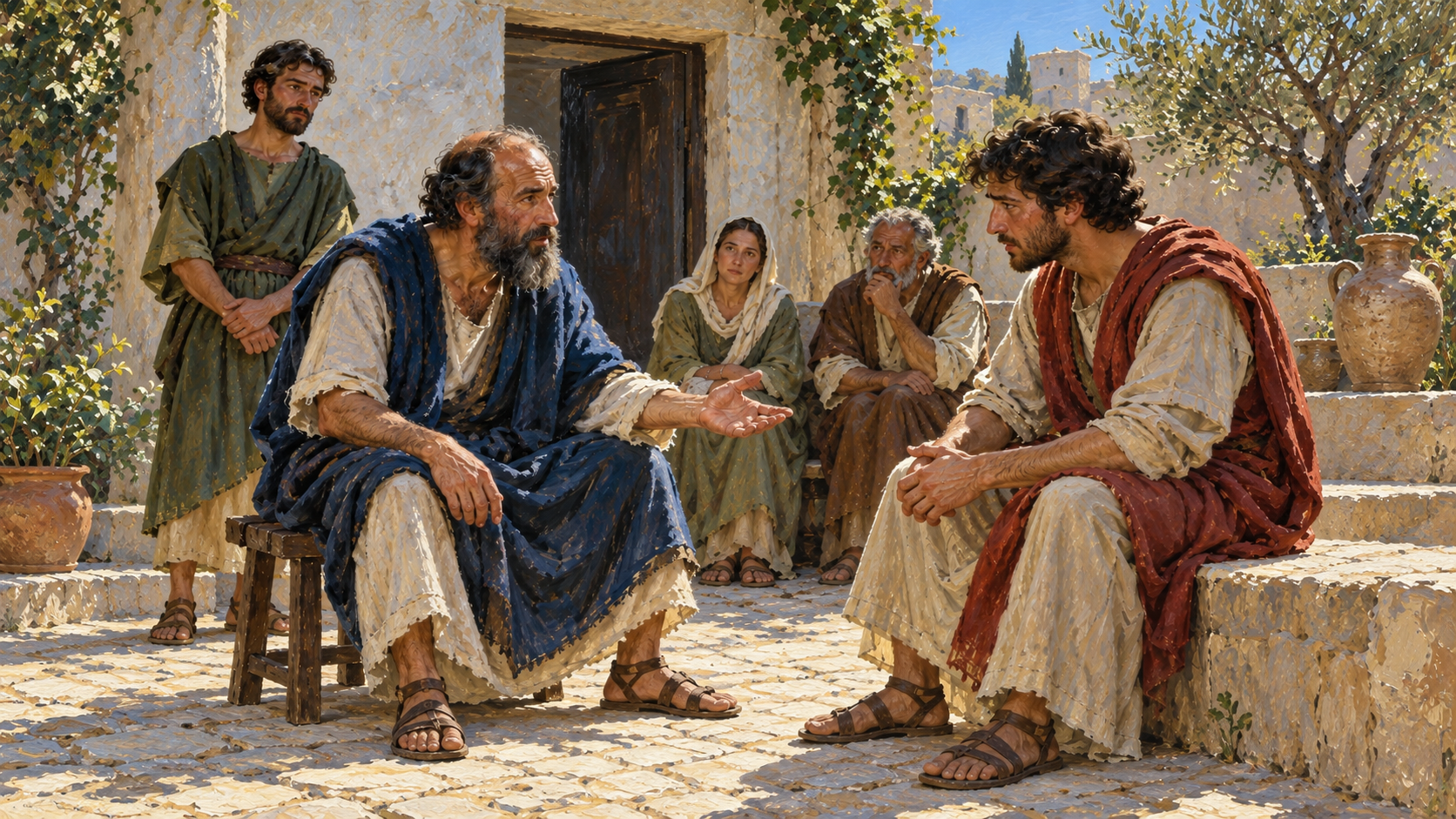
What does Paul mean when he calls himself and his coworkers ambassadors for Christ? We need to understand the authority they were given before applying that description to ourselves. Otherwise, we can end up claiming the apostles’ authority or saying little more than that Christians represent Jesus. Paul’s own explanation helps us see how the whole church bears witness today.
Paul’s Ministry and the New Creation
Paul used the phrase “ambassadors for Christ” in his second letter to the Corinthians while defending the character and message of his ministry. His critics judged by outward appearance and public polish, valuing the advantage an impressive image could give them. Paul explained his service very differently. Christ’s love compelled him because Christ died for all, so those who live should no longer live for themselves. They should live for the One who died and rose again (2 Corinthians 5:14–15).
Paul served sincerely even though weakness and suffering marked his ministry. In the previous chapter, he described himself as hard-pressed without being crushed and perplexed without falling into despair. Persecution had not left him abandoned, and being struck down had not destroyed him (2 Corinthians 4:8–9). I do not see him trying to impress the Corinthians as a celebrity or spiritual strongman. He preached Christ Jesus the Lord and described himself as a servant for Jesus’ sake (2 Corinthians 4:5).
With that ministry in view, Paul says God reconciled “us” to Himself through Jesus Christ and gave “us” the ministry of reconciliation (2 Corinthians 5:18). He was speaking immediately of himself and his apostolic coworkers. Their commission was unique: they proclaimed the gospel and gave the authoritative New Testament witness on which the church is founded. We need to preserve that distinction when we use the ambassador image. No modern teacher can claim their apostolic office or add revelation to Scripture.
That unique commission did not leave the gospel confined to the first century. The apostles’ message has been entrusted to the church, and every believer is called to confess Christ and live as His disciple. Wherever God has placed me, I can make Him known, but I remain under the authority of the completed apostolic Scriptures. Neither I nor the church has a private message to invent, and our opinions do not acquire God’s authority simply because we speak about Him.
Paul then writes, “Therefore, if anyone is in Christ, he is a new creation; old things have passed away; behold, all things have become new” (2 Corinthians 5:17). Being in Christ is more than adopting a religious label while the old self remains in charge. God has brought a sinner into a new relationship with His Son.
Before receiving that new life, a person is ruled by sin and separated from God. Better habits and church attendance cannot make him new, and neither can baptism or an emotional experience. The new life begins by grace as God gives it through the gospel. Those who truly believe are forgiven and indwelt by the Holy Spirit, and God gives their hearts a new direction. They still need correction and must grow in obedience, but rebellion no longer defines who they are.
Belonging to Christ helps me understand whom I am supposed to represent. Christians do not speak for themselves or use His name to advance a political tribe, social standing, or personal brand. We belong to the Savior who died and rose again, so our words and conduct should draw attention to Him. That does not mean we immediately understand every doctrine or stop facing temptation. Christ has made us His own and continues to conform us to His image. Every real change begins with His mercy, giving us reason to thank Him rather than take pride in ourselves.
The Message Is Reconciliation Through Christ
To understand reconciliation, we first need to recognize that we are separated from God. Human beings are not naturally at peace with their holy Creator, because sin is rebellion against Him. It makes us guilty and brings death and judgment. Paul describes people as dead in trespasses and sins and by nature children of wrath (Ephesians 2:1–3). Low self-esteem, cultural division, or a lack of information cannot explain the deepest problem he is describing. We need peace with the God against whom we have sinned.
God took the initiative to bring that peace. Paul writes that God was in Christ reconciling the world to Himself and not imputing their trespasses to them. He entrusted the word of reconciliation to the apostolic messengers (2 Corinthians 5:19). God did not negotiate away His holiness so sinners could keep their rebellion. He graciously dealt with sin through His Son in order to bring people into peace with Himself.
Christ died for the whole world, and God genuinely calls every person to repent and believe. That gives me reason to offer the message freely, without leaving anyone to wonder whether Christ’s invitation excludes him. People can still resist and reject His offer. We therefore cannot promise that everyone will be saved or that every spiritual path leads to God. As ambassadors, we bring the same plea Paul gave: “Be reconciled to God” (2 Corinthians 5:20).
We should make that plea with compassion and urgency, speaking plainly because God has provided the only Savior. We must not manipulate someone’s emotions or promise earthly success, and we must not hide the call to repentance. An ambassador has not invented the good news he brings. He is delivering God’s testimony about His Son, so he can speak with confidence in the message itself.
Paul explains the work of Christ in 2 Corinthians 5:21: “For He made Him who knew no sin to be sin for us, that we might become the righteousness of God in Him.” I cannot understand that sacrifice rightly if I overlook Jesus’ sinlessness. Jesus is the eternal Son, fully God and fully man. He was born of a virgin and remained completely sinless, so He never needed forgiveness and did not deserve death.
Paul does not say that Jesus became sinful or that the Father treated Him as morally corrupt. Christ remained holy throughout His sacrifice. Nor does the verse teach that God made Himself die or turned against His Son. Wicked men physically tortured Jesus, while He willingly gave Himself in obedience to the Father. He bore the punishment for our sins in His innocent body and shed His blood. After He died, His body was buried. The Father did not abandon or curse the Son, nor did He punish Jesus as though He were a guilty sinner. This was the holy and willing offering of the sinless Lamb, made once for all.
Through Christ, believers become the righteousness of God in Him. We do not become divine or acquire a reason to be self-righteous. God receives those who trust His Son because Christ’s righteousness is the ground of their acceptance. If I stand before Him on that basis, I stand as someone who has received mercy, not earned His favor. The cross therefore teaches me humility even as it gives me the message I am to share.
Jesus rose bodily on the third day, showing that death had not defeated Him and that His sacrifice is complete. He is the only Mediator between God and mankind. A priest or church ritual cannot take His place, and neither can a saint or a spiritual experience. No amount of moral achievement can provide what He alone gives. An ambassador must direct people to Christ Himself.
What an Ambassador Is and Is Not
An ambassador carries the authorized message of a ruler or government to a place that is not his permanent home. He represents the one who sent him rather than creating national policy himself. That helps explain the responsibility Paul is describing. An ambassador cannot edit the king’s words to make them popular or attach his own demands as though they came from the king.
For Christians, that authorized message is the gospel revealed in Scripture. We can explain it in ordinary language and answer honest objections, applying it wisely to the people we address. But we may never change who Jesus is or suggest that sin is harmless. We cannot promise salvation apart from repentance and faith. I also need to distinguish my political preferences from Christ’s commands. Christians should take civic responsibility seriously, but the church’s saving message is not a campaign platform.
Calling believers ambassadors does not give every Christian the apostles’ unique foundational role. It does not make someone a prophet receiving new revelation or confer an office of authority over other believers. Christ gives qualified men the authoritative teaching leadership of a local church; the ambassador image does not make everyone an elder. Yet all believers may speak the truth of the gospel. Each can serve others and pray while making disciples according to the gifts and responsibilities God has given.
An ambassador answers to the king who sent him, which should keep him humble. If I use Christ’s name to gain status or control people, I am misusing the position of a servant. Christians cannot demand unquestioning loyalty to their own opinions. We answer to the King, and Scripture remains the final authority for testing every ministry and message.
The Whole Church Bears Witness With Its Life
Before He ascended, Jesus told His disciples to make disciples of all nations. They were to baptize and teach people to observe everything He commanded (Matthew 28:18–20). This commission belongs to the church’s continuing mission. Baptism comes after salvation and identifies the believer with Christ; it does not cause salvation. The church proclaims the gospel because it first received the gospel.
Some Christians speak publicly or travel as missionaries, while others support their work. Many bear witness through ordinary life at home or among people in workplaces, neighborhoods, and schools. I would not consider that quiet faithfulness less valuable simply because fewer people see it. Paul compares the church to a body whose members have different functions, with each member needed for the health of the whole (1 Corinthians 12:12–27).
Christian witness involves much more than winning an argument. We may explain the gospel or answer a question gently, but people also see how we serve in Christ’s name. Welcoming a stranger or patiently raising children in the truth bears witness to Him. So does supporting faithful workers and living honestly before people who may never enter a church building. I cannot use those actions as a substitute for telling people the gospel. They do, however, give the message a fitting setting by showing how Christ’s grace changes ordinary life.
Guarding the church’s doctrine is part of faithful witness. Reconciliation would be an empty message if we denied Christ’s deity or the reality of sin. His shed blood and bodily resurrection must remain central, along with the need for personal faith. Loving people does not require us to accept every spiritual claim or refuse to identify false teaching. We should tell the truth with the compassion of people who know that grace is what saved us.
Paul’s message and manner belonged together. He preached Christ Jesus the Lord rather than himself. He also said that he and his coworkers gave no offense, so the ministry would not be blamed (2 Corinthians 6:3). Good behavior cannot save Christians, but their conduct can either adorn or contradict the gospel they confess.
Jesus told His disciples to let their light shine so people would see their good works and glorify their Father in heaven (Matthew 5:16). That purpose should affect how I serve. Good works are the visible result of a life submitted to God, not a performance meant to bring praise to me. A Christian can show that change by being honest and dependable at work. Sexual purity and generosity also make Christ’s character visible, as do forgiveness and care for someone weak. Even the way we restrain our speech can show whom we belong to.
Christians still sin, and the ambassador image gives us no excuse to hide it. If I sin, I need to confess and repent rather than protect my appearance. I should receive God’s forgiveness and seek reconciliation where possible. Hiding sin allows hypocrisy to grow, while bringing it into the light acknowledges the truth. Humble repentance can itself become a strong testimony to the reality of grace.
Holiness does not require us to withdraw from people. Jesus prayed that the Father would keep His disciples from the evil one rather than remove them from the world (John 17:15–18). We still live among relatives and neighbors who need the gospel, and we work beside people who need it too. We can carry out those ordinary responsibilities without letting the world’s rebellion determine our moral direction.
Faithfulness May Be Costly
Paul’s life gives me no reason to expect that faithful service will always bring admiration or prosperity. He endured beatings and imprisonment as well as slander and opposition, and concern for the churches burdened him. Yet he continued preaching Christ. His endurance came from the risen Lord and the hope of resurrection, rather than from the strength of his personality (2 Corinthians 4:13–18).
Peter likewise tells believers to be ready to give a defense when someone asks the reason for their hope. They are to answer with meekness and fear while keeping a good conscience (1 Peter 3:15–16). If I am trying to dominate the conversation or embarrass the other person, I have lost sight of that instruction. My purpose should be to honor Christ as Lord and answer faithfully when the opportunity comes.
We also need to be honest about why opposition comes. Sometimes Christians provoke it by speaking harshly or carelessly, or by turning the gospel into a political fight. Those failures need correction. At other times, people oppose the message because it confronts their pride and calls them to Christ. Rejection of the cross should not surprise us, but it never gives us permission to answer with cruelty. As Christ’s servants, we are to overcome evil with good and leave judgment to God.
I do not want the church to hide the gospel for the sake of comfort, but seeking conflict to look courageous would be just as misguided. The church must avoid both fear and spectacle. We can speak steadily and truthfully while depending on God in prayer, willing to suffer when obedience requires it.
Citizens of Heaven Speak for Their King
Paul tells the Philippians that our citizenship is in heaven, from which we eagerly wait for the Savior, the Lord Jesus Christ (Philippians 3:20). My highest allegiance therefore belongs to Him. That gives me no reason to neglect my earthly neighbors or become indifferent to public life. It does mean that my final hope rests in Christ’s kingdom rather than in an earthly government.
Jesus will return bodily. I understand Scripture to teach that He will gather His church before the Tribulation and later return to deliver Israel. He will then reign for a literal thousand years. That expectation gives me reason to speak about Him urgently without becoming frantic. Christians do not have to manufacture His kingdom through political power or cultural pressure. We announce the King who will establish perfect righteousness in His time.
Until then, believers pray for those in authority and seek peace. We obey lawful commands, but we must refuse an order that requires disobedience to God. Every ruler remains accountable to Him. Because our confidence rests in the unchanging reign of Jesus Christ, it cannot depend on the fortunes of human institutions.
Paul asked the Colossians to pray that God would open a door for the Word and help him speak the mystery of Christ clearly. He told them to walk wisely toward people outside the church. Their speech should be gracious and seasoned with salt so they would know how to answer each person (Colossians 4:2–6).
Paul’s instruction gives us something practical to do: pray for opportunities and ask God for courage. When we speak with someone, we should listen instead of assuming what that person believes. We can then open Scripture and explain the gospel plainly, telling the truth about sin and judgment before pointing to Christ’s greater mercy. I do not need to force the conversation through a script or promise a result God has not promised. My responsibility is to speak the message He gave us and leave the response with Him.
Clever words cannot convert anyone, so a faithful ambassador remains dependent on God. The Holy Spirit convicts and gives life. We pray and speak because God uses His people as witnesses, and we keep serving through difficulty because the result belongs to Him. Readers who want to study these responsibilities further can continue with the studies on evangelism, the gospel, discipleship, and prayer.
My Final Thoughts
An ambassador’s life and message belong to the King who sent him. I cannot rewrite the gospel to gain approval or claim the apostles’ unique authority for myself. I can speak clearly about reconciliation through the crucified and risen Christ, and His grace should shape how I live among the people around me. If you have never trusted Him, receive that reconciliation through repentance and faith. If you belong to Him, carry His message with humility and hope. The risen King reigns now, and He will return.