
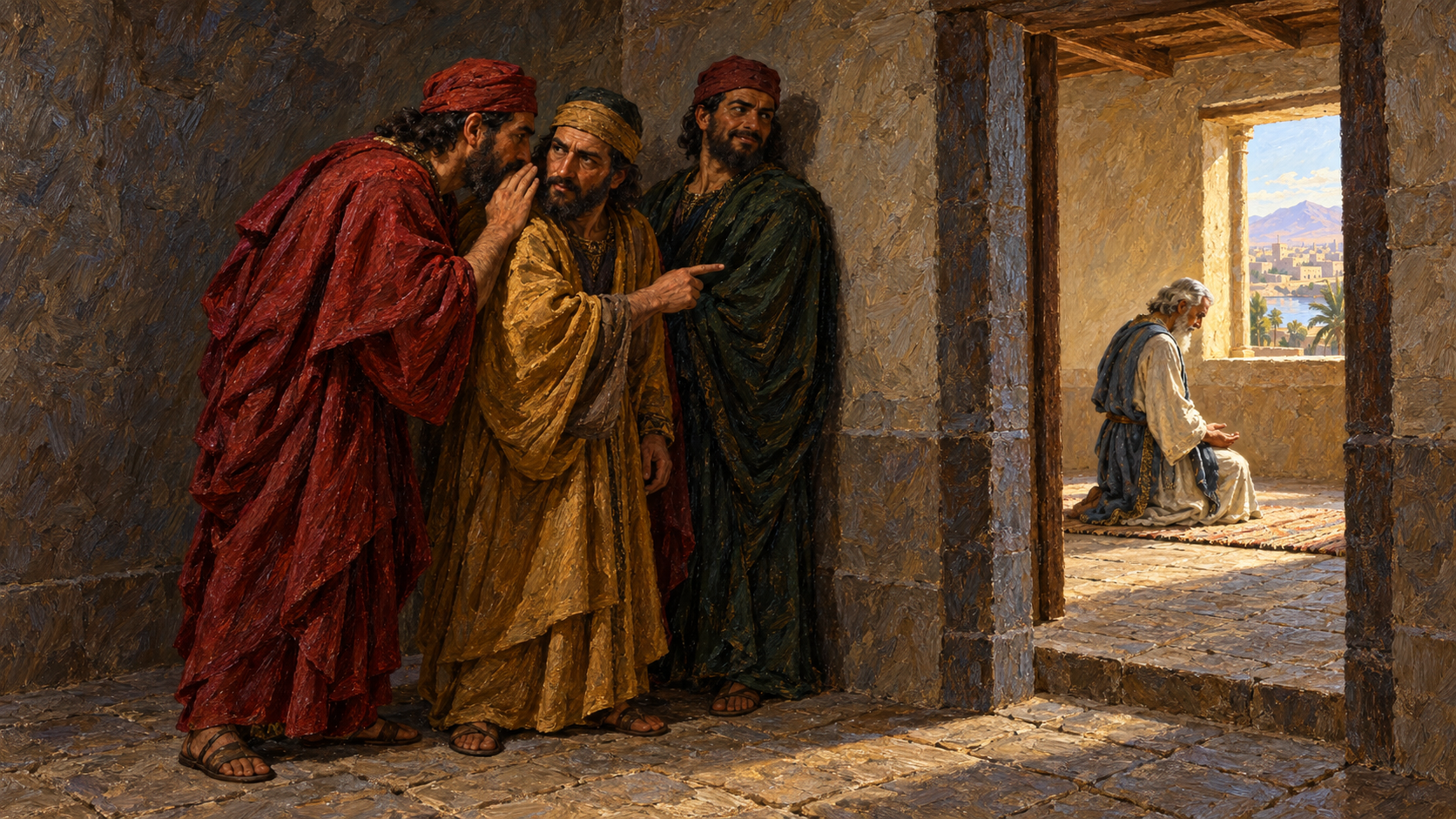
Planning ahead is necessary in family life, work, and ministry. Scripture commends diligence and wise counsel, so having a plan is not the problem. A plan becomes wicked because of what someone intends to accomplish or the sinful methods used to accomplish it. I want to examine how Scripture exposes that deliberate harm and teaches us to respond without becoming deceitful ourselves.
When Planning Becomes Wicked Scheming
Careful organization cannot make theft righteous. A person may arrange every detail of a false accusation and recruit respected people to support it, but their agreement does not change the lie. A good result does not excuse a method that depends on deception, exploitation, or unjust coercion either. I need to consider both what I want and what I am prepared to do to get it.
Planning language is not always negative in the Bible. Joseph told his brothers that they intended evil against him while God intended good through the same events (Genesis 50:20). Proverbs commends plans established through counsel while condemning a heart that devises wicked plans. A wise plan respects God’s commands, seeks another person’s genuine good, and remains open to honest correction. What is intended and how it is pursued determine the moral character of the plan.
Nor does secrecy by itself prove corruption. Families, doctors, pastors, and others may need to protect confidential information, and security arrangements can require privacy. A wicked scheme uses concealment to advance an evil purpose or hide corrupt methods. Private meetings, money, or an institution’s authority can then give the plan reach and credibility while keeping the person being harmed from understanding what is happening.
God knows those purposes and methods, including words the target never hears. We must still distinguish His knowledge from our suspicions. Calculated evil is real, and people threatened by it need protection. Reckless accusations are also real and can inflict the false witness and division this study addresses. We need to take a report seriously while being honest about what has been established.
The serpent’s deception in Genesis shows how someone can make disobedience appear desirable:
Now the serpent was more cunning than any beast of the field which the LORD God had made. And he said to the woman, "Has God indeed said, 'You shall not eat of every tree of the garden'?" And the woman said to the serpent, "We may eat the fruit of the trees of the garden; but of the fruit of the tree which is in the midst of the garden, God has said, 'You shall not eat it, nor shall you touch it, lest you die.'" Then the serpent said to the woman, "You will not surely die. For God knows that in the day you eat of it your eyes will be opened, and you will be like God, knowing good and evil." So when the woman saw that the tree was good for food, that it was pleasant to the eyes, and a tree desirable to make one wise, she took of its fruit and ate. She also gave to her husband with her, and he ate. Then the eyes of both of them were opened, and they knew that they were naked; and they sewed fig leaves together and made themselves coverings. And they heard the sound of the LORD God walking in the garden in the cool of the day, and Adam and his wife hid themselves from the presence of the LORD God among the trees of the garden. Then the LORD God called to Adam and said to him, "Where are you?" So he said, "I heard Your voice in the garden, and I was afraid because I was naked; and I hid myself." And He said, "Who told you that you were naked? Have you eaten from the tree of which I commanded you that you should not eat?" Then the man said, "The woman whom You gave to be with me, she gave me of the tree, and I ate." And the LORD God said to the woman, "What is this you have done?" The woman said, "The serpent deceived me, and I ate." So the LORD God said to the serpent: "Because you have done this, You are cursed more than all cattle, And more than every beast of the field; On your belly you shall go, And you shall eat dust All the days of your life. And I will put enmity Between you and the woman, And between your seed and her Seed; He shall bruise your head, And you shall bruise His heel." To the woman He said: "I will greatly multiply your sorrow and your conception; In pain you shall bring forth children; Your desire shall be for your husband, And he shall rule over you." Then to Adam He said, "Because you have heeded the voice of your wife, and have eaten from the tree of which I commanded you, saying, 'You shall not eat of it': "Cursed is the ground for your sake; In toil you shall eat of it All the days of your life. Both thorns and thistles it shall bring forth for you, And you shall eat the herb of the field. In the sweat of your face you shall eat bread Till you return to the ground, For out of it you were taken; For dust you are, And to dust you shall return." And Adam called his wife's name Eve, because she was the mother of all living. Also for Adam and his wife the LORD God made tunics of skin, and clothed them. Then the LORD God said, "Behold, the man has become like one of Us, to know good and evil. And now, lest he put out his hand and take also of the tree of life, and eat, and live forever"– therefore the LORD God sent him out of the garden of Eden to till the ground from which he was taken. So He drove out the man; and He placed cherubim at the east of the garden of Eden, and a flaming sword which turned every way, to guard the way to the tree of life.
The serpent questioned God’s command, denied His warning about death, and promised that eating would open their eyes and make them like God. Their eyes did open, but the promise concealed what disobedience would bring. Adam and Eve discovered their nakedness, hid in fear, and faced the consequences God announced. The death God had warned about followed their disobedience, despite the serpent’s denial.
Deception does not always require every sentence to be false. A person can quote someone’s actual words while withholding the context needed to understand them. If I arrange true details to make an innocent person appear guilty, saying “I never said that exact sentence” does not excuse what I intended others to believe. False urgency, flattery, threats, and promises someone never intends to keep can also draw people into a scheme.
Not every sin follows that kind of calculation. Fear, anger, habit, or ignorance can affect a quick sinful choice. Wicked scheming describes deliberate planning, and Proverbs 6 shows how that planning engages the whole person:
A worthless person, a wicked man, Walks with a perverse mouth; He winks with his eyes, He shuffles his feet, He points with his fingers; Perversity is in his heart, He devises evil continually, He sows discord. Therefore his calamity shall come suddenly; Suddenly he shall be broken without remedy. These six things the LORD hates, Yes, seven are an abomination to Him: A proud look, A lying tongue, Hands that shed innocent blood, A heart that devises wicked plans, Feet that are swift in running to evil, A false witness who speaks lies, And one who sows discord among brethren.
The movement from “six things…yes, seven” builds a list rather than correcting a counting mistake. It culminates in the person sowing discord among brethren, drawing attention to the harm done within a community. These are not the only sins God hates; the NET Bible’s note on the numerical pattern explains that the form does not make the list exhaustive.
The heart devises evil, the mouth advances it, and gestures draw others into what is happening. Hands shed innocent blood, and feet hurry toward evil. The schemer has organized his abilities around wrongdoing, with false witness and discord extending the injury to other people. God calls these things abominable because He is morally opposed to lies, proud contempt, and the destruction of a neighbor. His hatred of evil is not an irrational fit of temper.
Psalm 36 describes the self-flattery that allows a person to keep planning without facing his guilt:
An oracle within my heart concerning the transgression of the wicked: There is no fear of God before his eyes. For he flatters himself in his own eyes, When he finds out his iniquity and when he hates. The words of his mouth are wickedness and deceit; He has ceased to be wise and to do good. He devises wickedness on his bed; He sets himself in a way that is not good; He does not abhor evil. Your mercy, O LORD, is in the heavens; Your faithfulness reaches to the clouds. Your righteousness is like the great mountains; Your judgments are a great deep; O LORD, You preserve man and beast. How precious is Your lovingkindness, O God! Therefore the children of men put their trust under the shadow of Your wings. They are abundantly satisfied with the fullness of Your house, And You give them drink from the river of Your pleasures. For with You is the fountain of life; In Your light we see light. Oh, continue Your lovingkindness to those who know You, And Your righteousness to the upright in heart. Let not the foot of pride come against me, And let not the hand of the wicked drive me away. There the workers of iniquity have fallen; They have been cast down and are not able to rise.
The wicked man has no fear of God before his eyes. He flatters himself, gives up wisdom and goodness, and devises evil even on his bed. His deceitful speech grows from a heart that no longer abhors evil. Describing such conduct as poor communication would leave the deliberate wrongdoing unnamed.
The psalm then directs us to God’s mercy, faithfulness, and righteousness. The threatened person asks Him for protection rather than accepting the wicked man’s judgment of himself. I need to submit my intentions to His truthful judgment rather than defend a misleading omission as clever wording. A rumor repeated often enough can also turn a group against someone before the person has an opportunity to answer.
How Schemes Exploit Weakness and Power
Psalm 10 describes a schemer watching the helpless as prey. The psalmist names both the injury and the offender’s assumption that he will not be called to account:
Why do You stand afar off, O LORD? Why do You hide in times of trouble? The wicked in his pride persecutes the poor; Let them be caught in the plots which they have devised. For the wicked boasts of his heart's desire; He blesses the greedy and renounces the LORD. The wicked in his proud countenance does not seek God; God is in none of his thoughts. His ways are always prospering; Your judgments are far above, out of his sight; As for all his enemies, he sneers at them. He has said in his heart, "I shall not be moved; I shall never be in adversity." His mouth is full of cursing and deceit and oppression; Under his tongue is trouble and iniquity. He sits in the lurking places of the villages; In the secret places he murders the innocent; His eyes are secretly fixed on the helpless. He lies in wait secretly, as a lion in his den; He lies in wait to catch the poor; He catches the poor when he draws him into his net. So he crouches, he lies low, That the helpless may fall by his strength. He has said in his heart, "God has forgotten; He hides His face; He will never see." Arise, O LORD! O God, lift up Your hand! Do not forget the humble. Why do the wicked renounce God? He has said in his heart, "You will not require an account." But You have seen, for You observe trouble and grief, To repay it by Your hand. The helpless commits himself to You; You are the helper of the fatherless. Break the arm of the wicked and the evil man; Seek out his wickedness until You find none. The LORD is King forever and ever; The nations have perished out of His land. LORD, You have heard the desire of the humble; You will prepare their heart; You will cause Your ear to hear, To do justice to the fatherless and the oppressed, That the man of the earth may oppress no more.
The wicked man boasts about what he wants, persecutes the poor, and waits in secret to catch them. He assumes God has forgotten and will not require an account. The psalm answers that claim: God sees trouble and grief, hears the humble, and acts for the fatherless and oppressed. The victim’s lack of influence does not make the harm invisible to Him.
That kind of exploitation can take advantage of money, physical strength, or standing within an institution. Someone may have no independent witness, little knowledge of the dominant language, or no money to challenge a powerful person. A schemer counts on those weaknesses to keep the victim from being heard. We should make it possible to report wrongdoing, preserve evidence carefully, and prevent retaliation instead of treating someone’s position as proof that the accusation cannot be true.
False witness can cost a person a reputation, freedom, or life. It includes fabricated allegations, altered records, and testimony people have been coached to give. Selected information can also be released to create a false impression. Even if I did not invent the allegation, repeating it recklessly as fact can multiply the injustice.
A person sowing discord may work more quietly, exaggerating a disagreement or assigning hostile motives to ordinary words. Separate conversations can keep people suspicious of one another while preventing direct contact that would expose the distortion. Biblical peacemaking requires truth. It must not turn abuse into a supposed personality conflict in which the person harmed is expected to compromise for the sake of appearances. Reconciliation cannot be manufactured by silencing a serious complaint or demanding immediate access to the victim.
Micah describes people whose power allowed them to turn covetousness into the seizure of other households’ property:
Woe to those who devise iniquity, And work out evil on their beds! At morning light they practice it, Because it is in the power of their hand. They covet fields and take them by violence, Also houses, and seize them. So they oppress a man and his house, A man and his inheritance. Therefore thus says the LORD: "Behold, against this family I am devising disaster, From which you cannot remove your necks; Nor shall you walk haughtily, For this is an evil time. In that day one shall take up a proverb against you, And lament with a bitter lamentation, saying: 'We are utterly destroyed! He has changed the heritage of my people; How He has removed it from me! To a turncoat He has divided our fields.'" Therefore you will have no one to determine boundaries by lot In the assembly of the LORD. "Do not prattle," you say to those who prophesy. So they shall not prophesy to you; They shall not return insult for insult. You who are named the house of Jacob: "Is the Spirit of the LORD restricted? Are these His doings? Do not My words do good To him who walks uprightly? "Lately My people have risen up as an enemy– You pull off the robe with the garment From those who trust you, as they pass by, Like men returned from war. The women of My people you cast out From their pleasant houses; From their children You have taken away My glory forever. "Arise and depart, For this is not your rest; Because it is defiled, it shall destroy, Yes, with utter destruction. If a man should walk in a false spirit And speak a lie, saying, 'I will prophesy to you of wine and drink,' Even he would be the prattler of this people. "I will surely assemble all of you, O Jacob, I will surely gather the remnant of Israel; I will put them together like sheep of the fold, Like a flock in the midst of their pasture; They shall make a loud noise because of so many people. The one who breaks open will come up before them; They will break out, Pass through the gate, And go out by it; Their king will pass before them, With the LORD at their head."
Micah preached in the eighth century BC, warning Judah about people who planned evil on their beds and carried it out the next morning “because it is in the power of their hand.” They coveted fields and houses, then took them. The land was a covenant inheritance tied to a family’s place among God’s people, so its seizure threatened a household’s livelihood and stability as well as its property.
God answered these people’s plans with a disaster they could not remove from themselves. Yet He also promised to gather Jacob’s remnant, with their king going before them and the Lord at their head. Their present power did not give them control over God’s judgment or His promised future. I cannot call theft righteous merely because the people benefiting from it control the official process. Paperwork or an official decision does not make exploitation righteous.
Haman used royal power against an entire people because of his anger toward Mordecai. When Mordecai refused to bow, Haman sought the destruction of the Jews throughout the Persian Empire. He misrepresented them to the king, offered money, and secured a royal decree to advance the plot. Esther risked approaching the king and then exposed the danger at her banquet:
So the king and Haman went to dine with Queen Esther. And on the second day, at the banquet of wine, the king again said to Esther, "What is your petition, Queen Esther? It shall be granted you. And what is your request, up to half the kingdom? It shall be done!" Then Queen Esther answered and said, "If I have found favor in your sight, O king, and if it pleases the king, let my life be given me at my petition, and my people at my request. For we have been sold, my people and I, to be destroyed, to be killed, and to be annihilated. Had we been sold as male and female slaves, I would have held my tongue, although the enemy could never compensate for the king's loss." So King Ahasuerus answered and said to Queen Esther, "Who is he, and where is he, who would dare presume in his heart to do such a thing?" And Esther said, "The adversary and enemy is this wicked Haman!" So Haman was terrified before the king and queen. Then the king arose in his wrath from the banquet of wine and went into the palace garden; but Haman stood before Queen Esther, pleading for his life, for he saw that evil was determined against him by the king. When the king returned from the palace garden to the place of the banquet of wine, Haman had fallen across the couch where Esther was. Then the king said, "Will he also assault the queen while I am in the house?" As the word left the king's mouth, they covered Haman's face. Now Harbonah, one of the eunuchs, said to the king, "Look! The gallows, fifty cubits high, which Haman made for Mordecai, who spoke good on the king's behalf, is standing at the house of Haman." Then the king said, "Hang him on it!" So they hanged Haman on the gallows that he had prepared for Mordecai. Then the king's wrath subsided.
Esther identified herself with the people marked for destruction and named Haman as the enemy. The king’s authority, which Haman had used against them, turned against him. Harbonah pointed out the gallows he had prepared for Mordecai, and the king ordered Haman hanged there. The structure intended for the man he hated became the place of his own death.
Daniel’s enemies also shaped a public decree around someone they wanted removed. They first searched his government work for corruption and found none. Knowing they could attack him only through his obedience to God, they devised a demand that appeared favorable to Darius:
It pleased Darius to set over the kingdom one hundred and twenty satraps, to be over the whole kingdom; and over these, three governors, of whom Daniel was one, that the satraps might give account to them, so that the king would suffer no loss. Then this Daniel distinguished himself above the governors and satraps, because an excellent spirit was in him; and the king gave thought to setting him over the whole realm. So the governors and satraps sought to find some charge against Daniel concerning the kingdom; but they could find no charge or fault, because he was faithful; nor was there any error or fault found in him. Then these men said, "We shall not find any charge against this Daniel unless we find it against him concerning the law of his God." So these governors and satraps thronged before the king, and said thus to him: "King Darius, live forever! All the governors of the kingdom, the administrators and satraps, the counselors and advisors, have consulted together to establish a royal statute and to make a firm decree, that whoever petitions any god or man for thirty days, except you, O king, shall be cast into the den of lions. Now, O king, establish the decree and sign the writing, so that it cannot be changed, according to the law of the Medes and Persians, which does not alter." Therefore King Darius signed the written decree. Now when Daniel knew that the writing was signed, he went home. And in his upper room, with his windows open toward Jerusalem, he knelt down on his knees three times that day, and prayed and gave thanks before his God, as was his custom since early days. Then these men assembled and found Daniel praying and making supplication before his God. And they went before the king, and spoke concerning the king's decree: "Have you not signed a decree that every man who petitions any god or man within thirty days, except you, O king, shall be cast into the den of lions?" The king answered and said, "The thing is true, according to the law of the Medes and Persians, which does not alter." So they answered and said before the king, "That Daniel, who is one of the captives from Judah, does not show due regard for you, O king, or for the decree that you have signed, but makes his petition three times a day." And the king, when he heard these words, was greatly displeased with himself, and set his heart on Daniel to deliver him; and he labored till the going down of the sun to deliver him. Then these men approached the king, and said to the king, "Know, O king, that it is the law of the Medes and Persians that no decree or statute which the king establishes may be changed." So the king gave the command, and they brought Daniel and cast him into the den of lions. But the king spoke, saying to Daniel, "Your God, whom you serve continually, He will deliver you." Then a stone was brought and laid on the mouth of the den, and the king sealed it with his own signet ring and with the signets of his lords, that the purpose concerning Daniel might not be changed. Now the king went to his palace and spent the night fasting; and no musicians were brought before him. Also his sleep went from him. Then the king arose very early in the morning and went in haste to the den of lions. And when he came to the den, he cried out with a lamenting voice to Daniel. The king spoke, saying to Daniel, "Daniel, servant of the living God, has your God, whom you serve continually, been able to deliver you from the lions?" Then Daniel said to the king, "O king, live forever! My God sent His angel and shut the lions' mouths, so that they have not hurt me, because I was found innocent before Him; and also, O king, I have done no wrong before you." Now the king was exceedingly glad for him, and commanded that they should take Daniel up out of the den. So Daniel was taken up out of the den, and no injury whatever was found on him, because he believed in his God. And the king gave the command, and they brought those men who had accused Daniel, and they cast them into the den of lions–them, their children, and their wives; and the lions overpowered them, and broke all their bones in pieces before they ever came to the bottom of the den. Then King Darius wrote: To all peoples, nations, and languages that dwell in all the earth: Peace be multiplied to you. I make a decree that in every dominion of my kingdom men must tremble and fear before the God of Daniel. For He is the living God, And steadfast forever; His kingdom is the one which shall not be destroyed, And His dominion shall endure to the end. He delivers and rescues, And He works signs and wonders In heaven and on earth, Who has delivered Daniel from the power of the lions. So this Daniel prospered in the reign of Darius and in the reign of Cyrus the Persian.
The officials claimed all the leaders agreed, although Daniel plainly had not joined a plan devised to trap him. They asked for a thirty-day restriction on petitions to any god or man except the king, with death in the lions’ den for disobedience. Once Darius signed it, their appeal to an unalterable decree prevented him from simply releasing Daniel because he wanted to save him.
Daniel continued his established prayer and thanksgiving. The accusers reported that obedience as disloyalty to the king, concealing how they had designed the conflict. Daniel did not answer with personal violence or a counterplot. God sent His angel and shut the lions’ mouths, and Daniel came out unharmed because he trusted Him.
Darius then ordered the accusers and their families thrown to the lions. That brutal collective punishment is recorded without becoming a model for Christians to follow. God’s deliverance of Daniel does not require us to approve everything the king did afterward. The chapter ends with Darius acknowledging the living God’s enduring kingdom and power to deliver.
Haman and Daniel’s accusers did suffer reversals of their plans. I would not turn those events into a promise that every schemer will receive an equally visible punishment during this life. They show God’s ability to expose and defeat a plot; they do not establish a timetable for every injustice.
Establish Truth, Seek Protection, and Refuse Vengeance
Psalm 37 addresses the anger and envy that can grow when someone appears to prosper through wickedness:
Do not fret because of evildoers, Nor be envious of the workers of iniquity. For they shall soon be cut down like the grass, And wither as the green herb. Trust in the LORD, and do good; Dwell in the land, and feed on His faithfulness. Delight yourself also in the LORD, And He shall give you the desires of your heart. Commit your way to the LORD, Trust also in Him, And He shall bring it to pass. He shall bring forth your righteousness as the light, And your justice as the noonday. Rest in the LORD, and wait patiently for Him; Do not fret because of him who prospers in his way, Because of the man who brings wicked schemes to pass. Cease from anger, and forsake wrath; Do not fret–it only causes harm. For evildoers shall be cut off; But those who wait on the LORD, They shall inherit the earth. For yet a little while and the wicked shall be no more; Indeed, you will look carefully for his place, But it shall be no more. But the meek shall inherit the earth, And shall delight themselves in the abundance of peace. The wicked plots against the just, And gnashes at him with his teeth. The Lord laughs at him, For He sees that his day is coming. The wicked have drawn the sword And have bent their bow, To cast down the poor and needy, To slay those who are of upright conduct. Their sword shall enter their own heart, And their bows shall be broken. A little that a righteous man has Is better than the riches of many wicked. For the arms of the wicked shall be broken, But the LORD upholds the righteous. The LORD knows the days of the upright, And their inheritance shall be forever. They shall not be ashamed in the evil time, And in the days of famine they shall be satisfied. But the wicked shall perish; And the enemies of the LORD, Like the splendor of the meadows, shall vanish. Into smoke they shall vanish away. The wicked borrows and does not repay, But the righteous shows mercy and gives. For those blessed by Him shall inherit the earth, But those cursed by Him shall be cut off. The steps of a good man are ordered by the LORD, And He delights in his way. Though he fall, he shall not be utterly cast down; For the LORD upholds him with His hand. I have been young, and now am old; Yet I have not seen the righteous forsaken, Nor his descendants begging bread. He is ever merciful, and lends; And his descendants are blessed. Depart from evil, and do good; And dwell forevermore. For the LORD loves justice, And does not forsake His saints; They are preserved forever, But the descendants of the wicked shall be cut off. The righteous shall inherit the land, And dwell in it forever. The mouth of the righteous speaks wisdom, And his tongue talks of justice. The law of his God is in his heart; None of his steps shall slide. The wicked watches the righteous, And seeks to slay him. The LORD will not leave him in his hand, Nor condemn him when he is judged. Wait on the LORD, And keep His way, And He shall exalt you to inherit the land; When the wicked are cut off, you shall see it. I have seen the wicked in great power, And spreading himself like a native green tree. Yet he passed away, and behold, he was no more; Indeed I sought him, but he could not be found. Mark the blameless man, and observe the upright; For the future of that man is peace. But the transgressors shall be destroyed together; The future of the wicked shall be cut off. But the salvation of the righteous is from the LORD; He is their strength in the time of trouble. And the LORD shall help them and deliver them; He shall deliver them from the wicked, And save them, Because they trust in Him.
This wisdom psalm is arranged in sections following the Hebrew alphabet. David returns repeatedly to the wicked person’s apparent success and the Lord’s care for His people. He even describes a man who “brings wicked schemes to pass.” Faith does not require pretending that evil never achieves an immediate result. David tells the righteous to trust the Lord and keep doing good while remembering the future God has announced.
Some wrongdoers are exposed during their earthly lives, but these promises reach their fullness in God’s judgment and kingdom. I cannot promise a victim that the perpetrator will be exposed next week. God knows His people’s days and preserves their inheritance, while the wicked person’s power will end. Waiting for Him means refusing to imitate the methods that seem to have made that person successful.
Nothing hidden escapes God’s knowledge. He sees altered evidence, hears threats spoken privately, and knows the contents of a deleted message. Human investigations can fail, but His judgment cannot be bribed or confused. That gives hope to someone falsely accused and reason for a schemer to repent. Delay in exposure does not mean the plan has escaped Him.
His perfect knowledge does not make my suspicion His verdict. A private conversation may have an innocent purpose, an administrative mistake may be an ordinary error, and disagreement does not prove malice. Fear can make unrelated details seem connected until we feel certain enough to accuse someone. Jesus’ warning that hidden things will be revealed addresses hypocrisy and gives courage before persecutors; it does not authorize an unproved public allegation (Luke 12:1–12).
Esther and Daniel show that conspiracies happen, so dismissing every concern would be foolish. We need to distinguish observed facts from conclusions, asking who has firsthand knowledge and what evidence supports the report. Other explanations may fit the known facts, so a fair inquiry must consider them. A rumor, a credible concern, and an established fact require different responses.
Biblical law required corroboration, confirmation of testimony, in serious judgments and condemned malicious witnesses (Deuteronomy 19:15–21). Jesus and the apostles likewise required truth, impartiality, and proper examination of a charge. That concern should lead us to investigate fairly, not refuse to hear a victim until a second eyewitness appears. Nor does an instruction about resolving an ordinary dispute require a threatened person to confront a dangerous offender privately before seeking protection.
Documents, messages, financial records, physical findings, and independent testimony can help establish what happened. Recording events promptly and keeping a careful timeline can protect memory from later confusion. We should preserve evidence rather than alter it to make a case stronger. Investigators also need to distinguish what a record actually establishes from the interpretation someone has placed on it.
A truthful report of wrongdoing is not automatically gossip. A victim or witness may need to speak to the proper civil authority, church leaders, an employer, or a professional licensing body. An affected family may need accurate information for protection too. The report should identify what is known, distinguish uncertainty, and reach those who properly need it. Protection and justice do not require broadcasting every detail to an audience.
While a report is investigated, leaders may need to separate the people involved or restrict access to protect someone at risk. Those measures need not announce a final verdict. A fair judgment still requires testing the evidence, without allowing someone’s influence or the fact of an accusation to decide the case before it is heard.
A person facing an immediate threat may need to leave and contact emergency services. Crimes belong before the proper civil authority, and qualified legal counsel can explain available protections. Church or workplace leaders may also need truthful information to prevent further access. Scripture does not make seeking such help a failure to trust God. Paul used legal protections when people plotted against his life, and David fled Saul while refusing to murder him.
I still cannot fabricate counterevidence, spread rumors, threaten someone’s family, or manipulate a verdict because I have been wronged. Romans 12 tells believers how to resist that temptation:
Let love be without hypocrisy. Abhor what is evil. Cling to what is good. Be kindly affectionate to one another with brotherly love, in honor giving preference to one another; not lagging in diligence, fervent in spirit, serving the Lord; rejoicing in hope, patient in tribulation, continuing steadfastly in prayer; distributing to the needs of the saints, given to hospitality. Bless those who persecute you; bless and do not curse. Rejoice with those who rejoice, and weep with those who weep. Be of the same mind toward one another. Do not set your mind on high things, but associate with the humble. Do not be wise in your own opinion. Repay no one evil for evil. Have regard for good things in the sight of all men. If it is possible, as much as depends on you, live peaceably with all men. Beloved, do not avenge yourselves, but rather give place to wrath; for it is written, "Vengeance is Mine, I will repay," says the Lord. Therefore "If your enemy is hungry, feed him; If he is thirsty, give him a drink; For in so doing you will heap coals of fire on his head." Do not be overcome by evil, but overcome evil with good.
Christian love abhors evil and clings to good. Paul calls us to seek peace as far as it depends on us and leave vengeance with God. Feeding an enemy does not require enabling further crime. We can show mercy while testifying truthfully and maintaining protective boundaries. The governing authority’s responsibility in Romans 13 also allows lawful consequences to accompany personal mercy.
Forgiveness does not require destroying evidence, hiding danger, preventing lawful consequences, or immediately restoring access. Reconciliation requires truth and trustworthy repentance. Vengeance seeks unauthorized harm out of hatred; protection and lawful justice seek to stop wrongdoing and defend a neighbor. Waiting on the Lord can include a truthful appeal and appropriate steps to protect a home or financial resources.
An injured person does not have to become judge and executioner to establish that the injury was serious. We can seek protection and justice without devising private retaliation. The Lord who knows what happened has not asked us to become deceitful in order to defeat deceit.
The Plot Against Jesus and God’s Saving Purpose
The plot against Jesus brought religious authority, private consultation, and money together against the innocent Son of God. Matthew records the leaders’ actual purpose:
Now it came to pass, when Jesus had finished all these sayings, that He said to His disciples, "You know that after two days is the Passover, and the Son of Man will be delivered up to be crucified." Then the chief priests, the scribes, and the elders of the people assembled at the palace of the high priest, who was called Caiaphas, and plotted to take Jesus by trickery and kill Him. But they said, "Not during the feast, lest there be an uproar among the people." And when Jesus was in Bethany at the house of Simon the leper, a woman came to Him having an alabaster flask of very costly fragrant oil, and she poured it on His head as He sat at the table. But when His disciples saw it, they were indignant, saying, "Why this waste? For this fragrant oil might have been sold for much and given to the poor." But when Jesus was aware of it, He said to them, "Why do you trouble the woman? For she has done a good work for Me. For you have the poor with you always, but Me you do not have always. For in pouring this fragrant oil on My body, she did it for My burial. Assuredly, I say to you, wherever this gospel is preached in the whole world, what this woman has done will also be told as a memorial to her." Then one of the twelve, called Judas Iscariot, went to the chief priests and said, "What are you willing to give me if I deliver Him to you?" And they counted out to him thirty pieces of silver. So from that time he sought opportunity to betray Him.
The chief priests, scribes, and elders gathered at Caiaphas’s palace to arrange Jesus’ capture by trickery and have Him killed. They feared an uproar during the feast, and Judas, one of Jesus’ twelve disciples, offered to betray Him for thirty pieces of silver. The plan later advanced through false testimony and pressure on the civil authorities, followed by mockery, physical torture, and crucifixion. Their religious titles did not make the scheme righteous. The study of Judas Iscariot examines his part more fully.
Jesus announced His approaching death before the leaders carried out their plan. He knew what was coming and gave Himself willingly. His obedience did not make the suffering unreal or excuse those who inflicted it. Weeks after His bodily resurrection, Peter explained the relationship between God’s saving purpose and their guilt:
But Peter, standing up with the eleven, raised his voice and said to them, "Men of Judea and all who dwell in Jerusalem, let this be known to you, and heed my words. For these are not drunk, as you suppose, since it is only the third hour of the day. But this is what was spoken by the prophet Joel: 'And it shall come to pass in the last days, says God, That I will pour out of My Spirit on all flesh; Your sons and your daughters shall prophesy, Your young men shall see visions, Your old men shall dream dreams. And on My menservants and on My maidservants I will pour out My Spirit in those days; And they shall prophesy. I will show wonders in heaven above And signs in the earth beneath: Blood and fire and vapor of smoke. The sun shall be turned into darkness, And the moon into blood, Before the coming of the great and awesome day of the LORD. And it shall come to pass That whoever calls on the name of the LORD Shall be saved.' "Men of Israel, hear these words: Jesus of Nazareth, a Man attested by God to you by miracles, wonders, and signs which God did through Him in your midst, as you yourselves also know– Him, being delivered by the determined purpose and foreknowledge of God, you have taken by lawless hands, have crucified, and put to death; whom God raised up, having loosed the pains of death, because it was not possible that He should be held by it. For David says concerning Him: 'I foresaw the LORD always before my face, For He is at my right hand, that I may not be shaken. Therefore my heart rejoiced, and my tongue was glad; Moreover my flesh also will rest in hope. For You will not leave my soul in Hades, Nor will You allow Your Holy One to see corruption. You have made known to me the ways of life; You will make me full of joy in Your presence.' "Men and brethren, let me speak freely to you of the patriarch David, that he is both dead and buried, and his tomb is with us to this day. Therefore, being a prophet, and knowing that God had sworn with an oath to him that of the fruit of his body, according to the flesh, He would raise up the Christ to sit on his throne, he, foreseeing this, spoke concerning the resurrection of the Christ, that His soul was not left in Hades, nor did His flesh see corruption. This Jesus God has raised up, of which we are all witnesses. Therefore being exalted to the right hand of God, and having received from the Father the promise of the Holy Spirit, He poured out this which you now see and hear. "For David did not ascend into the heavens, but he says himself: 'The LORD said to my Lord, "Sit at My right hand, Till I make Your enemies Your footstool."' "Therefore let all the house of Israel know assuredly that God has made this Jesus, whom you crucified, both Lord and Christ."
At Pentecost, Peter explained the Spirit’s public work from Joel, then showed how David’s words in Psalm 16 spoke prophetically of the Messiah’s resurrection. David himself had died, and his tomb remained known. Christ was not left in Hades, the realm of the dead, and His body did not decay in the grave. God raised Jesus bodily and exalted Him as Lord and Christ.
Peter said that Jesus was delivered according to God’s determined purpose and foreknowledge, yet killed by lawless hands. God accomplished redemption without making the plotters innocent or their torture good. They intended to silence Jesus; He willingly gave Himself, and God raised Him. Human rebellion could not overturn God’s saving purpose.
We need to be precise about who inflicted His suffering. Jesus physically bore the punishment for our sins in His innocent body as wicked human beings tortured and killed Him. He voluntarily shed His blood and died. The Father did not punish, curse, abandon, strike, bruise, or pour wrath on Jesus. God accomplished saving good through the accountable acts of wicked people without declaring their evil righteous.
Jesus is the eternal Son, fully God and fully man, born of a virgin and completely sinless. He died for the whole world, and His saving work through His blood and death was complete before His burial and bodily resurrection. God’s offer is genuine, though people can resist His grace. Whoever repents and believes is forgiven and justified, declared righteous before God, and born again. The Holy Spirit indwells and seals that believer, whose salvation is eternally secure. That assurance never excuses lawlessness or makes every profession of faith genuine.
Repentance Requires Truth and Concrete Repair
A person who has schemed can receive forgiveness by grace. Receiving mercy does not rename deceit or make the harm unimportant. Paul describes conduct that belongs to the new life:
This I say, therefore, and testify in the Lord, that you should no longer walk as the rest of the Gentiles walk, in the futility of their mind, having their understanding darkened, being alienated from the life of God, because of the ignorance that is in them, because of the blindness of their heart; who, being past feeling, have given themselves over to lewdness, to work all uncleanness with greediness. But you have not so learned Christ, if indeed you have heard Him and have been taught by Him, as the truth is in Jesus: that you put off, concerning your former conduct, the old man which grows corrupt according to the deceitful lusts, and be renewed in the spirit of your mind, and that you put on the new man which was created according to God, in true righteousness and holiness. Therefore, putting away lying, "Let each one of you speak truth with his neighbor," for we are members of one another. "Be angry, and do not sin": do not let the sun go down on your wrath, nor give place to the devil. Let him who stole steal no longer, but rather let him labor, working with his hands what is good, that he may have something to give him who has need. Let no corrupt word proceed out of your mouth, but what is good for necessary edification, that it may impart grace to the hearers. And do not grieve the Holy Spirit of God, by whom you were sealed for the day of redemption. Let all bitterness, wrath, anger, clamor, and evil speaking be put away from you, with all malice. And be kind to one another, tenderhearted, forgiving one another, even as God in Christ forgave you.
Paul tells believers to leave the former conduct and put on the new person created in righteousness and holiness. Lies must give way to truth, theft to honest work and generosity, and corrupt speech to words that build people up. Because we belong to one another, another person’s injury cannot be treated as a useful cost of getting what we want. Bitterness and malice must be put away, and we are to forgive as God forgave us in Christ.
Repentance requires the schemer to stop the plan and name it honestly. If false statements damaged someone’s reputation, a private apology cannot by itself correct what other people believe. The correction needs to reach those who received the lie. Property must be returned, financial losses addressed where possible, and collaborators identified truthfully instead of being protected by another deception.
Repair must address the actual injury, and even then it does not purchase forgiveness or keep someone saved. It is fruit consistent with repentance because it shows that the offender is giving up the use of other people and the truth as instruments of self-protection.
Genuine repentance accepts lawful consequences and appropriate accountability. God can forgive immediately while trust takes time and observable faithfulness to rebuild. The person harmed does not have to pretend the consequences disappeared when the offender apologized. The study on repentance explains those responsibilities more fully.
I need to judge my own plans by the same standard. If I am withholding information so others will reach a false conclusion, I cannot excuse it by calling the plan spiritual. If another person’s reputation is an obstacle I intend to remove through deceit, I need to stop rather than recruit people who will reassure me. Religious language can conceal exploitation, as the study of false teachers also explains.
If you suspect calculated harm, begin with the facts you know and seek wise help in establishing the rest. Preserve evidence, report credible danger to the proper authority, and protect those at risk. Do not gather an online crowd around claims you cannot substantiate. If you have been targeted, you may seek safety and justice without adopting the deceit used against you. If you have schemed, repentance needs to reach the plan itself and the people it has harmed.
My Final Thoughts
God knows what a plan intends, how it uses people, and what harm it brings about. I want that knowledge to make me honest about my own purposes and careful with accusations against others. We can protect a vulnerable person, establish facts, and seek lawful help without taking personal vengeance. A scheme may escape human detection for a time, but it cannot defeat God’s saving purpose or place its author beyond His judgment. The mercy offered through Christ gives us reason to turn from deceit while there is opportunity to respond.