
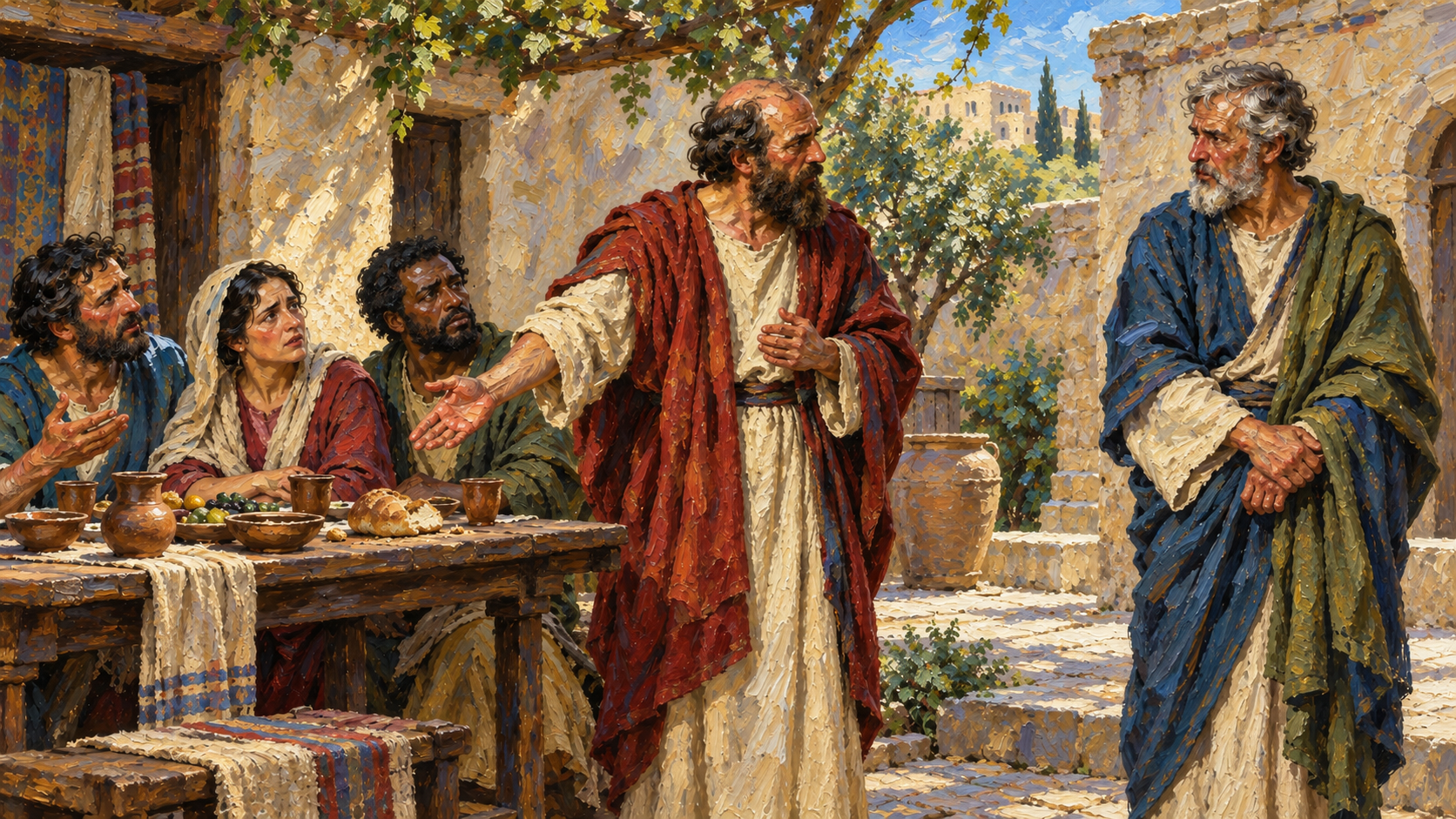
Paul rebuked Peter because his treatment of Gentile believers was contradicting the gospel they both preached. Peter had been eating with them, but fear of other people led him to withdraw, and others followed his example. I want to follow why that conduct required a public answer and how Paul connected fellowship at a table with justification by faith.
Peter Already Knew God Received Gentiles by Faith
Antioch was an important center of the Gentile mission. Acts 11 describes believers arriving there after persecution scattered them, and many people turning to the Lord. Barnabas came from Jerusalem, rejoiced at God’s grace among them, and brought Saul, also known as Paul, to help teach. The disciples were first called Christians in that city.
Jewish and Gentile believers could share meals because Christ had received both groups into the same fellowship. Gentiles did not have to adopt Jewish covenant identity before they could belong. The question was not whether they should live holy lives, but whether circumcision and observance of the law of Moses were conditions of their acceptance in Christ.
Peter had already learned that God received Gentiles through faith. In Acts 10, God sent him to Cornelius, a Gentile centurion. A vision prepared Peter to go, and he explained upon entering the house that God had taught him not to call any person common or unclean. He began his address this way:
Then Peter opened his mouth and said: “In truth I perceive that God shows no partiality. But in every nation whoever fears Him and works righteousness is accepted by Him.”
Those words must be read with the rest of the sermon. Peter was not saying that good works could save someone apart from Christ. He preached Jesus’ death and resurrection, then explained how sinners receive remission, or forgiveness, of sins:
To Him all the prophets witness that, through His name, whoever believes in Him will receive remission of sins.
While Peter was still speaking, the Holy Spirit fell on the Gentiles who heard the word. God received them without first requiring circumcision. Peter had witnessed their acceptance and could not claim ignorance about whether Gentiles might belong to Christ.
Acts 11 records the objection he faced in Jerusalem for entering the home of uncircumcised men and eating with them. Peter explained the vision, the Spirit’s direction, and the gift God had given the Gentiles just as He had given it to Jewish believers at the beginning. He could not stand against what God had done. His hearers then glorified God for granting Gentiles repentance to life. The study on the apostle Peter follows his ministry more fully.
Fear Made Peter Withdraw from Gentile Believers
Peter’s shared meals at Antioch agreed with what God had shown him. He was receiving Gentile Christians as brothers and sisters, without treating their ancestry as a reason to regard them as unclean. Then the arrival of certain men changed his conduct:
Now when Peter had come to Antioch, I withstood him to his face, because he was to be blamed; for before certain men came from James, he would eat with the Gentiles; but when they came, he withdrew and separated himself, fearing those who were of the circumcision.
Paul says these men came from James, but he does not say that James instructed Peter to separate from the Gentiles. They may have belonged to James’s circle or brought concerns associated with Jerusalem; Paul does not explain their precise commission. His stated explanation for Peter’s withdrawal is fear of those of the circumcision.
Following familiar Jewish customs was not itself Peter’s offense. He withdrew from Gentile believers under pressure, making their place at the table depend on meeting Jewish expectations. The practical message was that Christ’s acceptance was not enough for full fellowship unless they adopted those conditions. Peter was dividing people he knew God had received together.
Paul describes this as hypocrisy, conduct that conceals or contradicts the truth a person professes. He does not say that Peter had become an unbeliever or lost his salvation. Peter knew these Gentiles belonged to Christ, yet his behavior made fellowship with them appear unacceptable when the circumcision group was present. Other Jewish believers followed:
And the rest of the Jews also played the hypocrite with him, so that even Barnabas was carried away with their hypocrisy.
Barnabas had rejoiced in God’s grace at Antioch and taught these believers alongside Paul. Even he was drawn into Peter’s inconsistency. A respected leader’s example had made compromise appear acceptable, and the division was spreading through the Jewish believers. The Gentile members were being put under pressure by the conduct of men who should have welcomed them.
A Public Error Required a Public Rebuke
Paul identified the reason for confronting Peter before the others: their conduct was not straightforward about the truth of the gospel. The people affected needed to hear why the separation was wrong:
But when I saw that they were not straightforward about the truth of the gospel, I said to Peter before them all, “If you, being a Jew, live in the manner of Gentiles and not as the Jews, why do you compel Gentiles to live as Jews?”
Peter had been living freely among Gentile believers, but his withdrawal now pressed them toward living as Jews. He did not need to issue a formal command for his actions to exert that pressure. Refusing to share their table made adopting Jewish practices appear necessary for full acceptance. Paul exposed that contradiction in front of those who had seen and followed it.
In Matthew 18:15–17, Jesus begins with a private approach when a brother sins against another, then describes bringing witnesses and eventually telling the church if he refuses to listen. Private sin is not an excuse for an immediate public spectacle, but neither does that passage require every matter to remain private regardless of what follows. At Antioch, the conduct had already affected the group and obscured the gospel, so Paul answered it before them.
Peter’s position made the harm more serious because other believers followed him. His office could not make the conduct right or put him beyond biblical correction. Church leaders remain under God’s Word and are responsible for the effect of their example. A response should make the truth clear to those affected, rather than turn correction into a contest over personalities.
Justification by Faith Was at Stake
Paul moves from Peter’s conduct to justification, being declared righteous before God. The connection is direct: if Gentile believers needed additional law observance for full acceptance, faith in Christ was being treated as insufficient. Paul states the basis on which Jewish and Gentile sinners alike are received:
knowing that a man is not justified by the works of the law but by faith in Jesus Christ, even we have believed in Christ Jesus, that we might be justified by faith in Christ and not by the works of the law; for by the works of the law no flesh shall be justified.
Works of the law are deeds of obedience to the Mosaic law. They cannot provide the ground on which God declares a sinner righteous. Jewish ancestry could not save Paul or Peter, and Gentile ancestry could not make a believer inferior in Christ. Jewish and Gentile believers needed the same Savior and received the same standing through faith. The study on the book of Galatians examines Paul’s argument more fully.
The same truth appears in Peter’s words at the Jerusalem Council in Acts 15. Some were insisting that Gentile believers must be circumcised and keep the law of Moses. Peter reminded the assembly that God had given the Gentiles the Holy Spirit and purified their hearts by faith, making no distinction between them and Jewish believers:
Now therefore, why do you test God by putting a yoke on the neck of the disciples which neither our fathers nor we were able to bear? But we believe that through the grace of the Lord Jesus Christ we shall be saved in the same manner as they.
Peter put both groups on the same footing: salvation comes through the grace of the Lord Jesus Christ. The council still instructed Gentile believers to abstain from idolatrous pollution, sexual immorality, things strangled, and blood. Those commands governed holy conduct and fellowship; they did not make law-keeping the basis of salvation. Rejecting law-keeping as the basis of justification did not give believers permission to sin.
I can respect a cultural custom without making it a condition of someone’s standing before God. When we add an ethnic identity, denominational tradition, or religious performance to faith as a requirement for acceptance in Christ, we have changed the gospel. Legalism can affirm Christ while quietly moving confidence toward an additional requirement. The study on false gospels considers that danger.
The gospel rests on what Jesus has done. He is the eternal Son, fully God and fully man, virgin-born and completely sinless. On the cross He physically bore the punishment for our sins in His innocent body. Wicked men inflicted the real torture and crucifixion He willingly endured. He shed His blood and completed His saving work through His death, was buried, and rose bodily from the dead.
The Father did not punish, curse, abandon, strike, bruise, or pour wrath on Jesus. Christ died for the sins of the whole world, and God’s offer of salvation is genuine for every person, though people may resist His grace and reject Him. Everyone who repents and believes is forgiven and born again, indwelt and sealed by the Holy Spirit, and eternally secure. The study on the gospel explains that saving work more fully.
Good works grow from the new life He gives; they do not establish its foundation or purchase God’s declaration of righteousness. We should expect obedience from believers without transferring their confidence from Christ’s blood to their own performance. Assurance never gives permission for lawlessness, and holiness does not require us to invent new conditions of justification.
Gospel Truth Protects Real Unity
Peter’s fear shows how a person can know the truth and still act against it when human approval becomes too valuable. Proverbs names that danger:
The fear of man brings a snare, but whoever trusts in the LORD shall be safe.
I need to examine more than my ability to state sound doctrine. Do I treat believers as inferior because they do not share my background or customs? Am I allowing social pressure to decide whom I will welcome? We can speak warmly about unity while preserving divisions in practice. Trusting the Lord requires our conduct to agree with the grace we confess, even when other people disapprove.
Real unity sometimes requires a difficult correction. Paul answered the conduct that was harming Gentile believers and drawing others into hypocrisy. Avoiding that conversation would have left the exclusion in place. Yet correction must remain under Scripture and serve the people affected. Pride, harshness, and the pleasure of winning an argument have no place in that purpose. Refusing to speak needed truth in the name of love can also leave people suffering from an error we should have confronted.
Galatians does not record Peter’s immediate reply to Paul. Peter’s later words do show his continuing regard for Paul:
and consider that the longsuffering of our Lord is salvation–as also our beloved brother Paul, according to the wisdom given to him, has written to you,
Calling him “our beloved brother Paul” and recognizing his God-given wisdom does not erase the wrong at Antioch. It does show that the New Testament does not leave them as rival leaders of opposing churches. Biblical correction need not destroy fellowship. If I am corrected, I should receive what agrees with Scripture instead of nursing bitterness toward the person who spoke.
The reach of the harm should guide how we respond. A personal matter should be approached with the care Jesus commanded, while public conduct misleading a church may require a public answer. In either case, the aim is faithful obedience and restored fellowship under the truth. We should never make repentant believers permanently inferior because of their ancestry, customs, or a failure for which they have sought mercy.
My Final Thoughts
Paul opposed Peter because his public conduct was denying the gospel in practice and leading others into the same hypocrisy. Peter knew that Gentiles were received by grace, yet fear made him separate from them. I want my treatment of other believers to agree with what I confess about Christ’s sufficiency. We need courage to correct what harms the church and humility to receive correction ourselves, keeping our confidence in Jesus rather than the human requirements people add.