
Lot is one of the most tragic and sobering figures in Scripture. He is not presented as an overt rebel against God, nor is he portrayed as a man of deep spiritual strength. Instead, Lot’s life shows us what happens when a righteous man consistently makes choices based on sight, comfort, and proximity to the world rather than faith and discernment.
The New Testament identifies Lot as a righteous man, which forces us to wrestle honestly with his life and decisions.
“And delivered righteous Lot, who was oppressed by the filthy conduct of the wicked (for that righteous man, dwelling among them, tormented his righteous soul from day to day by seeing and hearing their lawless deeds).” (2 Peter 2:7–8)
This study will walk carefully through Lot’s life, beginning with his association with Abraham, tracing his gradual descent toward Sodom, examining his moral compromises, and ending with the devastating consequences of his choices. Lot’s account is not merely historical. It is a warning for every believer living in a corrupt world.
Lot’s Background and Connection to Abraham
Lot is first introduced in Genesis 11 as the son of Haran, Abram’s brother.
“Now Haran died before his father Terah in his native land, in Ur of the Chaldeans.” (Genesis 11:28)
After Haran’s death, Lot appears to have come under the care of Abram. When God called Abram to leave Ur, Lot went with him.
“Then Abram took Sarai his wife and Lot his brother’s son, and all their possessions that they had gathered, and the people whom they had acquired in Haran, and they departed to go to the land of Canaan.” (Genesis 12:5)
Lot benefited directly from Abram’s obedience. He walked alongside a man who heard from God, trusted God, and built altars to God. Yet Scripture never records Lot building an altar or calling on the name of the Lord during this early period.
The Prosperity of Abram and Lot
As Abram and Lot traveled together, God blessed them materially.
“Now Abram was very rich in livestock, in silver, and in gold.” (Genesis 13:2)
Lot also prospered on his as well:
“Lot also, who went with Abram, had flocks and herds and tents.” (Genesis 13:5)
But prosperity wasn’t all good… With it came conflict and drama.
“Now the land was not able to support them, that they might dwell together, for their possessions were so great that they could not dwell together.” (Genesis 13:6)
Abram, the one to whom the promise belonged, graciously gave Lot the first choice.
“Please let there be no strife between you and me… Is not the whole land before you? Please separate from me.” (Genesis 13:8–9)
Lot’s Choice: Walking by Sight, Not by Faith
Lot looked over all the land and evaluated it by appearance.
“And Lot lifted his eyes and saw all the plain of Jordan, that it was well watered everywhere… like the garden of the Lord.” (Genesis 13:10)
The Bible then gives an immediate warning about the people who live in that land:
“But the men of Sodom were exceedingly wicked and sinful against the Lord.” (Genesis 13:13)
Lot saw the prosperity, but he ignored the spiritual danger for himself and especially for his family.
“Then Lot chose for himself all the plain of Jordan, and Lot journeyed east. And they separated from each other.” (Genesis 13:11)
This is a defining pattern of Lot’s life. He consistently chose what looked good in the moment, without regard for long term spiritual consequences.
Pitching His Tent Toward Sodom
At first, Lot merely lived near Sodom…
“Abram dwelt in the land of Canaan, and Lot dwelt in the cities of the plain and pitched his tent even as far as Sodom.” (Genesis 13:12)
This language gives us the impression that this was a gradual compromise. Lot didn’t move into Sodom immediately… He moved toward it gradually.
And this reveals how spiritual decline is almost never instant. It is incremental… as we slowly sear our conscious to be ok with a little more sin, day by day.
Lot Gets in Trouble
By Genesis 14, Lot is no longer near Sodom. He is living in it.
“They also took Lot, Abram’s brother’s son who dwelt in Sodom, and his goods, and departed.” (Genesis 14:12)
Lot had fully immersed himself in a corrupt society. When Sodom fell to invading kings, Lot suffered the consequences of his proximity to wickedness.
Abram’s Intervention
Lot was rescued not by his own strength or wisdom, but by Abram’s faith and courage.
“Now when Abram heard that his brother was taken captive, he armed his three hundred and eighteen trained servants… and went in pursuit.” (Genesis 14:14)
Abram found him, defeated the kings and rescued Lot.
“So he brought back all the goods, and also brought back his brother Lot and his goods, as well as the women and the people.” (Genesis 14:16)
This was a gracious warning from God. Lot was delivered, and yet he still returned to Sodom.
Lot’s Moral Compromise in Sodom
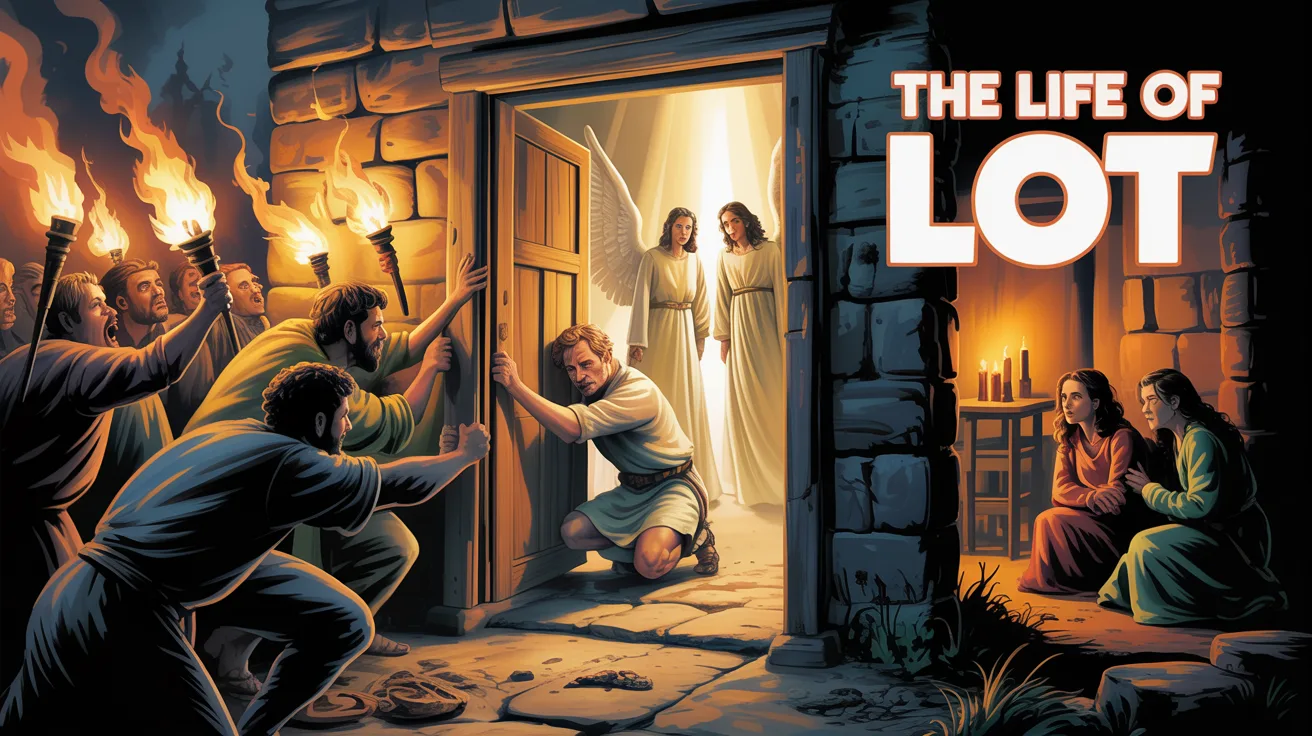
By Genesis 19, Lot is sitting at the gate of Sodom.
“Now the two angels came to Sodom in the evening, and Lot was sitting in the gate of Sodom.” (Genesis 19:1)
The gate was the place of leadership and civic authority. Lot had become integrated into the social structure of a wicked city.
Hospitality and Moral Confusion
Lot did show hospitality to the angels, yet his moral reasoning was deeply compromised. When the men of Sodom demanded the visitors, Lot responded:
“See now, I have two daughters who have not known a man; please, let me bring them out to you, and you may do to them as you wish.” (Genesis 19:8)
This statement reveals how far Lot’s judgment had been distorted. While he was distressed by the wickedness around him, prolonged exposure had dulled his moral clarity to the point where he would give up his daughters.
God’s Mercy and Lot’s Reluctance
The angels warned Lot very clearly.
“For we will destroy this place, because the outcry against them has grown great before the face of the Lord.” (Genesis 19:13)
Lot went and warned his sons in law, but they mocked him.
“But to his sons in law he seemed to be joking.” (Genesis 19:14)
A compromised testimony carries little weight and people will ignore those who don’t practice what they preach to believe.
Even with a direct divine warning, Lot hesitated.
“And while he lingered, the men took hold of his hand, his wife’s hand, and the hands of his two daughters, the Lord being merciful to him.” (Genesis 19:16)
Lot was saved by God’s mercy, not his decisiveness.
The Destruction of Sodom and Its Aftermath
As they fled, Lot’s wife looked back.
“But his wife looked back behind him, and she became a pillar of salt.” (Genesis 19:26)
This reveals that her heart remained in Sodom. Sadly this is the fruit of Lot moving his family into a wicked city. The world had sadly won over her heart.
Though Zoar was spared, Lot was only there for a short period. He eventually moved up to the mountains in seclusion.
“Then Lot went up out of Zoar and dwelt in the mountains… for he was afraid to dwell in Zoar.” (Genesis 19:30)
He ended his life in isolation, dwelling in a cave.
The Tragic End
Lot’s daughters, influenced by their upbringing, also commit a grave sin by waiting until he is passed out and sleeping with him, so they can be pregnant and have children.
“Thus both the daughters of Lot were with child by their father.” (Genesis 19:36)
His daughters gave birth to Moab and Ammon, which are nations that would later trouble Israel.
Lot in the New Testament
Peter’s assessment of Lot is quite striking…
“Righteous Lot… tormented his righteous soul from day to day.” (2 Peter 2:7–8)
Lot was righteous, yet his life was marked by loss, compromise, and regret.
Paul also echoes this same sentiment, which applies to believers who struggle with making bad decisions through their lives…
“If anyone’s work is burned, he will suffer loss; but he himself will be saved, yet so as through fire.” (1 Corinthians 3:15)
My Final Thoughts
Lot’s life is a warning to believers who attempt to live close to the world while belonging to God. He was righteous, yet nearly everything he valued was destroyed. He chose comfort over calling, prosperity over purity, and proximity to sin over spiritual safety for himself and his family.
Lot was saved, but he lost his testimony, his wife, his influence, and his legacy. Scripture never presents him as a model to follow, but rather as an example of a believer who was subdued by moral failure. .
The question Lot’s life forces us to ask is simple… are we making decisions based on sight or on faith? The direction we pitch our tent today determines where we end up tomorrow. And though we may be saved, we can put ourselves through torment day to day.


 Get the book that teaches you how to evangelize and disarm doctrines from every single major cult and religion.