
What does the Bible say finally happens to a person who rejects Jesus Christ? To answer that, we need to distinguish a person’s conscious state after death from the final sentence that follows resurrection. I want to follow Scripture’s language carefully so that we do not blend those stages together.
Life, Death, and the Gift of Immortality
I reject universalism, the belief that everyone will eventually be saved. Those who finally reject the Son face real judgment and exclusion from life, and that verdict will never be reversed. But I also reject the idea that people lose consciousness between death and resurrection. Jesus spoke of comfort and torment after death and promised the repentant thief that he would be with Him in Paradise. Paul desired to depart and be with Christ. That conscious existence between death and resurrection is what I mean by the intermediate state.
The question here is what happens after resurrection and the Great White Throne judgment. Is every human soul naturally immortal, so that it must remain alive forever in conscious misery? Or is immortality God’s gift in Christ, with the Lake of Fire bringing the second death and finally destroying the unbeliever’s body and soul? I want to test both views against the whole Bible. We must take sin and judgment seriously while allowing Scripture’s repeated words about death and destruction to speak, even where they challenge tradition.
The Bible does not describe the human soul as inherently immortal. When 1 Timothy 6:16 says God alone has immortality, it identifies Him as the One who has life in Himself. We receive life from Him and remain dependent on Him for it. That distinction does not deny consciousness after death or the resurrection of every person. It tells us where life comes from.
Romans 2:7 speaks of seeking immortality and eternal life, while 2 Timothy 1:10 says Christ brought life and immortality to light through the Gospel. Paul then describes believers putting on immortality at the resurrection in 1 Corinthians 15. I notice that these passages direct us to what the risen Christ secures and gives. They do not present immortality as an indestructible quality everyone already possesses.
We can see the same dependence on God in Genesis 3. After Adam sinned, God barred access to the Tree of Life so that man would not eat and live forever. Rebellion had not made human beings independently immortal. Eternal life depends on God’s gracious provision, and the Gospel restores what sin forfeited through the One who is the resurrection and the life.
Ezekiel twice says, “The soul who sins shall die.” He is addressing personal responsibility before God, and I do not want to lift those words out of that setting. Even so, they cannot fairly be made to say that a human soul is incapable of death. Jesus later warns that God can destroy both soul and body in Gehenna, the final place of judgment.
In Romans 6:23, Paul contrasts the wages of sin, which is death, with God’s gift of eternal life in Christ Jesus our Lord. I don’t read that as two forms of eternal life, one joyful and one miserable. Paul places death on one side and the life God gives through Christ on the other. John 3:16 makes the same contrast when it says the believer will not perish but have everlasting life.
We still need to pay attention to how a passage uses the word death. Physical death ends the body’s life, while spiritual death describes our alienation from God in sin. Revelation calls the final judgment the second death. Those different uses do not empty the word of meaning; context tells us which is being described. They belong within the same biblical account of life and judgment. God created us and gave us life, but sin brought death. Even death will not prevent Him from raising every person for judgment, with the final outcome being life in Christ or the irreversible judgment He calls death.
James says sin brings forth death when it is full-grown, and he also speaks of saving a soul from death. I cannot treat that as a mild warning. Final destruction means losing life itself. With that loss comes the end of fellowship and joy, along with every good gift God gives.
Destruction, Unquenchable Fire, and Final Overthrow
Jesus warns that the broad way leads to destruction, and in Matthew 10:28 He tells us to fear the One who can destroy both soul and body in Gehenna. The Greek terms translated destroy and destruction have a range of meaning. Understanding that range helps us read honestly, but a dictionary entry cannot settle the doctrine for us. Here Jesus names the whole human person in the final place of judgment, directly challenging the assumption that the soul cannot be destroyed.
When 2 Thessalonians 1:9 speaks of everlasting destruction, I understand the result to be everlasting because it will never be reversed. Paul does not describe a process of destroying that continues forever without reaching an outcome. A sentence can have an eternal consequence even when the act carrying it out is completed. Hebrews uses eternal redemption in a similar way: Christ does not repeatedly obtain redemption for us, but the redemption He obtained stands forever.
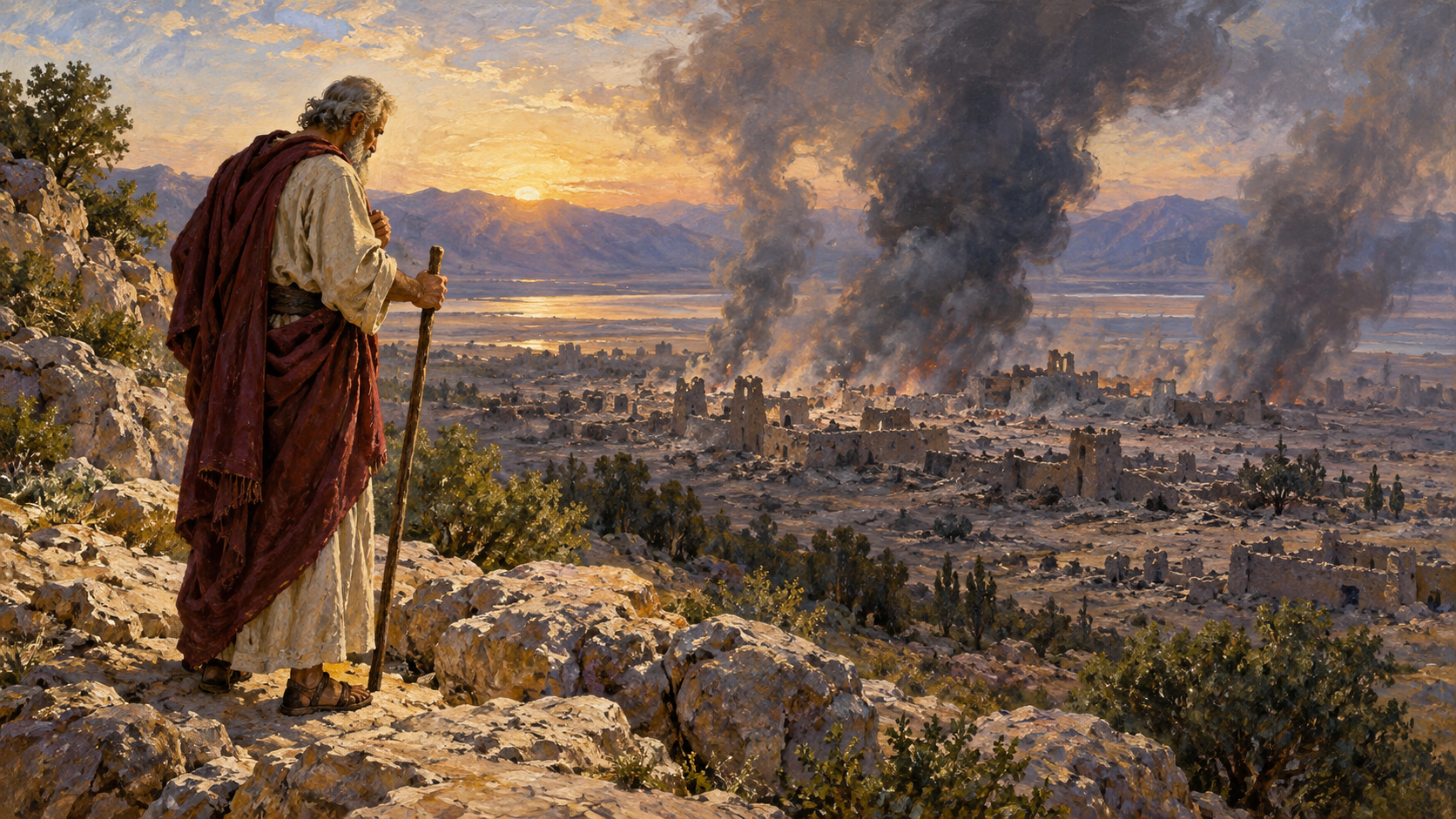
The Old Testament repeatedly shows God bringing public, decisive judgment. Pharaoh’s army was overthrown and proud cities were brought low. Elsewhere the wicked are pictured as chaff or stubble consumed by fire, vanishing like smoke or becoming ashes. I would not turn those images into a detailed map of every event in the final judgment. They do, however, show the usual biblical meaning of God consuming evil. He does not keep rebellion alive as an everlasting rival to His goodness.
Psalm 37 speaks to believers who have to watch evil prosper for a time. The wicked may look strong, but they will perish and vanish like smoke, so God’s people are called to trust His coming justice and wait for Him to remove evil finally. Malachi 4 describes the proud and wicked as stubble on the coming day of the Lord. They will be burned up with neither root nor branch left and will become ashes. Obadiah says God’s enemies will be as though they had never been. These are poetic pictures, but I see the same outcome in each: complete overthrow and removal, rather than human rebels preserved endlessly in conscious life.
Scripture’s language about fire follows the same pattern. It judges and consumes until its work is done. John the Baptist says Christ will burn up the chaff with unquenchable fire. Unquenchable does not require a flame to burn forever. It means no one can stop God’s fire before it accomplishes His judgment. Jeremiah warned that such a fire would devour Jerusalem’s palaces. Those buildings are not still burning, yet the warning was fulfilled because no one could put out the fire before it finished its work.
Jude says Sodom and Gomorrah suffered the vengeance of eternal fire, while Peter says God reduced the cities to ashes and condemned them to destruction as an example for the ungodly. Together, those descriptions lead me to understand the fire as having a permanent result. They give us no reason to imagine the people of Sodom still living eternally in those historical flames.
In Mark 9:48, Jesus quotes Isaiah 66:24, where people look upon the corpses of those who rebelled against God. Their worm does not die and their fire is not quenched. There is no escape from the judgment, and the disgrace is final, which makes the picture horrific. Isaiah is showing us dead rebels, not immortal human beings living forever in torment.
None of this lets us assign the same meaning to a judgment word wherever it appears. Destruction can mean ruin in a historical event without always meaning complete extinction. Spiritual death does not cancel physical death, nor does physical death cancel future resurrection. With those distinctions in mind, I read Matthew 10:28 as speaking about body and soul in Gehenna. In 2 Thessalonians 1:9, everlasting destruction takes place at Christ’s revelation in judgment. Both concern final judgment, so that is the setting in which I understand their language. To turn final destruction into endless preservation, a view needs clear passages requiring that reading. It cannot rest on the assumption that destruction means preservation.
Resurrection, the Book of Life, and the Second Death
Final destruction does not mean unbelievers will never rise. Jesus says all who are in the graves will hear His voice and come forth. Those who have done good rise to life, while those who have done evil rise to condemnation. Revelation 20 then shows the dead before the Great White Throne, where books are opened and each person is judged according to his works.
Death will not allow anyone to escape the Judge. Resurrection brings people before Him for public justice, and the books disclose each person’s deeds so that no evil is overlooked. Another book is opened, the Book of Life, which identifies those who belong to the Lamb. Scripture’s wider testimony says people begin written in that book. Those who finally reject the Messiah are blotted out, while believers remain because Christ’s blood has blotted out their sins.
I am not saying heavenly record keeping saves anyone. The deeds show that God’s judgment is just, while eternal life belongs to those who receive the Savior. He knows the truth about each person and has genuinely offered mercy. No one is condemned by a careless or arbitrary decree.
After judgment, Death and Hades are cast into the Lake of Fire, which Revelation calls the second death. Anyone whose name is absent from the Book of Life is cast there as well. The unbeliever is neither excused nor restored. By the time the dead stand before the Great White Throne, the opportunity to repent has passed. There is no further period for repentance, and the righteous Judge will carry out a dreadful sentence that can never be reversed.
That finality leaves no place for universalism in this passage. But being raised for judgment does not establish that a human being is immortal by nature. The condemned are raised so that God’s justice can be revealed and His verdict carried out. What Scripture names afterward is the second death.
Reading the Texts Commonly Used for Eternal Conscious Torment
Matthew 25:46 says the wicked go away into everlasting punishment and the righteous into eternal life. The punishment unquestionably lasts forever, but I also need to ask what it consists of. Other passages name death and destruction as the final penalty. A verdict and its consequence can last forever without a living person undergoing an endless process of punishment. The phrase itself does not require that process.
Some of Jesus’ strongest warnings are in Matthew. Alongside the broad way leading to destruction, He speaks of outer darkness and Gehenna. He describes weeping and gnashing of teeth and warns of everlasting punishment. We should not soften any of that. God’s offer of salvation is genuine, and a person who refuses it faces an irreversible verdict.
When I read those warnings, I also have to keep Matthew’s words about destruction in view. The broad way ends there, and God can destroy both body and soul in Gehenna. The parables separate the righteous from the wicked before Matthew 25 closes with everlasting punishment for those who reject the King. Nothing in this Gospel says the human soul cannot die. Its call is to flee sin and enter life through Christ.
Weeping and gnashing of teeth expresses the anguish and regret of people excluded under judgment. It tells us how they respond, but does not by itself establish the duration of punishment or how it is carried out. I hear mercy in Jesus’ severe words because He speaks them before the day of judgment. He is calling people away from their allegiance to sin and into His saving rule, not inviting speculation about every detail of punishment. Losing life forever is the most terrible loss a human being can suffer.
The rich man in Luke 16 was consciously tormented in Hades. Jesus’ account confirms accountability after death and warns against refusing Moses and the prophets. But Luke 16 describes the intermediate state, before final resurrection. We know Hades is not the final destination because Revelation later says it will itself be cast into the Lake of Fire. I would not force this account to describe the unbeliever’s fate after the Great White Throne when its setting is earlier.
The rich man’s torment and the thief’s promise of Paradise both show consciousness after death. Paul’s desire to be with Christ supports the same truth, as do the souls waiting for vindication in Revelation. I do not want to weaken any of those passages. But none makes Hades the everlasting destination of human unbelievers. Revelation says Hades will give up its dead before God carries out the final sentence.
Revelation 14:11 says the smoke of the beast worshipers’ torment ascends forever and ever. Isaiah 34 describes Edom in similar terms: its smoke ascends forever while the land lies waste from generation to generation. I understand that image to announce a judgment whose result and memorial remain permanently. It cannot cancel Revelation’s direct description of the Lake of Fire as the second death for human beings.
The Essential Distinction in Revelation
Revelation 20:10 explicitly says that the devil, the beast, and the false prophet will be tormented day and night forever and ever. I do not believe we have permission to explain that statement away. Scripture assigns endless torment to those beings. We must receive the text as written even when its language is difficult or does not fit a preferred system.
Revelation describes human beings differently. After the dead are judged, Death and Hades are thrown into the Lake of Fire, which is called the second death. Anyone not found in the Book of Life is cast there. Revelation 21:8 again names the lake burning with fire and brimstone as the second death. The Bible does not apply to every human being cast there the words of endless torment that Revelation 20:10 uses for the devil, beast, and false prophet.
I cannot treat endless torment and the second death as though they were identical descriptions. Fallen angels and human beings are different kinds of creatures, and Scripture gives direct descriptions for each. We need to hold together everything God has said: Revelation assigns endless torment to the devil, beast, and false prophet, while describing the final fate of human unbelievers as destruction and the second death.
God’s Justice and the Gospel Offer of Life
Some people think sin becomes less serious unless its penalty is eternal conscious torment. Scripture gives us no reason to draw that conclusion. The second death means the final loss of life under God’s holy judgment. It offers neither rehabilitation nor a temporary discipline followed by a return to life, and it does not lead to universal restoration. The person who finally refuses God’s mercy faces irreversible destruction.
God judges with perfect knowledge of every deed and all the light each person has received. His verdict always agrees with His holy character. I do not need to imagine human life preserved endlessly in misery to defend His righteousness. Abraham asked, “Shall not the Judge of all the earth do right?” Scripture’s answer is yes. God’s righteousness allows neither sentimentality toward evil nor cruelty in judgment.
Christ’s warnings should humble us, not leave us feeling triumphant over the lost. As believers, we received life by grace through faith and had no claim to better treatment than anyone else. The certainty of judgment makes me consider how urgently I pray for unbelievers and speak to them about Christ. It should deepen our gratitude and reverence for the Judge who showed us mercy.
Scripture’s final contrast is between eternal life in Christ and final death under judgment. It does not describe one kind of life in heaven and another in hell. Jesus willingly gave Himself for the world, bearing the punishment for our sins in His innocent body and shedding His physical blood. He truly died and was buried, then rose bodily. His atonement is sufficient for every person, although each person may resist or receive His offer.
Whoever personally trusts Christ receives forgiveness and eternal life. A true believer is made new and indwelt by the Holy Spirit. The Spirit seals that believer, who is eternally secure because Christ’s work is finished. That security does not give us permission to treat sin as harmless, because our new life belongs to the Savior and should be lived for Him.
If you have not trusted Jesus, His invitation is open now. People remain conscious as they face judgment after death, and Scripture promises no further opportunity after this life. Uncertainty about the details of punishment gives us no reason to postpone faith. Come to Christ, who alone gives life that death can never take away.
For further study, The Great White Throne examines the final judgment, the Book of Life, and the second death. Mark 9:48 looks closely at Christ’s warning about the worm and unquenchable fire, while Hell and Gehenna traces the Bible’s language for judgment. The study on Salvation follows the promise of forgiveness and eternal life in Christ.
My Final Thoughts
I do not believe these passages teach eternal conscious torment for human beings. Unbelievers remain conscious after death and will be raised to stand before God in judgment. Their final fate, however, is called the second death: the irreversible destruction of body and soul. Revelation plainly reserves endless torment for the devil, beast, and false prophet, and I want to preserve the distinction God made. This does not soften His warning or open a path to universal salvation. It brings us face to face with the finality of death and with God’s gracious offer of eternal life in Jesus Christ. That is why we need to receive Him now.