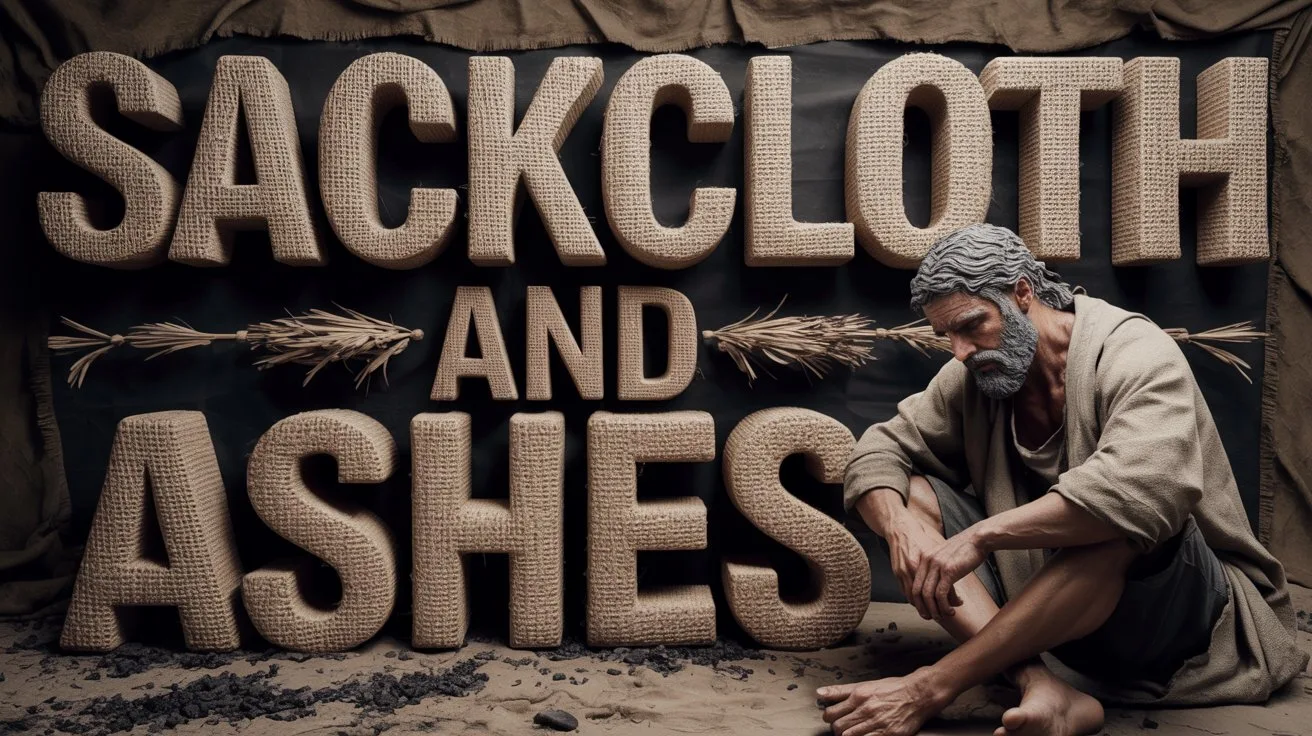
Sackcloth and ashes show up all through the Bible as a public way to express grief, humility, and repentance before God. A lot of believers have heard the phrase, but they are not always sure what it meant in Bible times, why people used it, and what parts of that practice still matter for Christians today. Genesis 37:34 is one of the plainest places to start, because it shows a man in real sorrow using the custom the way it was meant to be used.
What it meant
Sackcloth and ashes were never meant to be magic objects. They did not cleanse sin. They did not force God to answer. They were outward signs that fit an inward reality: a person has been brought low. Sometimes that low place came from grief. Sometimes it came from conviction over sin. Sometimes it came from fear of coming judgment. The outside was supposed to tell the truth about what was going on inside.
Sackcloth was rough
In Genesis, Jacob believes his son Joseph is dead. He responds the way an ancient Near Eastern father would respond in crushing loss: he tears his clothes and puts on sackcloth. The verse doesn’t present it as a religious ritual. It presents it as mourning.
Then Jacob tore his clothes, put sackcloth on his waist, and mourned for his son many days. (Genesis 37:34)
Sackcloth was a coarse fabric, often made from goat hair. It was the kind of material used for bags and basic labor, not for comfort. Wearing it against the skin was uncomfortable on purpose. It matched inward pain with an outward lowering. Jacob isn’t dressing up to impress anybody. He is dressing down because, as far as he knows, life has been cut in half.
Here is an observation people miss: in Genesis 37, sackcloth is not tied to repentance at all. Jacob is not confessing a sin in that moment. He is grieving. We need to keep that straight because we tend to hear sackcloth and immediately assume somebody must have done something wrong. Sometimes sorrow humbles you even when you didn’t cause the tragedy.
Genesis adds another small detail. Jacob mourned many days. This was not a quick gesture and then back to normal. Sackcloth, in that setting, fit a long season of grief, not a moment of emotion.
Ashes brought low
Ashes often went with sackcloth. Sometimes people put ashes on their head. Sometimes they sat in ashes. Either way, the picture is the same. Ashes are what’s left after the fire. They say, I have been reduced. I am not standing tall right now.
Ashes also connect to a basic Bible truth: man is made from dust and returns to dust. That background helps because sitting in ashes is a way of admitting, I am small, I am mortal, and I cannot fix this by strength or status.
In Esther, the crisis is national. A death order hangs over the Jewish people. Mordecai responds publicly with the recognized signs of distress and pleading.
When Mordecai learned all that had happened, he tore his clothes and put on sackcloth and ashes, and went out into the midst of the city. He cried out with a loud and bitter cry. (Esther 4:1)
That public aspect can sound strange to modern ears, but in that world it was normal for grief and urgent pleading to be visible in the streets. Mordecai is not putting on a show. He is sounding an alarm. He wants the right people to feel the weight of what is happening, because the danger is real and time is short.
A word note
When the Old Testament talks about repentance, one common Hebrew verb is shuv, which means to turn or return. That is a helpful word because it keeps repentance from being reduced to feelings. Repentance is not just sorrow. It is turning. You turn from sin and you turn to God.
There is another Hebrew verb you’ll sometimes see in these same contexts that can mean to be sorry or to relent, depending on who is acting. When it is used of God in judgment passages, it speaks of God not carrying out a threatened disaster because the situation has changed, often because people humbled themselves. That is not God being unstable. It is God responding consistently to what He has said He responds to: humility, confession, and turning.
Put it together and you get a simple picture. Sackcloth and ashes were a visible way of saying, I am brought low, and I need mercy.
How it was used
The Bible shows sackcloth and ashes most often in two big settings: grief over loss and repentance under conviction. Sometimes those overlap, but they are not the same thing. Scripture makes room for honest grief, and Scripture also calls for honest repentance. If we blur those, we will mishandle people’s pain and we will soften the call to turn from sin.
Grief in the open
When David hears that Saul and Jonathan have died, he and his men tear their clothes. The text treats that as appropriate mourning, not as spiritual failure.
Therefore David took hold of his own clothes and tore them, and so did all the men who were with him. (2 Samuel 1:11)
There is a kind of religious posing that tries to skip grief. It says if I had enough faith, I would never weep. But Scripture does not treat tears as unbelief. It treats humble sorrow as part of living in a broken world. Sackcloth, in those moments, was simply an honest way to say, I cannot carry on as normal right now.
Job is another clear example. He responds to catastrophe with outward humility, and at the same time he worships. He is not pretending the loss didn’t hurt, and he is not using grief as an excuse to curse God.
Then Job arose, tore his robe, and shaved his head; and he fell to the ground and worshiped. (Job 1:20)
Later, at the end of the book, Job speaks about dust and ashes in connection with repentance and humility before God.
Therefore I abhor myself, And repent in dust and ashes." (Job 42:6)
Job’s statement there is not him admitting to the specific sins his friends accused him of. The book never says Job’s losses were punishment for hidden evil. Job’s repentance is more about his posture and his words as he argued his case. When God speaks, Job sees God more clearly, and that clearer sight humbles him. He stops talking as if he can put God in his pocket and bows where he should have bowed sooner.
This is helpful for Christians. God can correct a believer without that correction being condemnation. A child of God can be wrong, can talk wrong, can act proud, and still belong to the Lord. Correction restores fellowship and wisdom. It is not God taking away salvation.
Repentance under guilt
Daniel 9 gives a clean picture of repentance that is rooted in Scripture. Daniel reads and understands that the exile was not an accident. It was the fruit of Israel’s long rebellion. So he seeks God with prayer, fasting, and the signs of humility.
Then I set my face toward the Lord God to make request by prayer and supplications, with fasting, sackcloth, and ashes. (Daniel 9:3)
Daniel’s prayer is full of plain language about sin. He doesn’t rename it. He doesn’t blame circumstances. He agrees with God. That is what confession is. Confession is saying the same thing God says about our sin, not arguing with Him about it.
Nineveh is another striking moment. Jonah announces judgment, and the people respond with belief and action. The text stresses that it spread through the whole city, from the greatest to the least. Even the king steps down from his throne, at least in posture, and humbles himself. That is a real act of lowering. Pride loves the throne. Humility gets off it.
So the people of Nineveh believed God, proclaimed a fast, and put on sackcloth, from the greatest to the least of them. (Jonah 3:5)
Then the passage tells you what God saw. He saw their works, meaning the visible fruit of their turning. The outward signs mattered only because they matched an inward turn from evil.
Then God saw their works, that they turned from their evil way; and God relented from the disaster that He had said He would bring upon them, and He did not do it. (Jonah 3:10)
This keeps us from a common mistake. Repentance is not mainly a feeling. The Bible does not treat repentance as mere emotion. Repentance is a change of mind that results in a change of direction. Sackcloth and ashes can show sorrow, but the turning is the heart of the matter.
Even Ahab, a notoriously wicked king, humbled himself when judgment was announced against his house. The text shows that God took notice of that humbling. That does not make Ahab a model of lasting obedience. It does show something true about God: He pays attention to humility, even when it is late and mixed.
Hezekiah also wore sackcloth during a national threat. In his case, the king does not rely on speeches and swagger. He goes into the house of the LORD and seeks God. Sackcloth there is tied to dependence. It is a public way of saying, we cannot save ourselves.
And so it was, when King Hezekiah heard it, that he tore his clothes, covered himself with sackcloth, and went into the house of the LORD. (2 Kings 19:1)
When it went wrong
Because sackcloth and ashes were such a recognized sign, they could be faked. People could use the appearance of humility to cover a proud heart. The Bible doesn’t just describe the practice. It also exposes the counterfeit.
God rejects pretense
Isaiah 58 is one of the sharpest rebukes of empty religion in the Bible. The people fast and act afflicted, but they keep living in self-will, oppression, and strife. God is not fooled by religious theater.
Is it a fast that I have chosen, A day for a man to afflict his soul? Is it to bow down his head like a bulrush, And to spread out sackcloth and ashes? Would you call this a fast, And an acceptable day to the LORD? (Isaiah 58:5)
The issue is not that sackcloth and ashes were sinful objects. The issue is mismatch. Outward signs that claim humility while the heart clings to sin are a lie acted out with religious props.
Joel says something similar, but as a direct call to return. God commands His people to turn to Him with the heart, not just with torn clothing. He draws a clear line: tearing fabric is easy; turning the inner man from sin to God is not.
"Now, therefore," says the LORD, "Turn to Me with all your heart, With fasting, with weeping, and with mourning." So rend your heart, and not your garments; Return to the LORD your God, For He is gracious and merciful, Slow to anger, and of great kindness; And He relents from doing harm. (Joel 2:12-13)
That call also rests on God’s character. He invites return because He is gracious and merciful. Repentance in the Bible is not despair. It is coming back to the God who receives the humble.
Jesus uses the phrase
Jesus treated sackcloth and ashes as a well-known picture of repentance. When He rebuked towns that saw His mighty works and still refused to repent, He said that pagan cities would have repented in sackcloth and ashes if they had seen the same light. His point was not to praise a ritual. His point was to expose stubborn hearts that refused to bow.
"Woe to you, Chorazin! Woe to you, Bethsaida! For if the mighty works which were done in you had been done in Tyre and Sidon, they would have repented long ago in sackcloth and ashes. But I say to you, it will be more tolerable for Tyre and Sidon in the day of judgment than for you. (Matthew 11:21-22)
There is a warning there too. Greater light brings greater responsibility. When someone is given clearer truth about Jesus Christ and still refuses Him, that refusal is not a small matter. Judgment is real, and each person is accountable for what they did with the light God gave them.
Jesus also warned about looking humble for attention. People can turn fasting into performance, and the same principle would apply to any outward sign of sorrow. If the goal is to be seen, then being seen is the whole reward.
"Moreover, when you fast, do not be like the hypocrites, with a sad countenance. For they disfigure their faces that they may appear to men to be fasting. Assuredly, I say to you, they have their reward. (Matthew 6:16)
What about Christians
The New Testament never commands Christians to put on sackcloth or sit in ashes. It does command the inward realities those signs were meant to express: humility, confession, turning from sin, and seeking God.
When a believer sins, the answer is not hiding. The answer is confession. Confession means we agree with God about what we did. We stop defending it. We bring it into the light. The promise is not based on our performance but on God’s faithfulness and on what Jesus has already done.
If we confess our sins, He is faithful and just to forgive us our sins and to cleanse us from all unrighteousness. (1 John 1:9)
That verse is not teaching that forgiveness is earned by confession as a work. We are saved by grace through faith in Jesus Christ alone, and the payment for sin was made at the cross. For the believer, confession is the path back to clean fellowship, not a way to keep yourself saved. Jesus paid for our sins through His suffering and physical death as the sinless God-man, and His sacrifice is enough.
Paul also distinguishes between godly sorrow and worldly sorrow. Not all regret is repentance. Some people are sorry for consequences, sorry for embarrassment, sorry they got caught, and then they go right back. Godly sorrow leads to repentance, a true turn.
For godly sorrow produces repentance leading to salvation, not to be regretted; but the sorrow of the world produces death. (2 Corinthians 7:10)
Peter’s command fits the old picture of sackcloth and ashes without requiring the old clothing. We humble ourselves under God’s hand. We bow willingly instead of being forced down. Then we trust God with the timing of lifting us up.
Therefore humble yourselves under the mighty hand of God, that He may exalt you in due time, (1 Peter 5:6)
Humility is not always private in Scripture. Sackcloth and ashes were often public because the crisis was public, or because the sin had affected people openly. That does not mean we stage confessions for attention. It does mean that if we have harmed people, private words to God alone are not the whole answer. Jesus connects worship with making things right.
Therefore if you bring your gift to the altar, and there remember that your brother has something against you, leave your gift there before the altar, and go your way. First be reconciled to your brother, and then come and offer your gift. (Matthew 5:23-24)
If you want a simple modern parallel to sackcloth and ashes, it is not buying a rough garment. It is taking the low place. It is dropping the excuses. It is being willing to be thought less of while you tell the truth, ask forgiveness, and do the next right thing.
My Final Thoughts
Sackcloth and ashes were outward signs of an inward reality. They were used in deep grief, in national crisis, and in repentance when sin was exposed or judgment was near. Sometimes they were right and beautiful because they matched a humble heart. Sometimes God rebuked them because they were used to cover a proud heart.
For Christians today, the clothing and ashes are not the command. The call is still the same: humble yourself before God, confess sin plainly, turn from it, and seek the Lord with a sincere heart. God does not despise a broken and contrite heart. He cleanses, restores, and teaches His people to walk straight again.



 Get the book that teaches you how to evangelize and disarm doctrines from every single major cult and religion.