
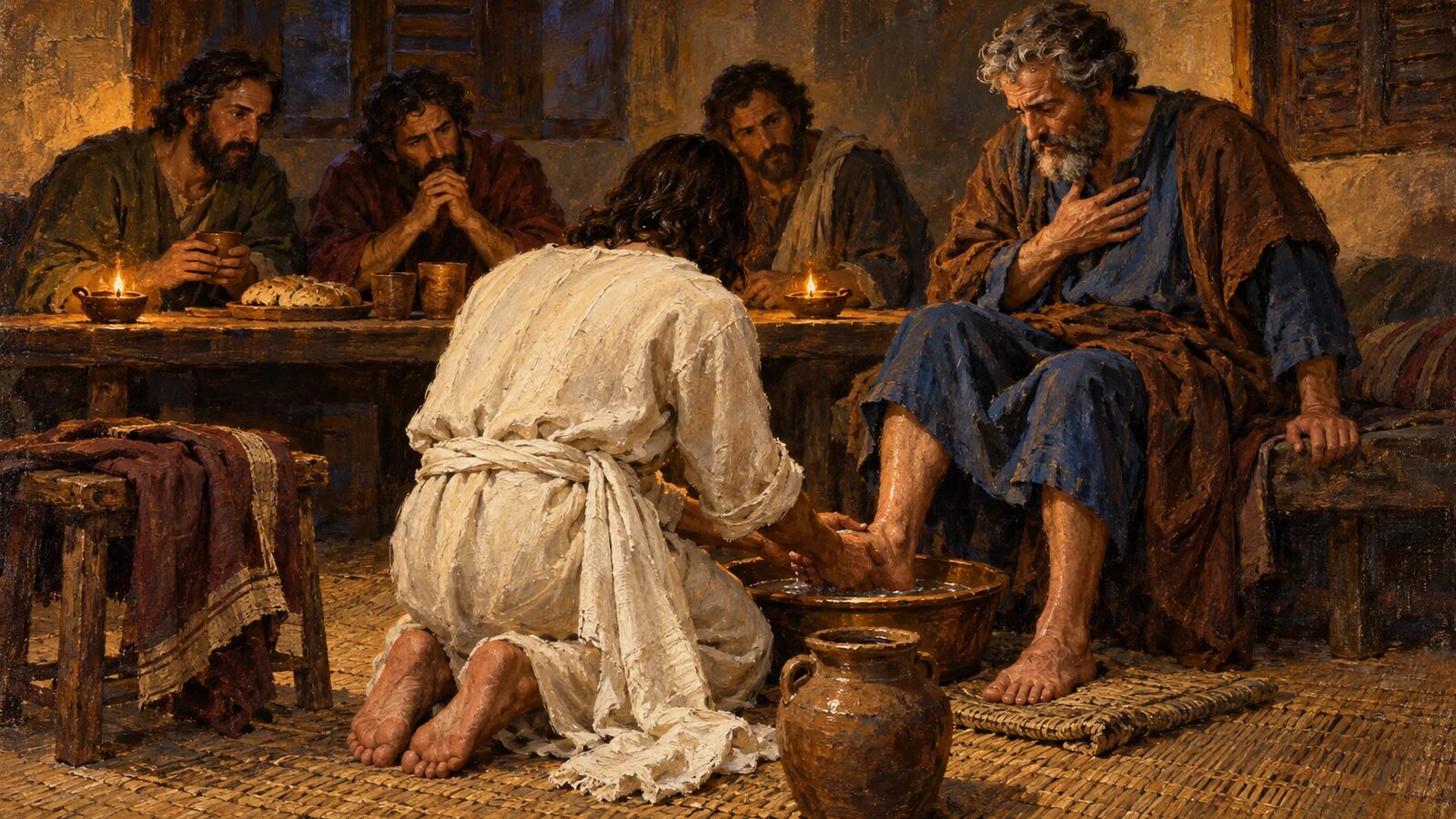
Some translations of Philippians 2 say Jesus “emptied Himself,” while the NKJV says He “made Himself of no reputation.” Does that mean He gave up His deity or switched off divine attributes to become man? Paul’s sentence gives us a different explanation: the eternal Son took the form of a servant and became truly human. I want to follow that explanation carefully, because what we believe about His humility must agree with who He is.
Philippians 2 Begins with the Life of the Church
Paul wrote from prison to believers who were facing opposition. At the end of Philippians 1, he urged them to stand together for the gospel without being frightened by their enemies. He then appealed to the comfort and love they had in Christ and the fellowship they shared in the Spirit. Those gifts should affect how they treated each other.
Let nothing be done through selfish ambition or conceit, but in lowliness of mind let each esteem others better than himself.
A congregation can defend sound doctrine and still allow rivalry to spoil its service. I might do something useful while quietly resenting the recognition someone else receives. Paul confronts that ambition by telling believers to consider other people’s concerns, then says, “Let this mind be in you which was also in Christ Jesus.” His teaching about the incarnation, the Son’s becoming man, belongs to that appeal.
He returns to the same concern through people the Philippians knew. Timothy genuinely cared about their welfare, and Epaphroditus nearly died in the work of Christ. Later, Paul urges Euodia and Syntyche, women who had labored with him in the gospel, to agree in the Lord. Neither their faithful service nor their knowledge made strained relationships impossible.
We need to understand the doctrine Paul teaches without overlooking the selfishness he is addressing. If I can explain Christ’s two natures but refuse necessary work unless it comes with a title, I have not taken Paul’s instruction seriously. The Son’s willingness to serve challenges the way we protect our own importance.
The Eternal Son Took the Servant’s Form
Paul begins with Christ already existing “in the form of God.” He does not introduce a creature who eventually earns divine status. The One who became a servant possessed divine glory before that descent began.
Let this mind be in you which was also in Christ Jesus, who, being in the form of God, did not consider it robbery to be equal with God,
The Greek word morphe, translated “form,” appears in both descriptions. Christ was in God’s form, and He took the form of a bondservant. Paul presents the servant’s condition as a real humbling, rather than a role Jesus only pretended to take. We should not read the earlier description of God’s form as a mere appearance either. The Son truly possessed the divine glory from which He came to serve.
The wording about “robbery” has been translated in different ways. Some readings emphasize that equality with God was not something Christ was trying to seize; others emphasize that He did not use the equality He possessed for His own advantage. These differ in how they explain the expression, but Paul begins with Christ in God’s form and proceeds to His willing service. Equality with God was not a prize He had to earn by becoming obedient.
I understand Paul’s emphasis to be that the Son did not insist on the treatment His glory deserved as a reason to refuse the Father’s saving will. He could accept humiliation without denying His identity. He knew who He was when He entered a world where people would misunderstand, reject, and finally crucify Him.
Emptying Means Addition, Not Loss
The Greek verb ekenosen gives us the language of emptying in verse 7. If we stop at that word, we can start imagining a container and deciding which divine qualities Jesus must have poured out. Paul does not leave the expression unfinished. He immediately explains what Christ took upon Himself.
but made Himself of no reputation, taking the form of a bondservant, and coming in the likeness of men.
Taking a servant’s form and coming in human likeness explain the emptying. Paul does not list divine attributes Christ discarded. He describes the eternal Son accepting a complete human nature and the low position of a servant. That is why I understand this as addition rather than a reduction of His deity.
Omniscience means knowing all things, and omnipotence means having unlimited power. The Son’s divine nature did not cease to possess those attributes when He became man. He accepted a human life and did not demand an outward display of His divine glory at every moment. Concealing that glory from ordinary sight is different from losing it.
Some kenotic theories, named from the language of emptying, claim that becoming human required the Son to surrender deity or divine attributes. That goes beyond saying He accepted a lowly life. Paul explains His emptying through taking the servant’s form and human likeness. Giving up what makes Him God is not the action Paul describes.
This also requires us to be precise about who became man. Jesus Christ is one Person with two natures, divine and human. The divine nature did not turn into flesh, and the Son did not move into an already existing human person. The eternal Son Himself took a complete human nature. His humanity remains genuinely human and His deity remains genuinely divine; they do not blend into a third kind of being.
The term hypostatic union names this union of two natures in one Person. What Jesus does and experiences is the action or experience of the one Lord Jesus Christ, though we must still distinguish what belongs to each nature. The study on the hypostatic union of Christ explains that further.
True Humanity Never Meant Less Deity
Neither “likeness” nor His appearance as a man means He was only pretending to be human. Jesus ate, slept, grew weary, and experienced hunger and sorrow. His body was real, and so were the blood He shed and the pain He endured.
And the Word became flesh and dwelt among us, and we beheld His glory, the glory as of the only begotten of the Father, full of grace and truth.
The Word became flesh without ceasing to be the eternal Son. The view called docetism treats His humanity as only an appearance. If He only seemed to have a human body, the blood He shed and the death He suffered would not be real either. Scripture describes a Savior who actually shared our humanity and died to redeem us, while remaining without sin.
Paul explains in Hebrews 2 that the Son partook of flesh and blood because the people He came to save share that condition. He became like His brethren and serves as the merciful and faithful High Priest who makes propitiation for their sins. Propitiation is the sacrifice that deals with sin and satisfies what God’s holiness requires. The Savior genuinely came near to those He would redeem, without becoming guilty of their wrongdoing.
His real humanity enabled Him to die a human death and be buried. His bodily resurrection is the firstfruits of His people’s resurrection, its beginning and the assurance that they will rise too. We cannot protect His divine glory by making that humanity less real. Neither can we reduce Him to a merely human savior who lacks the divine authority to reveal the Father fully and accomplish our salvation. The same Person is fully God and fully man.
John 5 helps explain why His obedience to the Father does not make Him a powerless creature. After Jesus healed a man on the Sabbath, His opponents accused Him of making Himself equal with God. His answer describes the Son acting in complete unity with the Father.
Then Jesus answered and said to them, “Most assuredly, I say to you, the Son can do nothing of Himself, but what He sees the Father do; for whatever He does, the Son also does in like manner.
If we stop after the words that the Son can do nothing of Himself, we miss the rest of His statement. He does whatever the Father does, and does it in the same way. He goes on to speak of giving life and exercising judgment. John 5:23 requires people to honor the Son as they honor the Father. That is far more than the claim of an ordinary servant who has no divine authority.
Paul describes the fullness of Christ’s deity in Colossians 2:9.
For in Him dwells all the fullness of the Godhead bodily;
His body does not make Him less divine, and deity did not merely visit Him for a season. The study on the deity of Jesus brings together the wider biblical testimony. We need to keep that testimony alongside the reality of His hunger, weariness, and suffering, without explaining either away.
His miracles were performed in agreement with the Father’s will, with authority over disease, demons, nature, sin, and death. He did not use that authority to put on a spectacle or evade His saving mission. In Matthew 4, the devil offered Him the kingdoms of the world if He would worship him. Jesus refused that demand. He would obey the Father rather than accept a kingdom through rebellion.
The Servant Path Reaches the Cross and Exaltation
Paul follows the Son’s willing service to the death He endured. The One who existed in God’s form accepted not only human life but the public shame and agony of crucifixion.
And being found in appearance as a man, He humbled Himself and became obedient to the point of death, even the death of the cross.
His obedience was not simply a humble attitude while others did things He could not prevent. In John 10, He says He lays down His life willingly and has authority to take it again. Wicked rulers authorized His condemnation, soldiers carried out the violence, and other lawless people joined in rejecting Him. Their cruelty remained their own sin, even though He willingly endured what they inflicted.
He physically bore the punishment for our sins in His innocent body, shed His blood, and died. His saving work was completed through that death; He was buried and then rose bodily from the grave. The Father did not punish, curse, abandon, strike, bruise, or pour wrath on Jesus. Father, Son, and Holy Spirit remained united in the saving purpose while guilty people killed the One they should have worshiped.
When I speak about His humility, I need to remember that real suffering. He did more than offer a sympathetic example to hurting people. The sinless Son bore our sins as the spotless Lamb and gave His own life to redeem us.
In Him we have redemption through His blood, the forgiveness of sins, according to the riches of His grace
Forgiveness is received by grace through faith in the crucified and risen Christ. Becoming modest enough or serving enough people cannot earn it. As 1 Peter 1 explains, our redemption cost Christ His precious blood, not silver or gold. Humble service and other good works follow salvation as its fruit. The study on the blood of Christ for salvation considers that cost more fully.
In Philippians 2:9, Paul follows Christ’s obedience to death with His exaltation.
Therefore God also has highly exalted Him and given Him the name which is above every name,
This does not mean Jesus became God as a reward for obeying. He was already in God’s form before taking the servant’s place. The crucified and risen Lord is publicly honored, and His exaltation does not discard His humanity or replace Him with a different Christ.
The following verses say that every knee will bow and every tongue confess that Jesus Christ is Lord, to the glory of God the Father. Paul recalls Isaiah 45, where the LORD declares that every knee will bow to Him. Applying that acknowledgment to Jesus identifies Him with divine glory; it does not set Him against the Father.
Believers gladly confess Him now. Those who reject Him will finally have to acknowledge the Lord they opposed, but defeated recognition is not the same as saving faith.
The Mind of Christ Changes His People
Paul calls us to imitate Christ’s humility without pretending that we can repeat His saving work. No Christian can atone for another person’s sin. Only the sinless God-man can redeem through His blood. His grace brings us new life, and His example teaches us how to serve as people He has saved.
Jesus did not pretend to be worthless or deny what was true about Himself. We do not have to do that either. But having a legitimate claim to honor does not mean every decision should be governed by protecting our comfort or demanding recognition.
Am I willing to help with necessary work even when another person is chosen to lead it? If I have done wrong, will I admit it plainly rather than spend the conversation defending myself? These are situations in which the desire for recognition or self-protection can become more important to me than the people I claim to serve.
In a disagreement, humility may mean listening long enough to understand the other person’s concern before insisting on my preference. It may require patience while a strained relationship is repaired, or willingness to make room for another believer’s gifts. Jesus did not obey the Father only when it was convenient, and I should not call myself willing to serve while resenting every demand on my time.
None of this requires us to deny truth or excuse harmful conduct. Jesus never made falsehood acceptable by being lowly. We can address wrongdoing firmly without humiliating someone to establish our own importance. Nor does every difference of opinion deserve to become a contest for influence.
I also need to be honest about the pride that can hide behind humble-sounding words. If my aim is for people to admire how little credit I claim, I am still trying to make them admire me. Paul directs us to the Son who willingly served the Father’s saving will, not to a more discreet method of self-promotion.
There is comfort here as well as correction. Jesus truly became man and understands human weakness without excusing sin. He remains fully God and mighty to save. Someone who has genuinely been born again is secure in Him; we do not have to defend our status in every conversation as though another person’s opinion could take away that life. Our acceptance rests on Christ, and we are free to consider someone else’s good.
My Final Thoughts
Jesus emptied Himself by taking the servant’s place and becoming truly man, while remaining fully God. His humility brought Him to a real cross, where He willingly shed His blood and died for our sins before rising bodily. The Lord whom all will acknowledge is the Savior on whom we depend, not merely an example of admirable behavior. As someone who needs His grace, I cannot reasonably treat my own reputation as too precious to risk in serving others. Paul’s teaching calls me to know Christ truthfully and let that knowledge change how I behave toward the people around me.