
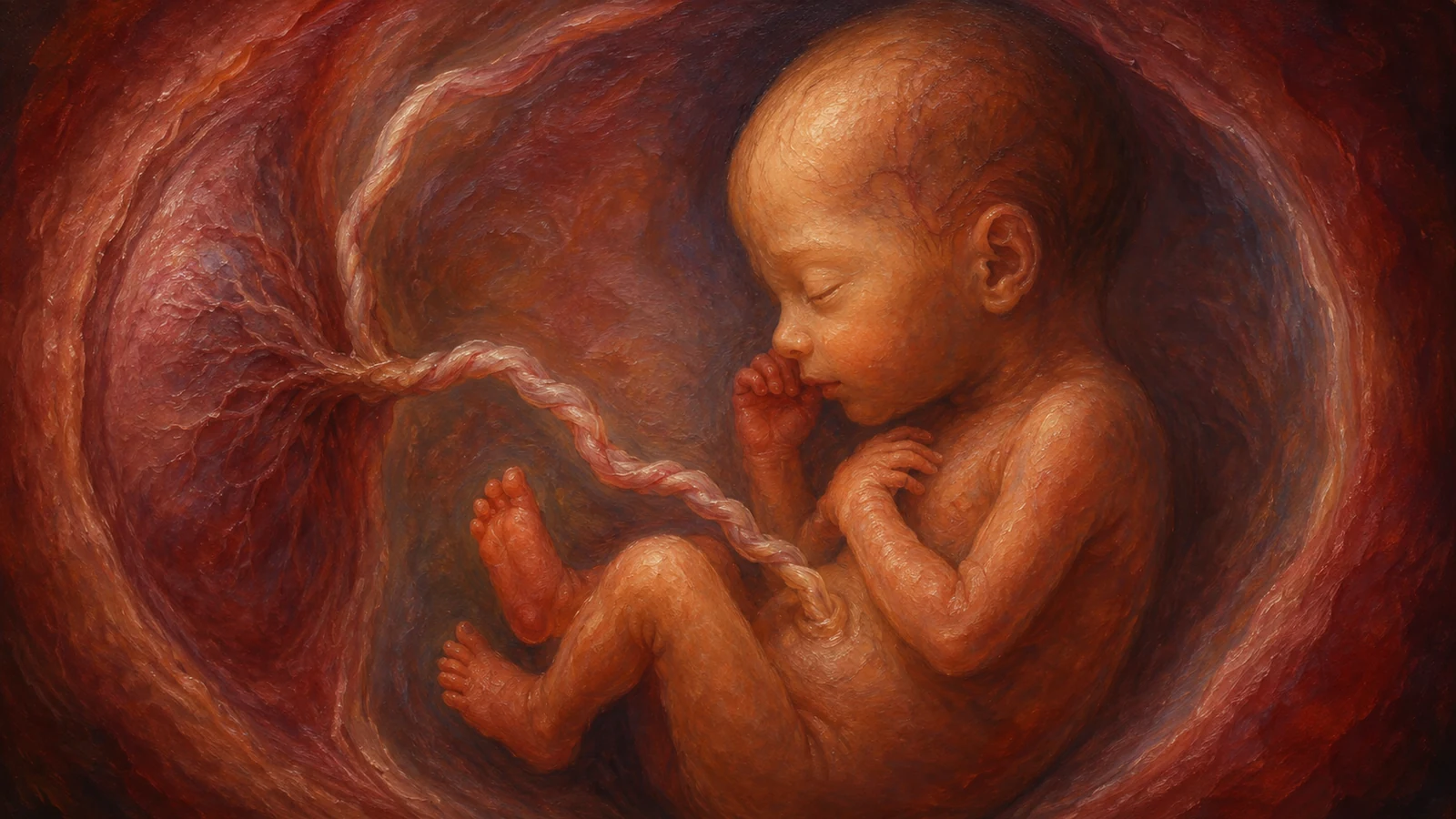
When I discuss abortion, I want to speak plainly about the unborn child’s life without treating the woman carrying that child as though her fears and difficulties are unimportant. Some people reading this have already had an abortion. Others were pressured into one or persuaded someone else to have one, and this subject may bring back painful things they would rather leave alone. We need to hear what Scripture says about human life and what Christ offers to people who cannot undo their past.
A Biblical Starting Point for Abortion
Before deciding whether an abortion is morally acceptable, we have to answer a more basic question: what is the unborn child? If that child is an innocent human being made in God’s image, the parents’ circumstances cannot determine whether he or she deserves to live. Financial hardship and family pressure can be severe, but neither turns a human life into something we are free to discard.
I also need to distinguish this discussion from miscarriage. Medical records sometimes call a miscarriage a “spontaneous abortion.” A woman who sees that wording after losing a pregnancy has not thereby been accused of deliberately taking her child’s life. She needs care and room to grieve, without someone adding a moral accusation to the words on her chart. Necessary treatment for a dangerous pregnancy also requires distinctions we will consider below.
Scripture gives us a basis for judging abortion through its teaching about human beings and the taking of innocent life. I begin with God’s image because a child’s worth cannot rest on how much someone wants that child. The same conviction also requires us to care about the mother. If we insist that she protect her child’s life, we ought to be willing to help with the difficulties she faces rather than disappear once we have given our opinion.
Human Worth and Life in the Womb
At creation, before giving Israel the law or establishing human government, God identified men and women as made in His image:
Then God said, “Let Us make man in Our image, according to Our likeness; let them have dominion over the fish of the sea, over the birds of the air, and over the cattle, over all the earth and over every creeping thing that creeps on the earth.”
So God created man in His own image; in the image of God He created him; male and female He created them.
This does not mean our bodies physically resemble God. Jesus tells us:
God is Spirit, and those who worship Him must worship in spirit and truth.
God made human beings capable of reason and relationship, morally accountable to Him and responsible to represent Him within His creation. We are His creatures, with a dignity He gave us. That dignity does not depend on how well a person can think or communicate at a particular moment. If it did, an infant or a severely disabled person would have less claim to our protection precisely when he most needed it.
Sin corrupted mankind without erasing that dignity. After the flood, God explained the seriousness of shedding human blood by referring again to His image:
“Whoever sheds man’s blood, By man his blood shall be shed; For in the image of God He made man.”
Human worth therefore cannot be granted or withdrawn according to a person’s strength, independence, or usefulness. The same objection applies when birth, awareness, or the ability to survive outside the womb is made the condition of a child’s right to live. None of those abilities is what makes a human being bear God’s image.
We still need to ask whether Scripture speaks of life in the womb as human life under His care. David praised God for forming him there:
For You formed my inward parts; You covered me in my mother’s womb. I will praise You, for I am fearfully and wonderfully made; Marvelous are Your works, And that my soul knows very well.
He speaks of “my inward parts” and says God covered “me” in his mother’s womb. David understood that hidden beginning as part of his own life. He was the person God was forming, even before anyone else could see him.
His language about being “covered” expresses God’s care during that formation. David is praising the Lord who knew him intimately, not giving us a technical description of prenatal development. Later in the psalm, he says God saw his substance while it was still unformed and knew his days before they unfolded. A person’s ability to recognize David by looking at him did not determine whether God knew who he was.
God spoke personally about Jeremiah even before forming him in the womb:
“Before I formed you in the womb I knew you; Before you were born I sanctified you; I ordained you a prophet to the nations.”
God was appointing Jeremiah as a prophet, so we should not take the verse as a promise that every child has Jeremiah’s calling. But He spoke of Jeremiah as someone He knew before forming him and whom He set apart before birth. His personal regard for Jeremiah did not begin when he was old enough to carry out that calling.
Luke describes another encounter before birth when Mary visited Elizabeth. Both women were pregnant, and Elizabeth was filled with the Holy Spirit as John responded in her womb:
And it happened, when Elizabeth heard the greeting of Mary, that the babe leaped in her womb; and Elizabeth was filled with the Holy Spirit.
Elizabeth recognized Mary as the mother of her Lord while Jesus was still in Mary’s womb. Luke calls the unborn John a babe, using the Greek word brephos, meaning a baby or infant. He uses the same word for Jesus after His birth:
And this will be the sign to you: You will find a Babe wrapped in swaddling cloths, lying in a manger.
The shared word shows how Luke could speak of a baby before or after birth. I read that language alongside Genesis and David’s description of his own formation in the womb. My conclusion rests on their combined teaching, rather than on one Greek word: I find no basis here for withholding human dignity from a child because that child is still developing inside his mother.
Innocent Blood and Biblical Justice
Once we recognize the unborn child as human, we cannot exclude that child from God’s command against murder:
You shall not murder.
Scripture does not classify every taking of life as murder. It distinguishes murder from lawful judgment and recognizes legitimate defense and war. The command forbids unjust killing. An unborn child has committed no crime and bears no guilt for the circumstances in which he or she was conceived. The child’s inability to protest or resist makes the child vulnerable, not less entitled to protection.
Proverbs includes innocent bloodshed among the things the Lord hates:
These six things the LORD hates, Yes, seven are an abomination to Him: A proud look, A lying tongue, Hands that shed innocent blood.
Calling abortion a choice does not answer the moral question. We still have to ask what is being chosen and whose life is being taken. A decision can be deeply personal and still inflict a grave wrong on another person, especially when that person has no way to object.
We should also be honest about differences in responsibility. A partner who threatens a woman unless she has an abortion is responsible for that coercion. A procedure forced on her is not her voluntary choice, and we should not accuse her of choosing what was done against her will. In other circumstances, we need to consider what each person knew, intended, and freely did, without pretending that every mother, father, relative, or counselor bears identical guilt.
Exodus 21:22-23 addresses men whose fighting harms a pregnant woman. Interpreters disagree over whether the first outcome describes a premature birth without injury or a miscarriage followed by a lesser penalty. That disagreement appears in English translations too: the NKJV describes a premature birth, while the NRSV Updated Edition describes a miscarriage. Readers also differ over whether the subsequent harm includes the child as well as the mother.
The men responsible faced a penalty determined through the judges, and the law required “life for life” where the specified harm followed. This is a law about judicial responsibility after violence, not permission to obtain an abortion. We should explain the disputed reading instead of quoting it as though the discussion were settled.
My conclusion does not require that disputed passage to carry the whole argument. Genesis grounds human worth in God’s image, the command against murder protects innocent human life, and the passages about the womb describe people whom God forms and knows. Together, they give substantial grounds for regarding the intentional killing of an innocent unborn child as sin.
Hard Cases Need Truth and Care
That conviction is painful to discuss when a pregnancy follows rape or incest. A woman who has suffered that violence needs protection from further abuse and people who will take her seriously. We should respond to a report of assault with attentive care and appropriate protection while the crime is investigated. She should not have to convince every person she approaches for help that she has suffered enough to deserve it.
The child did not commit the assault, and the father’s guilt cannot be transferred to the child he conceived. I cannot find permission in Scripture to take an innocent child’s life because the father committed a terrible crime. Saying that does not make the woman’s trauma disappear. If we urge her to carry the child, we need to support her through the pregnancy and the decisions afterward, rather than leave her alone with the repercussions of another person’s violence.
Medical emergencies need prompt attention from qualified clinicians. Christians should not pronounce judgment on a diagnosis they do not understand or expect a frightened family to make medical decisions without skilled help. Seeking biblical counsel must not delay treatment when the mother’s life is threatened.
An ectopic pregnancy develops outside the uterine cavity (the space inside the womb), most often in a fallopian tube. A tubal pregnancy cannot develop into a viable birth or be moved into the uterus, and rupture can cause life-threatening internal bleeding. A woman with this condition needs prompt medical care, with treatment determined by her diagnosis and condition. The NHS describes the available approaches, including careful monitoring in selected cases, medication, and surgery.
Seeking necessary care for a tubal ectopic pregnancy is not the same moral situation as ending a normally located pregnancy because the child is unwanted. The family may still grieve the loss deeply. Their grief does not mean they did something wrong by accepting care for a condition in which the child could not survive.
Other complications can involve uncertain outcomes and more than one treatment option. When time permits, families can ask clinicians to explain what is known and what a proposed treatment is intended to accomplish. Another qualified opinion may help when it is available without delaying necessary care. A tragic loss does not prove that the family made a sinful choice, and we should not accuse people when we do not know the circumstances.
Those medical distinctions do not resolve the moral question of an abortion sought because the pregnancy is unwanted. A woman may fear losing her job, leaving school, or being rejected by her family. She may have no idea how she will pay the rent once the child arrives. We need to take those fears seriously and help relieve the pressure, without treating the child’s life as expendable.
Deliver those who are drawn toward death, And hold back those stumbling to the slaughter.
Proverbs is calling us to help people facing death. An unborn child threatened by abortion needs that protection, and helping the mother through her pregnancy is often part of providing it. We cannot do that well if we dismiss her fears or leave her without support.
Mercy, Repentance, and Practical Love
If you have participated in an abortion, I do not want you to conclude that you must hide from Christ. Denying sin will not cleanse your conscience, but neither will trying to punish yourself for the rest of your life. You cannot undo what happened, and Christ does not ask you to accomplish that before you come to Him.
Jesus is the eternal Son, fully God and fully man, who lived without sin. Wicked people tortured and killed Him, and He willingly endured that real punishment for our sins in His innocent body. He shed His blood and gave His life for us. The Father did not punish, curse, abandon, strike, bruise, or pour wrath on Jesus. His saving work through His blood and death was complete before He was buried and rose bodily from the grave. Years of self-reproach cannot add to what He has done or earn the forgiveness He gives:
For by grace you have been saved through faith, and that not of yourselves; it is the gift of God, not of works, lest anyone should boast.
Christ died for the whole world, and God’s offer of salvation is genuine for every person. People can resist and finally reject Him, but He will not refuse someone who comes in repentant faith. That person is forgiven and regenerated, meaning genuinely born again, with the Holy Spirit dwelling within and sealing the believer. Every genuine believer is eternally secure because salvation rests on Christ’s finished work and God’s promise.
This assurance gives no permission to continue in lawlessness. Someone can call himself a Christian without having received new life, so a label alone does not establish that he has been saved. The changed life is evidence of regeneration, not payment for forgiveness. We should encourage a person who has come to Christ to obey Him, without treating that believer as though a past abortion still determines his or her standing before God.
The call to confession reaches beyond the mother. A man who pressured her into an abortion to avoid fatherhood has no right to stand back and place all the blame on her. Parents and friends who encouraged it need to acknowledge their own participation too. Even silence can be sinful when we knowingly refuse a responsibility we should accept. Each person needs to confess what he or she actually did, without shifting blame or assuming guilt for someone else’s choices.
If we confess our sins, He is faithful and just to forgive us our sins and to cleanse us from all unrighteousness.
Repentance means turning to God and agreeing with Him about our sin. It does not mean trying to pay Him back. Hating yourself cannot restore the child’s life, and refusing to receive mercy cannot honor the Savior who shed His blood to cleanse you. We confess honestly, trust His promise, and learn to obey Him as people He has forgiven.
Jesus showed mercy without approving sin when He addressed the woman caught in adultery. He did not condemn her, but He did call her away from her sin:
And Jesus said to her, “Neither do I condemn you; go and sin no more.”
A person grieving a past abortion may need patient pastoral counsel and help receiving that mercy. Being forgiven does not require pretending there was no loss, and ongoing grief does not prove that Christ has refused to forgive. Where relationships can be repaired safely, repentance may include acknowledging harm and making amends. No one should be pressured to contact an abusive person or put herself in danger to demonstrate sincerity.
Our churches also need to examine whether their conduct makes it harder for people to ask for help. A pregnant woman may fear gossip in the congregation, anger from her father, or relatives who are more concerned with appearances than with her child. Where there has been sexual sin, it can be addressed without humiliating the woman or treating her child as an embarrassment. She still needs practical help, and being able to speak honestly should make it easier to receive that help.
That support must fit her circumstances. A woman worried about rent needs more than reassurance that everything will work out. A congregation may be able to help with the bill, provide transportation to appointments, or arrange childcare so she can keep working. Meals and baby supplies can ease a family’s expenses. If she is considering adoption, she needs trustworthy advice without being pressured into that decision. If a partner is abusive, helping her includes protection from his coercion.
Fathers must be called to accept responsibility too. A man cannot treat fatherhood as optional because he would prefer to avoid the cost or embarrassment. Grandparents and friends can help the family welcome the child instead of treating the pregnancy as a scandal to conceal. This kind of care often continues long after the conversation in which a woman first asks for help.
My little children, let us not love in word or in tongue, but in deed and in truth.
I need to consider whether I am willing to provide the help I urge other people to seek. If I speak against abortion and disappear when a frightened mother needs support, I have left her with the same pressures she brought into the conversation. Strong convictions should make me willing to serve her, not merely win approval from people who agree with my position.
Parents can begin before a crisis by teaching their children what Scripture says about sex, marriage, and responsibility toward another person. We should not wait until an unexpected pregnancy to teach the value of a child. Our sons and daughters need to know how to live faithfully and where they can seek honest help when they have done wrong.
My Final Thoughts
I believe Scripture gives us a clear basis for opposing abortion: the unborn child is a human being made in God’s image, and being unwanted does not give someone the right to take that life. That conviction should make us willing to defend the child and help shoulder the difficulties a mother faces. For those who have participated in abortion, Christ’s blood is sufficient to cleanse everyone who comes to Him in repentant faith. We should speak plainly about the sin and offer the patient care that helps people receive His mercy and learn to obey Him.