
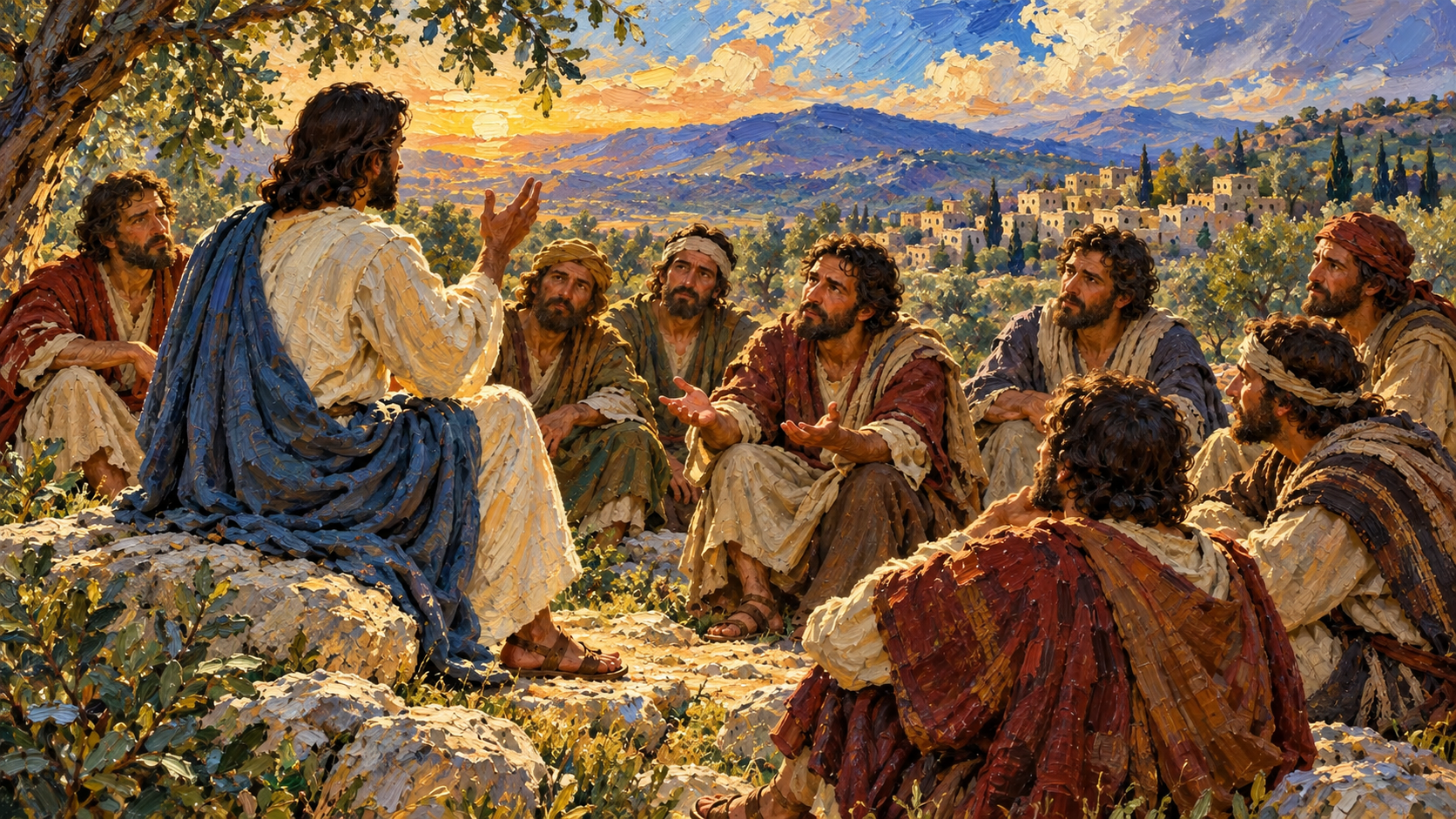
Jesus did not give His disciples a long or complicated method when they asked Him to teach them to pray. He gave them a short pattern that begins with the Father. John 17 lets us hear Jesus Himself praying on the night before the cross. I want to learn from both passages without confusing the prayer He taught His disciples with the one He prayed Himself.
A Pattern, Not a Spell
Prayer can become so familiar that we slip into an empty routine. It can also leave people feeling guilty because they think they are doing it poorly. In Matthew 6, Jesus takes away the pressure to perform and teaches His disciples how to pray sincerely with a simple order to follow.
In this part of the Sermon on the Mount, Jesus was correcting people who practiced religion to be noticed. Some prayed for an audience. Others relied on vain repetition, as though enough words could wear God down. He reminded His disciples that their Father already knew what they needed before they asked.
If the Father already knows, why should we pray? We are coming into fellowship with Him, not supplying information He lacks. We honor His name and submit our will to His as we speak to Him. Asking for provision admits our dependence, and confessing sin keeps us honest before Him. We also seek His help with temptation because we need His care there too.
Jesus was not condemning all public prayer or every repeated request. Scripture includes recurring cries to God, and the Psalms gave His people words they could pray together. The early believers also prayed as a church. What Jesus rejected was praying for human applause or treating God like an idol we could manipulate with a technique.
We commonly call the passage in Matthew 6 the Lord’s Prayer. That familiar title helps us find it, but I want to distinguish the prayer Jesus taught His disciples from the one He prayed Himself. Matthew 6 teaches us how to pray. In John 17, we hear the Lord speaking to the Father.
Jesus introduced the Matthew passage with these words: “In this manner, therefore, pray.” He gave His disciples a model for both what to pray and the order of their requests. We can thoughtfully recite His words, but repeating them without paying attention can become the very empty habit He had just warned against.
Luke 11 records a related occasion when a disciple asked Jesus to teach them after He had finished praying. Jesus gave a shorter form with the same basic order. Those differences help me see that He was teaching what prayer should seek. He was not giving an exact sequence of sounds that alone could reach God.
In this manner, therefore, pray: Our Father in heaven, Hallowed be Your name.
Jesus begins with the Father and the holiness of His name, then teaches us to seek His kingdom and submit to His will. Our daily needs follow. We ask for bread because we depend on Him, and we confess our sins as people who have received mercy. Knowing that temptation is real, we also ask for protection. In the received form of the prayer, the ending brings these needs back to God’s eternal rule and gives Him the glory.
I notice that Jesus makes room for our needs without letting them consume the whole prayer. Many prayers begin with whatever is pressing on us and never move beyond it. He does not shame us for those concerns, but teaches us to bring them to the Father through worship. We don’t need a long prayer to be honest, and we don’t need to impress anyone listening. This brief prayer brings the whole of life before God without making it a performance.
When my attention is scattered, this pattern gives me a way to return to who the Father is before describing what hurts. He already knows the burden. I don’t have to produce the right emotion or find enough words to make Him notice. Jesus does not minimize our needs, but places them beneath the holiness of God’s name and the rule of His kingdom. We can entrust them to the Father’s wisdom.
Listening to Jesus Pray
John 17 lets us hear Jesus lift His eyes and speak to the Father only hours before the cross. Throughout John’s Gospel, the events have been moving toward what Jesus calls “the hour.” That appointed time includes His suffering and physical death, then His bodily resurrection and return to the Father in glory.
Jesus spoke these words, lifted up His eyes to heaven, and said: “Father, the hour has come. Glorify Your Son, that Your Son also may glorify You,
Jesus did not panic or ask the Father to replace His mission with an easier one. He asked that the Father be glorified through the work He had come to finish. That makes me think about what I am seeking when obedience is costly. Prayer brings us into communion with God and agreement with His purpose. Its main purpose is not to make obedience painless.
In John 17, Jesus spoke about completing the work the Father had given Him. Later, from the cross, He declared, “It is finished.” Reading John 17 with John 19 helps us see that redemption was never an improvised response to events. The Son willingly came to accomplish the work of the cross.
Jesus is the sinless God-man. Wicked men physically tortured and punished Him, then killed Him. He willingly bore that real punishment for our sins in His innocent body. He shed His blood and died before being buried, and then He rose bodily from the dead. The Father did not punish or curse His Son. He did not abandon, strike, or bruise Jesus, and He did not pour wrath on Him. Father and Son remained united in the work of redemption.
how much more shall the blood of Christ, who through the eternal Spirit offered Himself without spot to God, cleanse your conscience from dead works to serve the living God?
Paul describes Christ offering Himself through the eternal Spirit to God. We see the Trinity at work in Hebrews without confusing the divine Persons. Christ’s blood cleanses the conscience, so I come to God in prayer on the basis of completed redemption, not my own worthiness. The cross reveals God’s holiness and justice along with His faithful love and mercy.
Jesus glorified the Father by doing the work He was given. I can be honest about grief or fear in prayer without making my comfort the highest goal. We can tell the Father what we need and still ask that His honor govern the answer.
Jesus then prayed for the disciples who would remain in the world. He did not ask the Father to remove them from their place of witness, but to guard them as they continued there:
I do not pray that You should take them out of the world, but that You should keep them from the evil one.
Spiritual conflict is real, yet Jesus directed His disciples’ attention to the Father’s care rather than fear of the enemy. Believers are guarded as they carry out their witness in a hostile world. He then connected their life in that world with the truth of God’s Word:
Sanctify them by Your truth. Your word is truth.
The Greek verb translated “sanctify” is hagiazō, meaning to set apart as holy. Matthew 6 asks that God’s name be hallowed, or treated as holy, while John 17 asks that believers be set apart by the truth. Understanding the word helps us see the relationship without treating the requests as identical. In prayer we honor the Holy One, while Scripture shapes us into people who belong to Him.
I need prayer and God’s Word together. Without truth, prayer can be led by feeling or imagination. But if I read the Bible without prayer, I can treat what it says as detached information. Jesus brings worship and obedience together as the Father sets His people apart through truth.
Jesus also prayed for people beyond those in the room: those who would believe through the apostles’ word. That includes every believer who has received the gospel through their witness preserved in Scripture.
that they all may be one, as You, Father, are in Me, and I in You; that they also may be one in Us, that the world may believe that You sent Me.
I don’t understand this unity as togetherness achieved by ignoring what we believe. John 17 has already connected the disciples’ lives with the apostolic message and sanctification through God’s Word. We grow in unity by submitting to Christ and walking in the light. That also requires us to deal honestly with sins against one another instead of hiding or excusing them, so our fellowship is protected.
Jesus connected that unity with the world recognizing that the Father sent Him. Treating every belief as equal cannot give that witness. The world should see people who have received the same apostolic gospel loving one another within the truth. Jesus’ concern in John 17 goes beyond our private comfort. He cares for His own and sends them into the world, where their life together should point to Him.
The Father, His Name, and His Kingdom
With John 17 in mind, I hear both nearness and majesty in the opening of Matthew 6: “Our Father in heaven” brings us to God as children He receives through Christ. Yet the Father we approach is still the Lord of heaven, ruling with complete authority and glory.
Calling God our Father does not mean that everyone is already His child in the saving sense. He created everyone, but sinners receive the right to become His children through faith in Christ and the new birth. I can call Him Father with confidence because adoption is His gift of grace, not a place in His family that human effort can earn.
Praying “Hallowed be Your name” means asking that God’s name be treated as holy. We cannot make Him holy because He already is. We ask that His revealed character receive the honor it deserves and that people submit to His authority. The study The Name of the Lord explains how His name speaks of His character and authority, as well as His presence and saving power.
If I ask for God’s name to be honored, that should affect how I speak about Him and whether I obey when no one is watching. Reverent words alone are not enough. His name should be honored in our homes and churches, and we should represent Him truthfully before the world.
“Your kingdom come” asks for more than God’s rule over my own choices, although it certainly includes that. We submit to His authority now while looking forward to the future kingdom Scripture promises. Jesus will return bodily and reign on the earth. Our daily obedience belongs within that much larger hope.
With the request “Your will be done” we invite the Father to correct the places where we resist Him. That is trust, not fatalism. Our choices still mean something, and we are not calling everything that happens good. We are placing our plans under God’s wisdom and authority.
I should not say “Your will be done” as though I expect God not to act. Some people use the words that way, but Jesus teaches us to ask boldly because the Father hears. We can submit our requests to Him because He sees what we cannot see and is good. There is no conflict between asking boldly and trusting His answer.
This order can steady an urgent prayer. Beginning with the Father’s name brings us back to reverence, and asking for His kingdom widens our concern beyond the pressure we face. Submitting to His will acknowledges that we cannot see everything He sees. Even our most urgent need can be placed safely in His hands.
Daily Bread, Forgiveness, and Rescue
Jesus then taught His disciples to ask for daily bread. Having begun with God, they were to bring their ordinary needs to the Father who cares for them. The request echoes Israel’s daily dependence in the wilderness and teaches us to depend on God instead of living in anxiety or self-sufficiency.
The Greek adjective translated “daily” is rare, and interpreters differ over whether it means bread for the present day or the coming day. I would not claim the wording settles that question more precisely than it does. We can still understand what Jesus is teaching us to do: ask for what we need and receive ordinary provision as the Father’s gift.
The Father who governs His kingdom also cares about daily life, so no honest need is beneath His attention. We can ask Him for work or food for the household. Heavy bills can be named plainly, and we need not be embarrassed to bring illness or fatigue before Him. I notice that Jesus includes bread in the same prayer that asks for God’s kingdom. His greatness does not make Him distant from ordinary needs.
But Jesus says “give us” rather than teaching me to pray as though I were alone. We belong to a family, and asking for bread should make room for people who lack it. That little plural keeps our own needs from becoming the only ones we bring before the Father.
“Forgive us our debts, as we forgive our debtors” brings confession and mercy into our daily prayer. Forgiving another person does not earn saving forgiveness for us. Salvation remains God’s gift received by faith, not something our works can purchase.
For by grace you have been saved through faith, and that not of yourselves; it is the gift of God, not of works, lest anyone should boast.
Receiving mercy should affect how I treat someone who has wronged me. Jesus does not leave room for making settled bitterness a way of life. Forgiving means giving personal vengeance over to God instead of acting as though mercy belongs only to us. It does not mean calling evil good or removing every wise boundary, and broken trust may take time to rebuild.
Matthew 6:14-15 confronts the contradiction of asking God to forgive us while stubbornly refusing forgiveness to everyone else. It does not give a second way of salvation in which our mercy buys His. Persistent, remorseless unforgiveness calls a profession of faith into question. If a believer sins in this area, he should confess it and return to the mercy he has already received in Christ. The study Repentance develops that honest return to God and the fruit that follows.
The plural appears again when Jesus says “forgive us.” I come personally, but my failures are not the only ones that need mercy. This prayer teaches us to confess without treating another person’s sin as heavier than our own.
We need to read the request not to be led into temptation with James 1:13, which tells us that God never entices anyone to do evil. Jesus teaches us to ask for the Father’s wise leading away from temptation and for rescue when testing comes.
Spiritual maturity does not mean we outgrow that request. As believers recognize their weakness and where the flesh is vulnerable, they ask the Father to keep them near Christ. Depending on Him helps them stay alert to evil and obey under pressure.
I need to seek the Father’s help before entering temptation, not wait until I have fallen. As we ask for His help, we should also avoid paths that feed the flesh. We should be alert to evil without becoming absorbed in it or driven by fear, because our Father is stronger than the evil one.
The form preserved in the received New Testament text closes, “For Yours is the kingdom and the power and the glory forever. Amen.” Every request returns to the Father’s authority and His ability to answer. We ask for bread and forgiveness because the kingdom is His, and for rescue because His power is greater than the danger. We want the answer to bring Him glory.
No amount of maturity makes temptation harmless. I still need forgiveness for yesterday and provision for today, and I need the Father to guard my next step. Jesus teaches us to be honest about that dependence throughout our lives instead of pretending spiritual growth has removed it.
Our bodies need the Father’s provision, and our daily fellowship with Him requires honest confession. We also need His leading and rescue because the choices ahead will require grace. In prayer we can face past failure without hiding it, tell Him what we need today, and entrust what comes next to Him rather than our own strength.
Coming to the Father Through Christ
Praying in Jesus’ name means that we come to the Father through the Son, rather than on our own merit. It is not a magic phrase we can attach to any request. Christ Himself gives us access:
For there is one God and one Mediator between God and men, the Man Christ Jesus,
We pray in His name as people who belong to Him, trusting His finished work and seeking what honors Him. That gives us reason to be bold. Paul, the author of Hebrews, invites believers to approach the throne of grace boldly because Jesus is our great High Priest. My confidence rests in Him, so I need not confuse boldness with presumption.
The Son gives us access to the Father, and the Holy Spirit helps us in our weakness and intercedes according to God’s will. We ordinarily pray to the Father through the Son with the Spirit’s help. All three Persons are involved in Christian prayer without being confused with one another.
We can now see how Matthew 6 and John 17 belong together while remaining distinct prayers. The disciples were taught to address the Father because the Son would go to the cross and complete redemption. He rose bodily and intercedes for His own. Our access to God is His gift, secured by Christ as our one Mediator and faithful High Priest. Eloquence cannot earn it.
I don’t want prayer to leave me impressed with my own words when I should be depending on Christ. We come because He is worthy and His blood opened the way. A simple, honest prayer can be strong when it rests on faith in Him. The broader study Prayer follows this communion with the Father through Christ and the Spirit’s help in greater detail.
The gospel beneath that access must remain clear. Christ died for the whole world, and people can resist God’s genuine offer. Everyone who repents and believes is forgiven. God justifies that person by faith apart from works, gives the new birth, and makes him new. The Holy Spirit indwells and seals the believer, who is eternally secure in Christ. That security never makes lawlessness harmless, and a superficial profession does not prove that the new birth occurred.
The Gospel explains Christ’s blood, death, burial, bodily resurrection, and salvation by grace through faith more fully. Those truths explain why a sinner can come to the holy Father at all.
So we can thoughtfully recite the words in Matthew 6 while remembering that Jesus gave a pattern for sincere prayer. Their value does not lie in reproducing a perfect sequence of sounds, as though the prayer were a spell.
We also need to understand forgiveness within the gospel of grace. Forgiving others grows from mercy already received; it is not the price of salvation. And we should let John 17 speak as Jesus’ own prayer to the Father before the cross, rather than reduce it to a general lesson about how everyone should pray.
Praying in Jesus’ name brings us through Him to the Father as we seek what honors Him. Adding the phrase cannot make a selfish desire acceptable or give our eloquence spiritual merit. However beautiful our words may be, we depend on Christ’s mercy.
My Final Thoughts
Matthew 6 and John 17 serve different purposes, but both help me understand how we come to the Father. Jesus’ model begins with the Father’s name and kingdom without leaving out the needs and failures of daily life. John 17 lets us hear His own prayer before the cross and helps me see that prayer keeps us near the Father even when obedience remains costly. We can speak simply and honestly because Christ’s blood opened the way, not because our words are impressive. We trust the Father through the Son, with the Spirit helping us in our weakness.