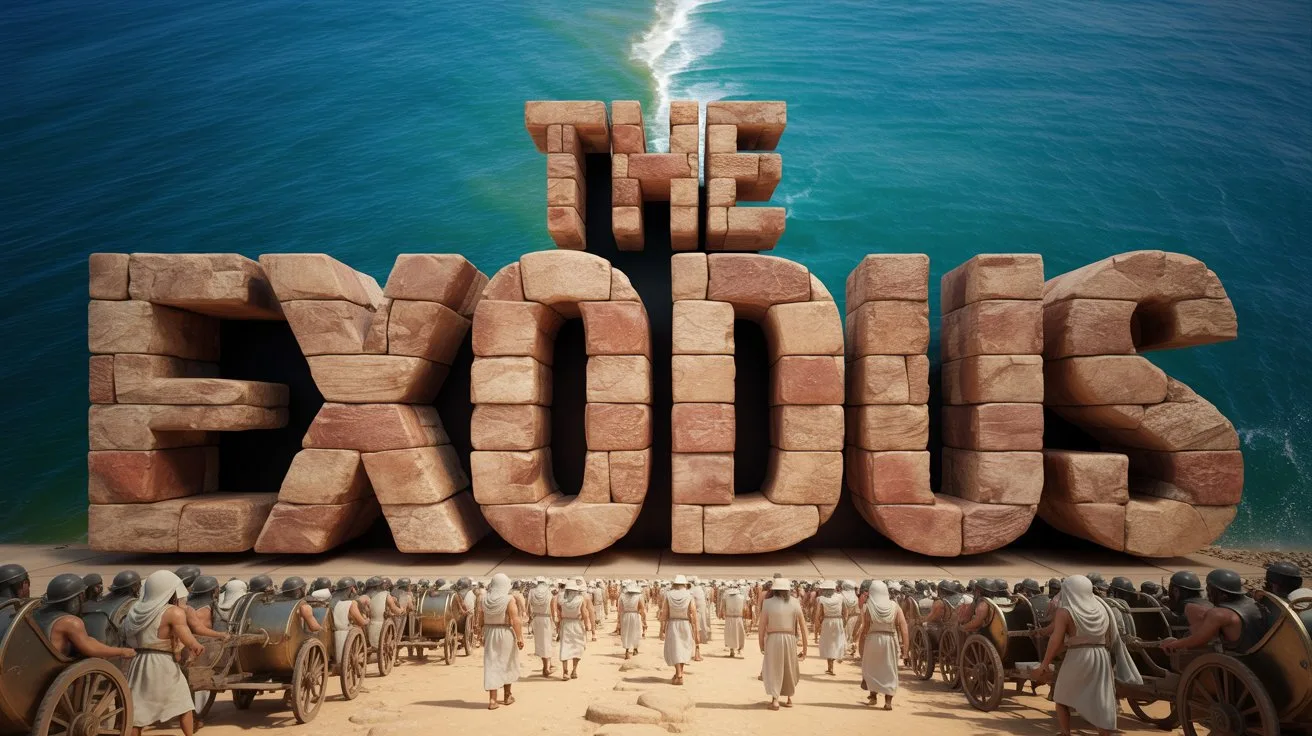
Exodus opens with a hard turn: the family of Israel that was protected in Egypt under Joseph becomes a people threatened in Egypt under Pharaoh. One sentence in Exodus 1:8 explains the human reason for the change, and it also sets up the way God will show His name, His holiness, His power to judge evil, and His mercy to save.
A new king rises
Genesis ends with Joseph honored and Israel settled in Goshen. Exodus begins by showing how fast political favor can disappear. The text does not blame Joseph, and it does not say Israel sinned to cause this. It simply reports what happened in Egypt and what that meant for God’s people.
The turning point is plain.
Now there arose a new king over Egypt, who did not know Joseph. (Exodus 1:8)
What changed and why
Exodus 1:8 says a new king arose over Egypt who did not know Joseph. In normal speech, that means Joseph’s service no longer counted at the top. The verb know can mean more than having information in your head. It can carry the idea of recognizing, acknowledging, treating something as binding. This Pharaoh is not willing to honor the past or treat Joseph’s record as a reason to protect Israel.
One easy-to-miss observation is how ordinary the crisis begins. Israel’s trouble does not start with a sudden natural disaster. It starts with a change in leadership and a shift in how a growing minority group is viewed. The suffering in the chapters that follow is not an accident. It is policy.
Pharaoh sees Israel multiplying and treats it like a threat. Fear turns into strategy. He talks about Israel as if they are a military risk, like they might switch sides in a war. That kind of talk makes harsh treatment sound reasonable to the people listening, but it is still driven by fear and control.
come, let us deal shrewdly with them, lest they multiply, and it happen, in the event of war, that they also join our enemies and fight against us, and so go up out of the land." (Exodus 1:10)
The oppression is intentional and it ramps up. The text keeps repeating the same idea: harsh service, bitter lives, crushing labor. The repetition is there to slow you down and make you feel the weight of what Egypt is doing. Israel is not just inconvenienced. They are being ground down.
So the Egyptians made the children of Israel serve with rigor. And they made their lives bitter with hard bondage–in mortar, in brick, and in all manner of service in the field. All their service in which they made them serve was with rigor. (Exodus 1:13-14)
Affliction cannot cancel promise
Then comes the reversal. The more Egypt presses, the more Israel grows. Pharaoh thinks he is managing a population problem. He is actually pushing against a promise God made long before, back in Abraham’s day. Oppression is real, and God does not pretend it is small. But oppression does not get the last word.
But the more they afflicted them, the more they multiplied and grew. And they were in dread of the children of Israel. (Exodus 1:12)
Pharaoh escalates from forced labor to a death plan. He targets Hebrew sons to cut off Israel’s future. The book begins with this ugly truth: evil will gladly attack children when it thinks that will secure power.
Another detail that deserves attention is who the first God-fearers are in Exodus. It is not a prince. It is not a public leader. It is Hebrew midwives. Under a direct command from the most powerful man in the land, they refuse to cooperate with murder. The text is showing you how God often blocks wicked plans: not always with thunder first, but with quiet obedience in hard places.
But the midwives feared God, and did not do as the king of Egypt commanded them, but saved the male children alive. (Exodus 1:17)
That does not mean we shrug at tyranny. It means we remember that God is not cornered. The right fear, the kind that steadies a believer, is fear of God more than fear of man.
Moses is preserved
Exodus 2 introduces Moses in the least impressive way possible: as a baby under a death decree. That is on purpose. God’s deliverer enters the account needy and exposed. From the start, the message is that deliverance is God’s work, not human muscle.
An ark in reeds
When Moses’ mother can no longer hide him, she places him in a small vessel in the Nile. The Hebrew word for that vessel is tevah, and Scripture uses it for Noah’s ark as well. It is a rare word, and the link is meant to be heard. In both events, death is near, judgment is in the background, and God provides a means of preservation. The point is not that Moses is clever. The point is that God is already working through faith and courage before Moses can do anything at all.
Then God’s irony shows up. Pharaoh’s own house becomes the place Moses is kept alive. Pharaoh is trying to kill Hebrew boys. Pharaoh’s daughter rescues one, names him, and raises him. God can turn an enemy’s household into a shelter for His plan without asking permission.
And the child grew, and she brought him to Pharaoh's daughter, and he became her son. So she called his name Moses, saying, "Because I drew him out of the water." (Exodus 2:10)
Acts adds that Moses was trained in Egypt’s wisdom. He did not grow up uneducated. He learned the world he would later confront.
And Moses was learned in all the wisdom of the Egyptians, and was mighty in words and deeds. (Acts 7:22)
Faith and identity
Hebrews tells you what was going on inside Moses later. He refused Egypt’s identity and chose to be identified with God’s people. That was not a social move. It was faith.
By faith Moses, when he became of age, refused to be called the son of Pharaoh's daughter, (Hebrews 11:24)
Hebrews also connects Moses’ choice to the reproach of Christ.
esteeming the reproach of Christ greater riches than the treasures in Egypt; for he looked to the reward. (Hebrews 11:26)
Moses did not know the name Jesus, and he did not have the clear light we have after the cross and resurrection. But he did know God’s promises and God’s pattern of redemption. He chose the line of God’s promise over the treasures of Egypt. In that sense, Moses was looking the same direction every believer looks: toward God’s rescue, even when it costs you in this world.
Zeal without timing
Moses’ early attempt to help shows another hard lesson. He sees an Egyptian beating a Hebrew, and he steps in. The problem is how he does it: murder and cover-up.
So he looked this way and that way, and when he saw no one, he killed the Egyptian and hid him in the sand. (Exodus 2:12)
Acts shows what Moses assumed. He thought his fellow Israelites would understand God would deliver them by his hand, but they did not.
For he supposed that his brethren would have understood that God would deliver them by his hand, but they did not understand. (Acts 7:25)
Moses may have sensed God’s call, but his method was fleshly and his timing was early. You can be right about the need and still be wrong in the way you try to fix it. God is going to break Egypt’s grip by His own power through open judgment and open redemption, not through hidden violence.
When Moses tries to mediate between two Hebrews, he is rejected with a question that stings: who made you a prince and a judge? That question is bitter, but it is also true at that moment. Moses will become a ruler and judge in Israel, but not by grabbing it. God will appoint him.
Then he said, "Who made you a prince and a judge over us? Do you intend to kill me as you killed the Egyptian?" So Moses feared and said, "Surely this thing is known!" (Exodus 2:14)
Moses flees to Midian and becomes a shepherd. The prince becomes a fugitive. The man raised near a throne ends up in the back side of nowhere. Those years matter because God is not just building skills. He is building patience, humility, and endurance. Egypt gave Moses education. The wilderness taught him to wait on God.
God reveals His name
Exodus 3 moves from hidden preparation to open calling. Moses is tending sheep when God meets him at Horeb, later called Sinai. That location is not random. The mountain where Israel will receive the law is first the place where the deliverer meets the God who gives commands.
The Lord appears in a burning bush that is not consumed. Fire often points to God’s holy presence. Yet the bush is not destroyed. God is holy, and He draws near without shrinking His holiness. He will deal with sin, but He is also merciful and patient with weak people.
When Moses approaches, God stops him and teaches him reverence first.
Then He said, "Do not draw near this place. Take your sandals off your feet, for the place where you stand is holy ground." Moreover He said, "I am the God of your father–the God of Abraham, the God of Isaac, and the God of Jacob." And Moses hid his face, for he was afraid to look upon God. (Exodus 3:5-6)
Holy ground and covenant
God tells Moses to remove his sandals because the ground is holy. The dirt is not magical. The ground is holy because God is there. Before Moses speaks for God, he learns what it means to stand before God.
God identifies Himself as the God of Abraham, Isaac, and Jacob. Exodus is not God trying something new because the old plan failed. This is God keeping promises already made. That anchors redemption where it belongs: in God’s faithfulness, not Israel’s worthiness.
I AM and the LORD
When Moses asks what he should say if Israel asks for God’s name, God answers with the divine name statement.
And God said to Moses, "I AM WHO I AM." And He said, "Thus you shall say to the children of Israel, "I AM has sent me to you."' (Exodus 3:14)
The Hebrew behind this is commonly rendered I AM WHO I AM. The key point is not a puzzle. It is that God is the living, self-existent One. He is not dependent, not fading, not limited by time. He will be faithful to be who He is.
Closely tied to that, Exodus 3:15 gives the covenant name shown by the letters YHWH, represented in many English Bibles as LORD in all capitals. This name is bound up with God’s dealings with His people across generations. It is not a private spiritual label. It is God making Himself known in history.
That sets up the conflict with Pharaoh. Pharaoh says he does not know the LORD and he will not obey. From that point on, the question is not mainly whether Moses can prove himself as a leader. The question is whether the LORD will make Himself known.
And Pharaoh said, "Who is the LORD, that I should obey His voice to let Israel go? I do not know the LORD, nor will I let Israel go." (Exodus 5:2)
Moses objects
Moses responds with objections. First, he points to his own inadequacy.
But Moses said to God, "Who am I that I should go to Pharaoh, and that I should bring the children of Israel out of Egypt?" So He said, "I will certainly be with you. And this shall be a sign to you that I have sent you: When you have brought the people out of Egypt, you shall serve God on this mountain." (Exodus 3:11-12)
God’s answer is not self-esteem. God promises His presence. The mission will succeed because God will be with the one He sends. God does not call someone and then watch from a distance. He calls, commands, and supplies what He requires.
Moses keeps pushing back. God gives signs and provides Aaron as help. God is patient with weakness, but God does not treat refusal as a virtue. When Moses asks God to send someone else, God’s anger is kindled. God still provides help, but He does not cancel Moses’ calling.
But he said, "O my Lord, please send by the hand of whomever else You may send." So the anger of the LORD was kindled against Moses, and He said: "Is not Aaron the Levite your brother? I know that he can speak well. And look, he is also coming out to meet you. When he sees you, he will be glad in his heart. (Exodus 4:13-14)
Later, when Moses is discouraged, he uses the odd phrase uncircumcised lips.
And Moses spoke before the LORD, saying, "The children of Israel have not heeded me. How then shall Pharaoh heed me, for I am of uncircumcised lips?" (Exodus 6:12)
That expression is an idiom. Circumcision was the covenant sign of being set apart to God. Uncircumcised could be used more broadly for something unfit or not properly set apart. Moses is saying his speech feels unqualified for the job, like it does not belong in holy service. God keeps bringing Moses back to the same ground: God’s word, God’s power, God’s presence.
Judgment and rescue
Then come the confrontations with Pharaoh and the plagues. They are not random disasters. They are targeted judgments that show God’s authority over creation and over Egypt’s false gods. God also makes distinctions, protecting Israel while judging Egypt. That is not luck. That is God acting with purpose and control.
And in that day I will set apart the land of Goshen, in which My people dwell, that no swarms of flies shall be there, in order that you may know that I am the LORD in the midst of the land. (Exodus 8:22)
The repeated language about Pharaoh’s hardened heart raises questions for a lot of readers. Exodus uses different expressions: Pharaoh hardens his heart, his heart is hardened, and the LORD hardens his heart. One key Hebrew verb used is chazaq, which can mean to strengthen or make firm. In context, God is not putting evil into an innocent man. Pharaoh is already resisting what he knows he should do, and God confirms him in the path he keeps choosing, using Pharaoh’s stubbornness to put God’s power on open display.
The New Testament points to the same pattern: persistent rejection can lead to God giving a person over to what they insist on. Romans uses Pharaoh to show that God can make His name known even through a ruler’s rebellion.
For the Scripture says to the Pharaoh, "For this very purpose I have raised you up, that I may show My power in you, and that My name may be declared in all the earth." Therefore He has mercy on whom He wills, and whom He wills He hardens. (Romans 9:17-18)
All of this pressure builds toward the last plague and the Passover. Here Exodus gives one of the clearest Old Testament pictures of substitution. Judgment comes, but God provides a substitute and attaches a promise to what He commands.
The lamb must be without blemish. The blood must be applied where God says. The difference between one house and another is not social standing, background, or good intentions. It is whether God sees the blood where He commanded it to be.
And they shall take some of the blood and put it on the two doorposts and on the lintel of the houses where they eat it. (Exodus 12:7)
Now the blood shall be a sign for you on the houses where you are. And when I see the blood, I will pass over you; and the plague shall not be on you to destroy you when I strike the land of Egypt. (Exodus 12:13)
Do not miss how personal it is. A lamb could die in the neighborhood, but if a household refused to apply the blood, that house had no promise. God provides rescue, and each household takes refuge in what God provides. That is a straight-line picture of how salvation works. Jesus died for all. His sacrifice is sufficient. The question is whether a person receives Him by faith.
The New Testament directly connects Passover to Christ.
Therefore purge out the old leaven, that you may be a new lump, since you truly are unleavened. For indeed Christ, our Passover, was sacrificed for us. (1 Corinthians 5:7)
Jesus is the true Passover Lamb. He is sinless, and His death is the sacrifice God accepts. Salvation is by grace through faith alone in Jesus Christ alone. Works do not earn that rescue. Works follow as fruit because the saved person now belongs to the Lord.
Passover also shows that salvation is not only escape from judgment. It leads to a new life under God’s leading. Israel is brought out to worship and serve. In the same way, believers are saved from the penalty of sin and from the mastery of sin. We do not clean ourselves up to get saved. We come to Christ as we are, and then He changes our direction and teaches us how to walk with Him.
My Final Thoughts
Exodus starts with a king who does not know Joseph in Exodus 1:8, and it keeps moving toward the LORD making Himself known to Pharaoh, to Israel, and to the nations. The oppression is real, the fear is real, and the weakness of God’s servants is real. None of that stops God from keeping His promises or saving through the means He provides.
If you are in a place where you feel pressured, overlooked, or outmatched, Exodus is steady ground. God can work through hidden faithfulness, long preparation, and even human resistance. The central question is not whether you feel strong enough. It is whether you will trust the Lord and take refuge in the true Lamb, Jesus Christ, who died and rose again so that all who believe in Him have eternal life.


 Get the book that teaches you how to evangelize and disarm doctrines from every single major cult and religion.