
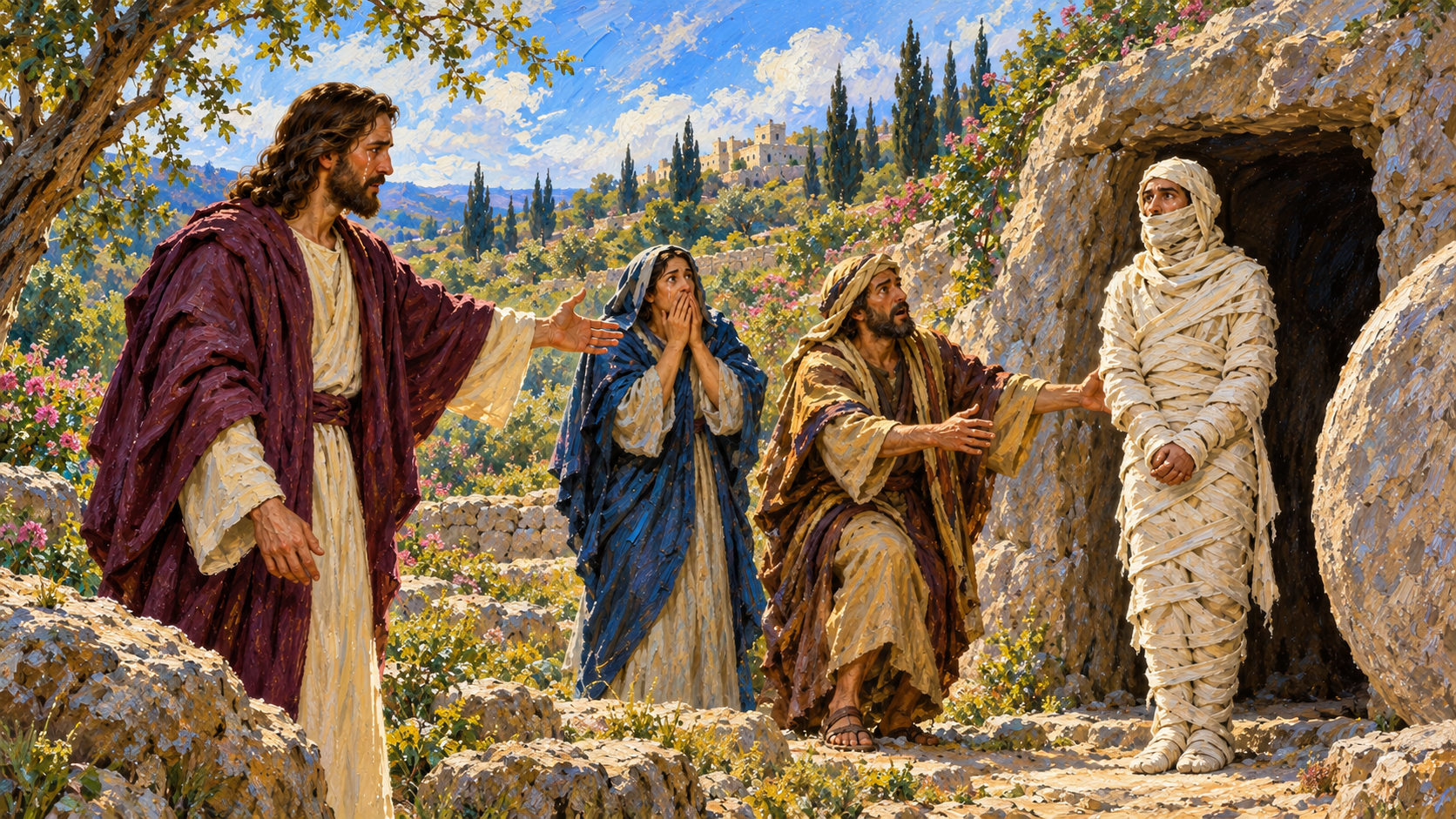
How can Jesus Christ be fully God and fully man at the same time? Scripture does not ask us to choose one truth and weaken the other. It shows us the eternal Son truly becoming man without ever ceasing to be God.
One Person With Two Complete Natures
The phrase hypostatic union names what the Bible reveals about Jesus Christ: He is one Person with two complete natures, truly God and truly man. He is not half of each, and He did not begin as a human being who later became divine. The eternal Son became genuinely human rather than wearing humanity as a disguise.
The Greek terms help us distinguish two questions. In doctrinal use, hypostasis refers to a person or personal existence, while physis means nature. “Person” answers who Jesus is, the eternal Son. “Nature” answers what He is, fully divine and fully human.
I need to keep that difference clear when I speak about Jesus. A divine person and a human person are not cooperating side by side, nor have deity and humanity blended into a third nature that is neither fully God nor fully man. The eternal Son took a complete human nature to Himself while remaining one Person.
Older Christian language describes the two natures as united “without confusion or change” and “without division or separation.” The first phrase protects us from saying that the divine nature became human or the human nature became divine. The Son never lost or reduced His deity. The second keeps us from dividing the one Lord Jesus Christ into two persons. Together, these phrases preserve what Scripture says about Him.
The same Person who was born of Mary is the eternal Word. That helps me understand why Scripture can describe experiences belonging to His humanity in one passage and reveal His deity in another. We are learning about the one Lord Jesus Christ in both.
This concerns our salvation, not only our theological vocabulary. If Jesus were not truly God, He could neither reveal the Father perfectly nor forgive sins by His own authority. Worshiping Him would be wrong, and His victory over death could not give us complete salvation. A created being cannot be who Scripture says the Son is or accomplish the work it attributes to Him.
If Jesus were not truly man, He could not stand as our kinsman Redeemer or obey God in our nature. His suffering, blood, death, and bodily resurrection would not belong to real human history. The gospel requires the same Jesus to be fully divine and fully human, because only the God-Man can bring God and humanity together.
The Word Became Flesh
In the beginning was the Word, and the Word was with God, and the Word was God.
John takes us back before Bethlehem, to the Word who already existed in the beginning. He was “with God,” so He is personally distinct, and He “was God,” so His deity is complete. All things were made through this eternal, divine Person. He cannot therefore be the first or highest creature.
When John says the Word became flesh, I understand him to mean that the Son took true humanity to Himself while remaining who He had eternally been. He became human, something He had not been before, without laying aside His deity.
And the Word became flesh and dwelt among us, and we beheld His glory, the glory as of the only begotten of the Father, full of grace and truth.
“Flesh” here means real human life, not a sinful nature. The Son took a body and grew from infancy to adulthood. He lived under the law and walked among sinners without sharing their sin. His humanity was more than an appearance, and He experienced ordinary human weakness.
The virgin birth shows that this humanity was holy from the beginning. Jesus was not conceived by Joseph or any earthly father. Matthew says that Mary was found with child of the Holy Spirit before she and Joseph came together. Gabriel told Mary that the Holy Spirit would come upon her and that the power of the Highest would overshadow her.
Jesus truly received human nature from Mary and was born from her, so the virgin conception did not make Him less human. Yet His conception was the Holy Spirit’s work, not the beginning of the Son’s existence. He was already the eternal Son when He entered the human life He had chosen to take.
“Behold, the virgin shall be with child, and bear a Son, and they shall call His name Immanuel,” which is translated, “God with us.”
Luke 1:35 calls the child “that Holy One” and says He will be called the Son of God. Holy from conception, Jesus did not inherit a sinful nature as ordinary descendants of Adam do. He is the Lamb without blemish and without spot.
Matthew explains Immanuel as “God with us.” I do not understand that name as merely a symbol of God being near. The child Mary carried was God Himself dwelling among His people in true humanity. He was the eternal Son, not a new human person who was later joined to God.
His Humanity Was Real and Complete
And Jesus increased in wisdom and stature, and in favor with God and men.
Luke describes a genuine childhood. After His conception and birth, Jesus was nursed and carried, then grew up in a household where He received care and teaching. At twelve He sat among the teachers in the temple, listening and asking questions. Those who heard Him were amazed at His understanding. The Son was truly living a human life.
When Luke says Jesus increased in wisdom and stature, I want to receive that statement with reverence rather than explain it away. The Son is eternally perfect and knows all things according to His divine nature. He also had a real human mind and underwent genuine development according to His human nature. His deity did not become ignorant, and His humanity was not an illusion.
A human body without a human mind or soul would not be complete humanity. Jesus thought and reasoned as a man, and His human life included love and obedience. Scripture also says He was troubled in soul. Taking only part of our nature would not have allowed Him to share fully the human life He came to redeem.
The Gospels make His humanity unmistakable. Jesus became hungry after fasting in the wilderness. When He grew weary, He sat beside Jacob’s well. He slept in the boat during a storm, and He wept at the tomb of Lazarus. His suffering also took place in a real body. His blood was shed, and He truly died and was buried. None of these events was an appearance staged by someone who only seemed human.
For we do not have a High Priest who cannot sympathize with our weaknesses, but was in all points tempted as we are, yet without sin.
Satan truly tempted Jesus in the wilderness, but He answered with Scripture and obeyed the Father perfectly. He knew hunger and sorrow as well as the pain of rejection and suffering. Yet no sinful desire ever ruled Him, and no sinful action ever came from Him. He remained completely without sin through genuine temptation.
Because Jesus is truly human, He can sympathize with our weaknesses as High Priest. I do not need to suppose that He sinned in order to understand us. Sin is not what makes us human. In enduring temptation and suffering without rebellion against God, Christ shows what perfect humanity is.
If we treat His humanity as only an appearance, we make His hunger a display and His tears something pretended. We also deny the reality of His death. His human mind and soul were just as genuine: deity did not take their place inside a body that served only as a shell. He lived a whole, sinless human life, as these passages show.
His Deity Was Full and Unreduced
For in Him dwells all the fullness of the Godhead bodily.
Paul says all the fullness of the Godhead dwells in Christ bodily. I cannot reconcile that with a partly divine Jesus or an exalted creature, and it cannot describe a temporary appearance of God either. The Son’s deity remained complete when He took humanity.
Jesus spoke and acted with divine authority. The crowds recognized that He did not teach like the scribes. He forgave sins, and His opponents understood the claim behind those words when they asked who could forgive sins but God alone. Jesus then healed the paralyzed man so they would know that the Son of Man had authority on earth to forgive sins.
Jesus’ knowledge also revealed who He is. He saw Nathanael before Philip called him and knew what was in people. He exposed His opponents’ thoughts and told the Samaritan woman the truth about her life. His works showed the same authority: He commanded the wind and sea, and sickness and demons obeyed Him. Even death yielded to His command. None of these works made Him God; they revealed the divine identity He already possessed.
Jesus said to them, “Most assuredly, I say to you, before Abraham was, I AM.”
Jesus said more than that He existed before Abraham. He said, “I AM.” The leaders understood the claim and took up stones because of it. Even so, I would not rest the whole case for His deity on this verse alone. Scripture also gives Him divine names and shows His divine authority through His works. He receives worship, is eternal, and rose bodily from the dead. Together, these passages testify to who He is.
Jesus slept from weariness in the boat and also commanded the wind and sea as Lord. The One who thirsted beside the well offered living water, and the One who wept at Lazarus’s tomb called him out alive. This same Lord of glory was truly nailed to the cross. I do not see two Christs taking turns in these passages. They describe the acts and experiences of the one incarnate Son.
That does not mean His natures blended when He acted. The divine nature remained divine and the human nature remained human, while the acting Person was always the one Son. Scripture can therefore speak of the Lord of glory being crucified without saying His divine nature became mortal or that God stopped being God.
Knowledge and Submission in the Servant Mission
Some passages show Christ’s divine knowledge, while others describe human development or His submission to the Father. I do not want to explain one group by denying the other. The hypostatic union helps me receive all of them as testimony to one Person acting according to two complete natures.
“But of that day and hour no one knows, not even the angels in heaven, nor the Son, but only the Father.”
When I read Mark 13:32 beside the rest of these passages, I do not believe it denies the deity of Jesus. The same Lord says that He and the Father are one. He receives worship and forgives sins by His own authority. He knows what is in human hearts, and He declares His existence before Abraham. His statement about the day and hour must be read within the incarnation and His mission as the obedient Servant.
The Son did not stop being omniscient in His divine nature. At the same time, He truly lived a human life in obedient submission to the Father. In that servant mission He did not disclose the day or act independently from the Father’s appointed will. We should not turn that submission into a denial of His eternal deity.
Philippians 2 calls for the same care. Paul describes Christ making Himself of no reputation and taking the form of a bondservant, not emptying Himself of deity. His humility appears in the humanity and servant’s form He took, and in His obedience all the way to death. Coming in the likeness of men did not make the Son less than God.
The Father, Son, and Holy Spirit share the one divine essence in perfect unity, and each is God. There is also a real order in Their roles: the Father sent the Son, who obeyed Him in the work of redemption, and the Spirit bears witness to the Son. This harmony does not divide God or make the Son less divine because He obeyed the Father in His mission.
John 10:30 states Christ’s equality with the Father: “I and My Father are one.” Philippians 2:6-8 describes His servant mission. Reading them together, I see His willing obedience expressing the Father and Son’s unity in redemption, not a conflict between Them.
Making Christ less than Scripture says He is does not resolve the difficulty. A created being cannot be the Word who was God in the beginning and through whom all things were made. Two personal subjects cannot explain why the same Jesus is both Mary’s son and the eternal Word. Blending the natures gives us a being Scripture never describes. We need to keep His full deity and complete humanity together in the one undivided Person.
Only the God-Man Can Be the Mediator
For there is one God and one Mediator between God and men, the Man Christ Jesus.
Jesus can mediate between God and humanity because He fully represents both in His one Person. As God the Son, He is no outsider to God, and by truly becoming man He is no outsider to us. That is why the hypostatic union is essential to His work as the only Mediator.
Hebrews 2 says the Son shared in flesh and blood as the children did. He became man so He could truly die, and through that death He broke the devil’s power and released those held by the fear of death. I need to be precise about who died: the divine nature cannot die, but the divine Person of the Son truly died according to the human nature He had taken.
Jesus shared our flesh and blood without sin, entering the condition of those He came to save rather than rescuing humanity from a distance. As the merciful and faithful High Priest described in Hebrews, He can represent His people before God and help those who are tempted.
His humanity made it possible for Him to suffer and die in our nature, and His sinlessness made His death an acceptable sacrifice. Because He is God, His saving work has infinite sufficiency and divine authority. No mere prophet, created angel, or exalted martyr could have accomplished what the incarnate Son did.
Jesus physically bore the punishment for our sins in His innocent body on the cross. He endured real torture and shed real human blood. He died and was buried, then rose bodily from the dead. Because He is truly man, His suffering and blood were real. Because He is truly God, this was the saving work of the Lord of glory rather than the death of a mere martyr.
And without controversy great is the mystery of godliness: God was manifested in the flesh, justified in the Spirit, seen by angels, preached among the Gentiles, believed on in the world, received up in glory.
God was manifested in the flesh, which is far more than an inspiring religious teacher appearing among us. His resurrection and ascension did not undo the incarnation. Jesus remains the incarnate Son, glorified in real humanity, and He intercedes for believers as their living High Priest.
The empty tomb and the risen Lord’s visible, tangible body show that He did not discard His humanity. His body was glorified rather than abandoned. At the Father’s right hand He remains both God and man, continuing His priestly work as the same Person who died and rose for us.
Understanding who Jesus is leads me to worship Him as the eternal Son made flesh. He is neither a created being nor a divided Christ, and His humanity was no mere appearance. Our Lord and Savior is the one High Priest who sympathizes with our weaknesses and can save completely those who come to God through Him.
For related studies, see A Complete Bible Study on The Deity of Jesus, A Complete Bible Study on The Virgin Birth, and A Complete Bible Study on the Trinity.
My Final Thoughts
These passages give me more than a doctrine to define. They show me the eternal Son coming near without giving up His deity and entering our humanity without sharing our sin. In His true humanity He can sympathize with our weakness and represent us before God, while His saving work has divine authority and complete sufficiency because He is truly God. That gives us confidence to come to Him for mercy and to worship Him. Our living High Priest is both God with us and the Man Christ Jesus.