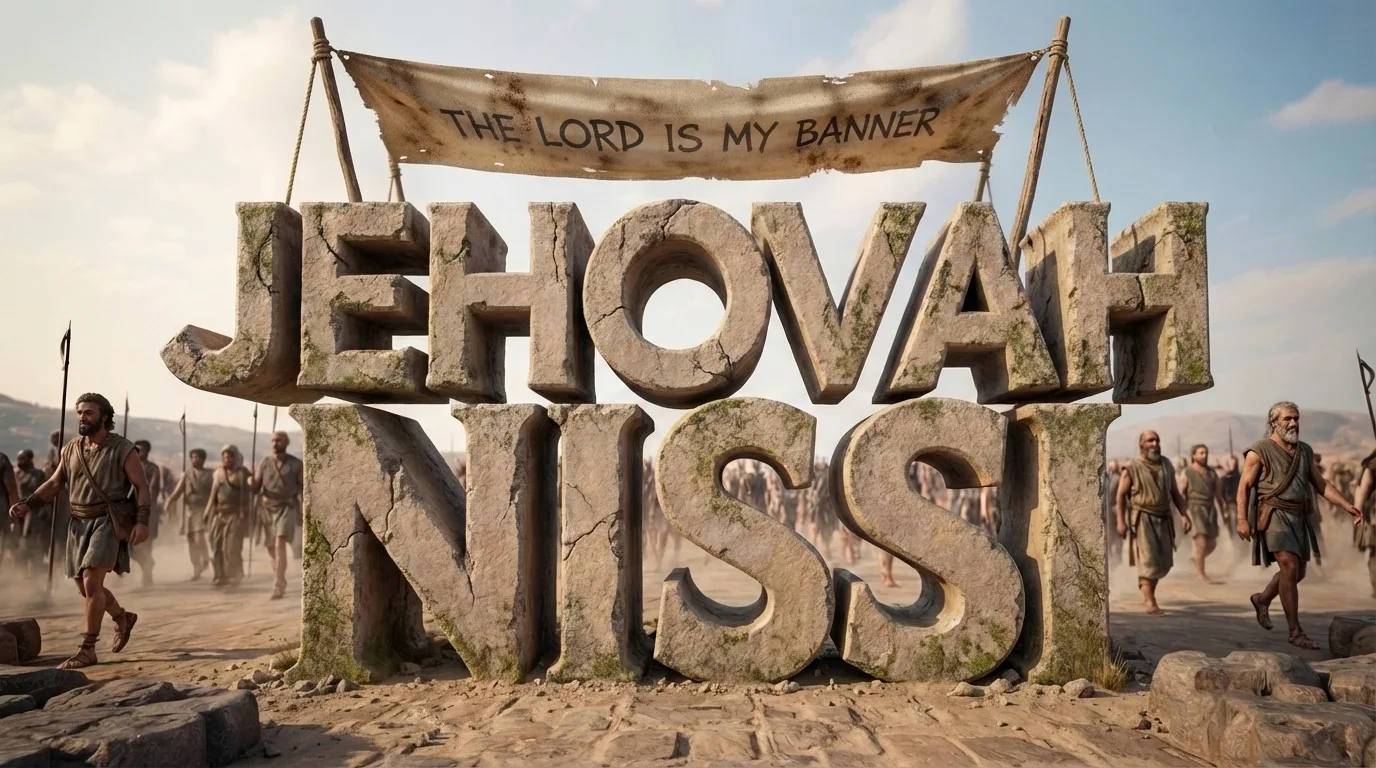

Jehovah Nissi, “The LORD Is My Banner,” is a name God revealed in a real moment of conflict when His people needed His help, direction, and victory. This study begins where that name is first declared, in Exodus 17:8-16, and then follows the Bible’s own use of the banner theme to show what God was teaching Israel about His authority and presence in the battle.
A banner in the ancient world was a raised signal that gathered people, marked allegiance, and pointed to the leader. In Exodus 17:8-16, the raised hands of Moses with the rod of God make plain that Israel’s success did not rest on human strength alone but on the LORD who fought for them. From there, we will trace how the same “lifted up” imagery is used in later passages to point to healing, deliverance, and ultimately to Messiah as God’s standard for the nations.
The aim is simple: to understand what it means to live under God’s banner today, not as a slogan, but as a confession of who leads, who protects, and who gives victory, so our trust is placed where Scripture places it.
Jehovah Nissi Revealed in Battle
Exodus 17:8-16 shows Jehovah Nissi revealed, not in a classroom, but in a battlefield. Amalek attacked Israel at Rephidim, and the text highlights two arenas at once: Joshua fought in the valley, and Moses stood on the hill with the rod of God in his hand. The point is not that Moses had magic power in his arms, but that the LORD was teaching Israel where victory comes from and how His people are to look to Him in the fight.
Now Amalek came and fought with Israel in Rephidim. And Moses said to Joshua, Choose us some men and go out, fight with Amalek. Tomorrow I will stand on the top of the hill with the rod of God in my hand. So Joshua did as Moses said to him, and fought with Amalek. And Moses, Aaron, and Hur went up to the top of the hill. And so it was, when Moses held up his hand, that Israel prevailed; and when he let down his hand, Amalek prevailed. But Moses’ hands became heavy; so they took a stone and put it under him, and he sat on it. And Aaron and Hur supported his hands, one on one side and the other on the other side; and his hands were steady until the going down of the sun. So Joshua defeated Amalek and his people with the edge of the sword. (Exodus 17:8-13)
Notice the balance: Joshua truly fought, and Israel truly swung swords. Yet the outcome visibly tracked with Moses’ raised hands. God was making the battle a lesson in dependence. Israel had just grumbled about water in the wilderness, and now the LORD trains them that their survival is not secured by grit alone. They needed the LORD’s help, the LORD’s presence, and the LORD’s authority. The raised rod had already been associated with God’s powerful acts in Egypt and at the sea; here it functions as a public signal that Israel’s hope is anchored in God, not in their own resources.
Also, this passage quietly teaches teamwork and perseverance. Moses grows weary, and Aaron and Hur come alongside him. That is not a side note. God’s work often requires sustained faith and shared support. The battle lasted until sunset, and faithfulness had to be maintained longer than one emotional moment. The text does not praise human independence. It shows God supplying what is needed through the help of others while keeping the focus on Himself.
Then the LORD said to Moses, Write this for a memorial in the book and recount it in the hearing of Joshua, that I will utterly blot out the remembrance of Amalek from under heaven. And Moses built an altar and called its name, The-LORD-Is-My-Banner; for he said, Because the LORD has sworn: the LORD will have war with Amalek from generation to generation. (Exodus 17:14-16)
Moses’ altar names the victory: The LORD Is My Banner. A banner is a rallying signal and a declaration of allegiance. Israel would remember that day not as Israel’s greatness, but as the LORD’s faithfulness. For us, the application is straightforward: engage the real work in front of you with diligence, but keep your confidence fixed on the LORD. Pray, obey what He has said, and seek the steadying help of godly believers when your strength is heavy, because the victory belongs to the LORD.
Banner Meaning and Covenant Authority
Exodus 17:15 functions like a banner itself. Moses does not merely celebrate a win; he marks out who holds covenant authority over Israel’s battles. The altar becomes a fixed witness that the LORD Himself is the rallying signal, the One who gathers His people, defines their allegiance, and directs their fight. When Moses names the altar, he is preaching a theology of leadership and loyalty: Israel is not an independent tribe that happens to receive occasional help; they are the LORD’s people, living and fighting under His authority.
And Moses built an altar and called its name, The-LORD-Is-My-Banner; (Exodus 17:15)
The word banner points to something lifted up for public recognition. In war it gathered troops, identified the commander, and clarified who belonged to whom. So when Moses says the LORD is my banner, he is confessing that the LORD is the One Israel gathers to, the One Israel follows, and the One Israel represents. This also protects Israel from a dangerous misunderstanding: they could have walked away saying Joshua’s skill or Israel’s toughness won the day. The altar forces the opposite conclusion. The banner is not Israel’s name; the banner is the LORD’s name.
That is why Exodus 17:15 cannot be separated from Exodus 17:16. The text grounds this banner-confession in the LORD’s own sworn commitment. The issue is not only a past victory, but the LORD’s ongoing claim and ongoing opposition to what seeks to destroy His people. Covenant authority means the LORD has the right to command and the right to judge, and His word determines the long-term outcome.
for he said, Because the LORD has sworn: the LORD will have war with Amalek from generation to generation. (Exodus 17:16)
This theme carries forward in Israel’s later worship. God’s people understood banners not as superstition, but as a visible way to confess confidence in the LORD’s saving help. Notice how Psalm 20 ties banners to God’s name and to prayer, not to human strength.
We will rejoice in Your salvation, And in the name of our God we will set up our banners! May the LORD fulfill all your petitions. (Psalm 20:5)
That is covenant authority applied: God hears petitions, God saves, and God’s name is the public standard. When believers today speak of living under God’s banner, the Bible’s meaning is not that we claim an easy life. It is that we belong to the LORD, we gather to His Word, and we fight the right battles in the right way, refusing self-reliance as our foundation. The practical question is simple: in conflict, pressure, or temptation, what name are you rallying under, and whose direction will you obey?
Victory Comes From The Lord
Psalm 20 is a battle prayer. It is not sentimental, and it does not deny that real threats exist. It teaches Israel how to think when pressure rises: seek the LORD, trust His name, and measure victory by His saving help, not by human resources. That is exactly the confession of Psalm 20:5, where banners are raised in connection with salvation and answered prayer. A banner marks who you belong to and where your confidence is placed, and Scripture ties that confidence to the LORD Himself.
We will rejoice in Your salvation, And in the name of our God we will set up our banners! May the LORD fulfill all your petitions. (Psalm 20:5)
Notice the order. First, salvation from the LORD. Then, banners in His name. Then, petitions brought to Him. In other words, the banner is not a replacement for prayer, and it is not a symbol of self-confidence. It is a public confession that we are depending on the LORD to act according to His character. The phrase in the name of our God points to His revealed authority and faithfulness. Israel is not rallying around their king’s charisma or their army’s strength; they are rallying around the LORD’s name.
The same point is stated plainly a few lines later. Psalm 20 contrasts two kinds of confidence: confidence in visible military strength, and confidence in the LORD who saves. This is not an argument against planning or preparedness. The Bible consistently affirms wise action. The contrast is about what you ultimately trust.
Some trust in chariots, and some in horses; But we will remember the name of the LORD our God. (Psalm 20:7)
Chariots and horses were the top level technology of that day. They represent the best human tools, training, and advantages. Yet the psalmist says we will remember the name of the LORD our God. Remember means more than recall; it means to keep His character and promises in view so that our choices follow faith, not fear. When God’s people forget the LORD, they reach for whatever looks strongest in the moment. When they remember Him, they can act courageously without turning their resources into an idol.
This also helps us read Psalm 20:5 rightly. Setting up banners is not triumphalism. It is worship expressed on the battlefield: we rejoice in Your salvation. Even when the outcome is not yet visible, faith speaks according to what the LORD has said and who He is. Application is straightforward. When you face conflict, temptation, opposition, or heavy responsibility, do the next right thing in obedience, but refuse to anchor your peace in your own chariots and horses. Bring specific petitions to the LORD, act with integrity, and let your words make clear whose name you are living under. Victory comes from the Lord, and His people are safest when their confidence stays there.
Lifted Up For Healing And Life
Numbers 21:8-9 shows another moment where something is lifted up in Israel’s camp, not as a charm, but as a God-appointed signal calling for faith and bringing real deliverance. The background matters. Israel had sinned against the LORD and Moses, and the LORD’s discipline came through fiery serpents. Many were bitten and died. When the people confessed their sin and asked for intercession, the LORD provided a remedy that required simple, obedient trust.
Then the LORD said to Moses, Make a fiery serpent, and set it on a pole; and it shall be that everyone who is bitten, when he looks at it, shall live. So Moses made a bronze serpent, and put it on a pole; and so it was, if a serpent had bitten anyone, when he looked at the bronze serpent, he lived. (Numbers 21:8-9)
The key action is not making the bronze serpent. The key action is looking, in response to the LORD’s word. The people could have argued that looking seems too easy, too simple, or too foolish. But the LORD was teaching them that life would come through trusting what He said. Their situation was desperate, their need was urgent, and their help was not found in human technique. God’s appointed provision was lifted up where it could be seen, and whoever looked lived. That is the plain meaning of the text.
Scripture itself tells us this event also points forward to Jesus Christ. The Lord Jesus used this exact account to explain how eternal life is received. He did not say people are saved by works, rituals, or self-improvement. He pointed to faith in Him, based on God’s promise.
And as Moses lifted up the serpent in the wilderness, even so must the Son of Man be lifted up, that whoever believes in Him should not perish but have eternal life. (John 3:14-15)
Notice the parallel. In Numbers, the bitten person looked and lived. In John, the sinner believes and receives eternal life. The object of faith is different, but the principle is the same: God provides, and we respond by trusting Him. This also guards the gospel from distortion. We are not saved by the strength of our faith, but by the Savior we believe. Salvation is by grace through faith alone in Jesus Christ alone, and the fruit of that salvation follows afterward.
There is also a warning implied by the broader biblical record. A God-given object can become an idol if people detach it from God’s word and treat it as power in itself. The lesson is to honor the LORD who saves, not the instrument He used. For us, the application is straightforward: when sin has wounded you and death is the outcome you cannot escape on your own, do not bargain with God or promise Him improvements. Look to the crucified and risen Christ. Take Him at His word. He is the One lifted up for healing and life.
Messiah As Banner For Nations
Isaiah 11 moves from the promise of a coming King from David’s line to the worldwide reach of His reign. The context is important. After describing the Spirit-empowered righteousness of the coming One, Isaiah shows that His influence will not be limited to Israel. He will be lifted up as a public signal, a banner, drawing people to Himself. Isaiah 11:10 is the clearest statement: the Messiah is not only Israel’s hope, but the nations’ gathering point.
And in that day there shall be a Root of Jesse, Who shall stand as a banner to the people; For the Gentiles shall seek Him, And His resting place shall be glorious. (Isaiah 11:10)
The Root of Jesse points to the Messiah’s connection to the house of David, yet the wording also hints at more than mere ancestry. A root is a source of life. The Messiah is not just another branch in the family tree; He is the One who establishes and sustains the kingdom God promised. As a banner, He stands visibly, openly, not hidden in a corner. The result is that the Gentiles seek Him. That seeking is not casual curiosity; it is a movement of the nations toward the Messiah as the answer God has provided.
This matches the consistent testimony of Scripture that God always intended to bless the nations through the promised Seed. The Messiah does not become a banner by human promotion, but because God has appointed Him as the One to whom people must come. Inference: the banner imagery includes both a call to assemble and a standard of allegiance. People are not only comforted by His presence; they are gathered under His authority.
Therefore He also says in another Psalm: You will not allow Your Holy One to see corruption. (Acts 13:35)
Acts 13 places the Messiah’s resurrection at the center of the message to both Jews and Gentiles. The One who died and rose again is the One God has publicly identified. That is why the nations can seek Him with confidence. He is alive, and His resting place will be glorious, meaning His kingdom presence brings true peace and ordered righteousness, not the temporary ceasefires of politics or power.
Be it known to you therefore, men and brethren, that through this Man is preached to you the forgiveness of sins; and by Him everyone who believes is justified from all things from which you could not be justified by the law of Moses. (Acts 13:38-39)
The banner gathers people through the gospel. Forgiveness and justification come through this Man, the Messiah, and they are received by faith. This keeps our application clear. Christ is not a tribal symbol we use to win cultural battles; He is God’s appointed Savior-King whom we proclaim to every person. If you want to live under the Messiah as banner, begin where Scripture begins: come to Him by faith for forgiveness, then make Him visible in your life by open allegiance, consistent obedience, and confident witness. When Christ is lifted up in the preaching of the gospel and in faithful living, the nations have a true place to seek and find rest.
Living Under God’s Banner Today
Living under God’s banner today means we stop treating spiritual victory as something we can manufacture. The same Lord who identified Himself as the rallying point of His people also teaches us the principle of how His work advances: not by human strength, not by human strategy, but by His Spirit accomplishing what He has promised. Zechariah 4 was given to encourage God’s people when the task in front of them felt beyond them. The point is not that effort is useless, but that effort is never the source of success when God is building what only God can build.
So he answered and said to me: This is the word of the LORD to Zerubbabel: Not by might nor by power, but by My Spirit, Says the LORD of hosts. (Zechariah 4:6)
In context, Zerubbabel faced obstacles, opposition, and discouragement as the temple work continued. The LORD did not deny the difficulty. He redirected confidence. Might and power are real words for resources and force, what we can gather, plan, and push through. God’s Spirit is the decisive difference. When you put Zechariah 4:6 alongside what we have already seen in Scripture, the logic is consistent: God raises up the banner, God provides the victory, and God’s people respond by faith-filled obedience.
Practically, this keeps us from two errors. One error is self-reliance, where we pray little, listen shallowly to Scripture, and then try to win spiritual battles with personality and willpower. The other error is passivity, where we claim to trust the Spirit while neglecting the means God has commanded, like prayer, holiness, and faithful witness. Scripture holds both together: God supplies the power, and we walk in what He says.
I say then: Walk in the Spirit, and you shall not fulfill the lust of the flesh. (Galatians 5:16)
Walking in the Spirit is not mystical. It is living under God’s direction, submitting to His Word, depending on His help, and refusing the flesh its “rights.” The flesh promises control and quick results, but it cannot produce righteousness. The Spirit produces what God approves, beginning with inward transformation that shows up in outward fruit.
So what does living under God’s banner look like this week? It looks like beginning your day with God’s Word open, because you need truth more than adrenaline. It looks like praying over real temptations, naming them plainly, and asking for strength to obey. It looks like making choices that honor Christ when no one applauds. It looks like speaking the gospel with clarity, trusting the Spirit to convict and draw, because only He can open blind eyes. And when you see progress, you give credit where it belongs: the Lord has done it.
If you are in Christ, you are already gathered to His banner through the gospel. Now live like His banner is over you by depending on His Spirit, obeying His Word, and making Christ visible in your home, your work, and your relationships. God’s work moves forward God’s way, and that is steady encouragement when the assignment is bigger than you.
My Final Thoughts
Jehovah Nissi is not a religious slogan for hard days. It is a settled confession of who leads you when the pressure is real. If you belong to Jesus Christ, you are not left to fight temptation, fear, conflict, or discouragement on your own. Your responsibility is to obey what God has said and to keep looking to Christ, not to your own strength, your own plans, or your own ability to control outcomes. Let the Lord’s banner over your life show up in simple, steady faithfulness: honest repentance, consistent prayer, serious time in Scripture, and choices that honor Christ when it costs you something.
And do not miss the pattern God showed in Exodus: Moses needed help holding up his hands. Many believers lose heart because they isolate. Bring trusted, godly people into your life who will pray with you, speak truth to you, and help you stay steady when you are weary. Then as the Lord gives victory, give Him the credit and keep moving forward under His authority. The banner is not your success. The banner is the Lord Himself.

 Get the book that teaches you how to evangelize and disarm doctrines from every single major cult and religion.