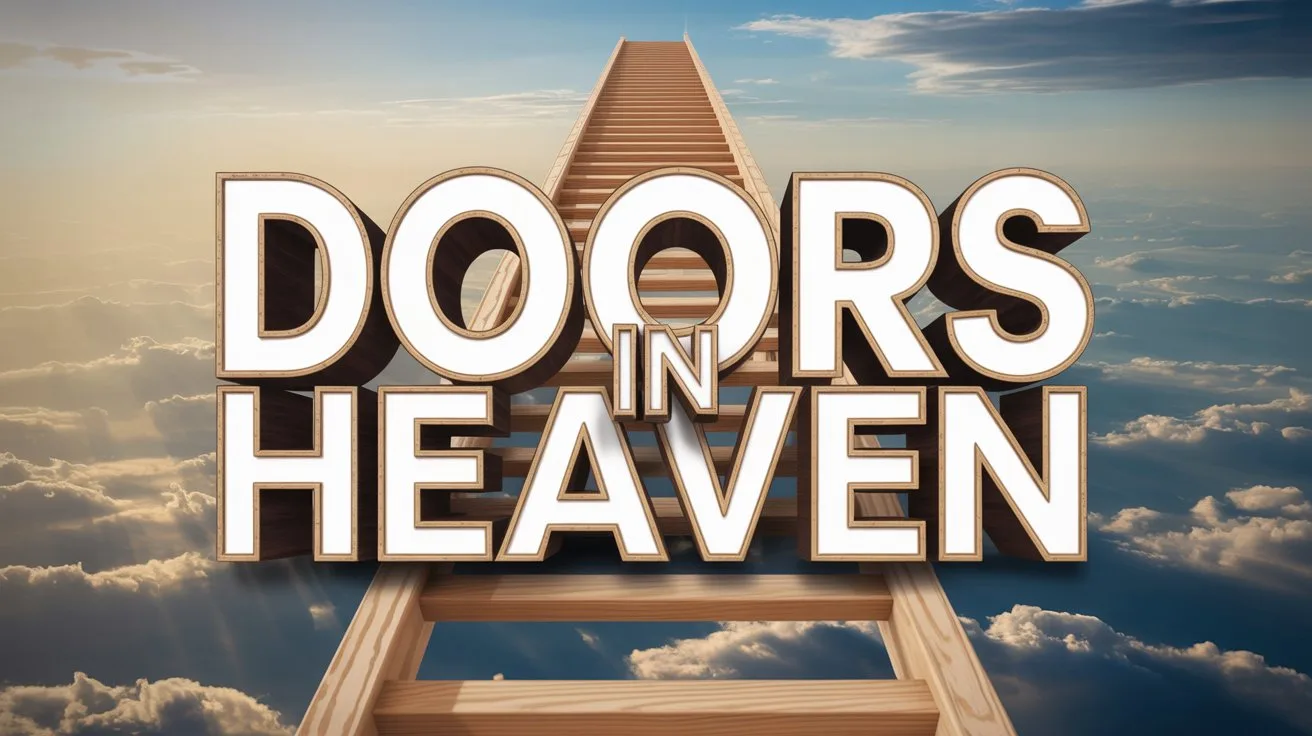
Sometimes the Bible lets us see, for a moment, what is normally unseen. Not because God is feeding our curiosity, but because He is showing us that heaven is real, active, and involved. One of the clearest pictures is Jacob’s vision in Genesis 28:12-17, where heaven and earth are connected and God speaks into a man’s life right in the middle of weakness and uncertainty.
Jacob at Bethel
Genesis 28 drops us into a pretty raw moment in Jacob’s life. He is traveling alone, leaving home, and he is not leaving as the hero of the family. He has deceived his father, he has stirred up conflict with his brother, and now he is on the run. Keep that in mind so we do not read Jacob’s vision like he earned it. God meets him by grace.
Jacob lies down in a place that is, to him, ordinary. No altar. No tabernacle. No priest. Just a man, a stone for a pillow, and a night on the road. Then God gives him a dream that changes how he sees everything.
One easy detail to miss is how the passage quietly pushes back on the idea that God is only with you when you are “in the right place.” Jacob is outside the land of promise’s center, outside family protection, outside any recognized worship site. Yet God shows up and speaks anyway. The ground is plain, but God’s presence is not.
Then he dreamed, and behold, a ladder was set up on the earth, and its top reached to heaven; and there the angels of God were ascending and descending on it. And behold, the LORD stood above it and said: "I am the LORD God of Abraham your father and the God of Isaac; the land on which you lie I will give to you and your descendants. Also your descendants shall be as the dust of the earth; you shall spread abroad to the west and the east, to the north and the south; and in you and in your seed all the families of the earth shall be blessed. Behold, I am with you and will keep you wherever you go, and will bring you back to this land; for I will not leave you until I have done what I have spoken to you." Then Jacob awoke from his sleep and said, "Surely the LORD is in this place, and I did not know it." And he was afraid and said, "How awesome is this place! This is none other than the house of God, and this is the gate of heaven!" (Genesis 28:12-17)
Stairway and angels
Most English Bibles say Jacob saw a ladder, but the Hebrew word (sullam) points more toward a stairway or ramp. The point is not what it was made of. The point is that it is “set up on the earth” and reaches into heaven. God is showing a real connection between His realm and ours.
Another detail that is easy to slide past: the angels are not shown giving Jacob a message. They are shown moving, ascending and descending. That steady traffic tells you heaven is not quiet, shut down, or disconnected. God’s work involves real activity, even when a man on the ground thinks he is alone.
Then the Lord identifies Himself as the God of Abraham and Isaac. That is not small talk. God is tying this moment to His promises to the fathers. Jacob’s mess has not canceled God’s plan, and God is not scrambling to figure out what to do next.
God takes the initiative
Jacob does not climb up. He does not reach heaven by effort, ritual, or spiritual technique. God speaks first, promises first, and assures first. That sets the tone for the whole Bible: when heaven is “opened,” it is because God opens it.
In Genesis 28 the promises are clear: land, offspring, blessing, and God’s presence. The promise of presence is especially personal here because Jacob is away from everything familiar. God is not limited by geography. He is the Almighty God on a lonely road the same as He is anywhere else.
Behold, I am with you and will keep you wherever you go, and will bring you back to this land; for I will not leave you until I have done what I have spoken to you." (Genesis 28:15)
There is also something quietly gracious in the way God speaks to Jacob. God does not begin with a lecture about Jacob’s sin. Jacob needs repentance, no question, and later his life shows God dealing with him. But here God starts by planting Jacob on solid ground: who God is, what God promised, and that God will be with him. Grace comes first, and grace is what will shape Jacob into a different man.
Gate of heaven
When Jacob wakes up, he is shaken. He says the Lord is in that place and he did not know it. Then he describes the place as the house of God and the gate of heaven.
In the ancient world a gate was not just a door on a hinge. A city gate was a recognized entry point, a threshold you did not ignore. Jacob uses that kind of language because he realizes he has come up against a boundary between the seen and the unseen, and God Himself has made contact. He is not claiming he found a magic patch of dirt where heaven leaks out. God made Himself known there, and that is why the place stands out.
Jacob’s fear is not a meltdown. It is the right response to realizing the living God is near and holy. When people in the Bible truly grasp that, they do not get casual. They get sober.
Other open heavens
Once Jacob’s vision is in your mind, you start noticing how often Scripture uses “open” language or doorway language to show that God can reveal what He wants from the unseen realm. These moments are not all the same kind of experience. Some are dreams, some are visions, some are sights God grants in real time. But the pattern is steady: God opens, God shows, and the result is faith, repentance, courage, or understanding.
Isaiah and the doorway
Isaiah 6 is famous for the revelation of God’s holiness, but it also includes a small doorway detail worth noticing. Isaiah sees a throne-room scene, and the doorposts are affected by what is happening. That is there to show the weight of God’s presence, not to give us trivia about heavenly architecture.
Also notice the motion. The heavenly beings are not statues. They are active in service. Heaven, in Isaiah’s vision, is not passive. God is worthy, and everything around Him responds accordingly.
In the year that King Uzziah died, I saw the Lord sitting on a throne, high and lifted up, and the train of His robe filled the temple. Above it stood seraphim; each one had six wings: with two he covered his face, with two he covered his feet, and with two he flew. And one cried to another and said: "Holy, holy, holy is the LORD of hosts; The whole earth is full of His glory!" And the posts of the door were shaken by the voice of him who cried out, and the house was filled with smoke. (Isaiah 6:1-4)
That keeps us from treating “openings” of heaven like they are fun experiences to chase. When God reveals Himself, it is meant to reshape the person who sees it. Isaiah does not walk away impressed with himself. He walks away humbled, cleansed, and sent.
Ezekiel and opened heavens
Ezekiel begins with a blunt statement that the heavens were opened and he saw visions from God. He is not in Jerusalem. He is among exiles. That setting keeps you from thinking God is tied to one building, or that His rule is canceled by their circumstances.
Now it came to pass in the thirtieth year, in the fourth month, on the fifth day of the month, as I was among the captives by the River Chebar, that the heavens were opened and I saw visions of God. (Ezekiel 1:1)
Ezekiel’s first chapter is full of hard-to-picture imagery, but the main point is not hard to grasp. God is alive, present, and reigning, even when His people are under discipline and far from home. The opened heavens are not there to entertain Ezekiel. They strengthen him for a difficult ministry to a stubborn people.
Stephen and steady courage
In Acts 7, Stephen is being falsely accused and is about to be killed. Right then, God grants him sight of heavenly reality. He sees the glory of God and Jesus in a position of honor. This is one of those moments that surprises people because it is not connected to a temple service or a quiet prayer retreat. It happens in the middle of violent opposition.
But he, being full of the Holy Spirit, gazed into heaven and saw the glory of God, and Jesus standing at the right hand of God, and said, "Look! I see the heavens opened and the Son of Man standing at the right hand of God!" (Acts 7:55-56)
The open heaven there does not remove Stephen from suffering. It anchors him in it. God does not promise that His servants will avoid hardship, but He does show that heaven’s reality is steady. Jesus is exalted even when His witness is being crushed on earth.
Across these examples, notice what you do not see. You do not see God telling people to chase visions. You do not see heaven opening because someone found the right method. You see God opening when He chooses, to reveal what His servants need in order to obey Him and stand firm.
Jesus the true access
Genesis 28 gives the picture. The New Testament shows where the picture leads. Jesus directly connects Jacob’s stairway scene to Himself. He speaks of heaven opened and angels ascending and descending, and He ties that movement to the Son of Man. He is telling us that He is the true meeting point between heaven and earth.
And He said to him, "Most assuredly, I say to you, hereafter you shall see heaven open, and the angels of God ascending and descending upon the Son of Man." (John 1:51)
What Jesus means
Jesus is not promising that every believer will see the same dream Jacob saw. He is saying the reality behind Jacob’s dream comes to its fulfillment in Him. If Jacob saw a connection between heaven and earth, Jesus says, I am that connection.
This is where the theme becomes practical. We do not need to locate a special place. We do not need to manufacture an experience. We come to God through Jesus Christ, because He is the sinless God-man who died and rose again. Salvation is God’s gift received by faith, not earned by works. Works matter, but they are fruit, not the root.
Paul uses the word access for what Christ has done. Access is not a mood. It is permission granted, a way opened. Through Christ, believers can approach the Father in prayer and worship with real confidence because the barrier of sin has been dealt with.
For through Him we both have access by one Spirit to the Father. (Ephesians 2:18)
A brief word note
The Greek word translated access in Ephesians 2:18 (prosagoge) carries the idea of being brought in, like being introduced into the presence of someone important. You do not stroll in on your own authority. You are brought in by someone who has the right to bring you. That fits Genesis 28: heaven is not climbed by human effort; access is granted by God, and it is granted through His Son.
Heaven is not far off
When Scripture shows angels ascending and descending, or a door standing open in heaven, it is not teaching us to obsess over angels. Hebrews describes angels as ministering spirits sent out to serve those who will inherit salvation. They serve God’s purposes. They are not the center of the picture. God is.
Are they not all ministering spirits sent forth to minister for those who will inherit salvation? (Hebrews 1:14)
Still, those angel references remind us that God is active in ways we do not see. Jacob was sleeping on the ground thinking he was alone, and the unseen world was busy carrying out God’s business. That is a needed correction for us. We often judge reality by what we can measure in the moment.
One more thing needs to be said plainly. None of this gives permission to chase mystical “open door” experiences. The Bible does not teach believers to pursue visions as a badge of maturity. God can grant them, but He does not command us to seek them. What He does command is faith in His Son, obedience to His word, and steady prayer. The greatest “open door” for the believer is not a vision. It is the finished work of Christ that gives us real access to God right now, and it rests on His promise, not on our performance. A person who is truly born again is secure in Christ.
My Final Thoughts
Genesis 28:12-17 shows a God who meets a flawed man on an ordinary night and makes it clear that heaven is not shut up and distant. Jacob sees a connection between heaven and earth, angels in motion, and the Lord speaking covenant promises. He wakes up changed because he realizes God is present and God is involved.
When the Bible shows heaven opening in other places, the message stays consistent. God reveals what He wants, when He wants, to strengthen His servants and make His purposes known. And when Jesus ties Jacob’s stairway to Himself, it lands the whole theme where it belongs: real access to the Father is through Jesus Christ alone, by grace through faith. That is the doorway God has opened, and nobody can shut it.




 Get the book that teaches you how to evangelize and disarm doctrines from every single major cult and religion.