


The titles “Lion” and “Lamb,” both applied to Jesus in Revelation 5, reveal two complementary aspects of His identity and mission: His eternal power and His sacrificial love. These titles summarize the entire work of Christ in redemption and judgment.
When John wept because no one was found worthy to open the scroll, an elder declared:
“Do not weep. Behold, the Lion of the tribe of Judah, the Root of David, has prevailed to open the scroll and to loose its seven seals.”
(Revelation 5:5)
The title Lion of the tribe of Judah points back to Jacob’s prophecy in Genesis 49:9–10, where Judah is described as a lion and promised a ruler whose scepter would not depart. This identifies Jesus as the royal Messiah, the conquering King from David’s line who will execute judgment and establish God’s kingdom.
However, when John looks, he does not see a lion but a lamb:
“And I looked, and behold, in the midst of the throne and of the four living creatures, and in the midst of the elders, stood a Lamb as though it had been slain.”
(Revelation 5:6)
The title Lamb points to Jesus’ sacrificial death, fulfilling the Old Testament imagery of the Passover lamb (Exodus 12) and Isaiah’s prophecy of the suffering Servant (Isaiah 53:7). His victory came not through force but through offering Himself as the perfect sacrifice for sin.
Both titles appear together to show that Christ conquers not by violence but through His sacrificial work. The Lion demons/”>demonstrates His authority and ultimate triumph, while the Lamb displays His humility and redeeming love. Together, they reveal that Jesus is both Judge and Savior.
The response in heaven affirms this dual reality:
“Worthy is the Lamb who was slain to receive power and riches and wisdom, and strength and honor and glory and blessing!”
(Revelation 5:12)
In summary, the Lion and the Lamb encapsulate the entire gospel: Jesus reigns as King and redeems as Savior. His power secures victory, and His sacrifice secures salvation.

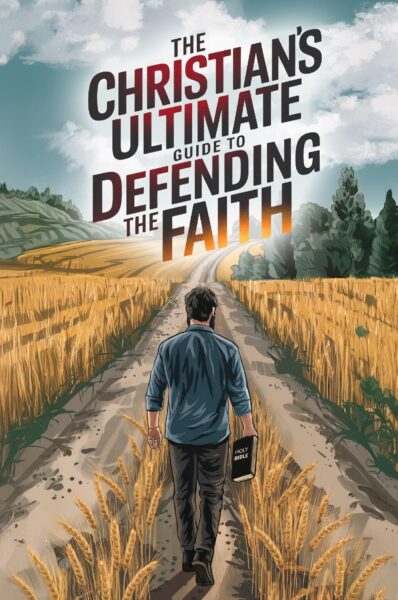 Get the book that teaches you how to evangelize and disarm doctrines from every single major cult and religion.