
The Bible does not reveal everything about the Messiah in one verse. As the promise grows across Scripture, we see His family line and identity, and we learn why He suffers before ruling. I want to follow that developing portrait because all of it comes together in Jesus Christ.
What Messiah and Christ Mean
The Hebrew word mashiach means anointed one. The Greek word Christos, from which we get the English title Christ, carries the same basic meaning. “Jesus Christ” is therefore not a first and last name. It identifies Jesus as the Anointed One whom God promised and appointed.
The word by itself does not always refer to the unique Savior. In the Old Testament, priests were anointed for their work. Kings such as Saul and David were called the LORD’s anointed, and prophets could be commissioned with anointing language. Isaiah 45 even calls Cyrus God’s anointed because the LORD appointed that pagan ruler for a particular historical task. Context must show whether Scripture is speaking about an ordinary officeholder or the promised Messiah.
As the biblical witness develops, the expectation becomes much more specific. Psalm 2 presents God’s Anointed as His Son and the King who will rule the nations. Psalm 110 identifies Him as David’s Lord and a Priest forever. Isaiah shows the Spirit resting upon Him in fullness so He can bring justice to the nations. Other passages describe His undeserved suffering. They then carry the promise through His resurrection to a reign without end. No ordinary anointed ruler fulfills everything in that portrait.
John 1 records Andrew telling Simon, “We have found the Messiah,” and then explains that the term means Christ. In Matthew 16, Peter confesses Jesus as the Christ and the Son of the living God. Jesus accepts the confession, but He immediately teaches that He must go to Jerusalem. He will suffer and be killed before rising from the dead. The title includes royal glory, yet the Messiah reaches that glory by passing through real suffering.
Jesus’ baptism also displays His messianic anointing. The Son stands in the water while the Holy Spirit descends and the Father speaks from heaven. Jesus does not become divine at His baptism because He is the eternal Son. The scene does not show one Person appearing in three different forms. Father, Son, and Holy Spirit are distinct, co-equal, and co-eternal Persons of the one God. The baptism publicly identifies Jesus and begins His Spirit-empowered public ministry as the promised Messiah.
I think we need the complete portrait rather than the title by itself. Someone can correctly observe that messiah sometimes names an ordinary anointed person and still miss the question the Bible is answering. Which Anointed One is God’s Son and David’s Lord? Who bears the sins of others and then rises from death? The promised One also serves as Priest forever and receives the nations. When these promises speak together, they identify a Person far greater than Cyrus or Saul and every other historical officeholder.
Messianic interpretation must begin with what each passage actually says. I do not think we help the case for Christ by quoting impressive prophecy statistics or treating every Old Testament detail as a direct prediction. We should begin with a passage’s words and historical setting. Its literary form tells us how it communicates, while its covenant setting connects it to God’s promises. We must also consider what the original audience heard before asking how Jesus and later inspired writers use the passage.
A direct promise does not work in exactly the same way as a type. Micah directly names Bethlehem as the ruler’s birthplace, while Zechariah describes Zion’s King arriving on a donkey. Daniel places the Messiah’s death before the later destruction of Jerusalem and its sanctuary. Covenant promises take a different form as God narrows the promised line through Abraham, Judah, and David. Inspired patterns such as Passover, the bronze serpent, the priesthood, and Davidic kingship prepare categories that later Scripture applies to Christ.
Some passages begin in a real historical experience and reach a greater fulfillment. David truly suffers in Psalm 22, but the Gospel writers deliberately show its features at the crucifixion. Isaiah 7 speaks into the immediate crisis facing Ahaz, and Matthew authoritatively identifies the virgin conception of Jesus as the fulfillment of Immanuel. The first setting is not erased. The inspired fulfillment is not optional either.
That method gives Scripture control over the study. Our imagination cannot create doctrine by finding a clever parallel. At the same time, we should not reject a messianic reading when Jesus or an apostle gives it to us. The Holy Spirit who inspired the earlier passage also governs its later biblical explanation.
No single Old Testament passage gives every part of the portrait. Genesis establishes the conflict with the serpent and the covenant line. The Psalms reveal the Anointed Son, the suffering righteous One, the risen Holy One, and David’s eternal Priest-King. Isaiah presents the virgin-born Child with divine titles and then explains the Servant’s saving work. Daniel and Zechariah place the Messiah within history and carry the promise through rejection to His future reign. The Gospels show Jesus living within that expectation. Acts and the Epistles explain His resurrection, exaltation, and priesthood, while Revelation shows the King returning. Reading these groups together keeps one favorite verse from carrying more weight than its context allows.
The Promise Narrows Through the Seed, Abraham, Judah, and David
The first promise of a Deliverer appears inside the first judgment. Adam and Eve have rebelled, and death has entered the world. For a moment, the serpent seems to have won. God announces that the conflict will continue, but He also reveals how it will end. The woman’s Seed will suffer a wound and then crush the serpent.
And I will put enmity Between you and the woman, And between your seed and her Seed; He shall bruise your head, And you shall bruise His heel.”
The Hebrew word zera can describe offspring as a group or point to a particular descendant. Genesis 3:15 moves from the broad conflict between two seeds to a masculine singular actor. The verse does not yet name Jesus or tell us about Bethlehem. It does not explain the cross and resurrection in full. It gives the first shape of the promise: victory will come through a true human descendant who suffers before decisively defeating the serpent.
Later Scripture fills in that first outline. Hebrews 2 says the Son shared flesh and blood so that through death He might defeat the devil’s death-dealing power. 1 John 3 says the Son of God was manifested to destroy the devil’s works. Revelation shows the ancient serpent finally judged. The cross looked like the serpent’s victory, but the wounded Messiah rose. He made death itself the road by which He defeated the enemy.
This is not a promise that humanity will slowly improve itself. Adam’s descendants enter a world under sin and death, and they become sinners themselves. The Deliverer must truly stand within humanity without sharing its guilt. The virgin-born, sinless Son accomplishes what no ordinary child of Adam could do.
God next places the promise within Abraham’s family. Through Abraham, all the families of the earth will be blessed. The covenant gives real promises to Abraham’s physical descendants, including a land and nation under God’s care. Its saving reach also extends beyond one people. Israel becomes the nation through whom Scripture is preserved and the Messiah enters the world.
After Abraham obeys in Genesis 22, God again says that all nations will be blessed in his Seed. Galatians 3 identifies the climactic Seed as Christ and explains that Gentiles are justified by faith. Paul does not erase Abraham’s natural descendants or turn the national promises into figures of speech. He shows that the deepest blessing promised to the world is righteousness and life through the Messiah rather than wealth or political power.
Genesis 49 narrows the royal expectation to Judah. The scepter will remain with that tribe until the coming ruler receives the obedience of the peoples. David later comes from Judah, and God makes a covenant with him. Even after the earthly dynasty appears to fall, the prophets continue looking for a righteous Branch from David’s line.
Matthew opens by calling Jesus the Son of David and the Son of Abraham. That genealogy is theology rooted in history. Jesus does not appear as a teacher detached from Israel’s story. He is born inside the promised covenant line. Through Him blessing reaches the nations, and in Him the promised royal authority is secure.
Matthew and Luke arrange their genealogies differently, and their real differences should not be waved away. Matthew traces the royal and legal line through Joseph, Jesus’ legal father. Luke is commonly understood to preserve the physical family line connected with Mary, though he names Joseph and does not pause to give a full harmonization. Romans 1:3 states the apostolic conclusion plainly: according to His humanity, Jesus came from David’s seed. We can affirm both His legal right and His genuine physical descent without pretending every genealogical question has an easy answer.
God’s covenant with David gives the royal promise a permanent home. In 2 Samuel 7, the LORD promises that David’s house, kingdom, and throne will ultimately endure forever. Solomon fulfills part of the promise, but neither he nor any later earthly king can reign without end. The prophets continue to expect a righteous Son of David long after the dynasty has lost its throne.
Psalm 2 calls this King the LORD’s Anointed and His Son. The nations rebel against Him, but they cannot undo God’s decree. Psalm 110 adds an astonishing detail. David calls the coming ruler “my Lord,” and the LORD seats Him at His right hand.
The LORD said to my Lord, “Sit at My right hand, Till I make Your enemies Your footstool.”
Jesus uses this psalm to show that the Messiah is more than David’s descendant. He is also David’s Lord. The same psalm records God’s oath that this ruler is “a priest forever according to the order of Melchizedek” (Psalm 110:4). David is describing a Messiah who joins kingship and priesthood without violating the Levitical order. His priesthood belongs to an older and greater order established by God Himself.
The Gospels identify Jesus as this promised Son of David. He presently sits at the Father’s right hand, where He serves as Priest and waits for the appointed time when His enemies will be made His footstool. When He returns, He will openly exercise His legal right to David’s throne.
The Virgin-Born Son Becomes the Suffering Servant
Isaiah 7:14 gives the sign of Immanuel during a crisis for David’s royal house. King Ahaz fears an alliance of Syria and the northern kingdom of Israel. Those rulers plan to invade Judah and replace David’s heir with a king of their own choosing. The threat therefore reaches beyond one frightened king because God has promised that the Messiah will come through David’s line.
The LORD offers Ahaz a sign, but the unbelieving king refuses while pretending humility. Isaiah then addresses the house of David and announces the Immanuel sign. The Hebrew word almah describes a young woman of marriageable age and carries an expectation of purity in its biblical use. Questions remain about how the sign related to the immediate historical horizon, so I would not turn an unidentified near child into settled fact.
Matthew gives the authoritative fulfillment. Mary conceived Jesus while she was still a virgin through the work of the Holy Spirit. The Masoretic Hebrew remains the governing Old Testament text, and Matthew’s inspired use identifies the promised conception. We do not need the Septuagint to overrule the Hebrew base in order to believe the virgin birth.
The virgin conception belongs to the incarnation of the eternal Son. Jesus received a true human nature from Mary and entered David’s family. He remained completely without sin from conception through every moment of His life. He is fully human, yet He never stopped being God.
Isaiah 9 joins those truths in one Child. The promised Son bears titles that include Mighty God, the same divine title Isaiah uses for the LORD in Isaiah 10:21. The title “Everlasting Father” describes the Son’s eternal and fatherly rule. It does not confuse Him with the Person of the Father. Jesus is one Person with a complete divine nature and a complete human nature, without mixture or division.
For unto us a Child is born, Unto us a Son is given; And the government will be upon His shoulder. And His name will be called Wonderful, Counselor, Mighty God, Everlasting Father, Prince of Peace.
Micah 5:2 names Bethlehem Ephrathah as the birthplace of Israel’s ruler. The chief priests in Matthew 2 understood that Micah pointed to the Messiah. An ordinary human claimant could not arrange his own birthplace to fulfill that prophecy. The humble town associated with David receives David’s greater Son.
Micah also says the ruler’s goings forth are from of old, from ancient days. I would read that expression with the rest of Scripture rather than make one debated phrase carry the whole doctrine of Christ’s deity. John says the Word was with God and was God before creation, and that all things were made through Him. Bethlehem marks His birth in David’s town. It is not the beginning of His eternal existence, nor even the beginning of His incarnate human life, which began at conception in Mary’s womb.
Colossians later calls Jesus “the firstborn over all creation.” In that setting, firstborn speaks of supremacy and inheritance. It does not mean He was the first creature God made. Paul immediately explains that every created thing, whether visible or invisible, was made through Christ and for Him. The Creator of all things cannot belong to the class of things He created.
The Old Testament’s major anointed offices come together in this divine and human Messiah. Deuteronomy 18 promises a Prophet like Moses, and Acts 3 applies the promise to Christ. Jesus speaks the Father’s words with final authority and reveals God perfectly. Everyone is called to hear Him.
Psalm 110 declares Him a Priest forever according to the order of Melchizedek. Melchizedek is a Christophany, a real appearance of the eternal Son before His incarnation. Paul, the author of Hebrews, explains that Christ’s priesthood does not descend from Levi. It rests on God’s oath and the power of an endless life.
As Priest, Jesus offered His own innocent body once for all. Wicked men tortured and punished Him, and He willingly endured their violence. He shed His physical blood and died before rising bodily. He now intercedes for His people, and no earthly priest can repeat or improve His sacrifice. As King, He sits at the Father’s right hand and will return to subdue His enemies.
Isaiah’s Servant songs explain why the road to the throne passes through rejection. Isaiah 53 describes an innocent individual who is despised and wounded because of other people’s transgressions. He is cut off from the living and buried with the rich, but afterward He lives to see the result of His work.
Isaiah does call Israel God’s servant in other places, so it is fair to ask whether the nation is also the servant in this chapter. The details answer that question. This Servant is personally righteous and stands apart from the sinful people whose iniquities He bears. He dies and then lives afterward. A merely collective reading cannot account for the whole chapter, and the New Testament repeatedly identifies Jesus as the One Isaiah described.
But He was wounded for our transgressions, He was bruised for our iniquities; The chastisement for our peace was upon Him, And by His stripes we are healed. All we like sheep have gone astray; We have turned, every one, to his own way; And the LORD has laid on Him the iniquity of us all.
We need to speak carefully about what happened at the cross. Wicked men physically tortured and punished Jesus before killing Him. In His innocent body, He willingly bore that real punishment for our sins through His blood and death. The Father did not punish, curse, abandon, strike, bruise, or pour wrath on the Son. Jesus never became morally sinful. His Father never stopped loving Him, and the Trinity did not divide.
Jesus did not suffer in Hell or endure the second death. In perfect unity with the Father and the Spirit, He gave Himself as the sufficient sacrifice for the whole world. When Isaiah says the LORD laid our iniquity upon the Servant, the prophet is explaining whose sins He willingly carried and why His innocent suffering saves. The wording does not identify the Father as the men who scourged, mocked, pierced, and killed Jesus. God appointed and accepted the Son’s willing sacrifice in complete Trinitarian unity.
Isaiah’s promise that we are healed must also remain in context. The chapter centers on transgression and iniquity. It explains how our guilt is answered and peace with God is secured. God can heal physical disease, and the resurrection will finally remove every bodily affliction. Isaiah 53 does not guarantee immediate physical healing to every believer.
Psalm 22 begins in David’s genuine anguish, but the Gospel accounts reveal its fuller pattern at the cross. Jesus speaks the psalm’s opening words while onlookers mock Him. According to the received Masoretic reading reflected in the NKJV, His hands and feet are pierced. The soldiers divide His garments by lot.
Jesus’ cry does not mean the divine nature fractured or the Father ceased to love Him. It expresses real suffering and deliberately brings the whole psalm before His hearers. Psalm 22 does not end in abandonment. It turns toward answered prayer and proclamation among God’s people before its worship reaches the nations. The crucifixion was not an accident or the failure of messianic hope. The rejected sufferer and the worldwide King are the same Person.
The Messiah Is Cut Off, Rises Bodily, and Will Return
Daniel 9 places the Messiah inside a historical sequence. The Messiah is cut off before Jerusalem and its sanctuary are destroyed. Roughly four decades after Jesus was crucified, Roman armies destroyed Jerusalem and the second temple in AD 70. Daniel’s order does not leave the Messiah’s first arrival open to some indefinite later century.
Chronological calculations deserve care because interpreters differ over details. The central order is plain: Messiah appears and is cut off, then the city and sanctuary are destroyed. The prince who is to come is not the Messiah. Daniel’s final week remains future and will unfold as the literal seven-year Tribulation.
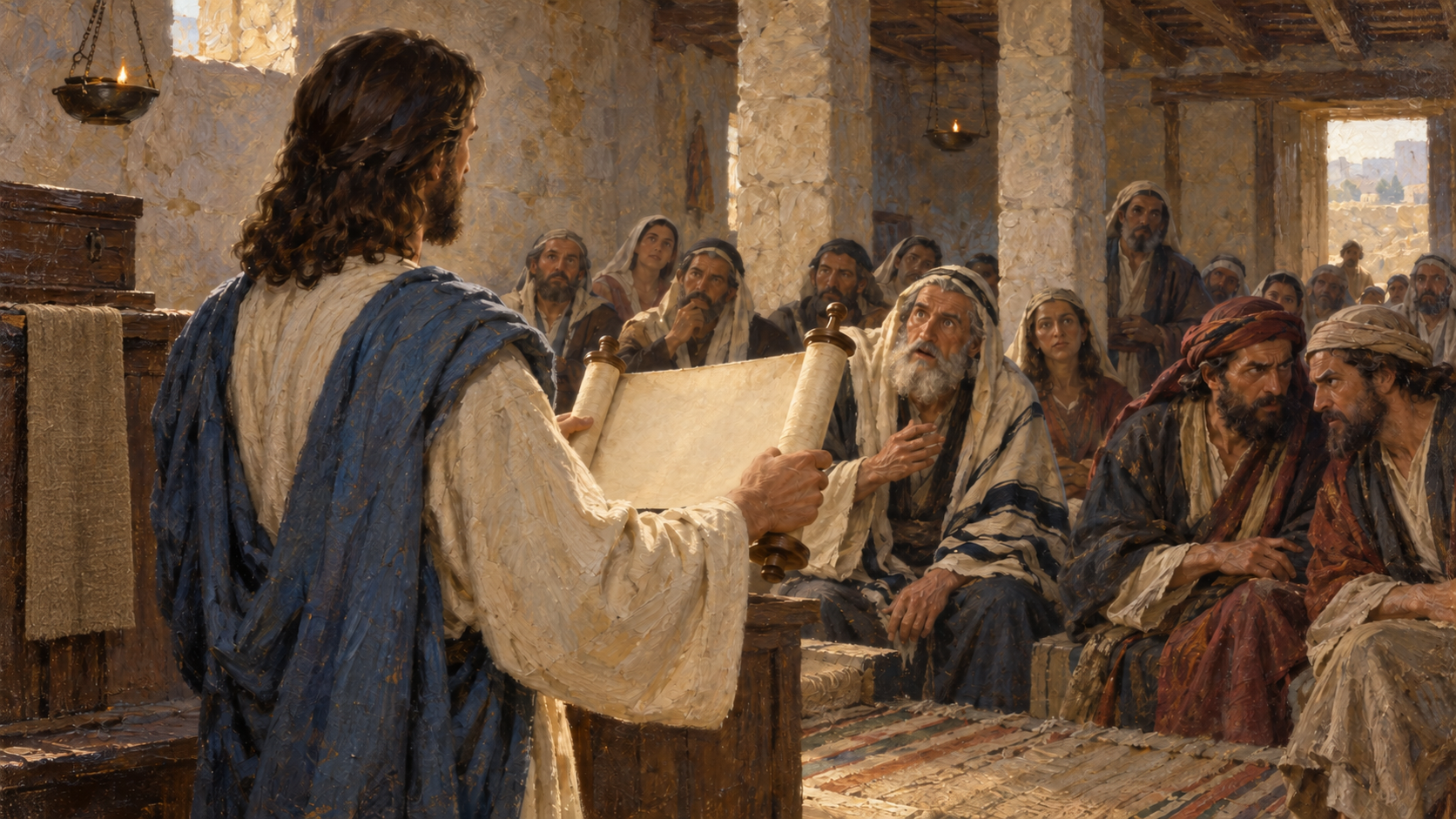
Jesus openly claimed that the messianic promises were being fulfilled in Him. In the synagogue at Nazareth, He read Isaiah 61 and announced that the Scripture had been fulfilled in the hearing of the congregation. He was not offering a general thought about compassion. He identified Himself as the Spirit-anointed One who brings good news and liberty.
And He began to say to them, “Today this Scripture is fulfilled in your hearing.”
Jesus stopped before Isaiah’s reference to the day of vengeance. That stopping point helps us distinguish the stages of His work. At His first coming, He proclaimed salvation and gave Himself for sin. He rose bodily and ascended to heaven. The day of open judgment still awaits His return.
The people of Nazareth first marveled, but their anger rose when Jesus exposed their unbelief and reminded them of God’s mercy to Gentiles. Familiarity with His hometown and heritage did not produce saving faith. The Messiah must be received on God’s terms. No community can claim Him as its private possession while refusing His authority.
Zechariah brings the two stages of messianic hope together. The King first appears in humility and experiences rejection. His people will later mourn in repentance before His royal victory becomes visible. Zechariah 9 pictures Zion’s King arriving with justice and salvation while riding lowly upon a donkey.
“Rejoice greatly, O daughter of Zion! Shout, O daughter of Jerusalem! Behold, your King is coming to you; He is just and having salvation, Lowly and riding on a donkey, A colt, the foal of a donkey.
Jesus knowingly entered Jerusalem in that manner. The crowds welcomed Him with royal words, but the city did not understand the character of its visitation. Zechariah 12 then speaks about the house of David and Jerusalem looking upon the One they pierced and mourning for Him. The LORD’s own speech is joined to mourning for a pierced individual, which fits the Messiah’s divine identity and genuine human suffering. John connects the piercing to Jesus at the cross, while Zechariah’s national setting also looks forward to Israel’s future repentance.
Zechariah 14 carries the prophecy to the LORD’s bodily intervention. His feet will stand upon the Mount of Olives, and He will reign as King over all the earth. The lowly King who entered Jerusalem and the victorious King who returns are one Person. His first coming does not cancel the visible fulfillment still promised to Israel and the nations.
Reading these prophecies as two stages of one Messiah’s work resolves the apparent tension between suffering and glory. The Messiah was not rejected because God’s plan failed, and His present reign in heaven is not a substitute for every earthly promise. The risen Christ already possesses all authority. He will exercise His royal rule openly when He returns, so the promises of humiliation and worldwide dominion both remain true without describing two different messiahs.
Between those two comings stands the bodily resurrection. Psalm 16 promised that God’s Holy One would not see corruption, and Peter proclaimed its fulfillment in Acts 2. Isaiah 53 also looks beyond the Servant’s death to prolonged days and the success of His work.
Jesus did not survive merely as an idea or an inspiring memory. His resurrection was not a private vision invented by disappointed followers. The tomb was empty, and He appeared bodily to His disciples. He invited them to examine His body and ate in their presence. Many other witnesses saw Him. The same men who had scattered in fear became public witnesses in the city where He had been killed.
The claim that the resurrection slowly grew from disappointment does not fit that public apostolic witness. The earliest preaching does not say that Jesus lived on only in the disciples’ hearts. It announces that God raised the One who had been killed and that named witnesses saw Him. Their message could be examined where the death and burial had occurred. The bodily details in the Gospel accounts also refuse to turn resurrection into a metaphor. The disciples could touch and recognize Jesus, and they even watched Him eat. The same Person who died was alive again.
After ascending, Christ sat down at the Father’s right hand in fulfillment of Psalm 110. He is alive and intercedes for His people while waiting for the time when His enemies will be placed beneath His feet. His resurrection proves that death could not hold the sinless Messiah. It also guarantees the future bodily resurrection of His people.
The prophets describe both a suffering Messiah and a reigning Messiah because the one Christ carries out His work in two comings. He first came in humility and completed the saving work through His blood, death, and bodily resurrection. He will come again visibly in a body with judgment and royal glory.
Before the Tribulation, Christ will gather His church to Himself. The seven-year Tribulation will then fulfill Daniel’s final week. At its close, Jesus will return openly and defeat His enemies. He will deliver Israel and establish His kingdom upon the earth.
Distinguishing the two comings does not divide Christ or deny His present authority. He reigns now at the Father’s right hand, where He builds His church and intercedes for believers. His present heavenly rule does not exhaust the promises. Visible judgment still awaits His return. Israel will be restored, and the Messiah will occupy a literal throne over the nations.
Israel and the Nations Remain Within God’s Promise
God always intended Abraham’s blessing to reach the nations. Gentiles who believe are justified by faith and share the salvation found in Israel’s Messiah. They do not become a replacement Israel. Their inclusion cannot cancel the covenants, the promised land, or the kingdom promises God gave to Abraham’s physical descendants.
John says Jesus came to His own and His own did not receive Him. That describes the broad national response, especially the actions of Israel’s leaders. It does not mean every Jewish person rejected Christ. The apostles and the earliest church came from Israel, as did many other believers in the first generation.
Israel’s rejection was neither total nor final. Romans 9–11 speaks of a believing remnant and warns Gentile Christians not to boast against the natural branches. Paul denies that God has cast away His people and looks forward to national mercy. Antisemitism and replacement theology both contradict his argument.
Isaiah 11 pictures David’s Branch ruling in righteousness. He gathers dispersed Israel and brings peace to creation. Daniel 7 gives the Son of Man everlasting dominion over every people and language. Revelation 19–20 shows Christ returning in judgment and then reigning for a literal thousand years.
The kingdom reveals God’s faithfulness. Jesus will govern Israel and the nations with perfect justice. He will fulfill what the prophets spoke and show openly that every promise rests securely in Him. Until then, the church should preach Christ to Jew and Gentile alike. Ethnic pride has no place in that mission, and neither does contempt.
Israel’s future is also tied to God’s character. If clear covenant promises can be reassigned because the original recipients were unfaithful, confidence in any promise becomes unstable. Romans 11 does not excuse Israel’s unbelief; it magnifies mercy. The natural branches must be grafted in again through faith in their own Messiah. When God brings that promised national repentance, Gentile believers will have no reason to boast. They will have another reason to worship the God who remains faithful.
The objection that Israel forfeited every national promise notices the nation’s broad rejection of Jesus, but it does not account for Romans 11. Gentiles were grafted into saving blessing; they were never authorized to boast over the natural branches. God’s faithfulness to Israel is not a threat to the church. It is evidence that He does not abandon His word.
The Messiah and the Gospel
All of these promises lead us to a Person, and that Person requires a response. Jesus is the eternal Son who became fully human and lived completely without sin. Wicked men physically tortured and punished Him before killing Him. He willingly bore that real punishment in His innocent body for our sins through the shedding of His blood and death. He was buried and rose bodily from the grave. Jesus alone is Savior and Mediator.
Christ died for the whole world, so God’s offer of salvation is genuine to every person. People can resist and finally reject Him. Ancestry cannot earn the benefit of His death, and neither can religious observance. Moral improvement does not secure salvation, while loyalty to a church can never replace personal faith. God calls each person to repent and place his faith in Jesus Christ.
God forgives and justifies everyone who truly believes. The believer is born again as a new creation, and the Holy Spirit comes to live within and seal that person. Every genuine believer is eternally secure because salvation rests on Christ’s finished work and God’s promise.
Eternal security does not turn grace into permission for lawlessness. A shallow profession without new life does not prove that someone has truly been saved. The King who saves also changes His people and calls them to obey. Obedience cannot purchase salvation, but it should grow from the life He has given.
The title Christ therefore asks more of us than agreement with a definition. Peter could confess that Jesus was the Christ, yet he still resisted the Lord’s teaching about suffering. The people of Nazareth knew His family and hometown, but familiarity did not become faith. A reader today can admire prophecy, discuss Hebrew words, or defend a theological system while still refusing the King Himself. The biblical response is personal repentant faith in Jesus, followed by a life that learns to obey the One who has saved us.
If Jesus is the promised King and Savior, He cannot be reduced to a moral teacher or a national symbol. He is not a private source of spiritual comfort who can be reshaped around our preferences. The Messiah comes on God’s terms. Life is found by receiving Him as Scripture presents Him.
For a closer look at His supremacy, see The Preeminence of Jesus Christ. Two related studies develop the prophetic witness in greater detail: Isaiah’s Prophecies of a Messiah and Psalm 22 and the Messiah.
My Final Thoughts
After following this promise from Genesis through the prophets and into the New Testament, I do not believe Jesus can be treated as one possible Messiah among many. The covenant line and divine identity lead us to the same Person who willingly suffered and rose bodily. He now serves as the eternal Priest, and He will return to reign over Israel and the nations exactly as God has spoken. His blood is sufficient, His tomb is empty, and His promised throne is certain. We should receive Him as Scripture presents Him and trust the work He has finished. Then we can live ready for the King who will keep every remaining promise.